THE TACUINUM SANITATIS: A LOMBARD PANORAMA WITH HOLISTIC HEALTH TIPS
To the facsimile
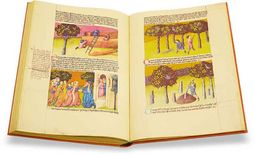
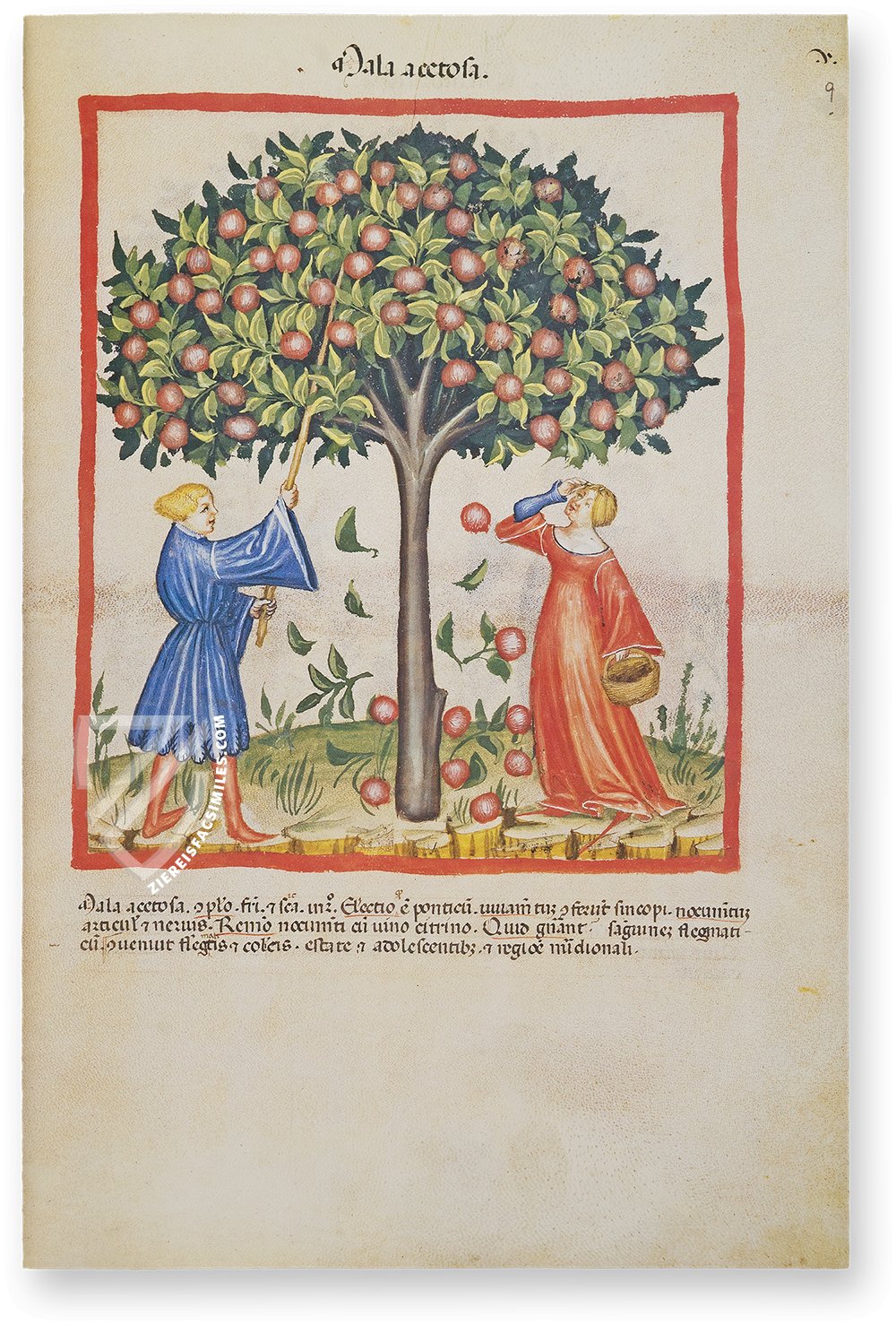
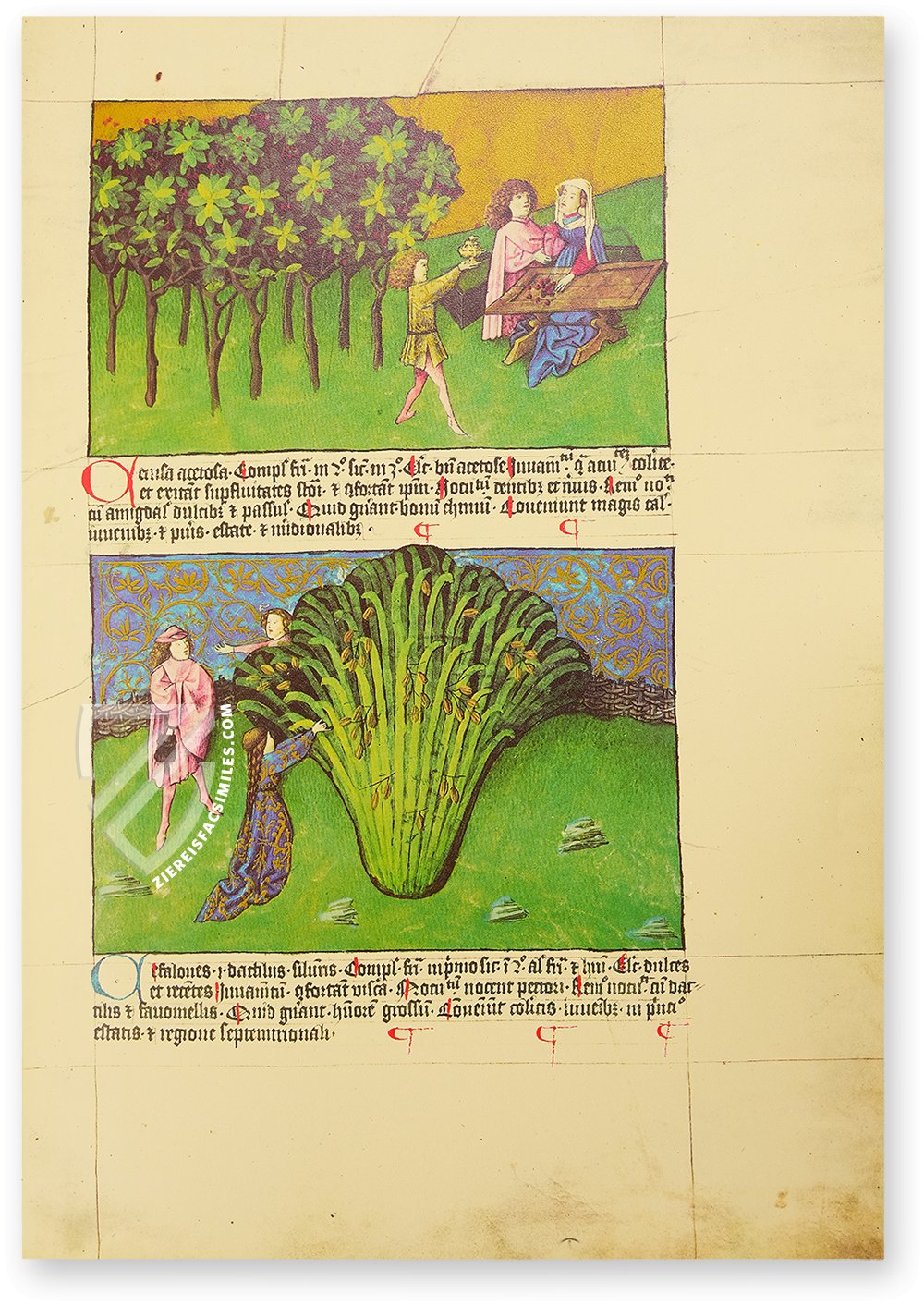
An aristocratic couple in richly colored robes flank an apple tree of almost perfect growth. Its green crown bears a rich harvest. While the man in blue shakes the large, red apples from the spreading tree with a long wooden stick, the woman in red observes the scene, but already has a basket ready to collect the fruit lying on the ground.
But what does a romantic apple harvest has to do with a medieval health guide? The following article will tell you.
To the facsimile
An Apple a Day Keeps the Doctor Away
Herbals and medical treatises are as much a part of medieval book culture as Bibles and books of hours. People's health depended not least on their diet and remedies, which were mainly derived from plant but also animal resources. Surgical procedures were considered a last resort due to the high risks involved. It is therefore hardly surprising that a number of manuscripts on human health and the healing of diseases have been preserved, most of which focus on recommendations for a healthy lifestyle. Among the illuminated medical writings, one work stands out in particular, having given rise to a genre of its own in Lombardy in northern Italy at the end of the 14th century: the Tacuinum Sanitatis.
Back in the Middle Ages, a healthy lifestyle was already seen as the key to physical and mental well-being
Tacuinum Sanitatis: Miniatures for Holistic Well-Being
To the facsimile
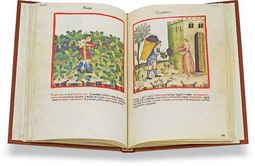
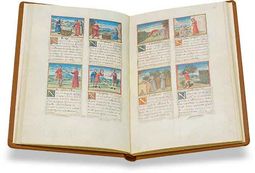
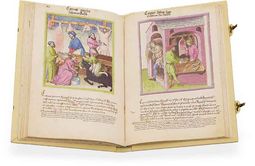
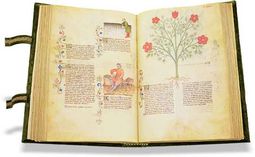
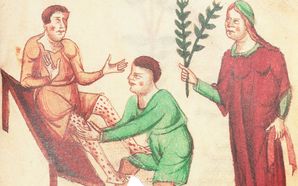
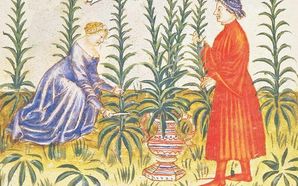
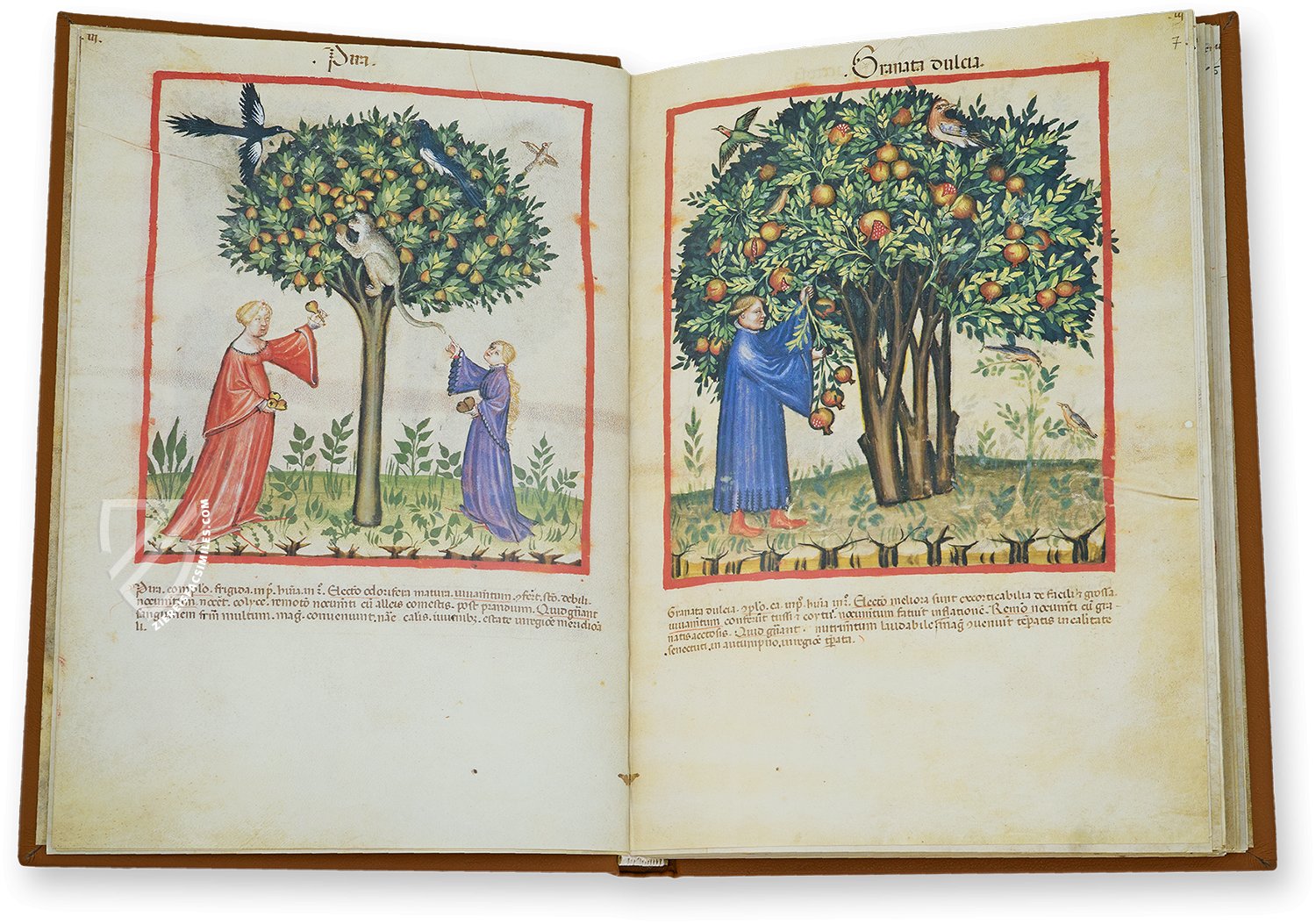
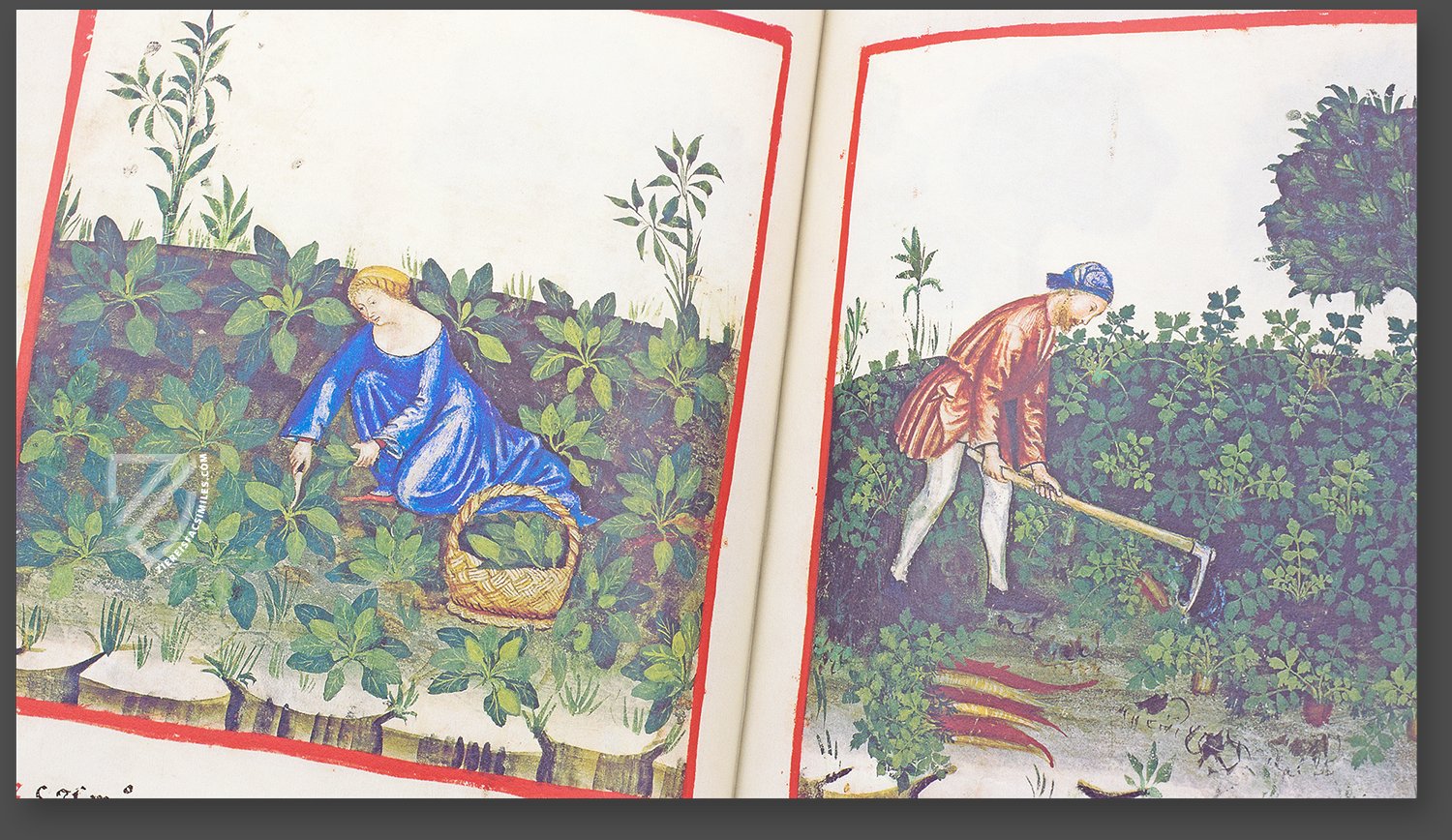
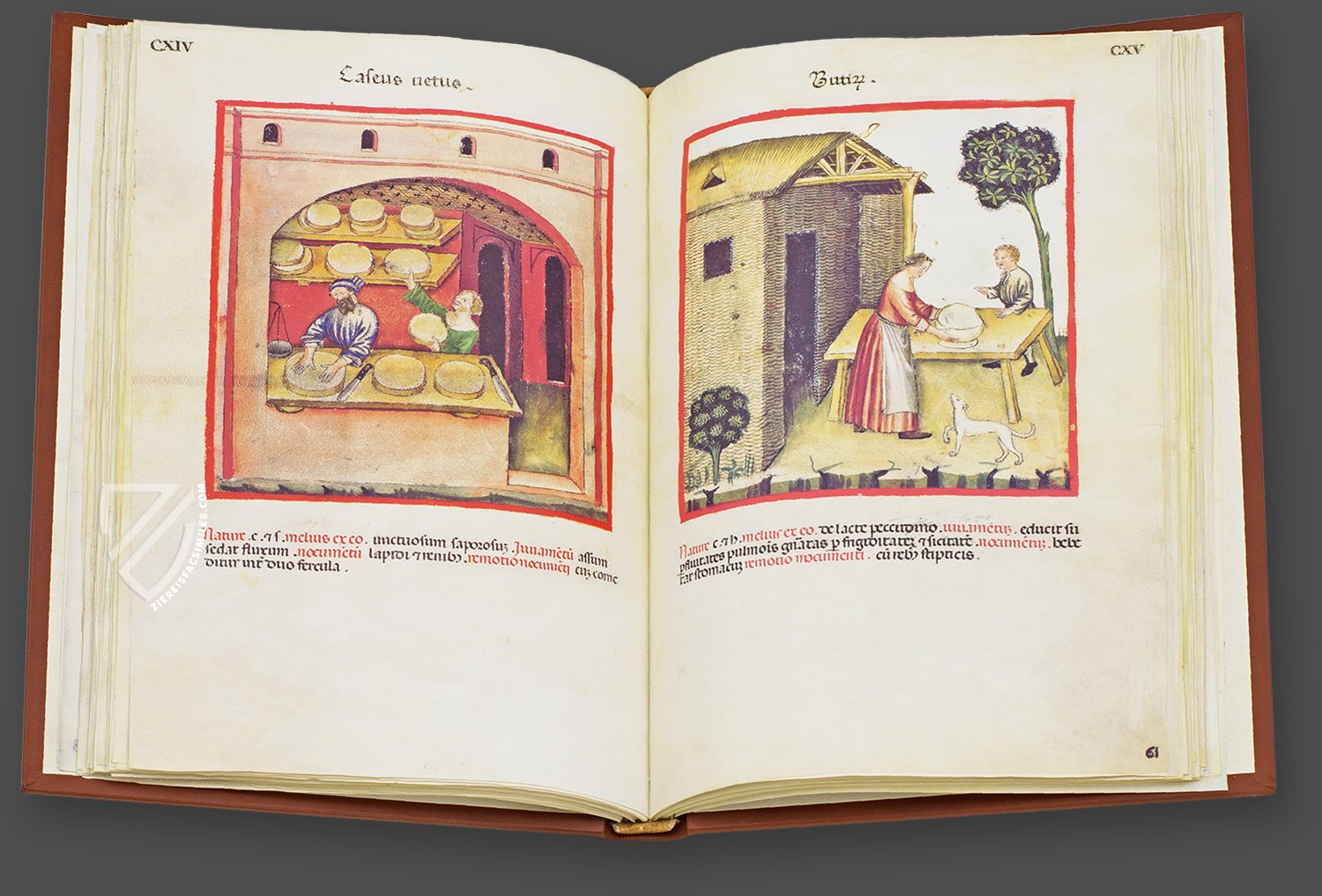
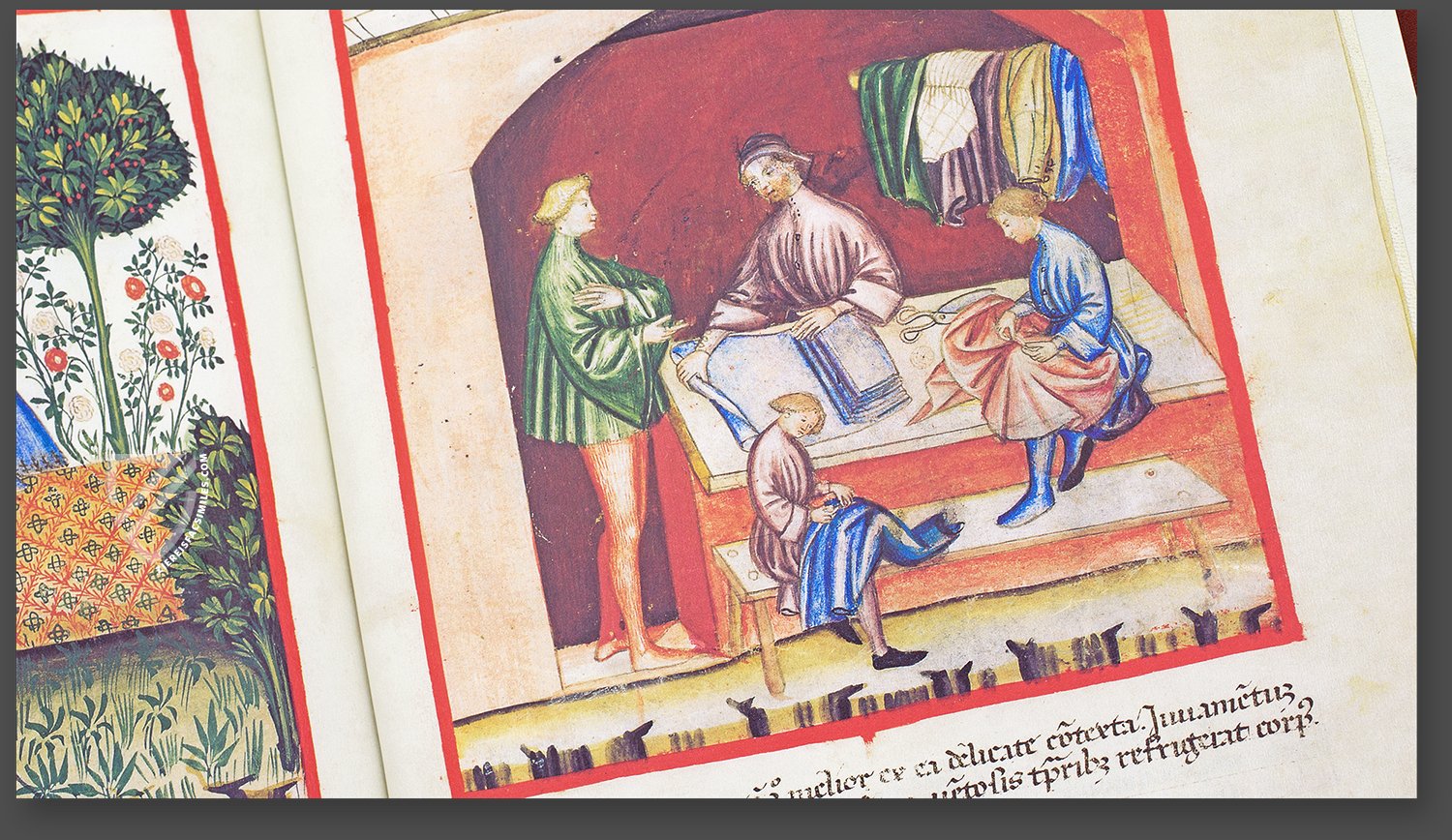
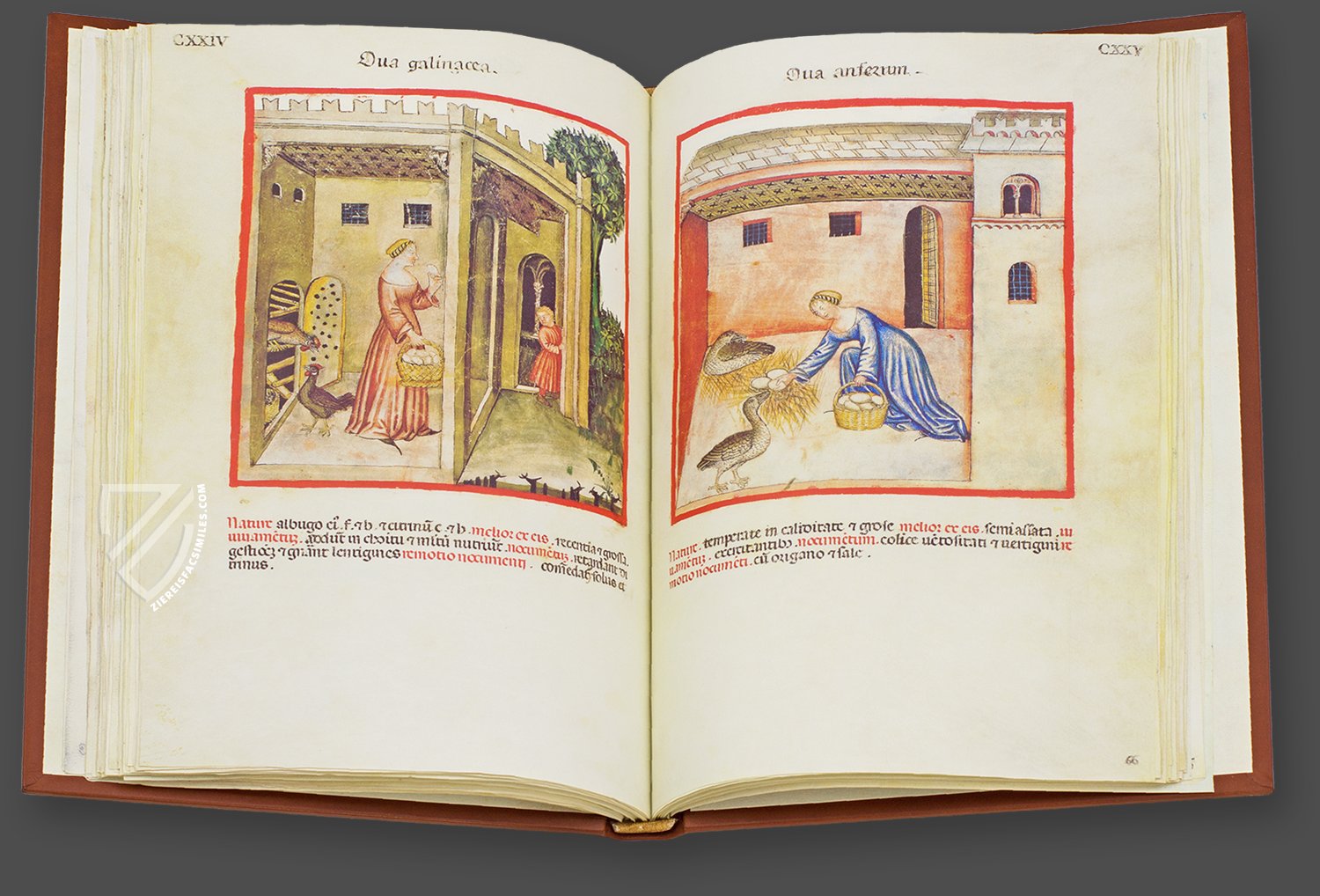
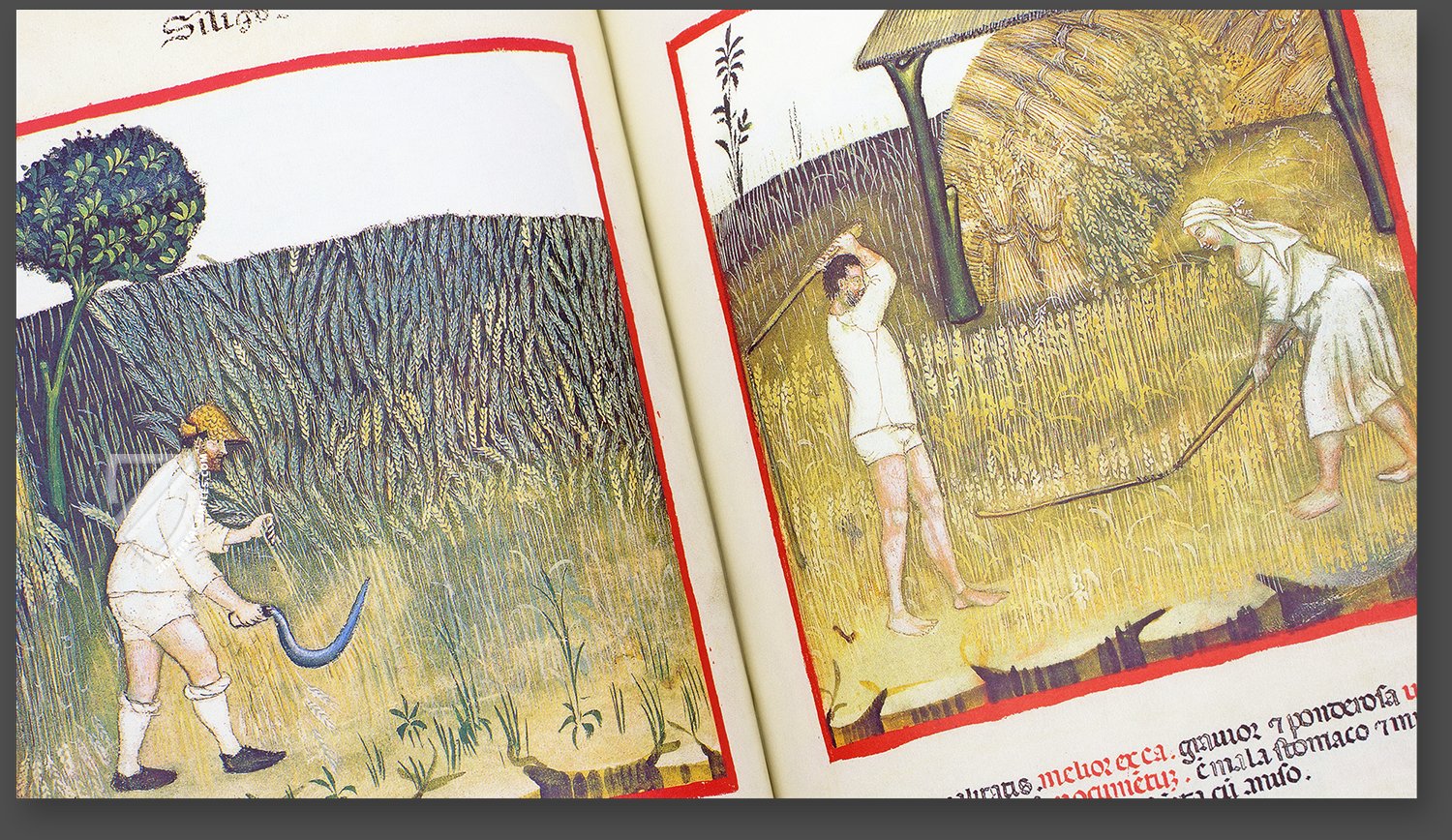
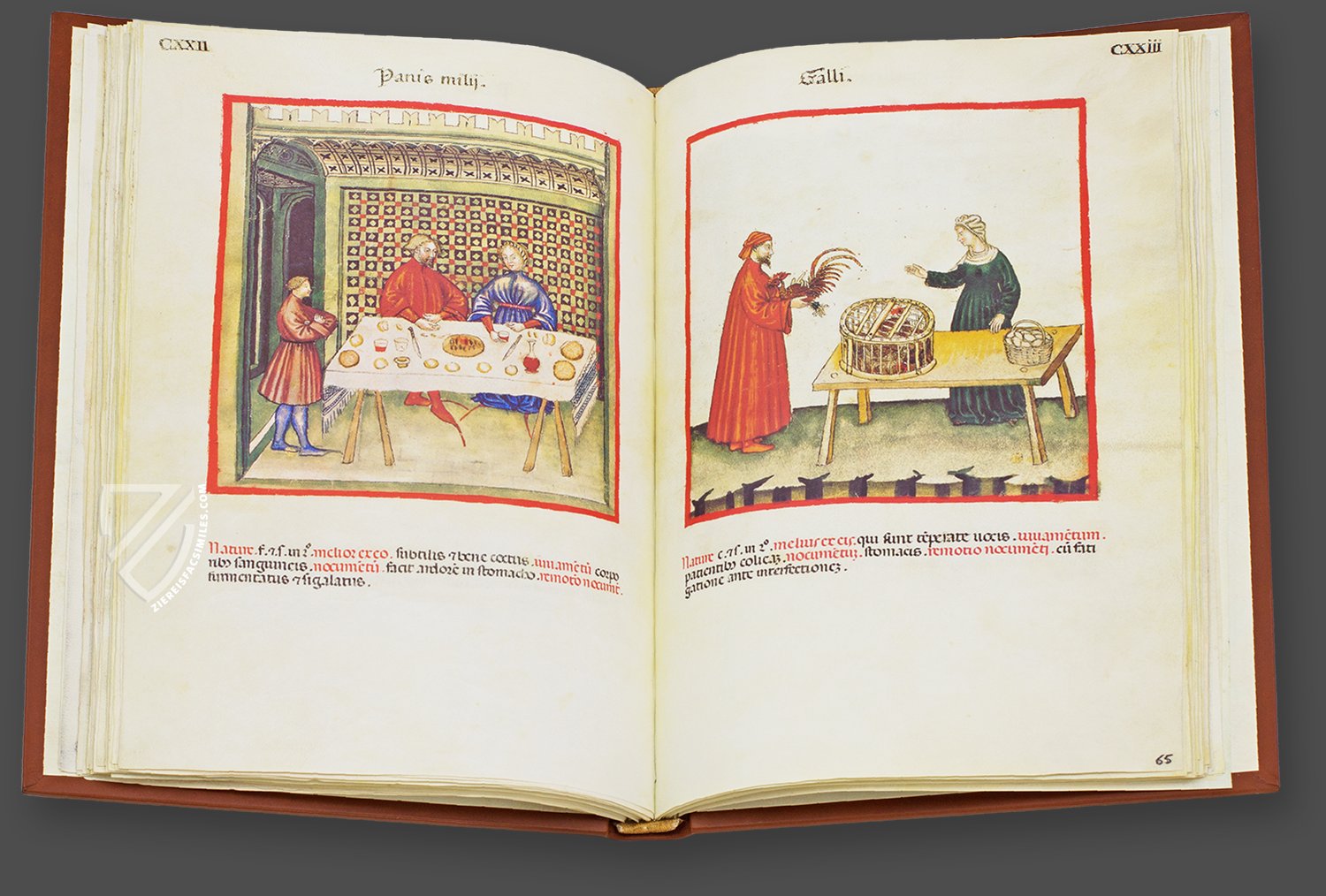
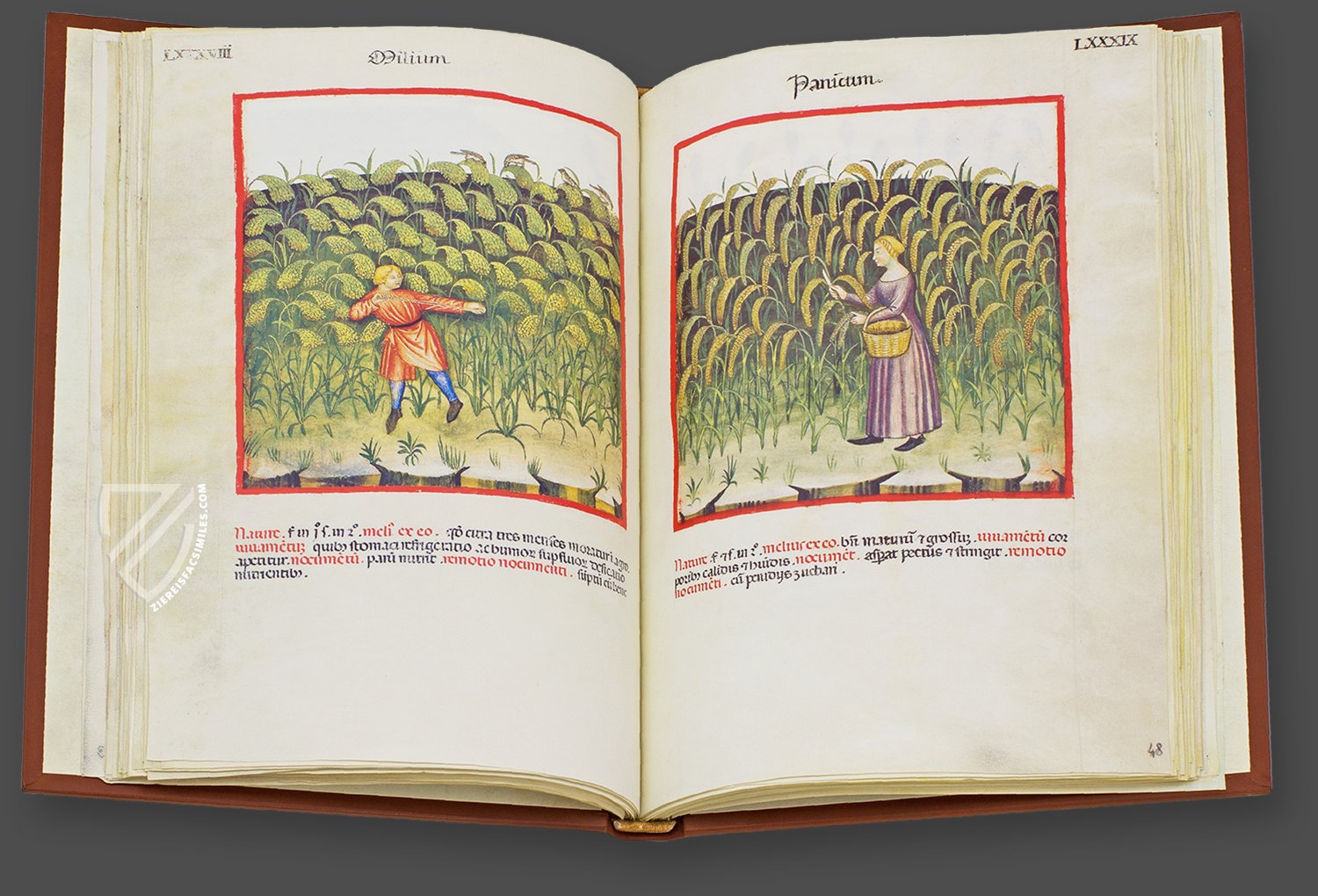
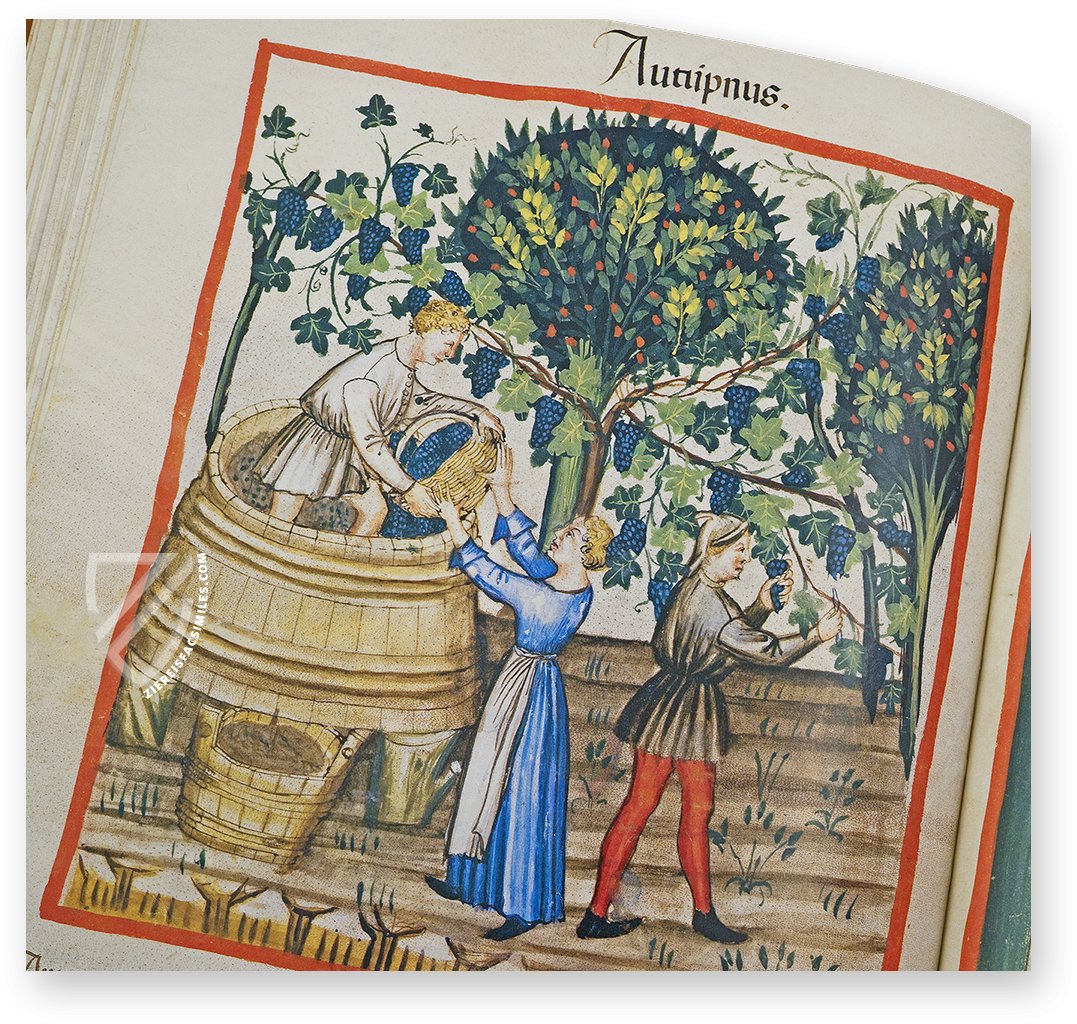
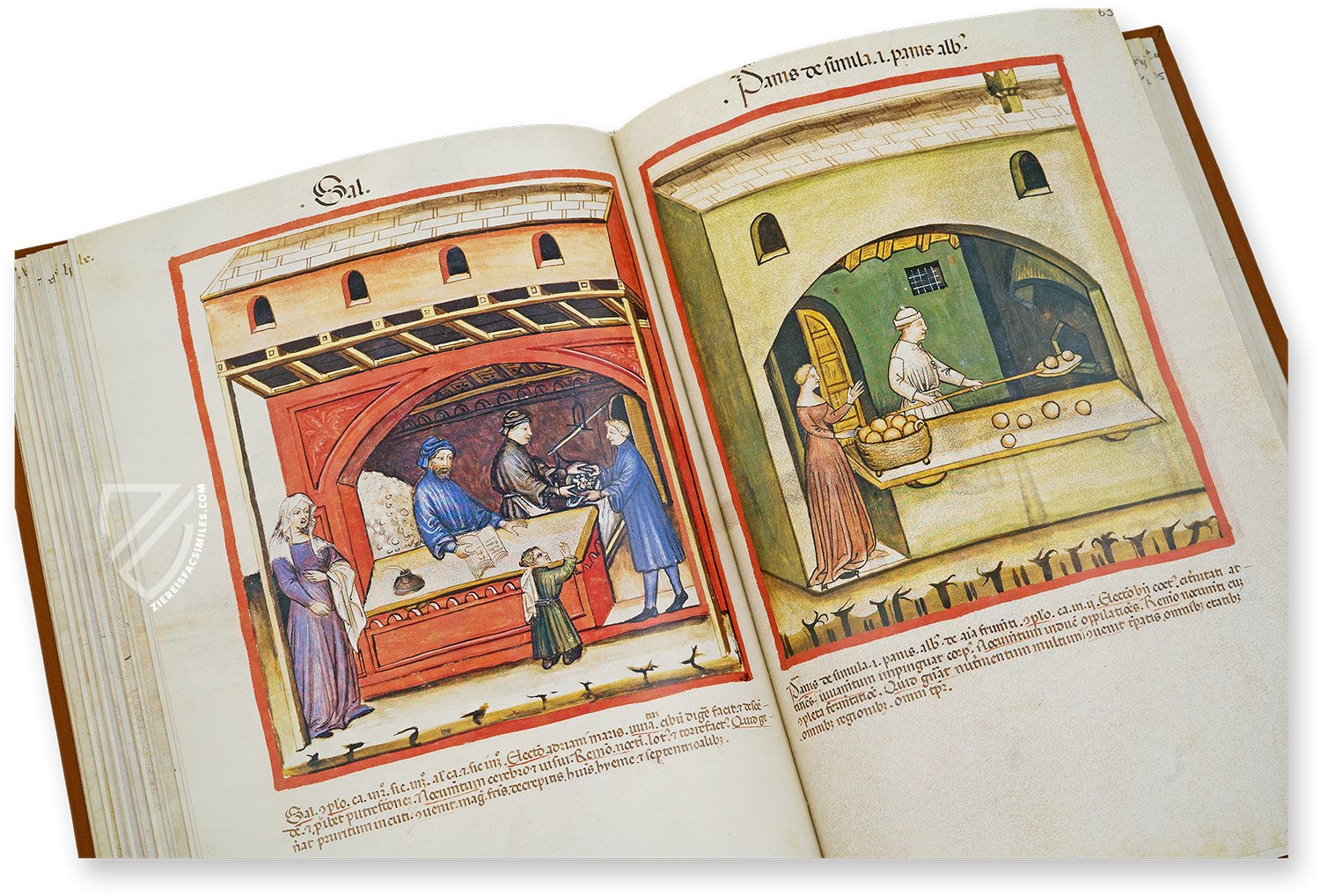
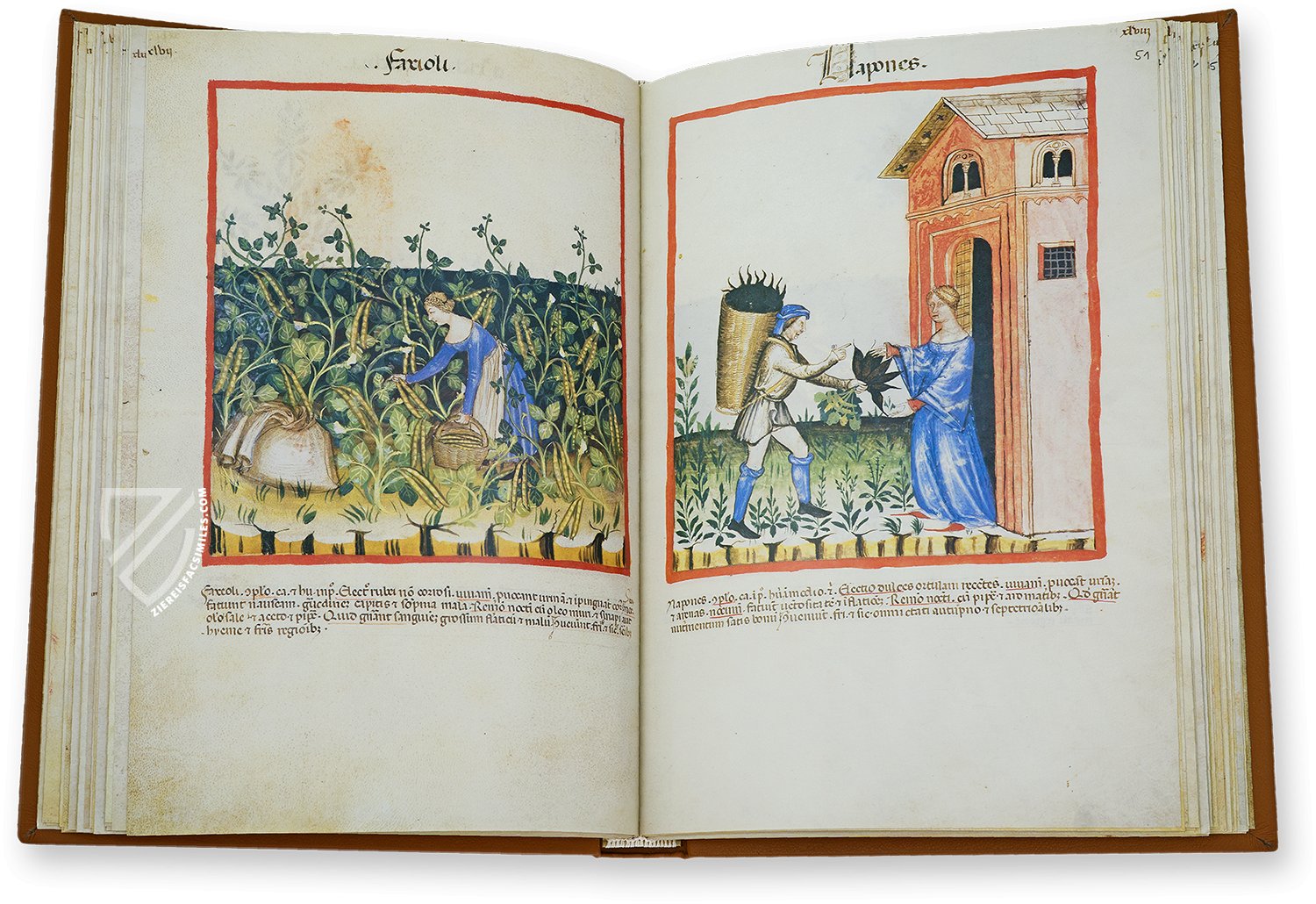
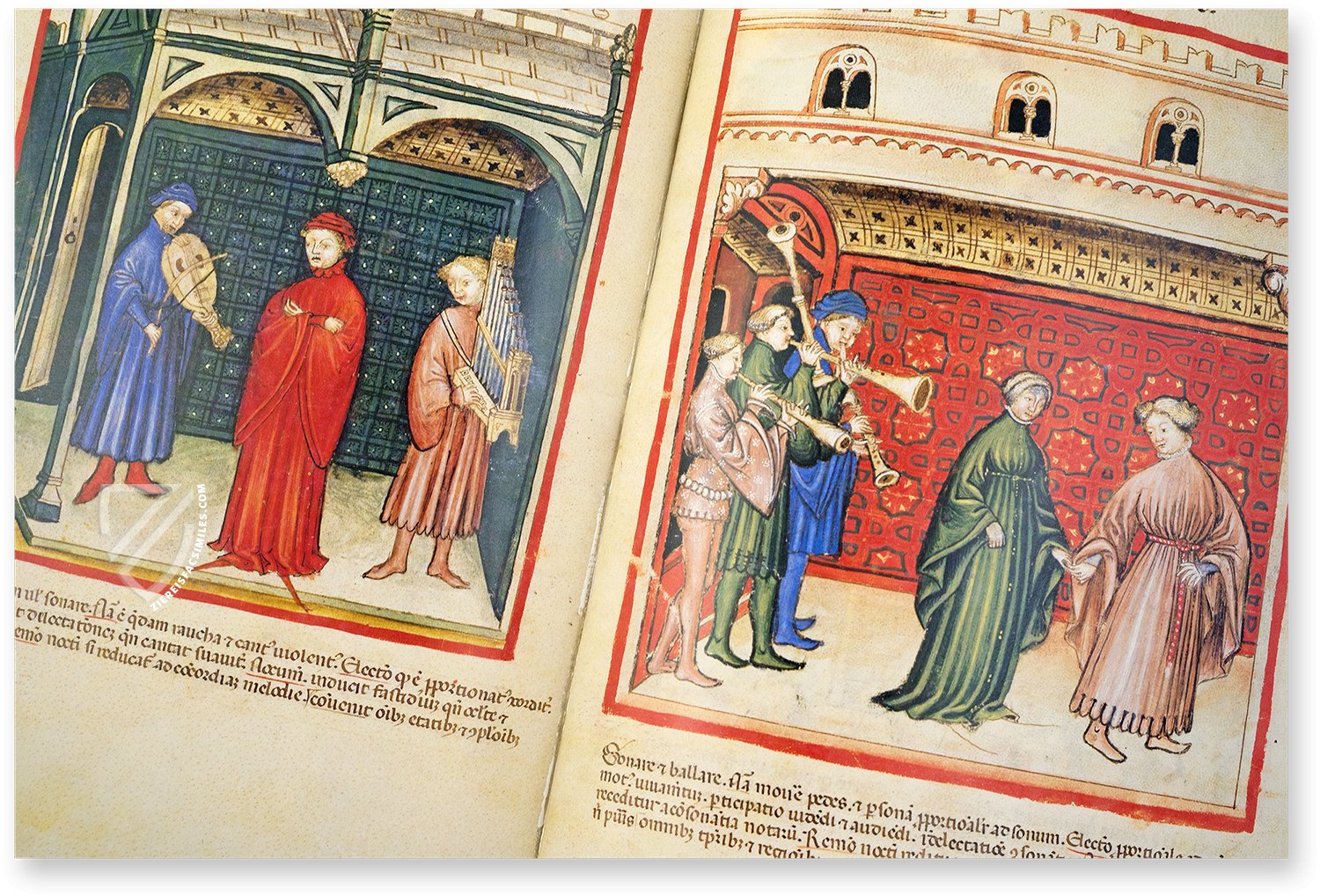
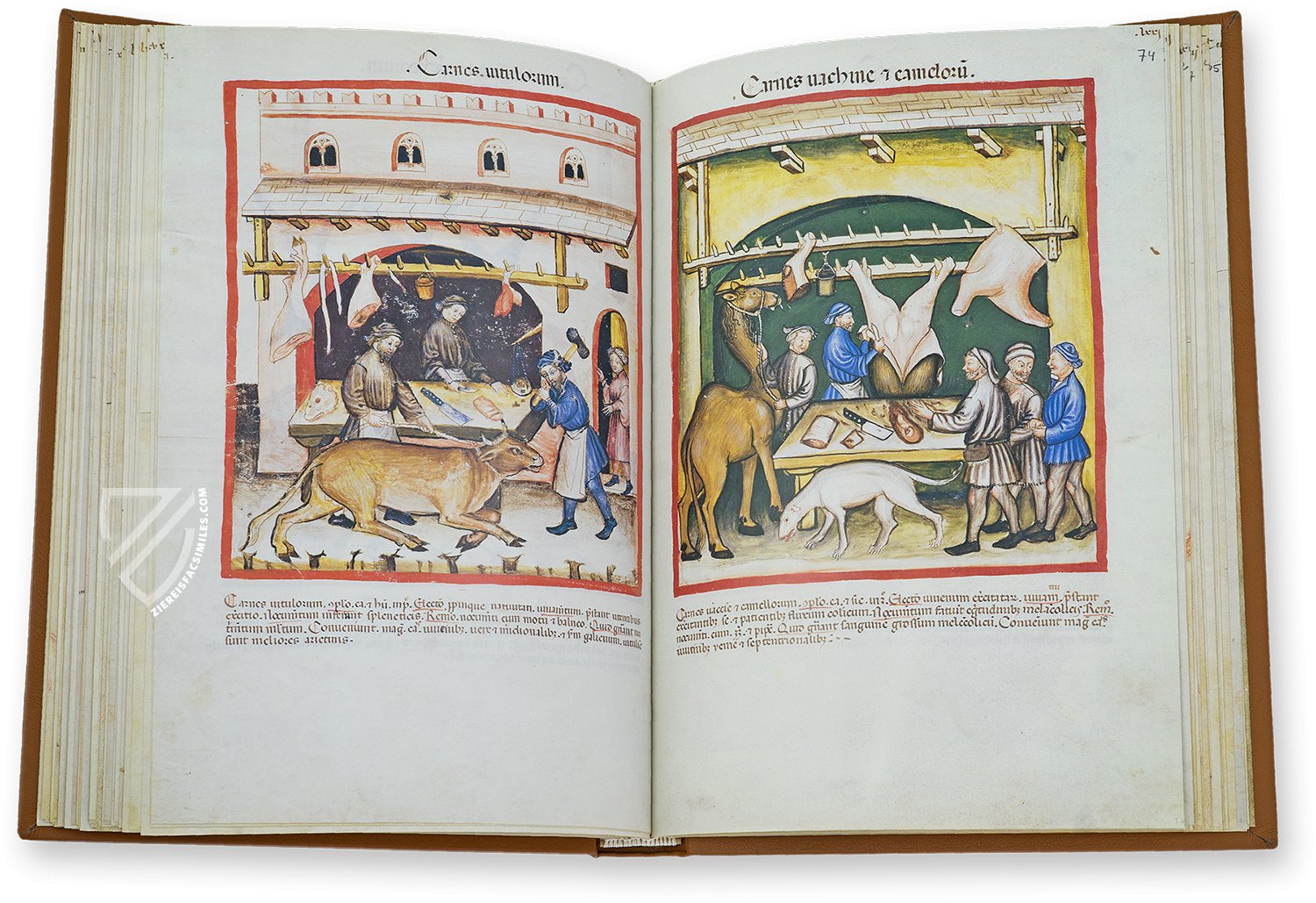
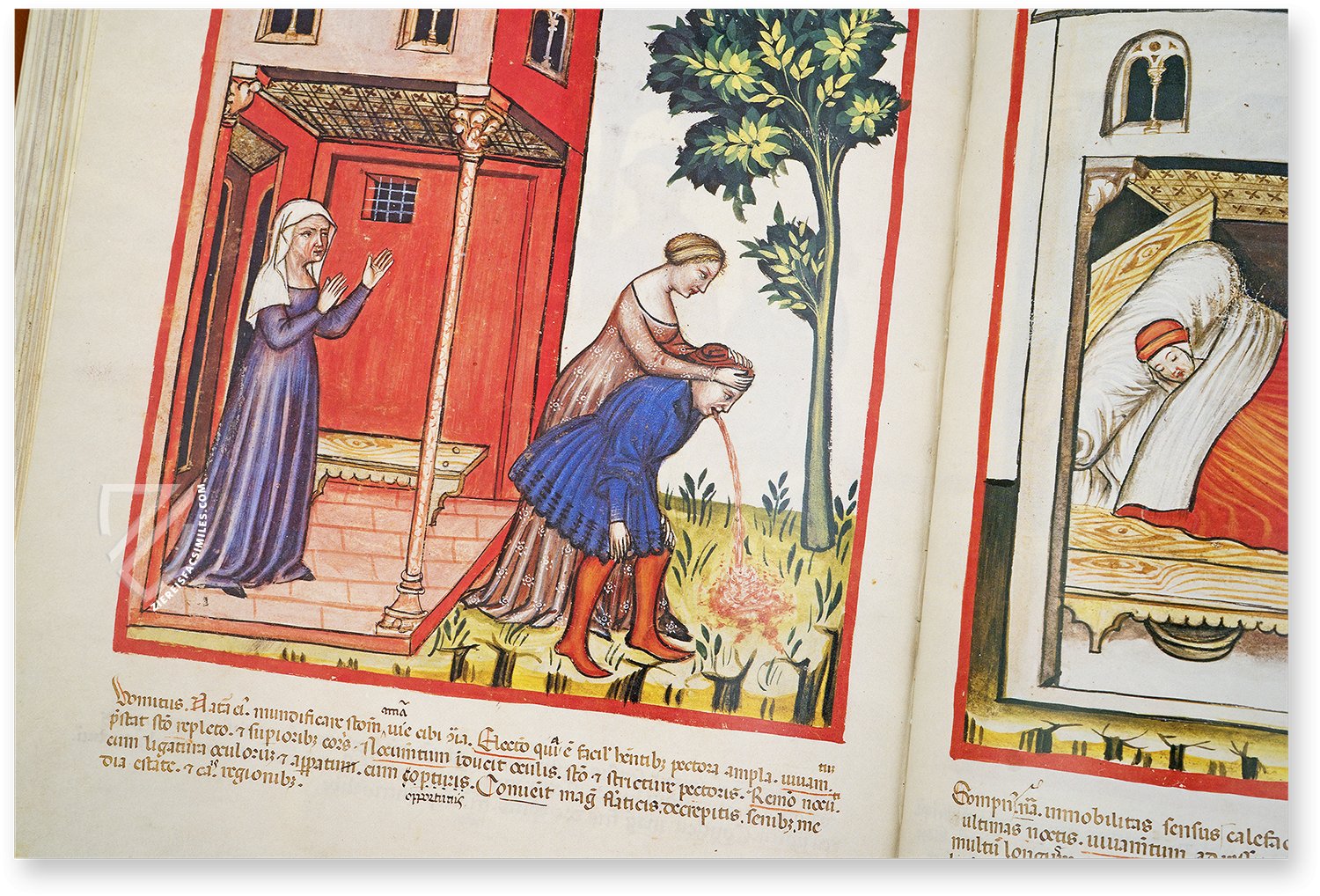
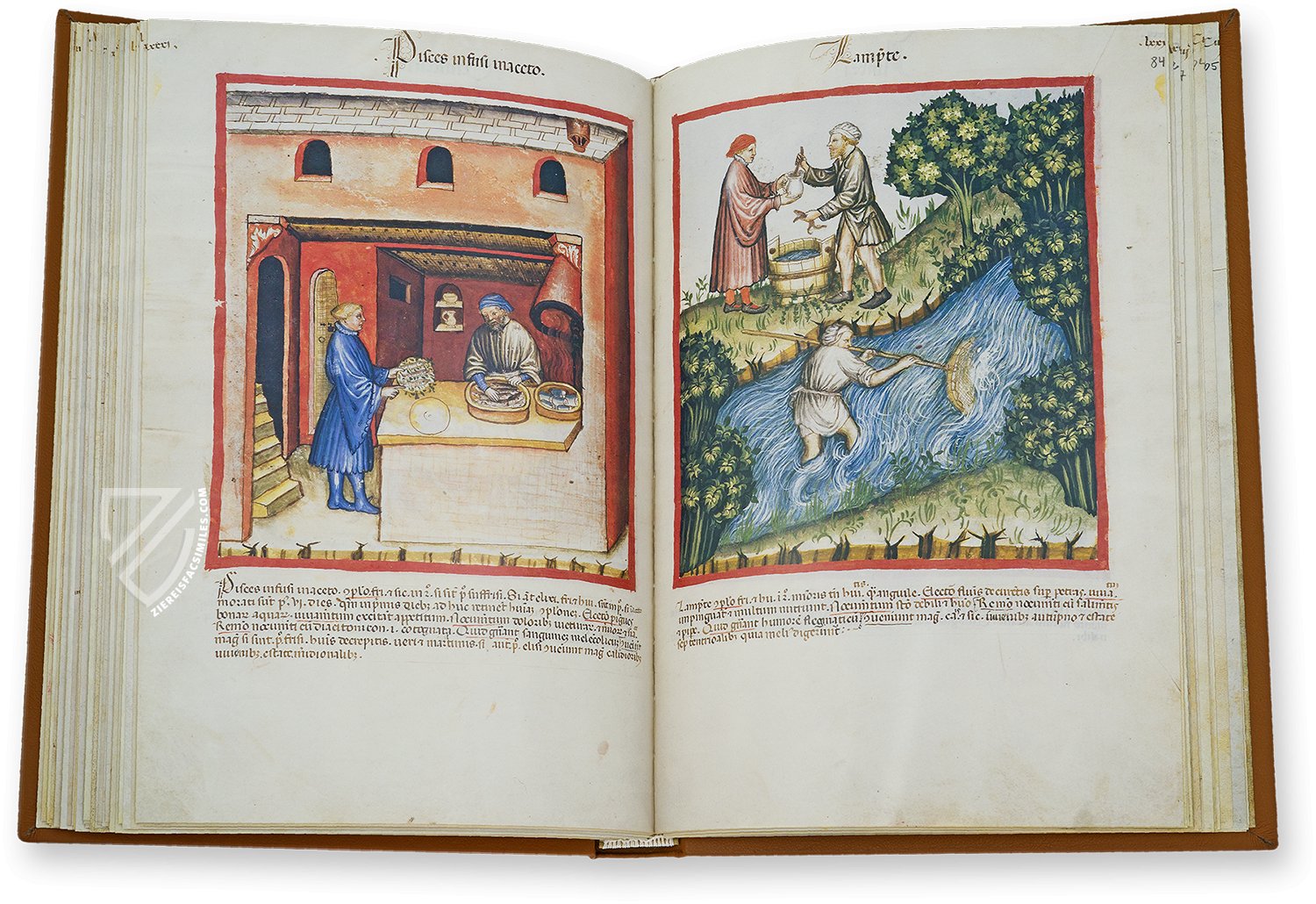
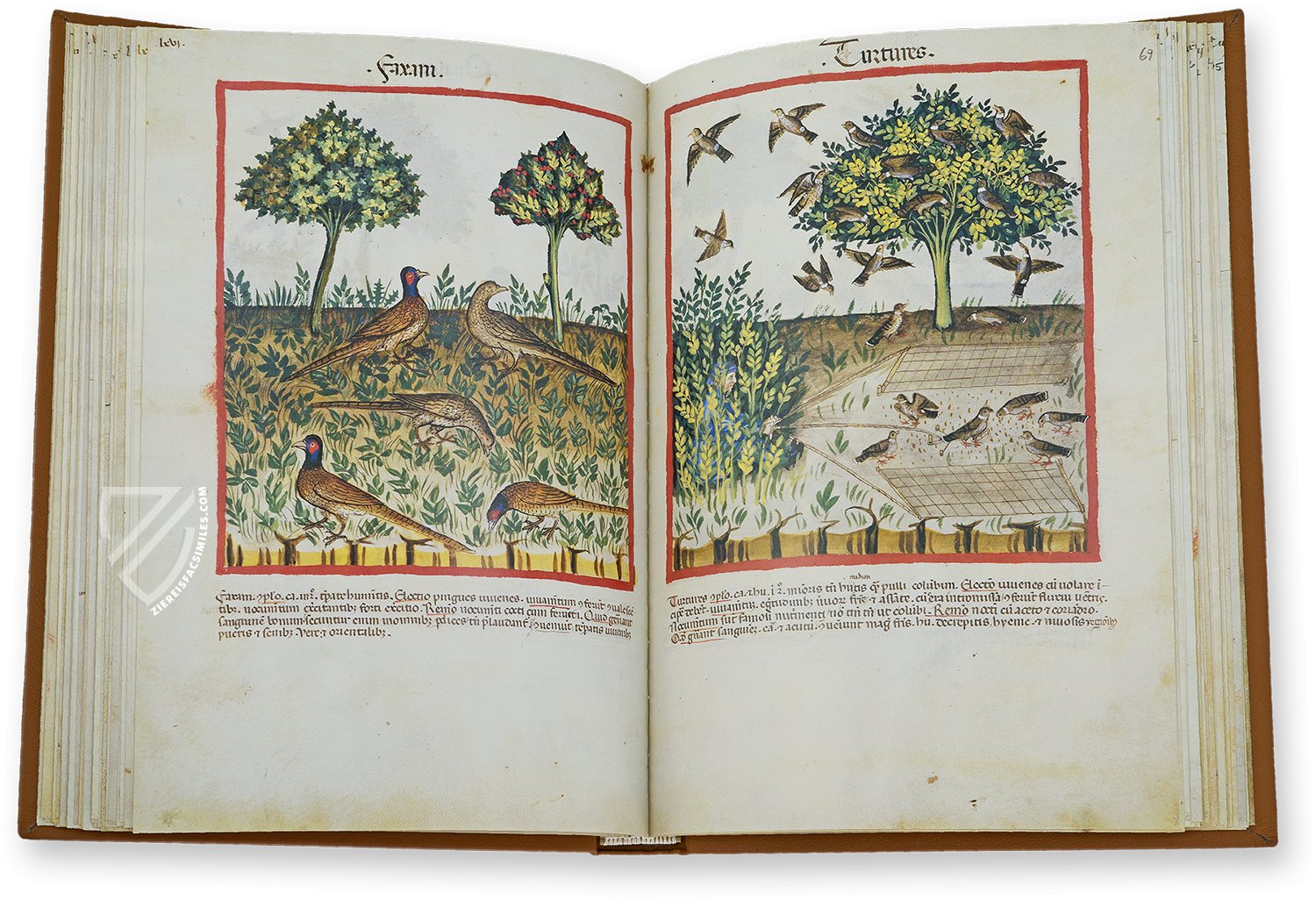
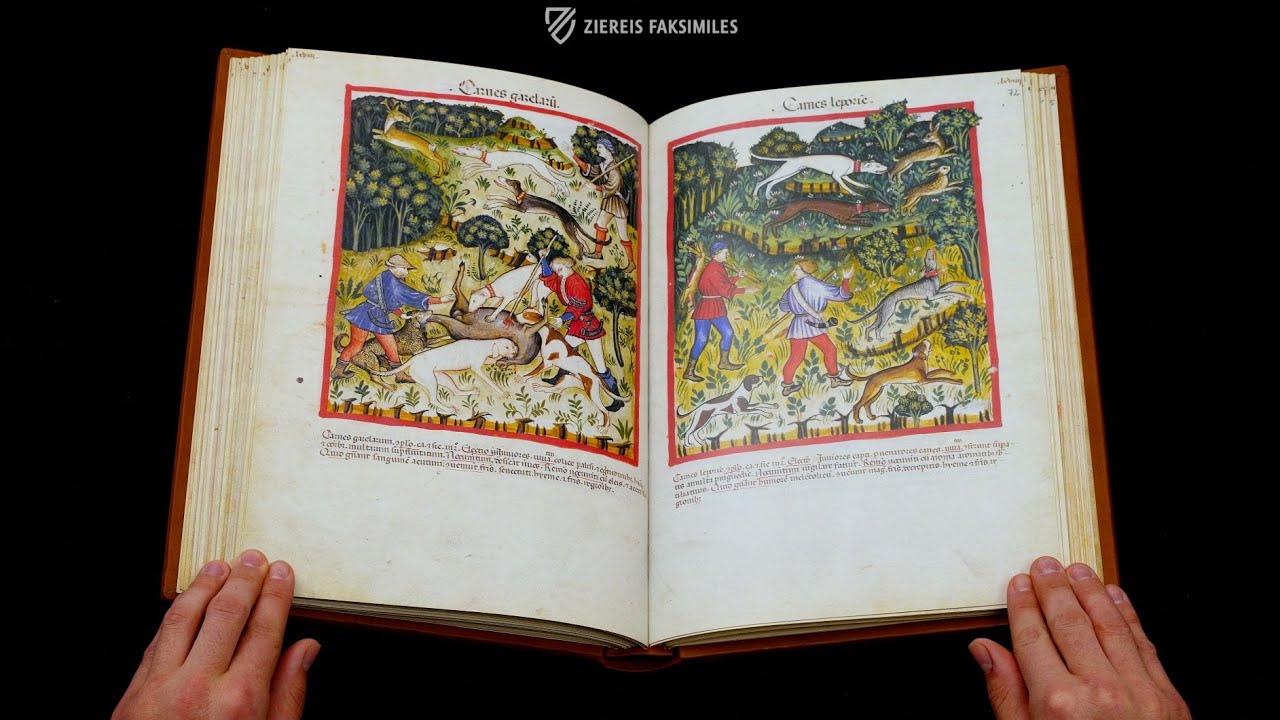
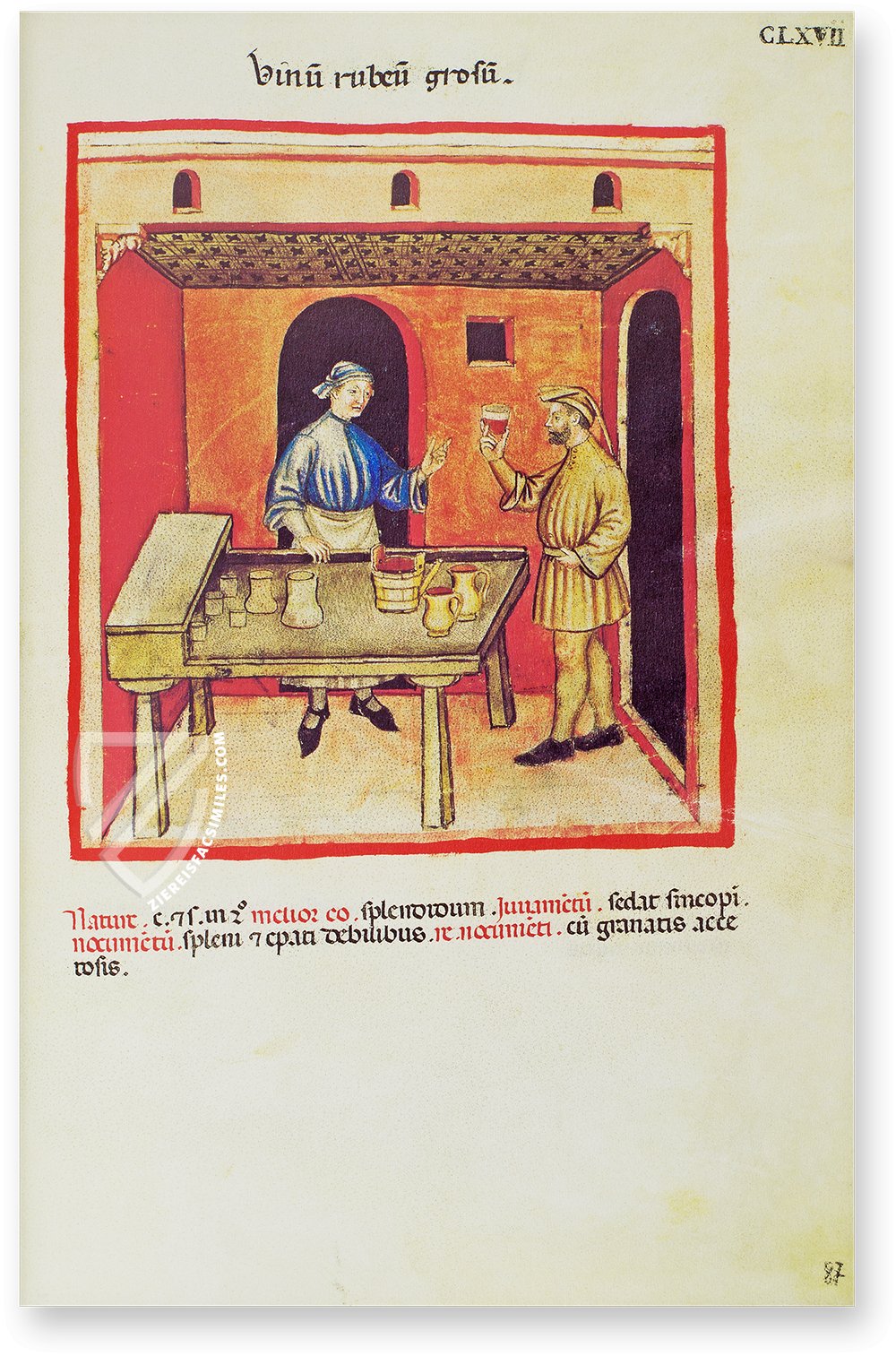
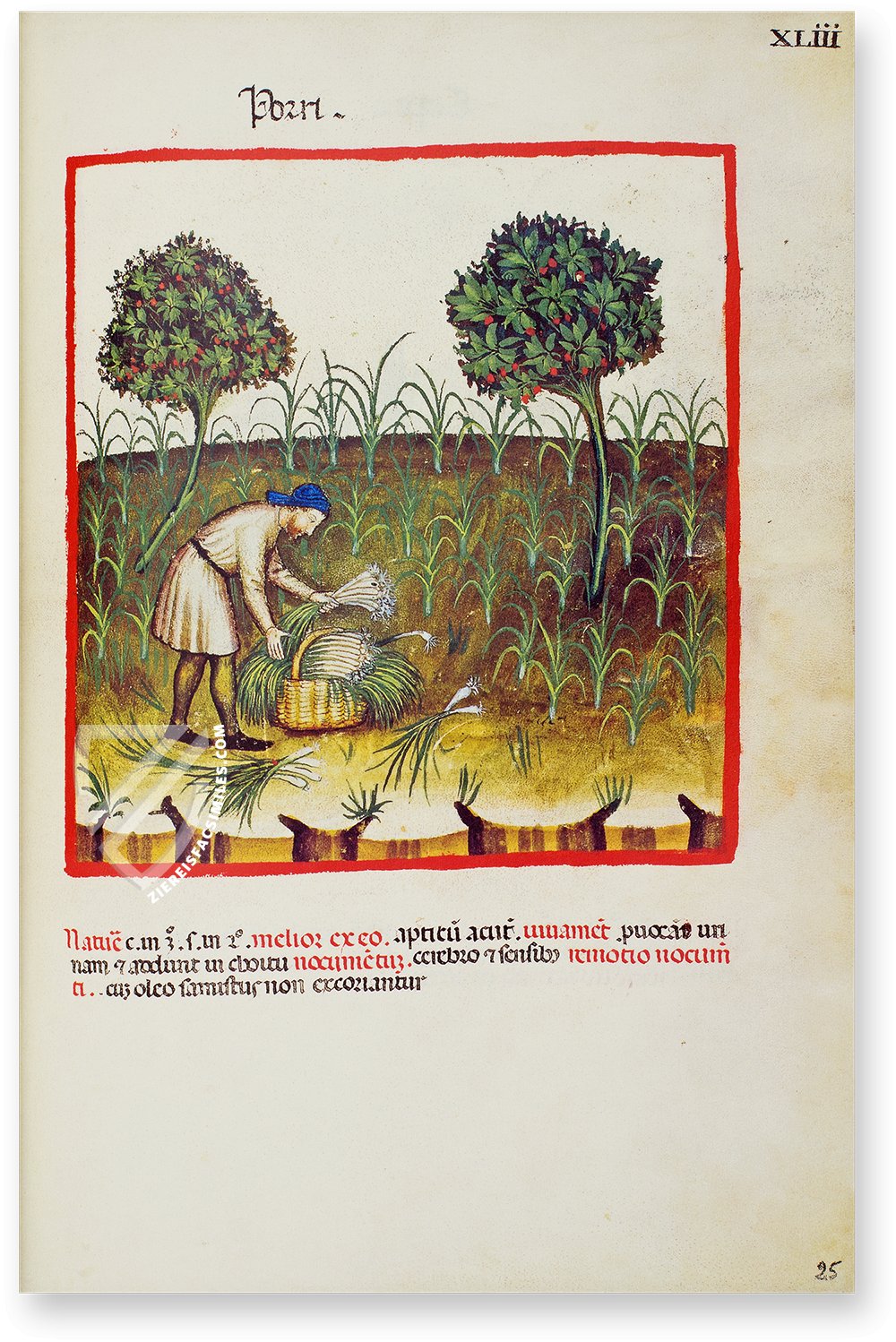
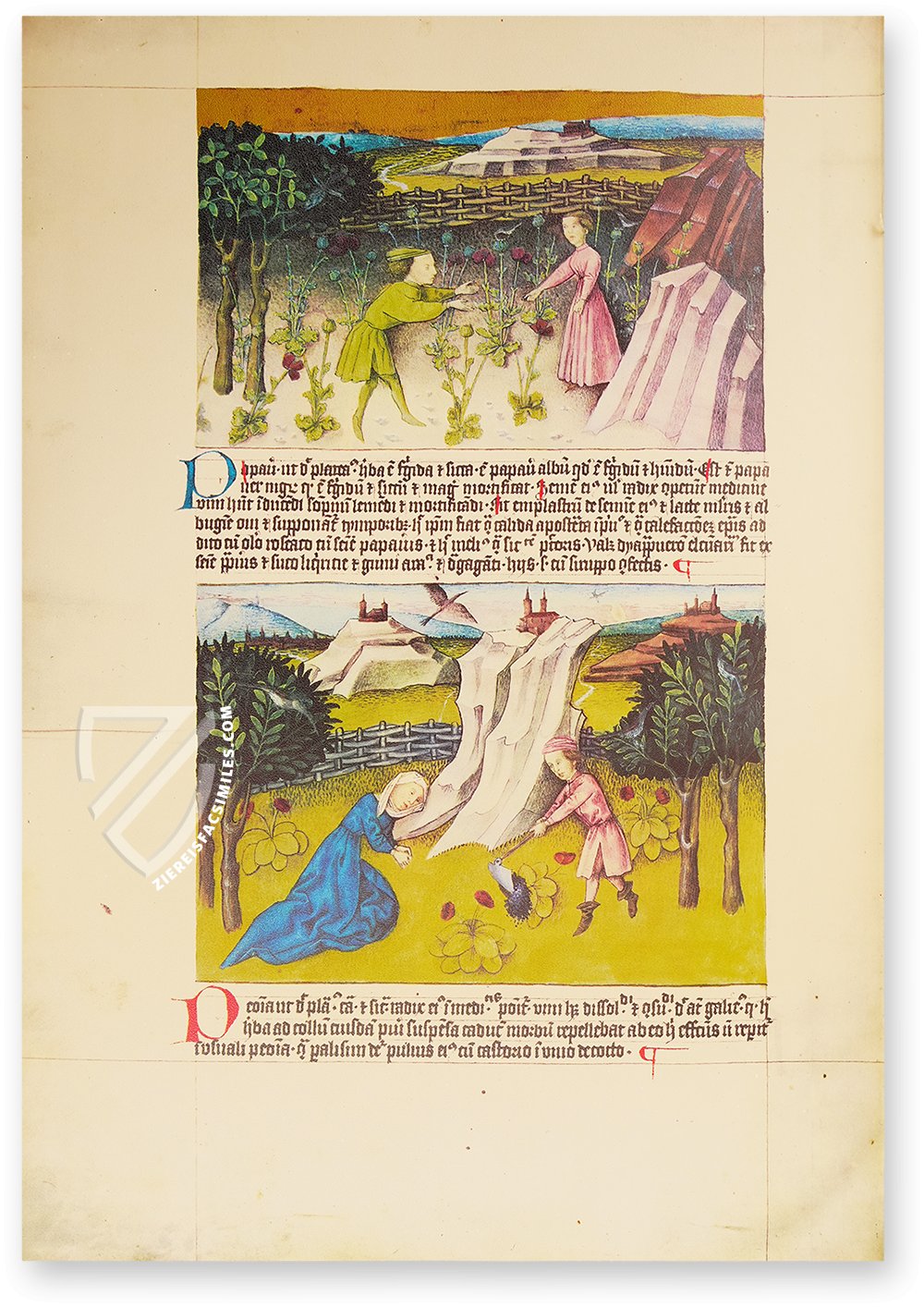
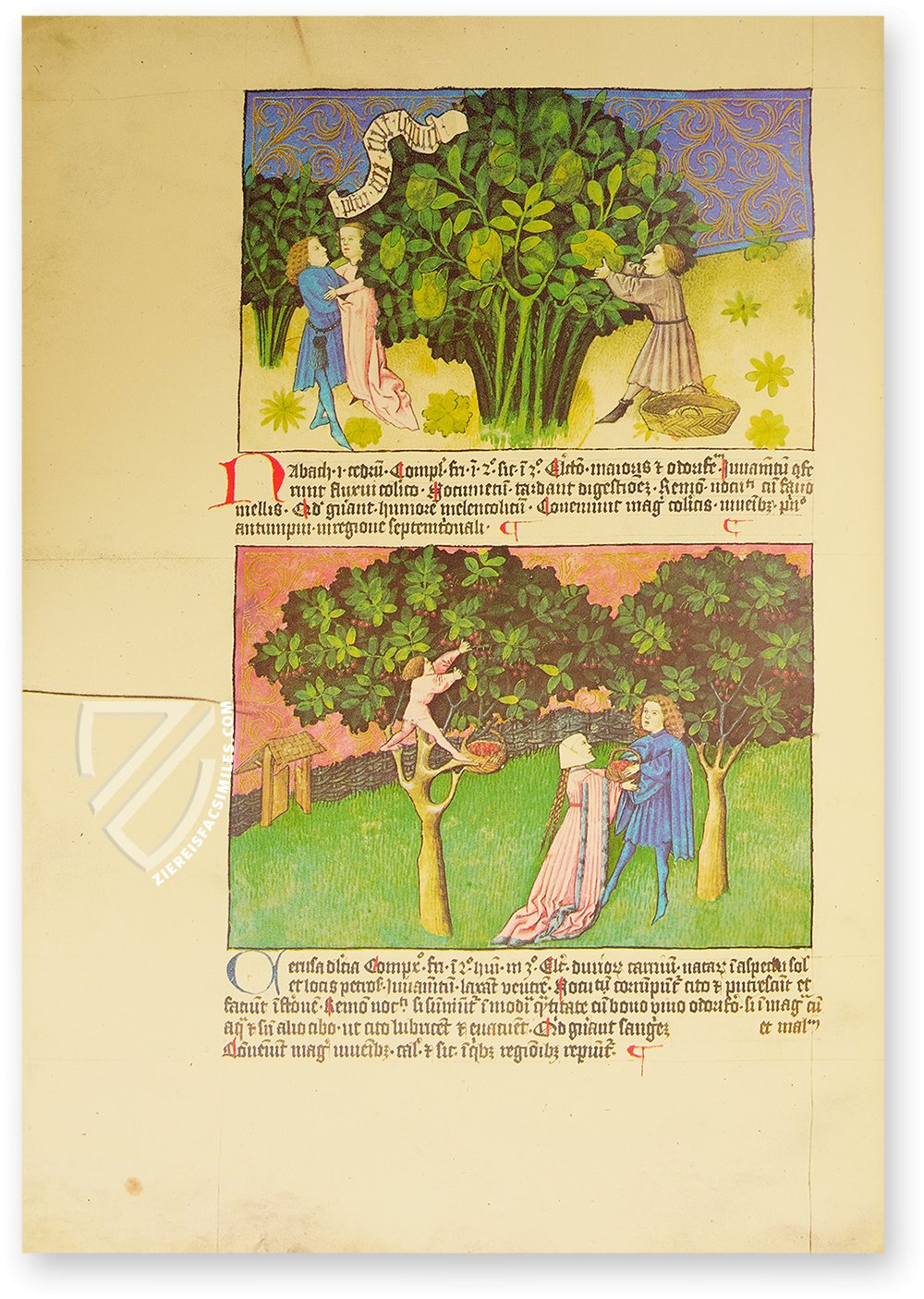
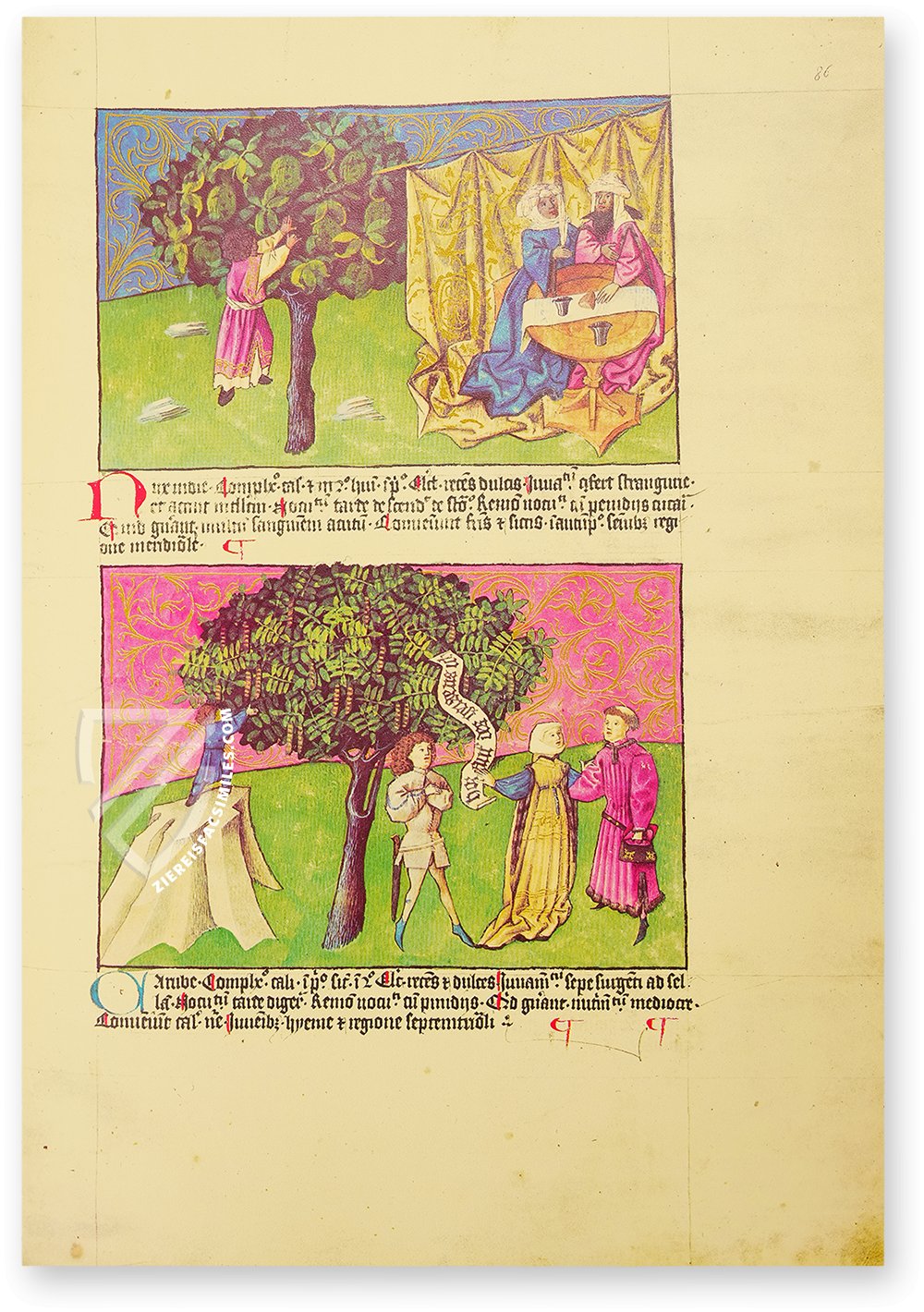
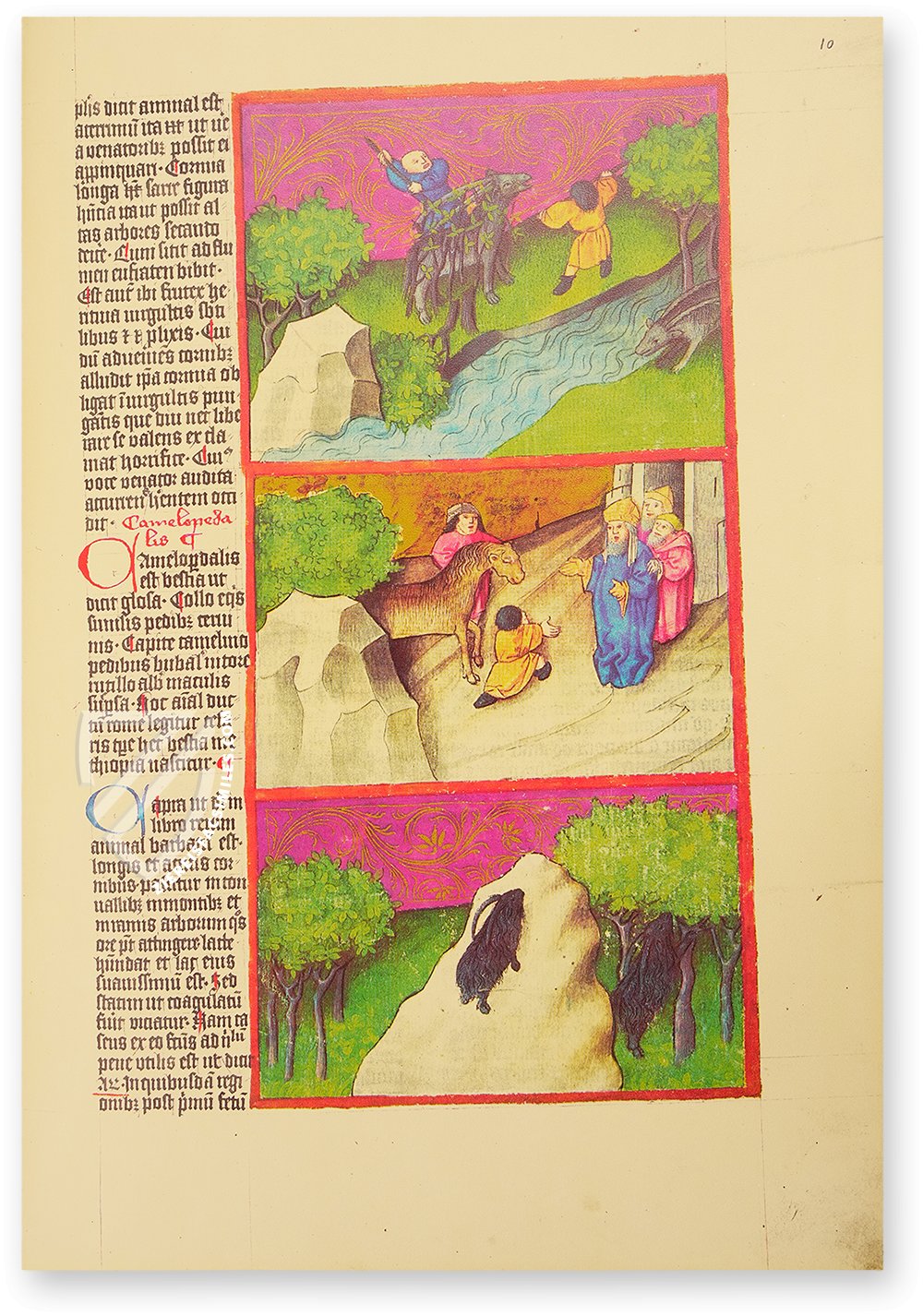
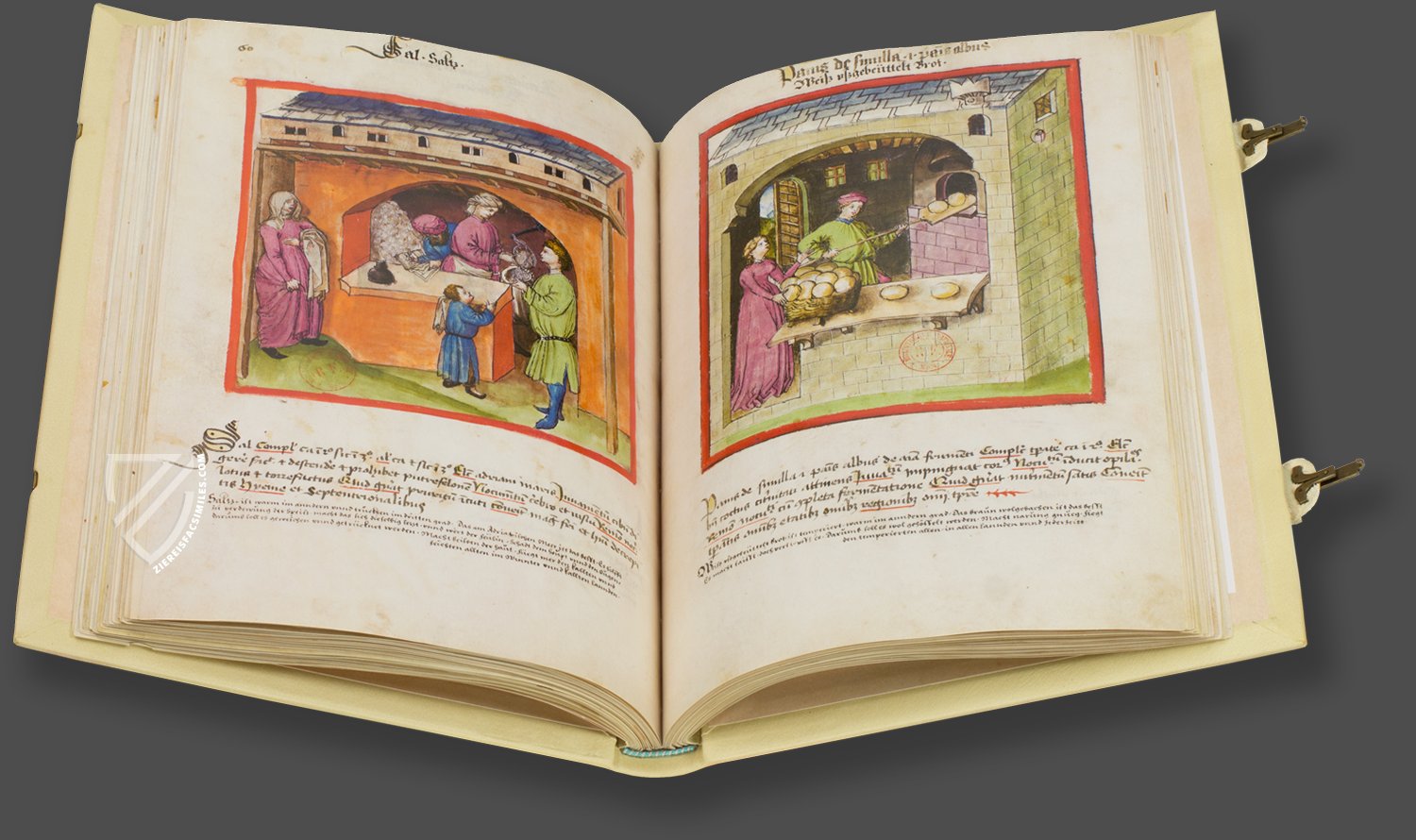
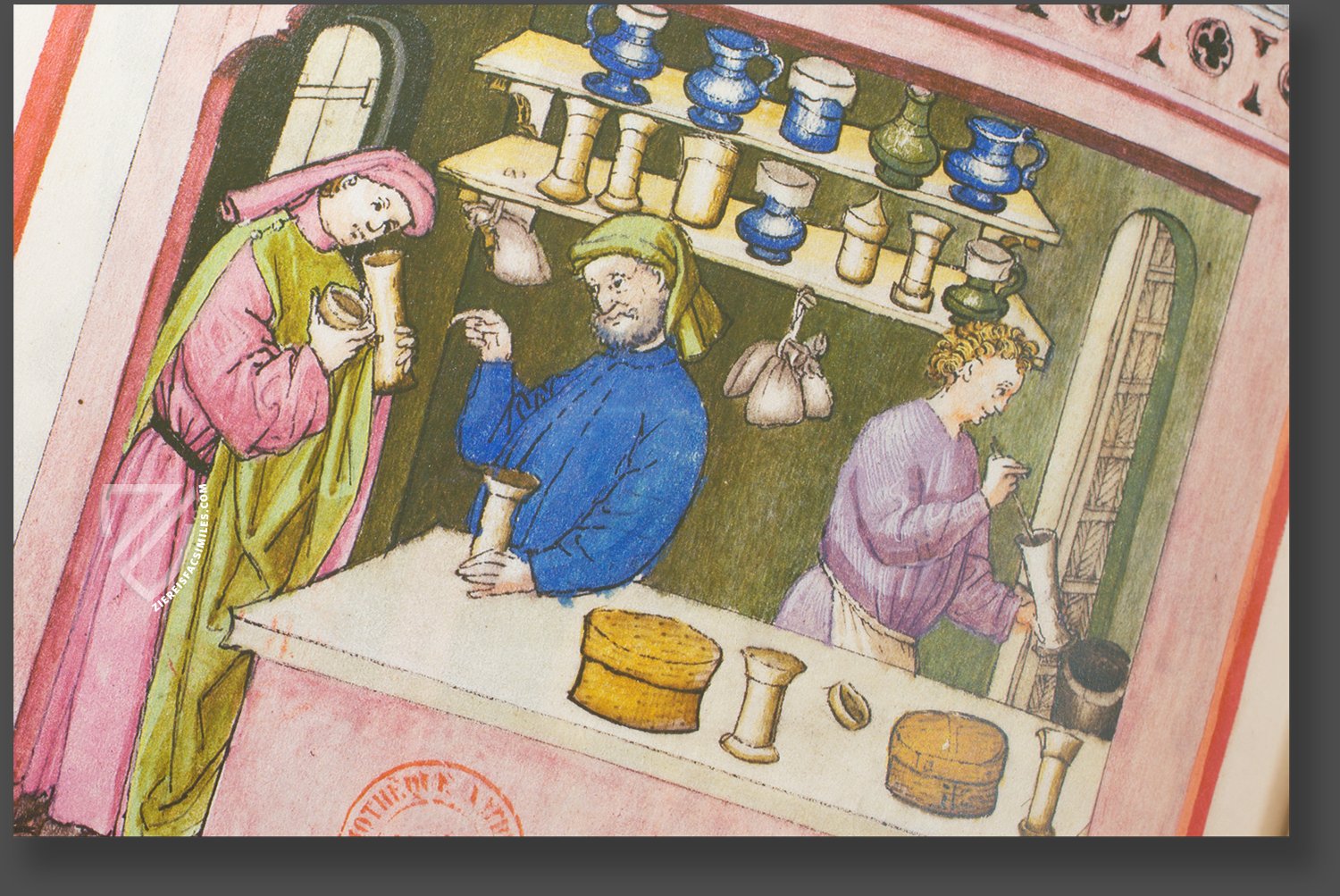
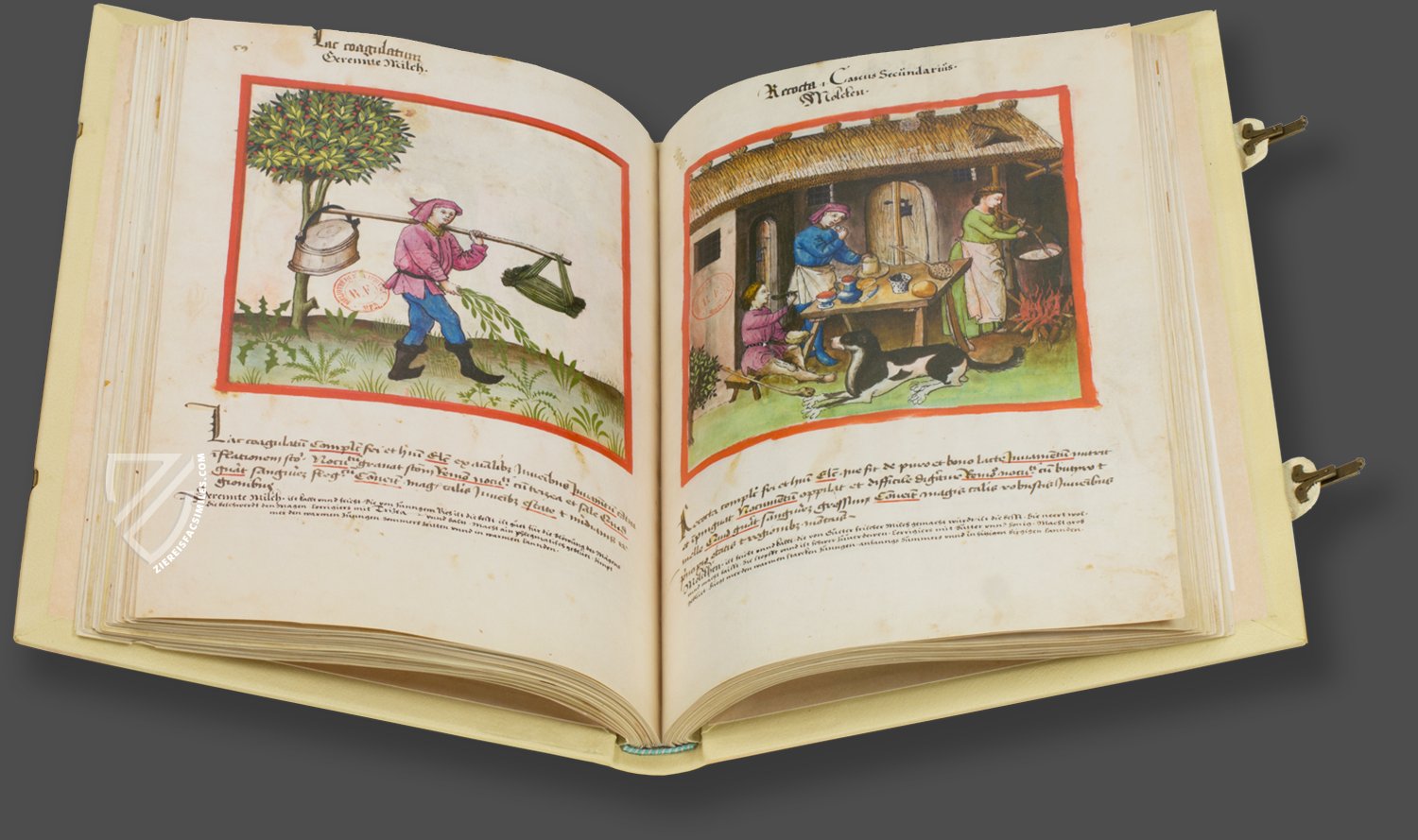
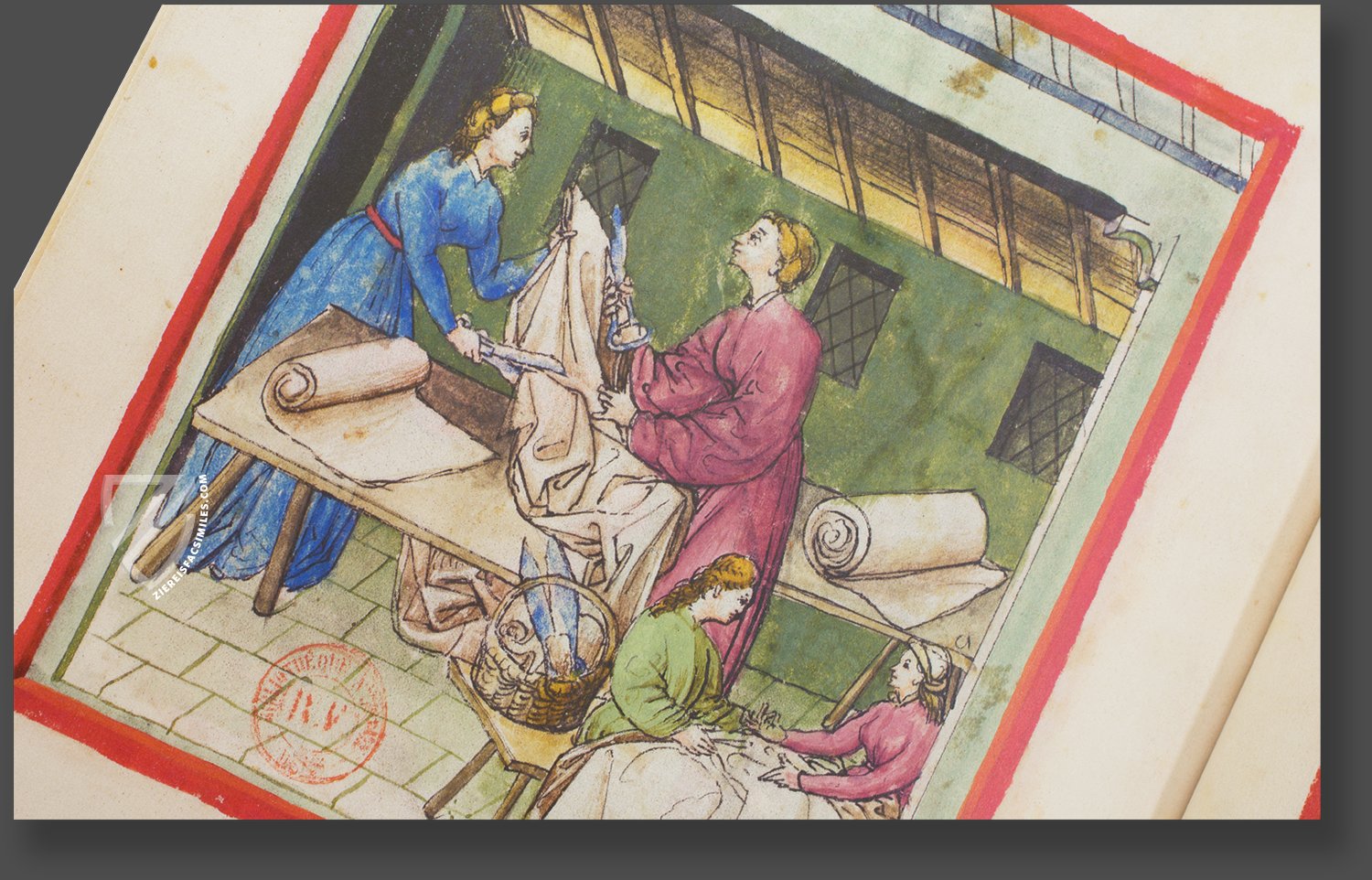
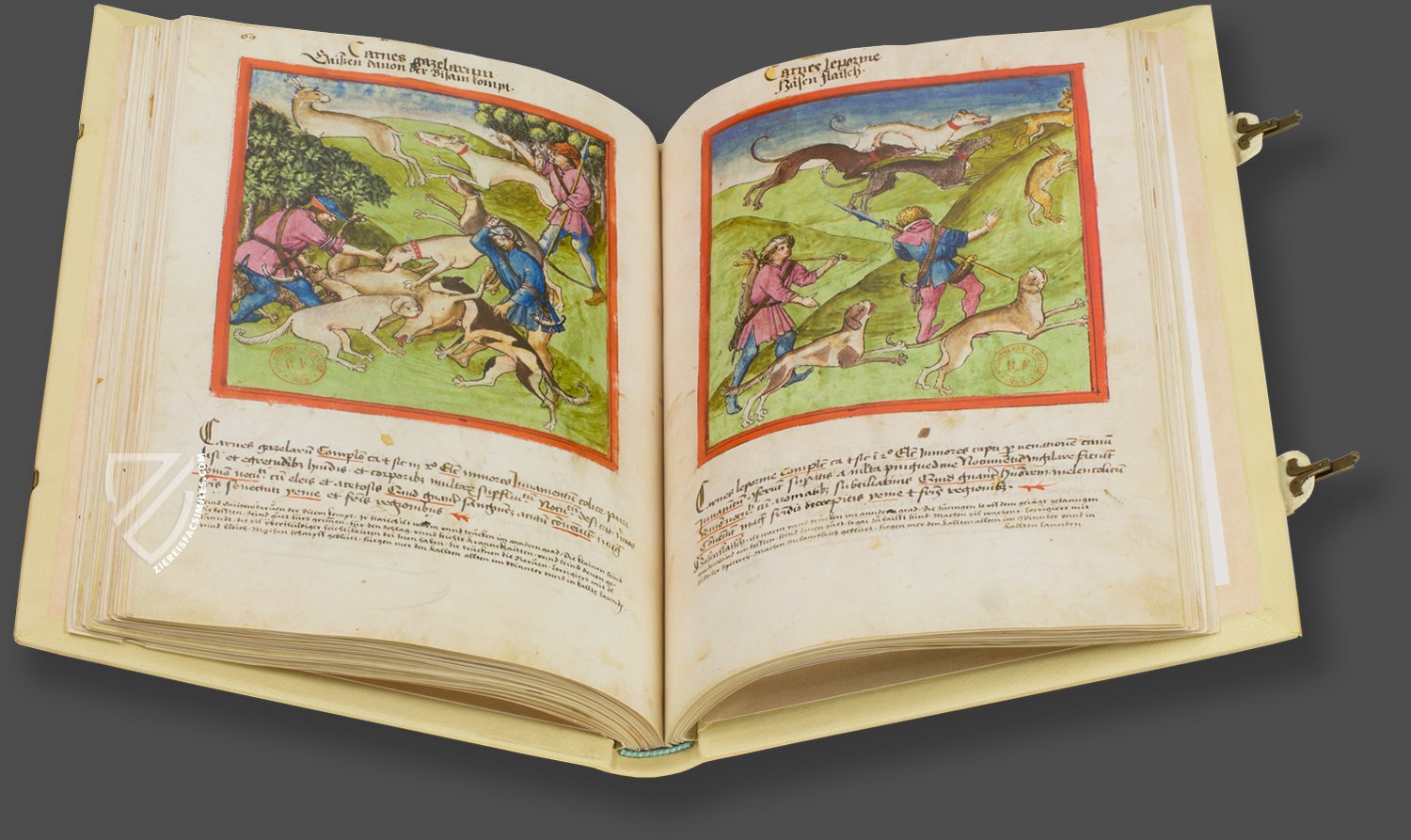
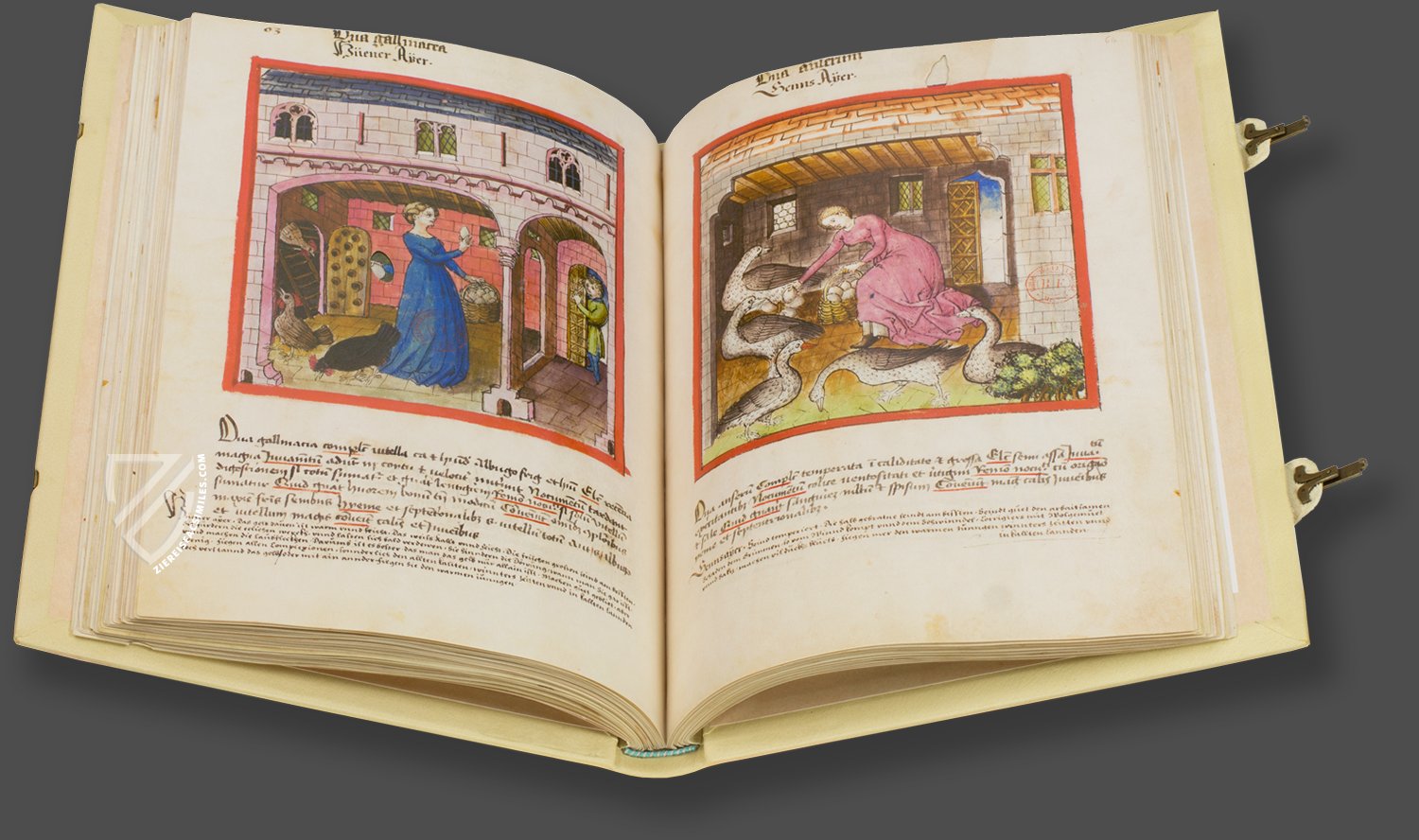
In the Tacuinum Sanitatis, also known as Theatrum Sanitatis, it is not the medical treatise that dominates the pages, but large, framed miniatures, which in most of the ten manuscripts of the work still preserved today are almost full-page in size. Each miniature depicts a plant, animal, or other health factor that influences human well-being–usually embedded in a scene depicting a related activity typical of the time. Among these are anise, figs, and millet; ducks, intestines, and eggs; the different seasons; activities such as singing and fencing; and even beverages and the four winds. The effects of the individual factors on the body and the recommended way of dealing with them are explained in concise, bullet-point captions. The specific health factor in question is specified in indicative headings.
To the facsimile
To the facsimile
To the facsimile
To the facsimile
To the facsimile
To the facsimile
To the facsimile
Experience more
Example: Sour Apples Against Heart Diseases
The Vienna Tacuinum Cod. Vindob. ser. nov. 2644, from which the miniature described above originates, lists two types of apples: sweet and sour apples. According to the text, the sour variety depicted here–mala acetosa–has a cold and dry complexion of the second degree and is said to help with heart problems, with those from Pontus being preferable. However, they could also damage the joints and nerves, which is why it is recommended that they be consumed together with lemon-colored wine, which is said to avert this damage. Sour apples would also be particularly beneficial for people with a phlegmatic or choleric temperament, for young people, in summer, and in southern regions.
To the facsimile
To the facsimile
Unique Insights into the Way of Life in the Late Middle Ages
To the facsimile
To the facsimile
To the facsimile
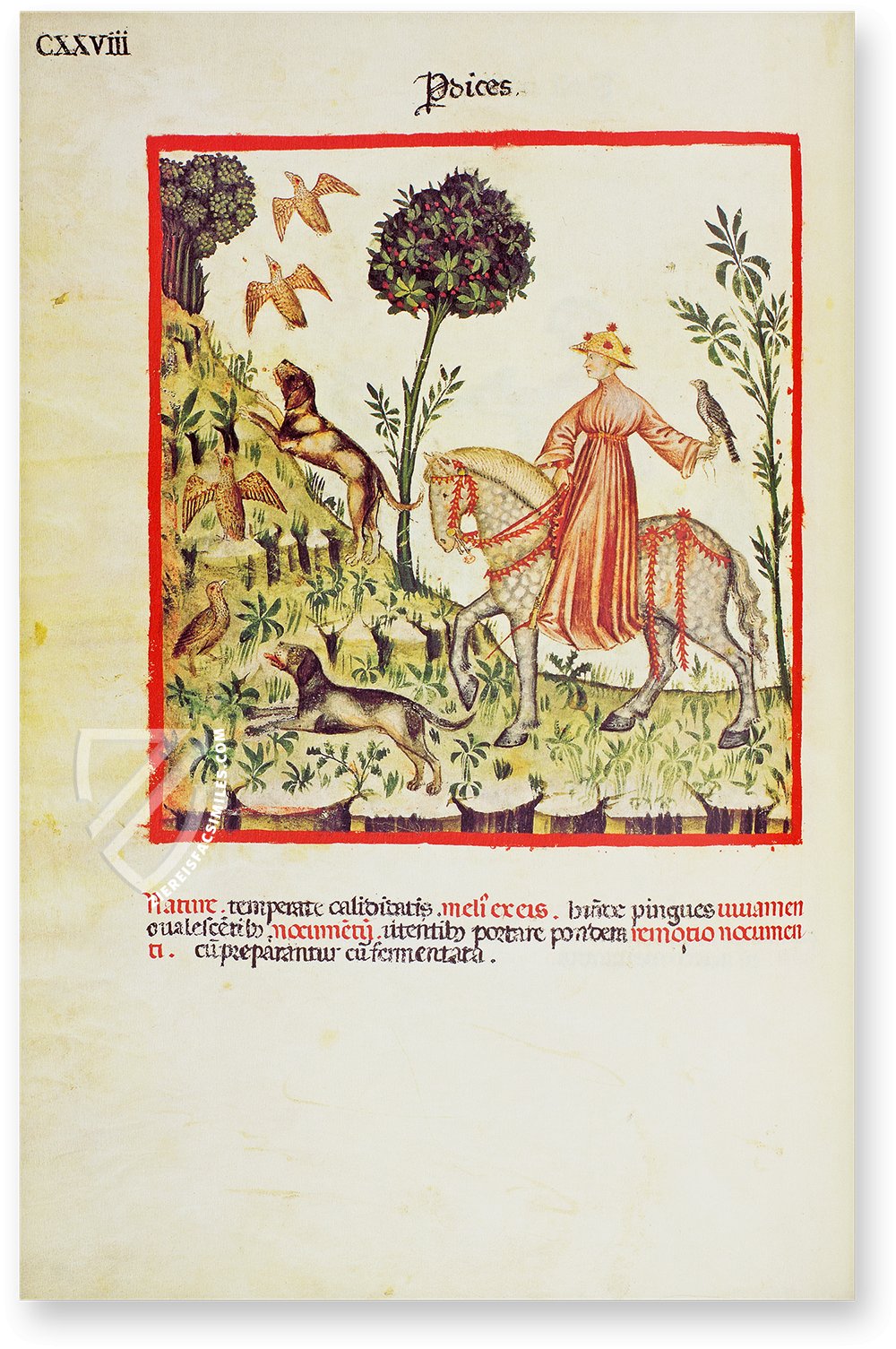
The large and numerous miniatures in the preserved Tacuina Sanitatis offer a fascinating panorama of life in Italy at the end of the Middle Ages, thereby revealing a unique aesthetic. While the texts provide insights into the medical teachings of the time, the miniatures depict cultural technologies, fashion, food, communication, and much more. The lifestyle propagated, with activities such as wine tasting, fencing, and music-making as well as a wide range of food and luxury items allows conclusions to be drawn about the everyday life of the aristocracy in particular, but also about the rural agriculture and gardening of the time.
The miniatures depict the paradisiacal conditions that were hoped for under ideal rule
However, the manuscripts should also be seen in the context of famines, war, and epidemics that ravaged the region. The images depict rich harvests and healthy, vigorous people of various social classes. They thus reflect not only an ideal vision of nature and the sustenance of the population, but also the result of perfect rule. In this way, they presented their aristocratic owners and users with a paradise-like scenario that they and their subjects could otherwise only dream of.
To the facsimile

Experience more
From Baghdad via Sicily to Milan
To the facsimile
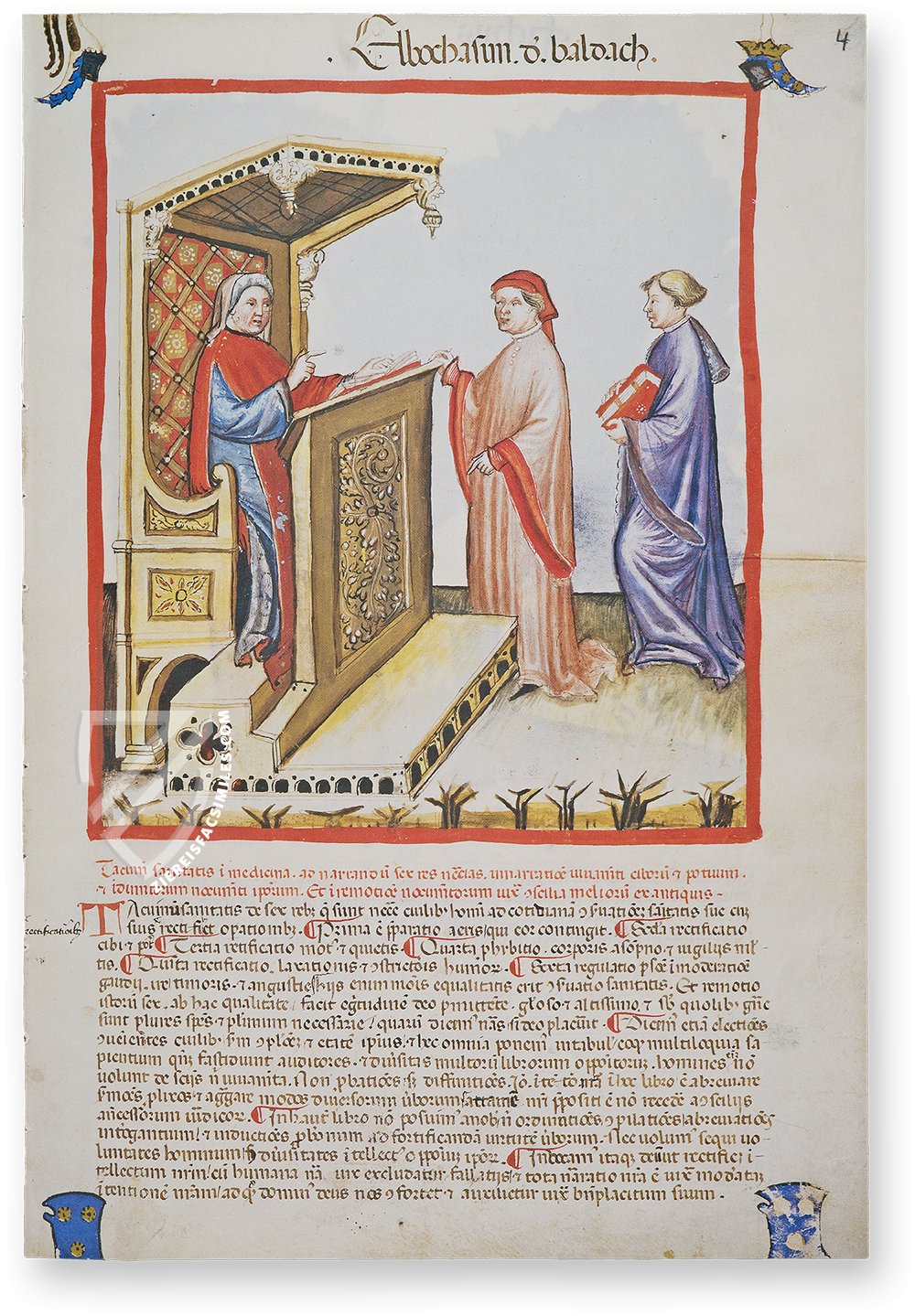
The origins of the Tacuinum Sanitatis lie in Baghdad, where the Arab court physician Ibn Butlan created a comprehensive tabular compendium in the 11th century that brings together the effects of 280 health factors on the human body and corresponding consumption recommendations. Two centuries later, this taqwim as-sihha reached Europe via Sicily. There, it was translated into Latin at the court of King Manfred in Palermo and subsequently widely adapted. The original tabular form of the work was preserved in many Latin manuscripts until modern times.
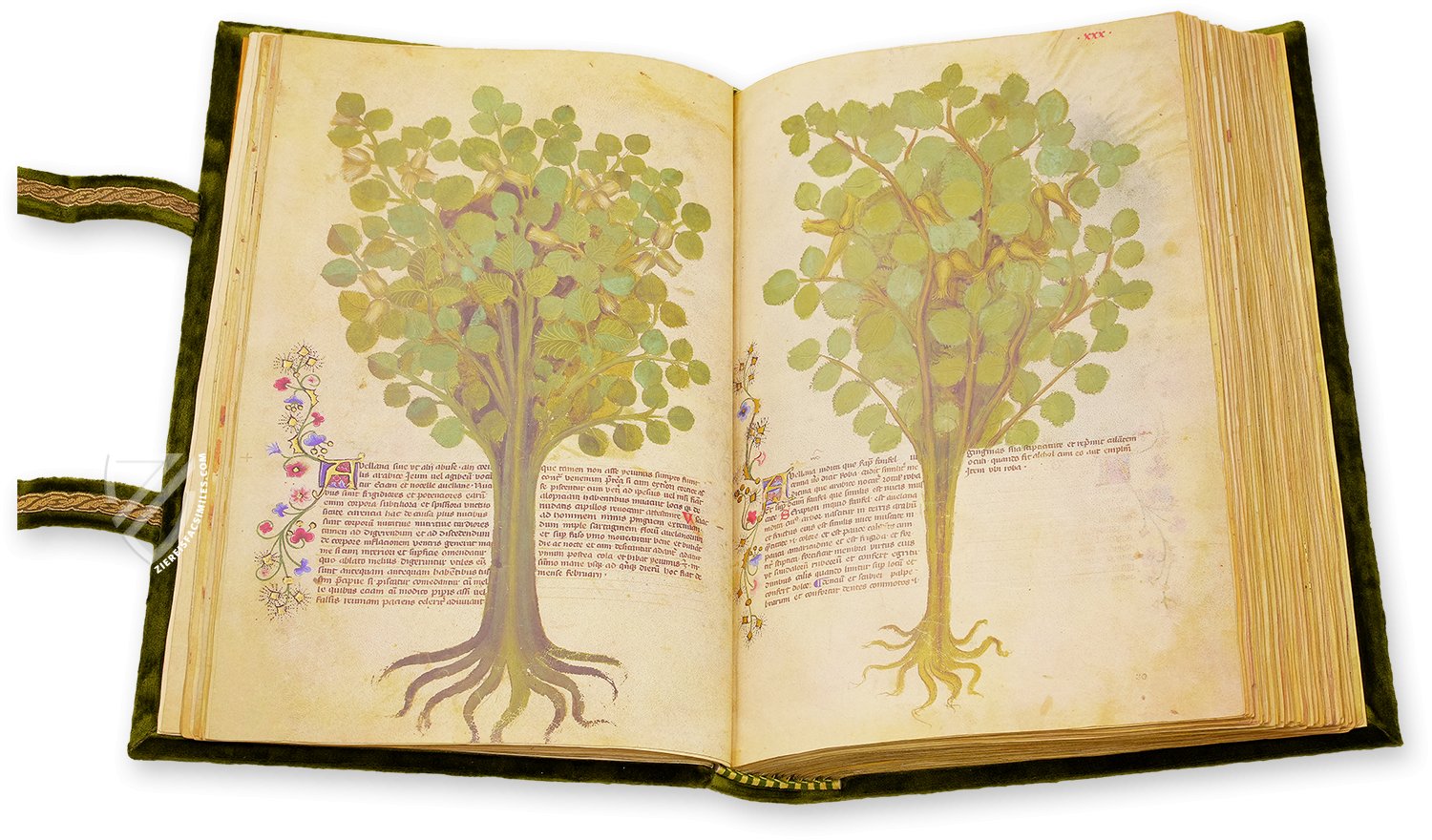
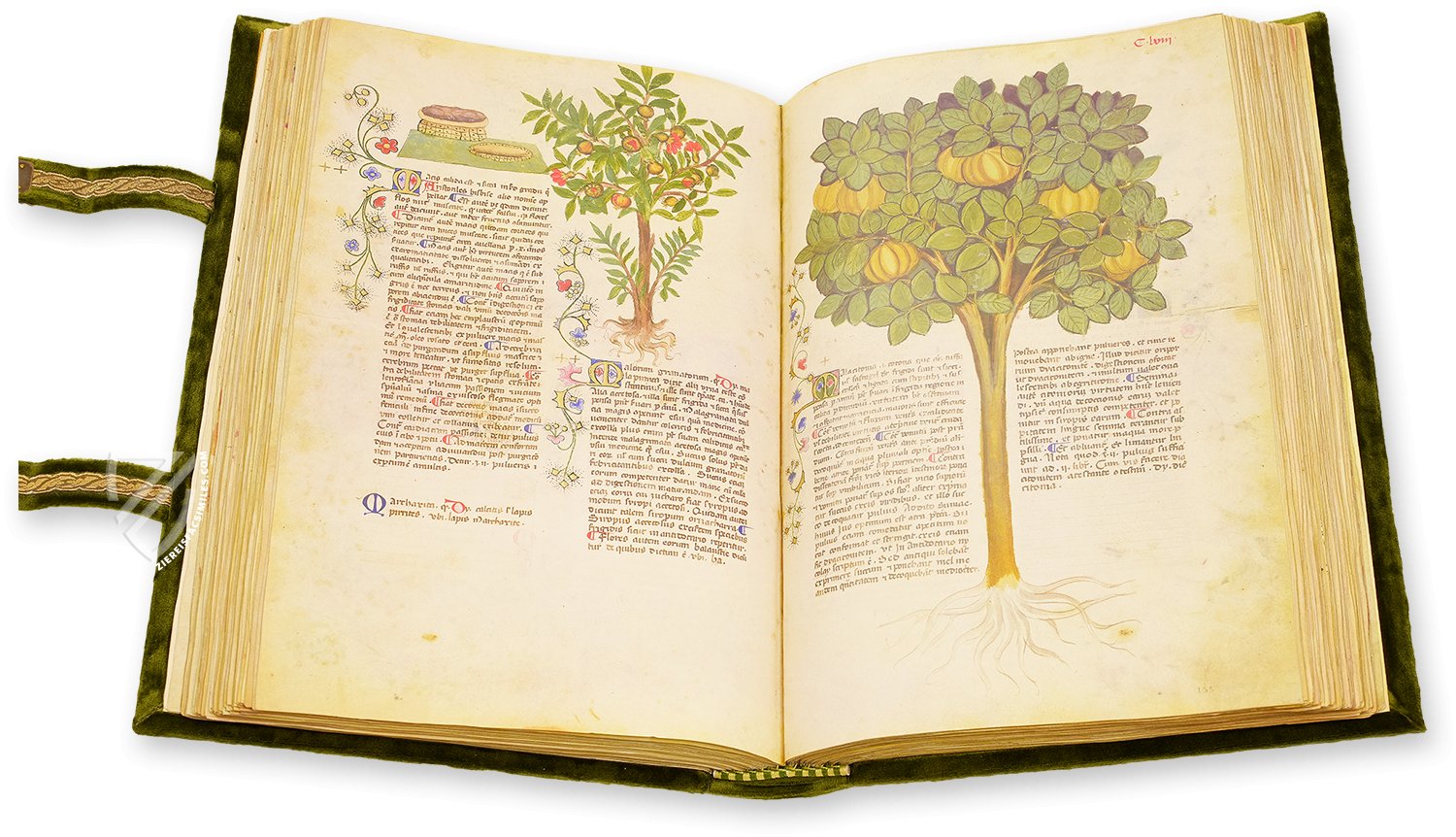
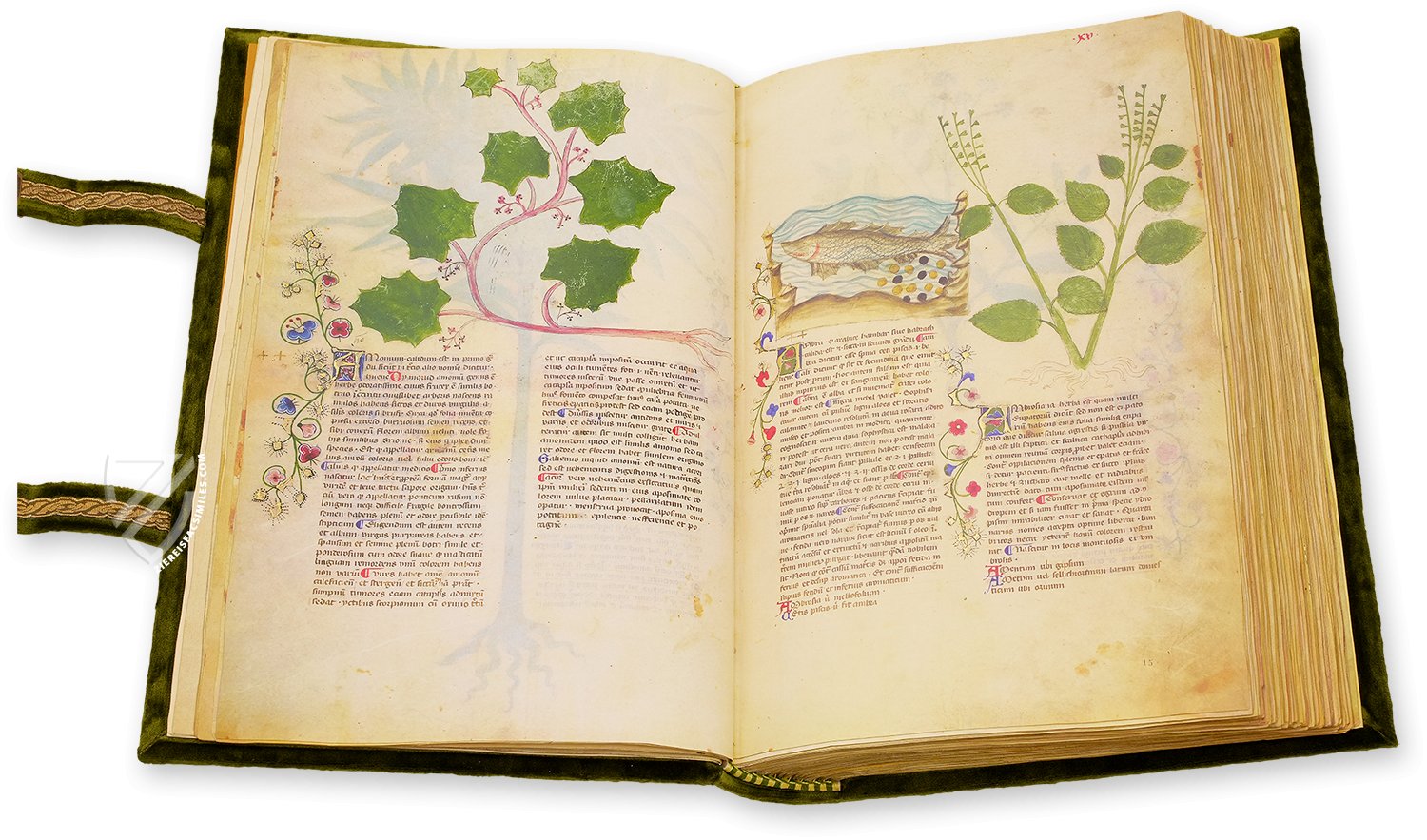
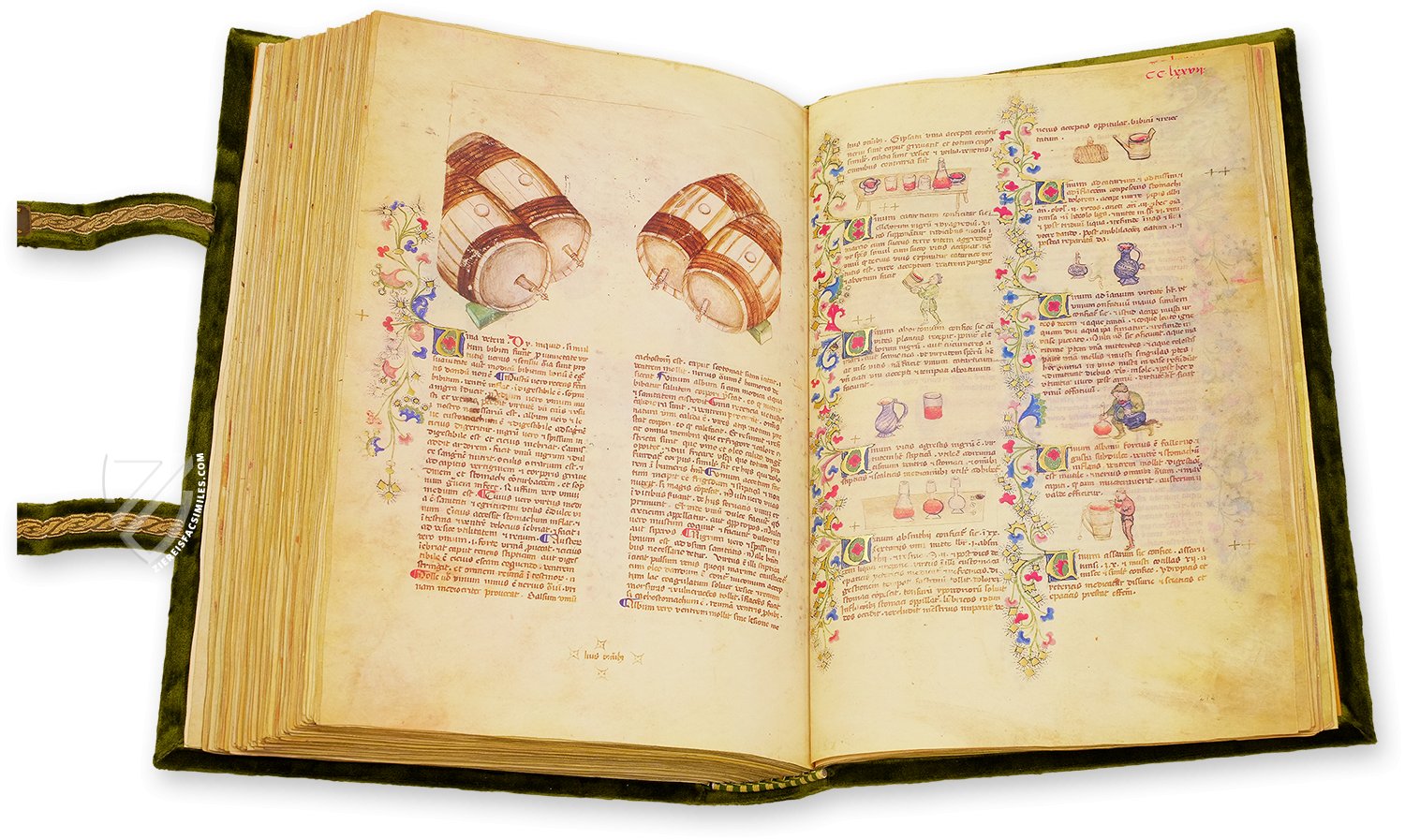
The elaborate and costly illumination and the accompanying abridgement of the text was a special development in Lombardy, which probably originated at the Visconti court in Milan. There, the work was incorporated into the famous Historia Plantarum, the medical encyclopedia for Emperor Wenceslaus, and illustrated for the first time. Giovannino de' Grassi's workshop was possibly responsible for the impressive illumination of the manuscript. These book artists thus laid the foundation for the illuminated Tacuina, whose miniatures are largely based on this manuscript.
To the facsimile
To the facsimile
To the facsimile
To the facsimile
Experience more
Ibn Butlan's work spread throughout late medieval Europe in numerous illuminated and unilluminated monographs, composite manuscripts, and compilations
To the facsimile
To the facsimile
To the facsimile
To the facsimile
To the facsimile
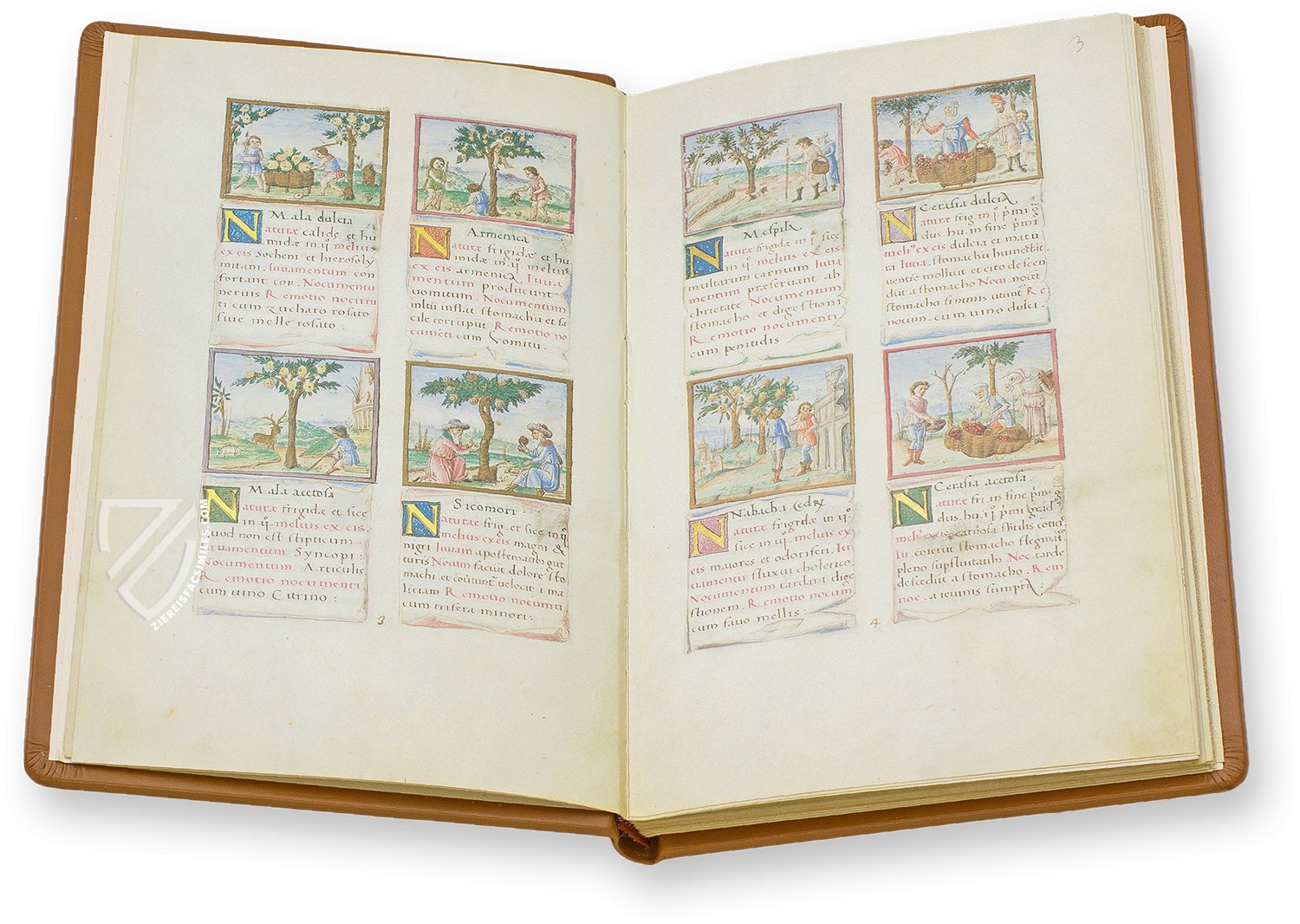
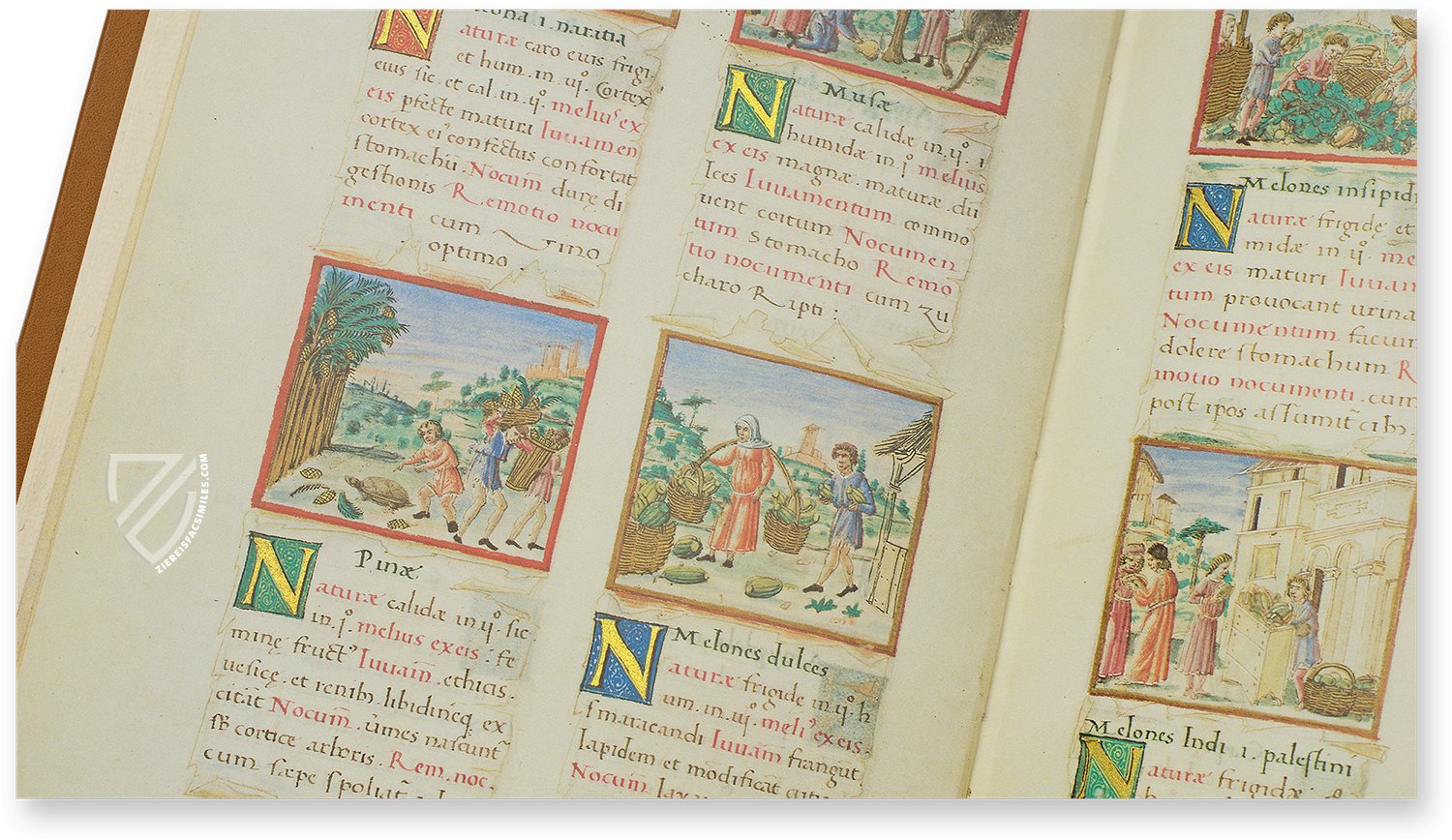
From northern Italy, the new genre soon spread to neighboring regions and was adapted in many ways. Sometimes parts of the work were included in anthologies and combined with other writings. For example, Codex C-67 from the Biblioteca Universitaria de Granada contains a compilation from the Tacuinum Sanitatis and Thomas of Cantimpré's (1201–1272) much older Liber de natura rerum, which is less a health guide and more an encyclopedic, moralizing natural history with scattered medical advice. Thus, both texts complement each other in this wonderfully illuminated manuscript.

Experience more
Even Back Then, the Motto Was: Prevention Is Better Than Cure
To the facsimile
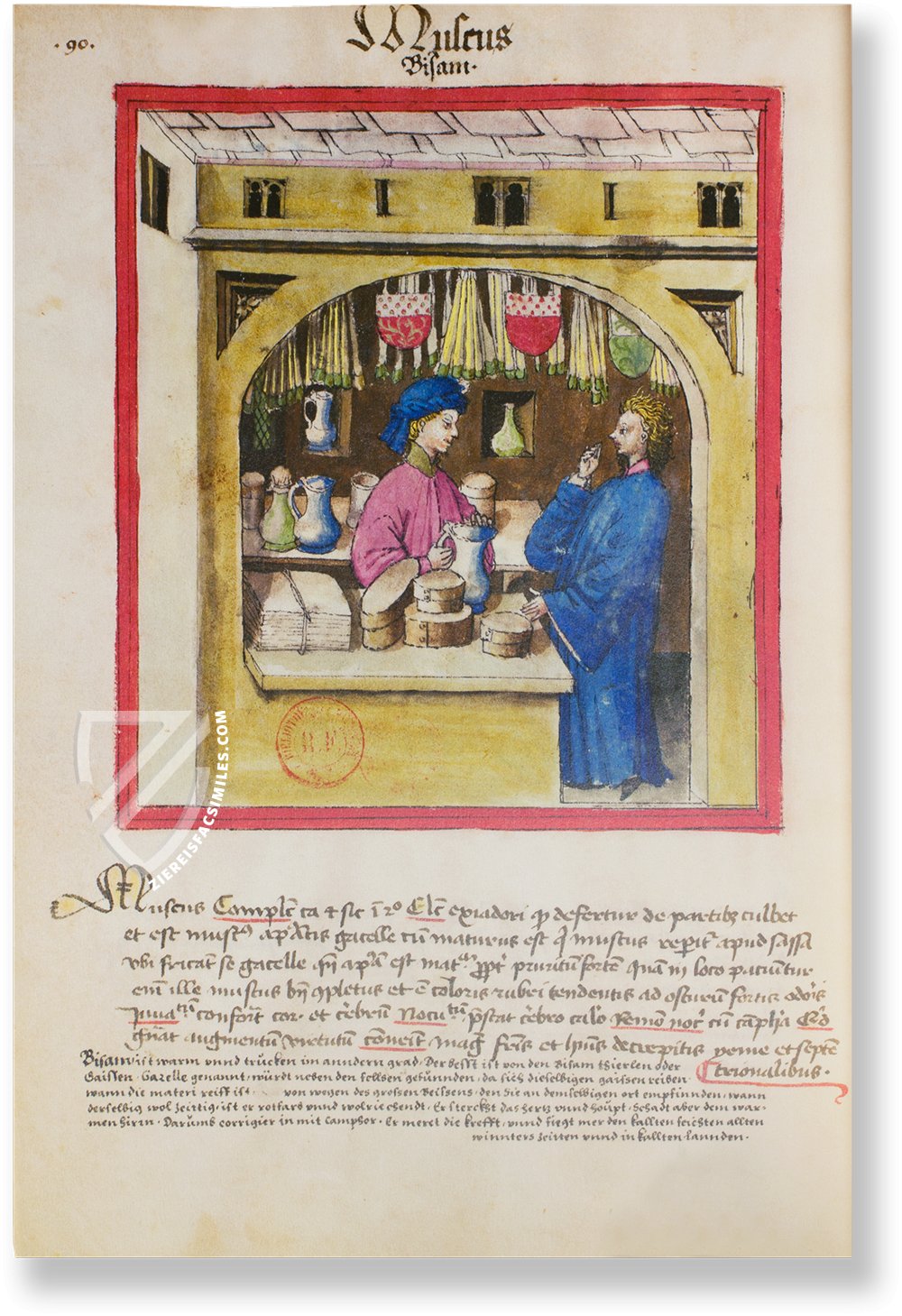
Ibn Butlan's work and his Latin successors are all about prevention. Illnesses should be prevented through a healthy lifestyle. The focus is less on treating acute complaints and more on maintaining and optimizing health and well-being. The approach was holistic — physical and mental health were seen as closely intertwined, which is why, in addition to foods such as apples, health factors such as sleep and good conversation are also listed.
The basis for this was the ancient theory of the four bodily fluids and the four temperaments, also known as Humorism, which is supplemented by the early medieval Persian doctrine of the sex res non naturales or six non-natural things. While the former deals with the inherent constitution of the human body, the latter concerns physical processes such as digestion or sleep, as well as external influencing factors such as food or climate. Both teachings are united by the idea that health is a state that can be achieved through the harmonization and balance of all factors.
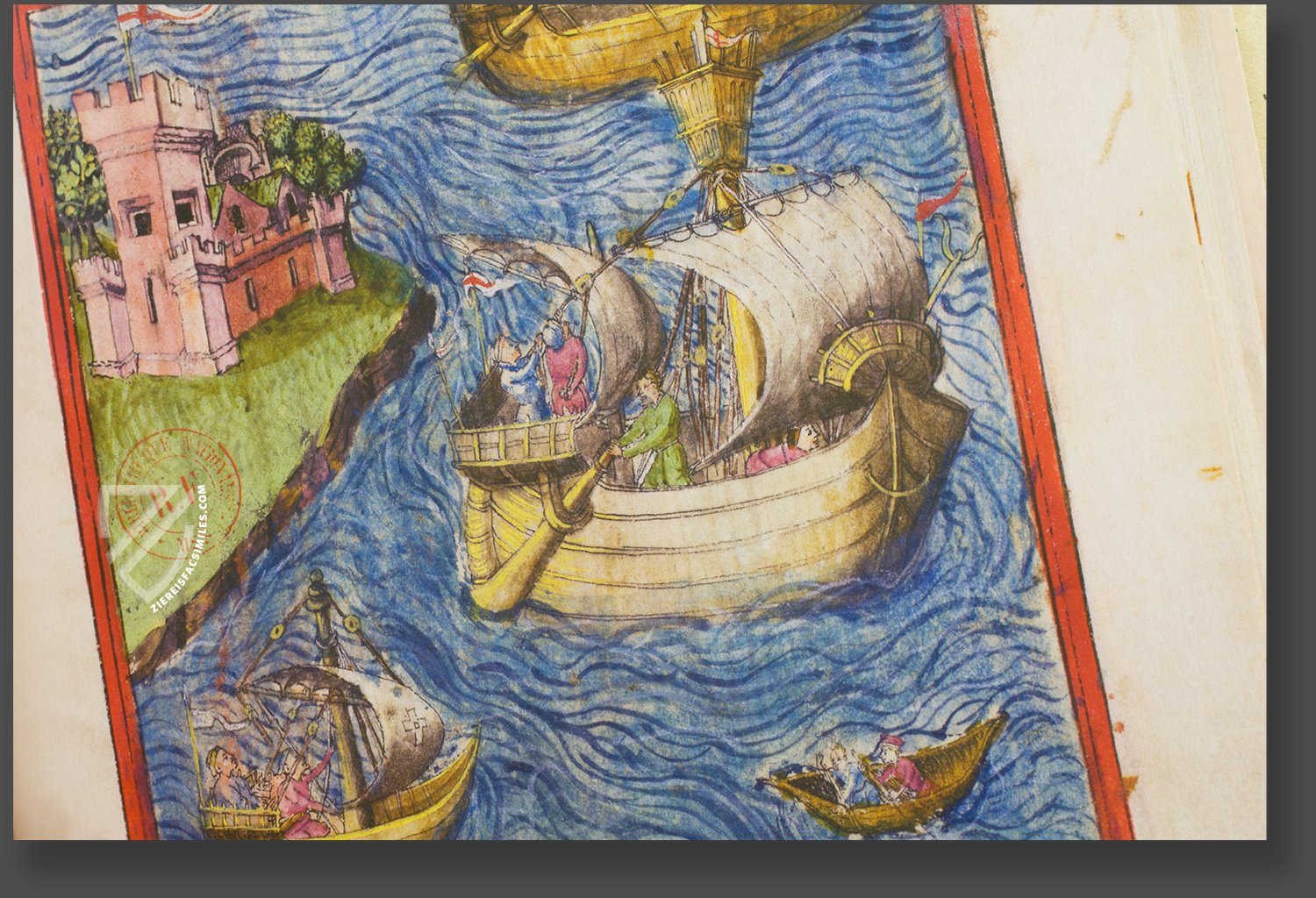
This was also the aim of the Tacuina Sanitatis, whose recommendations, however, could only be followed by nobles with plenty of free time and well-filled purses. Ultimately, a healthy lifestyle became a means of distinction for the ruling class, who commissioned the manuscripts. Nevertheless, these wonderful manuscripts provide an incomparable insight into the lives of different social classes and professions in the late Middle Ages and are thus an inexhaustible source on late medieval culture, which also captivates with its colorful aesthetics.

Experience more