
Neues Kräuterbuch - Leonhart Fuchs
Basel (Switzerland) — 1543
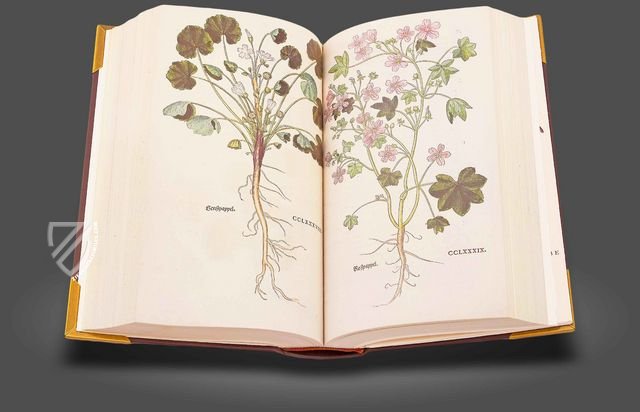
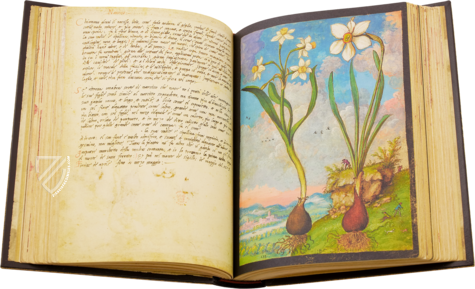
The plant world of the Renaissance seen anew: Ancient medicinal knowledge, precise observation of nature and 517 masterful woodcuts united in Leonhart Fuchs’s celebrated herbal
Published in Basel by Michael Isingrin in 1543
517 impressively accurate woodcuts of plants
Detailed descriptions of the plants’ medicinal effects for numerous diseases
Neues Kräuterbuch - Leonhart Fuchs

(under 1,000€)
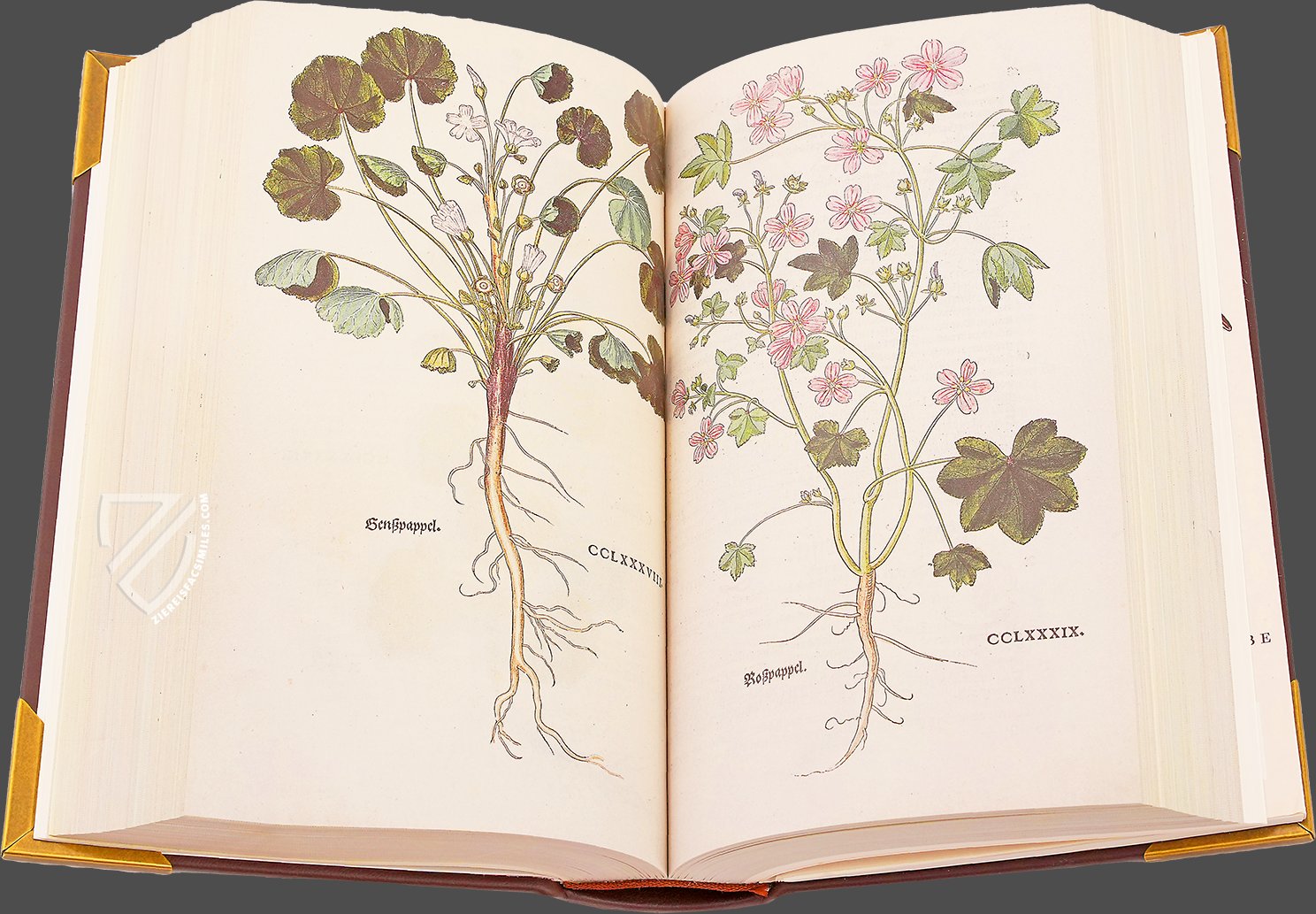
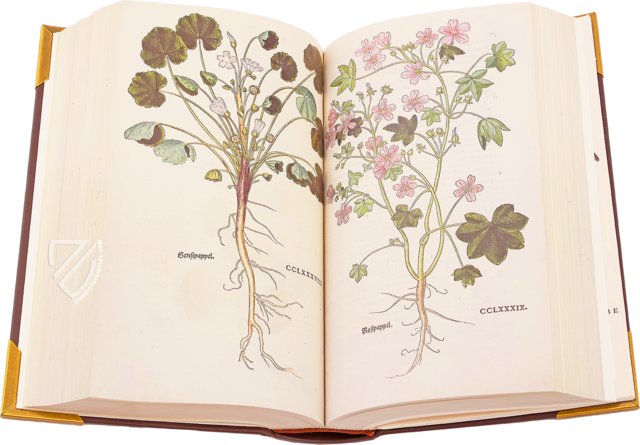
The German first edition of Leonhart Fuchs’ New Herbal, published by Michael Isingrin in Basel in 1543, ranks among the most influential botanical works of the Renaissance. In it, the celebrated physician and botanist made his knowledge accessible to a broad readership. He describes the names, appearance, habitats, flowering seasons, and medicinal properties of plants, combining the inherited knowledge of antiquity with precise observation of nature. The book owes its exceptional status above all to its 517 masterful woodcuts of plants, depicting roots, stems, leaves, flowers, and fruits with a degree of accuracy rarely achieved before. The impressive illustrations arose from the close observation and careful study of real plants in nature and continue to fascinate through their extraordinary attention to detail and vivid appearance. As a milestone in scientific botanical illustration, the work helped pave the way for a new approach to botany increasingly founded on the direct study of nature.
Botanical Knowledge in the Service of Medicine
Leonhart Fuchs was not only a botanist, but above all a physician and university professor. For him, the reliable identification of medicinal plants was one of the foundations of responsible medical practice. Yet many physicians of his time were scarcely familiar with the plants they prescribed from direct observation. With his herbal, Fuchs sought to reunite ancient medical knowledge with the close study of nature.
The German edition of 1543 followed one year after the Latin work De historia stirpium. By presenting his findings in the vernacular, Fuchs made them accessible to a much wider readership. The New Herbal thus became a practical compendium for physicians, apothecaries, and students of plants.
A Comprehensive Record of the Plant World
Each chapter devoted to a plant follows a clearly ordered structure. Fuchs gives its German, Greek, and Latin names, describes its form and distinguishing features, explains its habitat and flowering season, and summarizes its medicinal properties and uses. In this way, the work combines precise botanical description with practical medical knowledge.
Three indexes make the book particularly easy to consult: one lists the German plant names, another the Greek and Latin terms, while a third records illnesses and ailments. Readers could therefore begin either with a particular plant or with a medical condition. This careful organization made the book an exceptionally versatile reference work.
Images as a Source of Knowledge
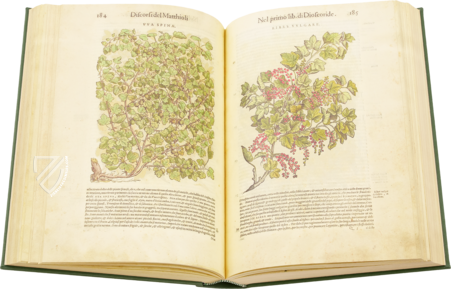
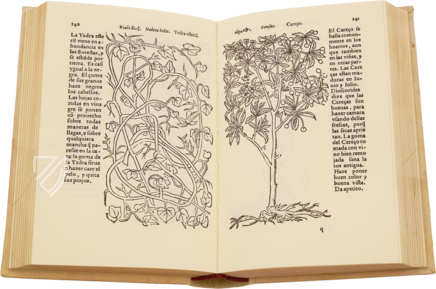
The enduring fame of the work rests above all on its 517 woodcuts of plants. The specimens are generally shown individually and in their entirety—from roots, stems, and leaves to flowers, seeds, and fruits. Unlike many earlier herbals, Fuchs did not simply repeat inherited pictorial conventions. The plants were intended to be clearly identifiable through their visible characteristics.
The impressive illustrations were created through the close observation and careful study of real plants in nature. Albrecht Meyer prepared the drawings, Heinrich Füllmaurer transferred them to the woodblocks, and Veit Rudolf Speckle carved the designs. Fuchs even honored the three artists with individual portraits—an unusual acknowledgement of their achievement.
Scientific Precision and the Art of the Book
The woodcuts largely dispense with narrative backgrounds and direct the viewer’s full attention to the plant itself. This clarity gives them scientific value without diminishing their aesthetic appeal. Gracefully curving stems, differentiated leaf forms, and meticulously rendered blossoms make each image a masterpiece of botanical book illustration.
The generous folio format allows the plant images to unfold to full effect. Text and illustration are carefully coordinated, enabling the written description to be compared directly with the plant’s appearance. This union of knowledge and artistic perfection established a new standard for later botanical publications.
A Milestone in the History of Botany
In his interpretation of medicinal effects, Fuchs remained indebted to the great authorities of antiquity, particularly Dioscorides and Galen. At the same time, his method initiated an important change: knowledge was no longer to be derived from tradition alone, but also from the careful observation and comparison of nature. The work therefore stands at the threshold of modern botany.
The illustrations were copied and adapted in other herbals for decades. Their clarity and accuracy shaped the representation of numerous plants far beyond the sixteenth century. The copy bearing the shelf mark Lo I 6 at the University Library of Basel thus preserves not only one of the most beautiful botanical books of the Renaissance, but also a work that permanently transformed the scientific study of nature.
Codicology
- Alternative Titles
- New Kreüterbuch
Leonhart Fuchs.New Kreüterbuch im Jar MDXLIII
Neues Kräuterbuch - Leonhart Fuchs - Type
- Print on paper
- Size / Format
- 888 pages / 38.5 × 25.5 cm
- Origin
- Switzerland
- Date
- 1543
- Epochs
- Style
- Language
- Illustrations
- 4 woodcut portraits, 517 full-page woodcuts of plants
- Content
- German translation of Fuchs' De historia stirpium commentarii insignes
- Artist / School
- Leonhart Fuchs (author)
Heinrich Füllmaurer (artist)
Albrecht Meyer (artist)
Veyt Rudolff Speckle (xylographer)
Michael Isengrin (printer) - Previous Owners
- Beat Hagenbach (1625–1641)
Jacob Hagenbach (1595–1649)
#1 Leonhart Fuchs.New Kreüterbuch im Jar MDXLIII
(under 1,000€)
#2 Leonhart Fuchs.New Kreüterbuch im Jar MDXLIII
(under 1,000€)
#3 Leonhart Fuchs.New Kreüterbuch im Jar MDXLIII
(under 1,000€)
#4 D. Leonhart Fuchs. New Kreüterbuch
(under 1,000€)
#5 Leonhard Fuchs 1543. New Kreüterbuch
(under 1,000€)


- Block Books / Incunables / Post-incunables
- Alchemy
- Apocalypses / Beatus Manuscripts
- Astronomy / Astrology
- Bibles / Gospels
- Picture Bibles / Bibles Moralisées / Mirror of Human Salvation
- Botany
- Chronicles / History / Letters
- Cookbook / Recipes
- Diaries / Biographies / Autograph Books
- Encyclopedias
- Fashion / Costume Books
- Games / Game Theory
- Geography / Cartography / Navigation
- Graduals / Antiphonaries / Exultet Roll
- Haggadot
- Hunting Books
- Law / Deeds / Rules
- Leonardo da Vinci
- Literature / Poetry
- Medicine
- Missals / Lectionaries / Sacramentaries
- Model Books / Sketchbooks / Notebooks
- Music
- Mythology
- Natural History / Bestiaries
- Other Liturgical Manuscripts
- Other Religious Works
- Other Secular Works
- Paintings / Graphics
- Primers / Textbooks
- Private Devotion Books
- Prophecies / Divination
- Psalters
- Quran
- Saints' Lives
- Sermons / Homilies
- Single Leaf Collections
- Song Books
- Tanakh
- Tournament Books / Armorials / Genealogy
- Travelogues / Travel Guides
- Treatises
- Afghanistan
- Algeria
- Armenia
- Austria
- Azerbaijan
- Belarus
- Belgium
- Belize
- Bosnia and Herzegovina
- China
- Colombia
- Costa Rica
- Croatia
- Cyprus
- Czech Republic
- Denmark
- Egypt
- El Salvador
- Ethiopia
- France
- Germany
- Greece
- Guatemala
- Honduras
- Hungary
- India
- Iran
- Iraq
- Israel
- Italy
- Japan
- Jordan
- Kazakhstan
- Kyrgyzstan
- Lebanon
- Libya
- Liechtenstein
- Luxembourg
- Mexico
- Morocco
- Netherlands
- Palestine
- Panama
- Peru
- Poland
- Portugal
- Romania
- Russia
- Serbia
- Slovakia
- Spain
- Sri Lanka
- Sweden
- Switzerland
- Syria
- Tajikistan
- Tunisia
- Turkey
- Turkmenistan
- Ukraine
- United Kingdom
- United States
- Uzbekistan
- Vatican City
- A. Oosthoek, van Holkema & Warendorf
- Aboca Museum
- Ajuntament de Valencia
- Akademie Verlag
- Akademische Druck- u. Verlagsanstalt (ADEVA)
- Aldo Ausilio Editore - Bottega d’Erasmo
- Alecto Historical Editions
- Alkuin Verlag
- Almqvist & Wiksell
- Amilcare Pizzi
- Andreas & Andreas Verlagsbuchhandlung
- Archa 90
- Archiv Verlag
- Archivi Edizioni
- Arnold Verlag
- ARS
- Ars Magna
- Ars Millenii
- Art Market
- ArtCodex
- AyN Ediciones
- Azimuth Editions
- Badenia Verlag
- Bärenreiter-Verlag
- Belser Verlag
- Belser Verlag / WK Wertkontor
- Benziger Verlag
- Bernardinum Wydawnictwo
- BiblioGemma
- Biblioteca Apostolica Vaticana (Vaticanstadt, Vaticanstadt)
- Bibliotheca Palatina Faksimile Verlag
- Bibliotheca Rara
- Boydell & Brewer
- Bramante Edizioni
- Bredius Genootschap
- Brepols Publishers
- British Library
- Brokarte
- C. Weckesser
- Caixa Catalunya
- Canesi
- CAPSA, Ars Scriptoria
- Caratzas Brothers, Publishers
- Carus Verlag
- Casamassima Libri
- Centrum Cartographie Verlag GmbH
- Chavane Verlag
- Christian Brandstätter Verlag
- Circulo Cientifico
- Club Bibliófilo Versol
- Club du Livre
- Club Internacional del Libro
- CM Editores
- Collegium Graphicum
- Collezione Apocrifa Da Vinci
- Comissão Nacional para as Comemorações dos Descobrimentos Portugueses
- Coron Verlag
- Corvina
- CTHS
- D. S. Brewer
- Damon
- De Agostini/UTET
- De Nederlandsche Boekhandel
- De Schutter
- Deuschle & Stemmle
- Deutscher Verlag für Kunstwissenschaft
- DIAMM
- Dropmore Press
- Droz
- E. Schreiber Graphische Kunstanstalten
- Ediciones Boreal
- Ediciones Grial
- Ediclube
- Edições Inapa
- Edilan
- Editalia
- Edition Deuschle
- Edition Georg Popp
- Edition Leipzig
- Edition Libri Illustri
- Editiones Reales Sitios S. L.
- Éditions de l'Oiseau Lyre
- Editions Medicina Rara
- Editorial Base
- Editorial Casariego
- Editorial Mintzoa
- Editrice Antenore
- Editrice Velar
- Edizioni Edison
- Egeria, S.L.
- Eikon Editores
- Electa
- Emery Walker Limited
- Enciclopèdia Catalana
- Eos-Verlag
- Ephesus Publishing
- Ernst Battenberg
- Eugrammia Press
- Extraordinary Editions
- Fackelverlag
- Facsimila Art & Edition
- Facsimile Editions Ltd.
- Facsimilia Art & Edition Ebert KG
- Faksimile Verlag
- Feuermann Verlag
- Folger Shakespeare Library
- Franco Cosimo Panini Editore
- Friedrich Wittig Verlag
- Fundación Hullera Vasco-Leonesa
- G. Braziller
- Gabriele Mazzotta Editore
- Gebr. Mann Verlag
- Gesellschaft für graphische Industrie
- Getty Research Institute
- Giovanni Domenico de Rossi
- Giunti Editore
- Goldenmark Librarium
- Graffiti
- Grafica European Center of Fine Arts
- Guido Pressler
- Guillermo Blazquez
- Gustav Kiepenheuer
- H. N. Abrams
- Harrassowitz
- Harvard University Press
- Helikon
- Hendrickson Publishers
- Henning Oppermann
- Herder Verlag
- Hes & De Graaf Publishers
- Hoepli
- Holbein-Verlag
- Houghton Library
- Hugo Schmidt Verlag
- Hungarian Academy of Sciences
- Idion Verlag
- Il Bulino, edizioni d'arte
- ILte
- Imago
- In Officina Danesi
- Insel Verlag
- Instituto de Estudios Altoaragoneses
- Instituto Nacional de Antropología e Historia
- Introligatornia Budnik Jerzy
- Istituto dell'Enciclopedia Italiana - Treccani
- Istituto Ellenico di Studi Bizantini e Postbizantini
- Istituto Geografico De Agostini
- Istituto Poligrafico e Zecca dello Stato
- Italarte Art Establishments
- Jaca Book
- Jan Thorbecke Verlag
- Johnson Reprint Corporation
- Johnson Reprint Corporation
- Jos. Baer
- Josef Stocker
- Josef Stocker-Schmid
- Jugoslavija
- Karl W. Hiersemann
- Kasper Straube
- Kaydeda Ediciones
- Kindler Verlag / Coron Verlag
- Kodansha International Ltd.
- Konrad Kölbl Verlag
- Kurt Wolff Verlag
- La Linea Editrice
- La Meta Editore
- Lambert Schneider
- Landeskreditbank Baden-Württemberg
- Leo S. Olschki
- Les Incunables
- Liber Artis
- Library of Congress
- Libreria Musicale Italiana
- Lichtdruck
- Lito Immagine Editore
- Lumen Artis
- Lund Humphries
- M. Moleiro Editor
- Maison des Sciences de l'homme et de la société de Poitiers
- Manuscriptum
- Martinus Nijhoff
- Maruzen-Yushodo Co. Ltd.
- MASA
- Massada Publishers
- McGraw-Hill
- Metropolitan Museum of Art
- Militos
- Millennium Liber
- Müller & Schindler
- Nahar - Stavit
- Nahar and Steimatzky
- National Library of Wales
- Neri Pozza
- Nova Charta
- Oceanum Verlag
- Odeon
- Omnia Arte
- Orbis Mediaevalis
- Orbis Pictus
- Österreichische Staatsdruckerei
- Oxford University Press
- Pageant Books
- Parzellers Buchverlag
- Patrimonio Ediciones
- Pattloch Verlag
- PIAF
- Plon-Nourrit et cie
- Poligrafiche Bolis
- Presses Universitaires de Strasbourg
- Prestel Verlag
- Princeton University Press
- Prisma Verlag
- Priuli & Verlucca, editori
- Pro Sport Verlag
- Propyläen Verlag
- Pytheas Books
- Quaternio Verlag Luzern
- Reales Sitios
- Recht-Verlag
- Reichert Verlag
- Reichsdruckerei
- Reprint Verlag
- Riehn & Reusch
- Rizzoli
- Roberto Vattori Editore
- Rosenkilde and Bagger
- Roto-Sadag
- Roxburghe Club
- Salerno Editrice
- Saltellus Press
- Sandoz
- Sarajevo Svjetlost
- Schöck ArtPrint Kft.
- Schulsinger Brothers
- Scolar Press
- Scrinium
- Scripta Maneant
- Scriptorium
- Shazar
- Siloé, arte y bibliofilia
- SISMEL - Edizioni del Galluzzo
- Sociedad Mexicana de Antropología
- Société des Bibliophiles & Iconophiles de Belgique
- Soncin Publishing
- Sorli Ediciones
- Stainer and Bell
- Studer
- Styria Verlag
- Sumptibus Pragopress
- Szegedi Tudomànyegyetem
- Taberna Libraria
- Tarshish Books
- Taschen
- Tempus Libri
- Testimonio Compañía Editorial
- TGB Limited Editions
- Thames and Hudson
- The Clear Vue Publishing Partnership Limited
- The Facsimile Codex
- The Folio Society
- The Marquess of Normanby
- The Orphan Hospital Ward of Israel
- The Richard III and Yorkist History Trust
- The Warburg Institute
- Tip.Le.Co
- TouchArt
- TREC Publishing House
- TRI Publishing Co.
- Trident Editore
- Tuliba Collection
- Typis Regiae Officinae Polygraphicae
- Union Verlag Berlin
- Universidad de Granada
- Universitaire Bibliotheken Leiden
- University of California Press
- University of Chicago Press
- Urs Graf
- Vallecchi
- Van Wijnen
- VCH, Acta Humaniora
- VDI Verlag
- VEB Deutscher Verlag für Musik
- Verein Schweizerischer Lithographie-Besitzer
- Verlag Anton Pustet / Andreas Verlag
- Verlag Bibliophile Drucke Josef Stocker
- Verlag der Münchner Drucke
- Verlag für Regionalgeschichte
- Verlag Styria
- Vicent Garcia Editores
- W. Turnowsky
- Waanders Printers
- Wiener Mechitharisten-Congregation (Wien, Österreich)
- Wissenschaftliche Buchgesellschaft
- Wissenschaftliche Verlagsgesellschaft
- Wydawnictwo Dolnoslaskie
- Xuntanza Editorial
- Zakład Narodowy
- Zollikofer AG