
Bible of Nürnberg
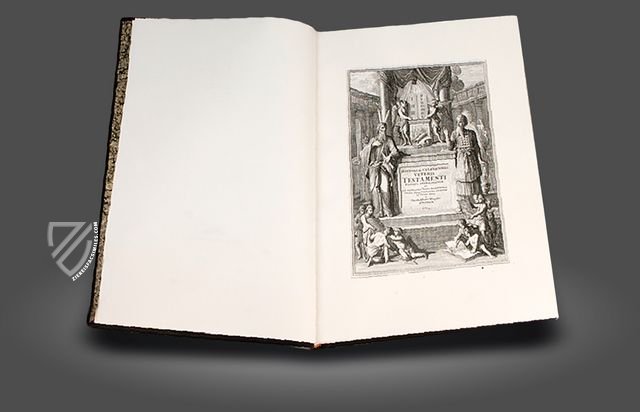
Nuremberg (Germany) — 1712
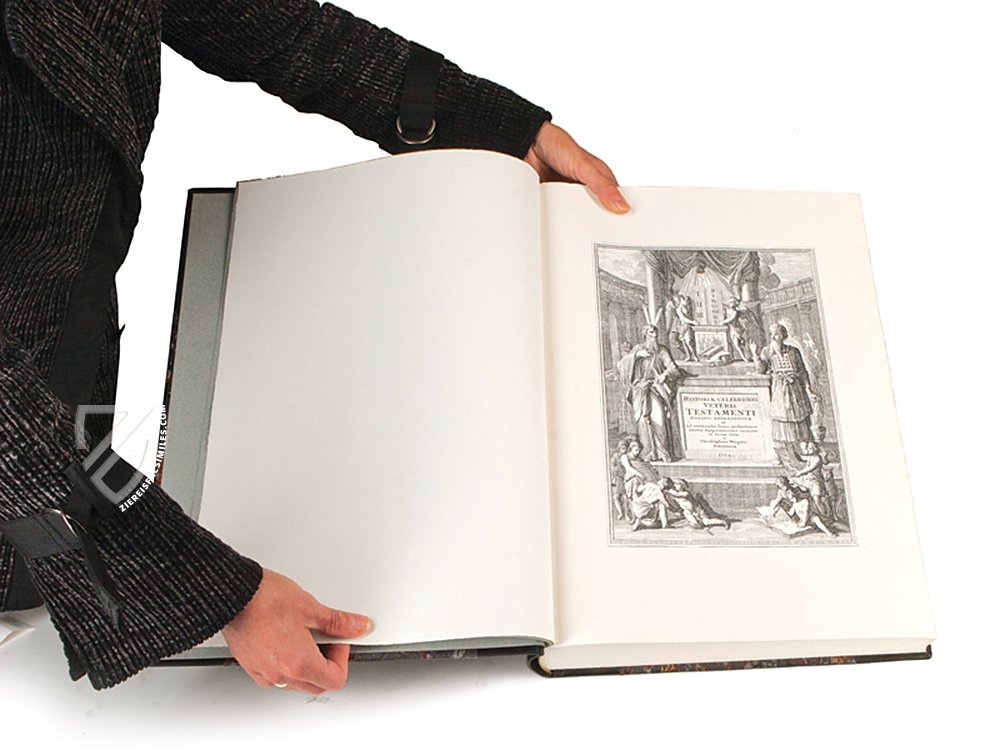
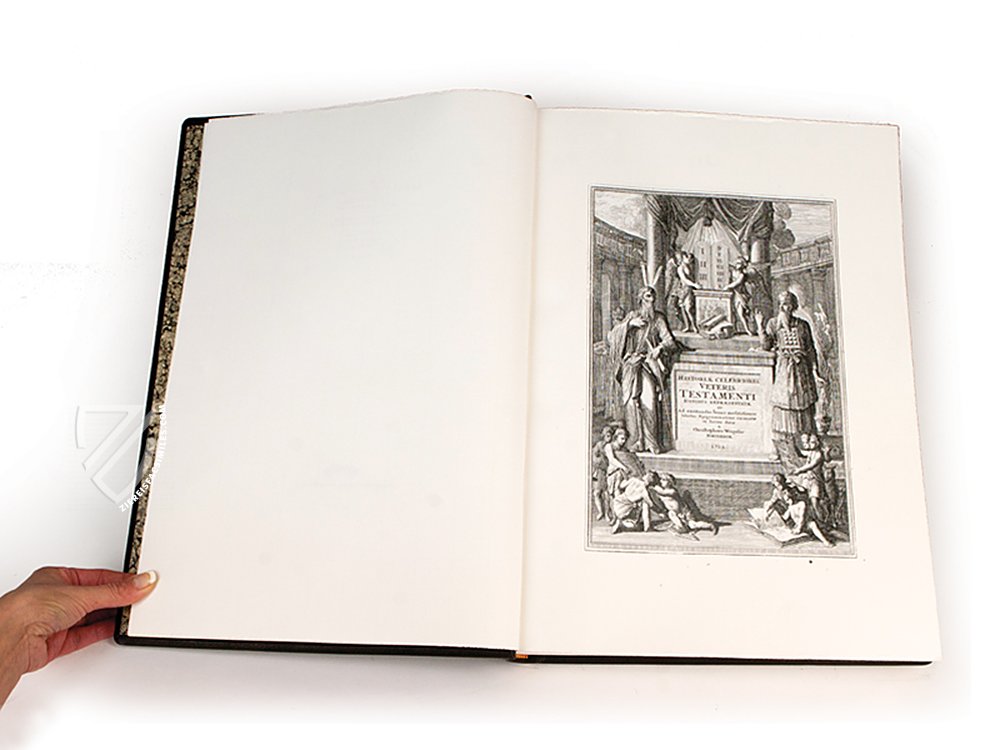
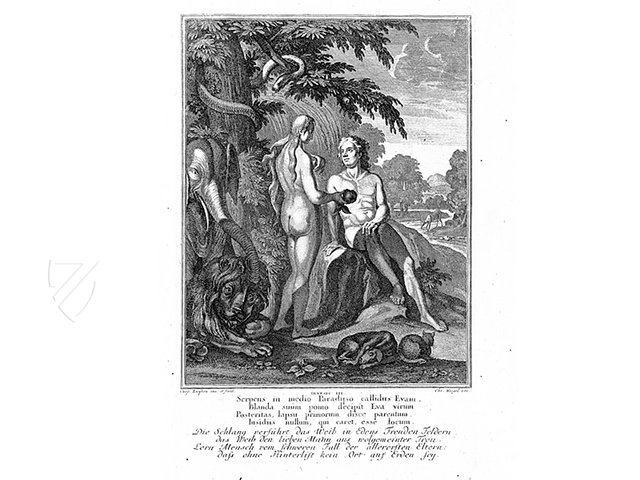
The result of an international collaboration of three Baroque masters: a magnificent, large-format picture Bible with 260 full-page engravings in stylish grandeur
Jan Luyken (1649–1712) and his son Caspar (1672–1708) designed the splendid illustrations
Christoph Weigel the Elder (1654–1725) served as the engraver and printer of the work
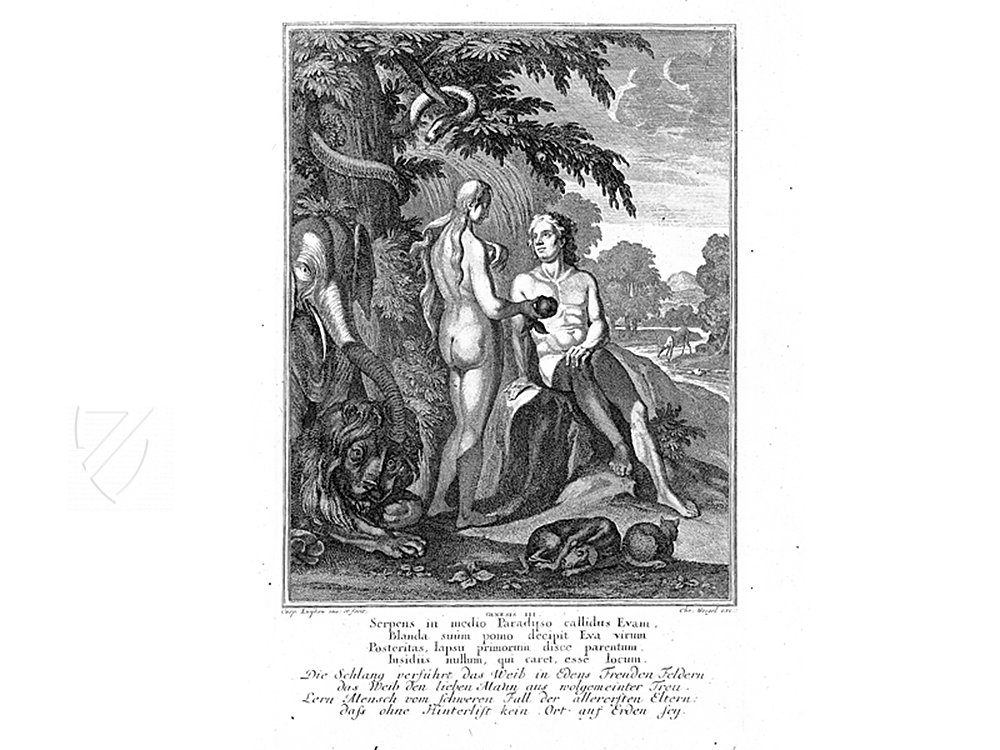
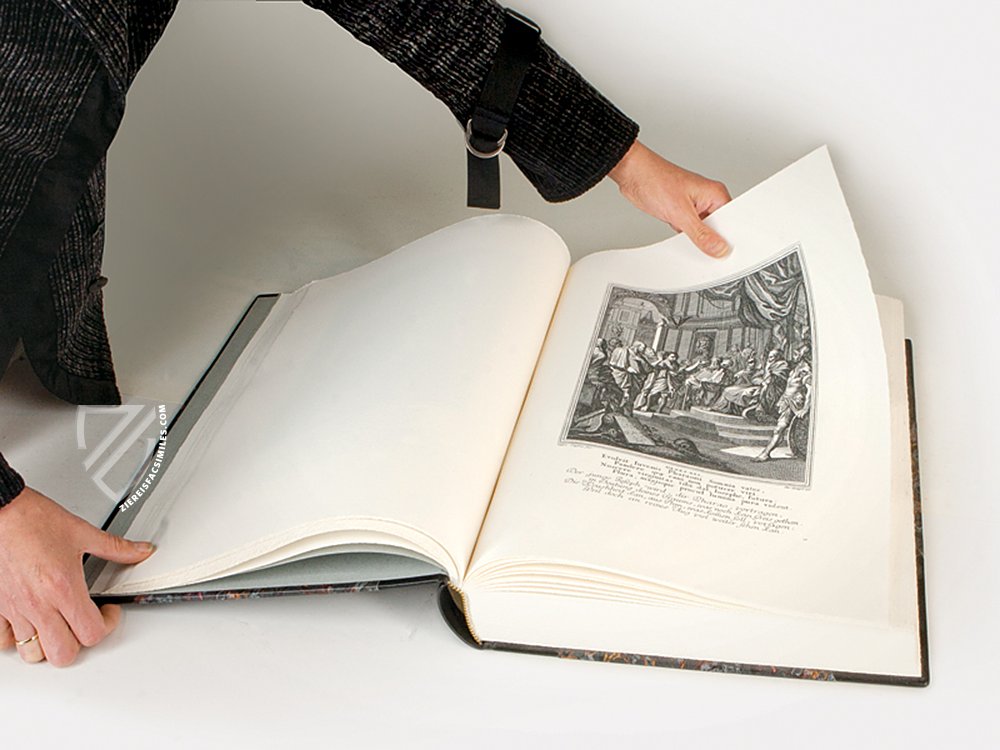
The detailed biblical scenes are presented with explanatory captions in Latin and German
Bible of Nürnberg


(1,000€ - 3,000€)
A beautiful graphic work, a collaboration of Baroque masters: the Bible of Nürnberg. Printed in 1712 in Nuremberg, home of great artists like Albrecht Dürer, is features 260 full-page etchings with captions in Latin and German. The illustrations in the work originate from the hand of the Dutch artists Jan (1649–1712) and Caspar Luyken (1672–1708), who collaborated with the engraver and printer Johann Christoph Weigel, known as Christoph Weigel the Elder (1654–1725), on the project. The work is stored today in the Archdiocesan Collections of the Kalocsa Cathedral Library in Hungary.
The Bible as a Sequence of Monumental Images
In the Bible of Nuremberg, biblical history is not presented as a continuous scriptural text but as an impressive sequence of large-format images. Its full Latin title – Historiae celebriores Veteris et Novi Testamenti iconibus repraesentatae et ad excitandas bonas meditationes selectis epigrammatibus exornatae – states the programme precisely: selected events from the Old and New Testaments are represented visually and accompanied by verses intended to encourage devout reflection. Published in Nuremberg in 1712, the volume belongs to the tradition of the picture Bible, yet expands it into a monumental graphic panorama of almost 260 full-page copperplate illustrations.
A Dutch–Nuremberg Collaboration
The series was issued by the Nuremberg engraver, art dealer and publisher Christoph Weigel the Elder. Its artistic character was shaped above all by Jan Luyken and his son Caspar Luyken, two important Dutch book illustrators of their age. Their designs and etchings combine narrative clarity with the dramatic visual language of the Baroque. Some plates in the New Testament section were supplied by Franz Anton Meloni, Paul Decker the Younger and other engravers. The result brought Dutch pictorial storytelling together with the highly developed publishing and printmaking culture of Nuremberg.
From Creation to the Early Church
The images lead from Creation, the Fall and the Expulsion from Paradise through the histories of the patriarchs, judges, kings and prophets to the life of Christ and the beginnings of the Church. Episodes such as the Sacrifice of Isaac, David’s battles and the Judgement of Solomon stand beside the Nativity, miracles, parables, Passion and Resurrection of Christ. The book does not illustrate every biblical passage. Instead, it selects scenes whose dramatic action, moral meaning or importance within salvation history made them especially suitable for visual interpretation.
The Luykens focus on the decisive moment. Gesture, posture and exchanged glances make conflict and emotion immediately intelligible. Angels break through clouds, rulers appear before densely gathered crowds and prophets raise admonishing hands, while contrasts of light and shadow intensify the action. Architecture, landscape, weapons, garments and everyday objects create convincing stage-like settings. Biblical history is thus made present within a Baroque visual world that draws the viewer emotionally into the narrative.
Image, Scripture and Epigram
Below each composition appears a reference to the relevant biblical passage. It is accompanied by a Latin and a German epigram, which do more than identify the scene: they condense its moral and spiritual meaning. The Latin verses are attributed to the Jesuit Paul Hansiz, while the German adaptations were written by Samuel Faber. Each page therefore forms a deliberately constructed unity of image, scriptural reference and meditation: the scene captures attention, the citation anchors it in the Bible and the verse directs reflection towards its religious significance.
The plates could be read, contemplated and used for personal devotion. They address a learned audience familiar with Latin, while the German verses opened the moral commentary to a broader readership. The large format and full-page presentation give each biblical event the presence of an independent devotional print and work of art.
A Major Achievement of Baroque Biblical Printmaking
The Bible of Nuremberg ranks among the most extensive and artistically ambitious picture Bibles of the early eighteenth century. Its significance lies not in reproducing the entire biblical text, but in offering a coherent visual interpretation of central events in salvation history. The exceptional number of plates, their carefully controlled drama and the bilingual union of image and verse make the volume an outstanding witness to Baroque biblical instruction and print culture.
The copy now preserved in the Kalocsa Cathedral Library also documents the wide European circulation of books produced in Nuremberg. Dutch graphic art, German publishing expertise and Baroque religious imagery meet here in a volume that does not merely recount the Bible, but transforms it into a sequence of compelling visual meditations.
Codicology
- Alternative Titles
- Nürnberger Bibel
Bible of Nuremberg - Type
- Print on paper
- Size / Format
- 264 pages / 41.6 × 29.4 cm
- Origin
- Germany
- Date
- 1712
- Epochs
- Style
- Illustrations
- 260 full-page engraved illustrations
- Content
- Old and New Testament
- Artist / School
- Christoph Weigel (engraver and printer)
Caspar and Jan Luyken (illustrators)
Bible of Nürnberg
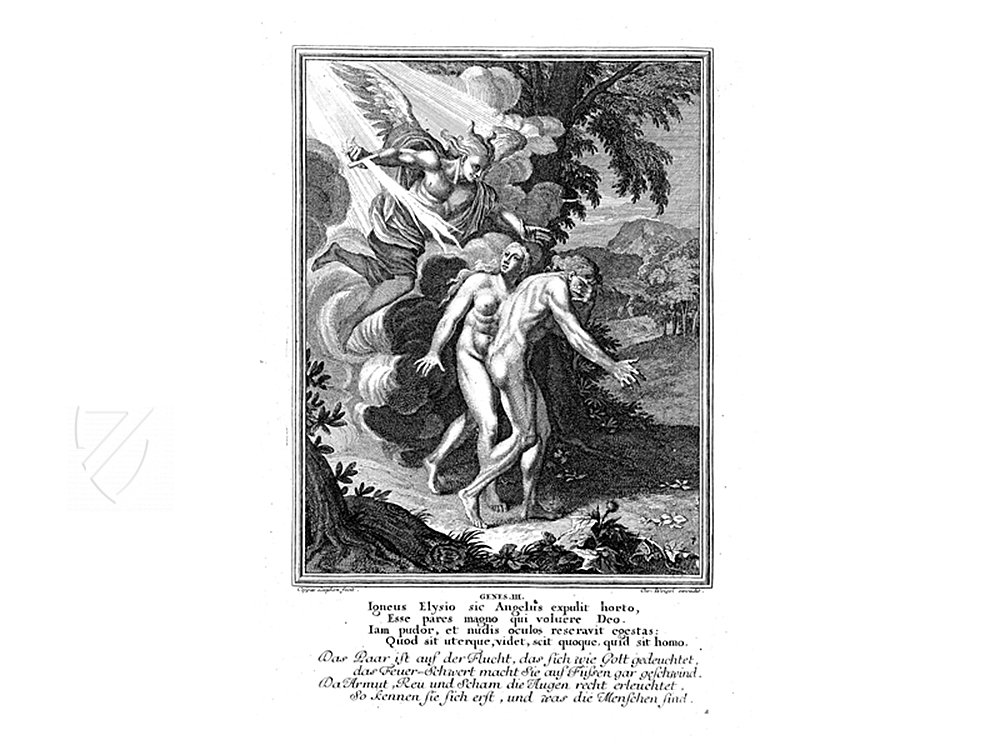
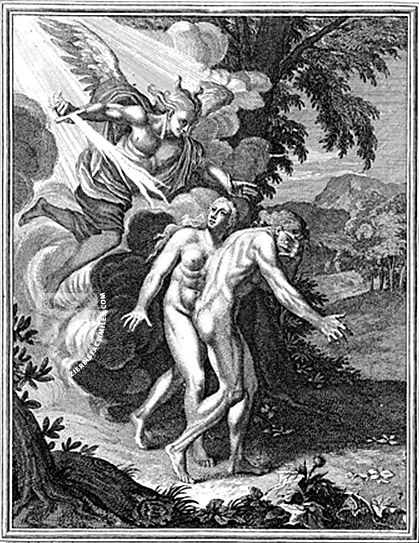
Expulsion from Paradise
This Baroque masterpiece of engraving depicts the final episode from the Fall of Man, i.e. the banishment of Adam and Eve from the Garden of Eden. Having eaten the forbidden fruit from the tree of knowledge, the first two humans are banished, and cherubim armed with flaming swords are set about the borders of Paradise to prevent them from returning to eat from the tree of life, and thus gain immortality.
One’s eyes are immediately drawn to the image of the angel armed with a sword that literally turns to flame descending from Heaven in a burst of clouds and light. Both original humans are depicted in detail, and not only does Adam have a developed musculature, but Eve’s abdominal muscles are also surprisingly well-defined.
#1 Bible of Nürnberg
(1,000€ - 3,000€)
- Block Books / Incunables / Post-incunables
- Alchemy
- Apocalypses / Beatus Manuscripts
- Astronomy / Astrology
- Bibles / Gospels
- Picture Bibles / Bibles Moralisées / Mirror of Human Salvation
- Botany
- Chronicles / History / Letters
- Cookbook / Recipes
- Diaries / Biographies / Autograph Books
- Encyclopedias
- Fashion / Costume Books
- Games / Game Theory
- Geography / Cartography / Navigation
- Graduals / Antiphonaries / Exultet Roll
- Haggadot
- Hunting Books
- Law / Deeds / Rules
- Leonardo da Vinci
- Literature / Poetry
- Medicine
- Missals / Lectionaries / Sacramentaries
- Model Books / Sketchbooks / Notebooks
- Music
- Mythology
- Natural History / Bestiaries
- Other Liturgical Manuscripts
- Other Religious Works
- Other Secular Works
- Paintings / Graphics
- Primers / Textbooks
- Private Devotion Books
- Prophecies / Divination
- Psalters
- Quran
- Saints' Lives
- Sermons / Homilies
- Single Leaf Collections
- Song Books
- Tanakh
- Tournament Books / Armorials / Genealogy
- Travelogues / Travel Guides
- Treatises
- Afghanistan
- Algeria
- Armenia
- Austria
- Azerbaijan
- Belgium
- Belize
- Bosnia and Herzegovina
- China
- Colombia
- Costa Rica
- Croatia
- Cyprus
- Czech Republic
- Denmark
- Egypt
- El Salvador
- Ethiopia
- France
- Germany
- Greece
- Guatemala
- Honduras
- Hungary
- India
- Iran
- Iraq
- Israel
- Italy
- Japan
- Jordan
- Kazakhstan
- Kyrgyzstan
- Lebanon
- Libya
- Liechtenstein
- Luxembourg
- Mexico
- Morocco
- Netherlands
- Palestine
- Panama
- Peru
- Poland
- Portugal
- Romania
- Russia
- Serbia
- Slovakia
- Spain
- Sri Lanka
- Sweden
- Switzerland
- Syria
- Tajikistan
- Tunisia
- Turkey
- Turkmenistan
- Ukraine
- United Kingdom
- United States
- Uzbekistan
- Vatican City
- A. Oosthoek, van Holkema & Warendorf
- Aboca Museum
- Ajuntament de Valencia
- Akademie Verlag
- Akademische Druck- u. Verlagsanstalt (ADEVA)
- Aldo Ausilio Editore - Bottega d’Erasmo
- Alecto Historical Editions
- Alkuin Verlag
- Almqvist & Wiksell
- Amilcare Pizzi
- Andreas & Andreas Verlagsbuchhandlung
- Archa 90
- Archiv Verlag
- Archivi Edizioni
- Arnold Verlag
- ARS
- Ars Magna
- Ars Millenii
- Art Market
- ArtCodex
- AyN Ediciones
- Azimuth Editions
- Badenia Verlag
- Bärenreiter-Verlag
- Belser Verlag
- Belser Verlag / WK Wertkontor
- Benziger Verlag
- Bernardinum Wydawnictwo
- BiblioGemma
- Biblioteca Apostolica Vaticana (Vaticanstadt, Vaticanstadt)
- Bibliotheca Palatina Faksimile Verlag
- Bibliotheca Rara
- Boydell & Brewer
- Bramante Edizioni
- Bredius Genootschap
- Brepols Publishers
- British Library
- Brokarte
- C. Weckesser
- Caixa Catalunya
- Canesi
- CAPSA, Ars Scriptoria
- Caratzas Brothers, Publishers
- Carus Verlag
- Casamassima Libri
- Centrum Cartographie Verlag GmbH
- Chavane Verlag
- Christian Brandstätter Verlag
- Circulo Cientifico
- Club Bibliófilo Versol
- Club du Livre
- Club Internacional del Libro
- CM Editores
- Collegium Graphicum
- Collezione Apocrifa Da Vinci
- Comissão Nacional para as Comemorações dos Descobrimentos Portugueses
- Coron Verlag
- Corvina
- CTHS
- D. S. Brewer
- Damon
- De Agostini/UTET
- De Nederlandsche Boekhandel
- De Schutter
- Deuschle & Stemmle
- Deutscher Verlag für Kunstwissenschaft
- DIAMM
- Dropmore Press
- Droz
- E. Schreiber Graphische Kunstanstalten
- Ediciones Boreal
- Ediciones Grial
- Ediclube
- Edições Inapa
- Edilan
- Editalia
- Edition Deuschle
- Edition Georg Popp
- Edition Leipzig
- Edition Libri Illustri
- Editiones Reales Sitios S. L.
- Éditions de l'Oiseau Lyre
- Editions Medicina Rara
- Editorial Base
- Editorial Casariego
- Editorial Mintzoa
- Editrice Antenore
- Editrice Velar
- Edizioni Edison
- Egeria, S.L.
- Eikon Editores
- Electa
- Emery Walker Limited
- Enciclopèdia Catalana
- Eos-Verlag
- Ephesus Publishing
- Ernst Battenberg
- Eugrammia Press
- Extraordinary Editions
- Fackelverlag
- Facsimila Art & Edition
- Facsimile Editions Ltd.
- Facsimilia Art & Edition Ebert KG
- Faksimile Verlag
- Feuermann Verlag
- Folger Shakespeare Library
- Franco Cosimo Panini Editore
- Friedrich Wittig Verlag
- Fundación Hullera Vasco-Leonesa
- G. Braziller
- Gabriele Mazzotta Editore
- Gebr. Mann Verlag
- Gesellschaft für graphische Industrie
- Getty Research Institute
- Giovanni Domenico de Rossi
- Giunti Editore
- Goldenmark Librarium
- Graffiti
- Grafica European Center of Fine Arts
- Guido Pressler
- Guillermo Blazquez
- Gustav Kiepenheuer
- H. N. Abrams
- Harrassowitz
- Harvard University Press
- Helikon
- Hendrickson Publishers
- Henning Oppermann
- Herder Verlag
- Hes & De Graaf Publishers
- Hoepli
- Holbein-Verlag
- Houghton Library
- Hugo Schmidt Verlag
- Hungarian Academy of Sciences
- Idion Verlag
- Il Bulino, edizioni d'arte
- ILte
- Imago
- In Officina Danesi
- Insel Verlag
- Instituto de Estudios Altoaragoneses
- Instituto Nacional de Antropología e Historia
- Introligatornia Budnik Jerzy
- Istituto dell'Enciclopedia Italiana - Treccani
- Istituto Ellenico di Studi Bizantini e Postbizantini
- Istituto Geografico De Agostini
- Istituto Poligrafico e Zecca dello Stato
- Italarte Art Establishments
- Jaca Book
- Jan Thorbecke Verlag
- Johnson Reprint Corporation
- Johnson Reprint Corporation
- Jos. Baer
- Josef Stocker
- Josef Stocker-Schmid
- Jugoslavija
- Karl W. Hiersemann
- Kasper Straube
- Kaydeda Ediciones
- Kindler Verlag / Coron Verlag
- Kodansha International Ltd.
- Konrad Kölbl Verlag
- Kurt Wolff Verlag
- La Liberia dello Stato
- La Linea Editrice
- La Meta Editore
- Lambert Schneider
- Landeskreditbank Baden-Württemberg
- Leo S. Olschki
- Les Incunables
- Liber Artis
- Library of Congress
- Libreria Musicale Italiana
- Lichtdruck
- Lito Immagine Editore
- Lumen Artis
- Lund Humphries
- M. Moleiro Editor
- Maison des Sciences de l'homme et de la société de Poitiers
- Manuscriptum
- Martinus Nijhoff
- Maruzen-Yushodo Co. Ltd.
- MASA
- Massada Publishers
- McGraw-Hill
- Metropolitan Museum of Art
- Militos
- Millennium Liber
- Müller & Schindler
- Nahar - Stavit
- Nahar and Steimatzky
- National Library of Wales
- Neri Pozza
- Nova Charta
- Oceanum Verlag
- Odeon
- Omnia Arte
- Orbis Mediaevalis
- Orbis Pictus
- Österreichische Staatsdruckerei
- Oxford University Press
- Pageant Books
- Parzellers Buchverlag
- Patrimonio Ediciones
- Pattloch Verlag
- PIAF
- Plon-Nourrit et cie
- Poligrafiche Bolis
- Presses Universitaires de Strasbourg
- Prestel Verlag
- Princeton University Press
- Prisma Verlag
- Priuli & Verlucca, editori
- Pro Sport Verlag
- Propyläen Verlag
- Pytheas Books
- Quaternio Verlag Luzern
- Reales Sitios
- Recht-Verlag
- Reichert Verlag
- Reichsdruckerei
- Reprint Verlag
- Riehn & Reusch
- Rizzoli
- Roberto Vattori Editore
- Rosenkilde and Bagger
- Roto-Sadag
- Roxburghe Club
- Salerno Editrice
- Saltellus Press
- Sandoz
- Sarajevo Svjetlost
- Schöck ArtPrint Kft.
- Schulsinger Brothers
- Scolar Press
- Scrinium
- Scripta Maneant
- Scriptorium
- Shazar
- Siloé, arte y bibliofilia
- SISMEL - Edizioni del Galluzzo
- Sociedad Mexicana de Antropología
- Société des Bibliophiles & Iconophiles de Belgique
- Soncin Publishing
- Sorli Ediciones
- Stainer and Bell
- Studer
- Styria Verlag
- Sumptibus Pragopress
- Szegedi Tudomànyegyetem
- Taberna Libraria
- Tarshish Books
- Taschen
- Tempus Libri
- Testimonio Compañía Editorial
- TGB Limited Editions
- Thames and Hudson
- The Clear Vue Publishing Partnership Limited
- The Facsimile Codex
- The Folio Society
- The Marquess of Normanby
- The Orphan Hospital Ward of Israel
- The Richard III and Yorkist History Trust
- The Warburg Institute
- Tip.Le.Co
- TouchArt
- TREC Publishing House
- TRI Publishing Co.
- Trident Editore
- Tuliba Collection
- Typis Regiae Officinae Polygraphicae
- Union Verlag Berlin
- Universidad de Granada
- Universitaire Bibliotheken Leiden
- University of California Press
- University of Chicago Press
- Urs Graf
- Vallecchi
- Van Wijnen
- VCH, Acta Humaniora
- VDI Verlag
- VEB Deutscher Verlag für Musik
- Verein Schweizerischer Lithographie-Besitzer
- Verlag Anton Pustet / Andreas Verlag
- Verlag Bibliophile Drucke Josef Stocker
- Verlag der Münchner Drucke
- Verlag für Regionalgeschichte
- Verlag Styria
- Vicent Garcia Editores
- W. Turnowsky
- Waanders Printers
- Wiener Mechitharisten-Congregation (Wien, Österreich)
- Wissenschaftliche Buchgesellschaft
- Wissenschaftliche Verlagsgesellschaft
- Wydawnictwo Dolnoslaskie
- Xuntanza Editorial
- Zakład Narodowy
- Zollikofer AG