
Ashburnham Pentateuch
Spain, North Africa, Northern Italy, or Rome — late 6th or early 7th century, mid-8th century additions
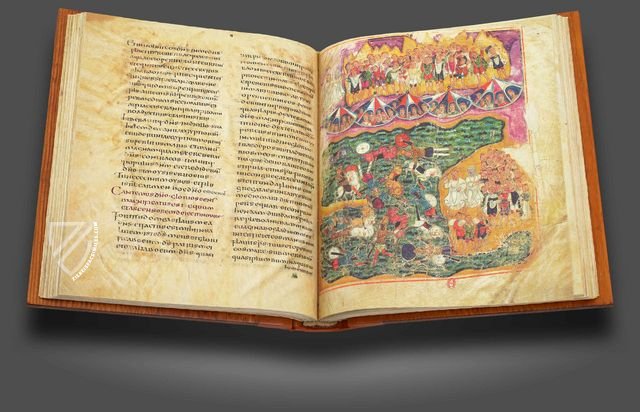
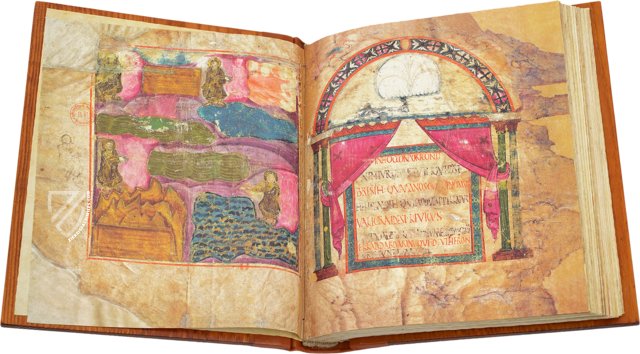
One of the oldest Latin Bibles featuring an extensive picture cycle: a late antique masterpiece of incomparable historical value and mysterious origin, containing 18 large-format miniatures depicting stories from the Old Testament
One of the oldest surviving Latin translations of the Bible and one of the oldest Latin Bibles with extensive illumination
Of the original 69 or so miniatures, 18 have survived and continue to captivate viewers to this day
The mysterious provenance has helped make it a valued collector’s item over the centuries
Ashburnham Pentateuch

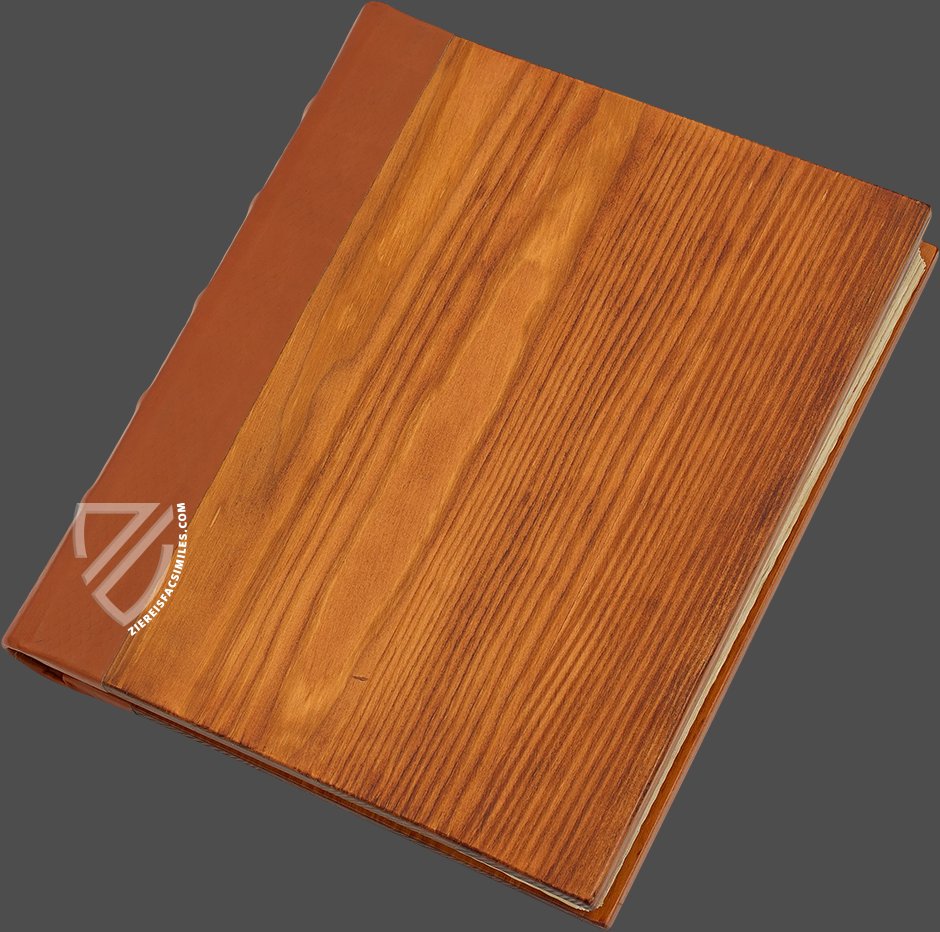
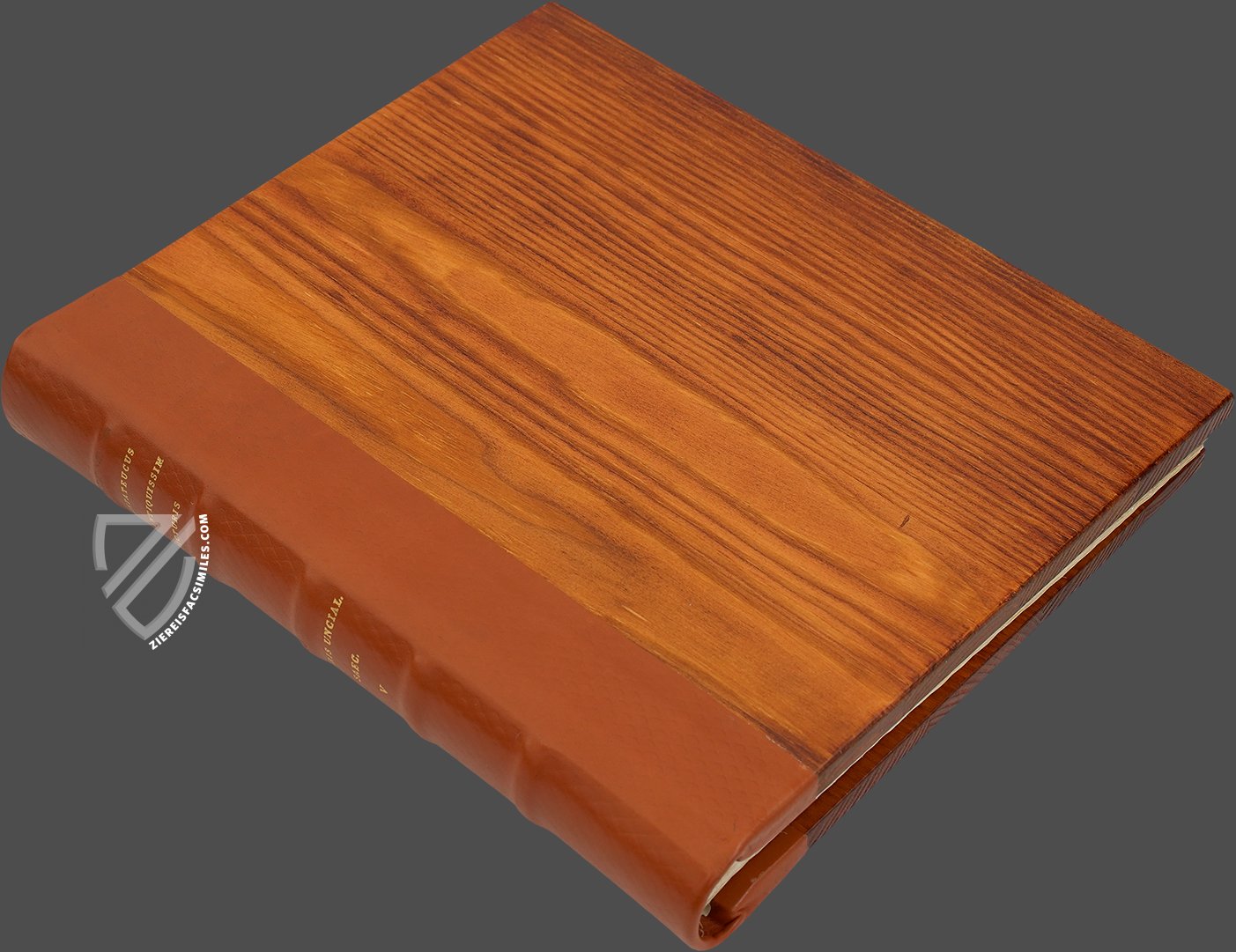
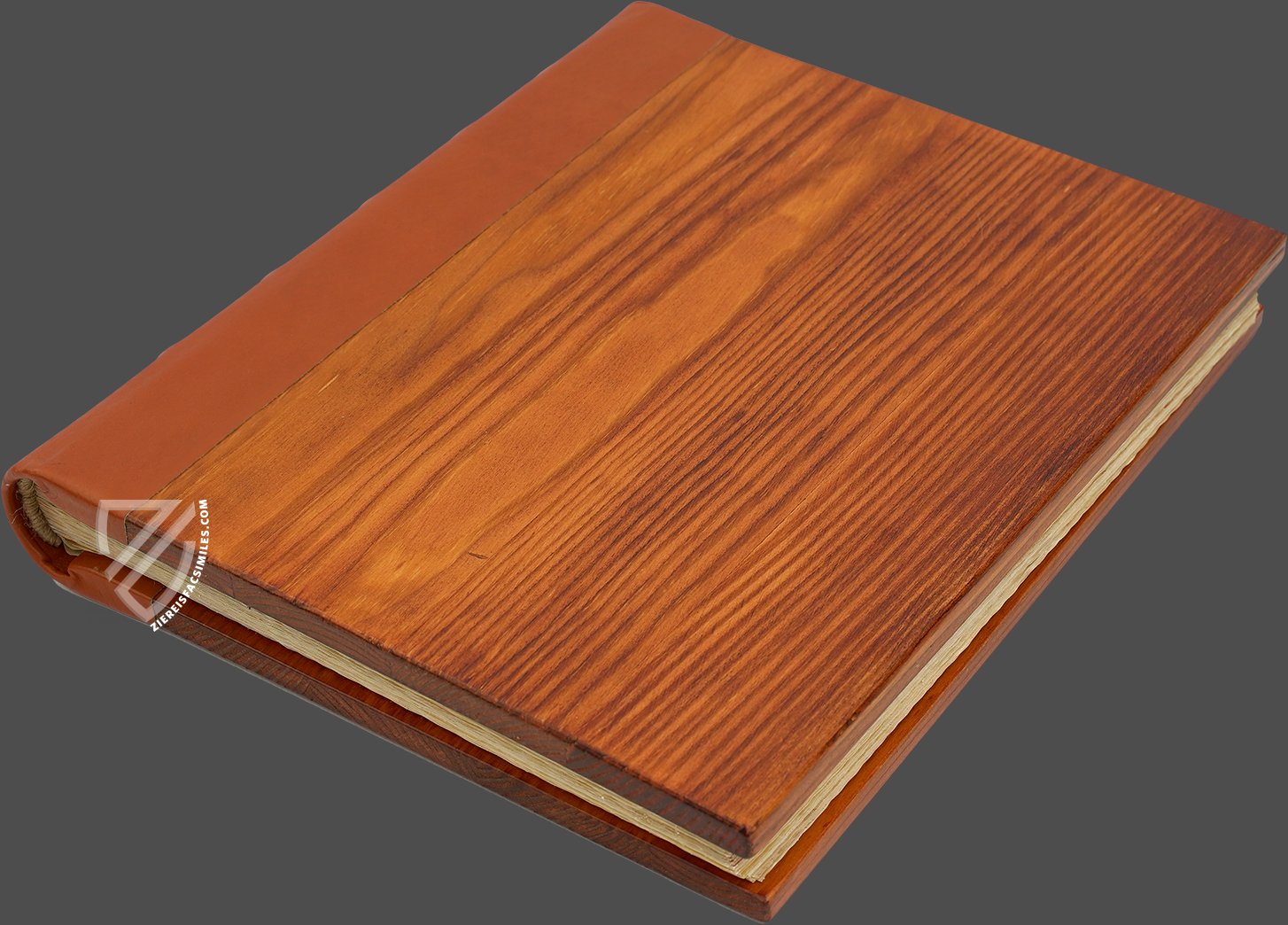
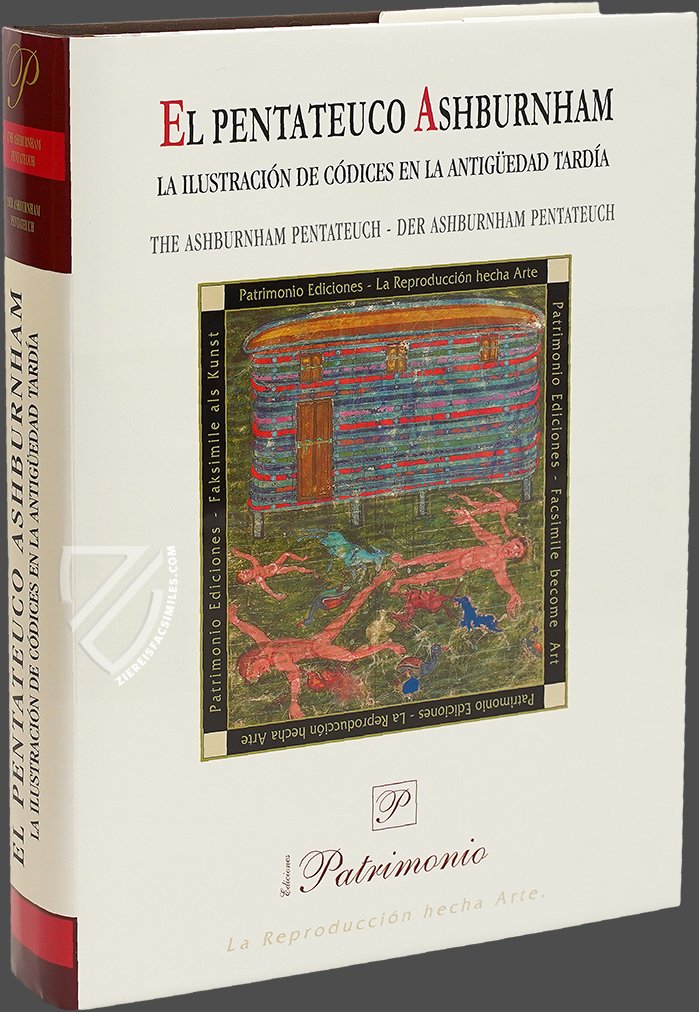
(3,000€ - 7,000€)
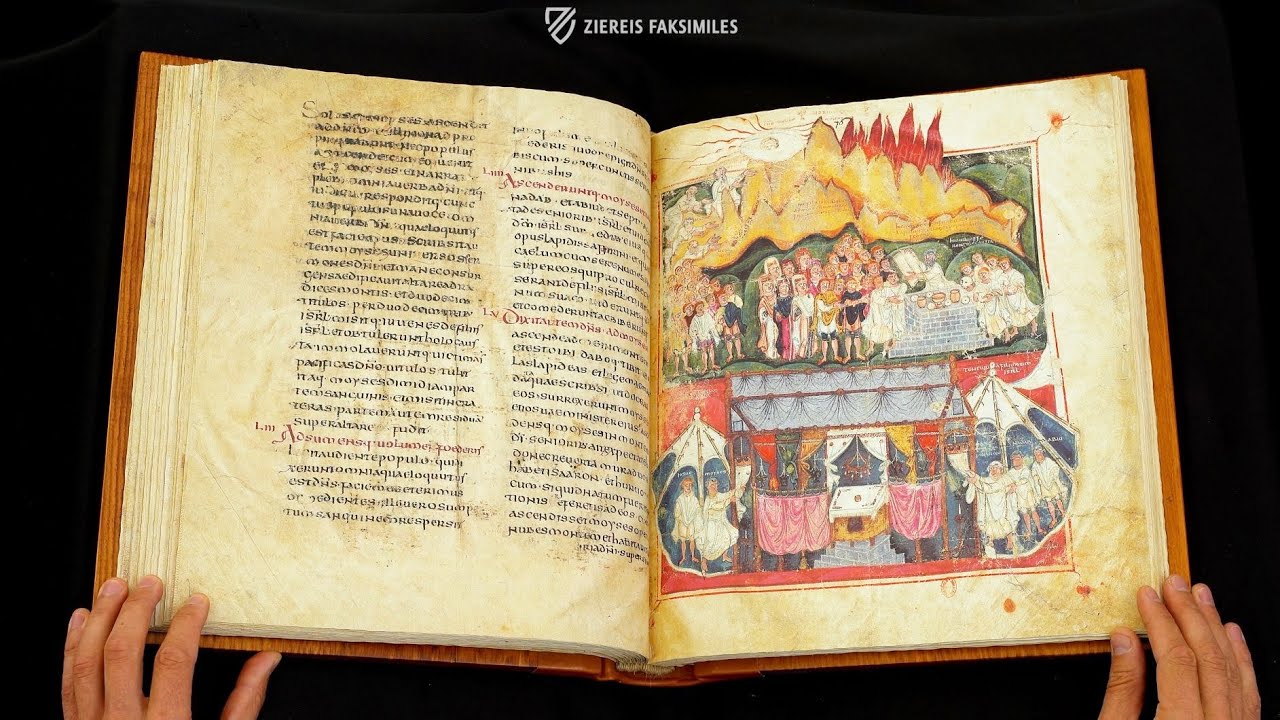
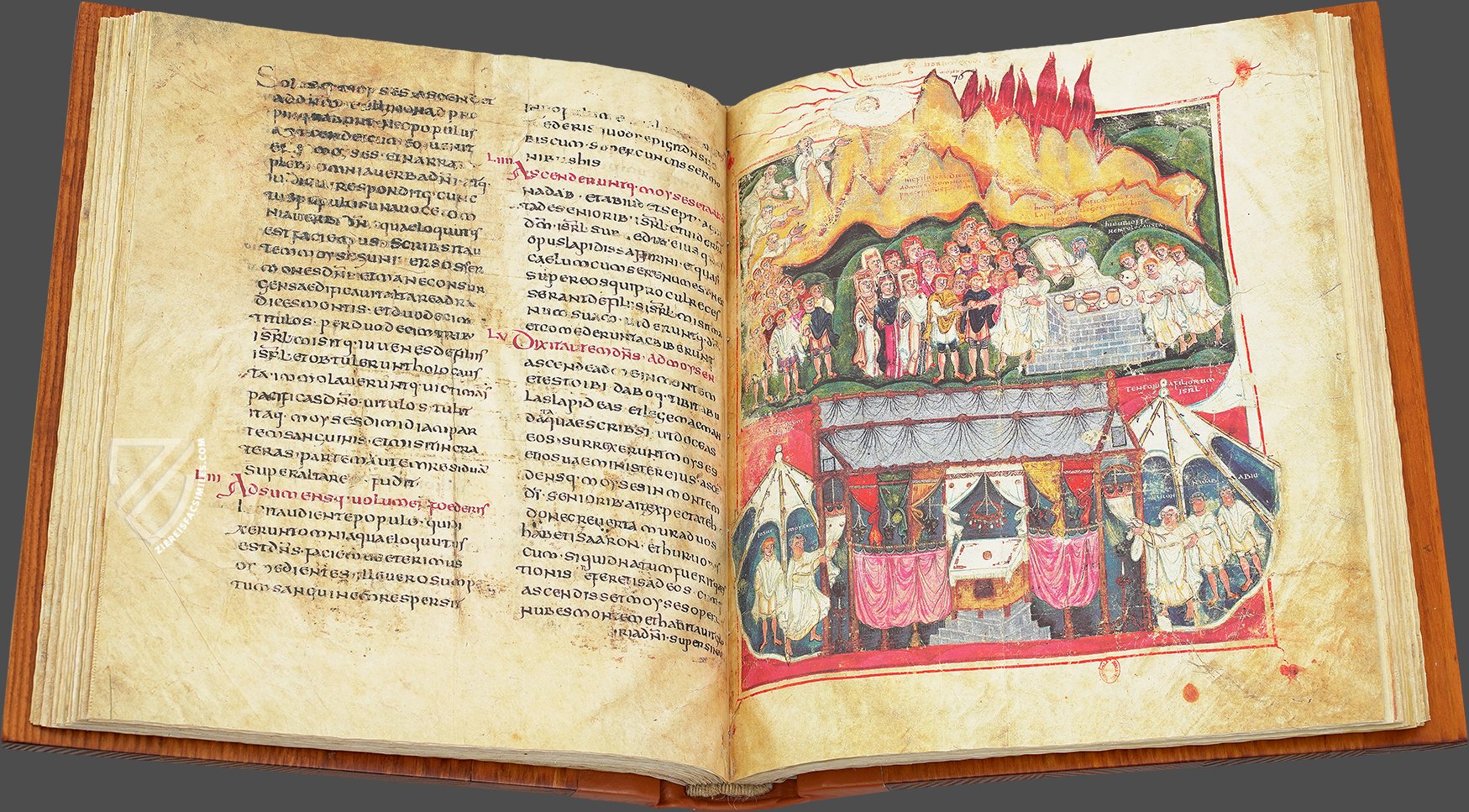
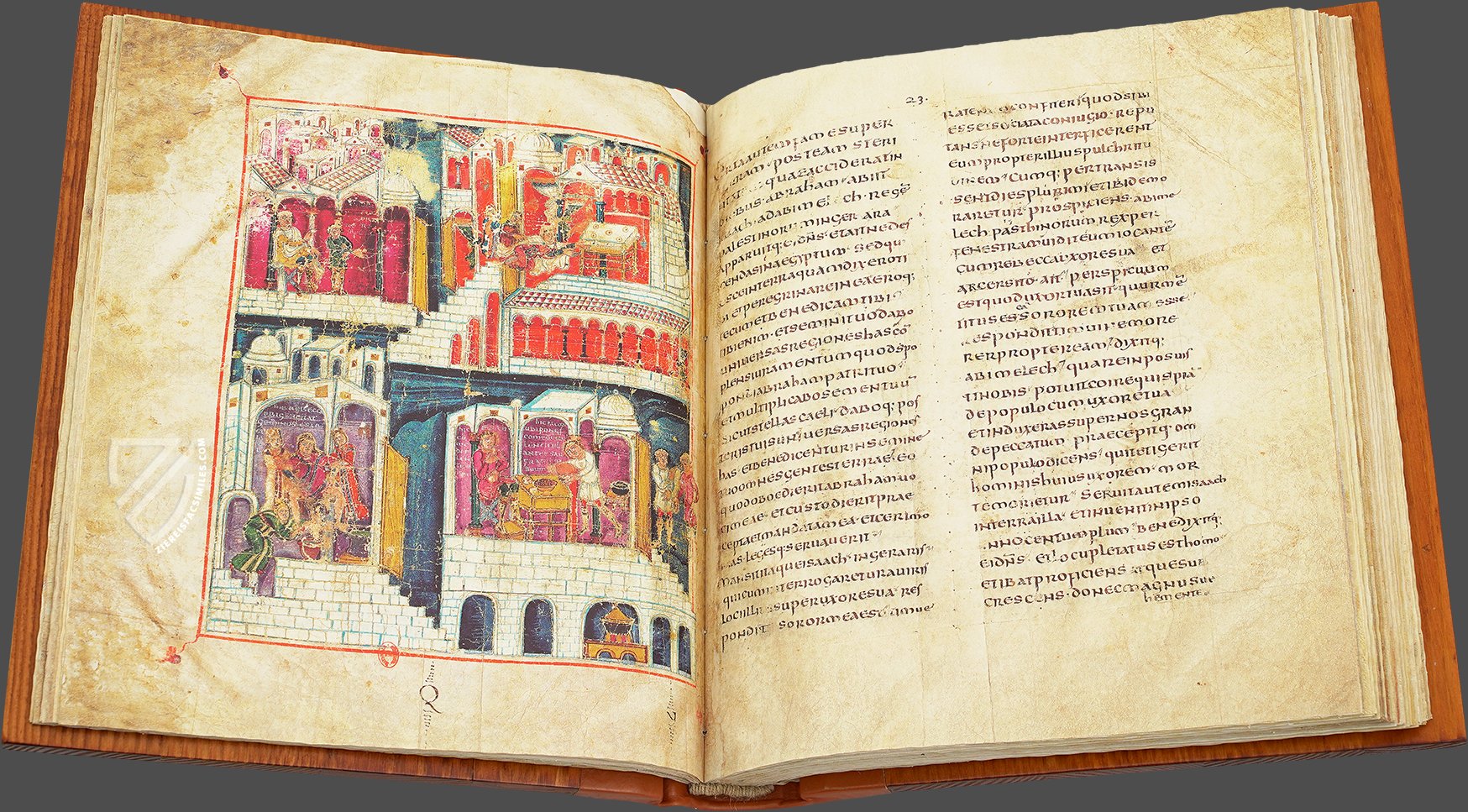
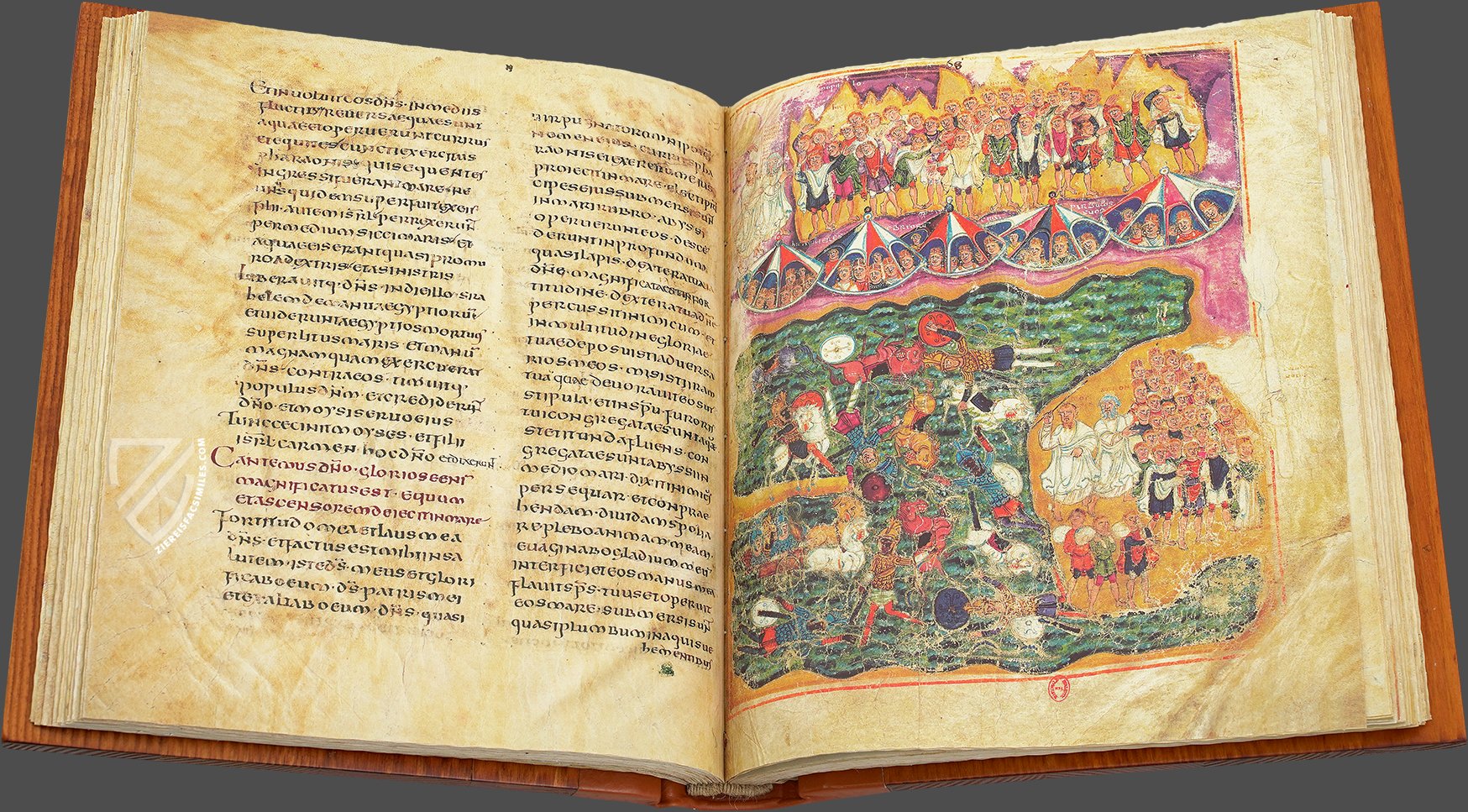
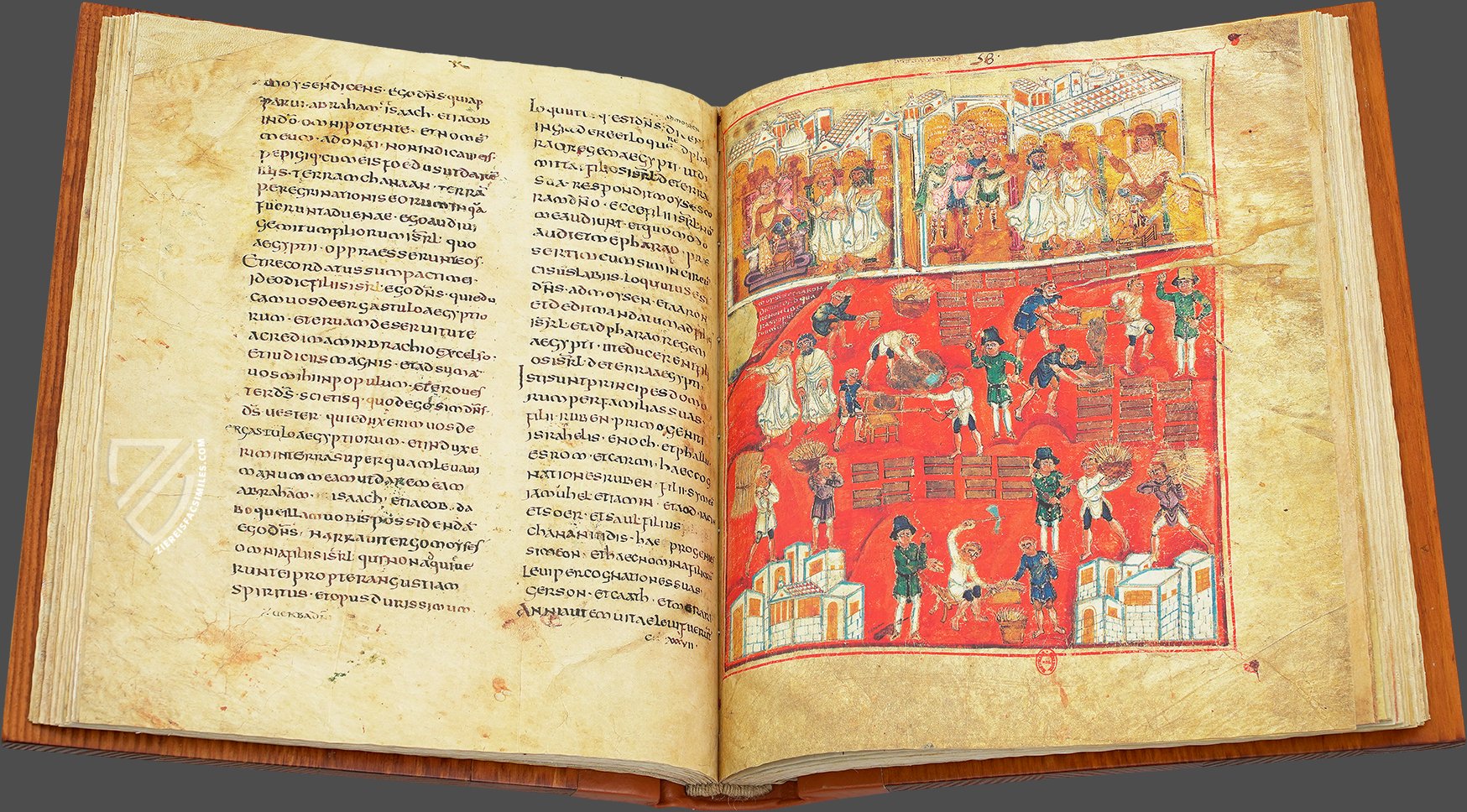
The so-called Ashburnham Pentateuch is without a doubt one of the most significant surviving illuminated manuscripts of late antiquity. The Five Books of Moses it contains were originally accompanied by 69 large, vividly colored, and narratively complex miniatures, 19 of which have survived to this day. They artfully combine image and text and follow the tradition of late antique art. As a result, these expressive miniatures make the manuscript a key work of early medieval book illumination and an important testament to the transition from late antique to medieval art.
Ashburnham Pentateuch
This remarkable manuscript was likely produced toward the end of the 6th or in the early 7th century and contains the Five Books of Moses—that is, the Pentateuch—in an early version of the Vulgate, the most widely used Latin translation of the Bible in the Middle Ages. It is thus one of the oldest Latin Bible manuscripts that have survived to this day. Its exact place of origin remains unclear. Scholars primarily discuss northern Italy or Rome, North Africa, and Spain as possible locations. It is precisely this early, mysterious origin that makes the manuscript particularly interesting in terms of art history, as it combines various late antique and early medieval pictorial traditions.
Remarkable Illumination
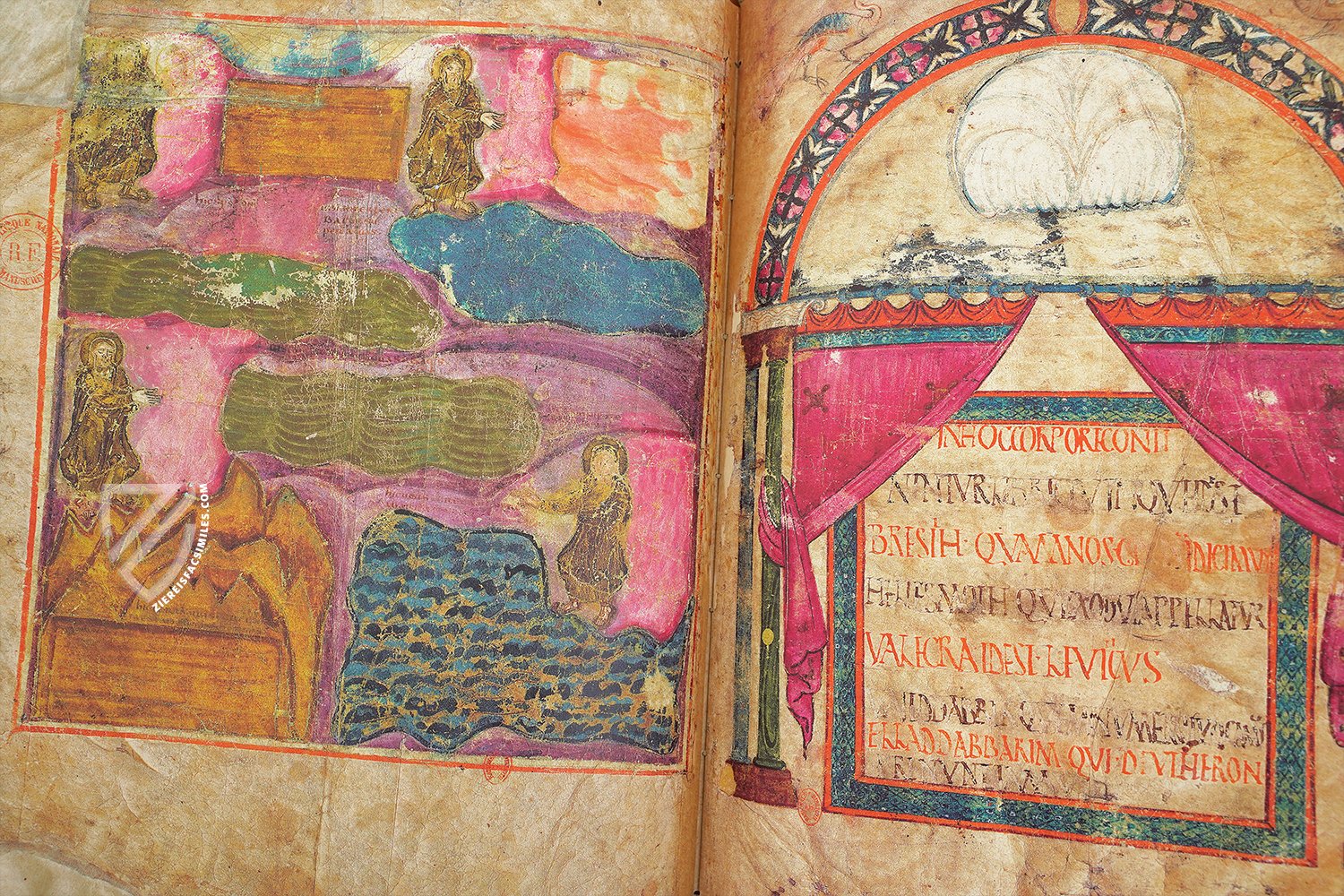
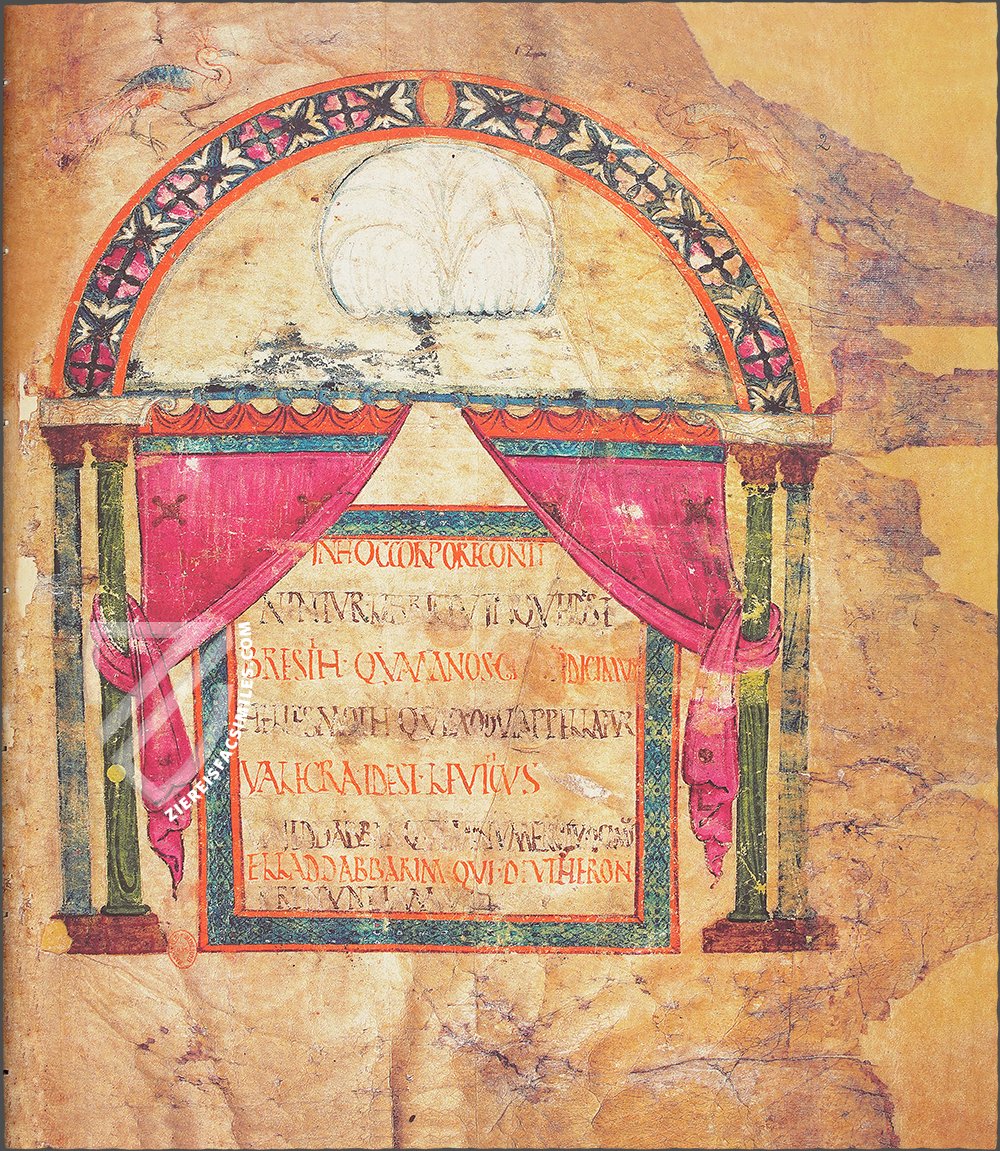
Given its age and the long and at times turbulent history that comes with it, it is hardly surprising that this valuable manuscript survives today only in a highly fragmentary state. In fact, the Book of Deuteronomy has only a single page remaining. The Books of Genesis and Exodus are the most extensively preserved and feature the greatest number of miniatures. The codex as a whole was originally likely adorned with a total of 69 large miniatures, of which 17 full-page miniatures, one half-page miniature, and the frontispiece still captivate their viewers today. This makes the codex unquestionably one of the earliest examples of extensive illumination of the Vulgate known to us today.
Visual Storytelling
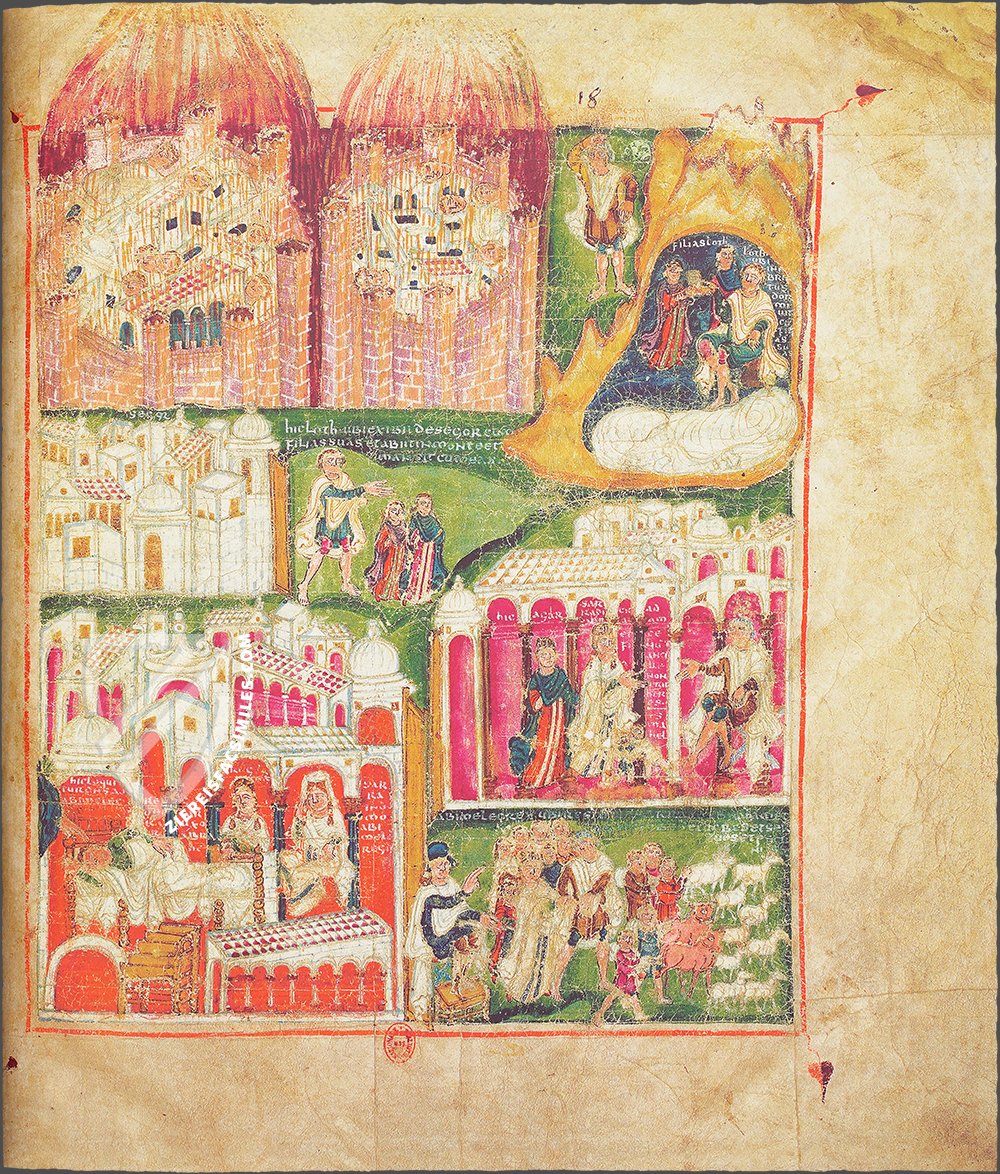
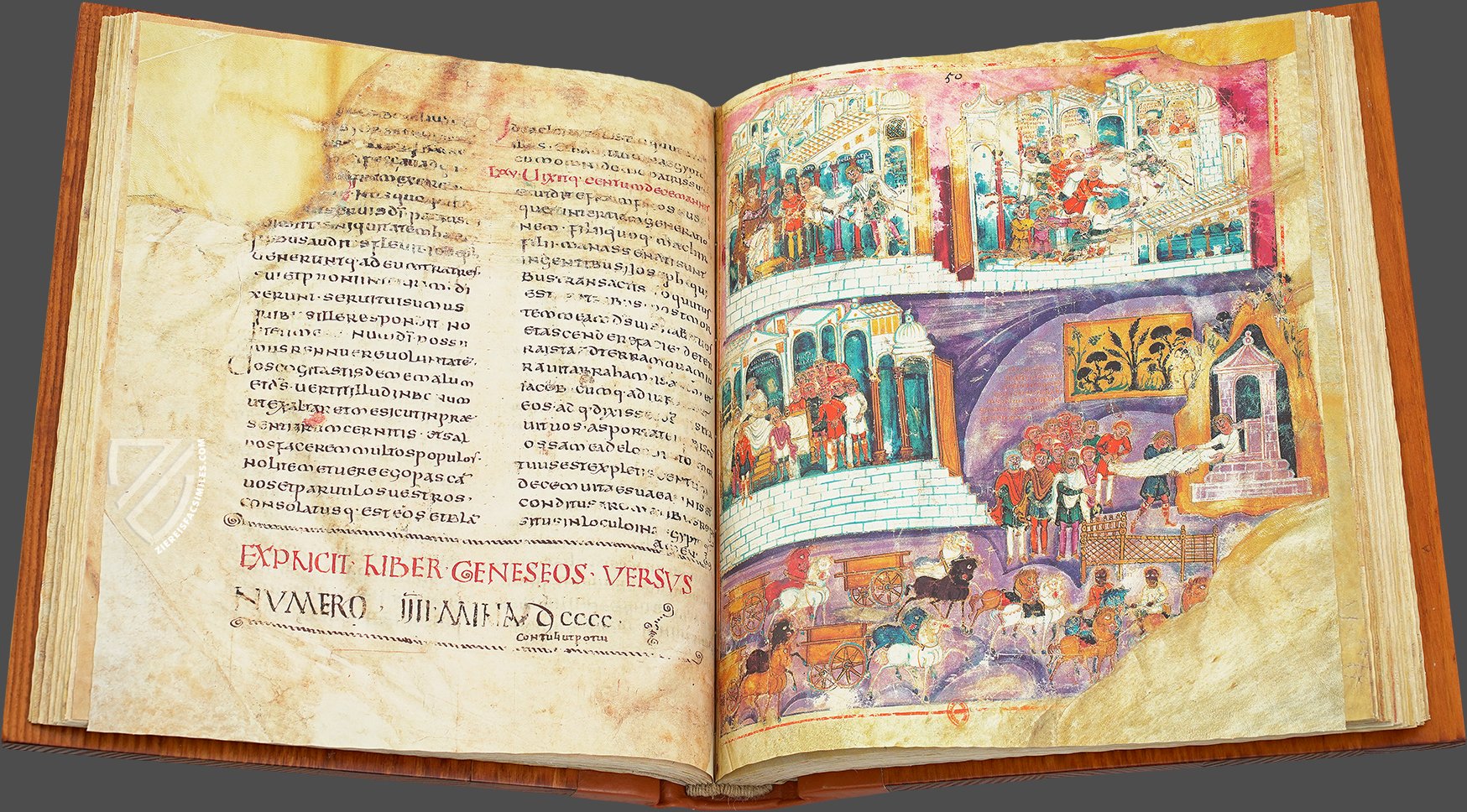
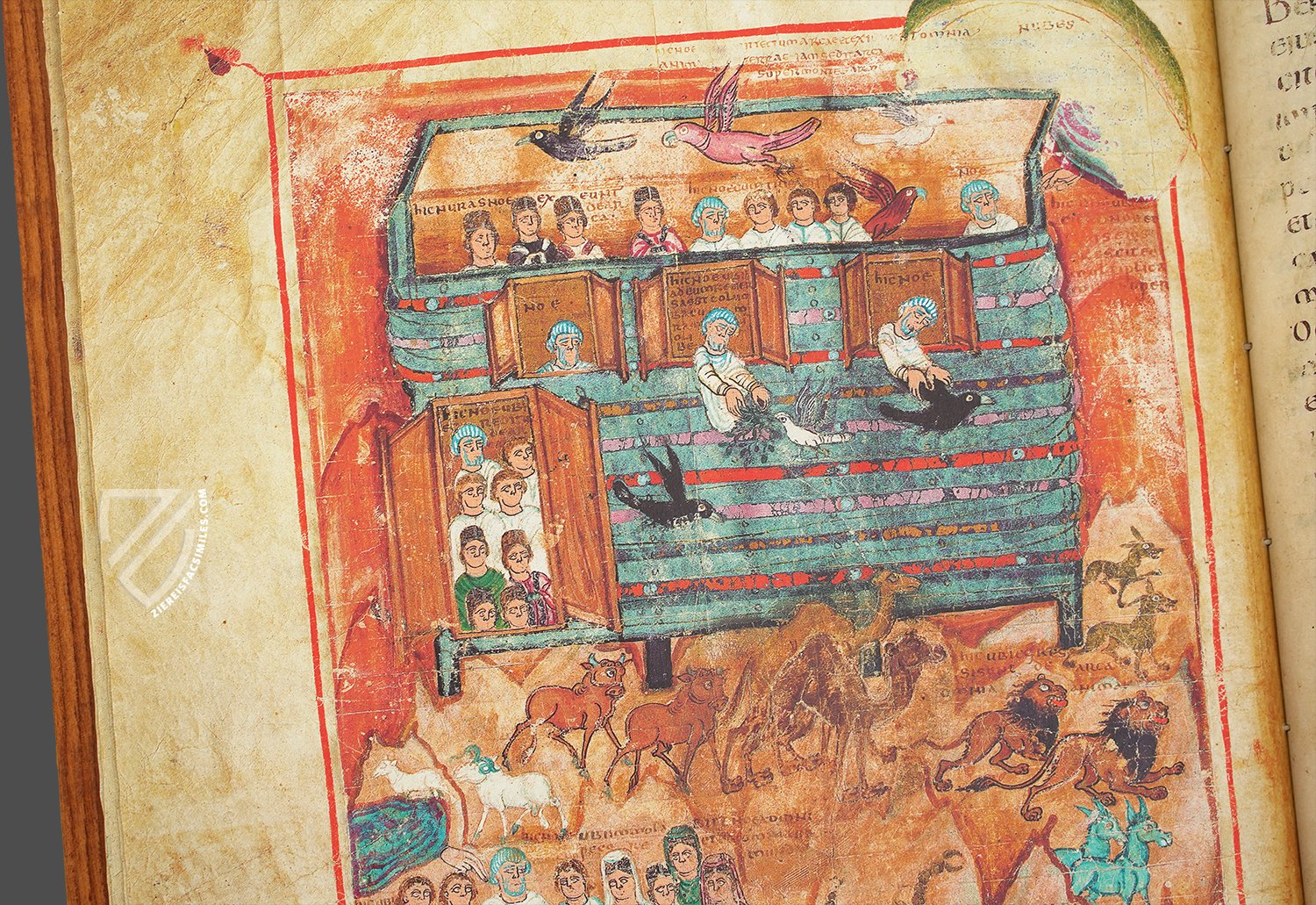
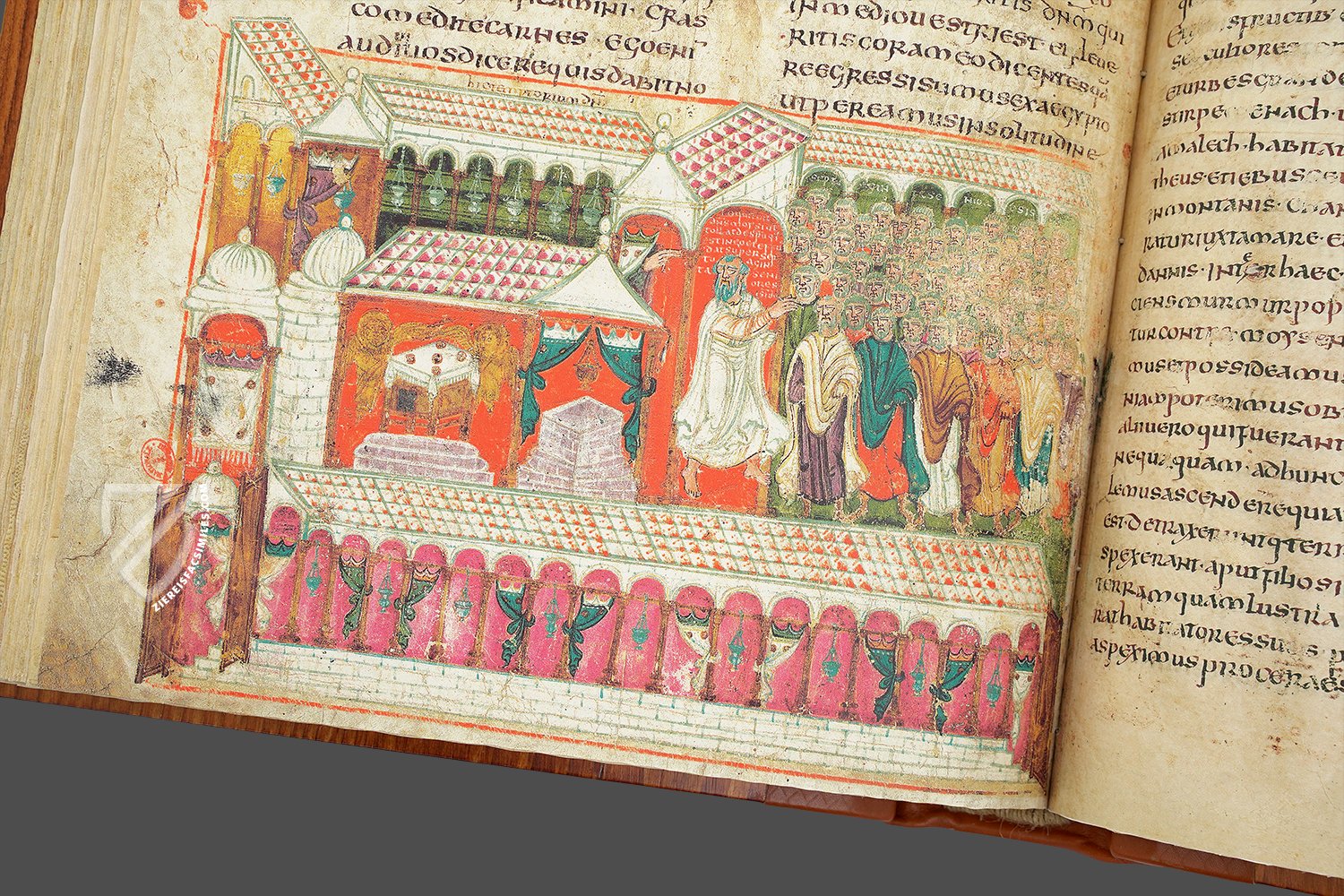
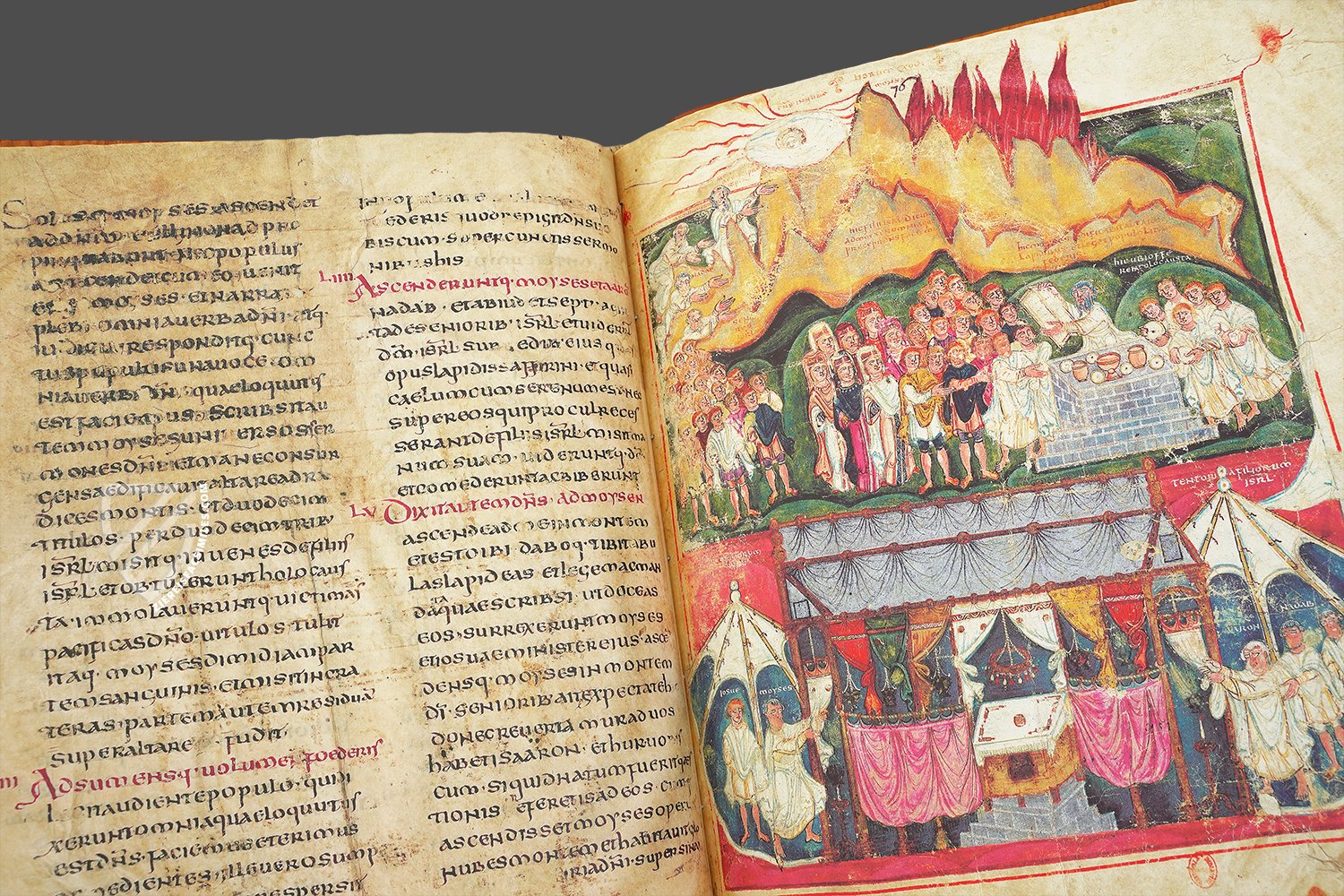
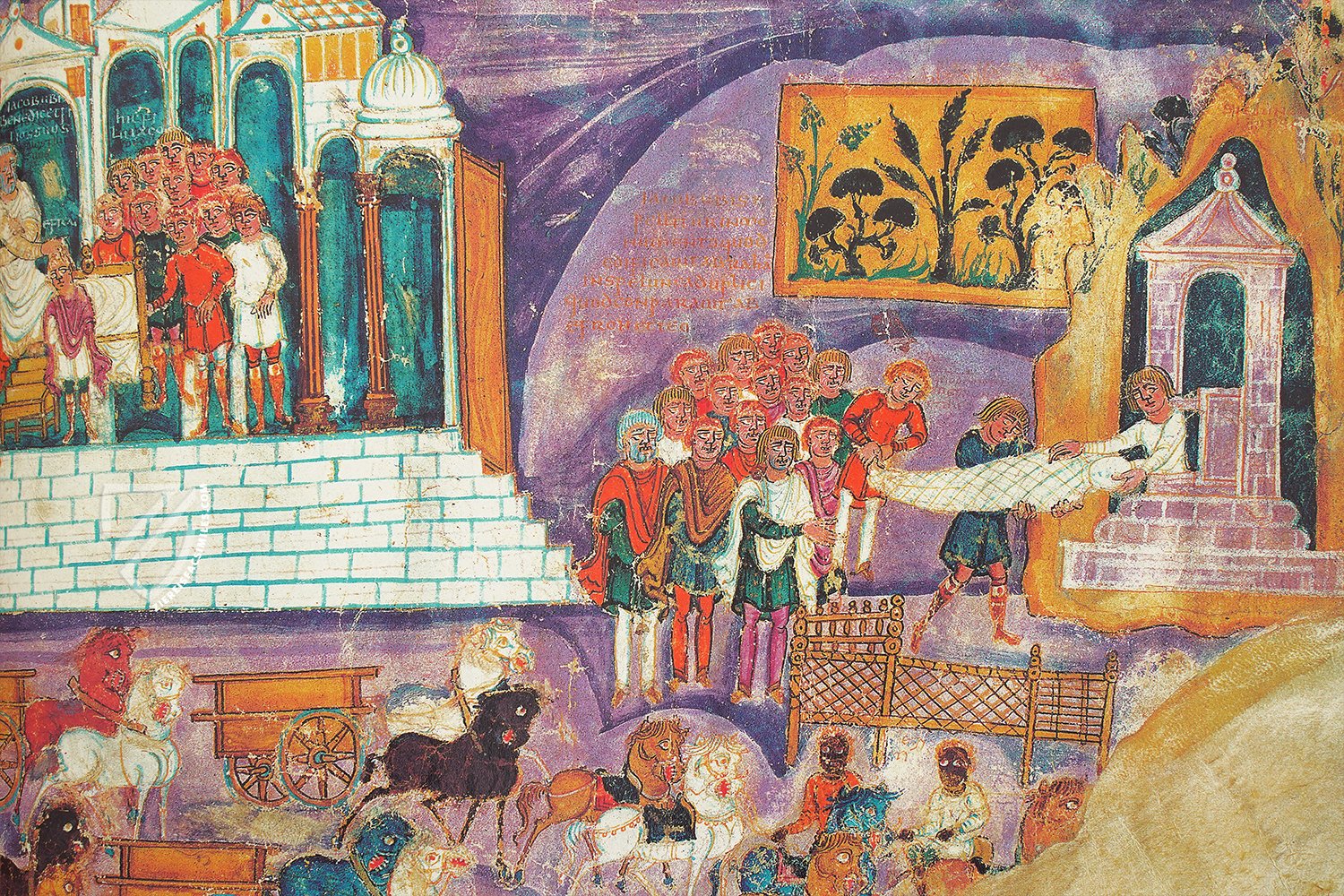
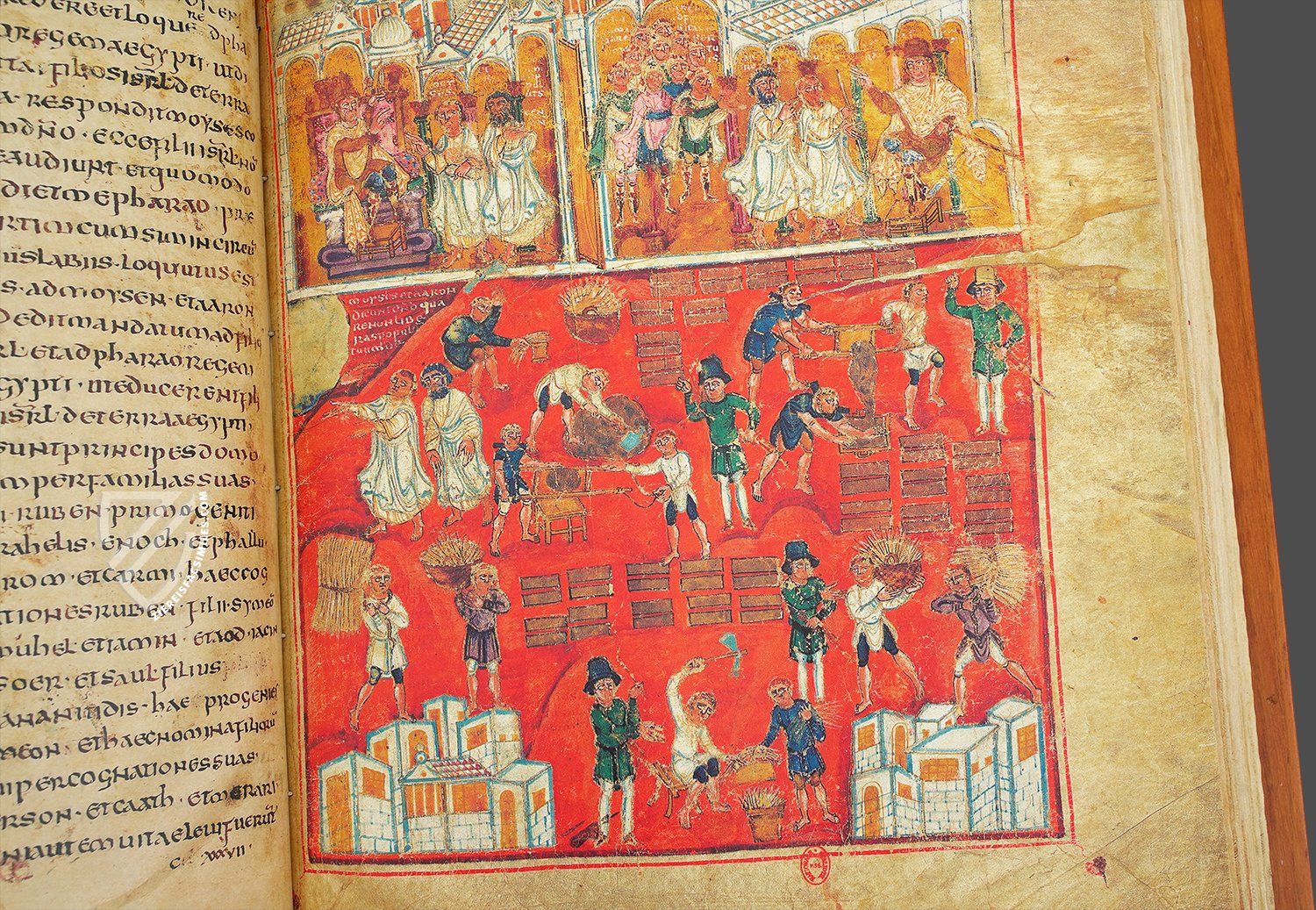
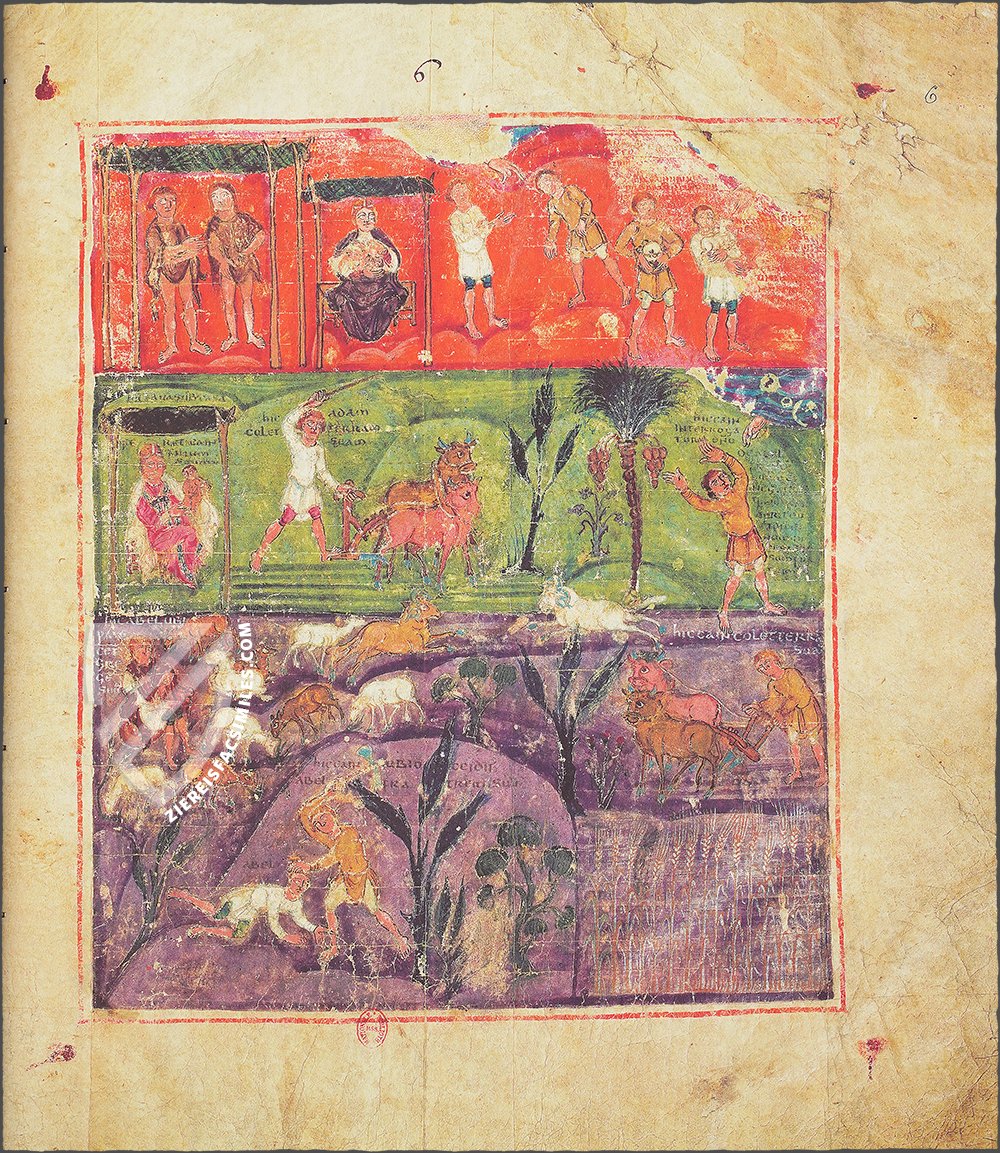
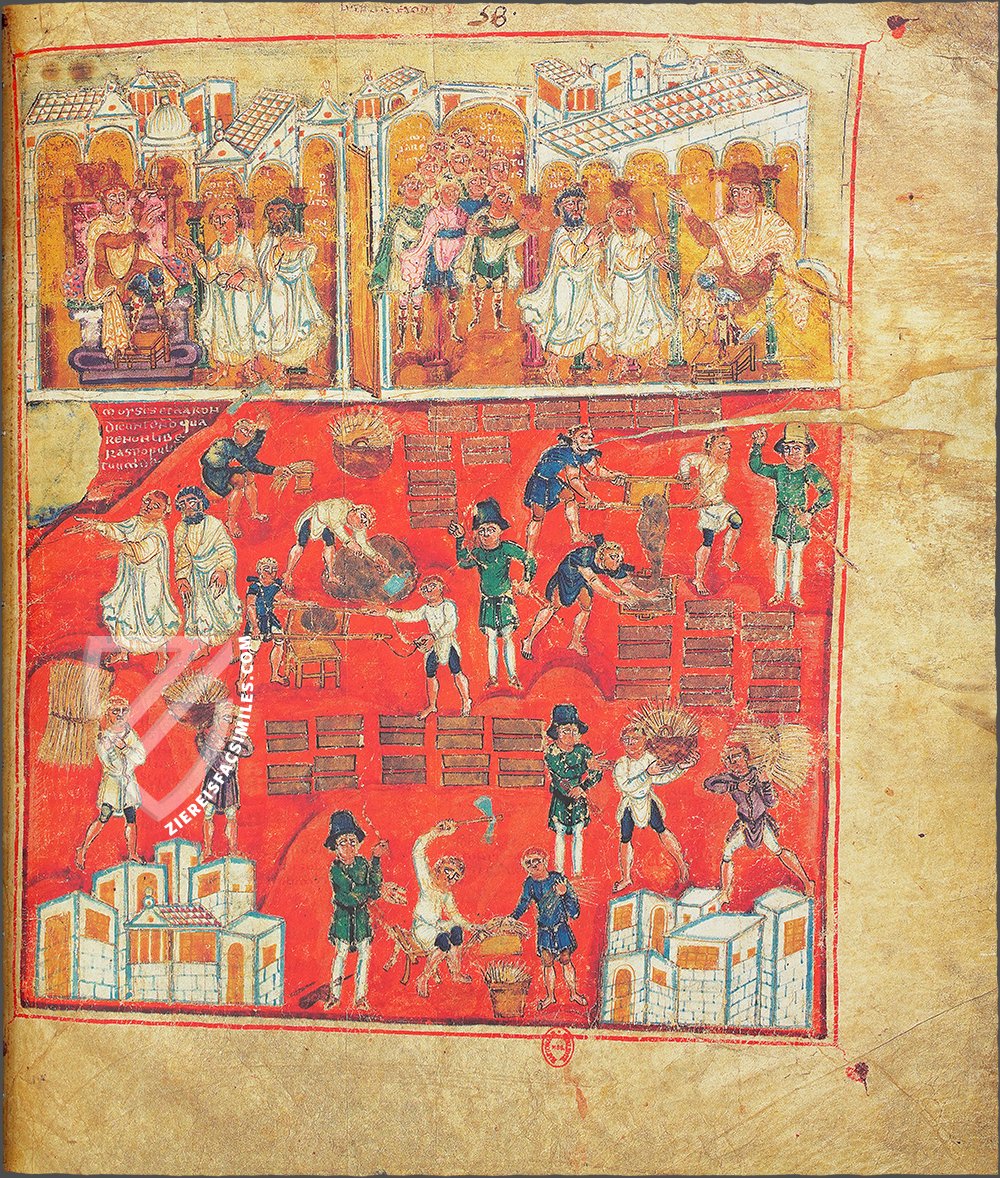
The colorful miniatures are wonderful complements to the biblical texts and depict the events described in a highly vivid manner. Often, several chronologically consecutive scenes are depicted side by side within a single miniature, artfully synthesizing them into a single composition. The result are condensed visual narratives of impressive complexity. For example, the illustration of Cain and Abel depicts various stages of their story in multiple registers arranged one above the other. The different colored backgrounds help distinguish the individual time periods of the actions depicted. Other miniatures focus on single scenes, which are presented in a large-scale and imposing manner—such as the Flood and Noah’s Ark.
Painting in the Tradition of Late Antiquity
The many Old Testament figures are often characterized by expressive gestures and movements. Architectural elements, landscapes, and objects complement the events depicted and lend the scenes a narrative and, at times, downright theatrical character. The expressiveness of the images is underscored by their vibrant and high-contrast color palette. In particular, the use of blue, red, green, and purple skillfully structures the compositions. Remarkably, analyses of the pigments used have revealed, among other things, an extensive use of Egyptian blue. This deep-blue, artificially produced pigment was widely used in ancient Egypt and, from there, throughout the ancient Roman Empire. Its use, however, declined over the course of the Middle Ages. The paintings thus not only demonstrate high artistic quality but also serve as evidence of late antique painting techniques that were still employed in the creation of the Ashburnham Pentateuch.
Late Antique Uncial and Carolingian Minuscule
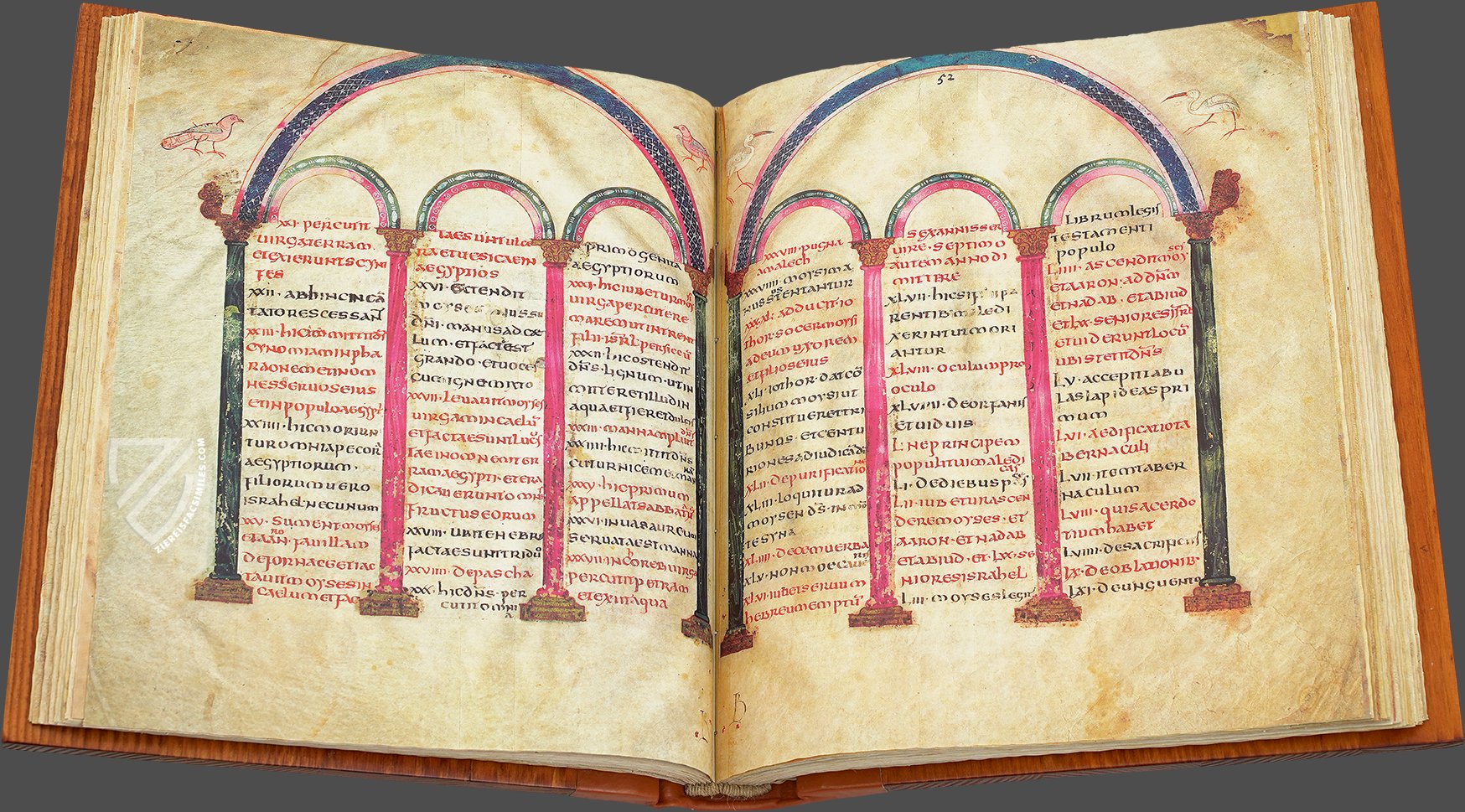
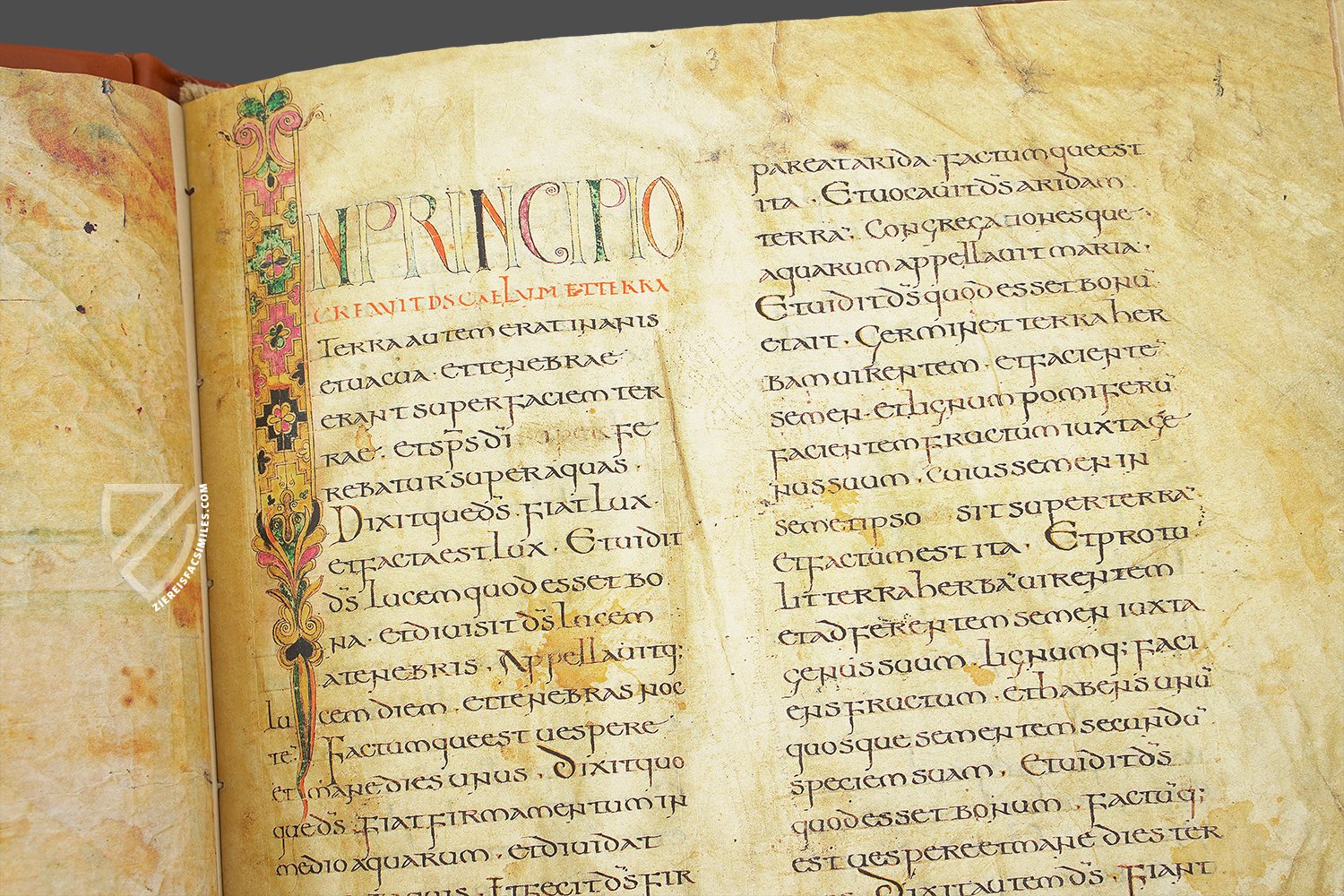
The original calligraphy is also rooted in ancient tradition. The main text is written in Roman uncials and, in some places, semi-uncials. The text is predominantly arranged in two columns and is structured by red display scripts and unadorned initials. Later additions from the 9th century were executed in the Carolingian minuscule, reflecting the customs of that time. Thus, the manuscript also serves as a bridge between different phases of writing culture.
A Defining Work of the Early Middle Ages
The Ashburnham Pentateuch holds particular significance for the development of early medieval book illumination. Its miniatures served as models for other illuminations, and the way in which complex biblical narratives are visually linked and conveyed through multiple scenes, registers, and gestures had a formative influence on medieval art in Europe. The manuscript thus stands at a crucial juncture between late antique visual language and the emerging early medieval book illumination.
An Eventful History and Famous Names
The manuscript is inevitably linked to a fascinating history of ownership. It first appears in the possession of the Monastery of St. Martin in Tours, more specifically in St. Gatianus Cathedral. In the 19th century, the Bible of Tours—initially named after this location—was stolen by the Italian collector and manuscript dealer Guglielmo Libri and sold to the Duke of Ashburnham, after whom the codex is generally named today. In 1888, the Ashburnham Pentateuch found its way to the Bibliothèque Nationale de France, where it is still preserved today.
Codicology
- Alternative Titles
- Biblia de Tours
Tours Pentateuch
Bible de Tours
Bibbia di Tours
Bíblia de Tours
Bibel von Tours
Pentateuque dit d’Ashburnham ou de Tours - Size / Format
- 284 pages / 37.1 × 32.1 cm
- Origin
- Italy
- Date
- late 6th or early 7th century, mid-8th century additions
- Epochs
- Style
- Genre
- Language
- Script
- Uncial Carolingian minuscule (f. 32v)
- Illustrations
- 18 miniatures, 17 of which are full-page and 1 of which is half-page, 1 frontispiz, 10 splendid canon tables and initials
- Content
- Fragment of the biblical books Genesis, Exodus, Leviticus, Numbers, and Deuteronomy
- Previous Owners
- Monastery of St. Martin in Tours
Guglielmo Libri Carucci dalla Sommaja
Duke of Ashburnham
Leopold Delisle
Ashburnham Pentateuch
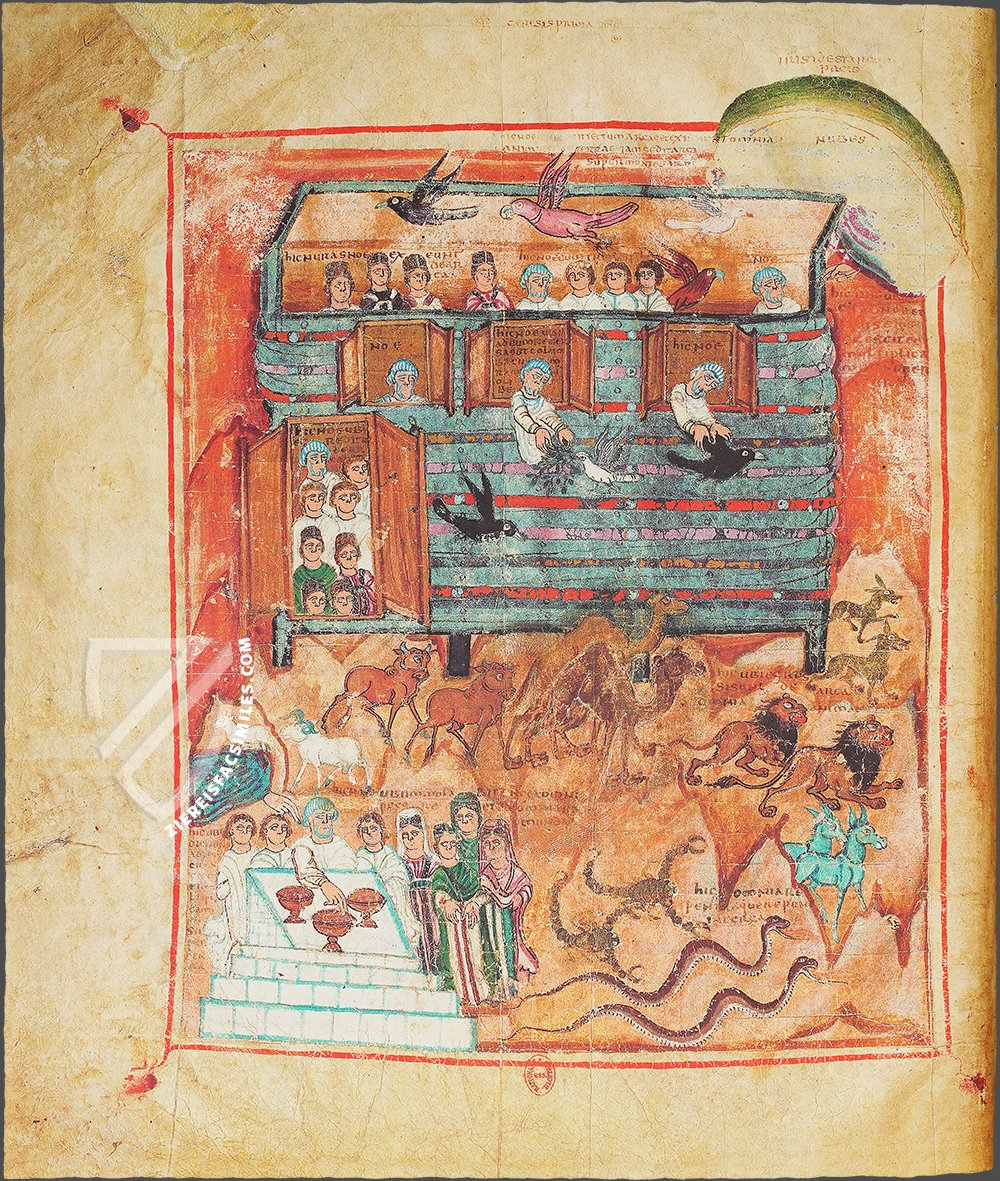
Noah’s Ark
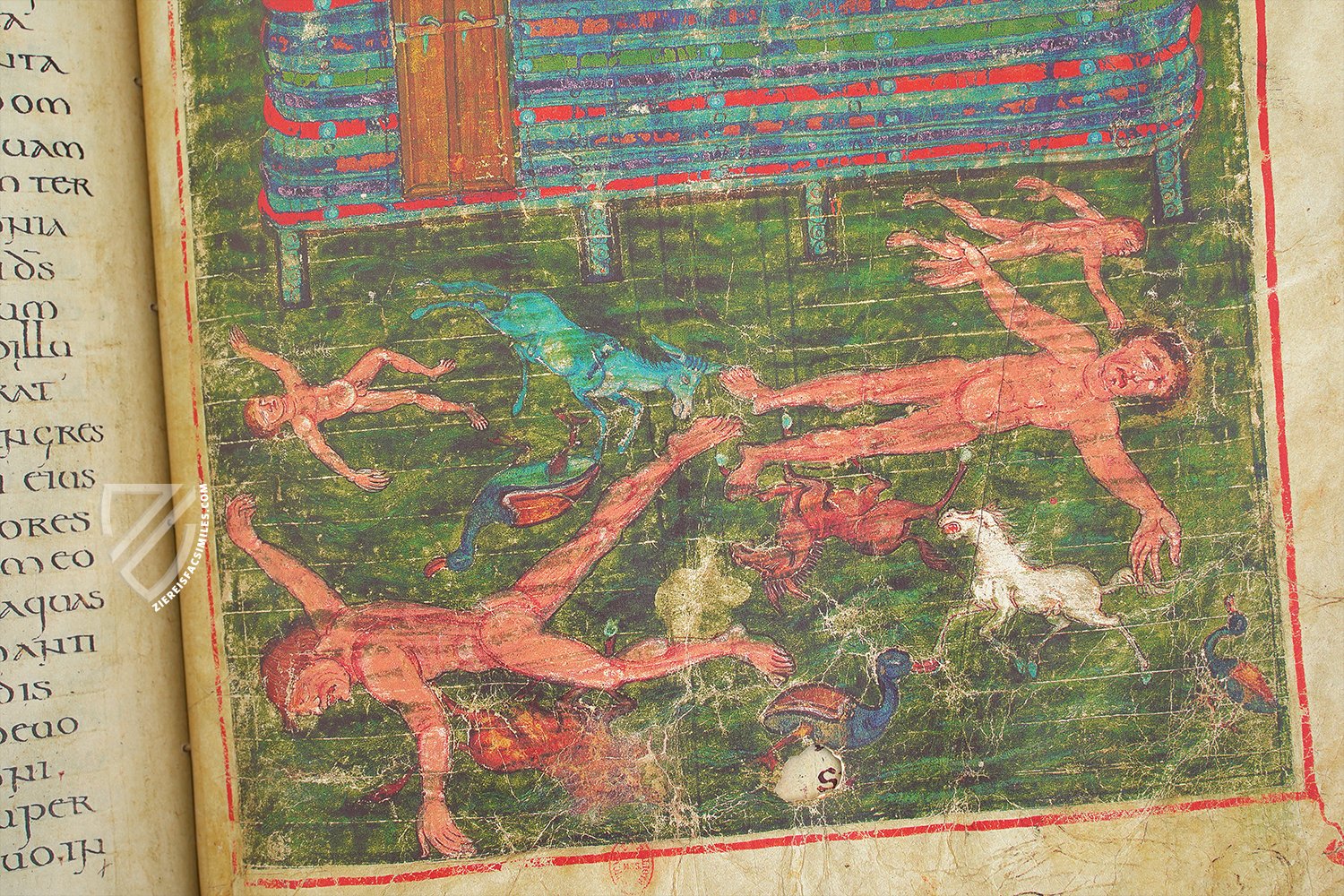
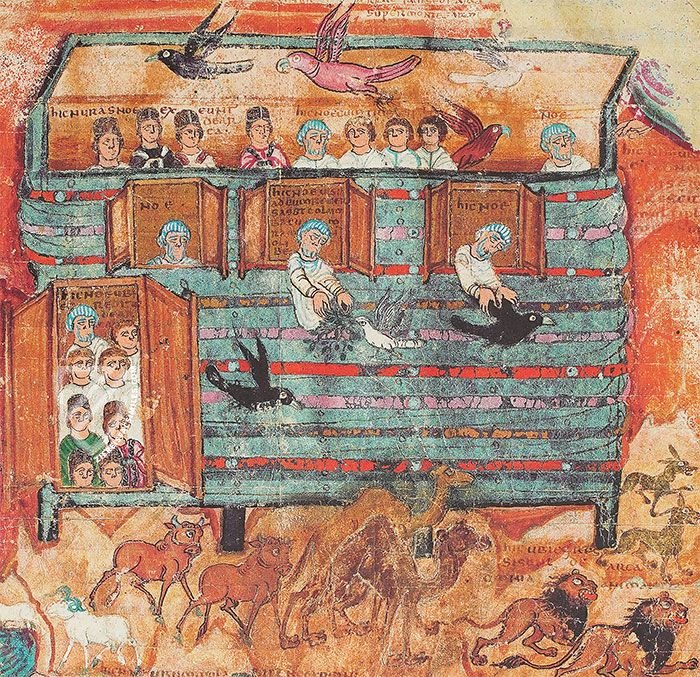
Rather than a great ship, Noah’s Ark is depicted as a great chest or box in the tradition of Rabbinic literature. Accounts vary as to the type of bird used by Noah to find land, but the artist has split the difference and shows both the raven, which was initially dispatched, and the dove, which in the Christian tradition returned with an olive branch in its beak as a sign of peace and salvation. The artist has condensed the image by showing the animals already disembarking from the Ark.
Ashburnham Pentateuch
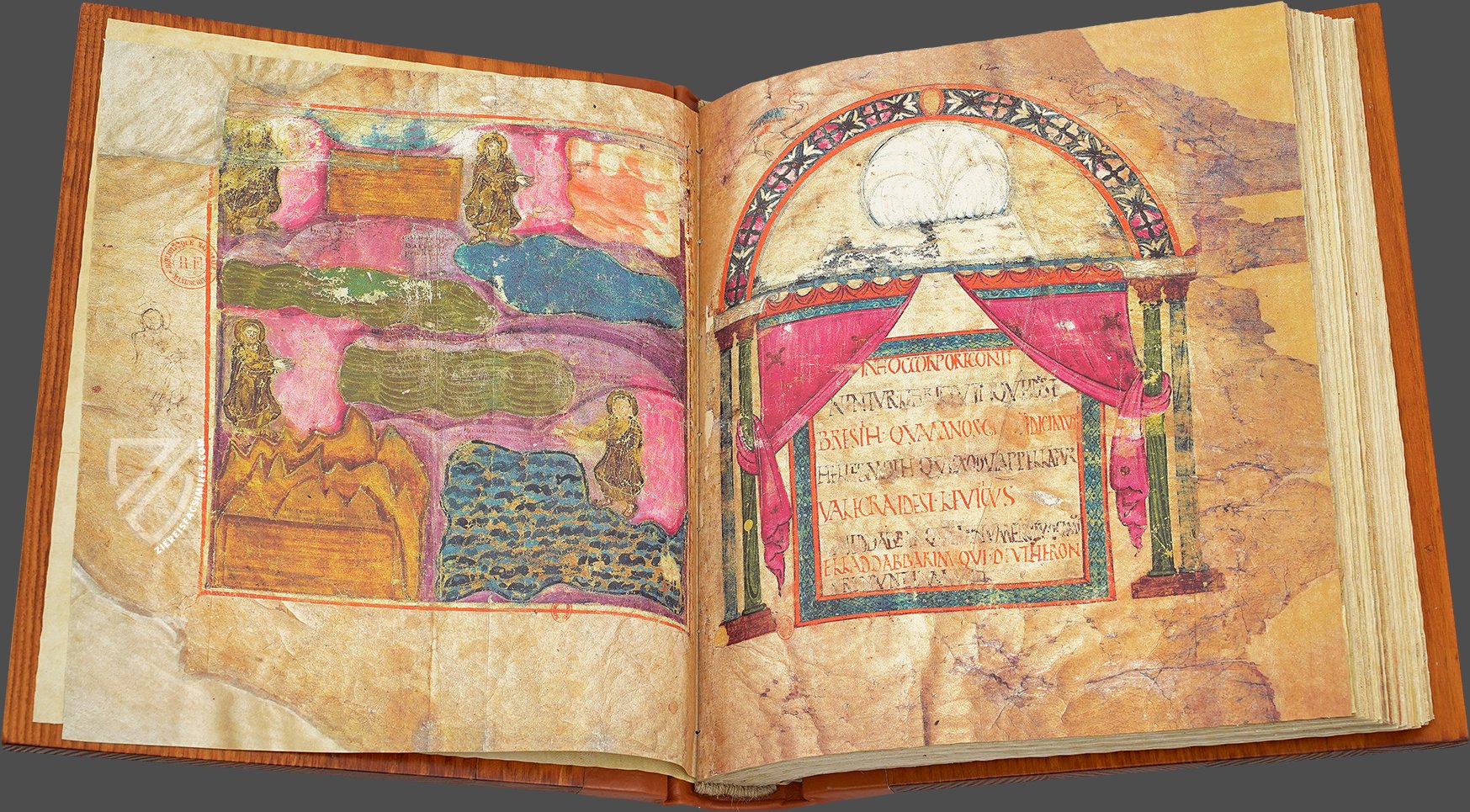
Cain and Abel
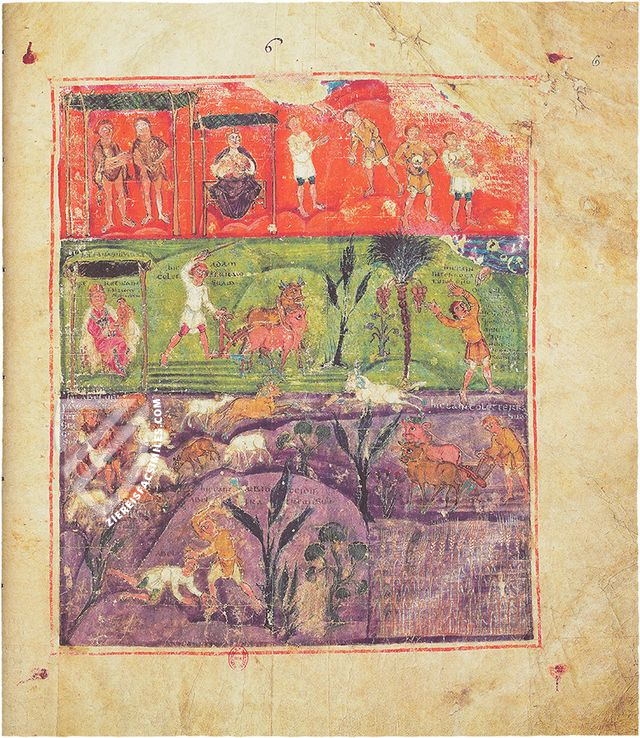
In the Book of Genesis, Cain and Abel are the first two sons of Adam and Eve, the first was a farmer and the latter a shepherd. Both brothers made sacrifices, but God favored Abel’s sacrifice over that of his older brother. Cain then murders Abel in a jealous rage, thus making him the first murderer and his brother the first murder victim. God then punishes Cain by condemning him to a life of wandering.
The story of the two brothers is depicted in three phases, each identifiable by a different background color: in the red upper register, both brothers present their sacrifices; in the green middle register, God warns Cain against being angry; in the purple bottom register, Cain is shown murdering Abel with a farm tool, possibly a hoe.
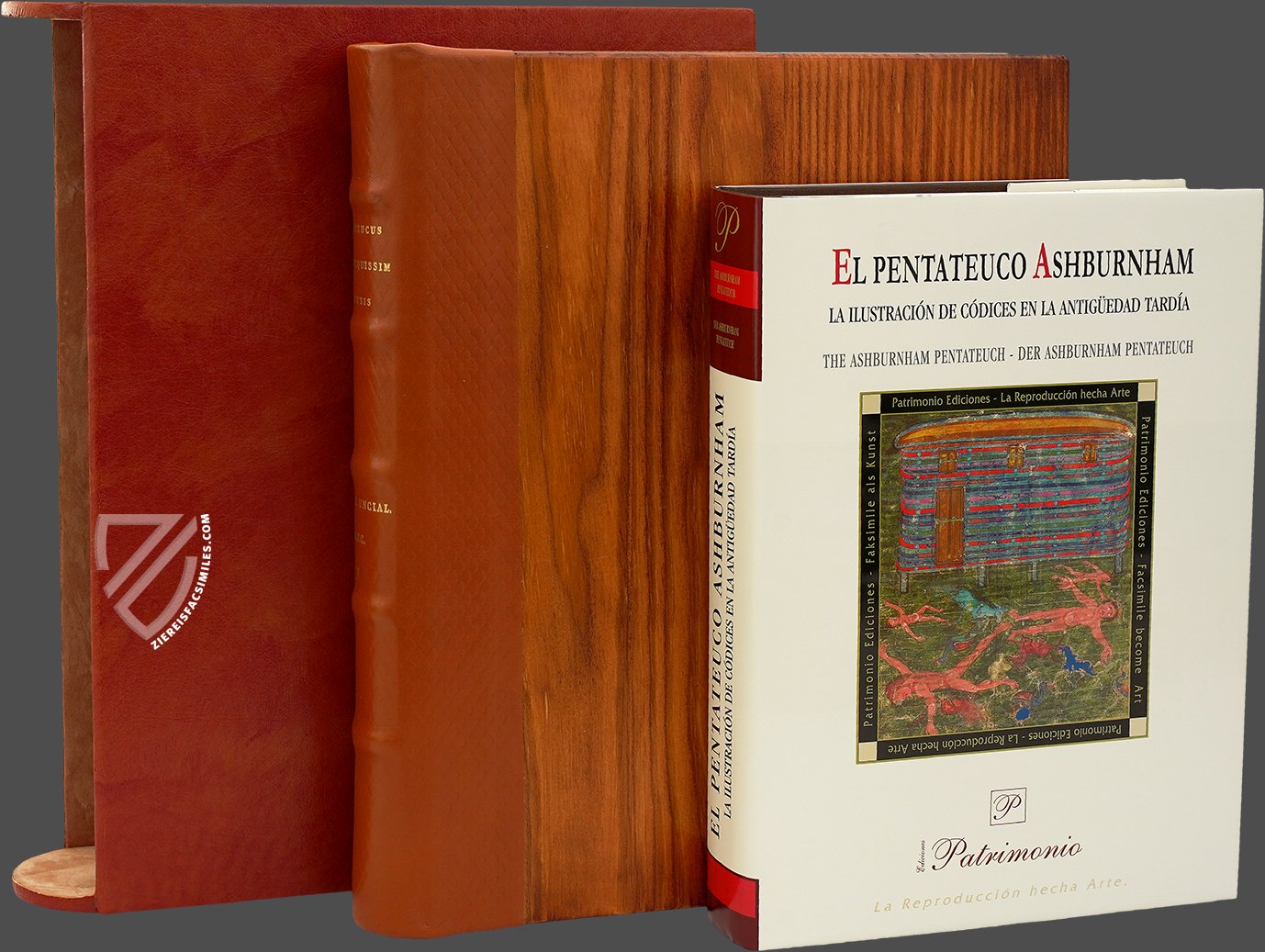
#1 Biblia de Tours
Languages: Spanish, English, German
(3,000€ - 7,000€)
- Block Books / Incunables / Post-incunables
- Alchemy
- Apocalypses / Beatus Manuscripts
- Astronomy / Astrology
- Bibles / Gospels
- Picture Bibles / Bibles Moralisées / Mirror of Human Salvation
- Botany
- Chronicles / History / Letters
- Cookbook / Recipes
- Diaries / Biographies / Autograph Books
- Encyclopedias
- Fashion / Costume Books
- Games / Game Theory
- Geography / Cartography / Navigation
- Graduals / Antiphonaries / Exultet Roll
- Haggadot
- Hunting Books
- Law / Deeds / Rules
- Leonardo da Vinci
- Literature / Poetry
- Medicine
- Missals / Lectionaries / Sacramentaries
- Model Books / Sketchbooks / Notebooks
- Music
- Mythology
- Natural History / Bestiaries
- Other Liturgical Manuscripts
- Other Religious Works
- Other Secular Works
- Paintings / Graphics
- Primers / Textbooks
- Private Devotion Books
- Prophecies / Divination
- Psalters
- Quran
- Saints' Lives
- Sermons / Homilies
- Single Leaf Collections
- Song Books
- Tanakh
- Tournament Books / Armorials / Genealogy
- Travelogues / Travel Guides
- Treatises
- Afghanistan
- Algeria
- Armenia
- Austria
- Azerbaijan
- Belarus
- Belgium
- Belize
- Bosnia and Herzegovina
- China
- Colombia
- Costa Rica
- Croatia
- Cyprus
- Czech Republic
- Denmark
- Egypt
- El Salvador
- Ethiopia
- France
- Germany
- Greece
- Guatemala
- Honduras
- Hungary
- India
- Iran
- Iraq
- Israel
- Italy
- Japan
- Jordan
- Kazakhstan
- Kyrgyzstan
- Lebanon
- Libya
- Liechtenstein
- Luxembourg
- Mexico
- Morocco
- Netherlands
- Palestine
- Panama
- Peru
- Poland
- Portugal
- Romania
- Russia
- Serbia
- Slovakia
- Spain
- Sri Lanka
- Sweden
- Switzerland
- Syria
- Tajikistan
- Tunisia
- Turkey
- Turkmenistan
- Ukraine
- United Kingdom
- United States
- Uzbekistan
- Vatican City
- A. Oosthoek, van Holkema & Warendorf
- Aboca Museum
- Ajuntament de Valencia
- Akademie Verlag
- Akademische Druck- u. Verlagsanstalt (ADEVA)
- Aldo Ausilio Editore - Bottega d’Erasmo
- Alecto Historical Editions
- Alkuin Verlag
- Almqvist & Wiksell
- Amilcare Pizzi
- Andreas & Andreas Verlagsbuchhandlung
- Archa 90
- Archiv Verlag
- Archivi Edizioni
- Arnold Verlag
- ARS
- Ars Magna
- Ars Millenii
- Art Market
- ArtCodex
- AyN Ediciones
- Azimuth Editions
- Badenia Verlag
- Bärenreiter-Verlag
- Belser Verlag
- Belser Verlag / WK Wertkontor
- Benziger Verlag
- Bernardinum Wydawnictwo
- BiblioGemma
- Biblioteca Apostolica Vaticana (Vaticanstadt, Vaticanstadt)
- Bibliotheca Palatina Faksimile Verlag
- Bibliotheca Rara
- Boydell & Brewer
- Bramante Edizioni
- Bredius Genootschap
- Brepols Publishers
- British Library
- Brokarte
- C. Weckesser
- Caixa Catalunya
- Canesi
- CAPSA, Ars Scriptoria
- Caratzas Brothers, Publishers
- Carus Verlag
- Casamassima Libri
- Centrum Cartographie Verlag GmbH
- Chavane Verlag
- Christian Brandstätter Verlag
- Circulo Cientifico
- Club Bibliófilo Versol
- Club du Livre
- Club Internacional del Libro
- CM Editores
- Collegium Graphicum
- Collezione Apocrifa Da Vinci
- Comissão Nacional para as Comemorações dos Descobrimentos Portugueses
- Coron Verlag
- Corvina
- CTHS
- D. S. Brewer
- Damon
- De Agostini/UTET
- De Nederlandsche Boekhandel
- De Schutter
- Deuschle & Stemmle
- Deutscher Verlag für Kunstwissenschaft
- DIAMM
- Dropmore Press
- Droz
- E. Schreiber Graphische Kunstanstalten
- Ediciones Boreal
- Ediciones Grial
- Ediclube
- Edições Inapa
- Edilan
- Editalia
- Edition Deuschle
- Edition Georg Popp
- Edition Leipzig
- Edition Libri Illustri
- Editiones Reales Sitios S. L.
- Éditions de l'Oiseau Lyre
- Editions Medicina Rara
- Editorial Base
- Editorial Casariego
- Editorial Mintzoa
- Editrice Antenore
- Editrice Velar
- Edizioni Edison
- Egeria, S.L.
- Eikon Editores
- Electa
- Emery Walker Limited
- Enciclopèdia Catalana
- Eos-Verlag
- Ephesus Publishing
- Ernst Battenberg
- Eugrammia Press
- Extraordinary Editions
- Fackelverlag
- Facsimila Art & Edition
- Facsimile Editions Ltd.
- Facsimilia Art & Edition Ebert KG
- Faksimile Verlag
- Feuermann Verlag
- Folger Shakespeare Library
- Franco Cosimo Panini Editore
- Friedrich Wittig Verlag
- Fundación Hullera Vasco-Leonesa
- G. Braziller
- Gabriele Mazzotta Editore
- Gebr. Mann Verlag
- Gesellschaft für graphische Industrie
- Getty Research Institute
- Giovanni Domenico de Rossi
- Giunti Editore
- Goldenmark Librarium
- Graffiti
- Grafica European Center of Fine Arts
- Guido Pressler
- Guillermo Blazquez
- Gustav Kiepenheuer
- H. N. Abrams
- Harrassowitz
- Harvard University Press
- Helikon
- Hendrickson Publishers
- Henning Oppermann
- Herder Verlag
- Hes & De Graaf Publishers
- Hoepli
- Holbein-Verlag
- Houghton Library
- Hugo Schmidt Verlag
- Hungarian Academy of Sciences
- Idion Verlag
- Il Bulino, edizioni d'arte
- ILte
- Imago
- In Officina Danesi
- Insel Verlag
- Instituto de Estudios Altoaragoneses
- Instituto Nacional de Antropología e Historia
- Introligatornia Budnik Jerzy
- Istituto dell'Enciclopedia Italiana - Treccani
- Istituto Ellenico di Studi Bizantini e Postbizantini
- Istituto Geografico De Agostini
- Istituto Poligrafico e Zecca dello Stato
- Italarte Art Establishments
- Jaca Book
- Jan Thorbecke Verlag
- Johnson Reprint Corporation
- Johnson Reprint Corporation
- Jos. Baer
- Josef Stocker
- Josef Stocker-Schmid
- Jugoslavija
- Karl W. Hiersemann
- Kasper Straube
- Kaydeda Ediciones
- Kindler Verlag / Coron Verlag
- Kodansha International Ltd.
- Konrad Kölbl Verlag
- Kurt Wolff Verlag
- La Linea Editrice
- La Meta Editore
- Lambert Schneider
- Landeskreditbank Baden-Württemberg
- Leo S. Olschki
- Les Incunables
- Liber Artis
- Library of Congress
- Libreria Musicale Italiana
- Lichtdruck
- Lito Immagine Editore
- Lumen Artis
- Lund Humphries
- M. Moleiro Editor
- Maison des Sciences de l'homme et de la société de Poitiers
- Manuscriptum
- Martinus Nijhoff
- Maruzen-Yushodo Co. Ltd.
- MASA
- Massada Publishers
- McGraw-Hill
- Metropolitan Museum of Art
- Militos
- Millennium Liber
- Müller & Schindler
- Nahar - Stavit
- Nahar and Steimatzky
- National Library of Wales
- Neri Pozza
- Nova Charta
- Oceanum Verlag
- Odeon
- Omnia Arte
- Orbis Mediaevalis
- Orbis Pictus
- Österreichische Staatsdruckerei
- Oxford University Press
- Pageant Books
- Parzellers Buchverlag
- Patrimonio Ediciones
- Pattloch Verlag
- PIAF
- Plon-Nourrit et cie
- Poligrafiche Bolis
- Presses Universitaires de Strasbourg
- Prestel Verlag
- Princeton University Press
- Prisma Verlag
- Priuli & Verlucca, editori
- Pro Sport Verlag
- Propyläen Verlag
- Pytheas Books
- Quaternio Verlag Luzern
- Reales Sitios
- Recht-Verlag
- Reichert Verlag
- Reichsdruckerei
- Reprint Verlag
- Riehn & Reusch
- Rizzoli
- Roberto Vattori Editore
- Rosenkilde and Bagger
- Roto-Sadag
- Roxburghe Club
- Salerno Editrice
- Saltellus Press
- Sandoz
- Sarajevo Svjetlost
- Schöck ArtPrint Kft.
- Schulsinger Brothers
- Scolar Press
- Scrinium
- Scripta Maneant
- Scriptorium
- Shazar
- Siloé, arte y bibliofilia
- SISMEL - Edizioni del Galluzzo
- Sociedad Mexicana de Antropología
- Société des Bibliophiles & Iconophiles de Belgique
- Soncin Publishing
- Sorli Ediciones
- Stainer and Bell
- Studer
- Styria Verlag
- Sumptibus Pragopress
- Szegedi Tudomànyegyetem
- Taberna Libraria
- Tarshish Books
- Taschen
- Tempus Libri
- Testimonio Compañía Editorial
- TGB Limited Editions
- Thames and Hudson
- The Clear Vue Publishing Partnership Limited
- The Facsimile Codex
- The Folio Society
- The Marquess of Normanby
- The Orphan Hospital Ward of Israel
- The Richard III and Yorkist History Trust
- The Warburg Institute
- Tip.Le.Co
- TouchArt
- TREC Publishing House
- TRI Publishing Co.
- Trident Editore
- Tuliba Collection
- Typis Regiae Officinae Polygraphicae
- Union Verlag Berlin
- Universidad de Granada
- Universitaire Bibliotheken Leiden
- University of California Press
- University of Chicago Press
- Urs Graf
- Vallecchi
- Van Wijnen
- VCH, Acta Humaniora
- VDI Verlag
- VEB Deutscher Verlag für Musik
- Verein Schweizerischer Lithographie-Besitzer
- Verlag Anton Pustet / Andreas Verlag
- Verlag Bibliophile Drucke Josef Stocker
- Verlag der Münchner Drucke
- Verlag für Regionalgeschichte
- Verlag Styria
- Vicent Garcia Editores
- W. Turnowsky
- Waanders Printers
- Wiener Mechitharisten-Congregation (Wien, Österreich)
- Wissenschaftliche Buchgesellschaft
- Wissenschaftliche Verlagsgesellschaft
- Wydawnictwo Dolnoslaskie
- Xuntanza Editorial
- Zakład Narodowy
- Zollikofer AG