
Civitates Orbis Terrarum – Braun / Hogenberg 1572–1617
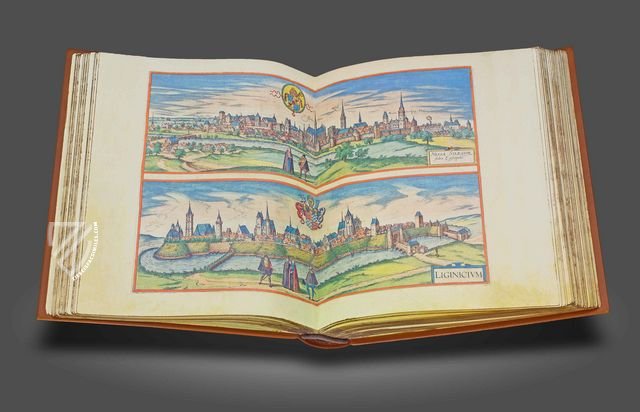
Cologne (Germany) — 1572–1617
Regarded today as an invaluable source of history and architecture before the destruction of the Thirty Years' War: the mammoth work by Georg Braun and Frans Hogenberg with 600 beautiful, realistic, and detailed cityscapes from all over the world
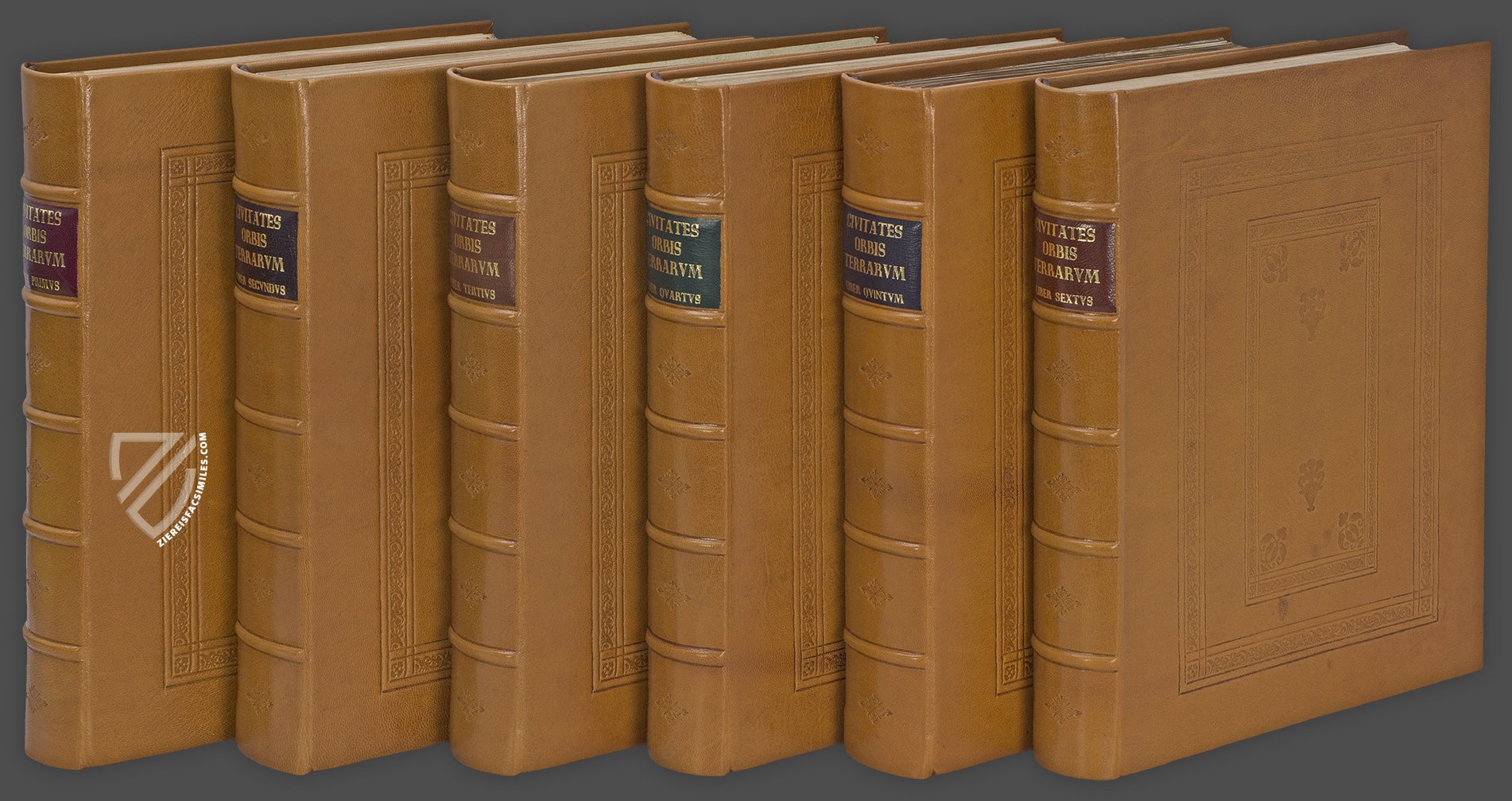
Georg Braun printed the first Latin edition of his popular city atlas between 1572 and 1617 in six comprehensive volumes
The more than 600 impressive city views and maps were created by Frans Hogenberg, Georg Hoefnagel, Abraham Hogenberg, and Simon Neuvelt
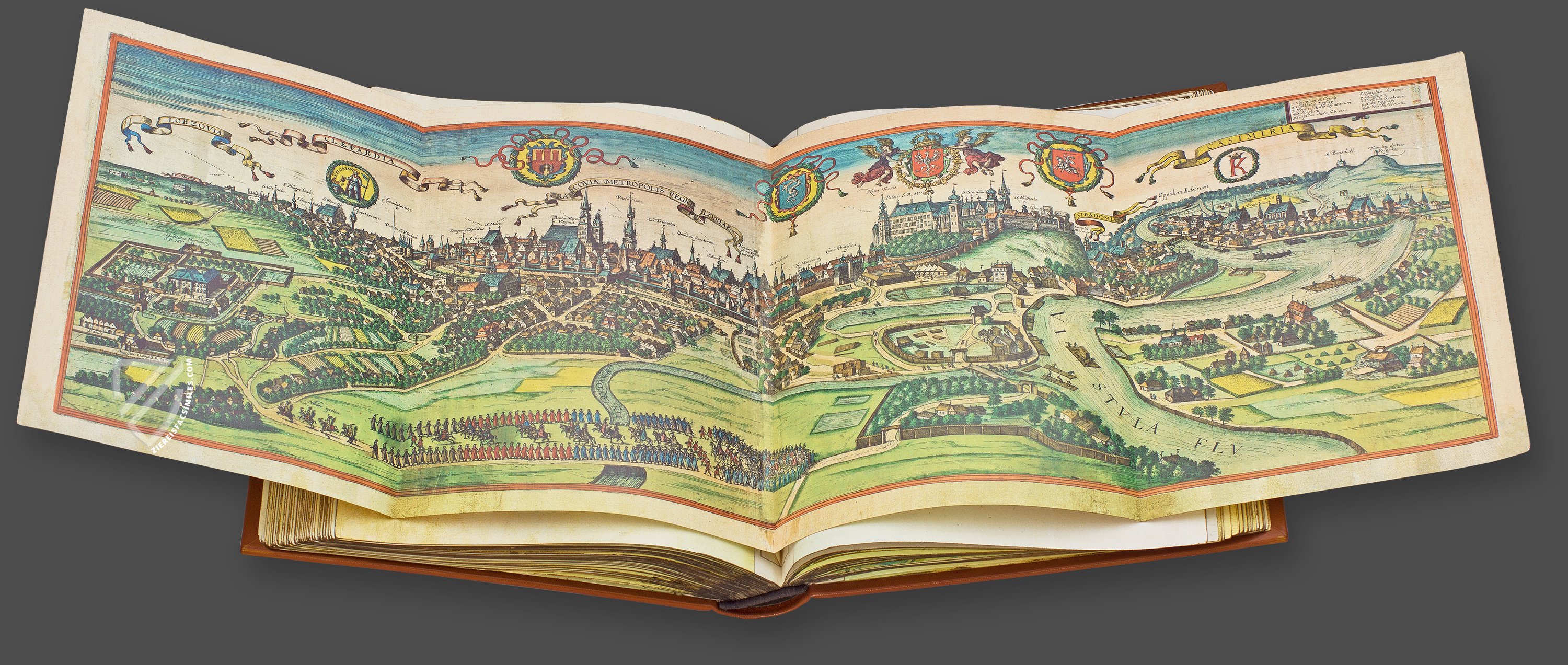
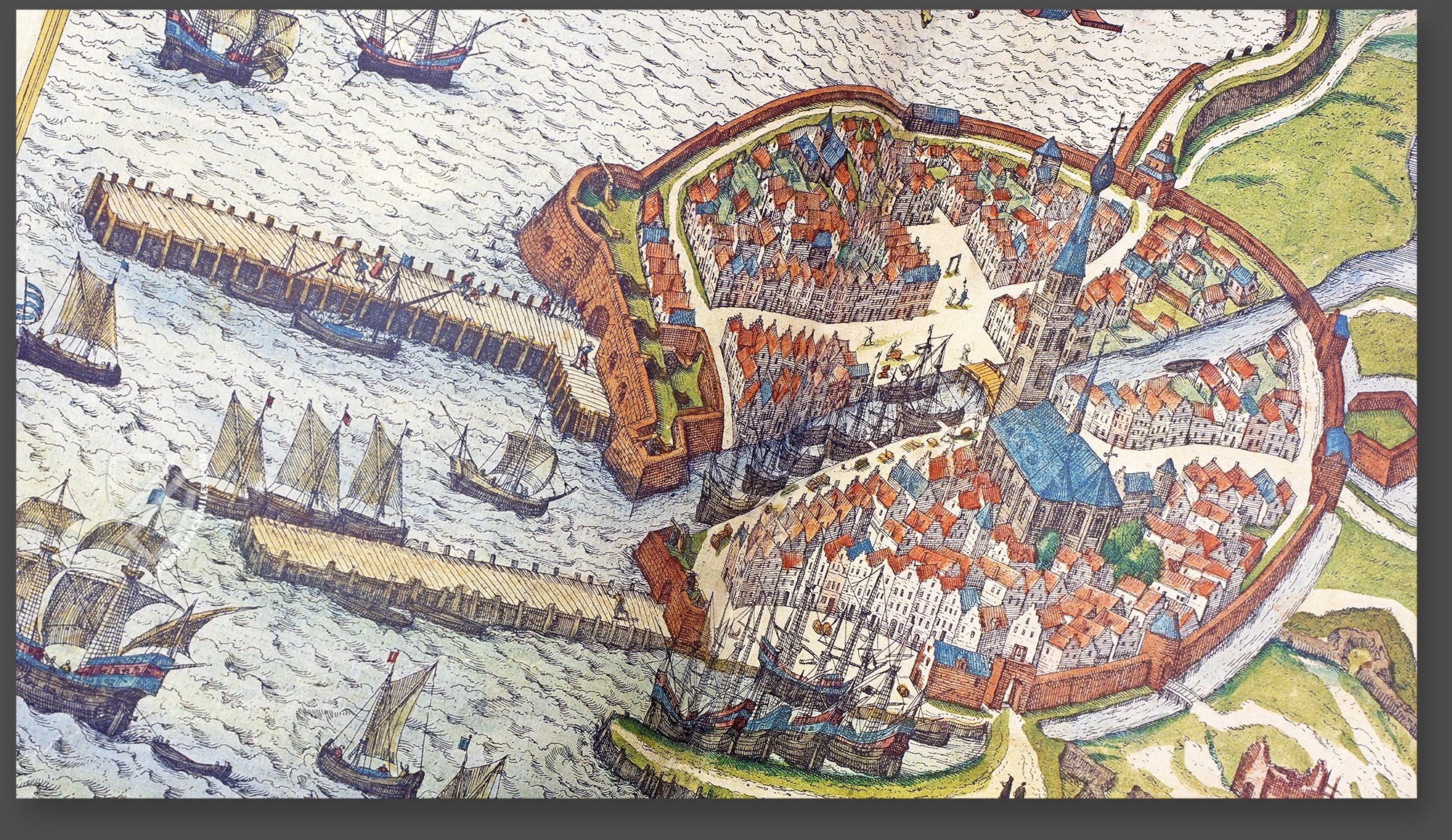
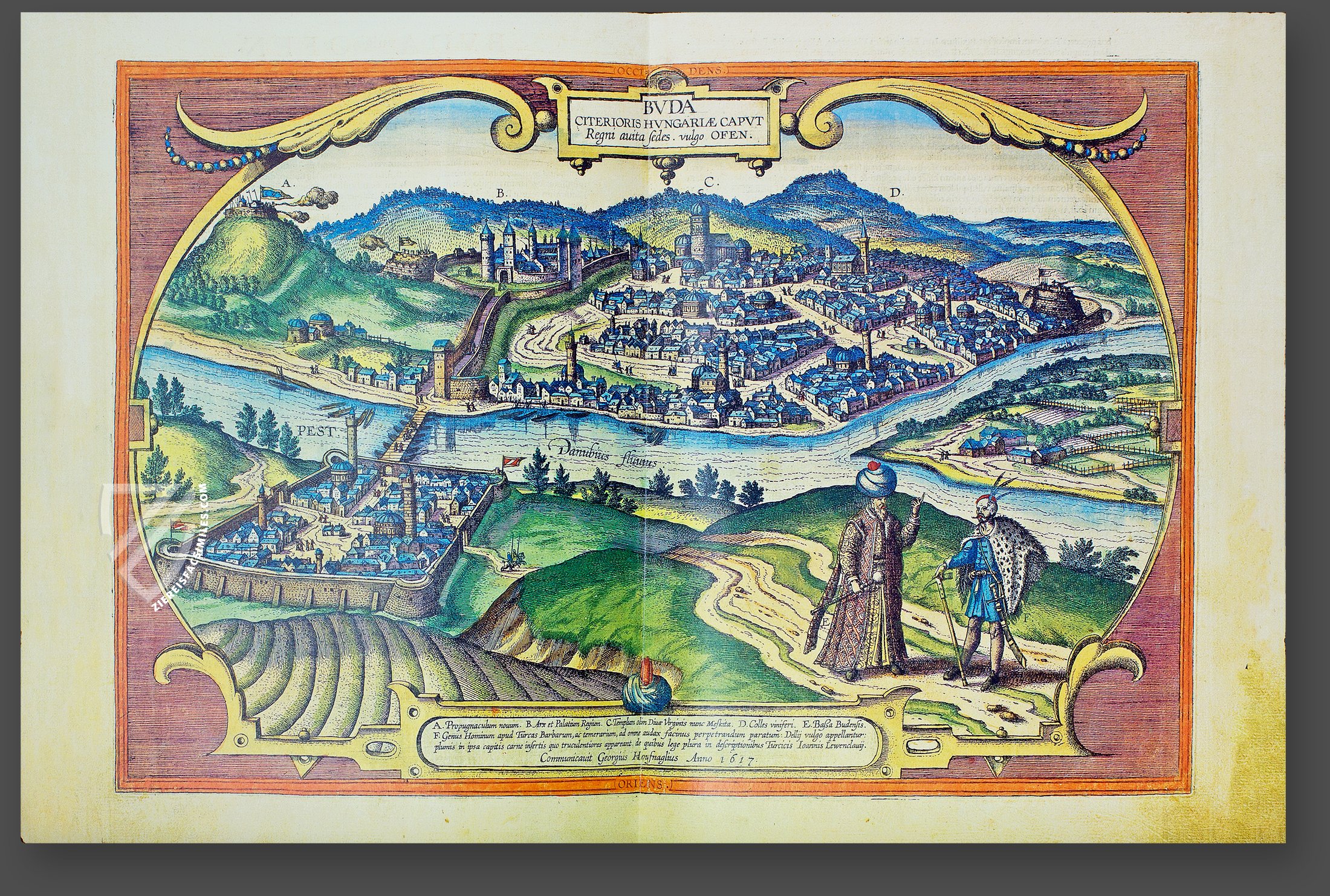
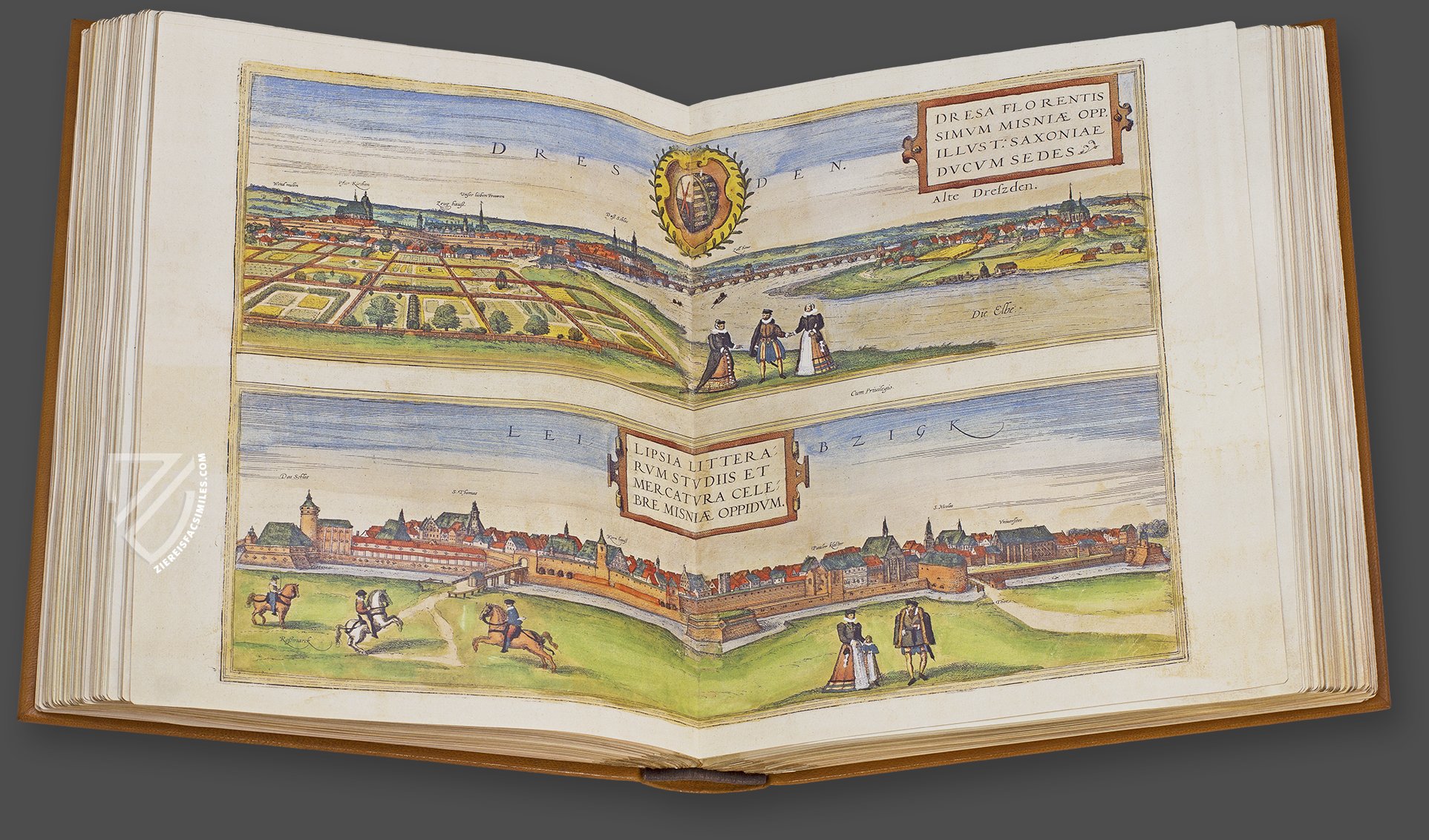
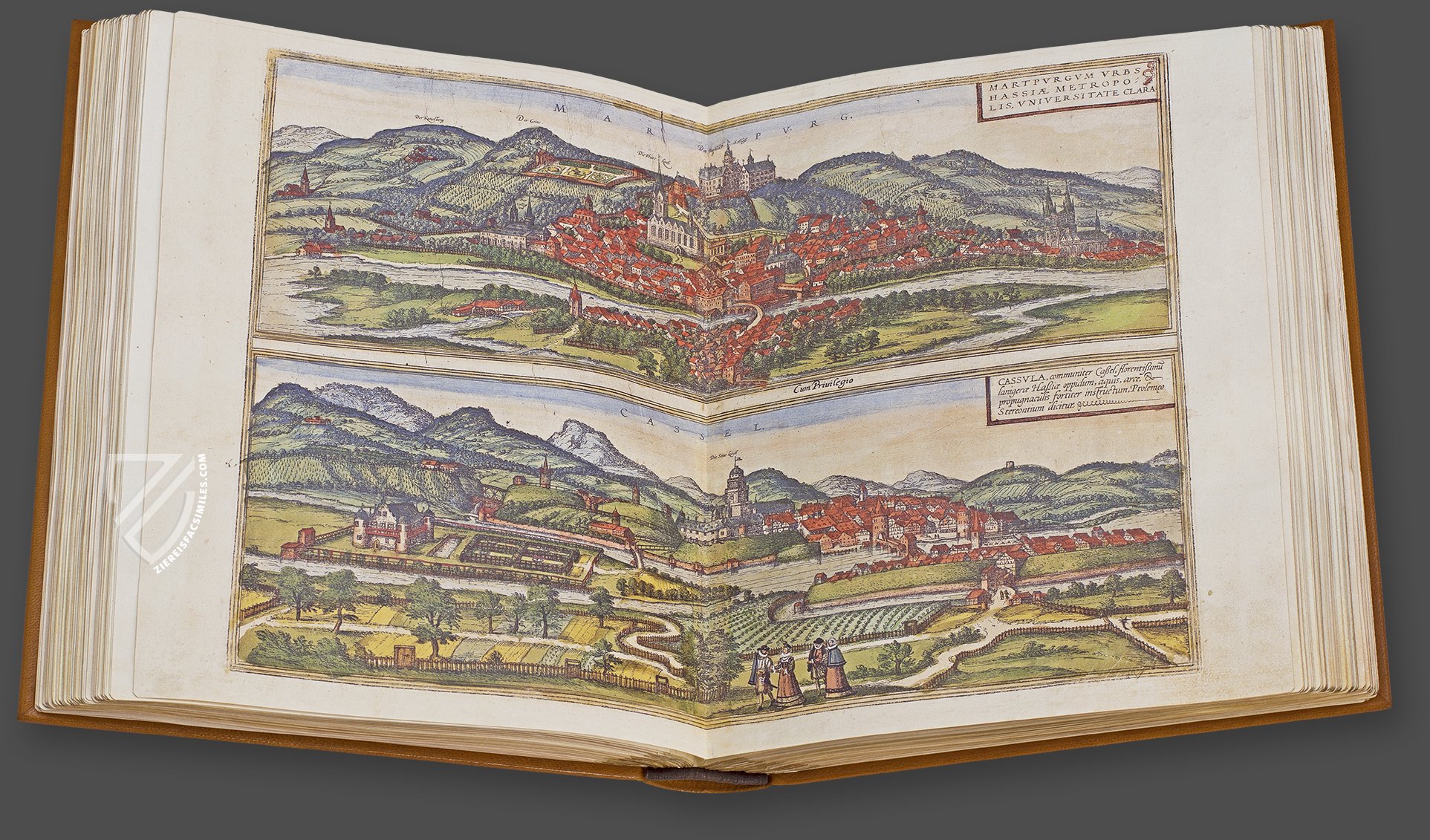
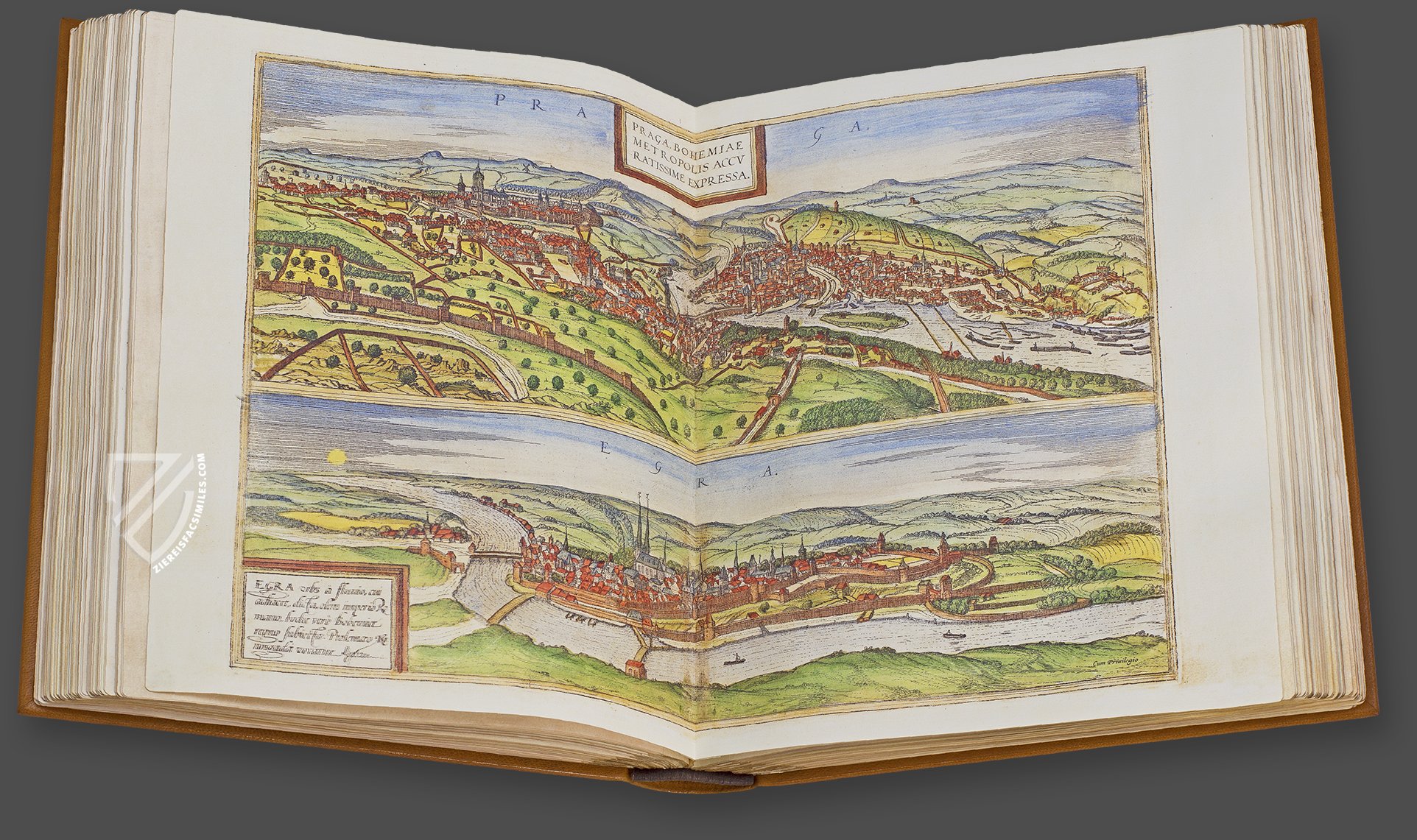
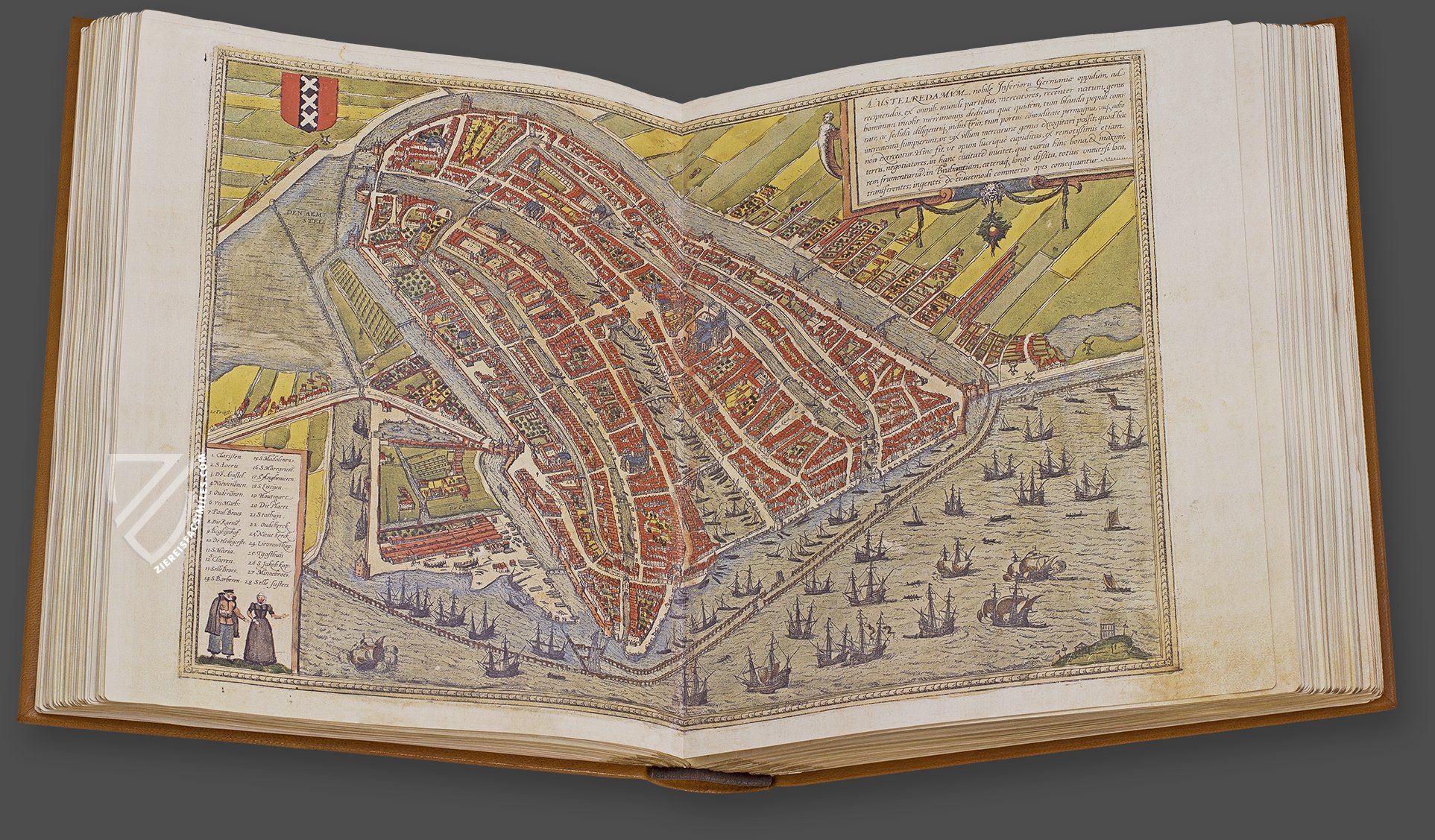
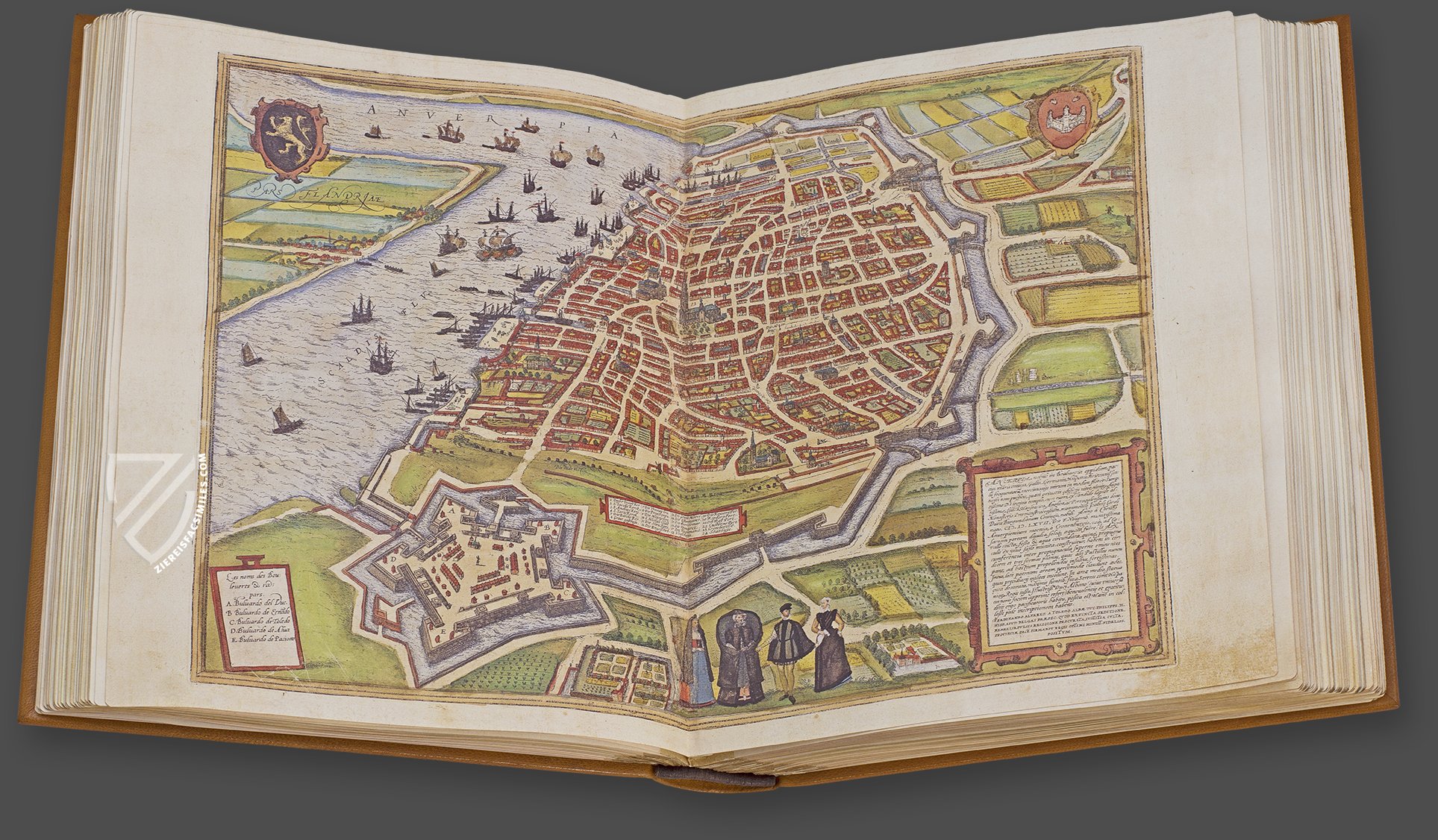
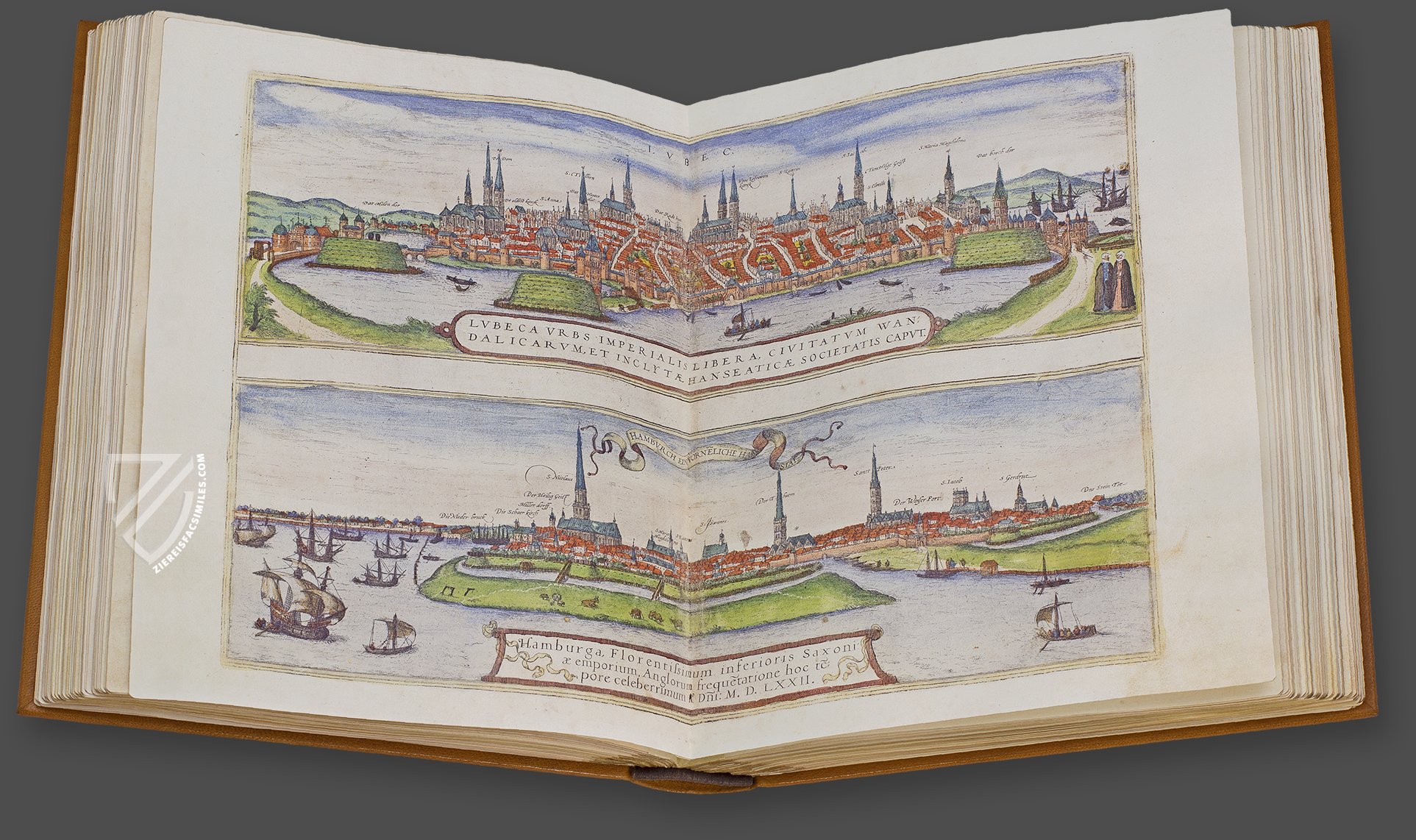
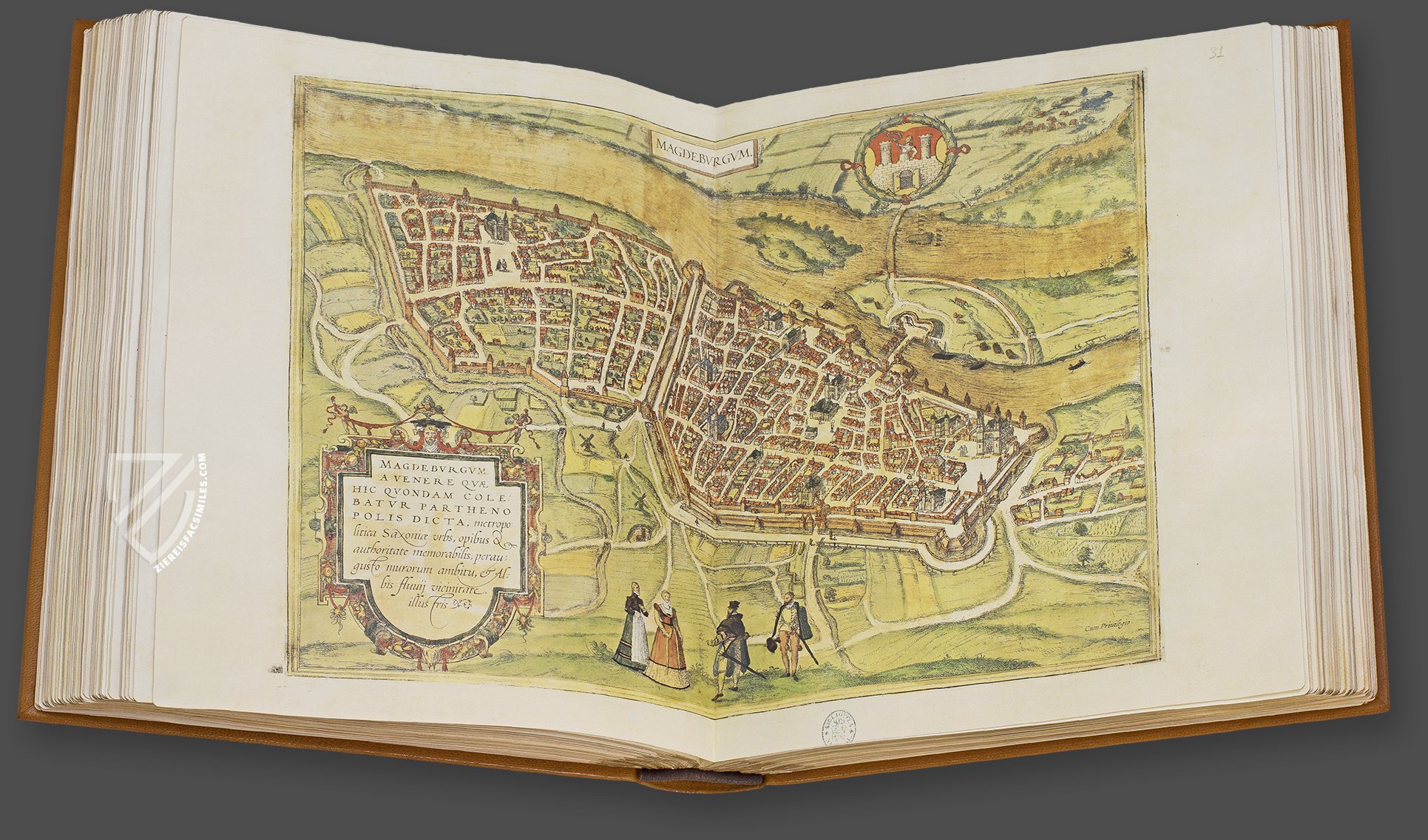
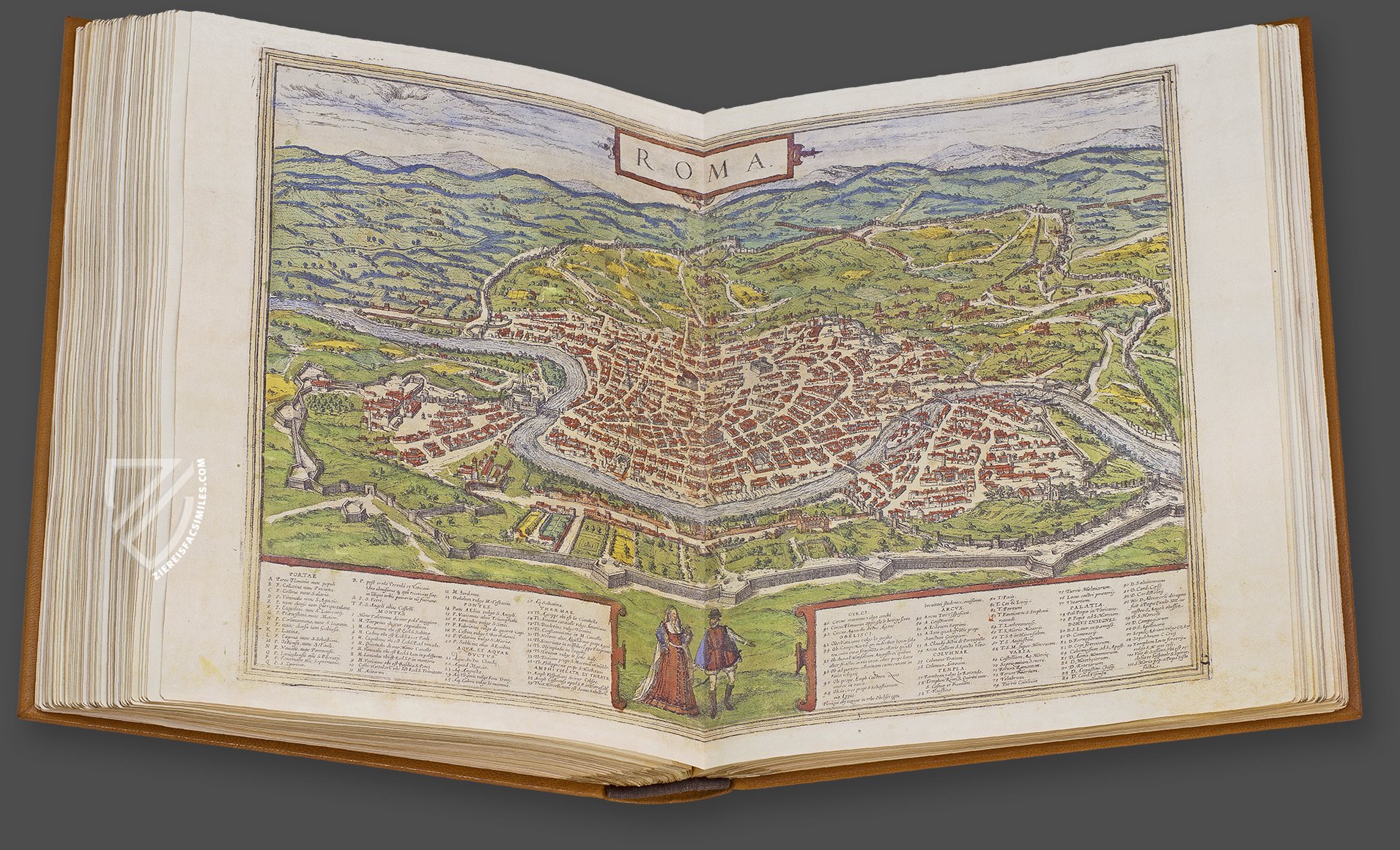
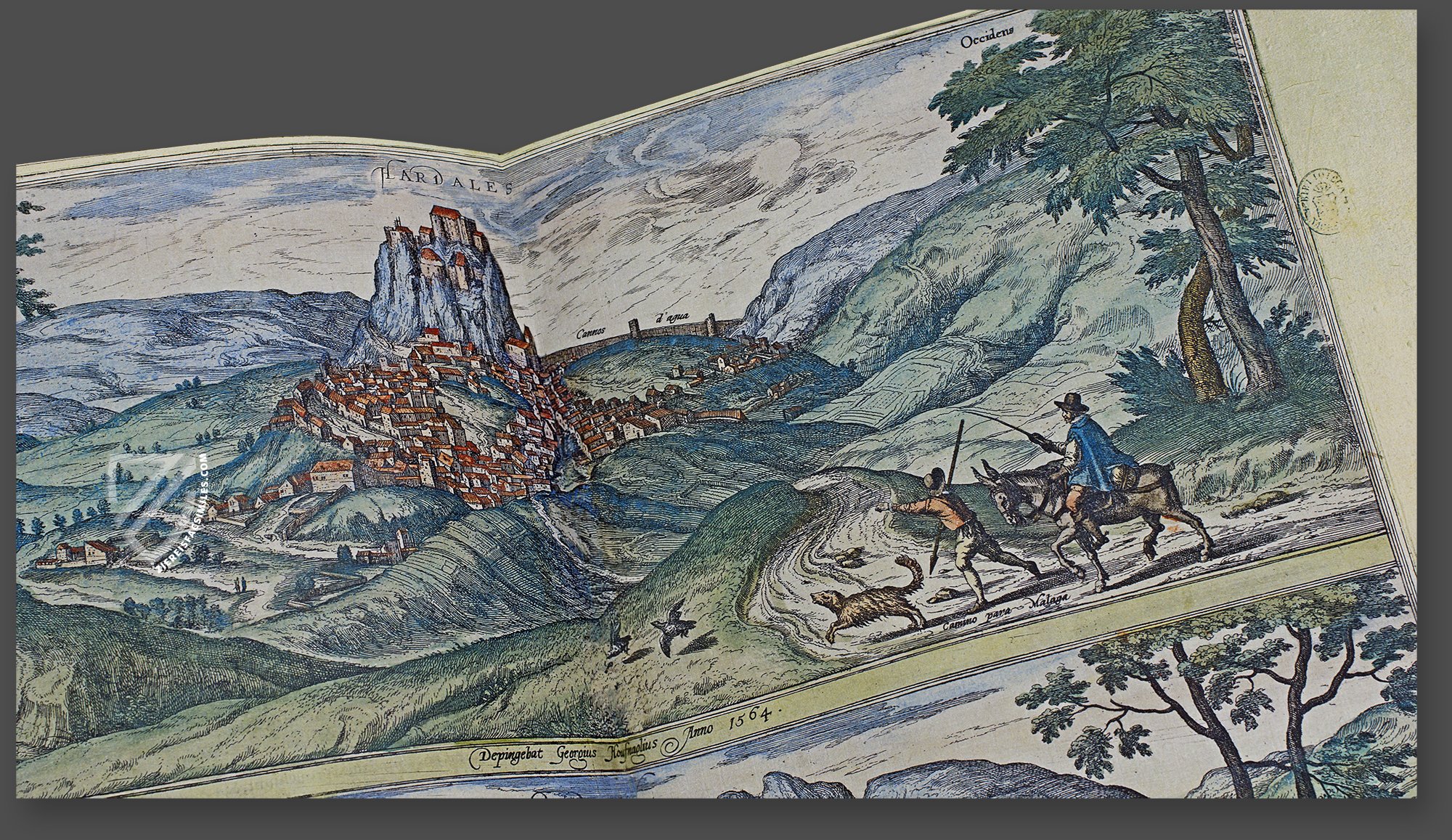
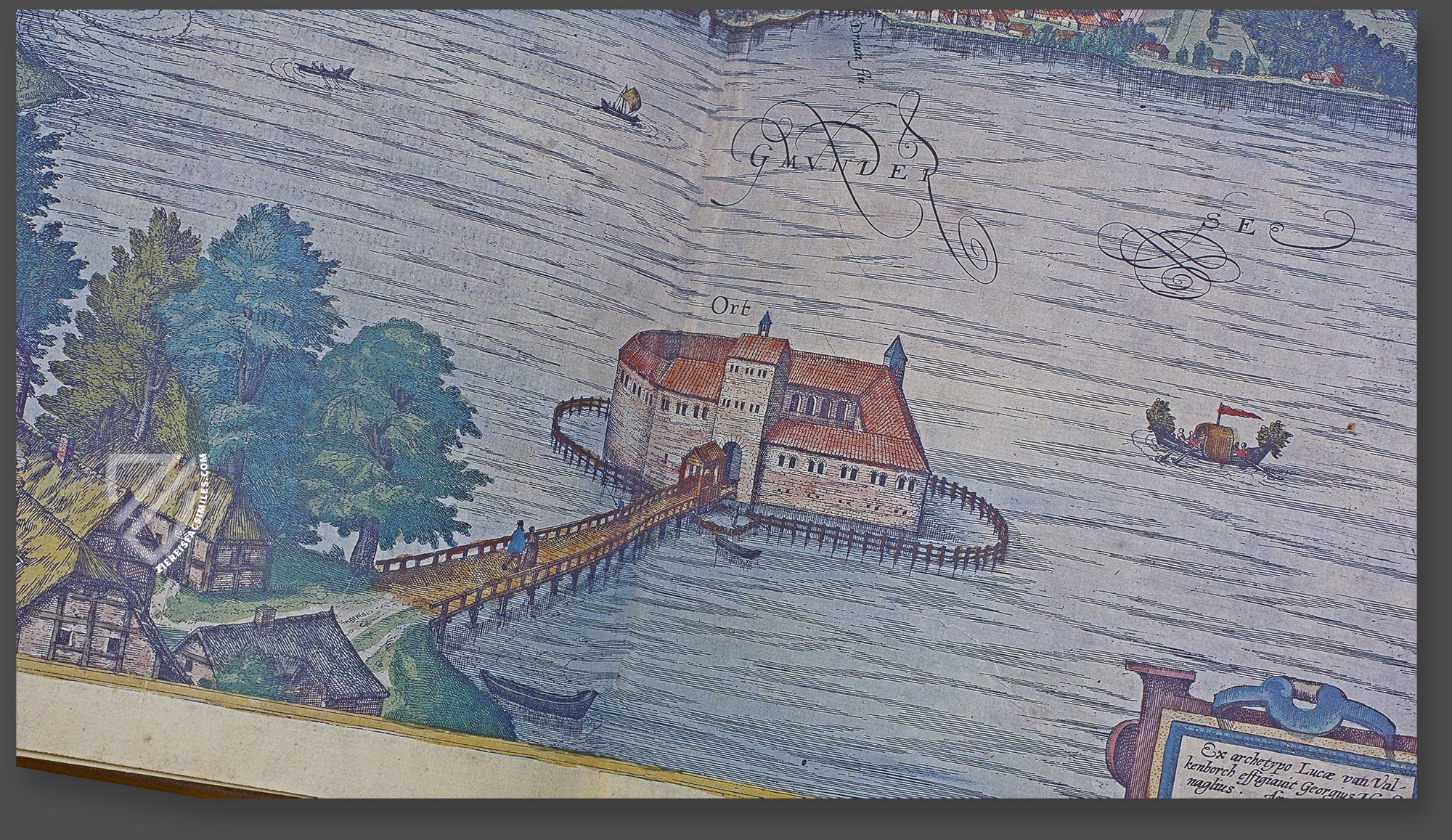
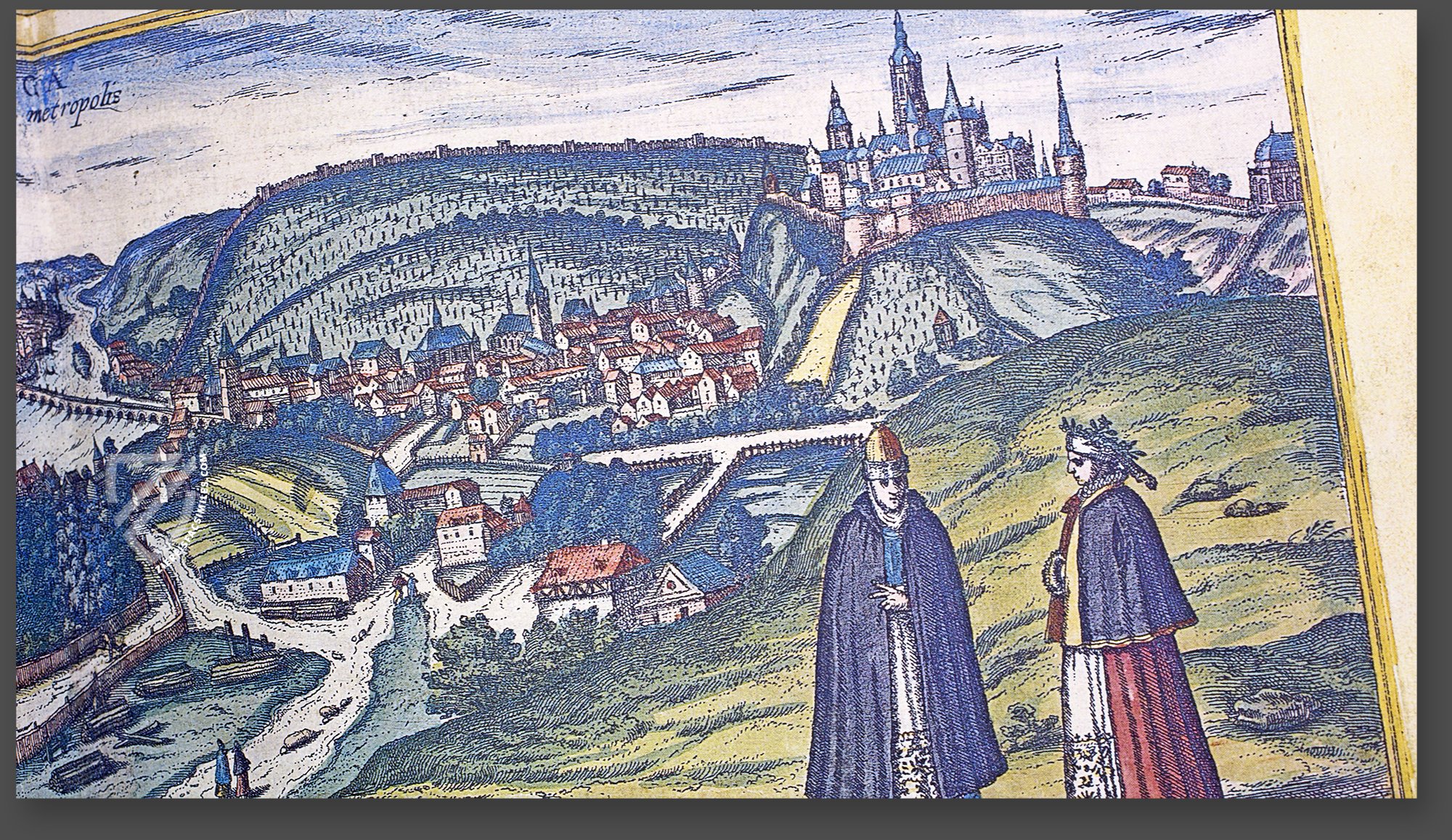
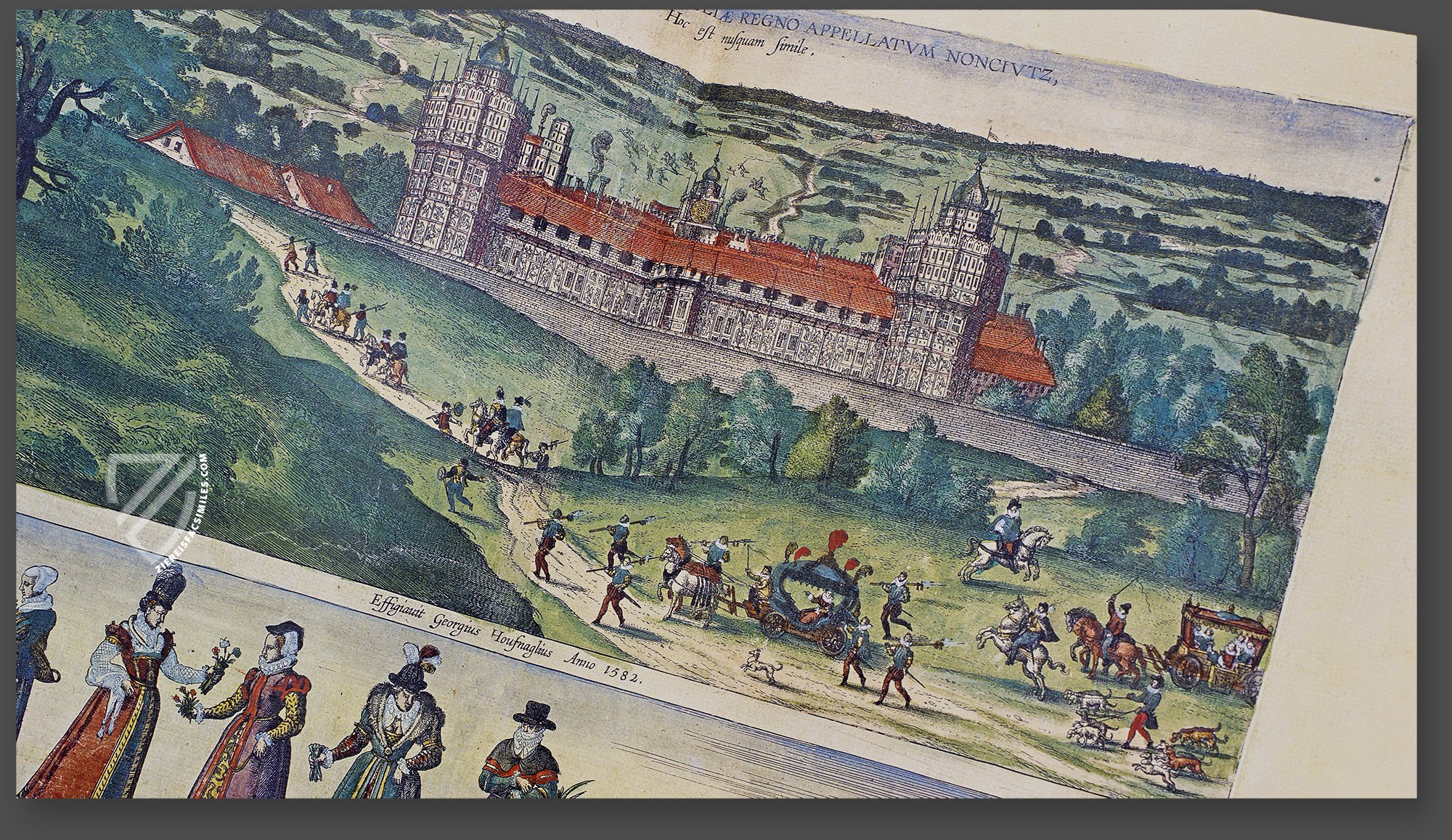
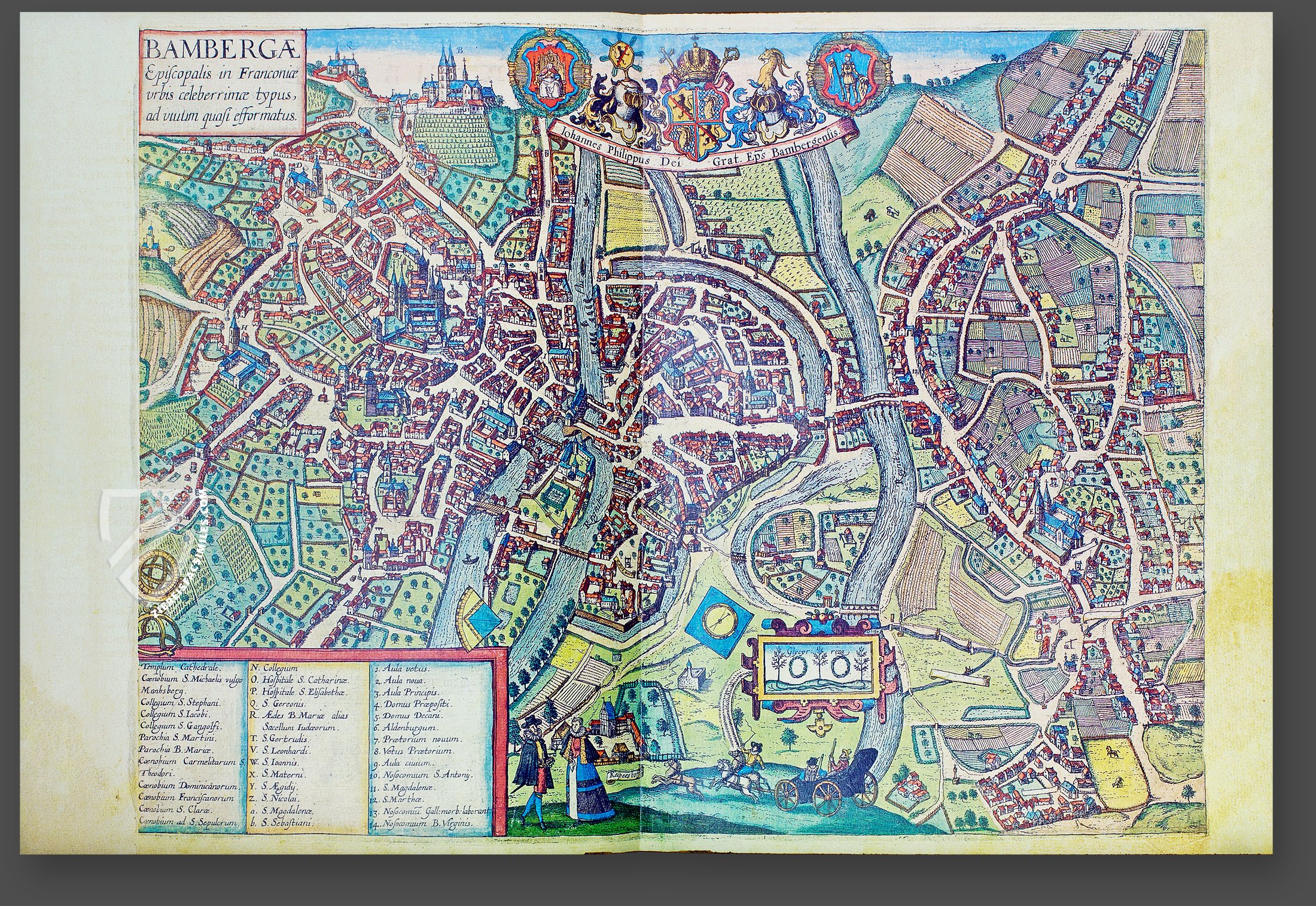
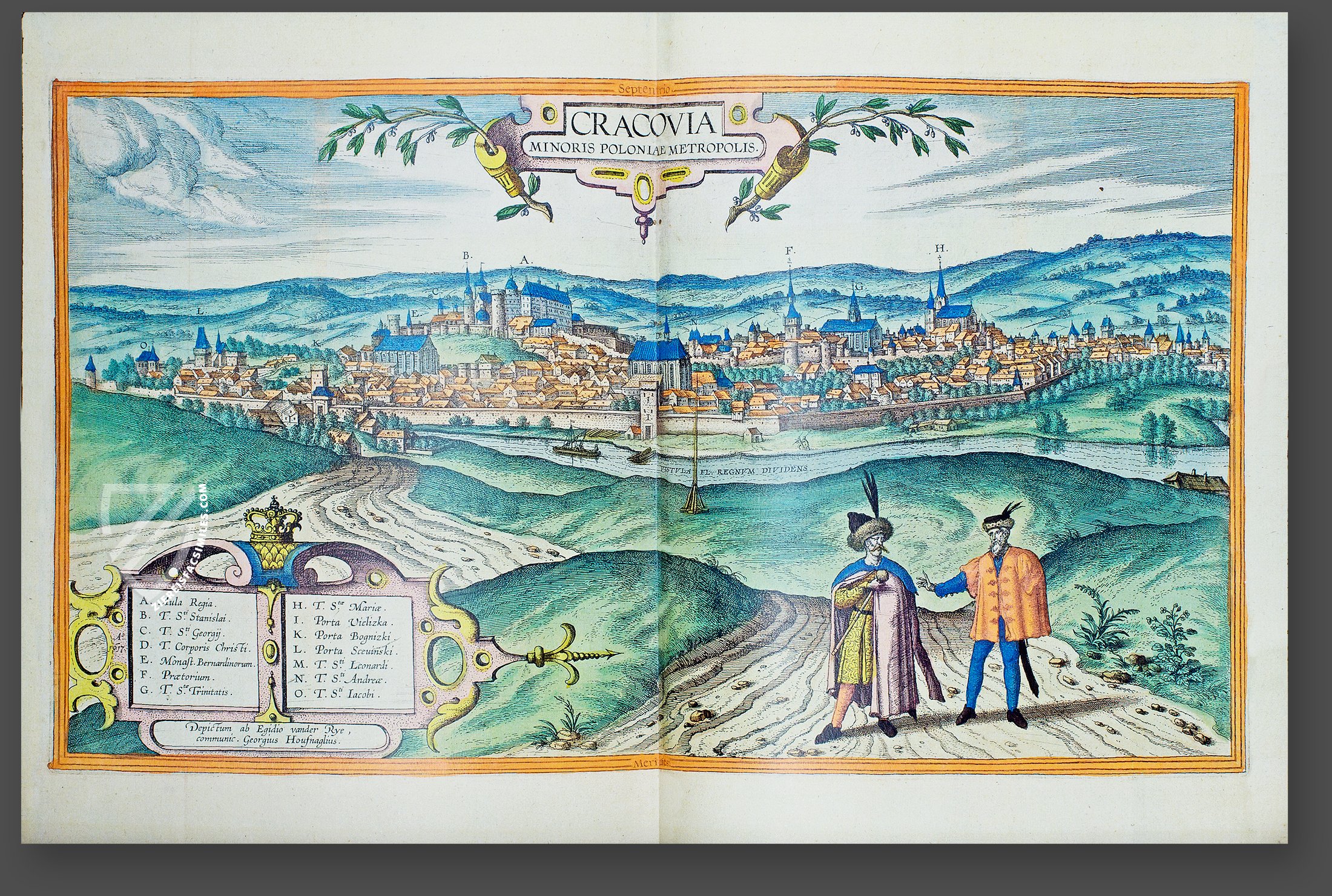
They not only show buildings, streets, and topography, but are also full of details about the clothing and everyday life of the citizens
Civitates Orbis Terrarum – Braun / Hogenberg 1572–1617
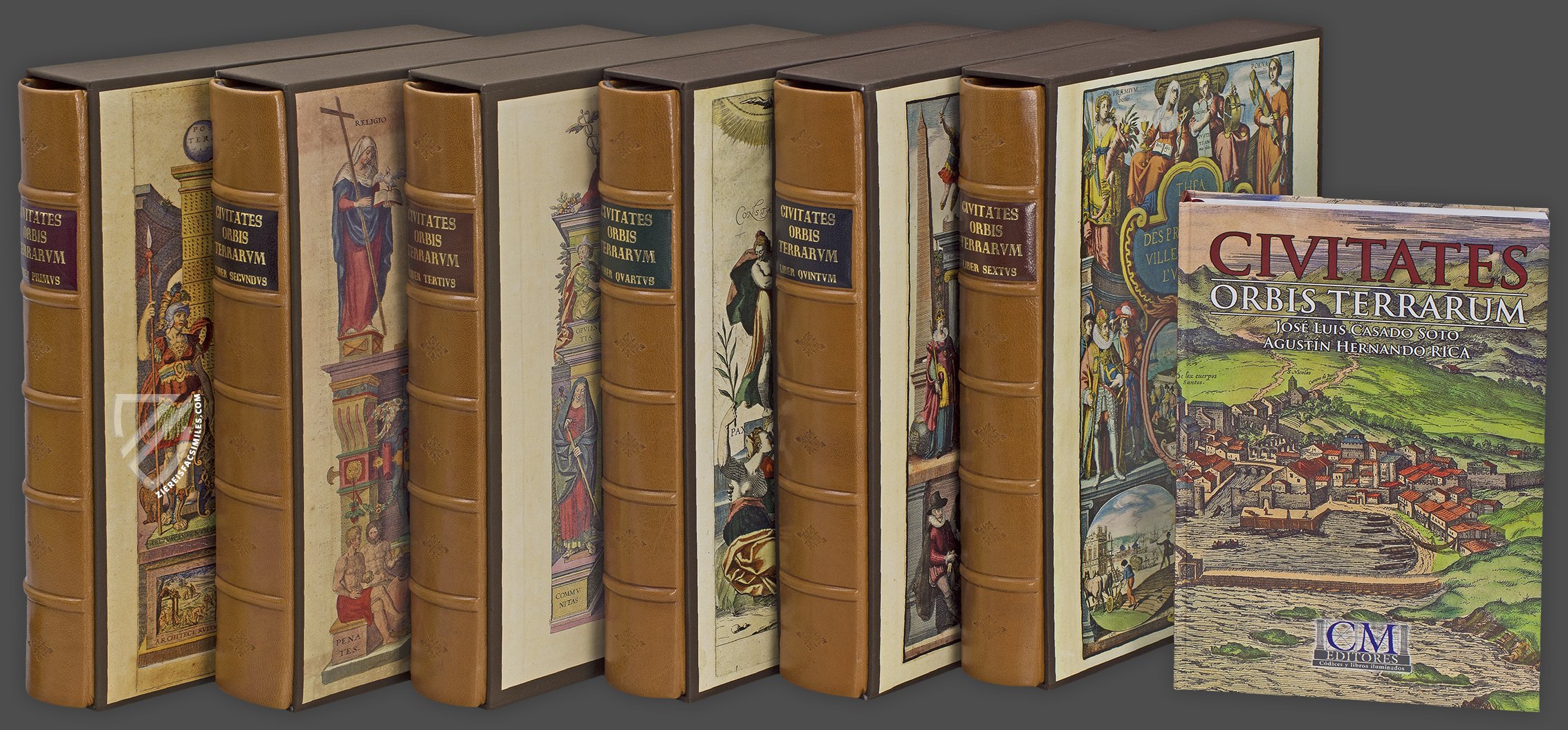
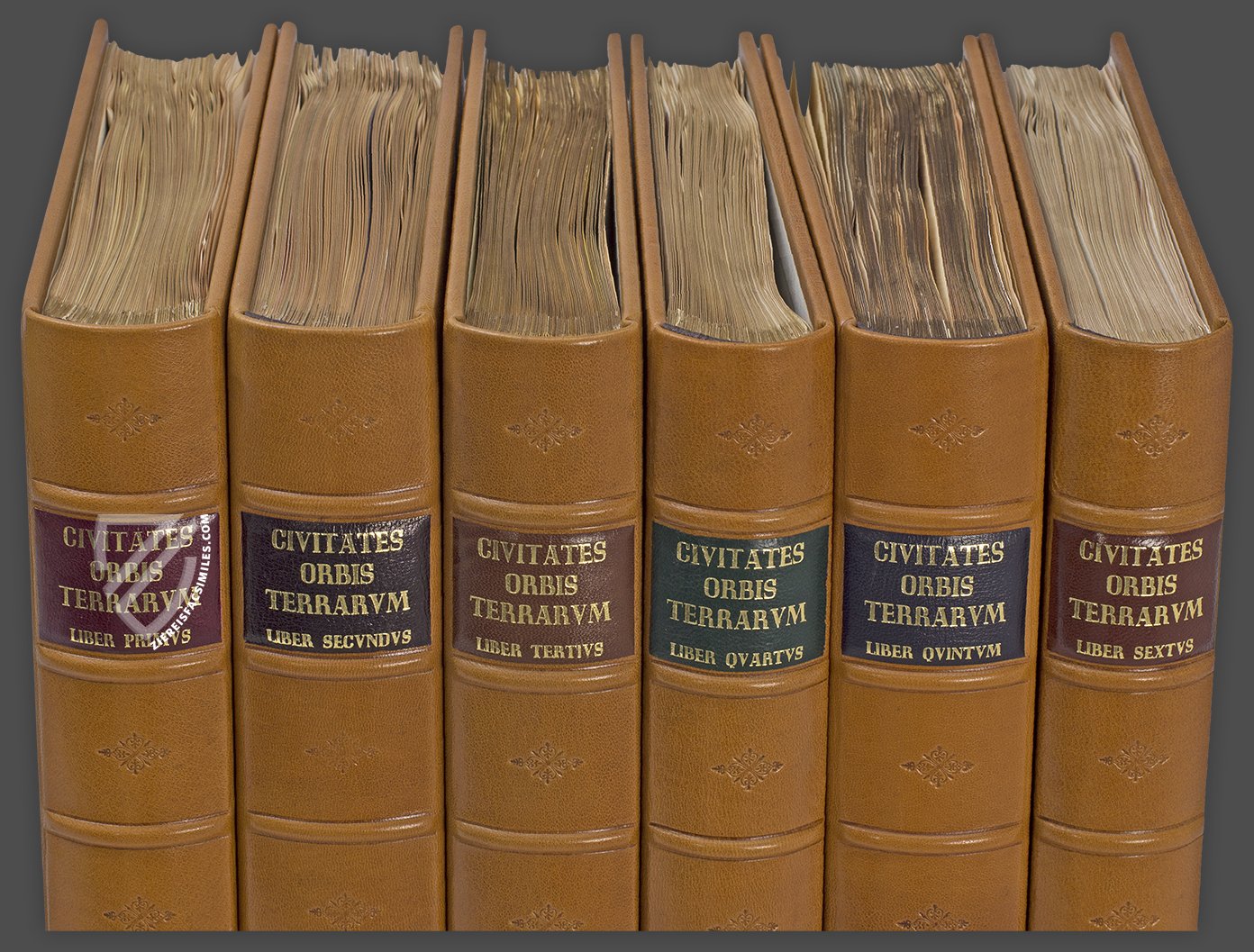
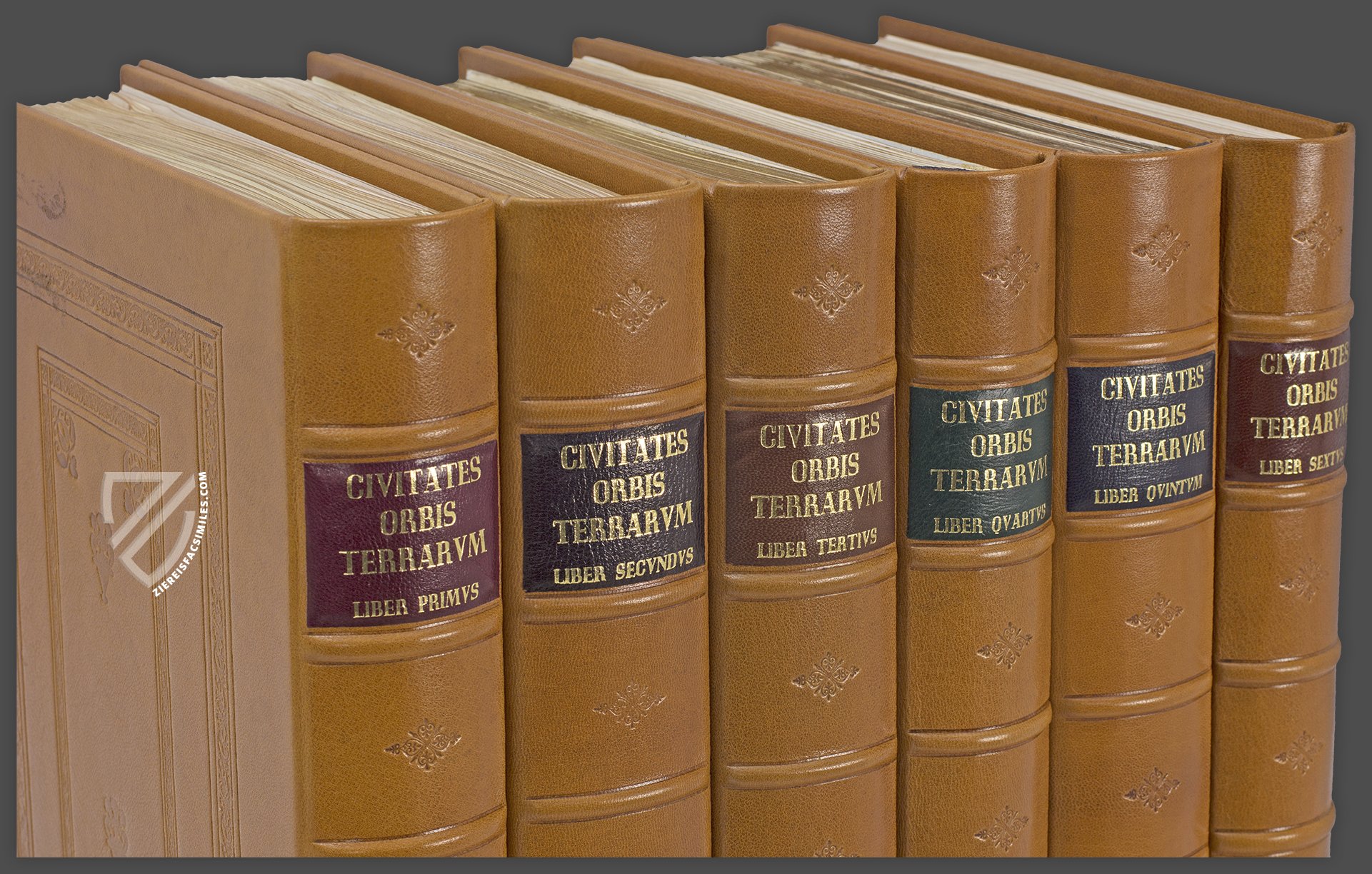
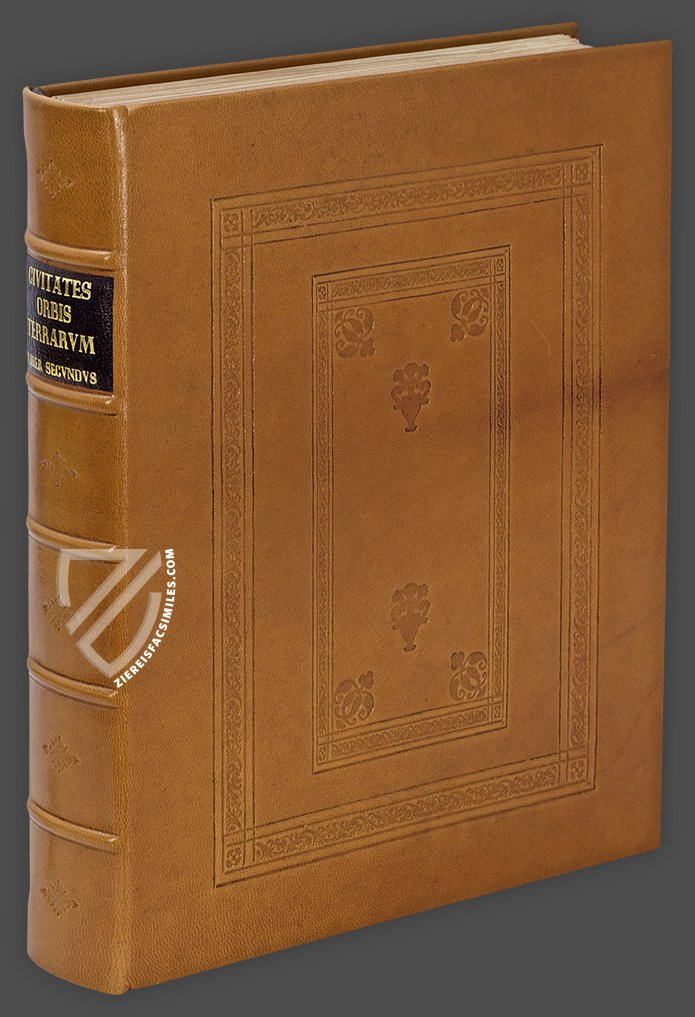
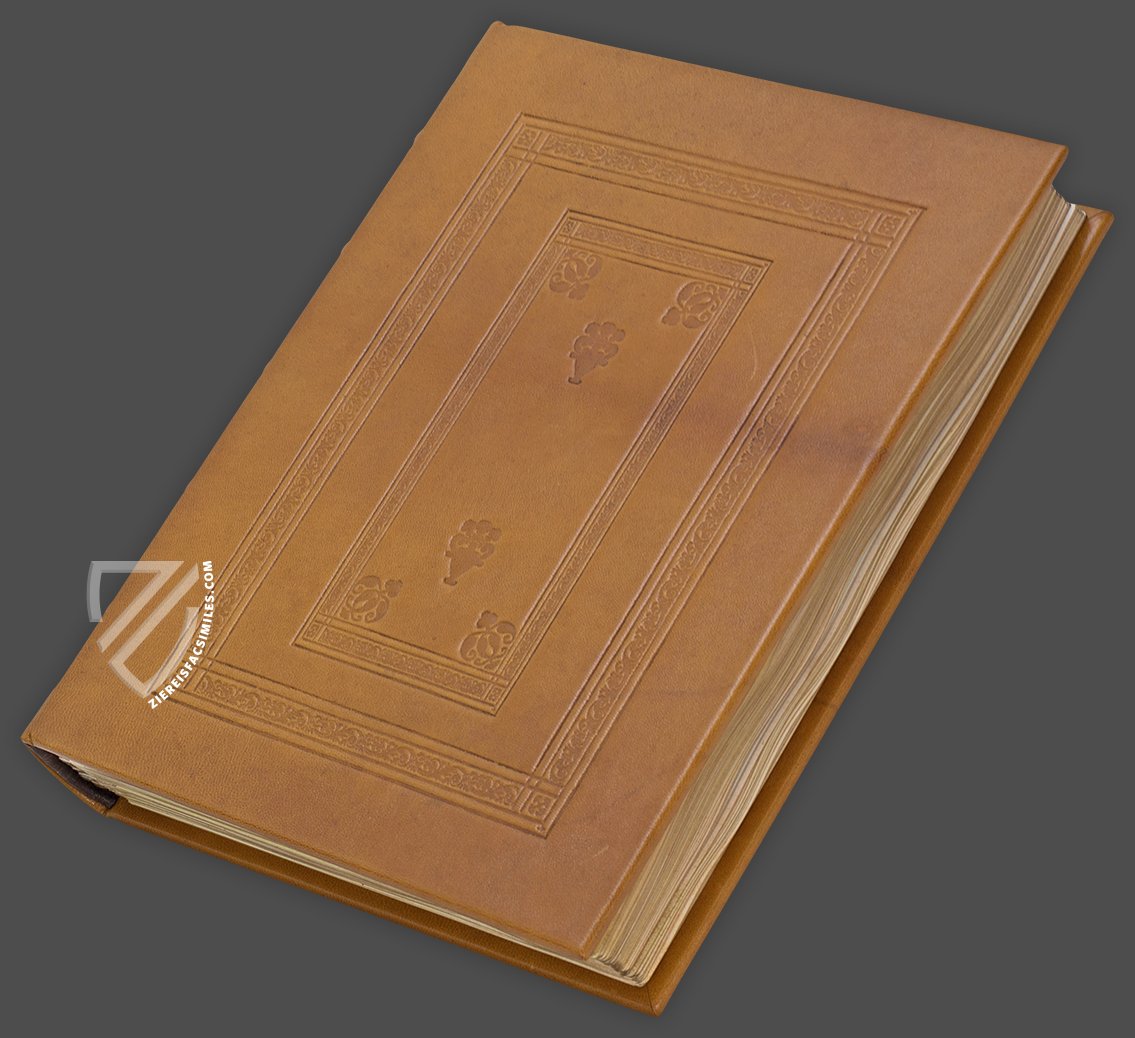
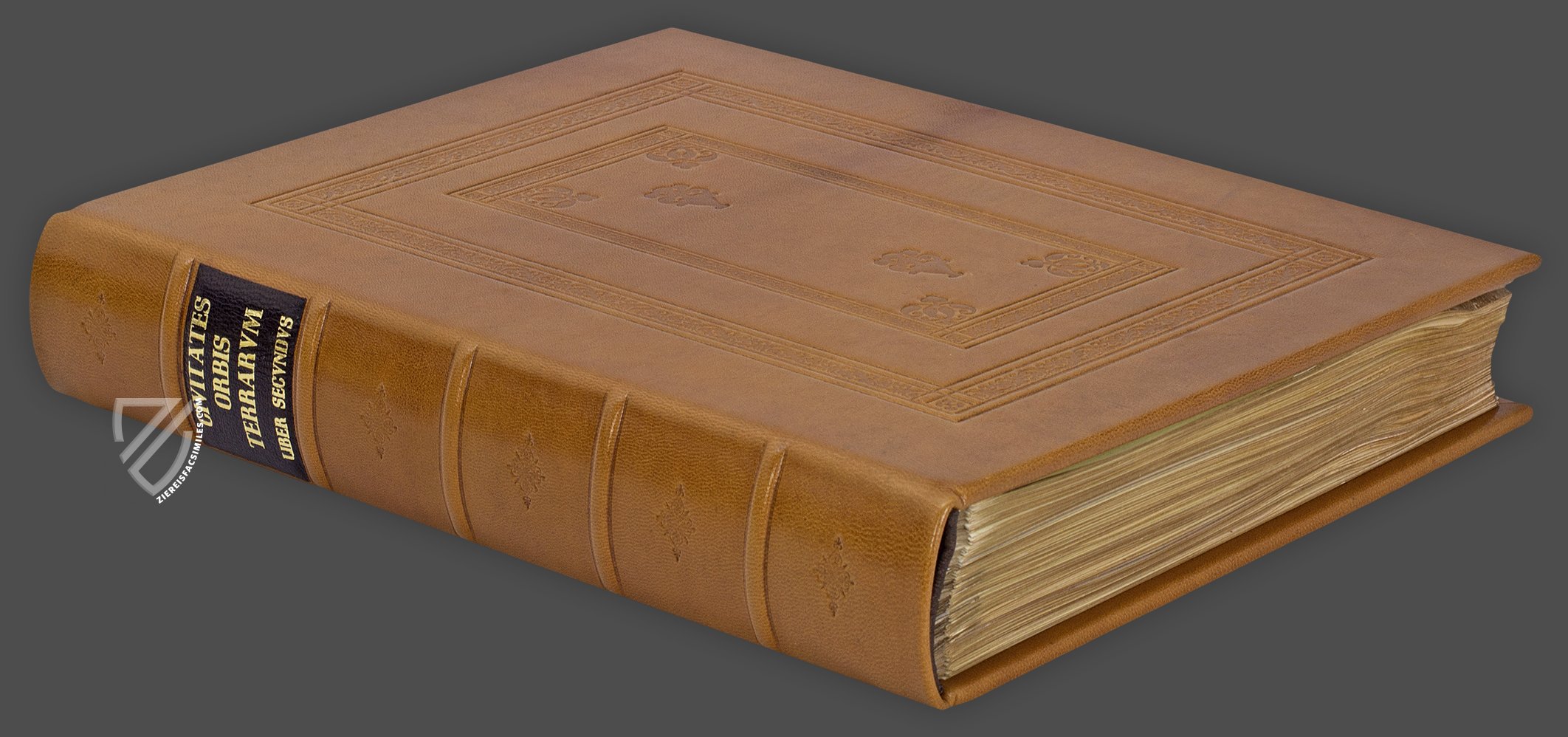
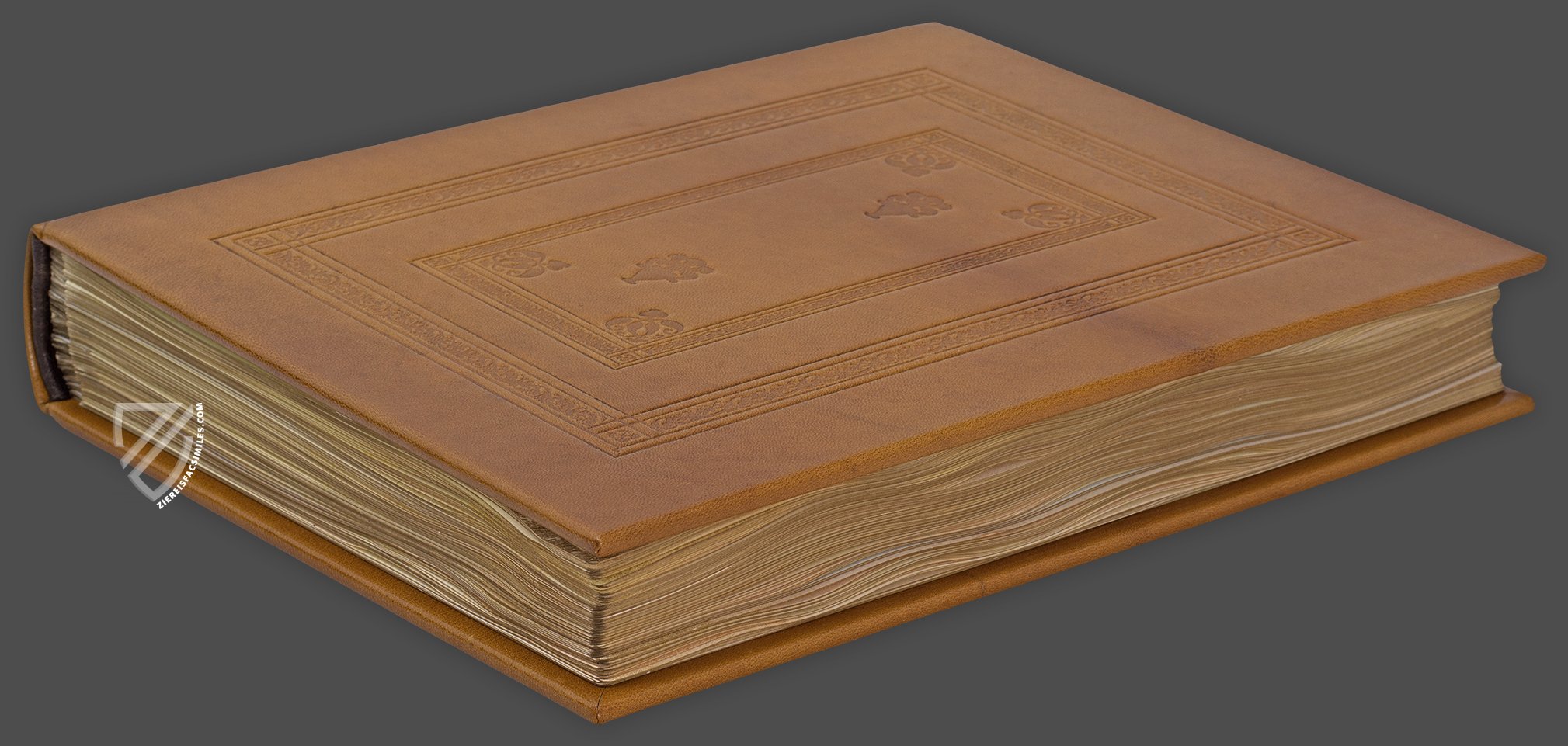
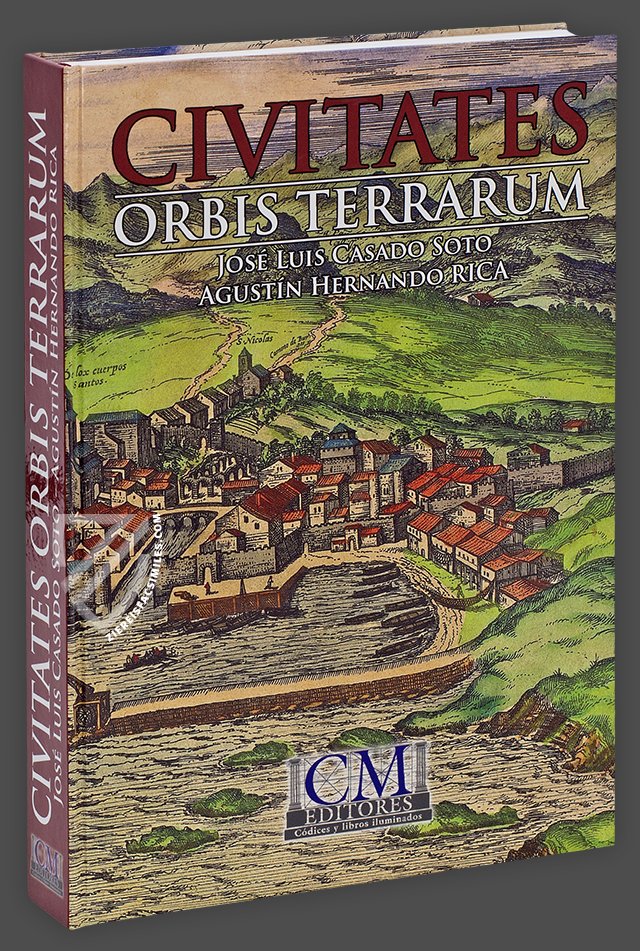
(7,000€ - 10,000€)
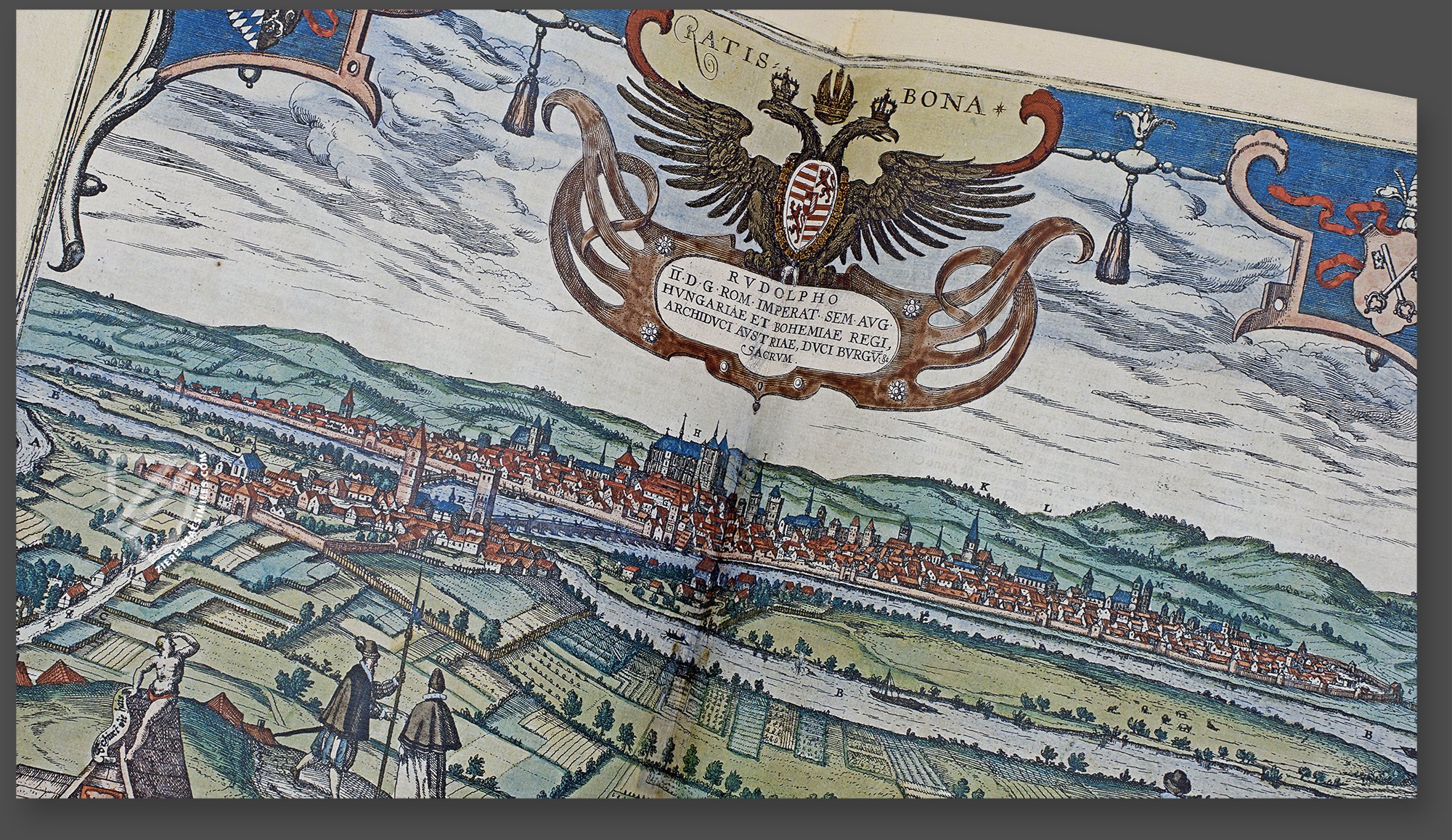
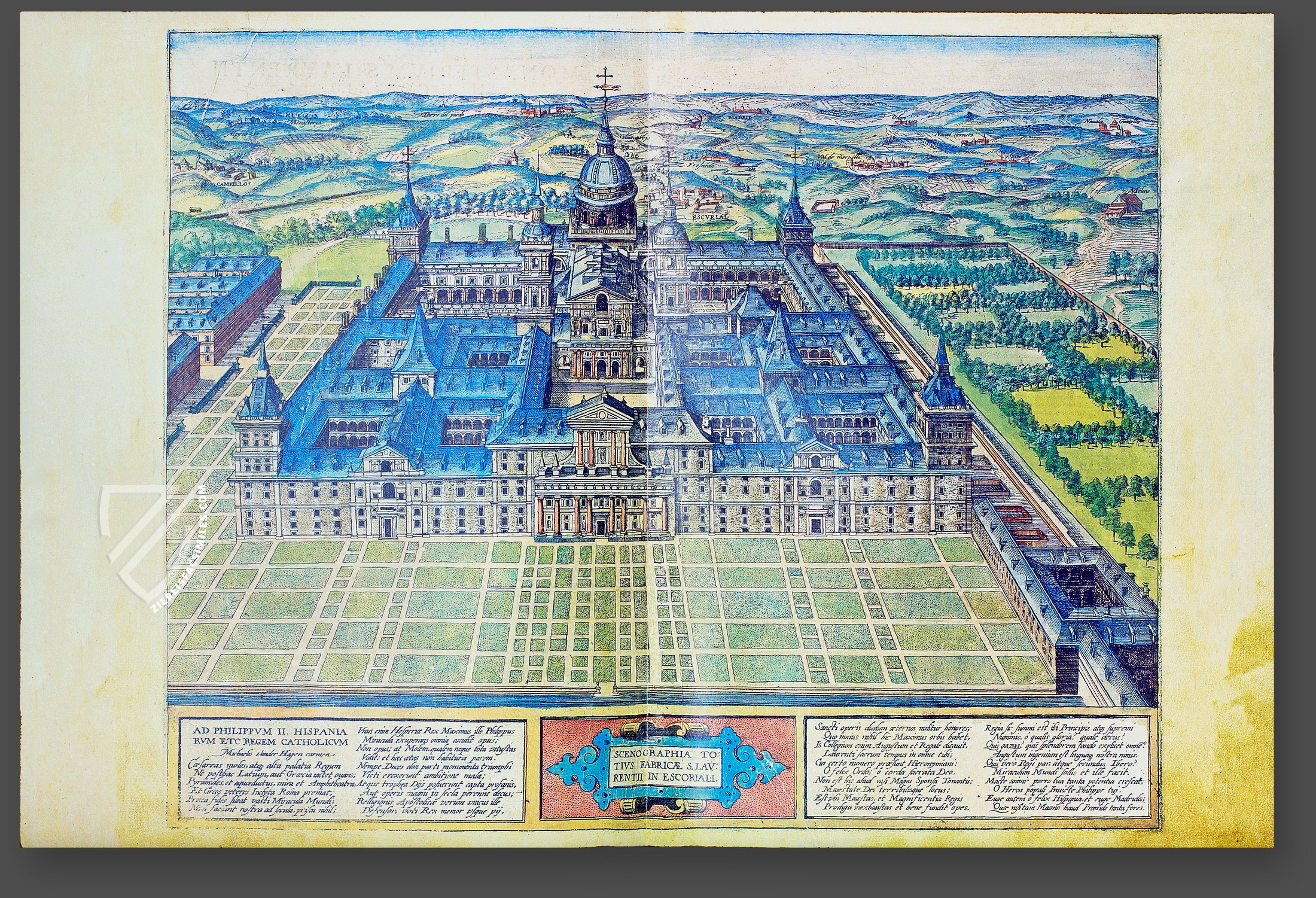
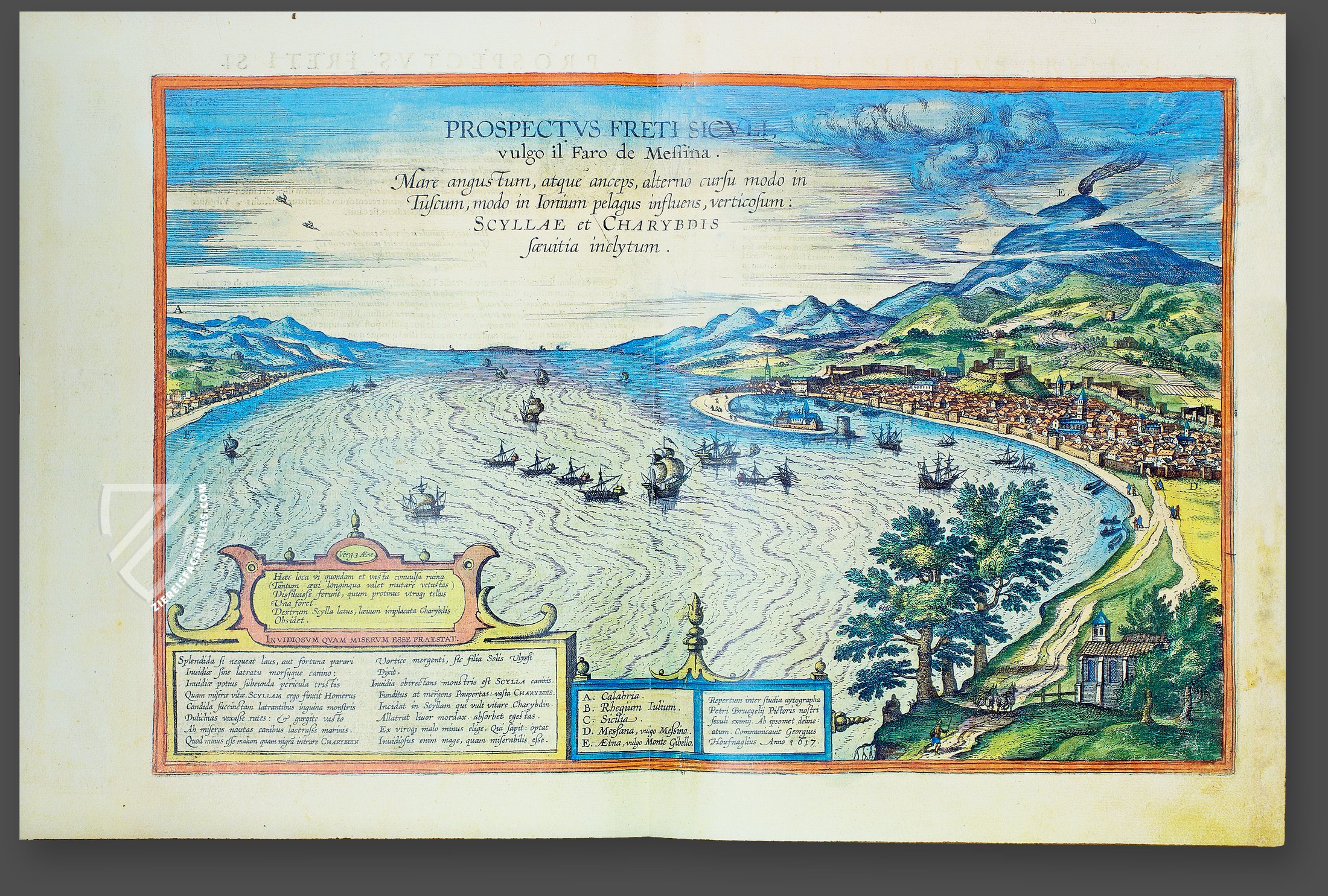
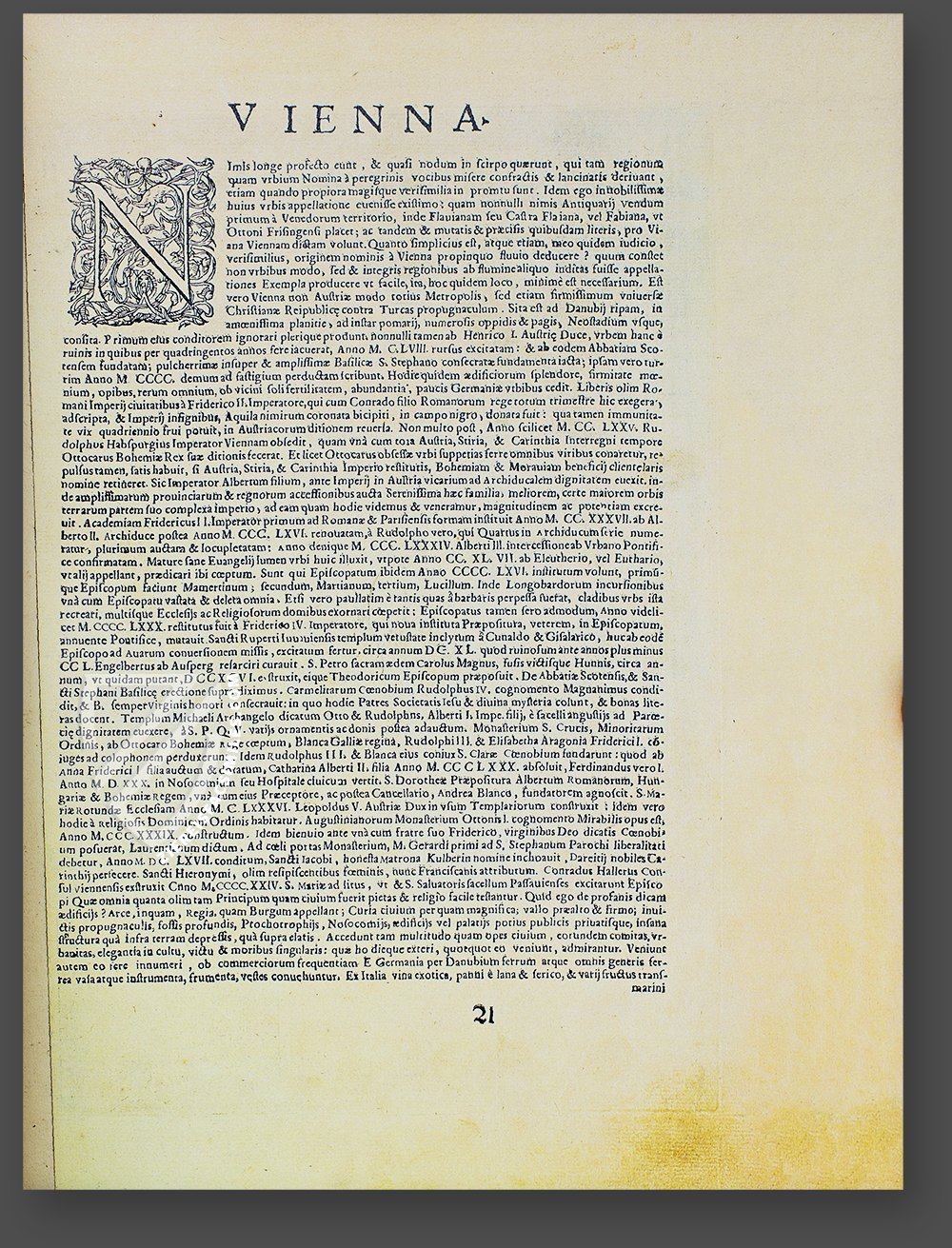
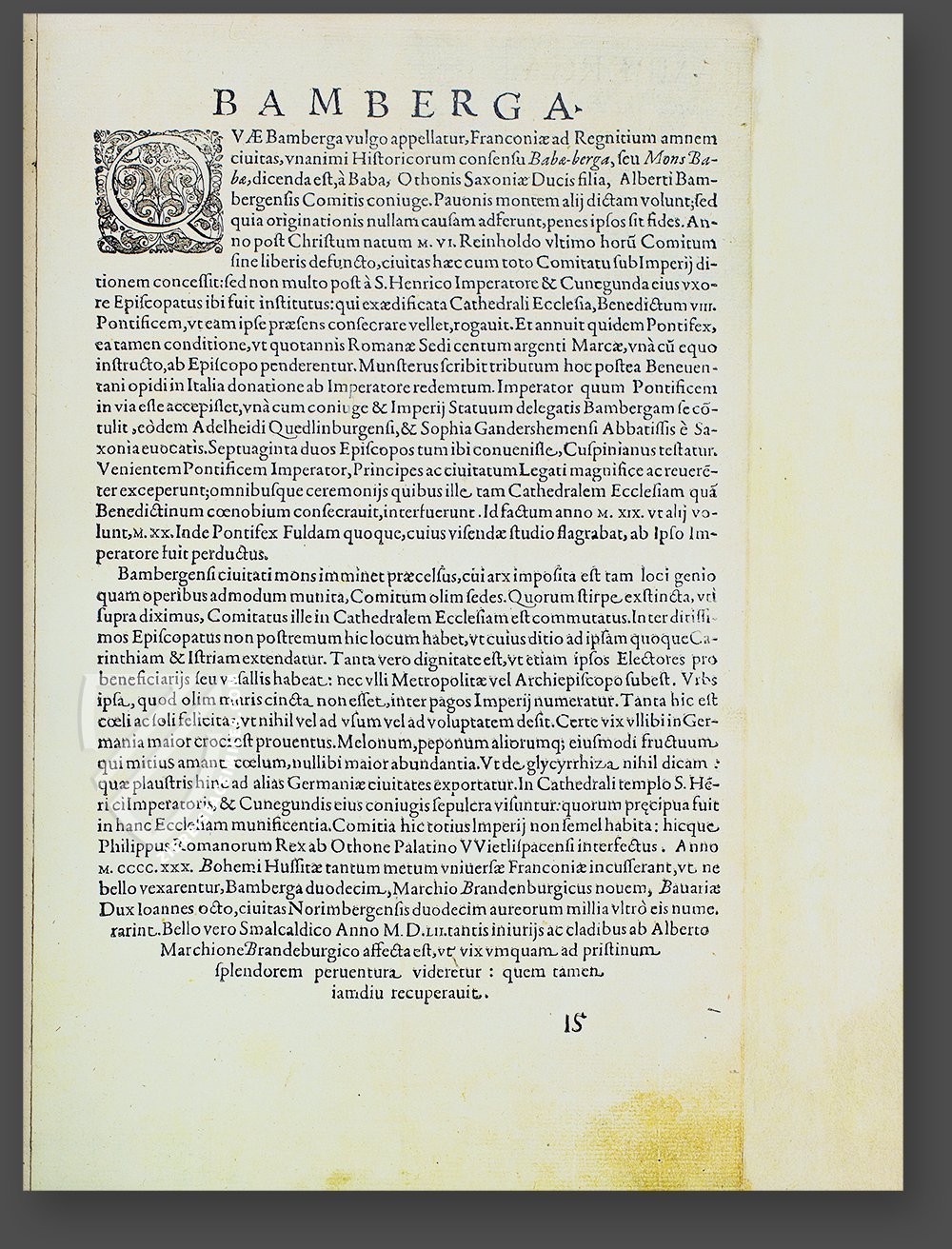
The Civitates Orbis Terrarum is famous for the hundreds of gorgeous cityscapes from around the world contained in its six volumes, which are particularly precious because they present the medieval cities of Europe before the destruction of the Thirty Years’ War. Cologne theologian, geographer, and printer Georg Braun and Flemish engraver Frans Hogenberg collaborated in creating the ambitious project, which has only gained popularity over the centuries. The masterfully designed and charmingly colored engravings not only depict buildings and their surrounding landscapes, but coats of arms, genre scenes from the everyday life of farmers and fishermen, local customs and costumes, boats, wagons, and more. Instructive and amusing texts written by Braun accompany the images and describe each town’s geographical location, historical development, and economic conditions. It was designed as a way of introducing the world to educated humanists.
Civitates Orbis Terrarum – Braun / Hogenberg 1572–1617
In 1570, Dutch geographer and cartographer Abraham Ortelius (1527–1598) published his famous Theatrum Orbis Terrarum – the first modern and commercially successful atlas of the world. The sensational work fascinated Flemish engraver Frans Hogenberg (1535–1590) and Cologne theologian, canon, and dean Georg Braun (1541–1622) so much that they decided to supplement it with an extensive collection of fantastic city views and maps.
A View of the Larger, Wider World
The result was the Civitates Orbis Terrarum, which was first published in Latin in six volumes between 1572 and 1617: This mammoth work brings together over 600 colored copperplate engravings on a total of ca. 1,600 pages, showing the most well-known and important cities of the 16th century from a European perspective. The view extends beyond Europe to Africa, Asia, and even the Americas. It is thus considered the oldest comprehensive collection of realistic and supraregional city views. In conjunction with the extensive additional information that complements the artistic representations, they still convey the joy of discovery and the desire to explore the larger, wider world.
An Significant Historical Source
However, the work derives its outstanding historical significance primarily from its systematic mapping of the structures of many medieval European cities, which still dominated urban topographies at the time of its creation. Shortly after the publication of the complete work, they were largely destroyed or severely damaged during the Thirty Years' War (1618–1648) and subsequently rebuilt in the Baroque style. The Civitates Orbis Terrarum thus offers a rare and valuable insight into the urban history of Europe, which is often difficult to reconstruct otherwise.
Artistic Teamwork
At first glance, this impressive work captivates with its more than 600 often double-page city views and maps, which are masterful, hand-colored copperplate engravings – each one a small work of art in its own right. In the first four volumes, they were created by Frans Hogenberg himself, with the Flemish illuminator Georg Hoefnagel (1542–1590) participating. However, as Frans died in 1590, the year the fourth volume was published, his son Abraham and Simon Neuvelt continued his work in the last two volumes. Neither the artists involved nor Georg Braun drew on personal sketches and observations from their own travels. Instead, Braun provided them with various samples that he obtained through his numerous, well-traveled contacts.
Slices of Life
The work becomes a complete atlas in the modern sense thanks to the additional information contained in each individual city view. The cities are embedded in the surrounding landscapes and often feature genre scenes or staffage in the foreground. There, the inhabitants are depicted in their everyday activities, providing information about traditional clothing, customs, and habits. Coats of arms and additional individual elevations complement the comprehensive insight offered by the various city views. They are complemented by texts by Georg Braun, which contain detailed descriptions of the geography, history, and economy of the cities and countries. This makes the collection a real treasure trove for humanists with wide-ranging interests and education.
Codicology
- Alternative Titles
- Städteansichten von Braun und Hogenberg
Contrafactur der Vornebster Stät - Type
- Map on paper
- Size / Format
- 6 volumes - 1,300 pages / 36.0 × 25.0 cm
- Origin
- Germany
- Date
- 1572–1617
- Epochs
- Style
- Language
- Illustrations
- More than 600 colored, mostly double-page city views and maps
- Content
- All 6 volumes of the Civitates Orbis Terrarum: Atlas of important cities in Europe, Africa, Asia, and America
- Artist / School
- Georg Braun (1541–1622)
Frans Hogenberg (1535–1590)
Georg Hoefnagel (1542–1590)
Abraham Hogenberg (after 1578 – after 1653)
Simon Neuvelt
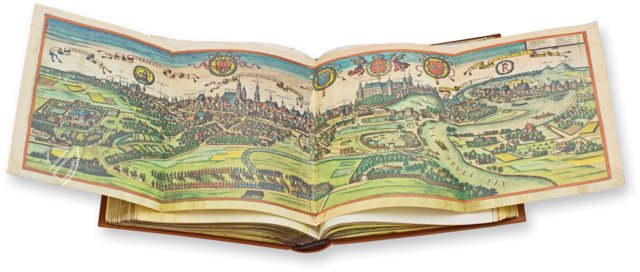
Civitates Orbis Terrarum – Braun / Hogenberg 1572–1617
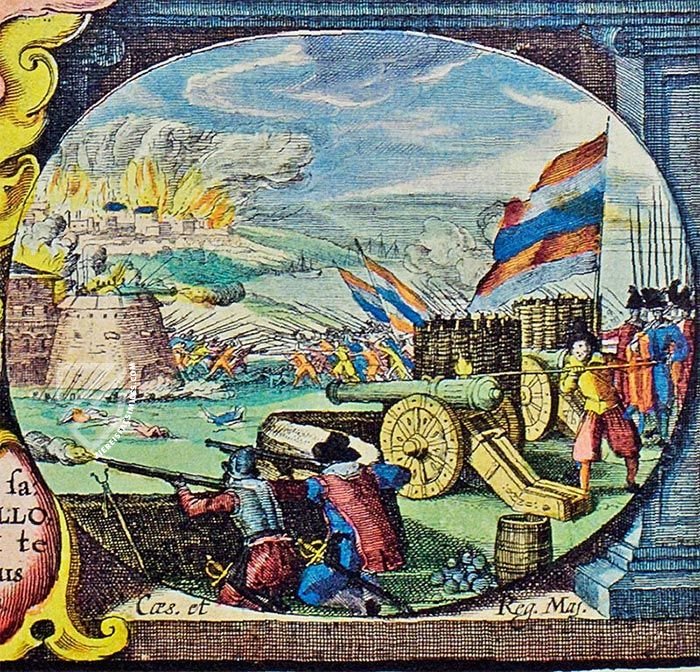
Eighty Years' War
Work on this marvelous collection of cityscapes and maps began four years after the outbreak of the Dutch War of Independence, also known as the Eighty Years' War (1568-1648). As such, it is a testament to the genius of the Dutch Republic, which first declared independence from Spain in 1581. This medallion miniature shows Dutch patriots attacking fortified positions with canon and muskets in the foreground as groups of pikemen clash in front of the ramparts.
Civitates Orbis Terrarum – Braun / Hogenberg 1572–1617
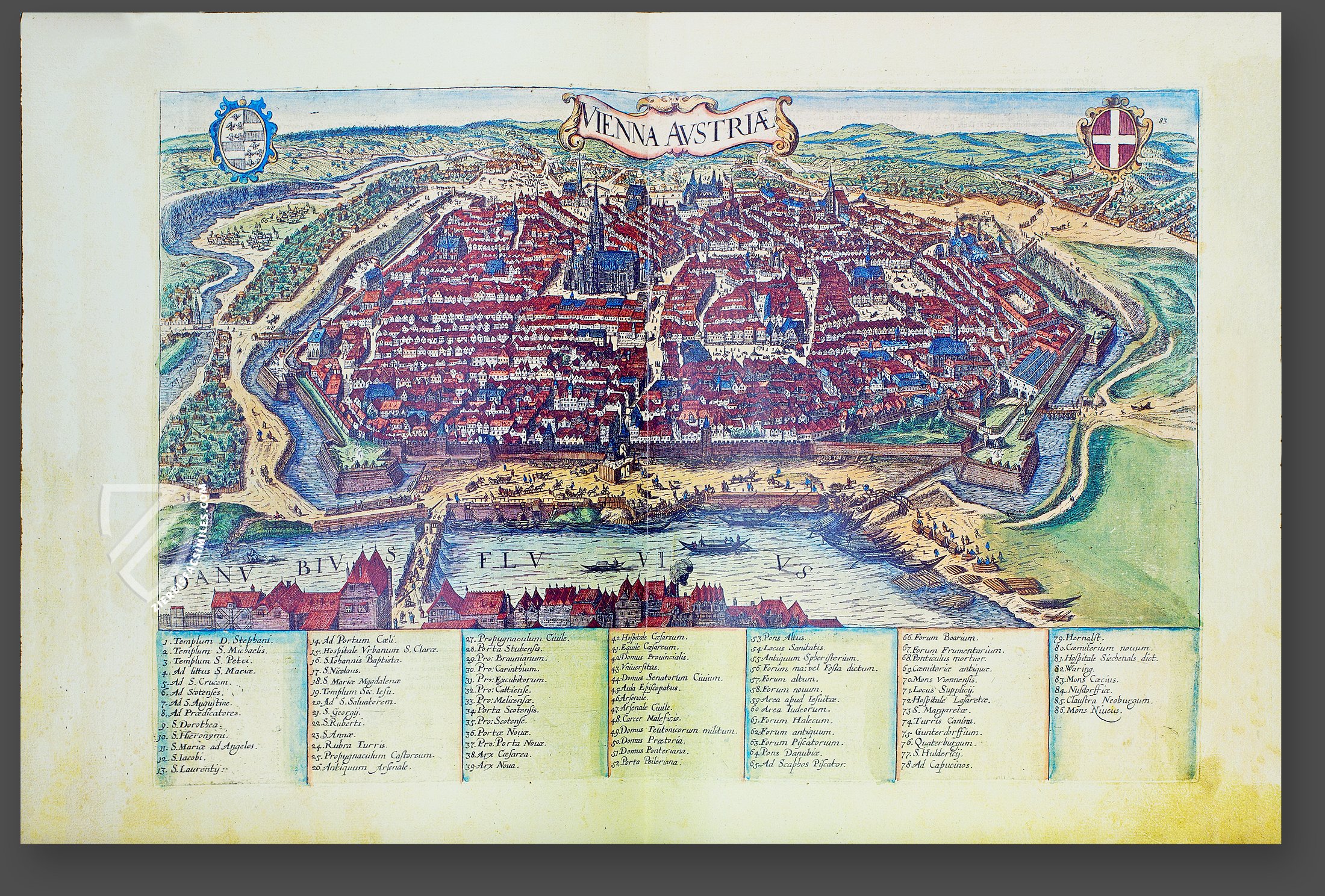
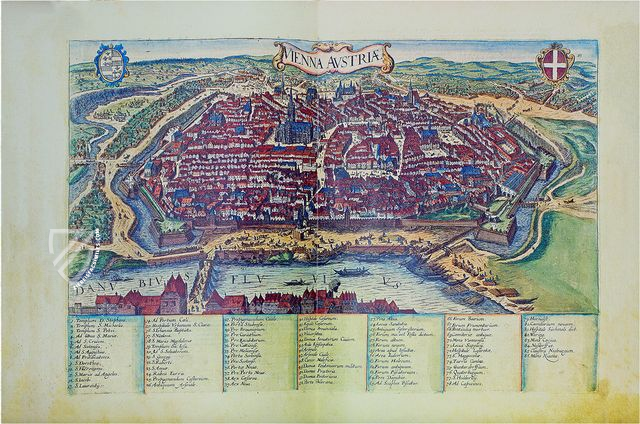
Cityscape of Vienna
The double-page copperplate at hand represents just one of 600 gorgeous and accurate cityscapes, which is the greatest source on the appearance of medieval cities before the destruction of the 30 Years’ War. It depicts the city of Vienna, one of the most important political, commercial, and artistic centers of late medieval Europe.
This realistic depiction possess a tremendous wealth of detail. It accurately depicts the Austrian city as a whole, with special attention paid to its most important buildings and landmarks – 85 of which are enumerated in the map key. Attention is also paid to its updated Renaissance fortifications as well as the commercial traffic via ship that occurs on the banks of the Danube River in the foreground.
#1 Civitates Orbis Terrarum
(7,000€ - 10,000€)
- Block Books / Incunables / Post-incunables
- Alchemy
- Apocalypses / Beatus Manuscripts
- Astronomy / Astrology
- Bibles / Gospels
- Picture Bibles / Bibles Moralisées / Mirror of Human Salvation
- Botany
- Chronicles / History / Letters
- Cookbook / Recipes
- Diaries / Biographies / Autograph Books
- Encyclopedias
- Fashion / Costume Books
- Games / Game Theory
- Geography / Cartography / Navigation
- Graduals / Antiphonaries / Exultet Roll
- Haggadot
- Hunting Books
- Law / Deeds / Rules
- Leonardo da Vinci
- Literature / Poetry
- Medicine
- Missals / Lectionaries / Sacramentaries
- Model Books / Sketchbooks / Notebooks
- Music
- Mythology
- Natural History / Bestiaries
- Other Liturgical Manuscripts
- Other Religious Works
- Other Secular Works
- Paintings / Graphics
- Primers / Textbooks
- Private Devotion Books
- Prophecies / Divination
- Psalters
- Quran
- Saints' Lives
- Sermons / Homilies
- Single Leaf Collections
- Song Books
- Tanakh
- Tournament Books / Armorials / Genealogy
- Travelogues / Travel Guides
- Treatises
- Afghanistan
- Algeria
- Armenia
- Austria
- Azerbaijan
- Belarus
- Belgium
- Belize
- Bosnia and Herzegovina
- China
- Colombia
- Costa Rica
- Croatia
- Cyprus
- Czech Republic
- Denmark
- Egypt
- El Salvador
- Ethiopia
- France
- Germany
- Greece
- Guatemala
- Honduras
- Hungary
- India
- Iran
- Iraq
- Israel
- Italy
- Japan
- Jordan
- Kazakhstan
- Kyrgyzstan
- Lebanon
- Libya
- Liechtenstein
- Luxembourg
- Mexico
- Morocco
- Netherlands
- Palestine
- Panama
- Peru
- Poland
- Portugal
- Romania
- Russia
- Serbia
- Slovakia
- Spain
- Sri Lanka
- Sweden
- Switzerland
- Syria
- Tajikistan
- Tunisia
- Turkey
- Turkmenistan
- Ukraine
- United Kingdom
- United States
- Uzbekistan
- Vatican City
- A. Oosthoek, van Holkema & Warendorf
- Aboca Museum
- Ajuntament de Valencia
- Akademie Verlag
- Akademische Druck- u. Verlagsanstalt (ADEVA)
- Aldo Ausilio Editore - Bottega d’Erasmo
- Alecto Historical Editions
- Alkuin Verlag
- Almqvist & Wiksell
- Amilcare Pizzi
- Andreas & Andreas Verlagsbuchhandlung
- Archa 90
- Archiv Verlag
- Archivi Edizioni
- Arnold Verlag
- ARS
- Ars Magna
- Ars Millenii
- Art Market
- ArtCodex
- AyN Ediciones
- Azimuth Editions
- Badenia Verlag
- Bärenreiter-Verlag
- Belser Verlag
- Belser Verlag / WK Wertkontor
- Benziger Verlag
- Bernardinum Wydawnictwo
- BiblioGemma
- Biblioteca Apostolica Vaticana (Vaticanstadt, Vaticanstadt)
- Bibliotheca Palatina Faksimile Verlag
- Bibliotheca Rara
- Boydell & Brewer
- Bramante Edizioni
- Bredius Genootschap
- Brepols Publishers
- British Library
- Brokarte
- C. Weckesser
- Caixa Catalunya
- Canesi
- CAPSA, Ars Scriptoria
- Caratzas Brothers, Publishers
- Carus Verlag
- Casamassima Libri
- Centrum Cartographie Verlag GmbH
- Chavane Verlag
- Christian Brandstätter Verlag
- Circulo Cientifico
- Club Bibliófilo Versol
- Club du Livre
- Club Internacional del Libro
- CM Editores
- Collegium Graphicum
- Collezione Apocrifa Da Vinci
- Comissão Nacional para as Comemorações dos Descobrimentos Portugueses
- Coron Verlag
- Corvina
- CTHS
- D. S. Brewer
- Damon
- De Agostini/UTET
- De Nederlandsche Boekhandel
- De Schutter
- Deuschle & Stemmle
- Deutscher Verlag für Kunstwissenschaft
- DIAMM
- Dropmore Press
- Droz
- E. Schreiber Graphische Kunstanstalten
- Ediciones Boreal
- Ediciones Grial
- Ediclube
- Edições Inapa
- Edilan
- Editalia
- Edition Deuschle
- Edition Georg Popp
- Edition Leipzig
- Edition Libri Illustri
- Editiones Reales Sitios S. L.
- Éditions de l'Oiseau Lyre
- Editions Medicina Rara
- Editorial Base
- Editorial Casariego
- Editorial Mintzoa
- Editrice Antenore
- Editrice Velar
- Edizioni Edison
- Egeria, S.L.
- Eikon Editores
- Electa
- Emery Walker Limited
- Enciclopèdia Catalana
- Eos-Verlag
- Ephesus Publishing
- Ernst Battenberg
- Eugrammia Press
- Extraordinary Editions
- Fackelverlag
- Facsimila Art & Edition
- Facsimile Editions Ltd.
- Facsimilia Art & Edition Ebert KG
- Faksimile Verlag
- Feuermann Verlag
- Folger Shakespeare Library
- Franco Cosimo Panini Editore
- Friedrich Wittig Verlag
- Fundación Hullera Vasco-Leonesa
- G. Braziller
- Gabriele Mazzotta Editore
- Gebr. Mann Verlag
- Gesellschaft für graphische Industrie
- Getty Research Institute
- Giovanni Domenico de Rossi
- Giunti Editore
- Goldenmark Librarium
- Graffiti
- Grafica European Center of Fine Arts
- Guido Pressler
- Guillermo Blazquez
- Gustav Kiepenheuer
- H. N. Abrams
- Harrassowitz
- Harvard University Press
- Helikon
- Hendrickson Publishers
- Henning Oppermann
- Herder Verlag
- Hes & De Graaf Publishers
- Hoepli
- Holbein-Verlag
- Houghton Library
- Hugo Schmidt Verlag
- Hungarian Academy of Sciences
- Idion Verlag
- Il Bulino, edizioni d'arte
- ILte
- Imago
- In Officina Danesi
- Insel Verlag
- Instituto de Estudios Altoaragoneses
- Instituto Nacional de Antropología e Historia
- Introligatornia Budnik Jerzy
- Istituto dell'Enciclopedia Italiana - Treccani
- Istituto Ellenico di Studi Bizantini e Postbizantini
- Istituto Geografico De Agostini
- Istituto Poligrafico e Zecca dello Stato
- Italarte Art Establishments
- Jaca Book
- Jan Thorbecke Verlag
- Johnson Reprint Corporation
- Johnson Reprint Corporation
- Jos. Baer
- Josef Stocker
- Josef Stocker-Schmid
- Jugoslavija
- Karl W. Hiersemann
- Kasper Straube
- Kaydeda Ediciones
- Kindler Verlag / Coron Verlag
- Kodansha International Ltd.
- Konrad Kölbl Verlag
- Kurt Wolff Verlag
- La Linea Editrice
- La Meta Editore
- Lambert Schneider
- Landeskreditbank Baden-Württemberg
- Leo S. Olschki
- Les Incunables
- Liber Artis
- Library of Congress
- Libreria Musicale Italiana
- Lichtdruck
- Lito Immagine Editore
- Lumen Artis
- Lund Humphries
- M. Moleiro Editor
- Maison des Sciences de l'homme et de la société de Poitiers
- Manuscriptum
- Martinus Nijhoff
- Maruzen-Yushodo Co. Ltd.
- MASA
- Massada Publishers
- McGraw-Hill
- Metropolitan Museum of Art
- Militos
- Millennium Liber
- Müller & Schindler
- Nahar - Stavit
- Nahar and Steimatzky
- National Library of Wales
- Neri Pozza
- Nova Charta
- Oceanum Verlag
- Odeon
- Omnia Arte
- Orbis Mediaevalis
- Orbis Pictus
- Österreichische Staatsdruckerei
- Oxford University Press
- Pageant Books
- Parzellers Buchverlag
- Patrimonio Ediciones
- Pattloch Verlag
- PIAF
- Plon-Nourrit et cie
- Poligrafiche Bolis
- Presses Universitaires de Strasbourg
- Prestel Verlag
- Princeton University Press
- Prisma Verlag
- Priuli & Verlucca, editori
- Pro Sport Verlag
- Propyläen Verlag
- Pytheas Books
- Quaternio Verlag Luzern
- Reales Sitios
- Recht-Verlag
- Reichert Verlag
- Reichsdruckerei
- Reprint Verlag
- Riehn & Reusch
- Rizzoli
- Roberto Vattori Editore
- Rosenkilde and Bagger
- Roto-Sadag
- Roxburghe Club
- Salerno Editrice
- Saltellus Press
- Sandoz
- Sarajevo Svjetlost
- Schöck ArtPrint Kft.
- Schulsinger Brothers
- Scolar Press
- Scrinium
- Scripta Maneant
- Scriptorium
- Shazar
- Siloé, arte y bibliofilia
- SISMEL - Edizioni del Galluzzo
- Sociedad Mexicana de Antropología
- Société des Bibliophiles & Iconophiles de Belgique
- Soncin Publishing
- Sorli Ediciones
- Stainer and Bell
- Studer
- Styria Verlag
- Sumptibus Pragopress
- Szegedi Tudomànyegyetem
- Taberna Libraria
- Tarshish Books
- Taschen
- Tempus Libri
- Testimonio Compañía Editorial
- TGB Limited Editions
- Thames and Hudson
- The Clear Vue Publishing Partnership Limited
- The Facsimile Codex
- The Folio Society
- The Marquess of Normanby
- The Orphan Hospital Ward of Israel
- The Richard III and Yorkist History Trust
- The Warburg Institute
- Tip.Le.Co
- TouchArt
- TREC Publishing House
- TRI Publishing Co.
- Trident Editore
- Tuliba Collection
- Typis Regiae Officinae Polygraphicae
- Union Verlag Berlin
- Universidad de Granada
- Universitaire Bibliotheken Leiden
- University of California Press
- University of Chicago Press
- Urs Graf
- Vallecchi
- Van Wijnen
- VCH, Acta Humaniora
- VDI Verlag
- VEB Deutscher Verlag für Musik
- Verein Schweizerischer Lithographie-Besitzer
- Verlag Anton Pustet / Andreas Verlag
- Verlag Bibliophile Drucke Josef Stocker
- Verlag der Münchner Drucke
- Verlag für Regionalgeschichte
- Verlag Styria
- Vicent Garcia Editores
- W. Turnowsky
- Waanders Printers
- Wiener Mechitharisten-Congregation (Wien, Österreich)
- Wissenschaftliche Buchgesellschaft
- Wissenschaftliche Verlagsgesellschaft
- Wydawnictwo Dolnoslaskie
- Xuntanza Editorial
- Zakład Narodowy
- Zollikofer AG