
Trial Against the Templars
Poitiers, Chinon, Avignon, and Malaucène (France) — 1307–1312
Rediscovered only a few years ago: official documents on the trial against the Knights Templar and the interrogation protocol of Jacques de Molay as testimony to one of the most notorious and mysterious events in history
Founded ca. 1118, the Knights Templar is one of the most famous and impressive endeavors in Christian history
The tremendous wealth and power accumulated by the Templars also earned them jealous enemies
The trial from 1307 to 1314 that resulted in their downfall is witnessed here by various official documents
Trial Against the Templars
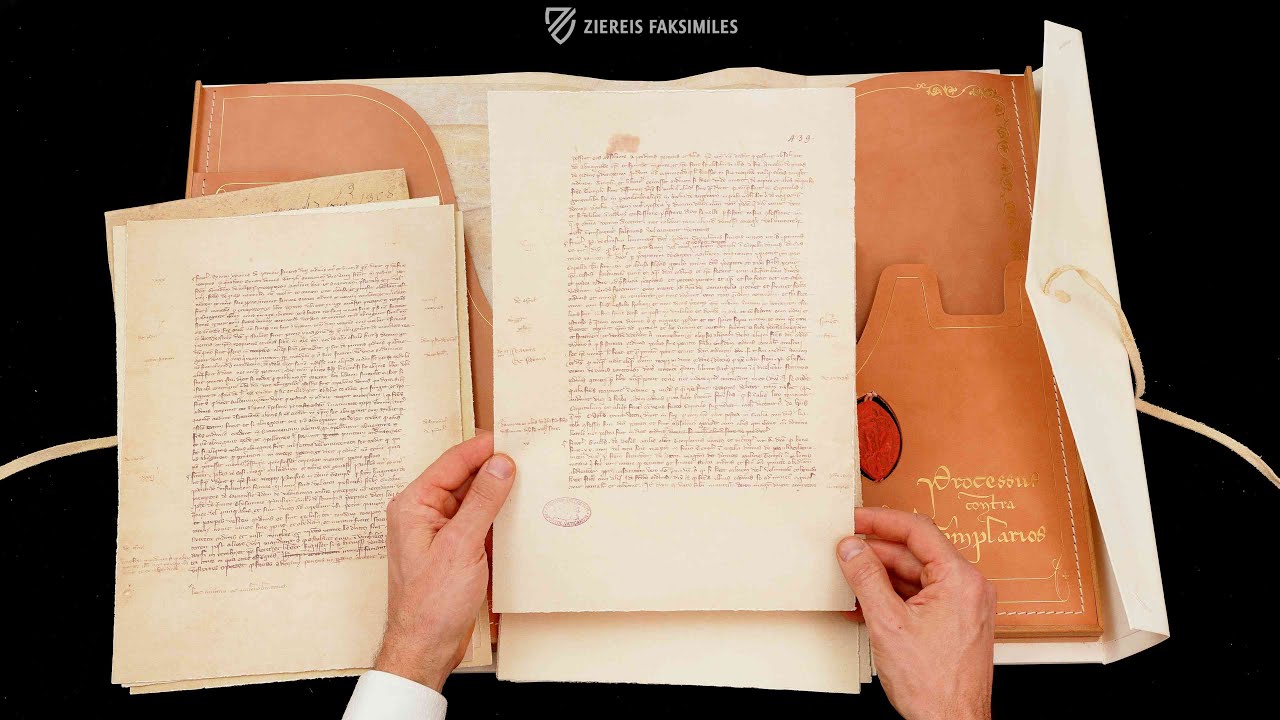

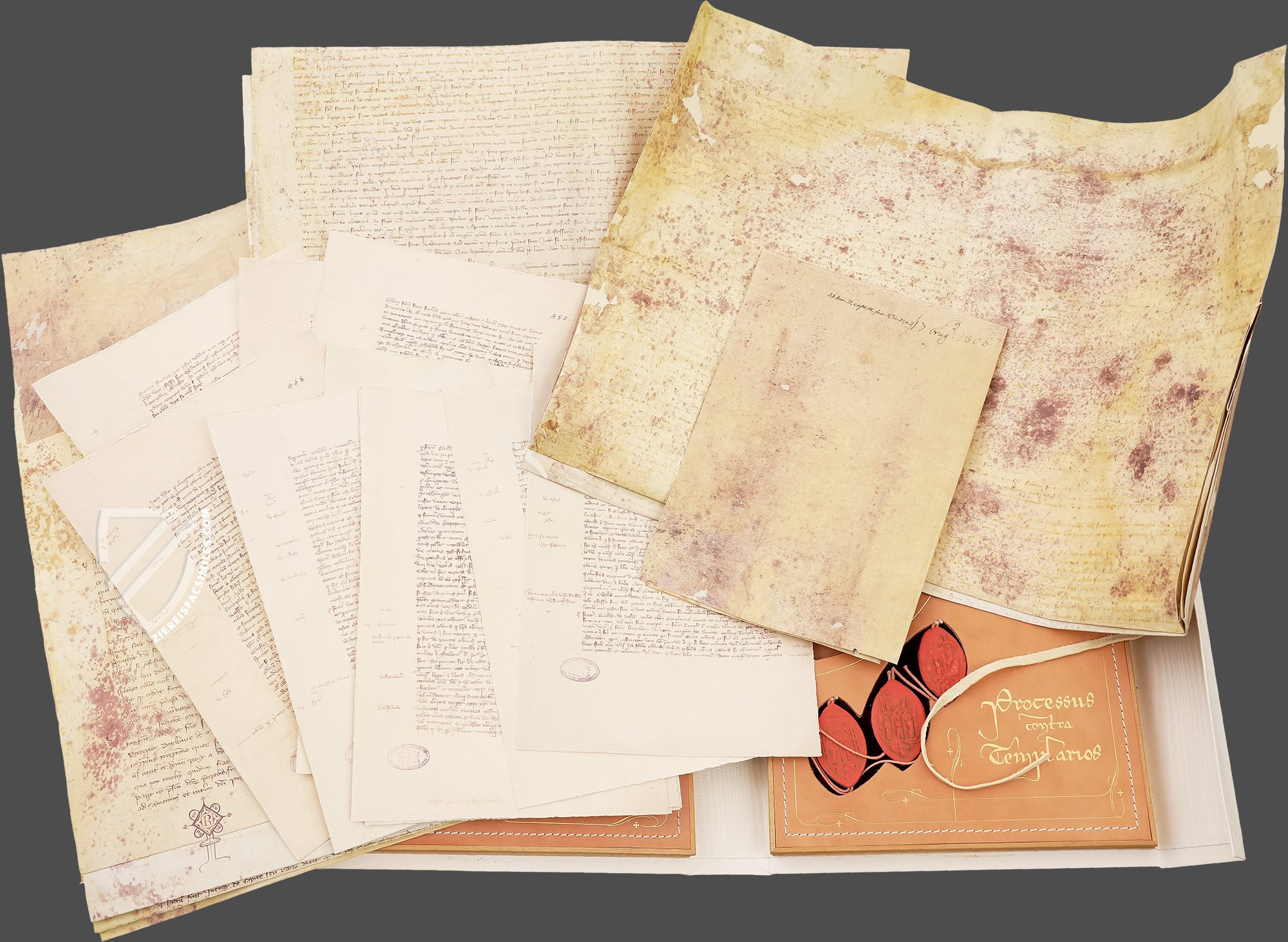
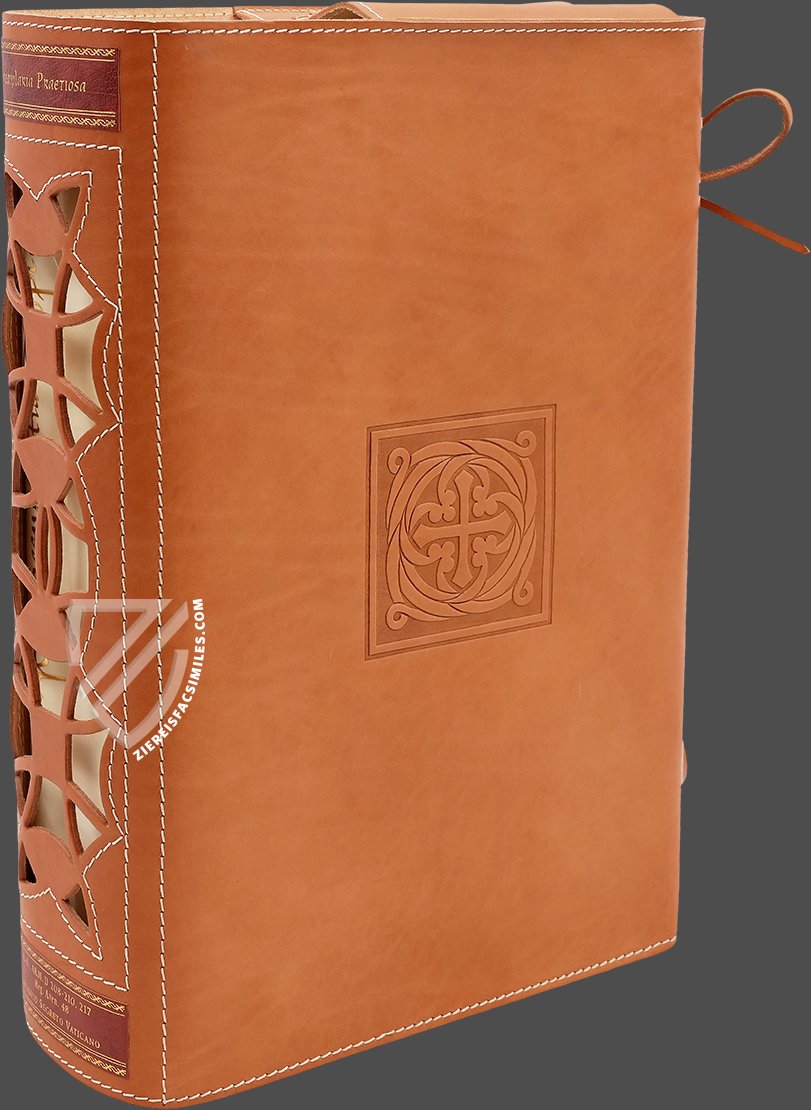
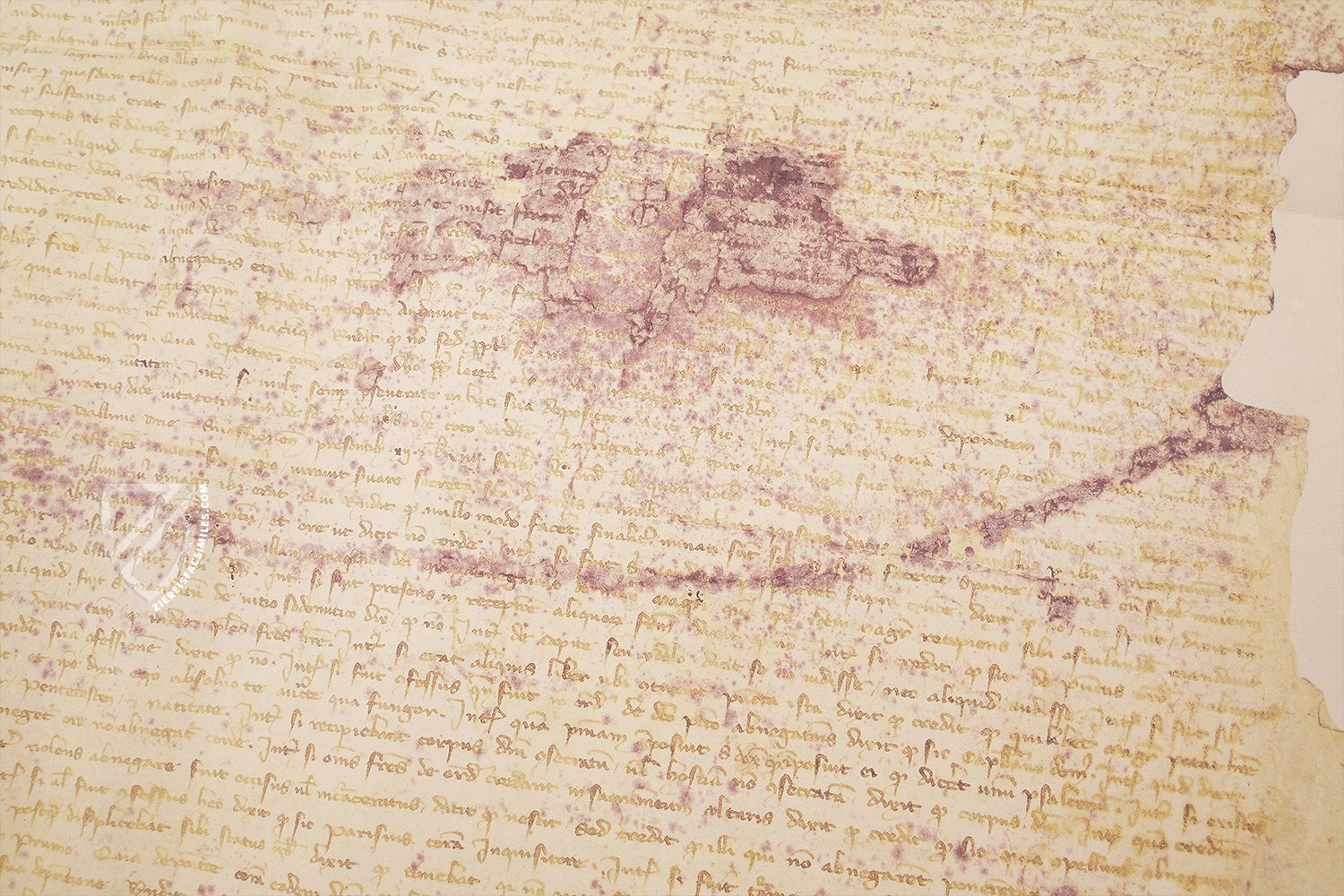
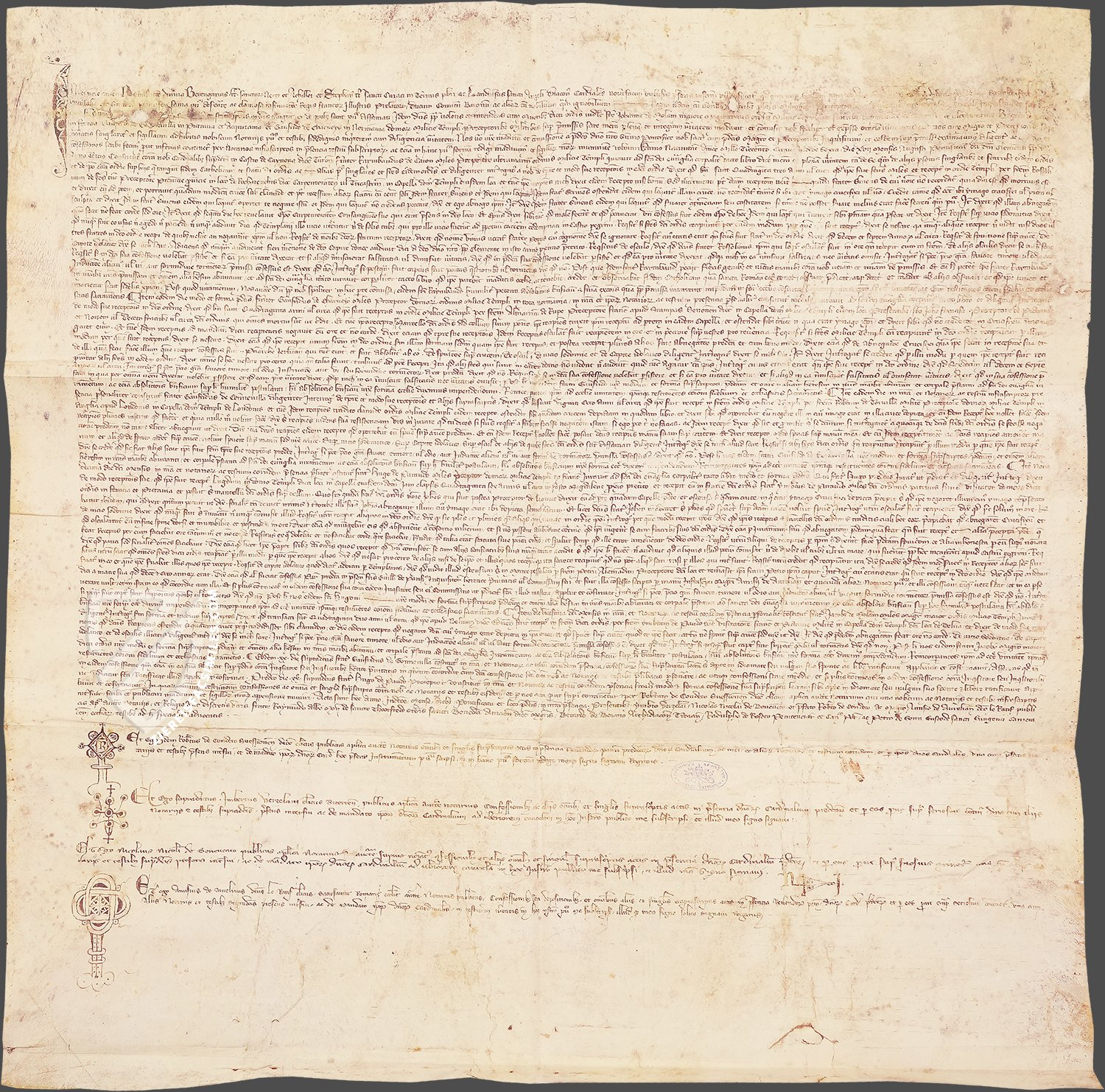
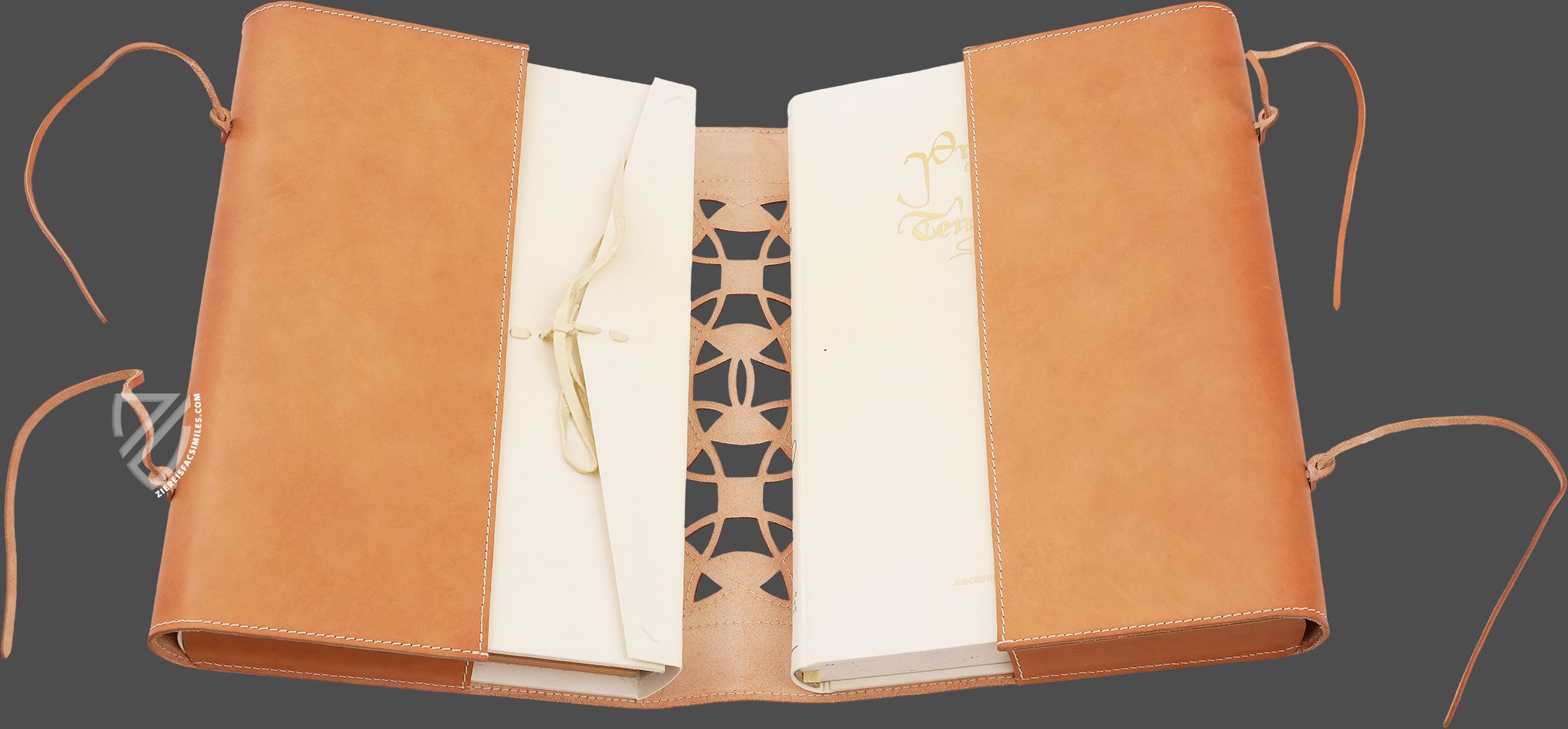
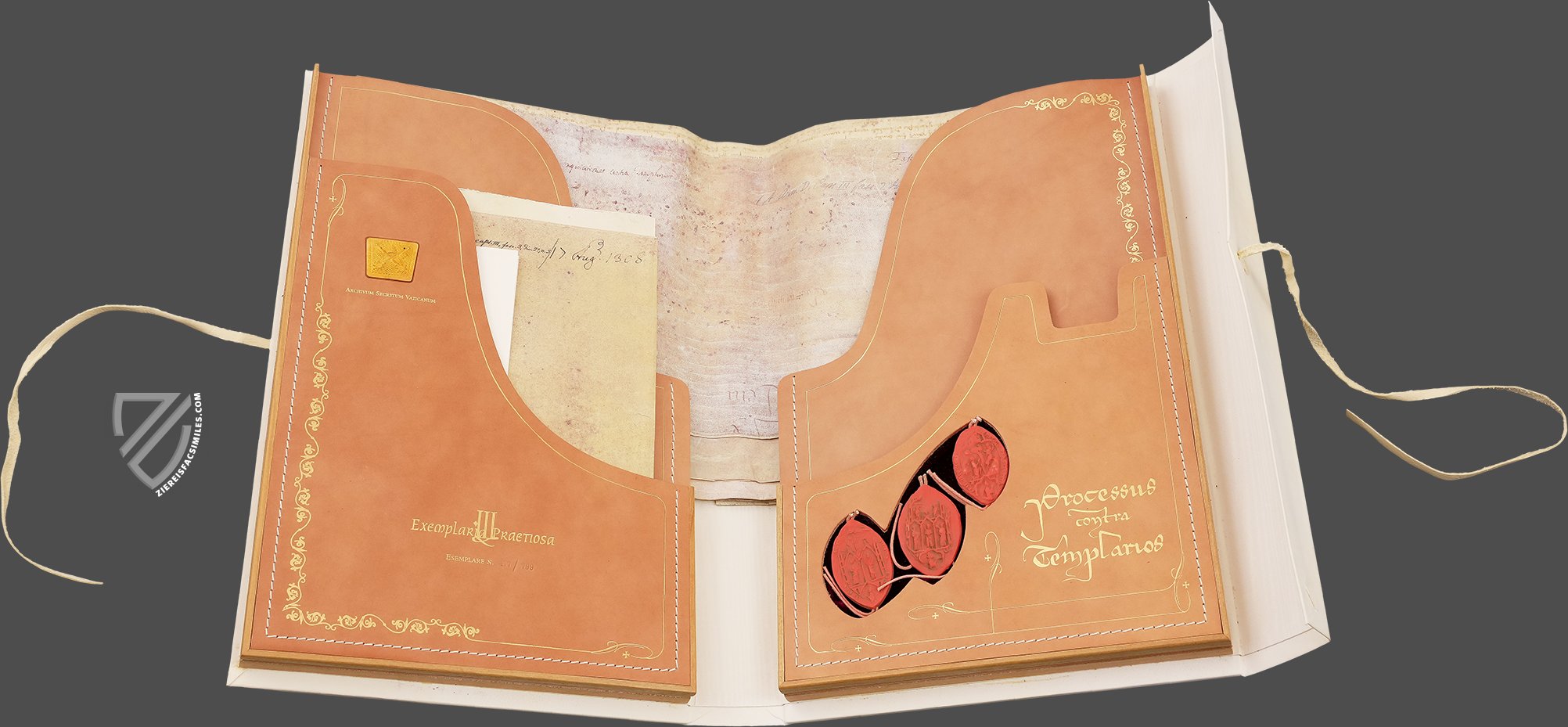
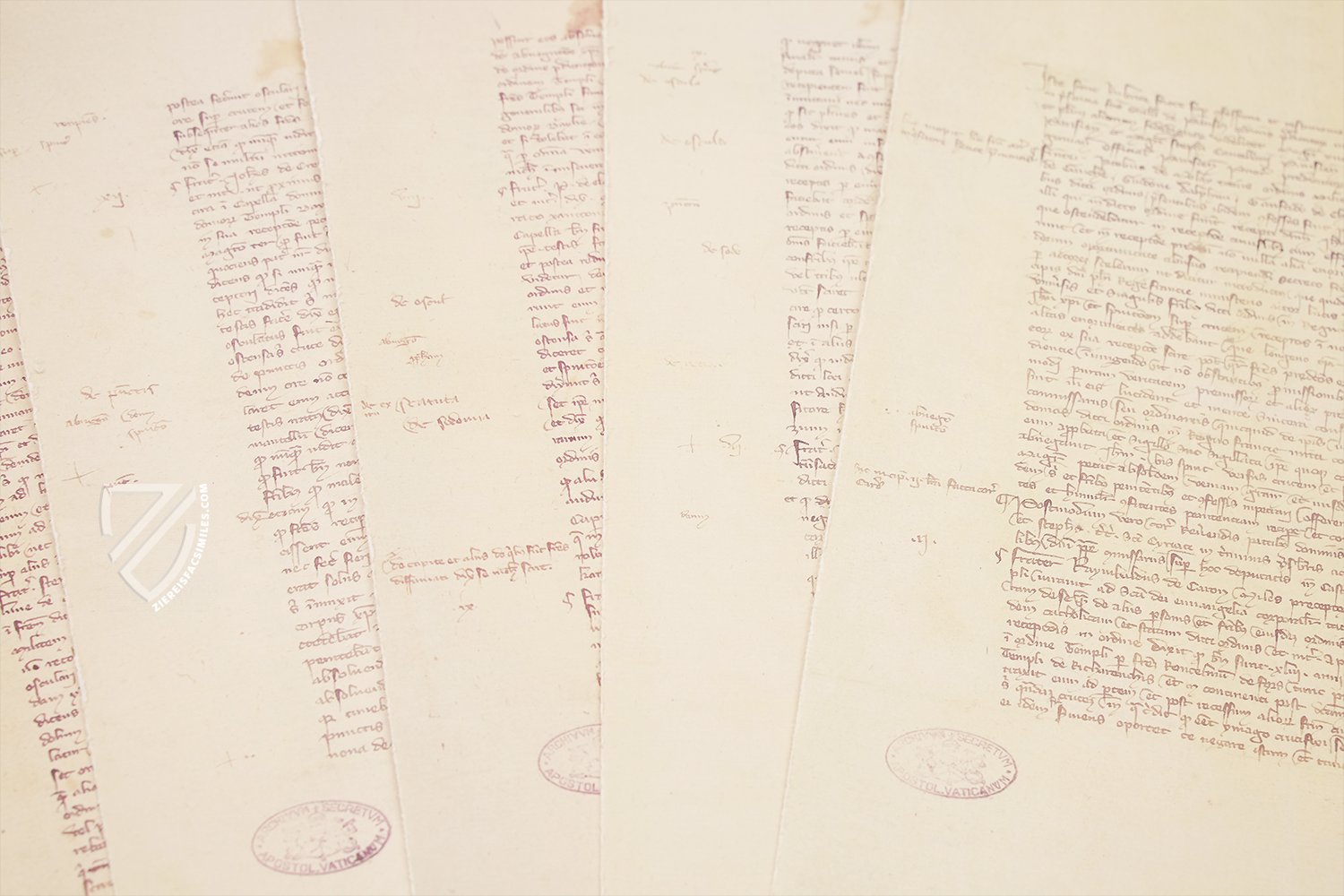
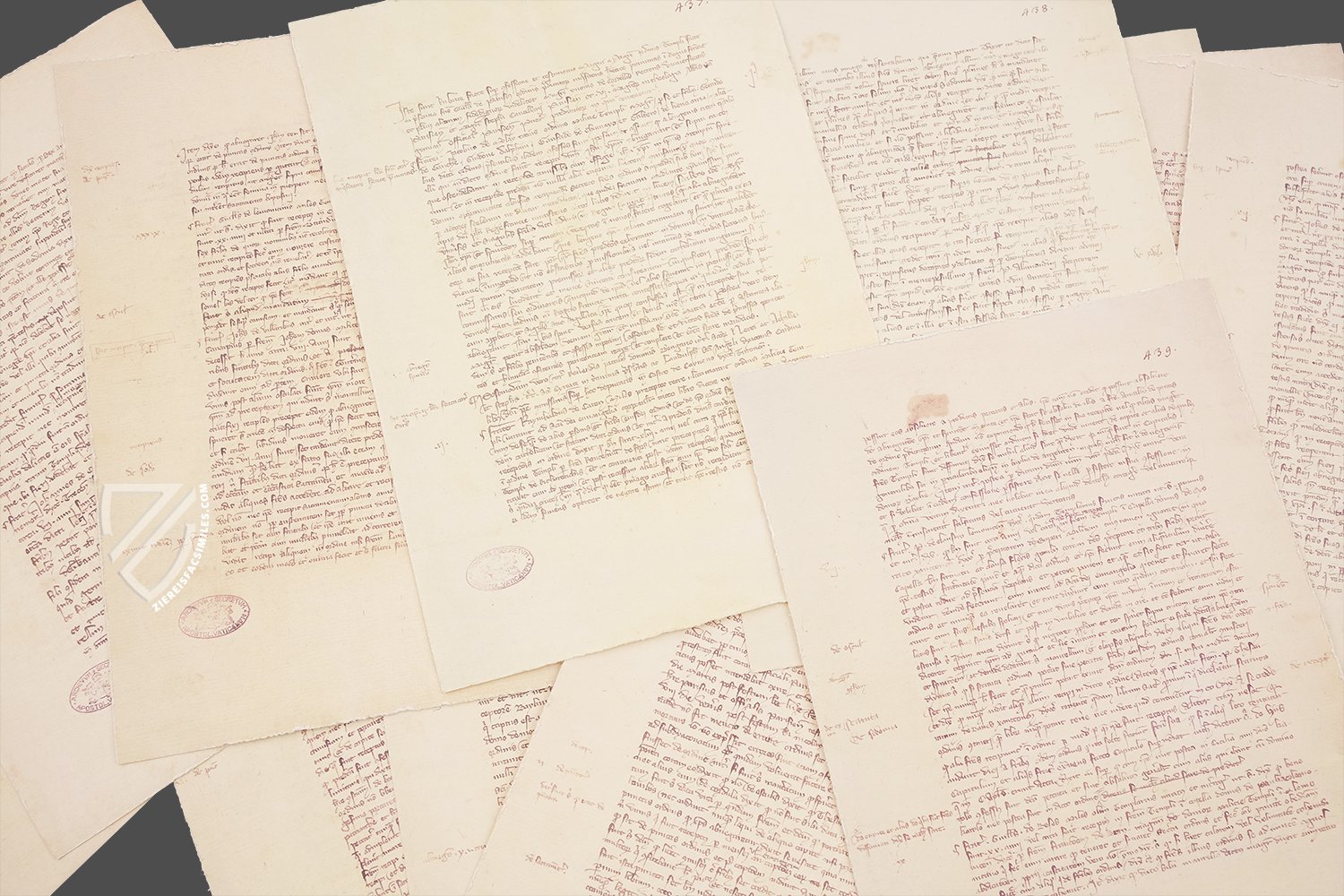
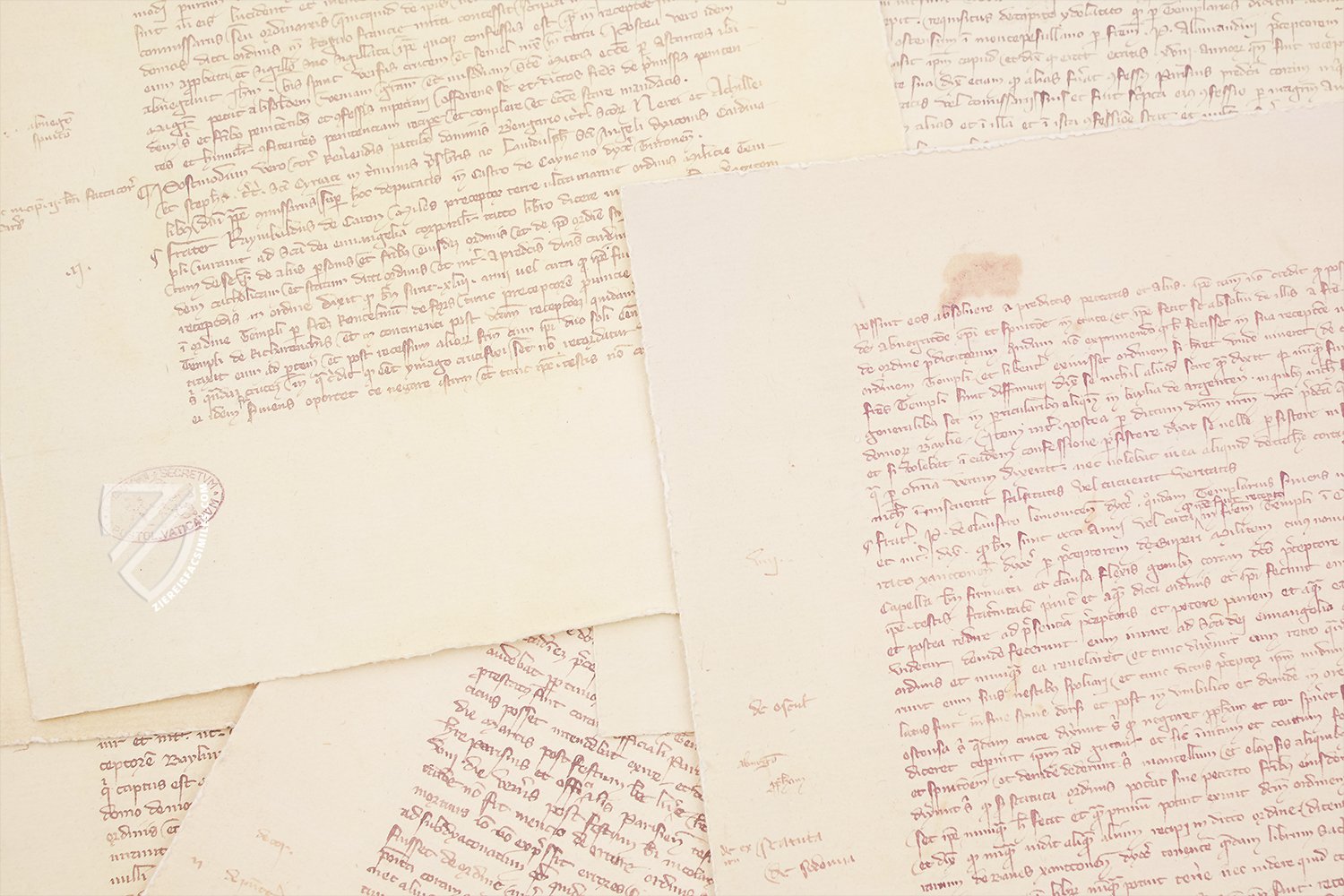
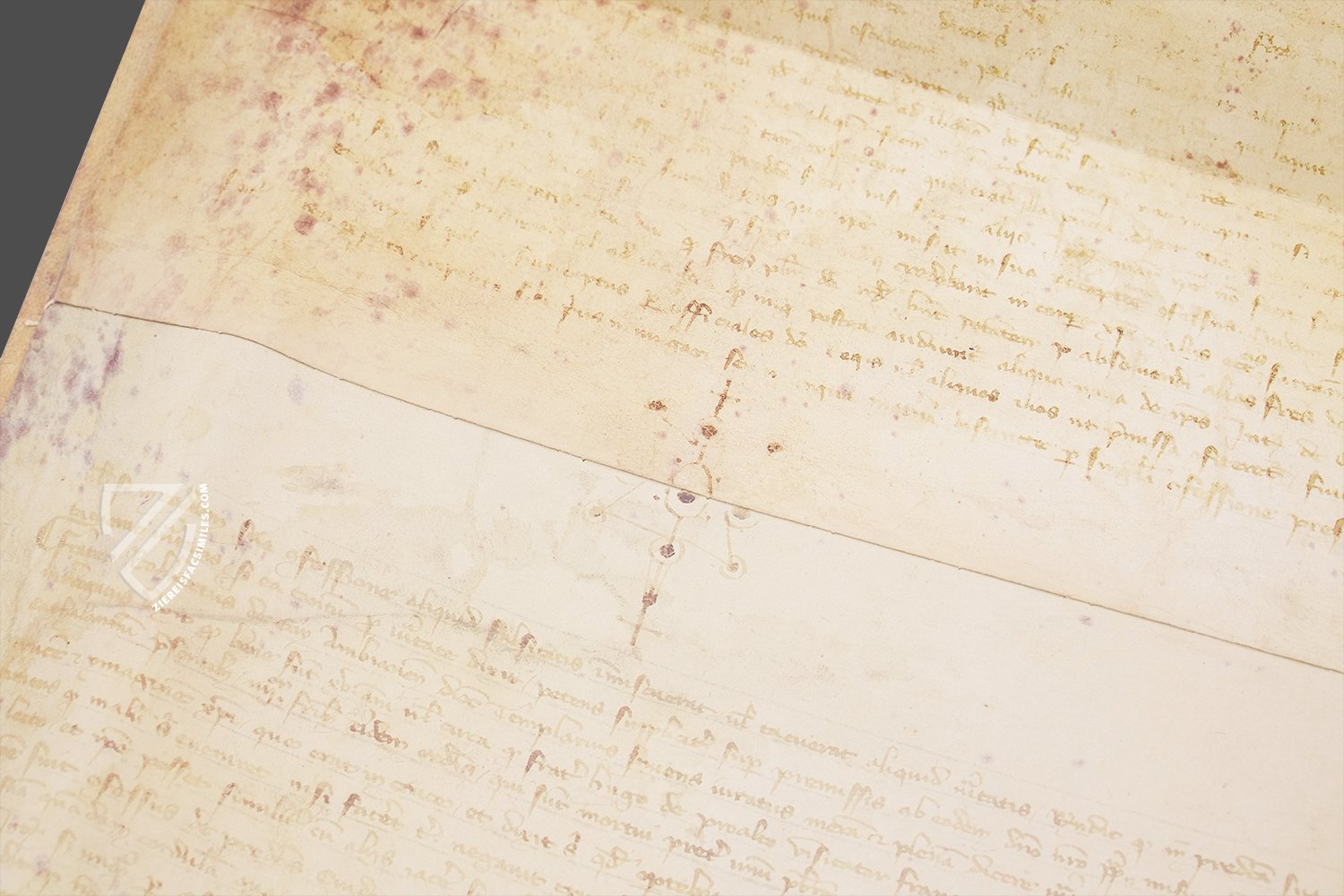
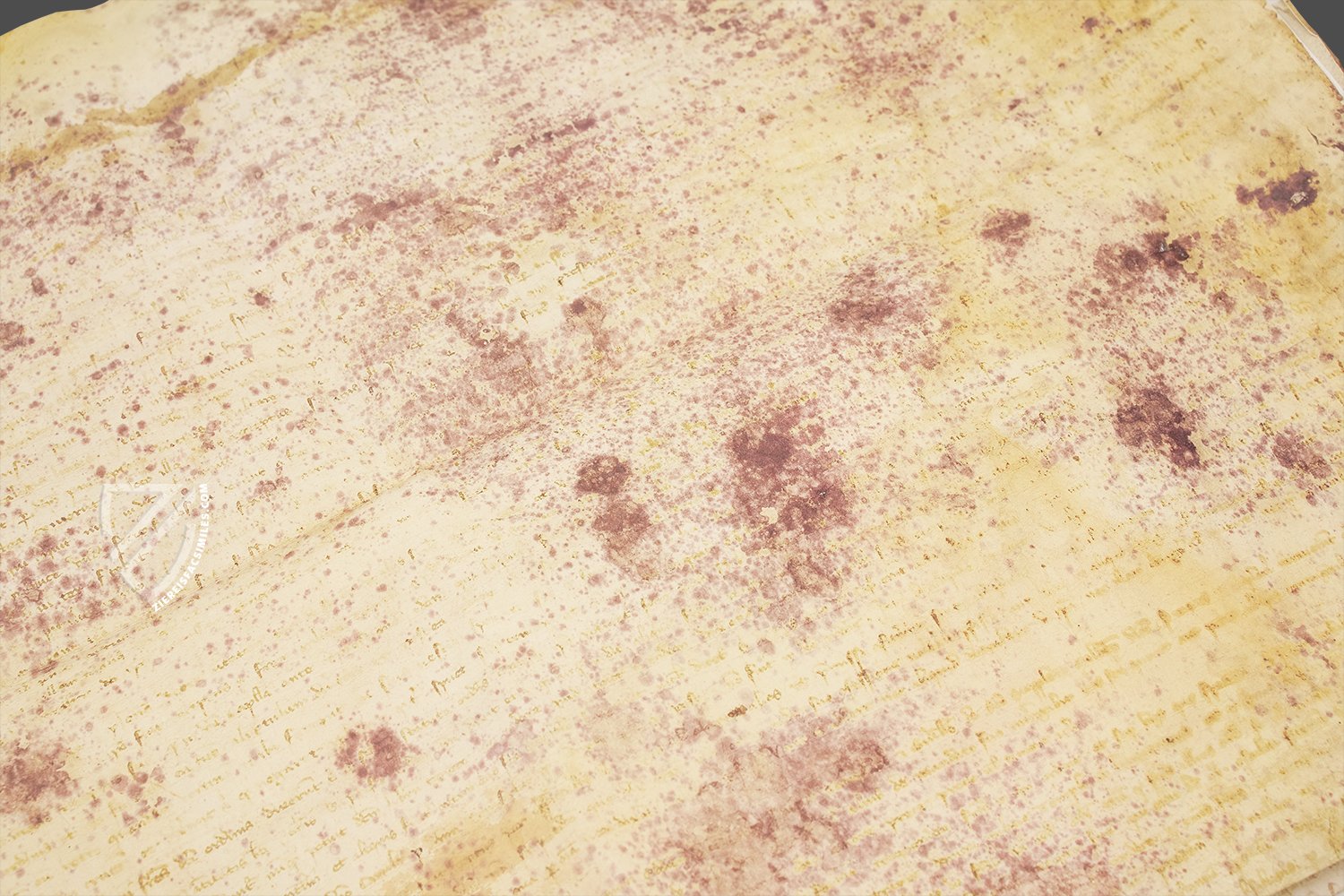
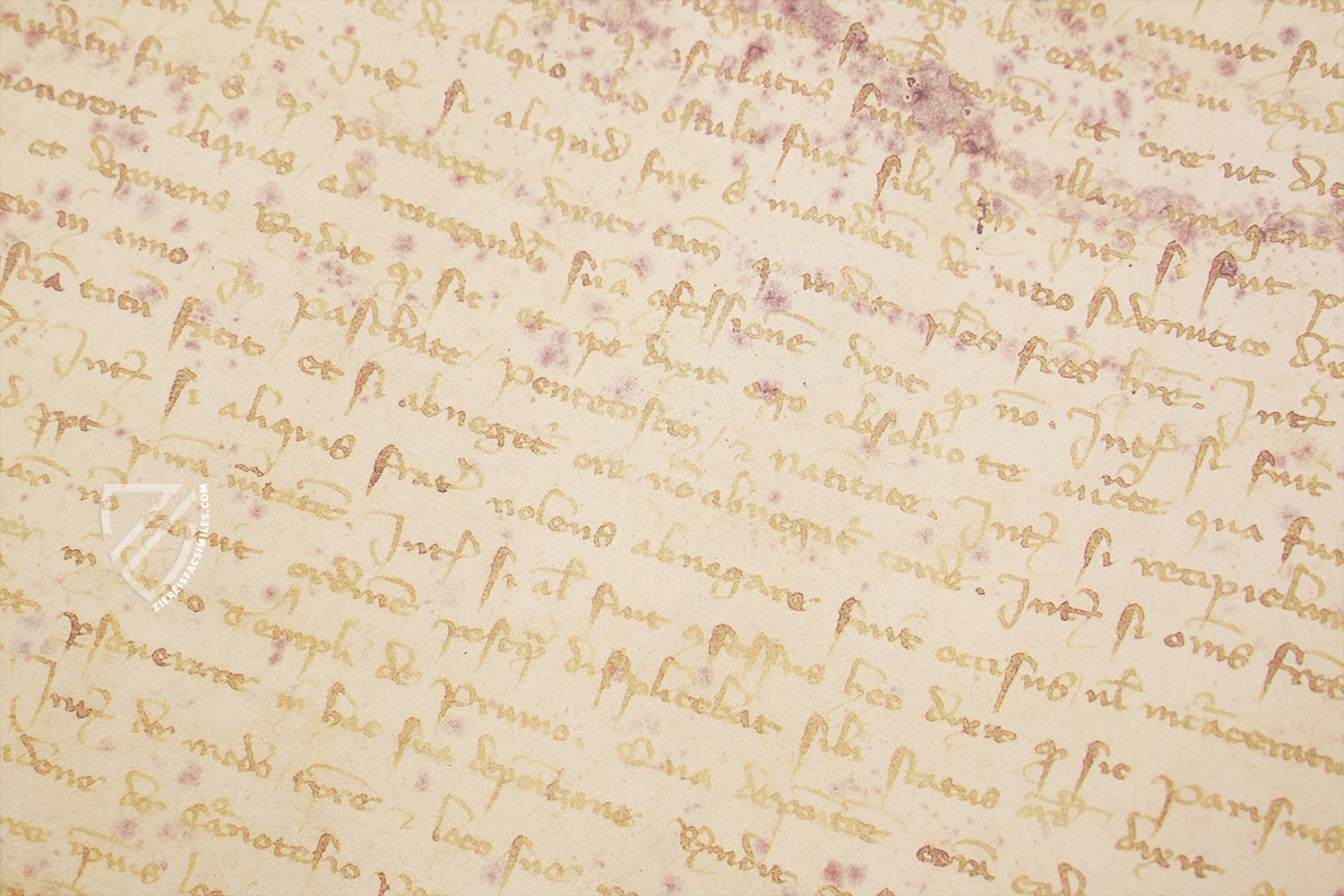
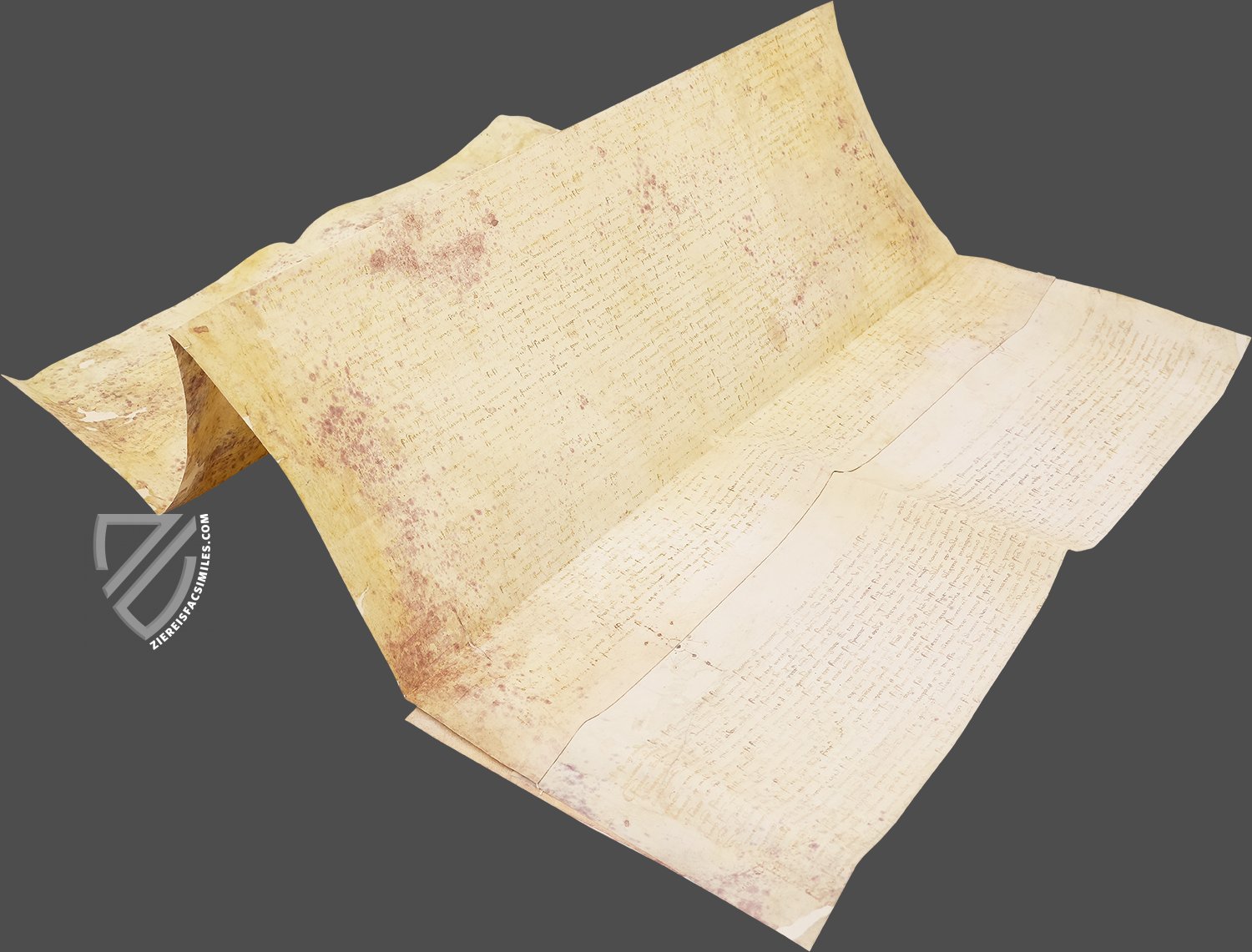
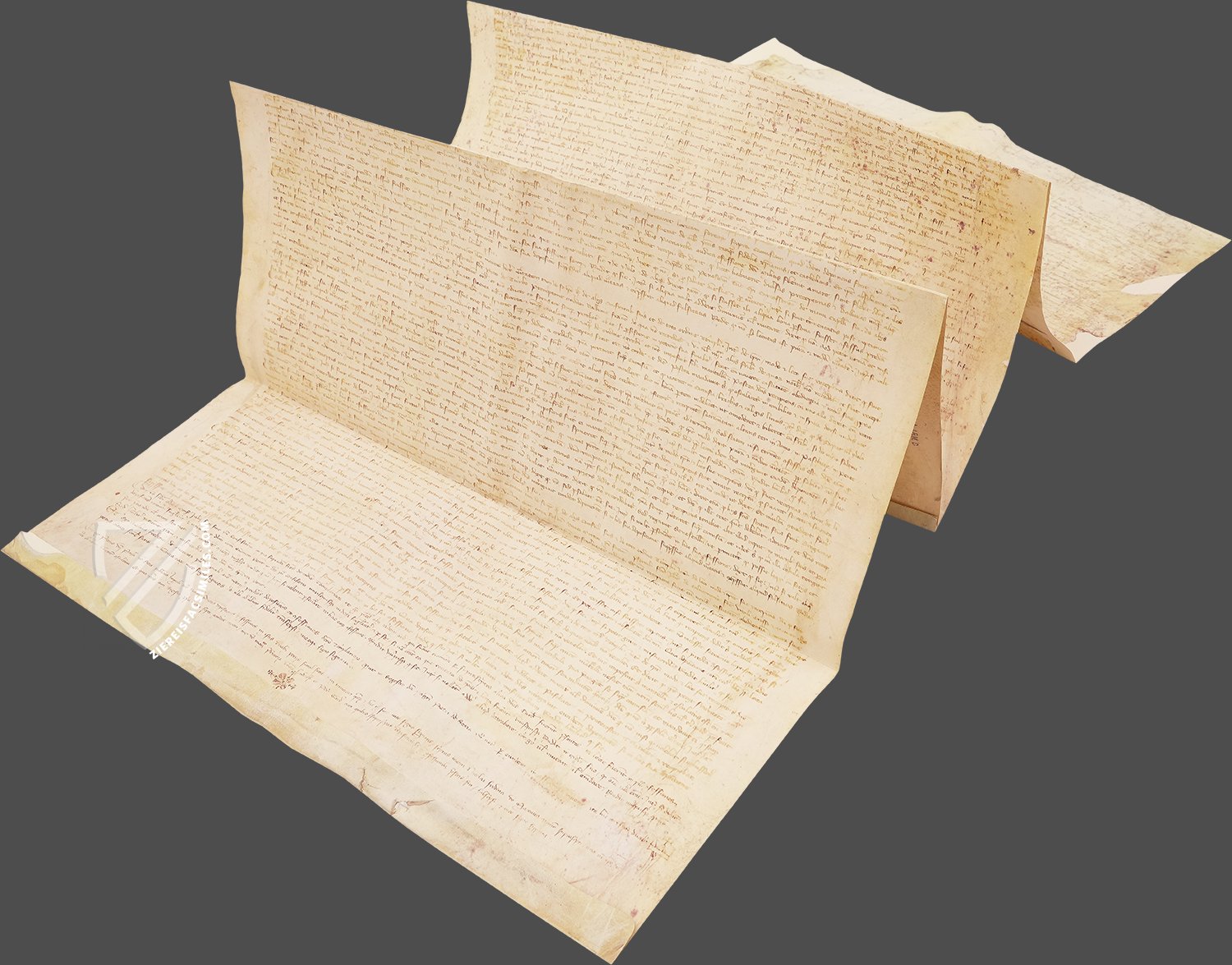
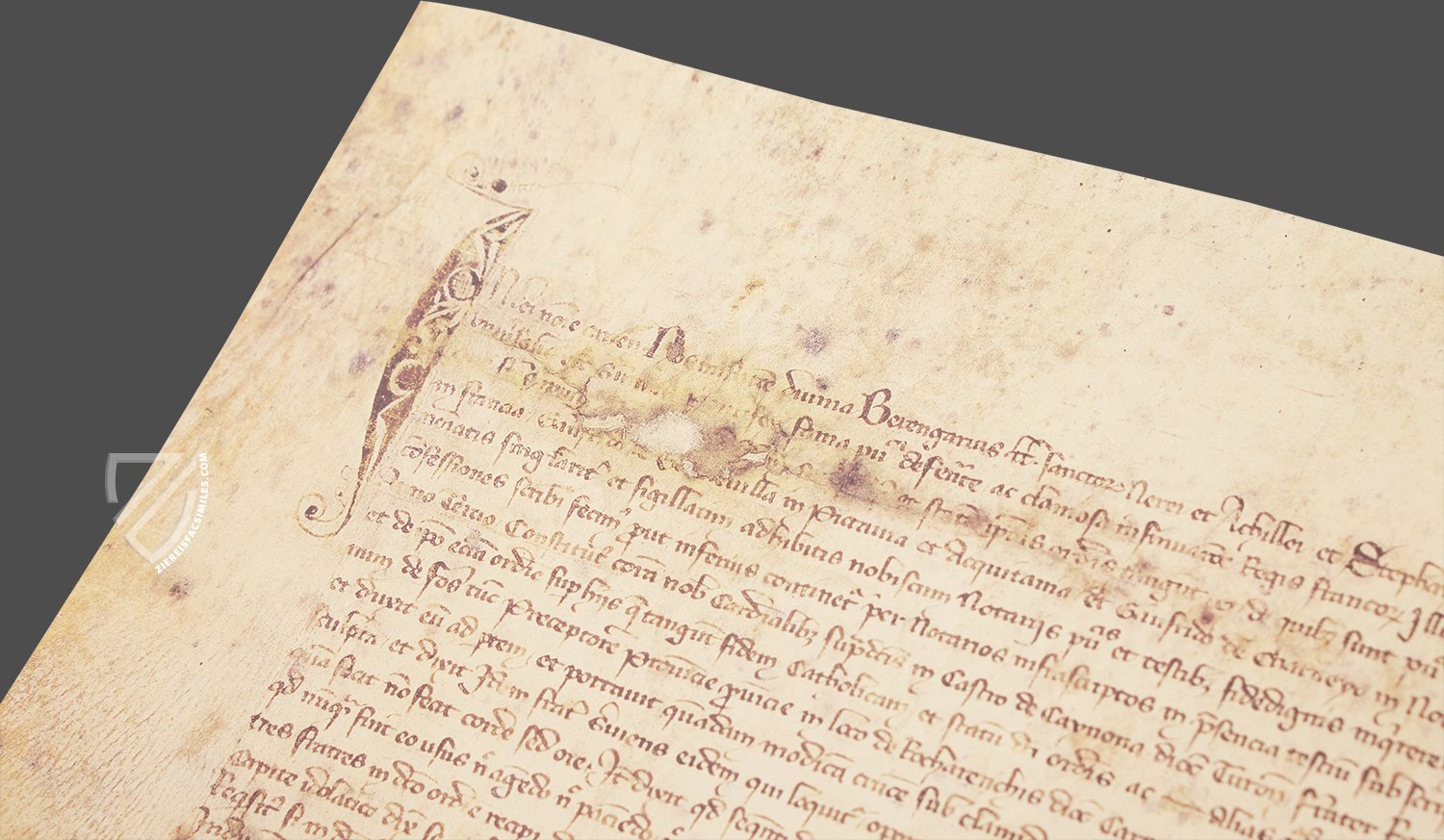
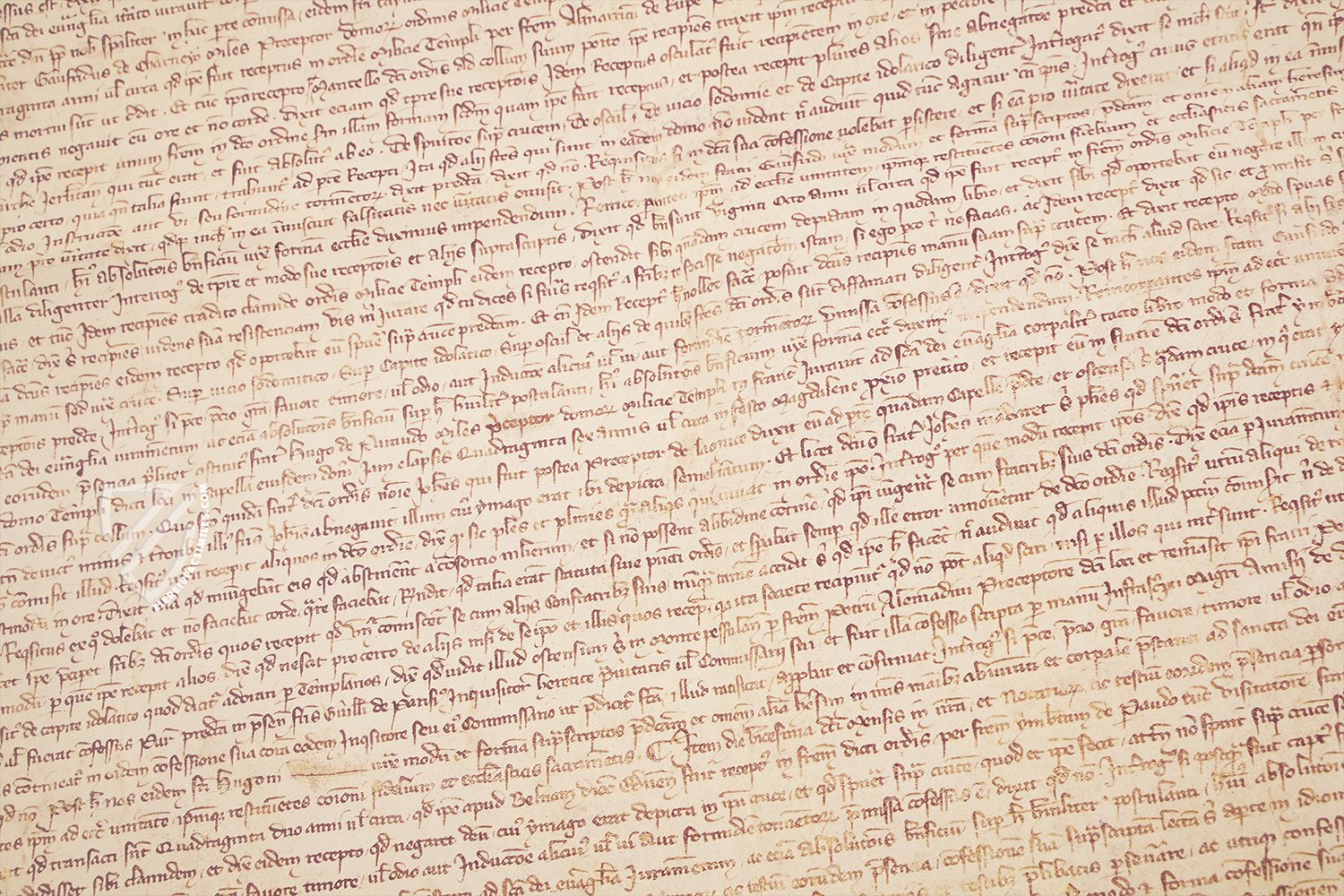
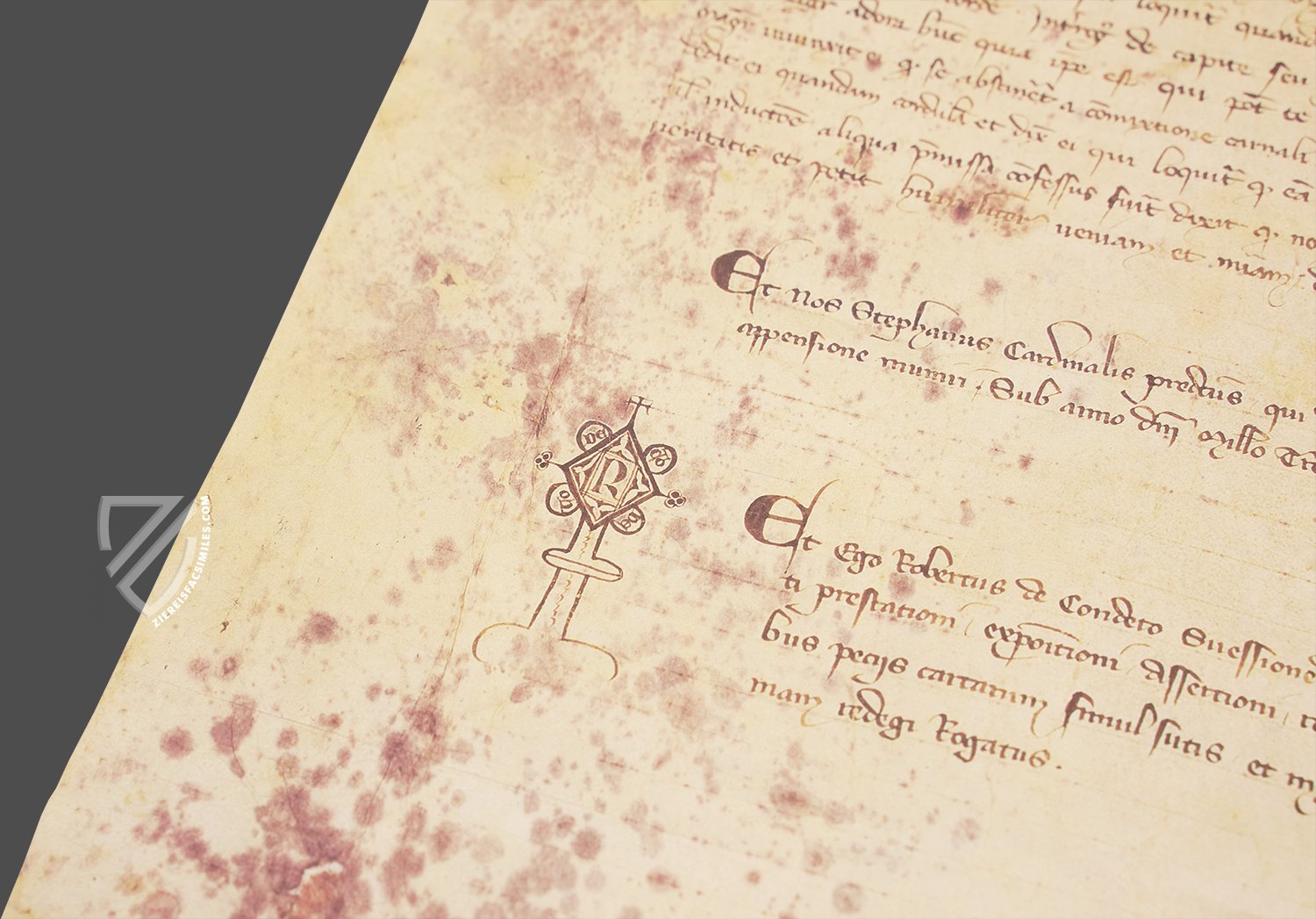
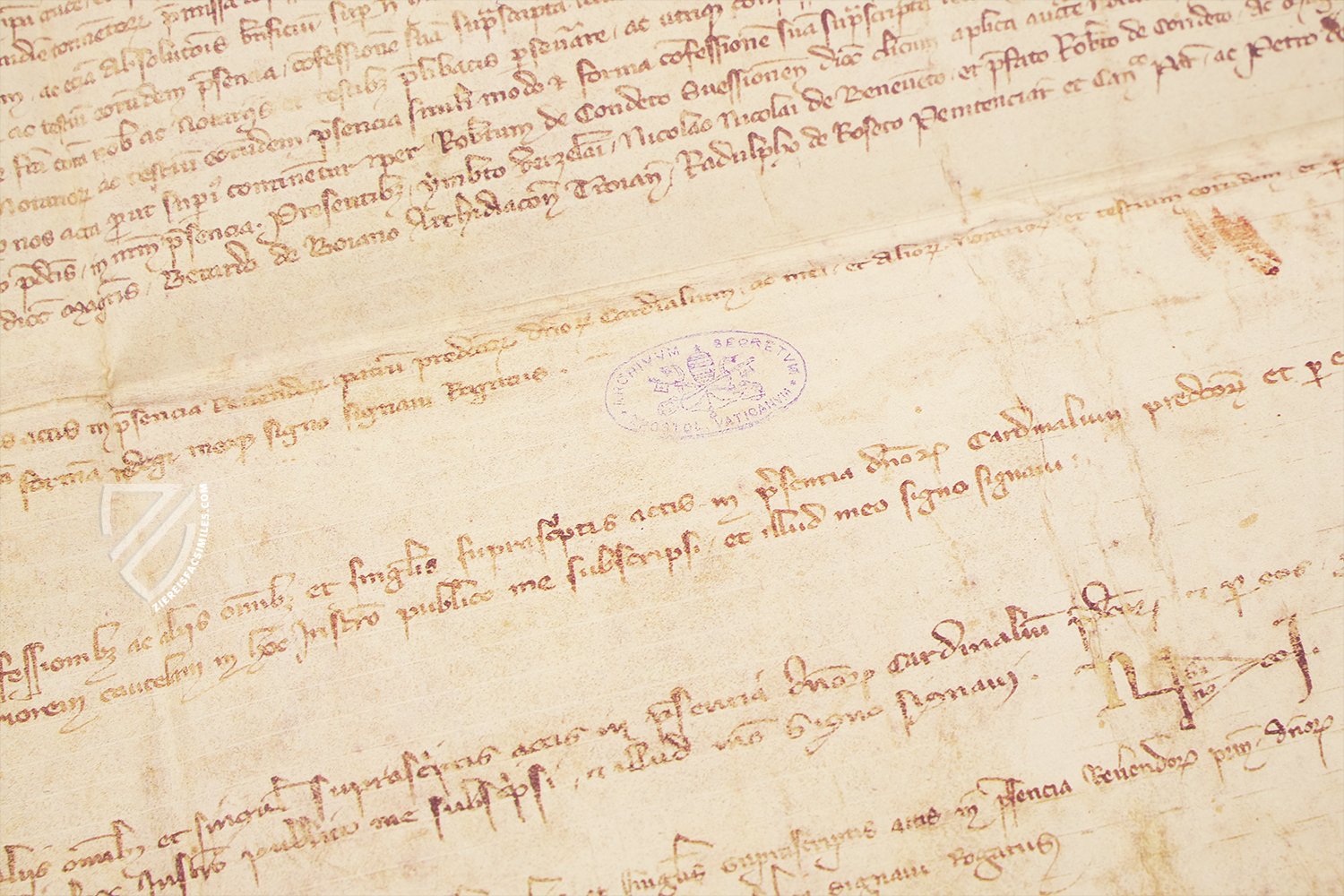
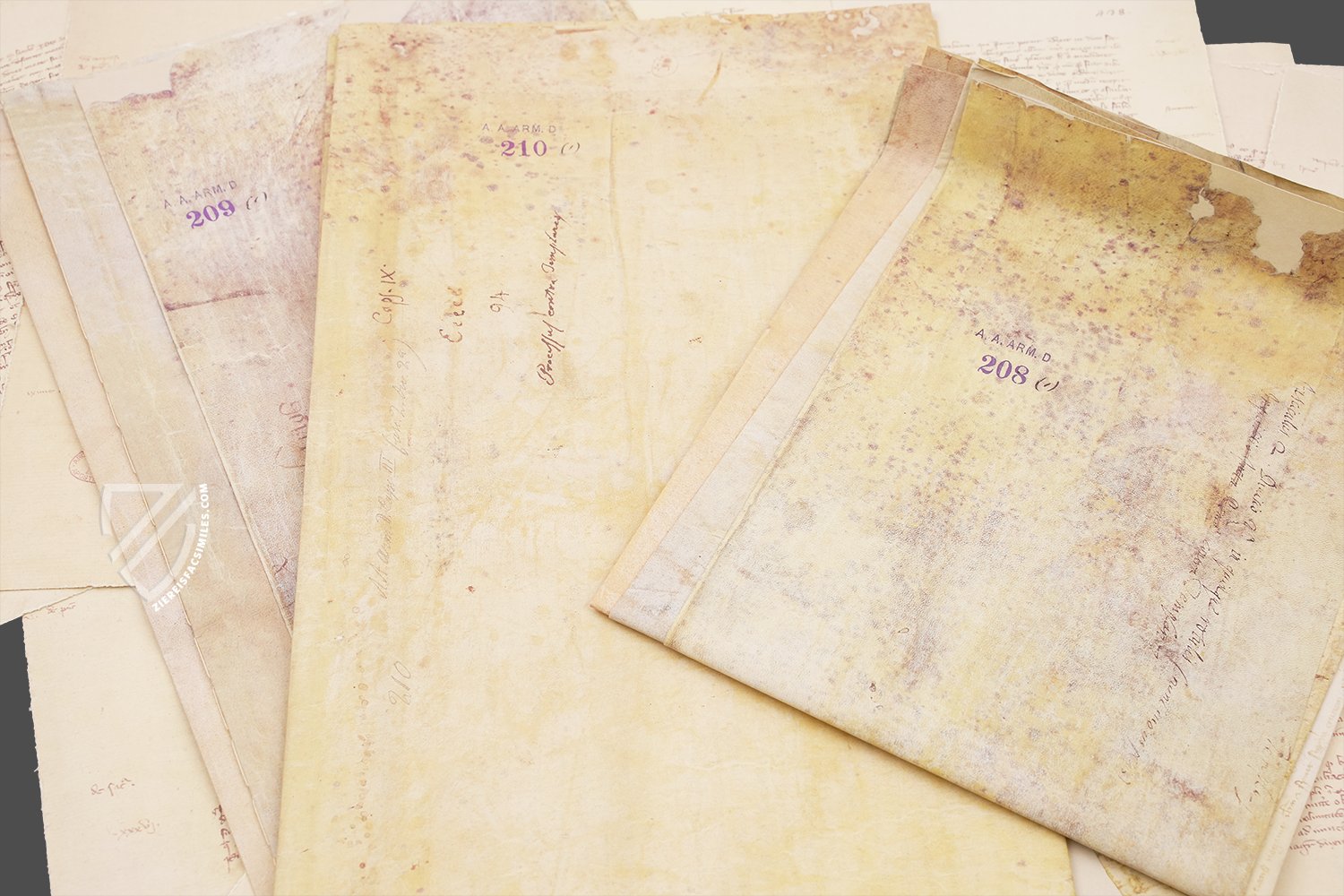
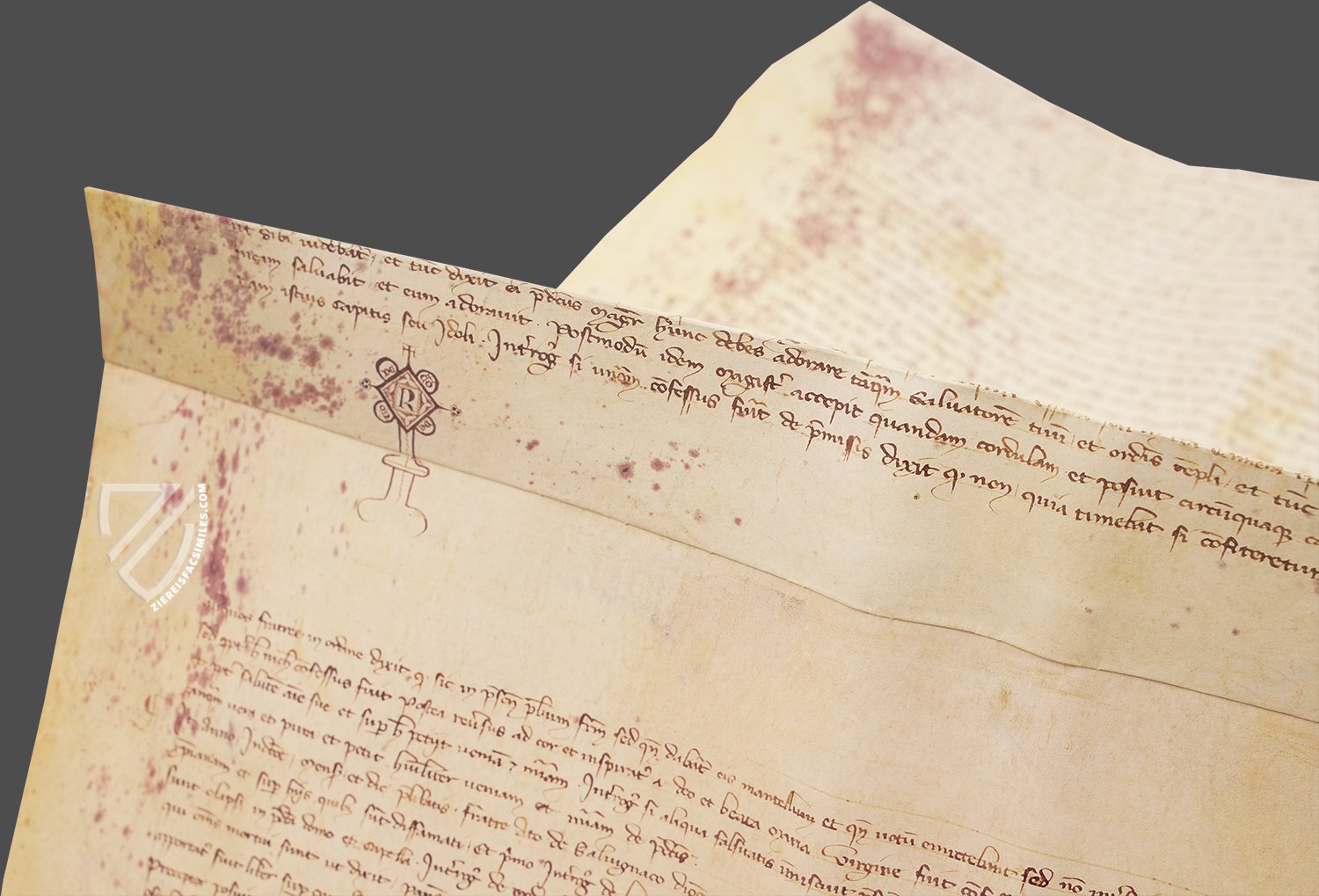
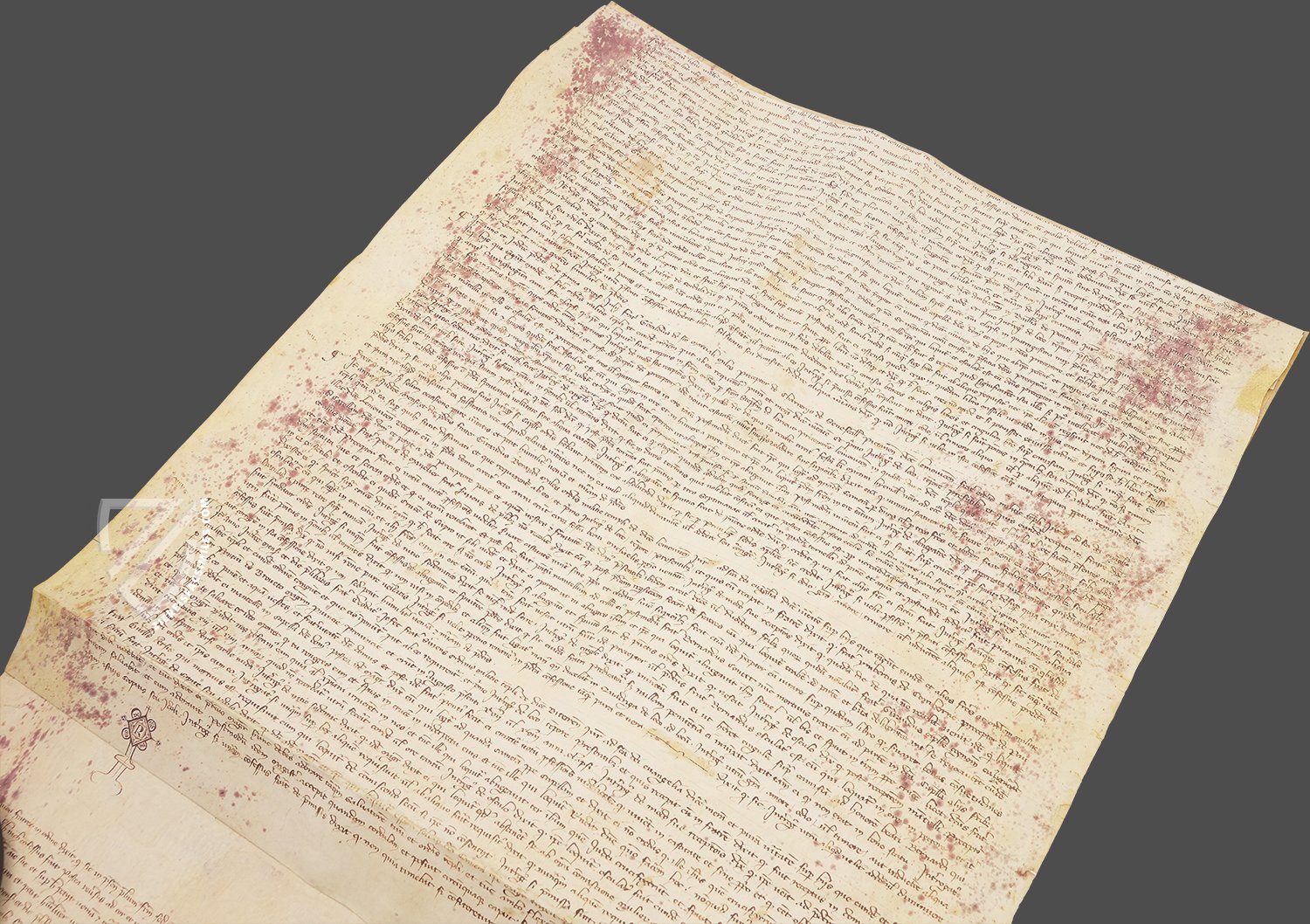
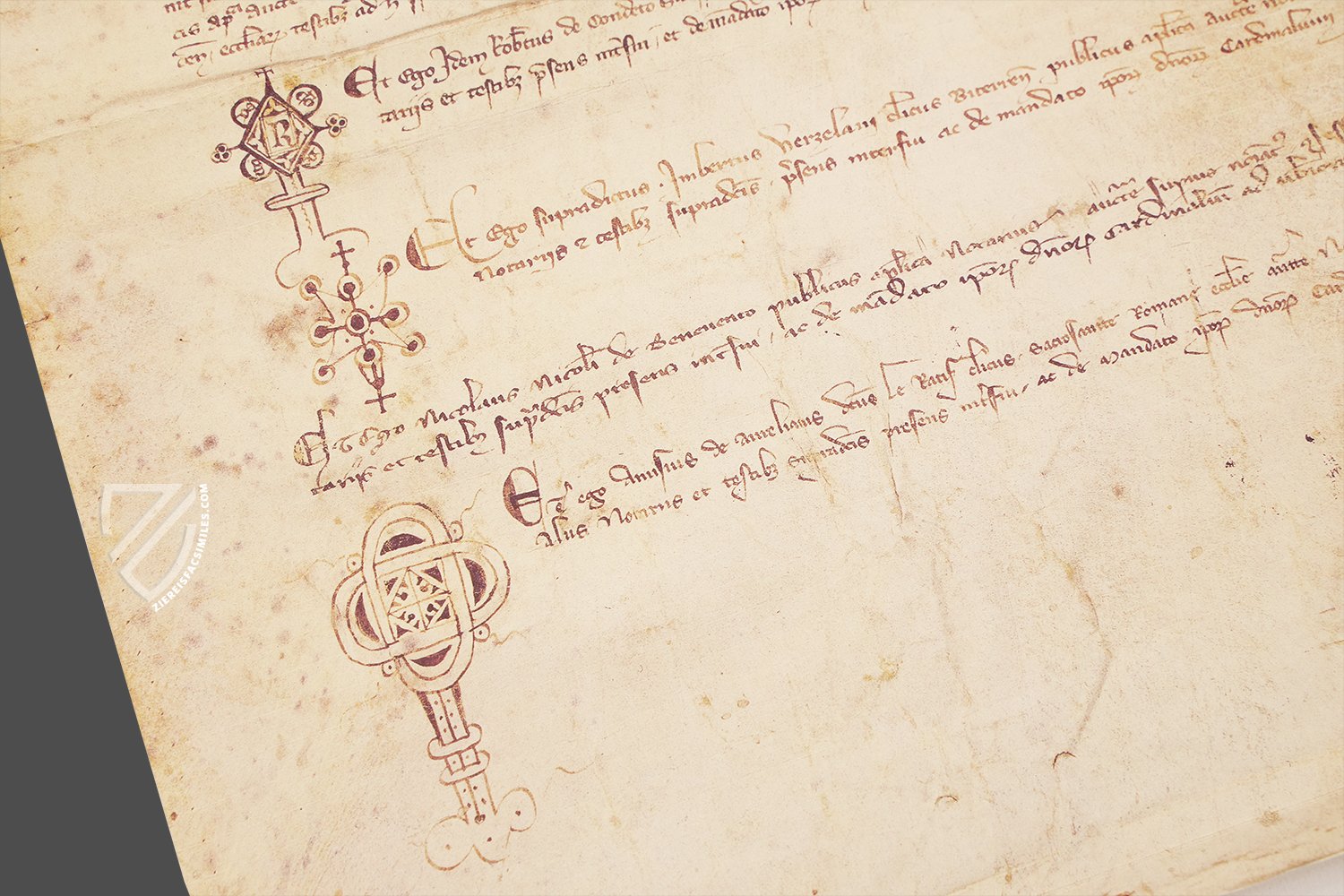
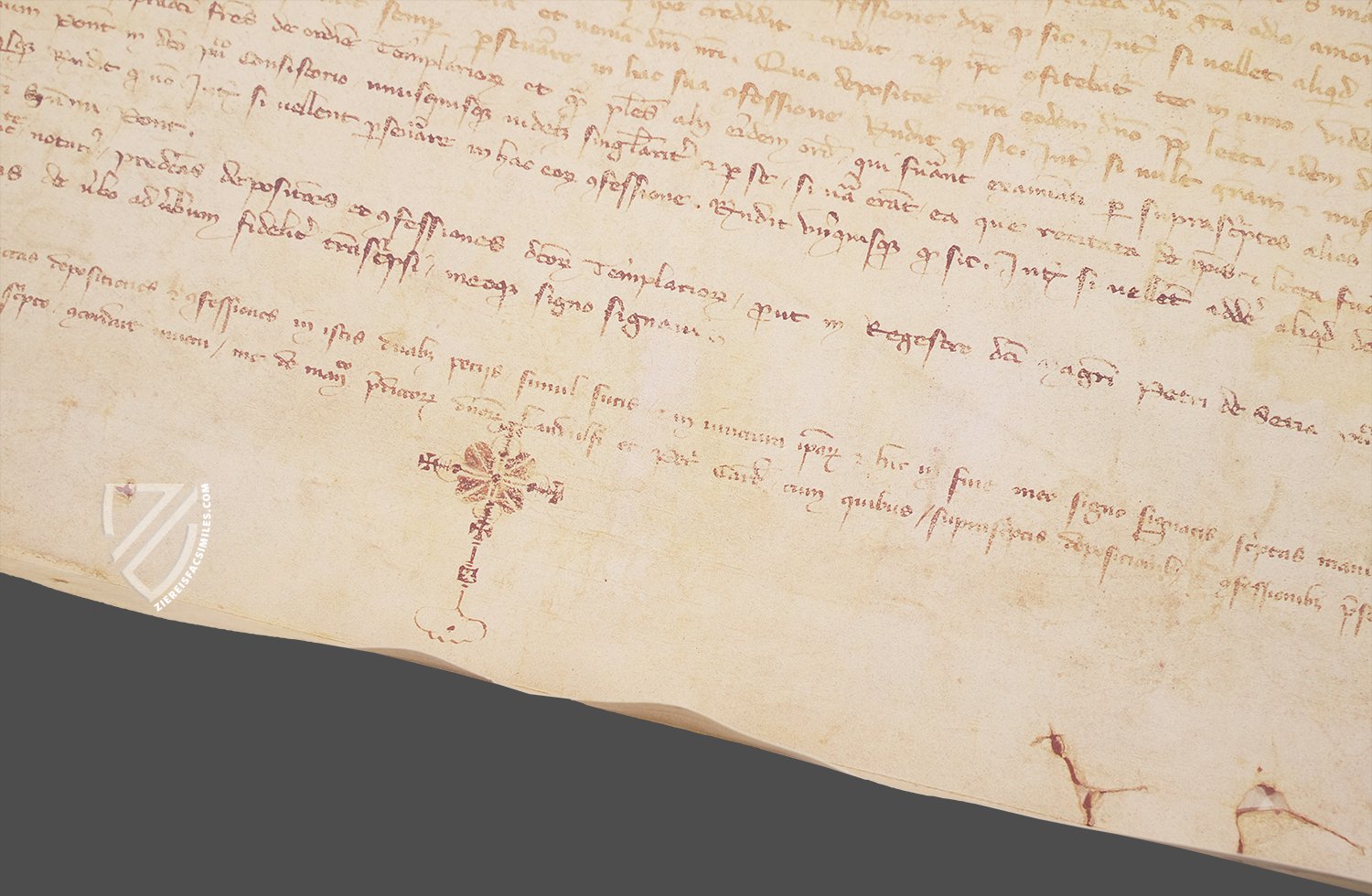
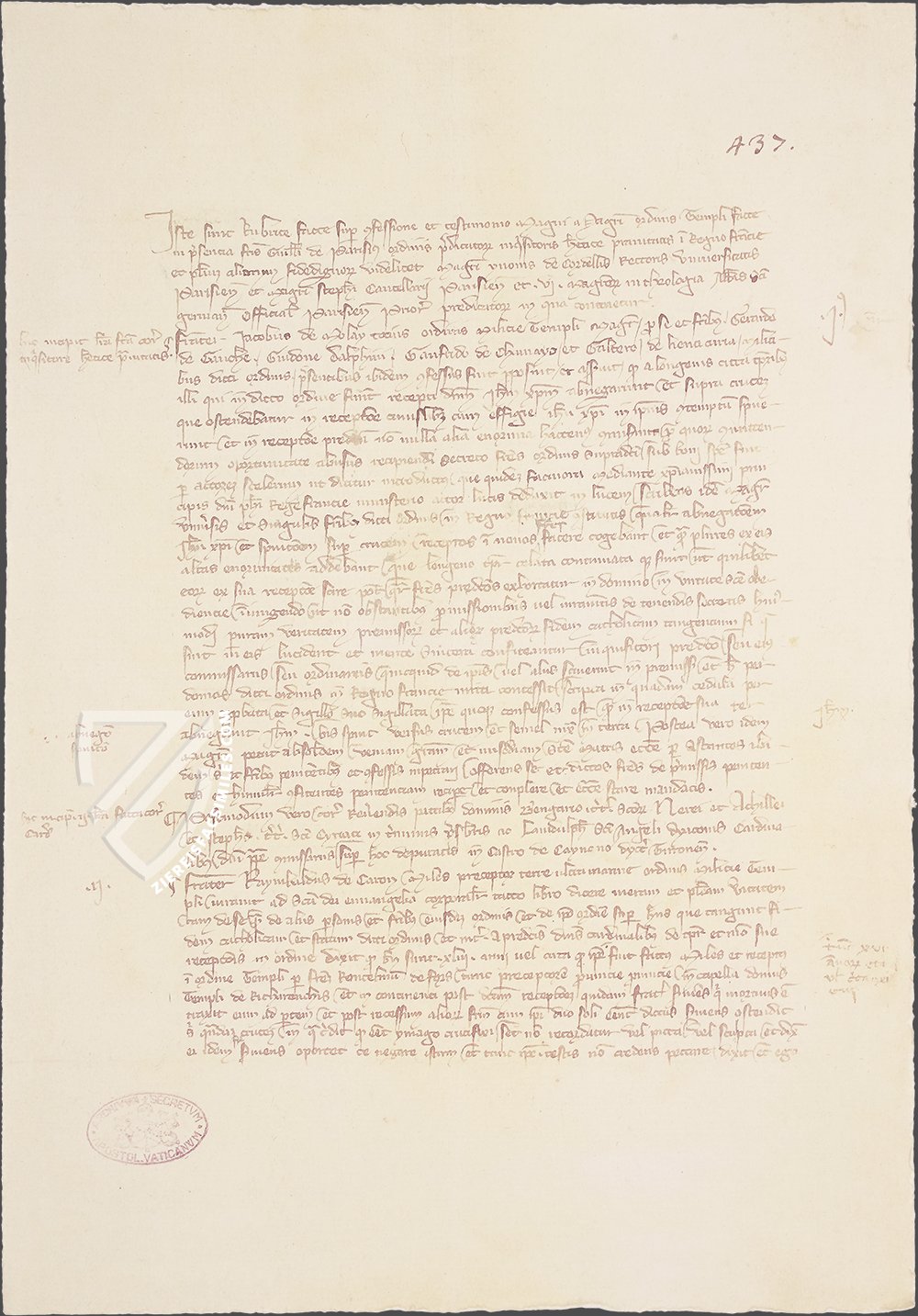
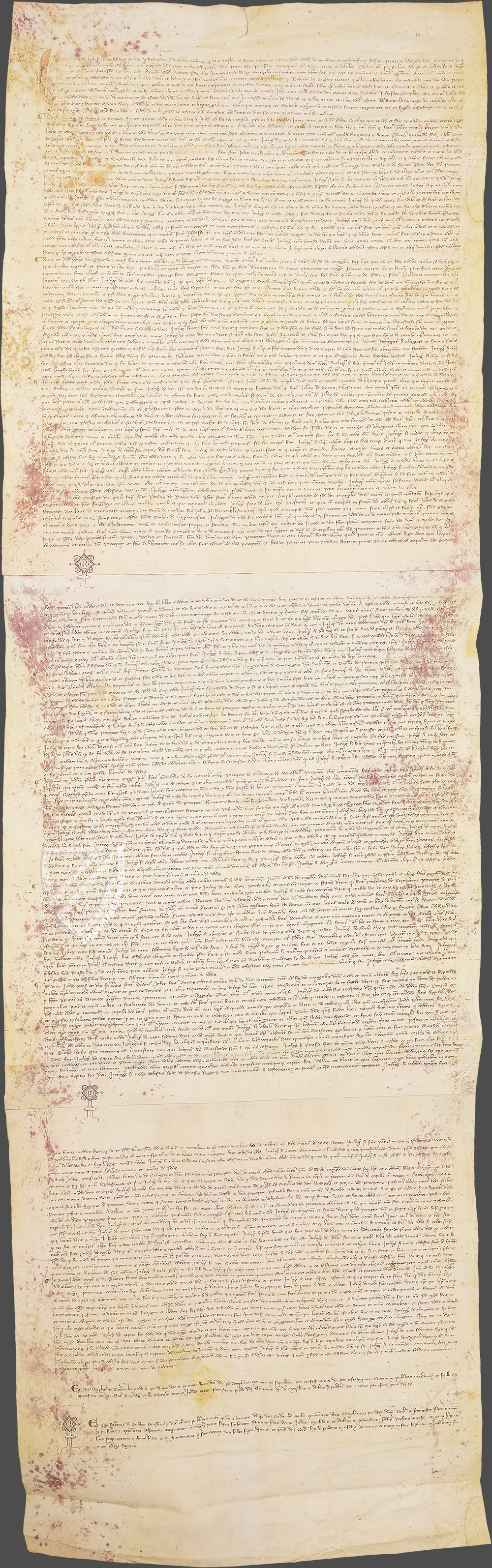
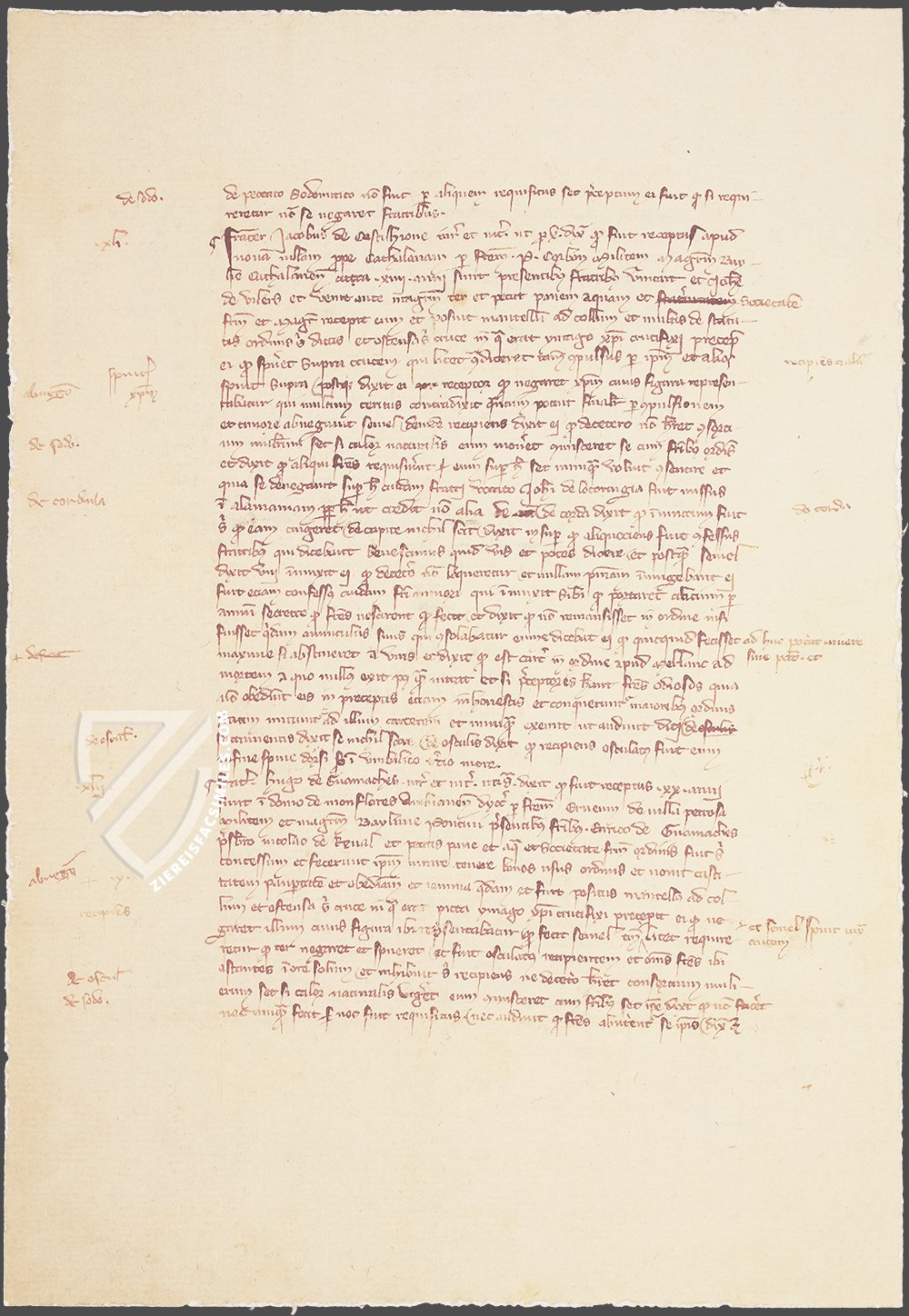
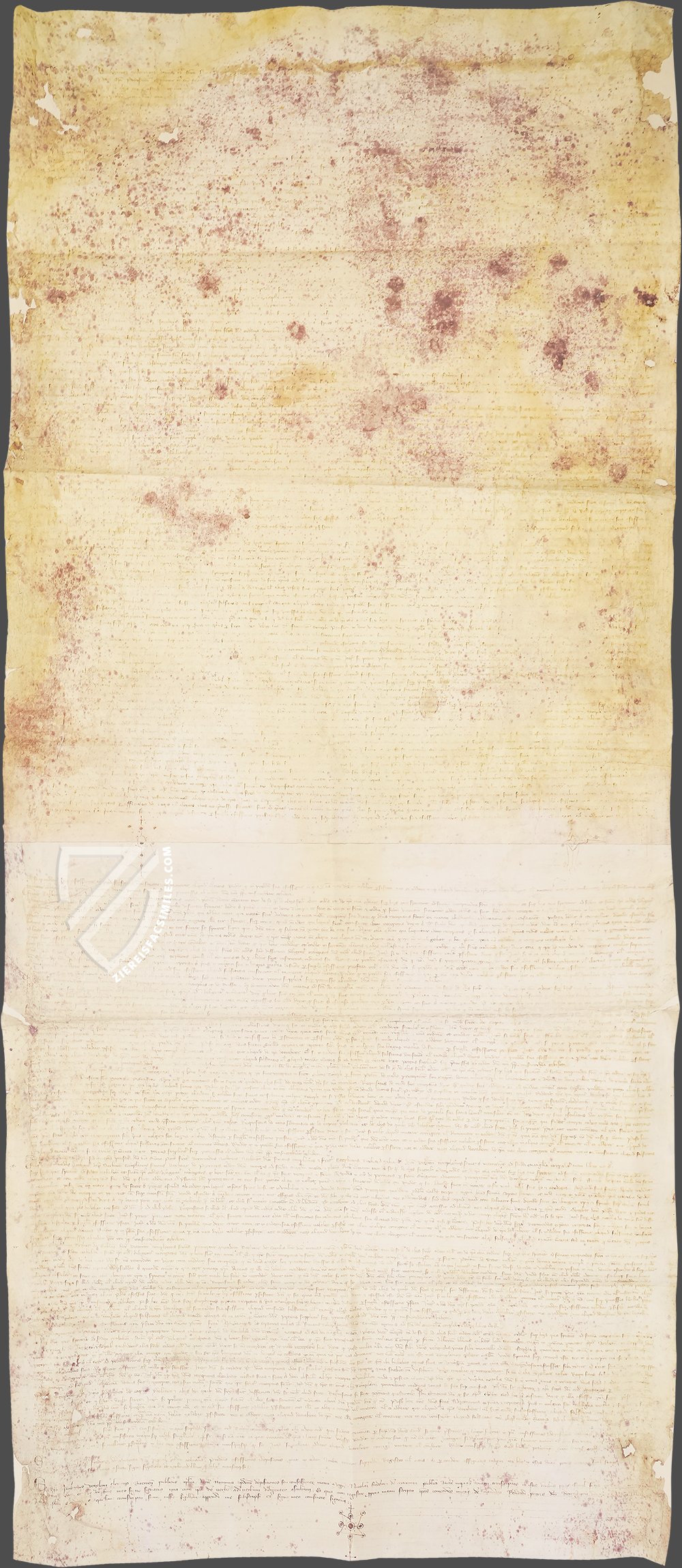
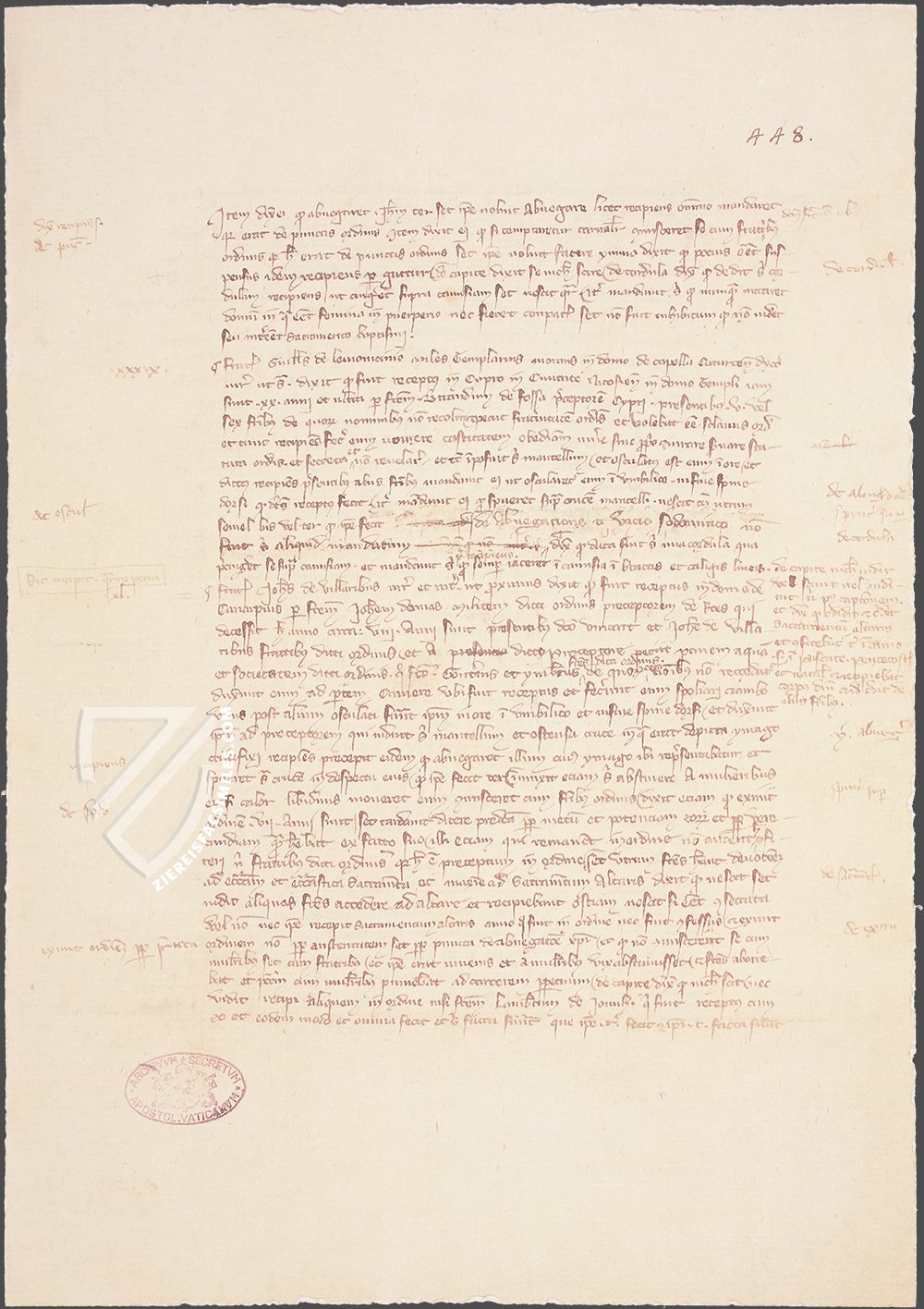
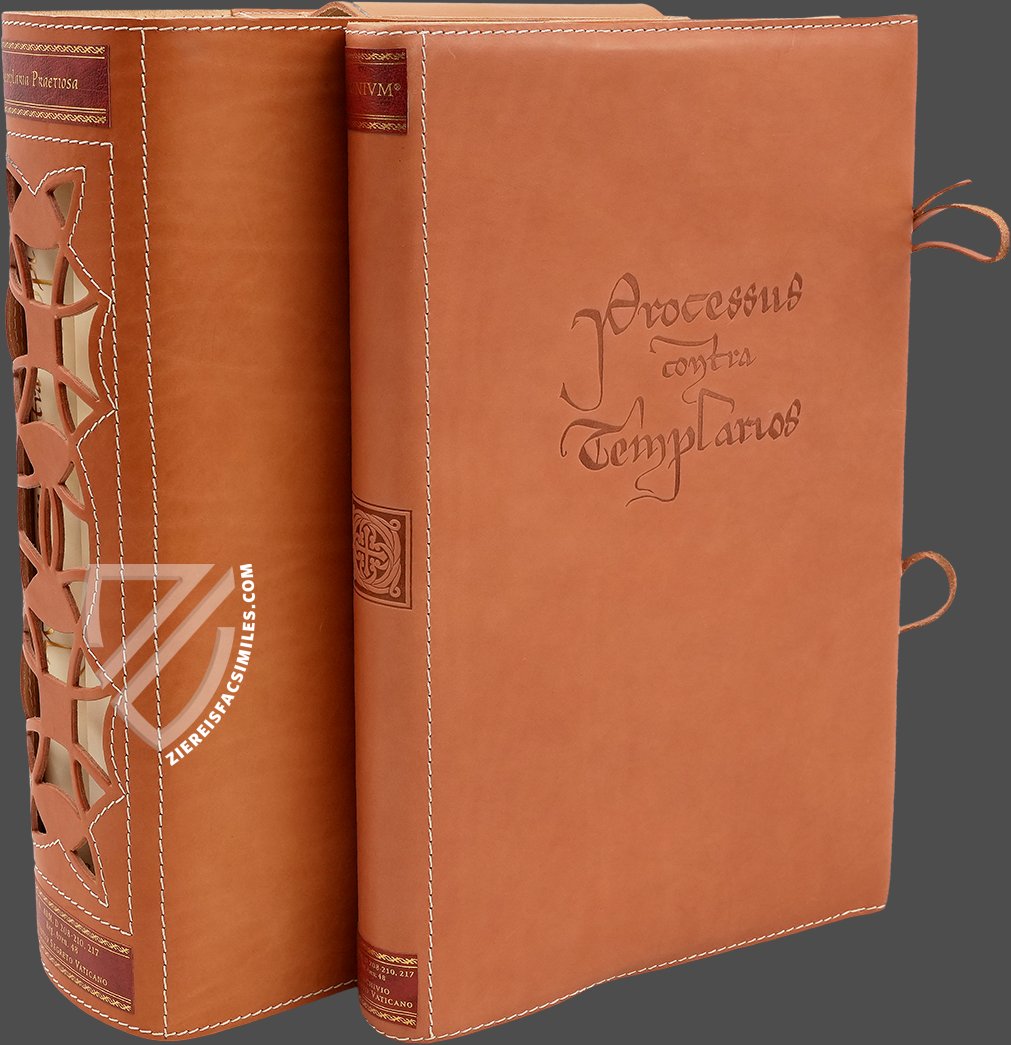
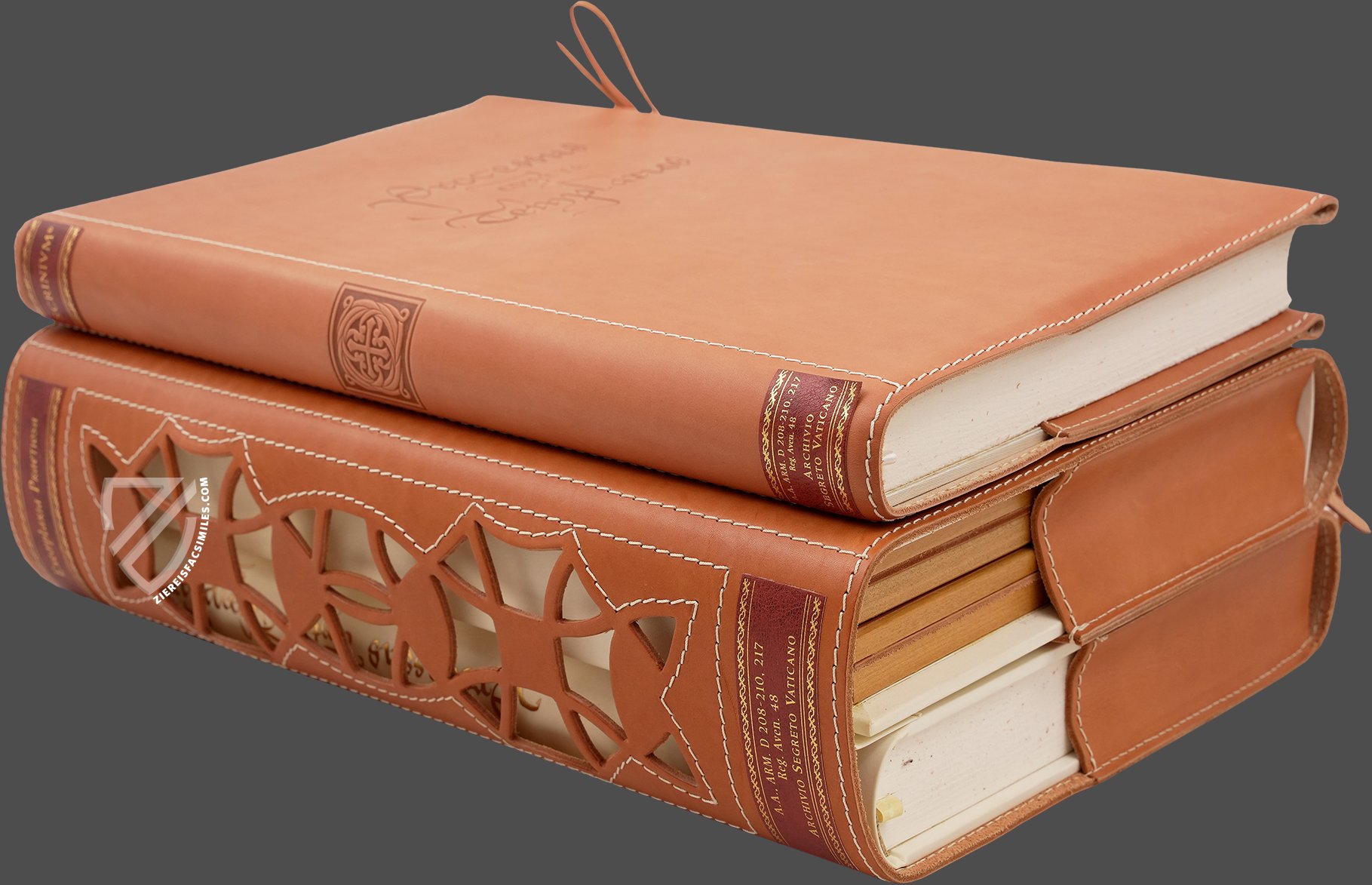
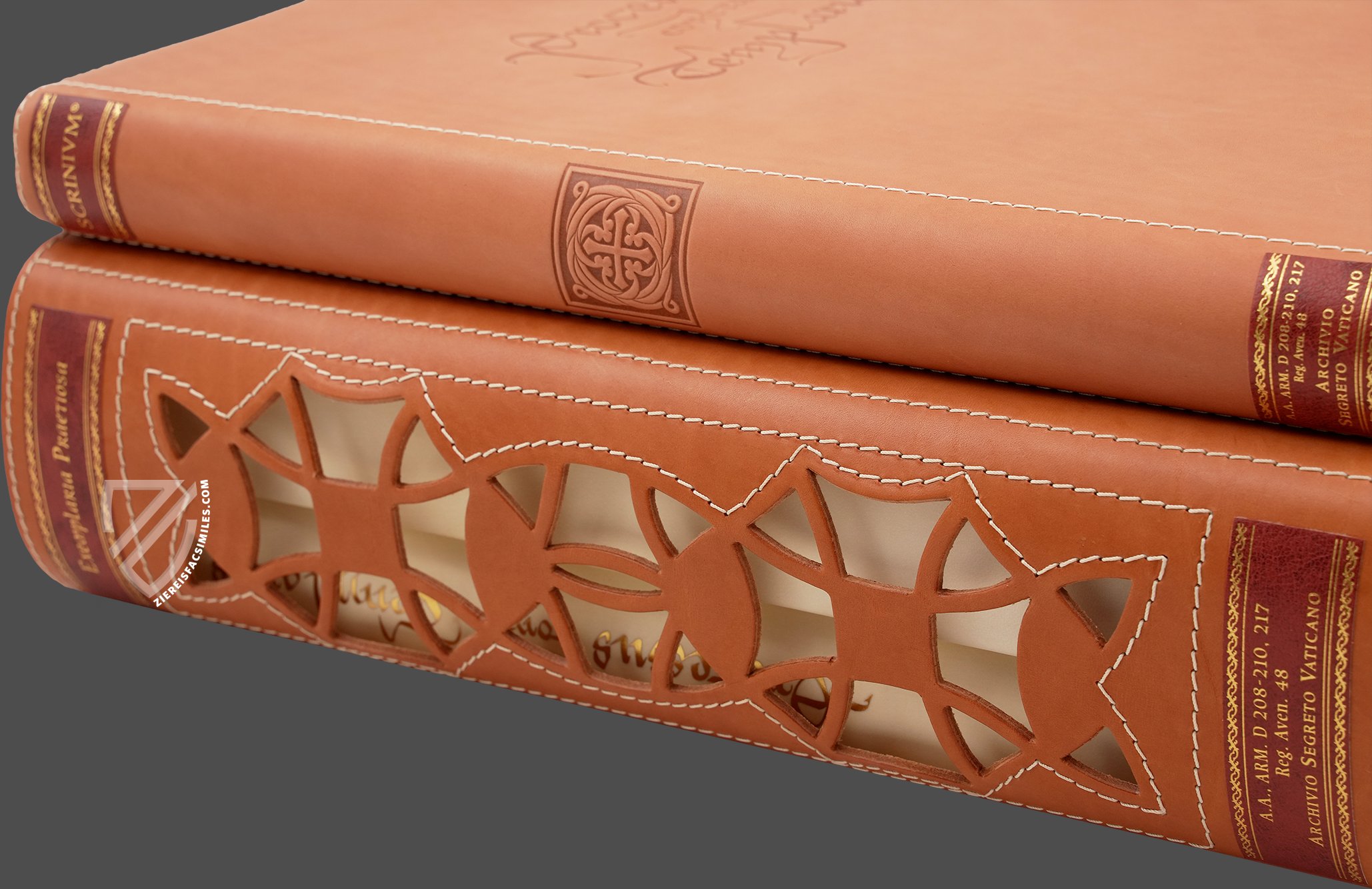
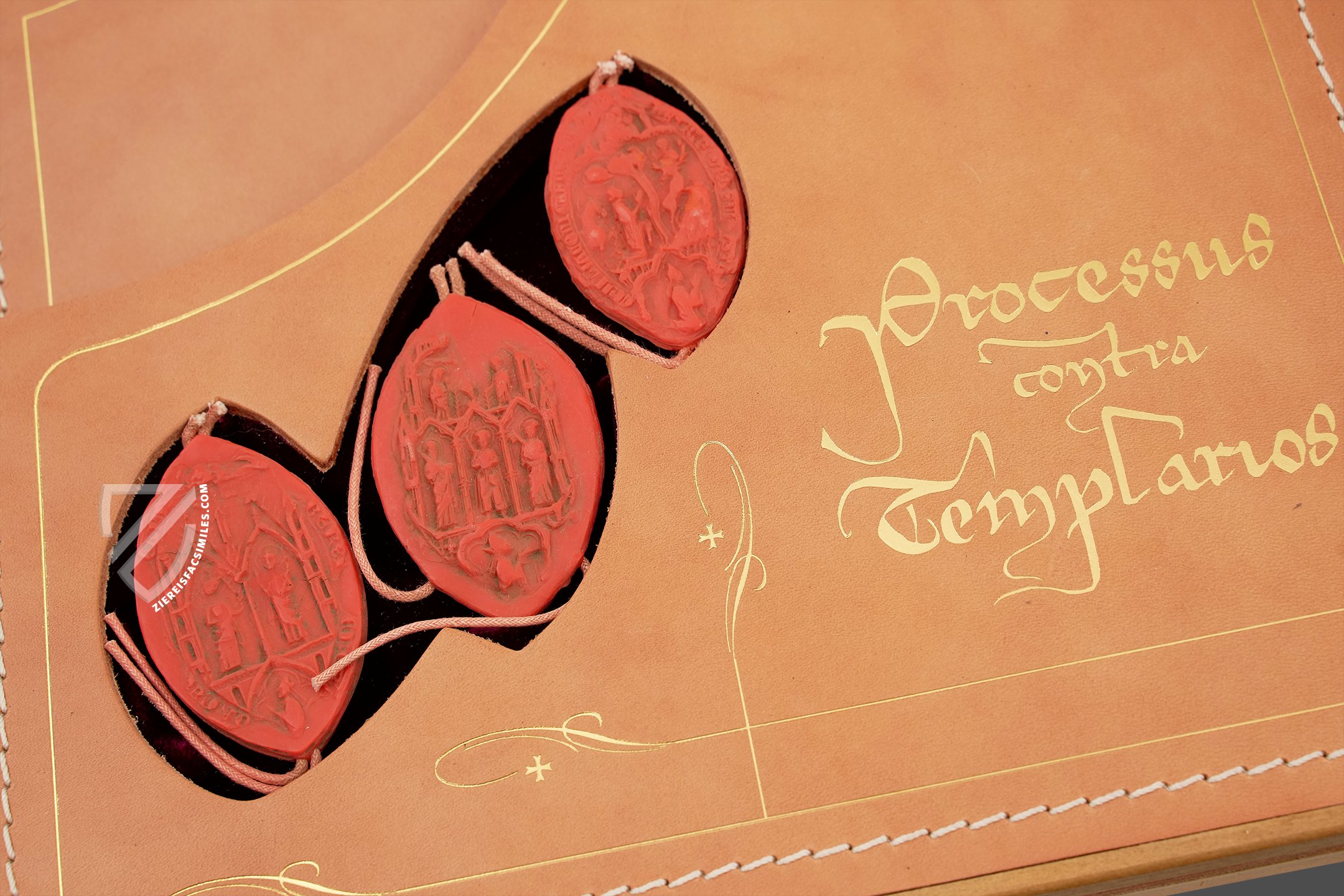
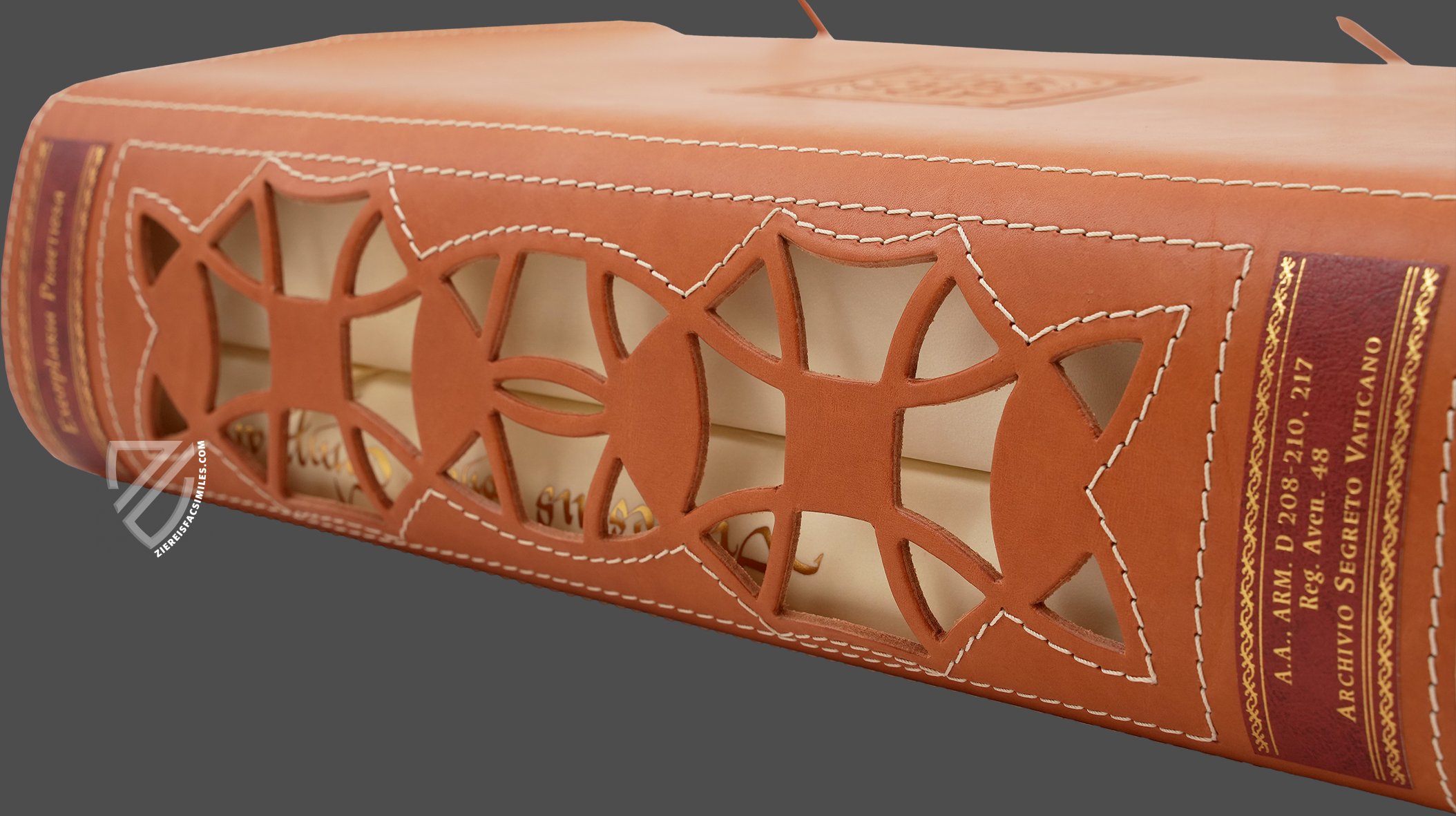
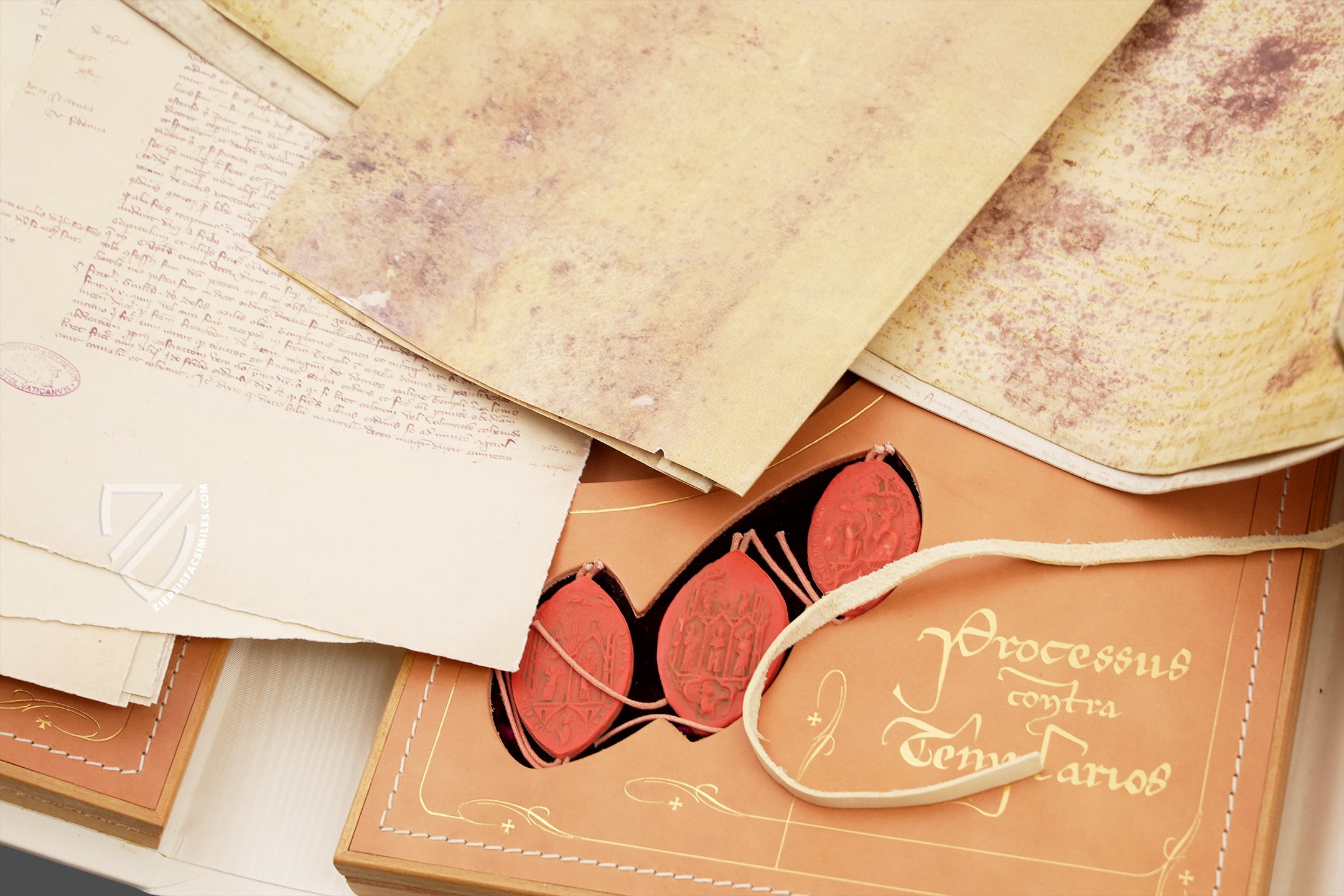
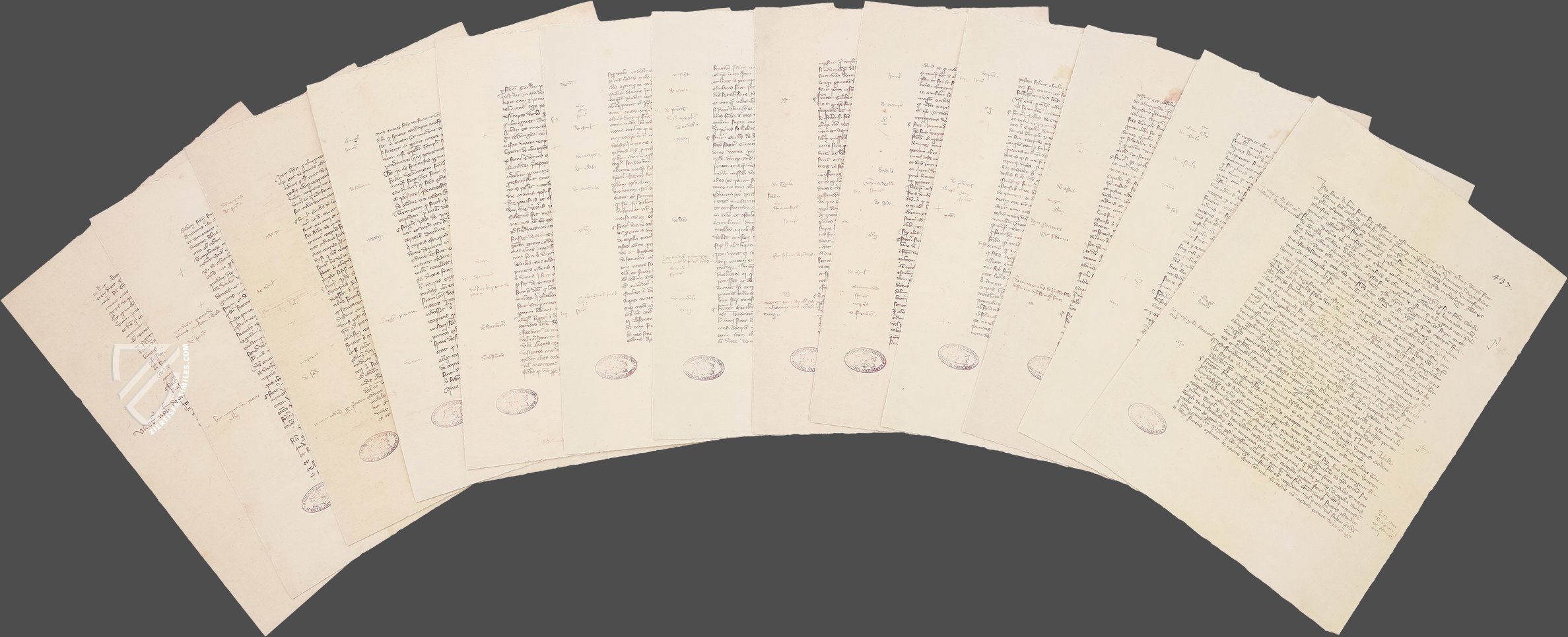
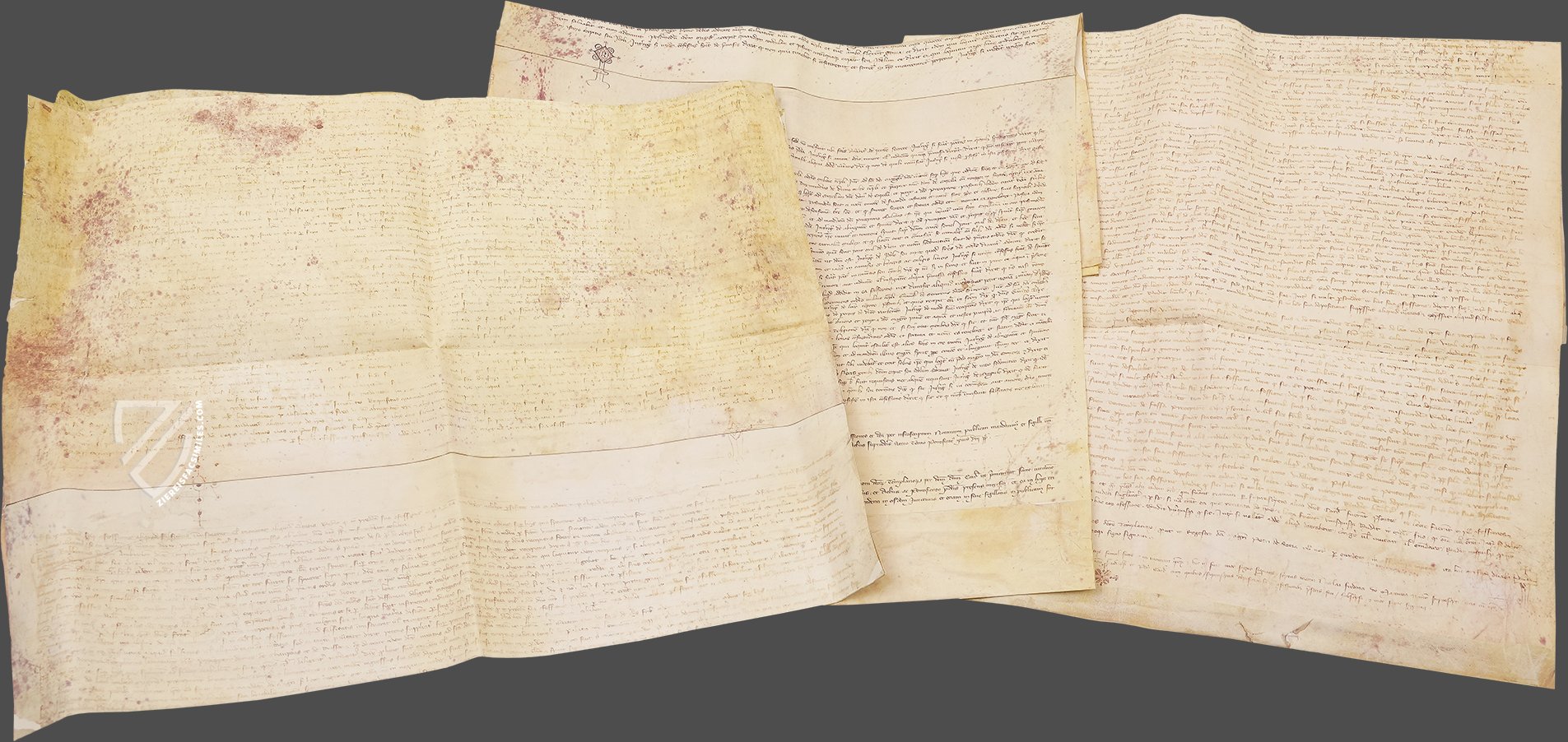
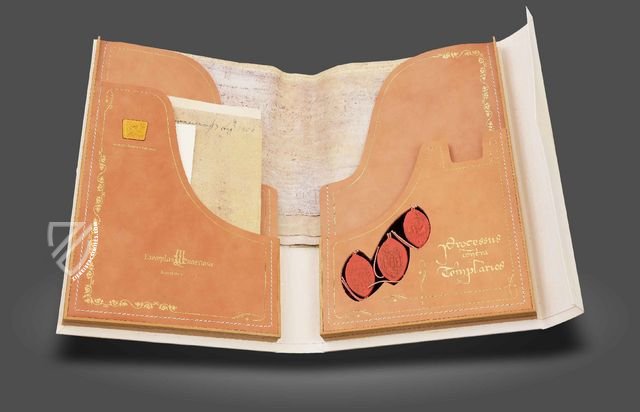
The "Poor Fellow-Soldiers of Christ and of the Temple of Solomon", commonly known as the Knights Templar, were a monastic military order that rose from humble beginnings in the early 12th century to becoming one of the most powerful organizations in the Western world in the 13th century. In the early–14th century, the Templars suddenly collapsed in one of the most mysterious and infamous episodes of medieval history, apparently the victims of a wide-reaching conspiracy against them. The collection of documents Trial Against the Templars brings together five key historical sources on the circumstances of the downfall of the legendary order from the Vatican Secret Archive, which document the papal inquisition against its members in France between 1307 and 1314 – including the famous Chinon Parchment with the record of interrogation of the last Grand Master Jacques de Molay (ca. 1243–1314) and other high-ranking Knights Templar.
Trial against the Templars
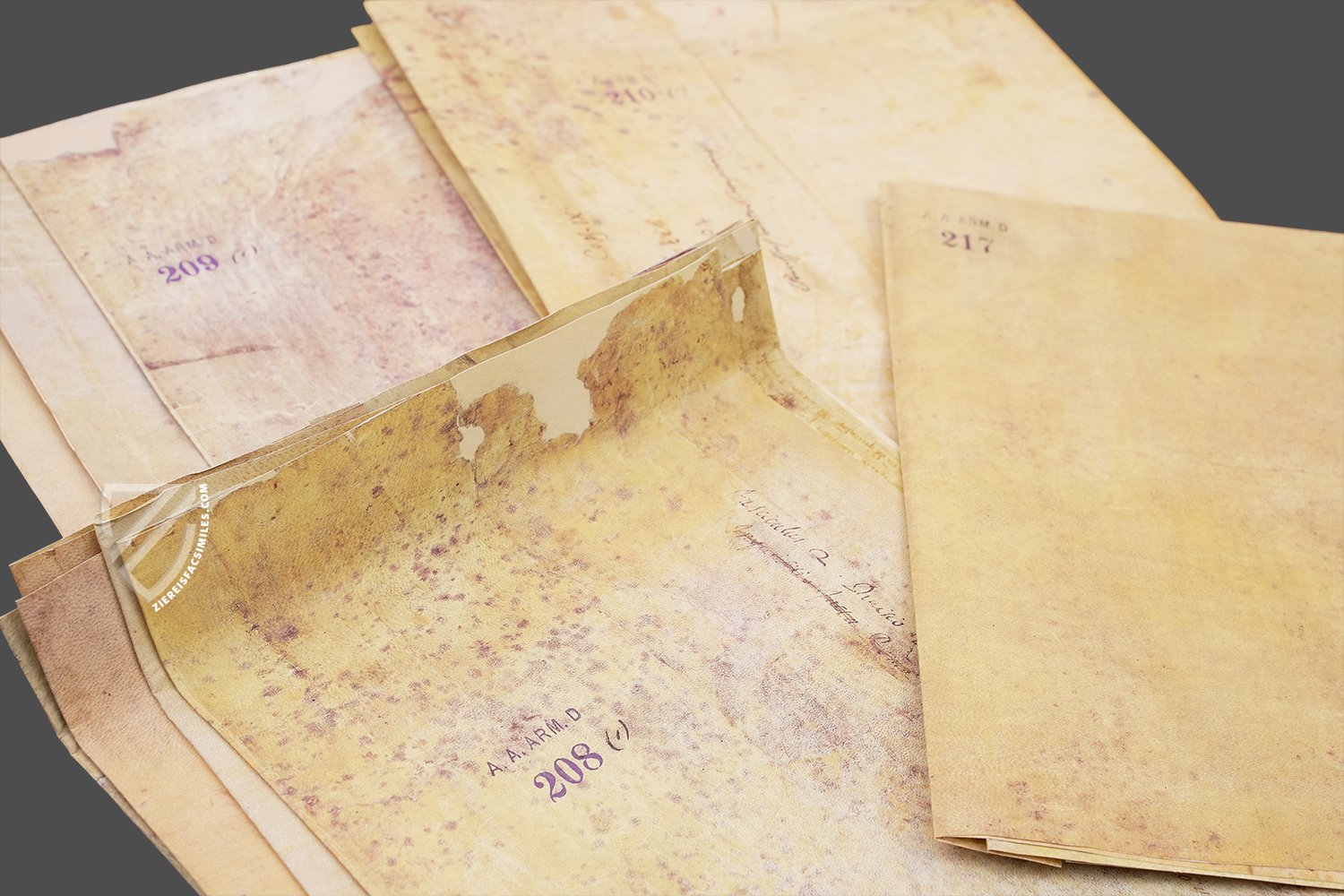
The Vatican Secret Archive (renamed the Vatican Apostolic Archives in 2019) is a centuries-old guardian of the world's largest documentary heritage, which comprises 35,000+ volumes dating back to the 8th century. Its name is somewhat inaccurate: Archivum Secretum Vaticanum more accurately translates as the “Private Vatican Library”, meaning it was intended for the Pope’s sole use and served as his personal archive, distinct from the archives of other church authorities. Nevertheless, the holdings are currently (since 2020) accessible only up to the year 1945; the contemporary records from the period thereafter are still kept classified and are thus, for the time being, “secret” in a certain sense. The archived holdings consist primarily of diplomatic documents, ranging from state papers and official documents, to correspondence and account books. A series of documents stored under the shelf marks A.A. Arm. 208, 209, 210 and 217 deal with one of the most infamous and mysterious events in history: the trial of the Knights Templar, which began in 1307 and lasted until 1314.
Medieval Court Records
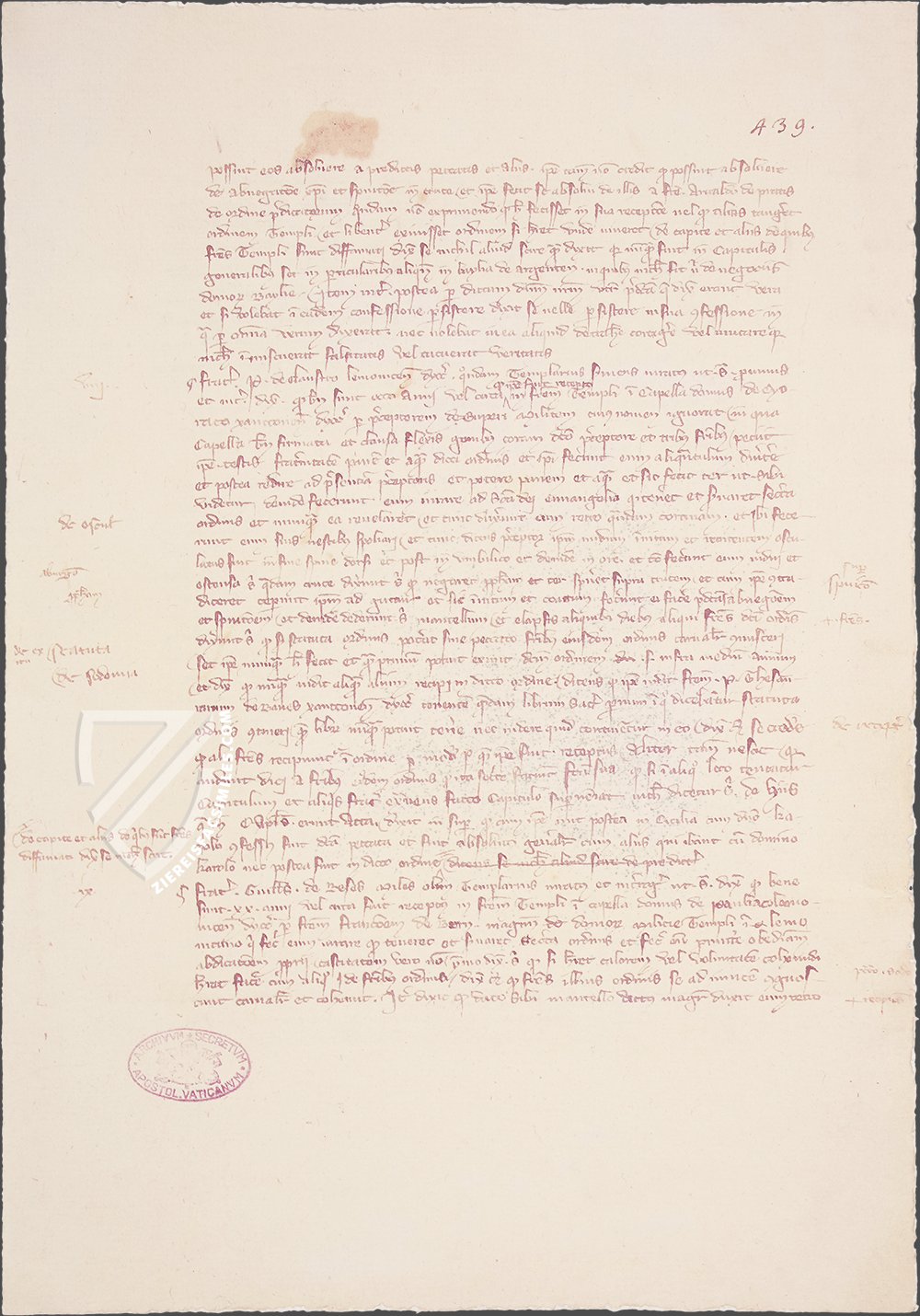
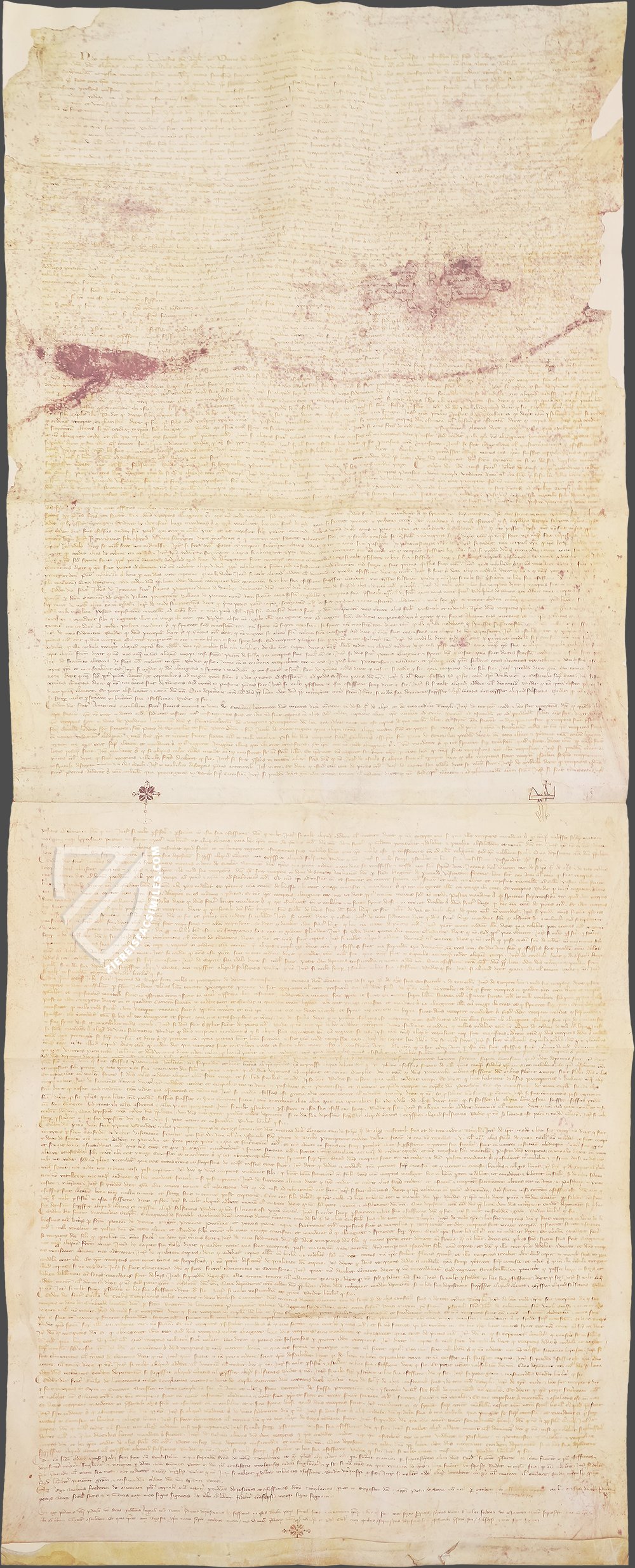
The first three documents (208, 209, 210) are the surviving specimens of an original corpus of five parchment rolls, including the confessions of seventy-two knights questioned by Pope Clement V (ca. 1264–1314) between June 28th and July 2nd, 1308. The fourth document (217) is the legendary Chinon Parchment, which was rediscovered in 2001 and caused a major sensation when it was first published in 2007. It records the interrogations of five high-ranking Knights Templar, including the last Grand Master, Jacques de Molay (ca. 1243–1314), and proves that the Order’s dignitaries were granted absolution by the papal commission. Thus, from a religious standpoint, the Order was acquitted of all charges of heresy, such as homosexuality and idolatry. This did nothing to prevent them from falling victim to secular power: At the instigation of King Philip IV of France, known as “the Fair” (1268–1314), who had unleashed the slander against the Templars because he owed them enormous debts and sought to seize their wealth and possessions, they nevertheless met their end at the stake. Finally, the facsimile edition includes a document contained in the file Registrum Avenionense 48 by Pope Benedict XII (1285–1342): it is a summary of the hearings of all Knights Templar—commissioned by Pope Clement V and compiled by representatives of the Holy See involved in the trial.
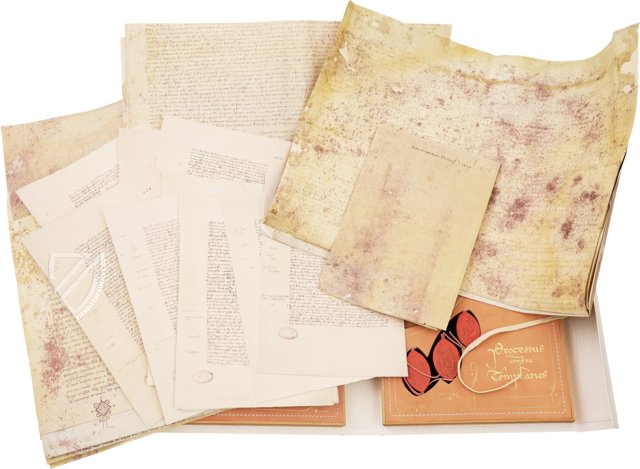
The facsimile edition features:
- Three fragments of originally five documents recording the confessions of 72 Knights Templar who were interrogated by Pope Clement V in Poitiers from June 28 to July 2, 1308. (ASV A.A. Arm. 208, 209, 210)
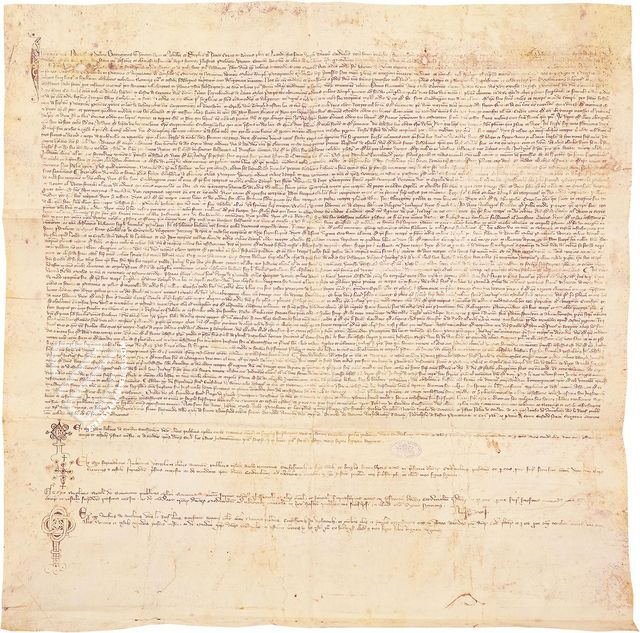
- A fragment of the Chinon Parchment containing the acquittals of Jacques de Molay and other Templar leaders. (ASV A.A. Arm. 217)
- Abstracts of the Templars’ hearings with extensive notes by Clemens V. (Registrum Avenionense 48, fols. 437–460)
Codicology
- Alternative Titles
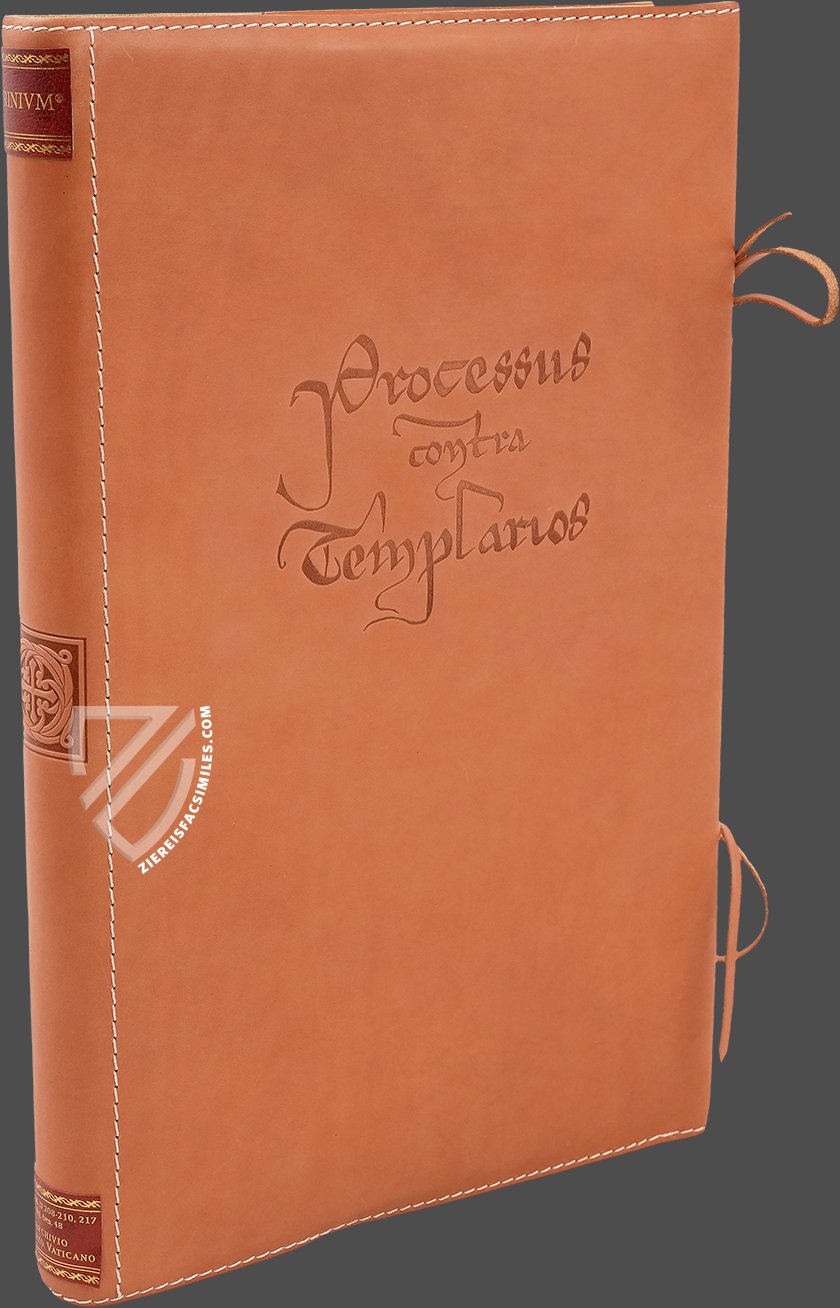
- Processus contra Templarios
Prozess gegen die Templer - Size / Format
- 5 documents / 53-64 × 69-77 cm
- Origin
- France
- Date
- 1307–1312
- Epochs
- Style
- Genre
- Language
- Script
- Gothic cursiva
- Illustrations
- 1 decorated initial and several symbols
- Content
- Documentation of the papal inquisition against the order of Templars, which took place in France between 1307 and 1314
Trial Against the Templars
The Chinon Parchment
This historical document is dated August 17-20, 1308 and contains the interrogation records of Grand Master Jacques de Molay and four other high-ranking Templars. It was written by Cardinals Bérenger Fredoli, Stephan de Suisy and Landolfo Brancacci, who, as papal delegates, interrogated the five Templars imprisoned at Chinon Castle.
The records contain not only the Templars' confessions of guilt, but above all their absolution in the name of Pope Clement V, which was to be granted on the condition that they renounce their "heresy" – which did not happen due to pressure from the French king. The remarkable document was long considered lost until it was accidentally rediscovered by the Italian historian and paleographer Barbara Frale in the Vatican Secret Archives.
#1 Processus Contra Templarios
Languages: English, Italian
- Block Books / Incunables / Post-incunables
- Alchemy
- Apocalypses / Beatus Manuscripts
- Astronomy / Astrology
- Bibles / Gospels
- Picture Bibles / Bibles Moralisées / Mirror of Human Salvation
- Botany
- Chronicles / History / Letters
- Cookbook / Recipes
- Diaries / Biographies / Autograph Books
- Encyclopedias
- Fashion / Costume Books
- Games / Game Theory
- Geography / Cartography / Navigation
- Graduals / Antiphonaries / Exultet Roll
- Haggadot
- Hunting Books
- Law / Deeds / Rules
- Leonardo da Vinci
- Literature / Poetry
- Medicine
- Missals / Lectionaries / Sacramentaries
- Model Books / Sketchbooks / Notebooks
- Music
- Mythology
- Natural History / Bestiaries
- Other Liturgical Manuscripts
- Other Religious Works
- Other Secular Works
- Paintings / Graphics
- Primers / Textbooks
- Private Devotion Books
- Prophecies / Divination
- Psalters
- Quran
- Saints' Lives
- Sermons / Homilies
- Single Leaf Collections
- Song Books
- Tanakh
- Tournament Books / Armorials / Genealogy
- Travelogues / Travel Guides
- Treatises
- Afghanistan
- Algeria
- Armenia
- Austria
- Azerbaijan
- Belgium
- Belize
- Bosnia and Herzegovina
- China
- Colombia
- Costa Rica
- Croatia
- Cyprus
- Czech Republic
- Denmark
- Egypt
- El Salvador
- Ethiopia
- France
- Germany
- Greece
- Guatemala
- Honduras
- Hungary
- India
- Iran
- Iraq
- Israel
- Italy
- Japan
- Jordan
- Kazakhstan
- Kyrgyzstan
- Lebanon
- Libya
- Liechtenstein
- Luxembourg
- Mexico
- Morocco
- Netherlands
- Palestine
- Panama
- Peru
- Poland
- Portugal
- Romania
- Russia
- Serbia
- Spain
- Sri Lanka
- Sweden
- Switzerland
- Syria
- Tajikistan
- Tunisia
- Turkey
- Turkmenistan
- Ukraine
- United Kingdom
- United States
- Uzbekistan
- Vatican City
- A. Oosthoek, van Holkema & Warendorf
- Aboca Museum
- Ajuntament de Valencia
- Akademie Verlag
- Akademische Druck- u. Verlagsanstalt (ADEVA)
- Aldo Ausilio Editore - Bottega d’Erasmo
- Alecto Historical Editions
- Alkuin Verlag
- Almqvist & Wiksell
- Amilcare Pizzi
- Andreas & Andreas Verlagsbuchhandlung
- Archa 90
- Archiv Verlag
- Archivi Edizioni
- Arnold Verlag
- ARS
- Ars Magna
- Ars Millenii
- Art Market
- ArtCodex
- AyN Ediciones
- Azimuth Editions
- Badenia Verlag
- Bärenreiter-Verlag
- Belser Verlag
- Belser Verlag / WK Wertkontor
- Benziger Verlag
- Bernardinum Wydawnictwo
- BiblioGemma
- Biblioteca Apostolica Vaticana (Vaticanstadt, Vaticanstadt)
- Bibliotheca Palatina Faksimile Verlag
- Bibliotheca Rara
- Boydell & Brewer
- Bramante Edizioni
- Bredius Genootschap
- Brepols Publishers
- British Library
- Brokarte
- C. Weckesser
- Caixa Catalunya
- Canesi
- CAPSA, Ars Scriptoria
- Caratzas Brothers, Publishers
- Carus Verlag
- Casamassima Libri
- Centrum Cartographie Verlag GmbH
- Chavane Verlag
- Christian Brandstätter Verlag
- Circulo Cientifico
- Club Bibliófilo Versol
- Club du Livre
- Club Internacional del Libro
- CM Editores
- Collegium Graphicum
- Collezione Apocrifa Da Vinci
- Comissão Nacional para as Comemorações dos Descobrimentos Portugueses
- Coron Verlag
- Corvina
- CTHS
- D. S. Brewer
- Damon
- De Agostini/UTET
- De Nederlandsche Boekhandel
- De Schutter
- Deuschle & Stemmle
- Deutscher Verlag für Kunstwissenschaft
- DIAMM
- Dropmore Press
- Droz
- E. Schreiber Graphische Kunstanstalten
- Ediciones Boreal
- Ediciones Grial
- Ediclube
- Edições Inapa
- Edilan
- Editalia
- Edition Deuschle
- Edition Georg Popp
- Edition Leipzig
- Edition Libri Illustri
- Editiones Reales Sitios S. L.
- Éditions de l'Oiseau Lyre
- Editions Medicina Rara
- Editorial Base
- Editorial Casariego
- Editorial Mintzoa
- Editrice Antenore
- Editrice Velar
- Edizioni Edison
- Egeria, S.L.
- Eikon Editores
- Electa
- Emery Walker Limited
- Enciclopèdia Catalana
- Eos-Verlag
- Ephesus Publishing
- Ernst Battenberg
- Eugrammia Press
- Extraordinary Editions
- Fackelverlag
- Facsimila Art & Edition
- Facsimile Editions Ltd.
- Facsimilia Art & Edition Ebert KG
- Faksimile Verlag
- Feuermann Verlag
- Folger Shakespeare Library
- Franco Cosimo Panini Editore
- Friedrich Wittig Verlag
- Fundación Hullera Vasco-Leonesa
- G. Braziller
- Gabriele Mazzotta Editore
- Gebr. Mann Verlag
- Gesellschaft für graphische Industrie
- Getty Research Institute
- Giovanni Domenico de Rossi
- Giunti Editore
- Goldenmark Librarium
- Graffiti
- Grafica European Center of Fine Arts
- Guido Pressler
- Guillermo Blazquez
- Gustav Kiepenheuer
- H. N. Abrams
- Harrassowitz
- Harvard University Press
- Helikon
- Hendrickson Publishers
- Henning Oppermann
- Herder Verlag
- Hes & De Graaf Publishers
- Hoepli
- Holbein-Verlag
- Houghton Library
- Hugo Schmidt Verlag
- Hungarian Academy of Sciences
- Idion Verlag
- Il Bulino, edizioni d'arte
- ILte
- Imago
- In Officina Danesi
- Insel Verlag
- Insel-Verlag Anton Kippenberger
- Instituto de Estudios Altoaragoneses
- Instituto Nacional de Antropología e Historia
- Introligatornia Budnik Jerzy
- Istituto dell'Enciclopedia Italiana - Treccani
- Istituto Ellenico di Studi Bizantini e Postbizantini
- Istituto Geografico De Agostini
- Istituto Poligrafico e Zecca dello Stato
- Italarte Art Establishments
- Jaca Book
- Jan Thorbecke Verlag
- Johnson Reprint Corporation
- Johnson Reprint Corporation
- Jos. Baer
- Josef Stocker
- Josef Stocker-Schmid
- Jugoslavija
- Karl W. Hiersemann
- Kasper Straube
- Kaydeda Ediciones
- Kindler Verlag / Coron Verlag
- Kodansha International Ltd.
- Konrad Kölbl Verlag
- Kurt Wolff Verlag
- La Liberia dello Stato
- La Linea Editrice
- La Meta Editore
- Lambert Schneider
- Landeskreditbank Baden-Württemberg
- Leo S. Olschki
- Les Incunables
- Liber Artis
- Library of Congress
- Libreria Musicale Italiana
- Lichtdruck
- Lito Immagine Editore
- Lumen Artis
- Lund Humphries
- M. Moleiro Editor
- Maison des Sciences de l'homme et de la société de Poitiers
- Manuscriptum
- Martinus Nijhoff
- Maruzen-Yushodo Co. Ltd.
- MASA
- Massada Publishers
- McGraw-Hill
- Metropolitan Museum of Art
- Militos
- Millennium Liber
- Müller & Schindler
- Nahar - Stavit
- Nahar and Steimatzky
- National Library of Wales
- Neri Pozza
- Nova Charta
- Oceanum Verlag
- Odeon
- Omnia Arte
- Orbis Mediaevalis
- Orbis Pictus
- Österreichische Staatsdruckerei
- Oxford University Press
- Pageant Books
- Parzellers Buchverlag
- Patrimonio Ediciones
- Pattloch Verlag
- PIAF
- Plon-Nourrit et cie
- Poligrafiche Bolis
- Presses Universitaires de Strasbourg
- Prestel Verlag
- Princeton University Press
- Prisma Verlag
- Priuli & Verlucca, editori
- Pro Sport Verlag
- Propyläen Verlag
- Pytheas Books
- Quaternio Verlag Luzern
- Reales Sitios
- Recht-Verlag
- Reichert Verlag
- Reichsdruckerei
- Reprint Verlag
- Riehn & Reusch
- Rizzoli
- Roberto Vattori Editore
- Rosenkilde and Bagger
- Roto-Sadag
- Roxburghe Club
- Salerno Editrice
- Saltellus Press
- Sandoz
- Sarajevo Svjetlost
- Schöck ArtPrint Kft.
- Schulsinger Brothers
- Scolar Press
- Scrinium
- Scripta Maneant
- Scriptorium
- Shazar
- Siloé, arte y bibliofilia
- SISMEL - Edizioni del Galluzzo
- Sociedad Mexicana de Antropología
- Société des Bibliophiles & Iconophiles de Belgique
- Soncin Publishing
- Sorli Ediciones
- Stainer and Bell
- Studer
- Styria Verlag
- Sumptibus Pragopress
- Szegedi Tudomànyegyetem
- Taberna Libraria
- Tarshish Books
- Taschen
- Tempus Libri
- Testimonio Compañía Editorial
- TGB Limited Editions
- Thames and Hudson
- The Clear Vue Publishing Partnership Limited
- The Facsimile Codex
- The Folio Society
- The Marquess of Normanby
- The Orphan Hospital Ward of Israel
- The Richard III and Yorkist History Trust
- The Warburg Institute
- Tip.Le.Co
- TouchArt
- TREC Publishing House
- TRI Publishing Co.
- Trident Editore
- Tuliba Collection
- Typis Regiae Officinae Polygraphicae
- Union Verlag Berlin
- Universidad de Granada
- Universitaire Bibliotheken Leiden
- University of California Press
- University of Chicago Press
- Urs Graf
- Vallecchi
- Van Wijnen
- VCH, Acta Humaniora
- VDI Verlag
- VEB Deutscher Verlag für Musik
- Verein Schweizerischer Lithographie-Besitzer
- Verlag Anton Pustet / Andreas Verlag
- Verlag Bibliophile Drucke Josef Stocker
- Verlag der Münchner Drucke
- Verlag für Regionalgeschichte
- Verlag Styria
- Vicent Garcia Editores
- W. Turnowsky
- Waanders Printers
- Wiener Mechitharisten-Congregation (Wien, Österreich)
- Wissenschaftliche Buchgesellschaft
- Wissenschaftliche Verlagsgesellschaft
- Wydawnictwo Dolnoslaskie
- Xuntanza Editorial
- Zakład Narodowy
- Zollikofer AG