
Life and Work of Saint Anthony the Abbot
France — 1431–1432
Concerning the mythological founder of Christian monasticism and the patron saint of the Antonines: a masterpiece of French Gothic art with 200 impressive demi-grisaille miniatures, once owned by a pope and the Medici family
Anthony the Great (251–356) is regarded as the first Desert Father and thus as the founder of Christian monasticism
The manuscript about his life was produced in the 1430's in a French village whose church had his relics
Richly illuminated with 200 miniatures, the coveted manuscript was once owned by Pope Eugene IV (1383–1447) and the Medici family
Life and Work of Saint Anthony the Abbot

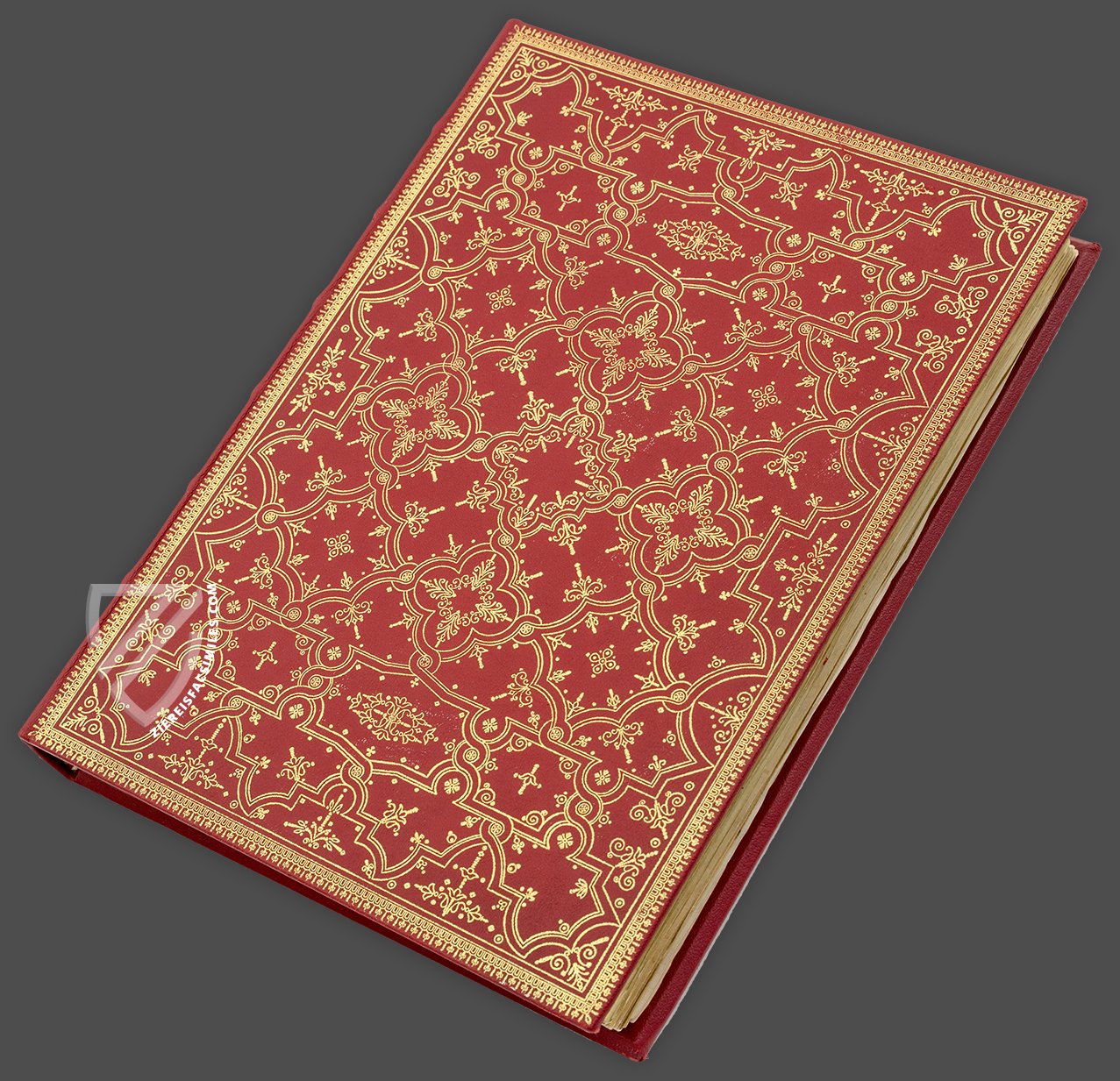
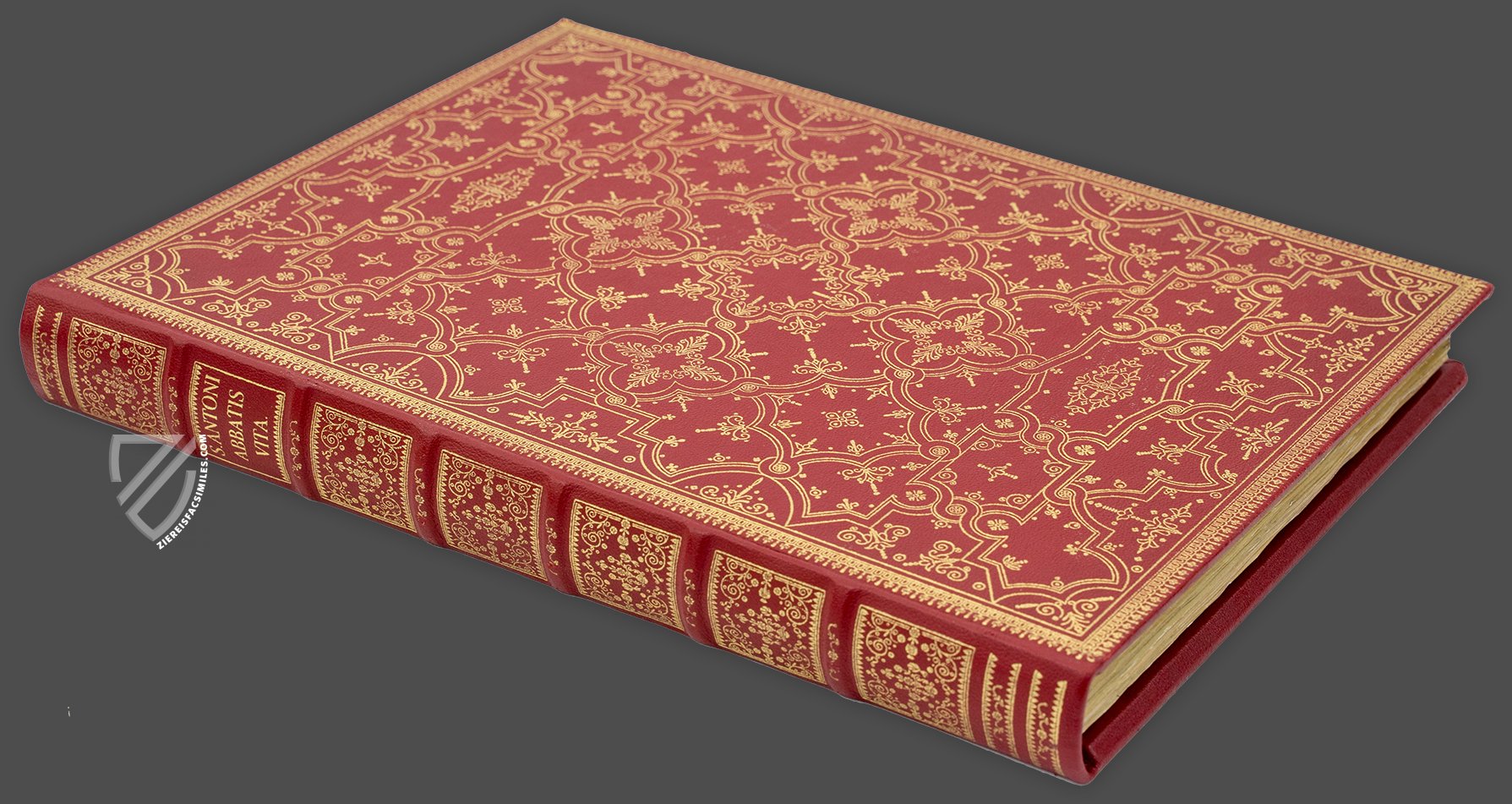
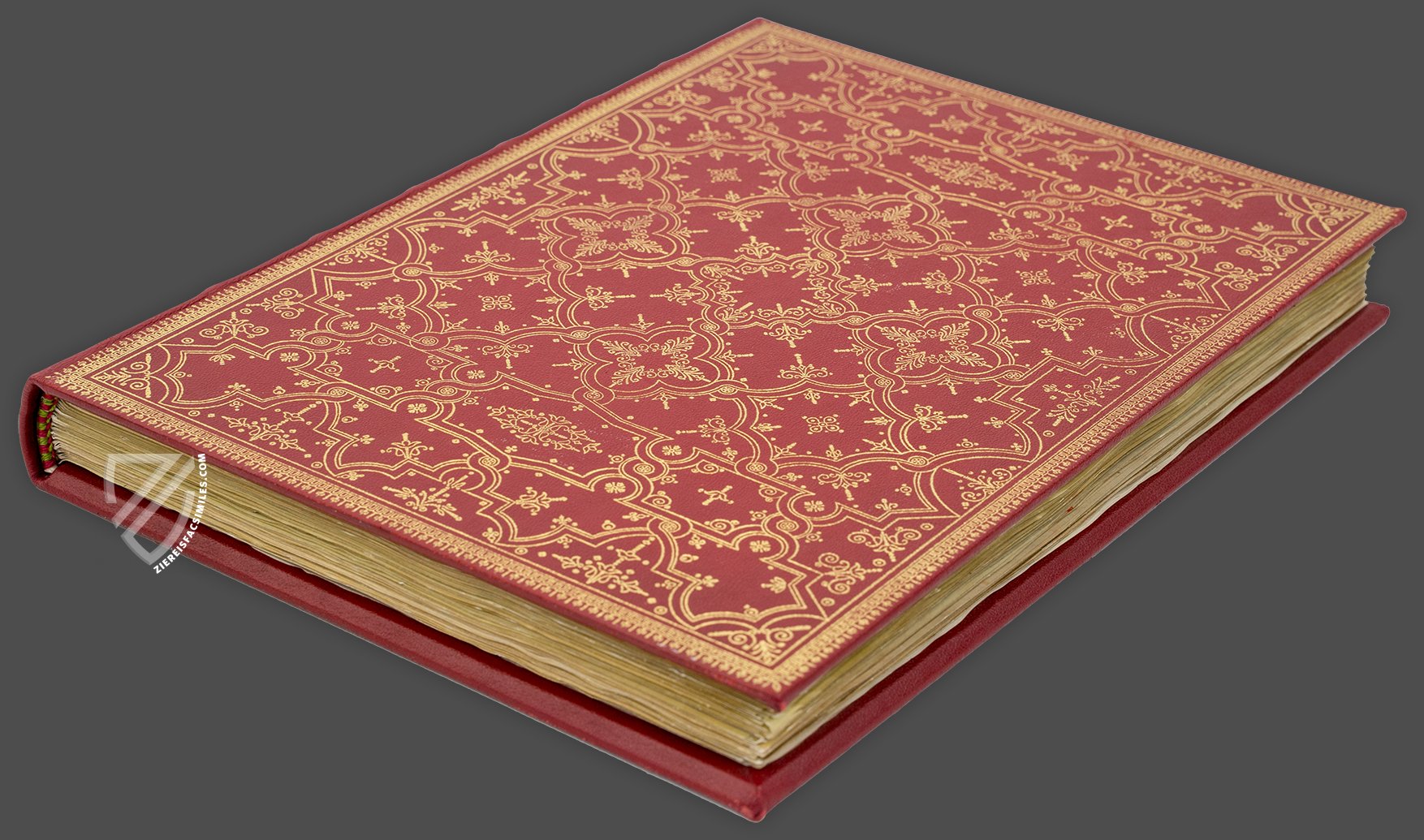
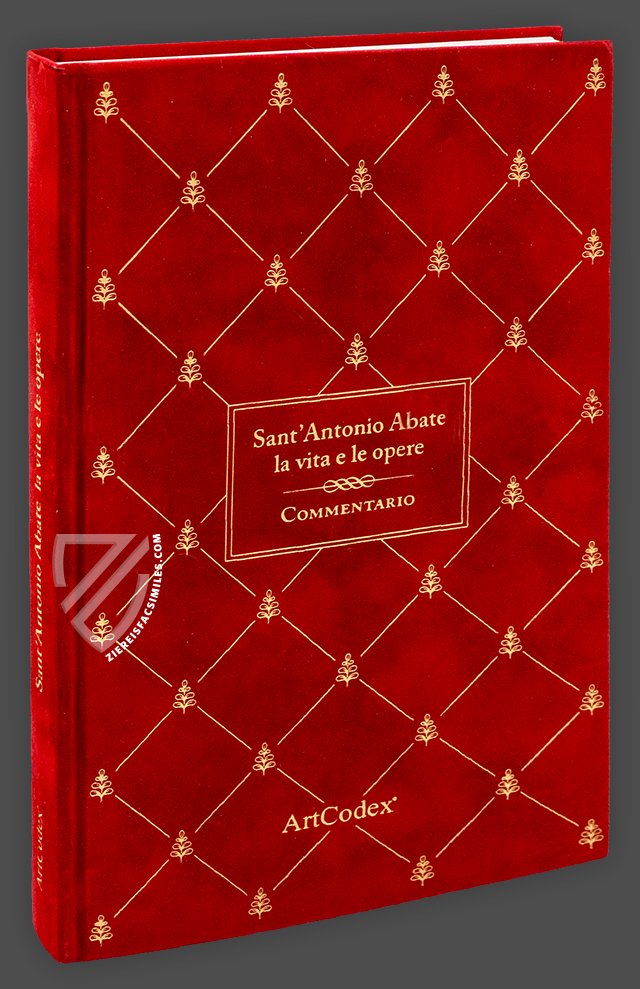
(1,000€ - 3,000€)
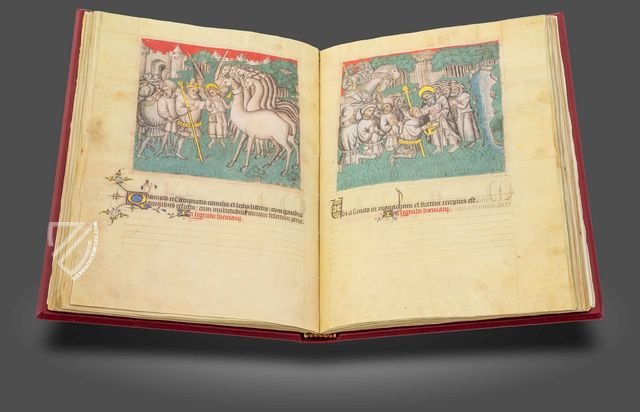
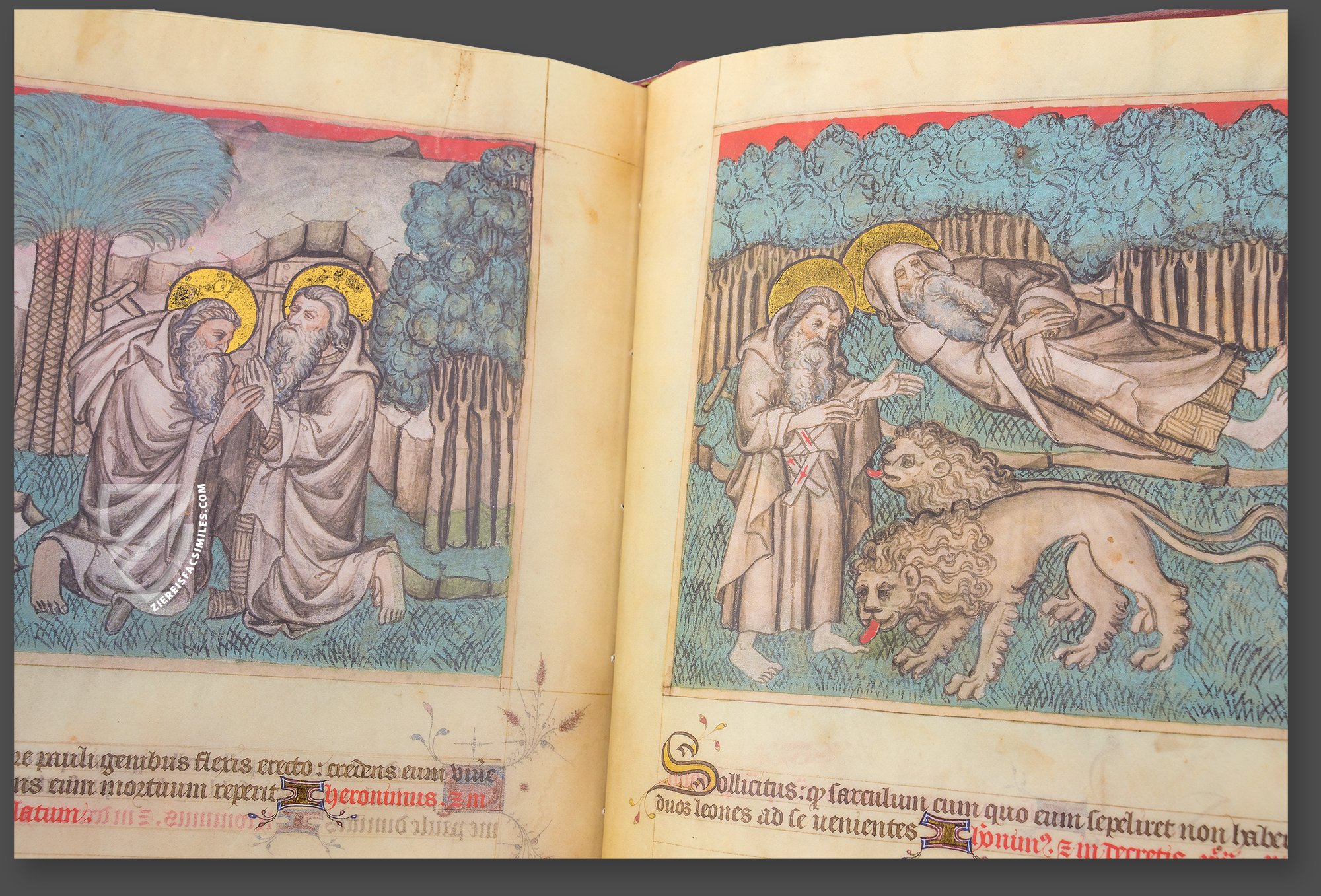
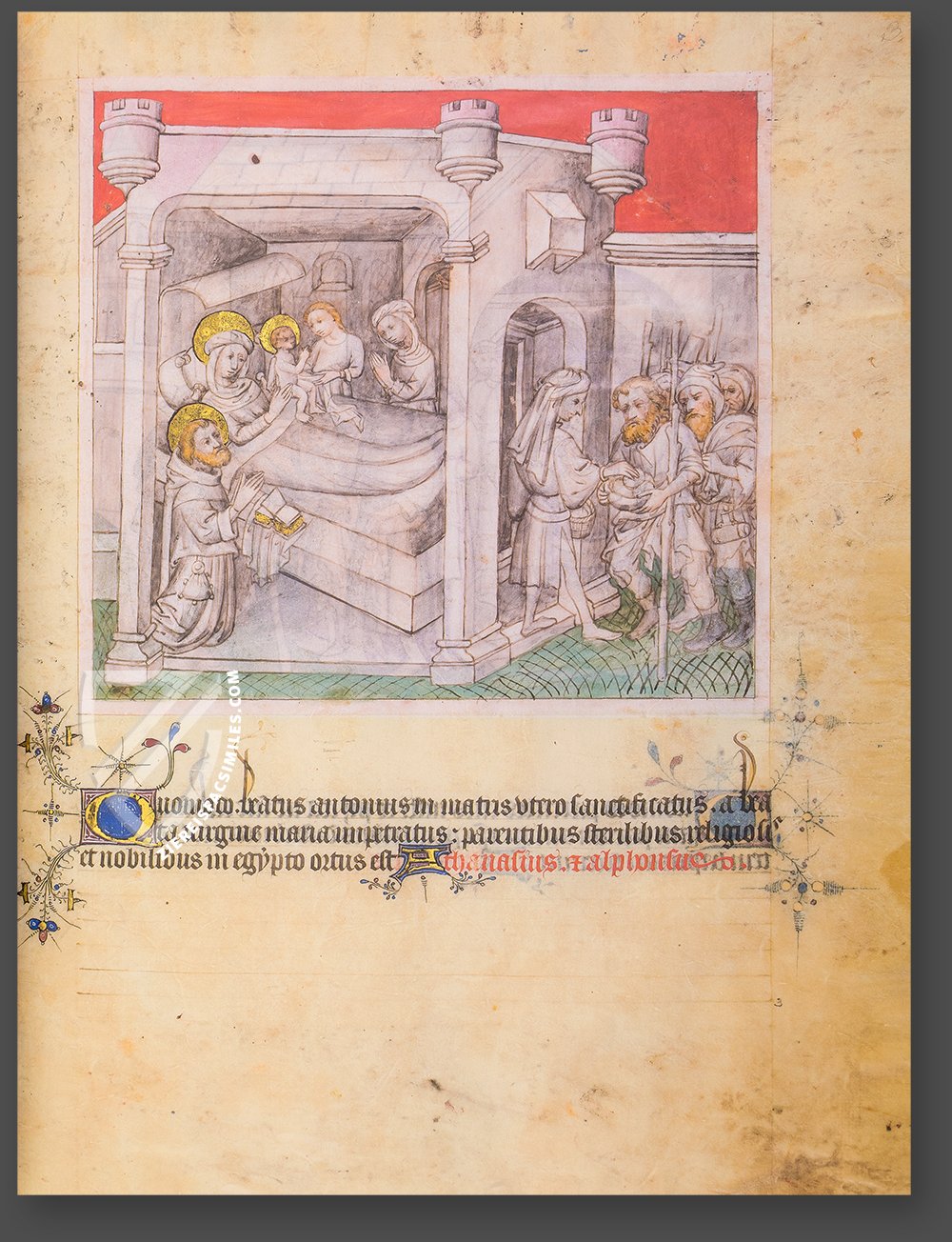
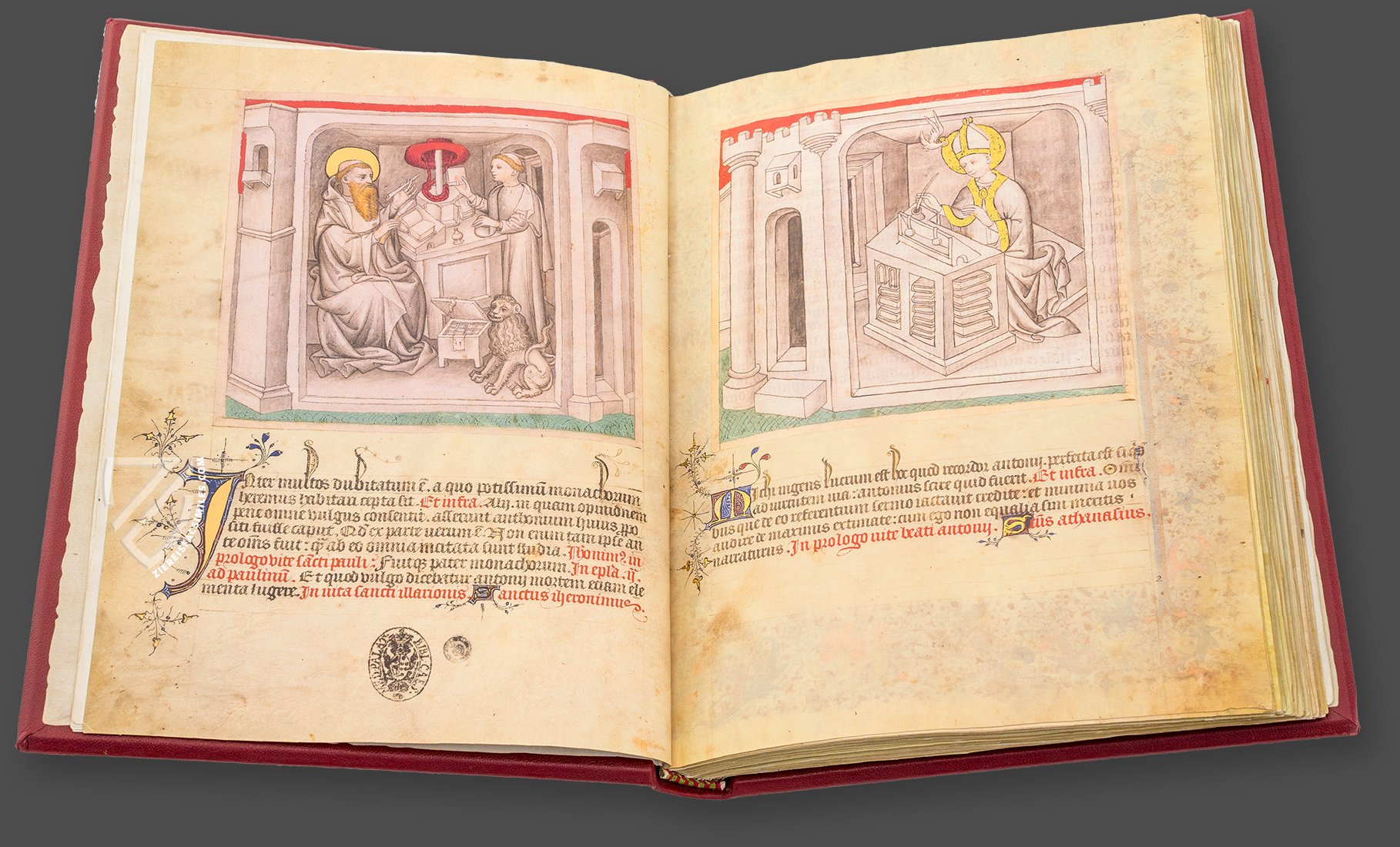
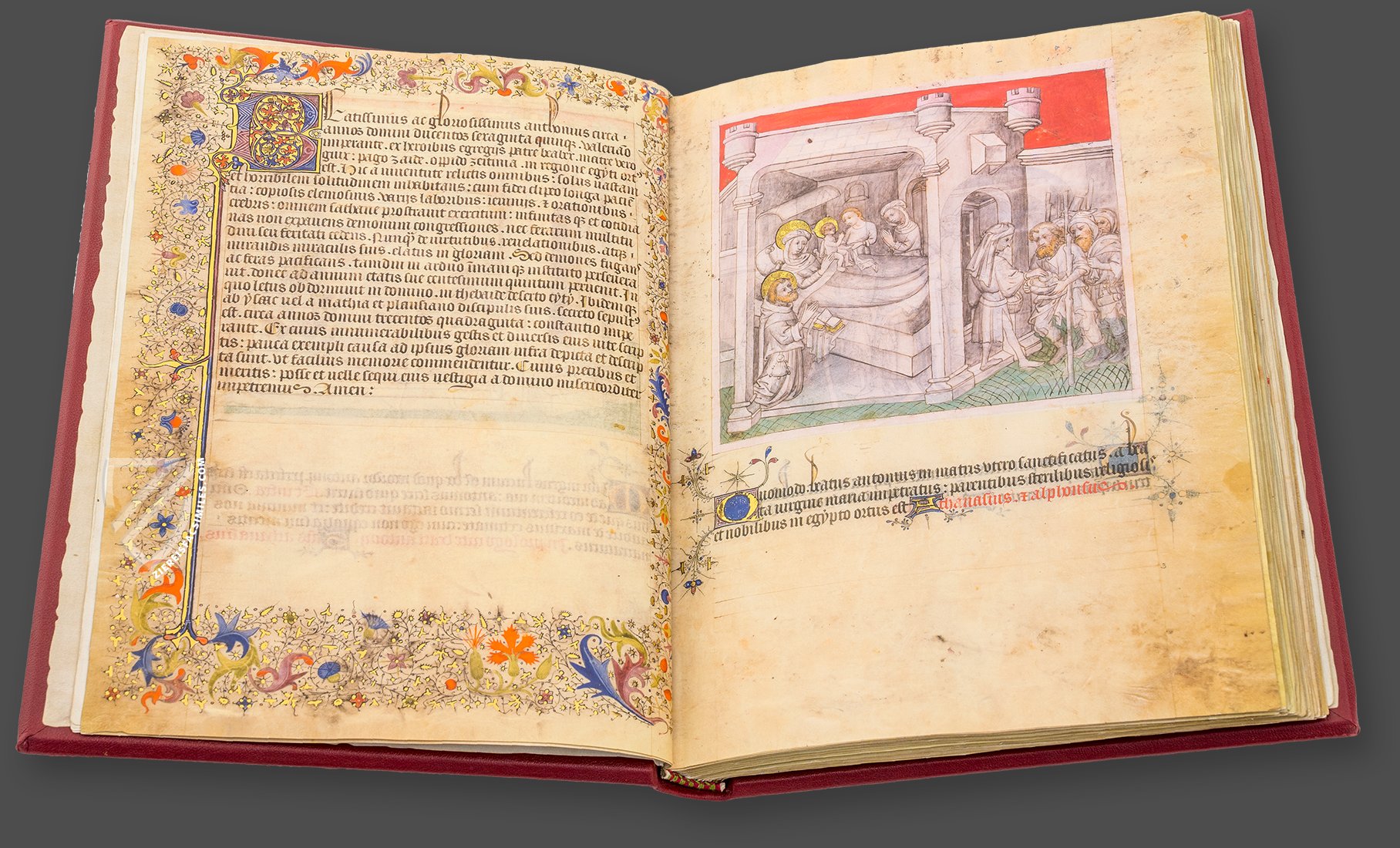
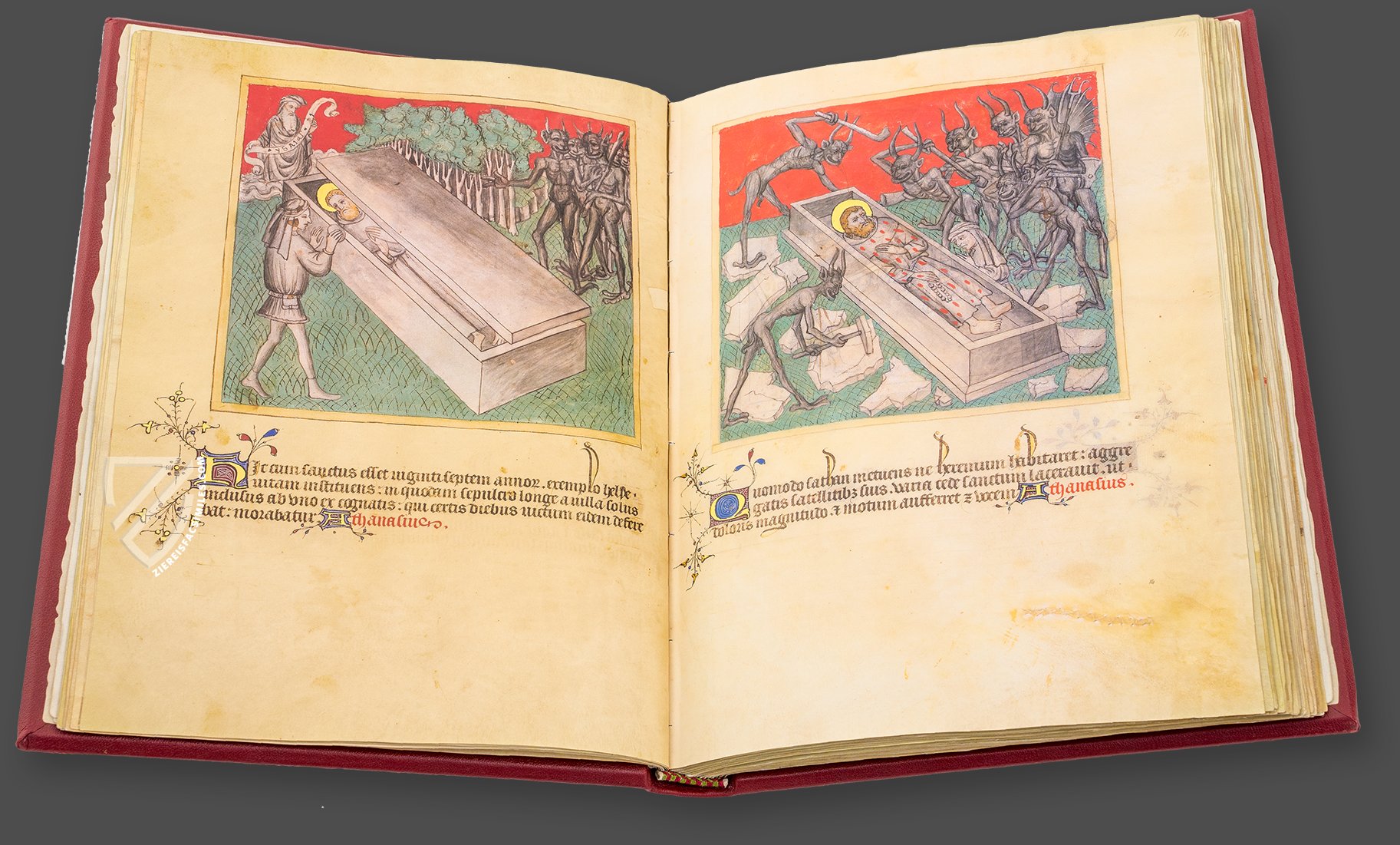
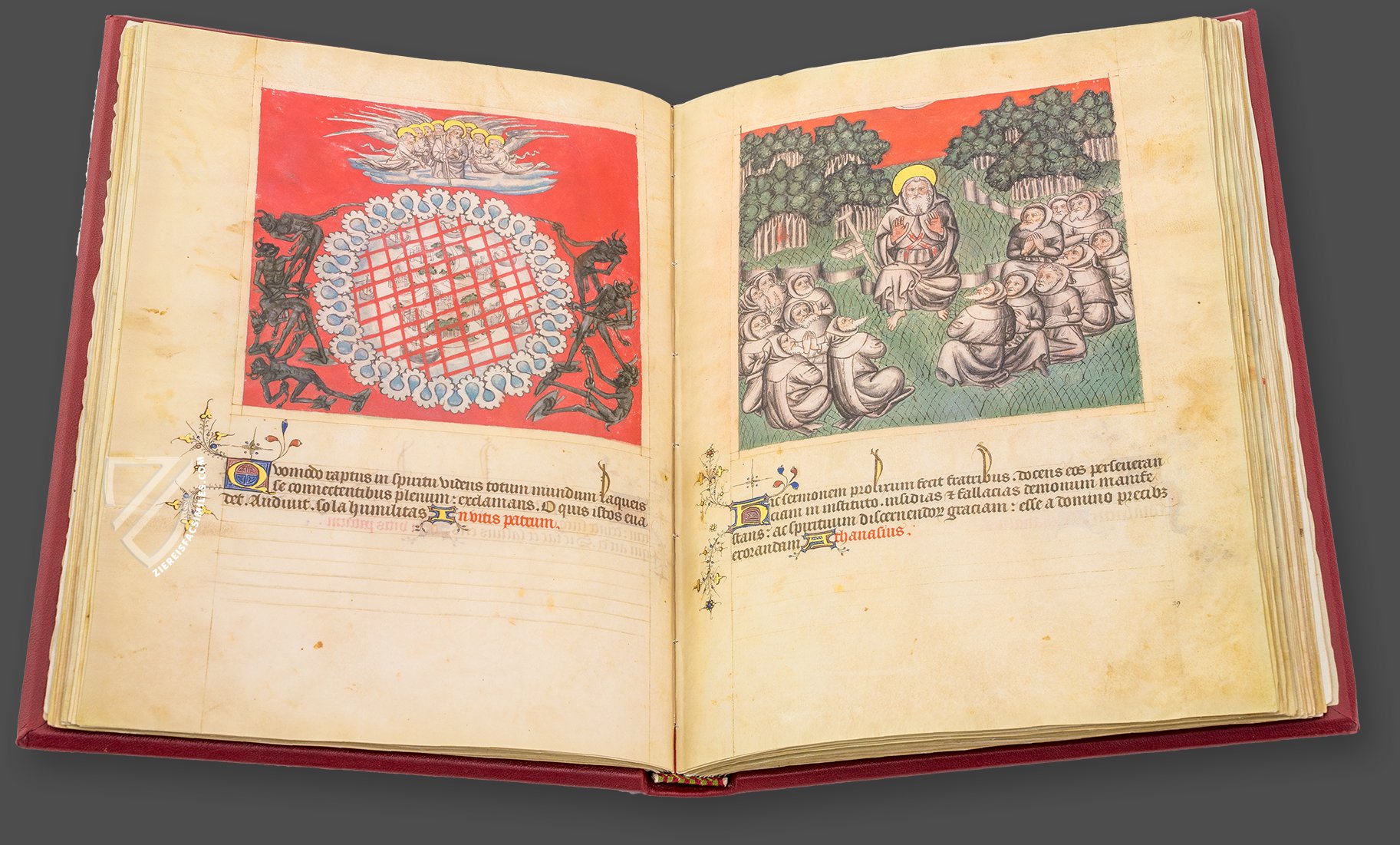
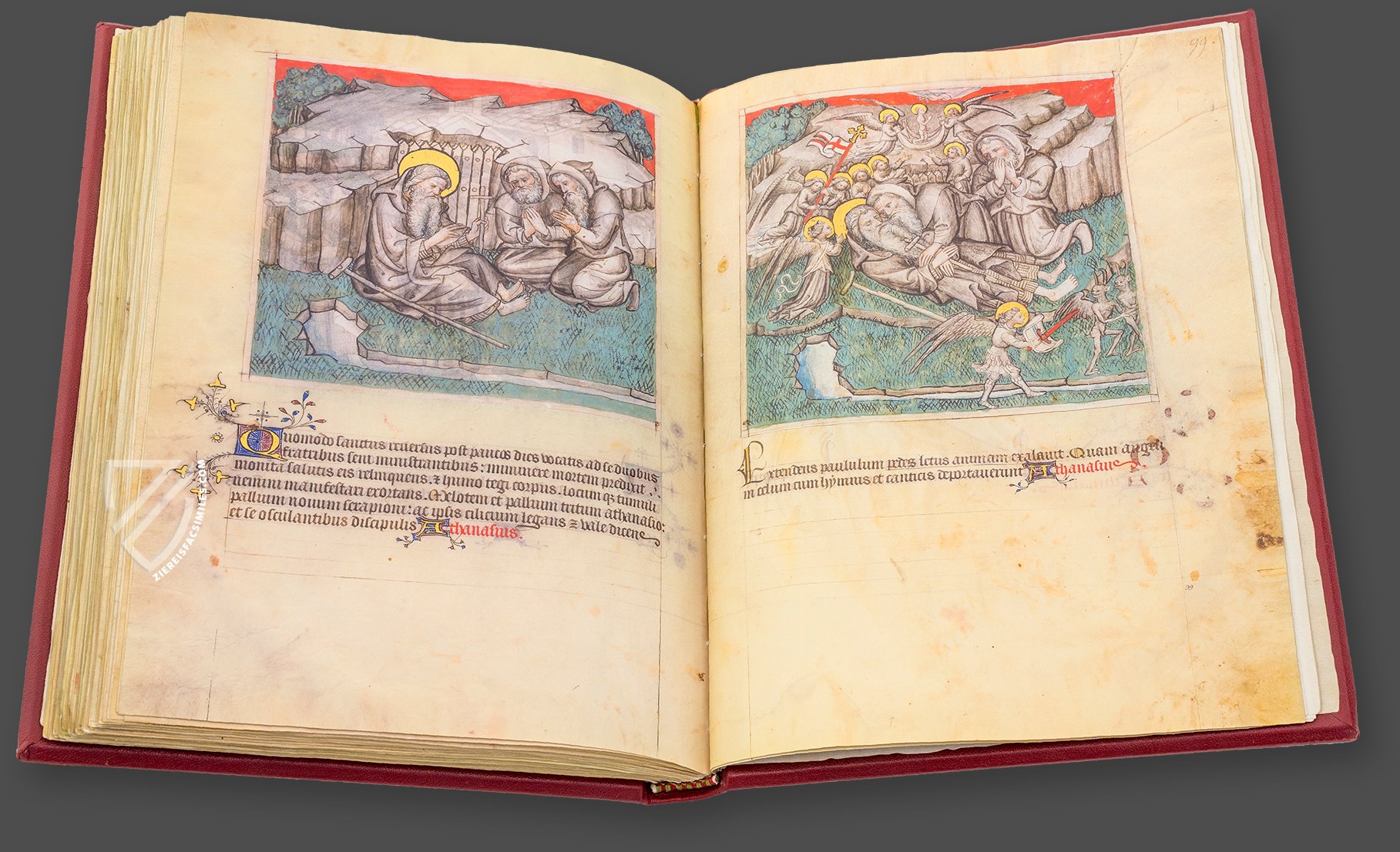
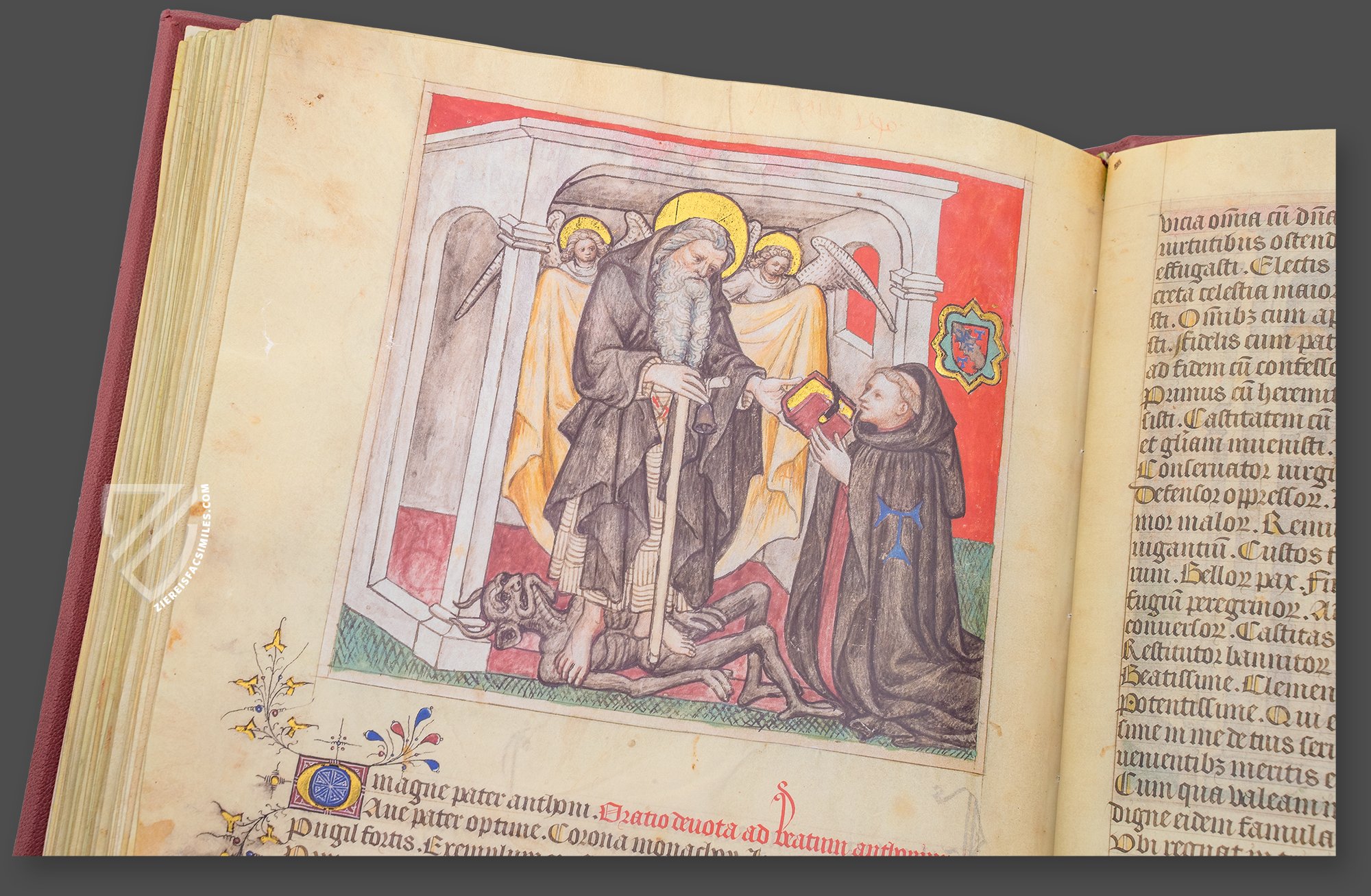
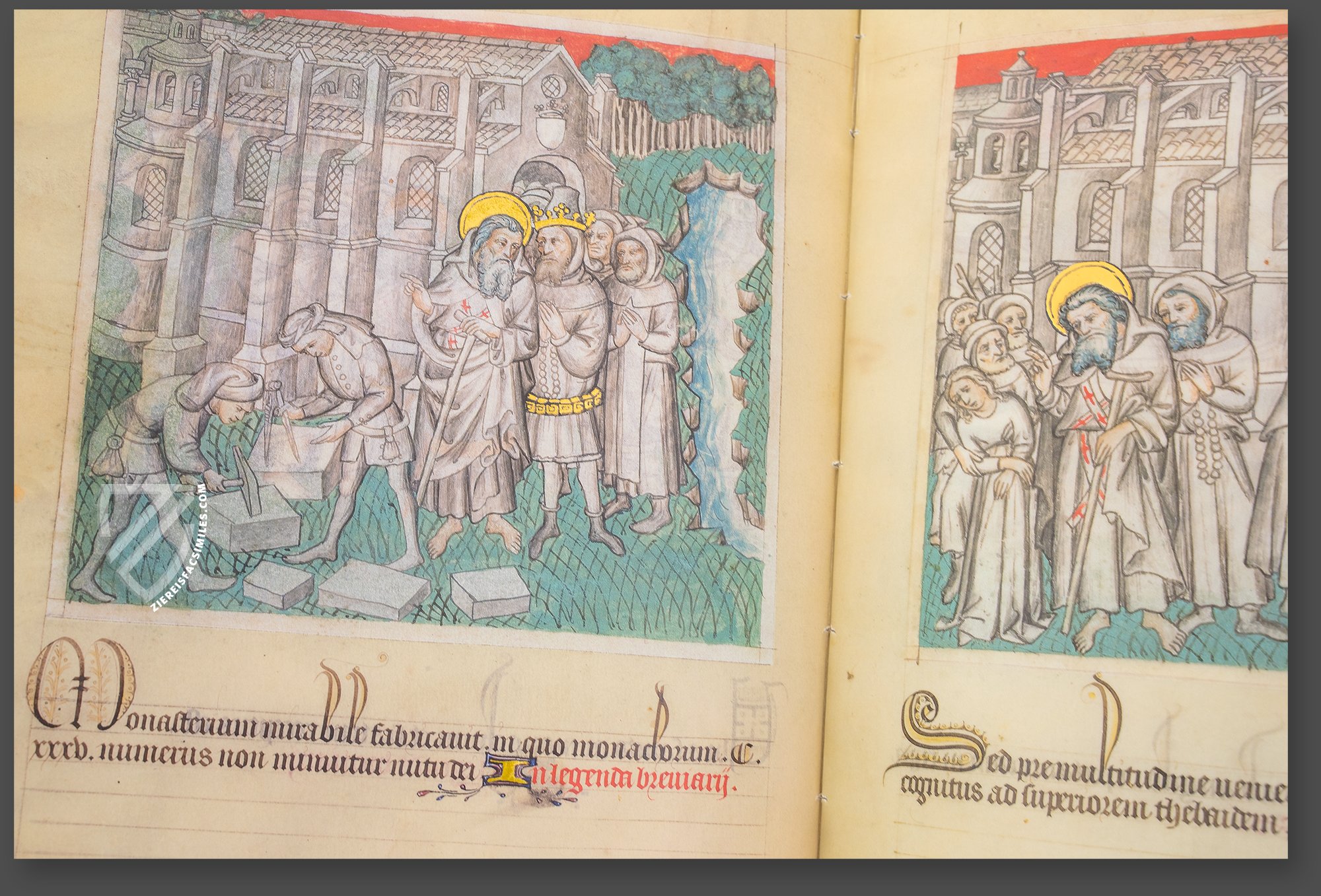
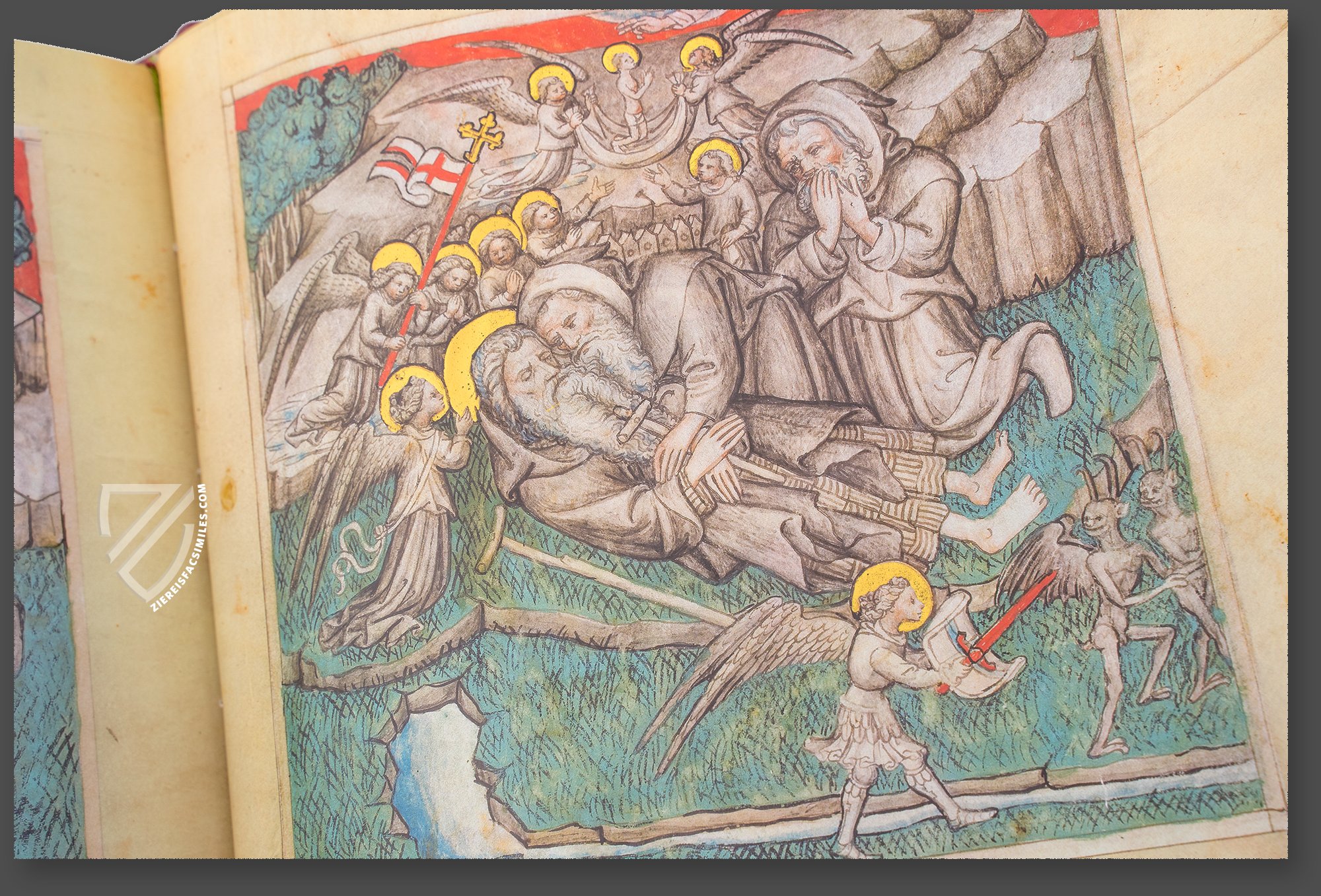
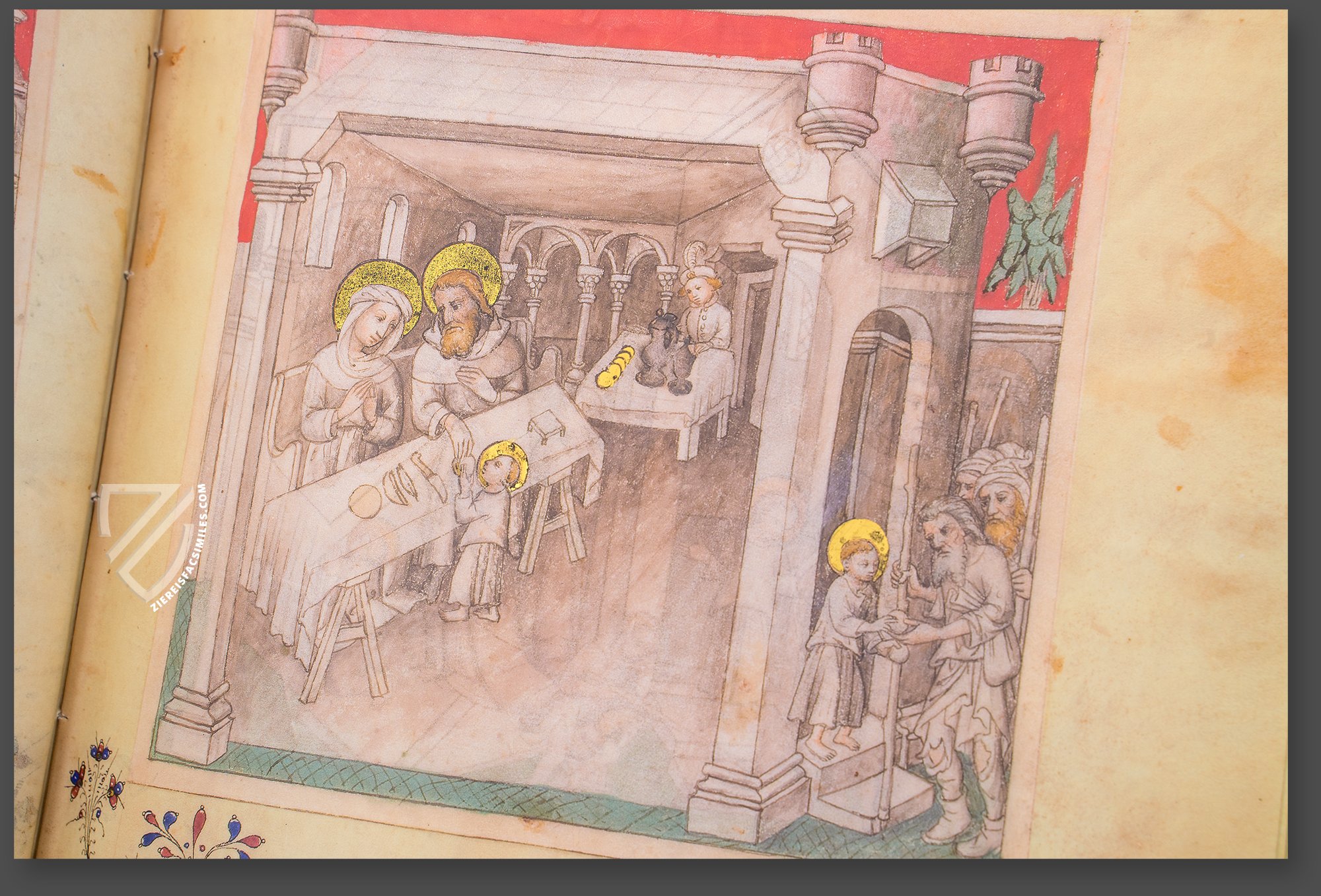
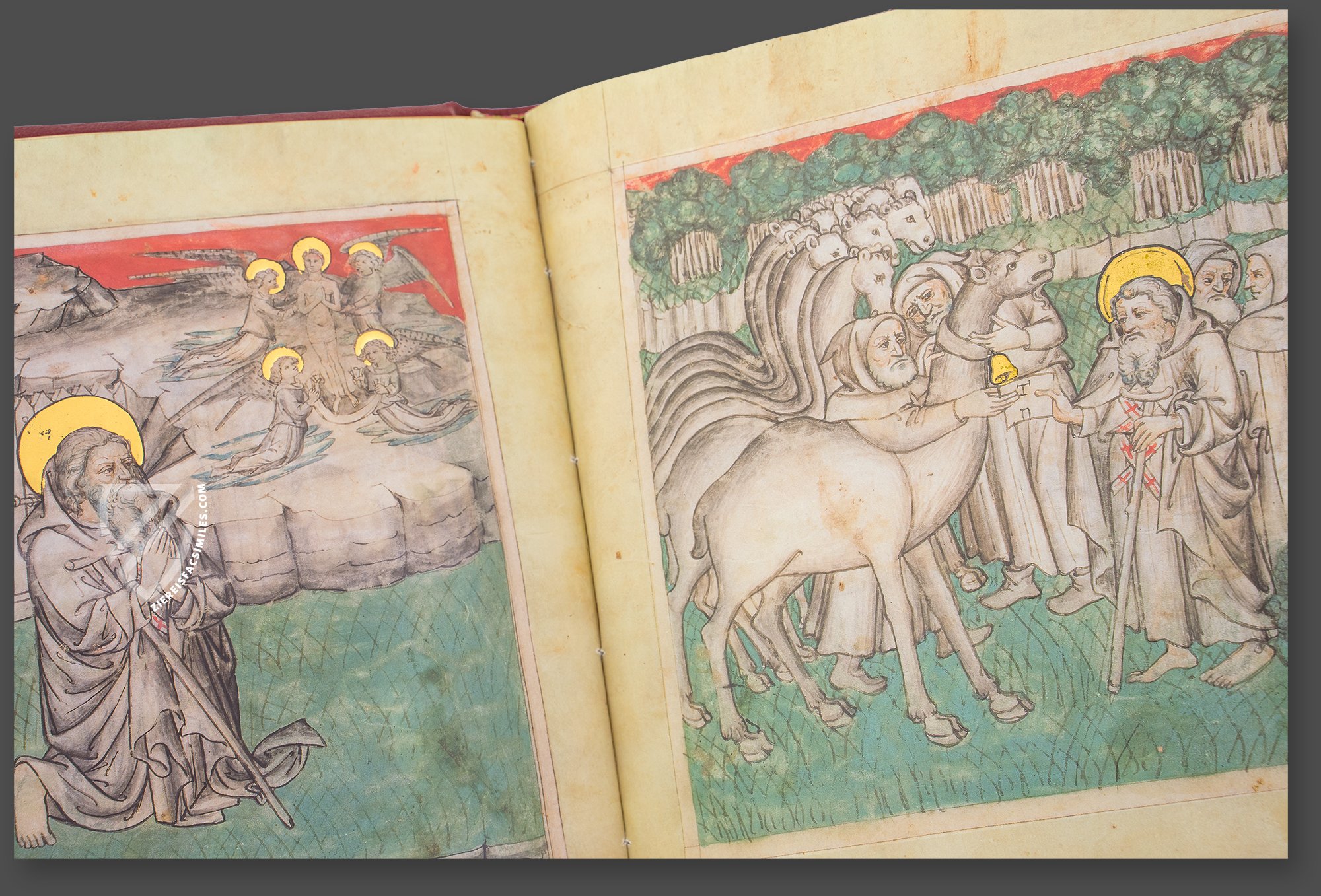
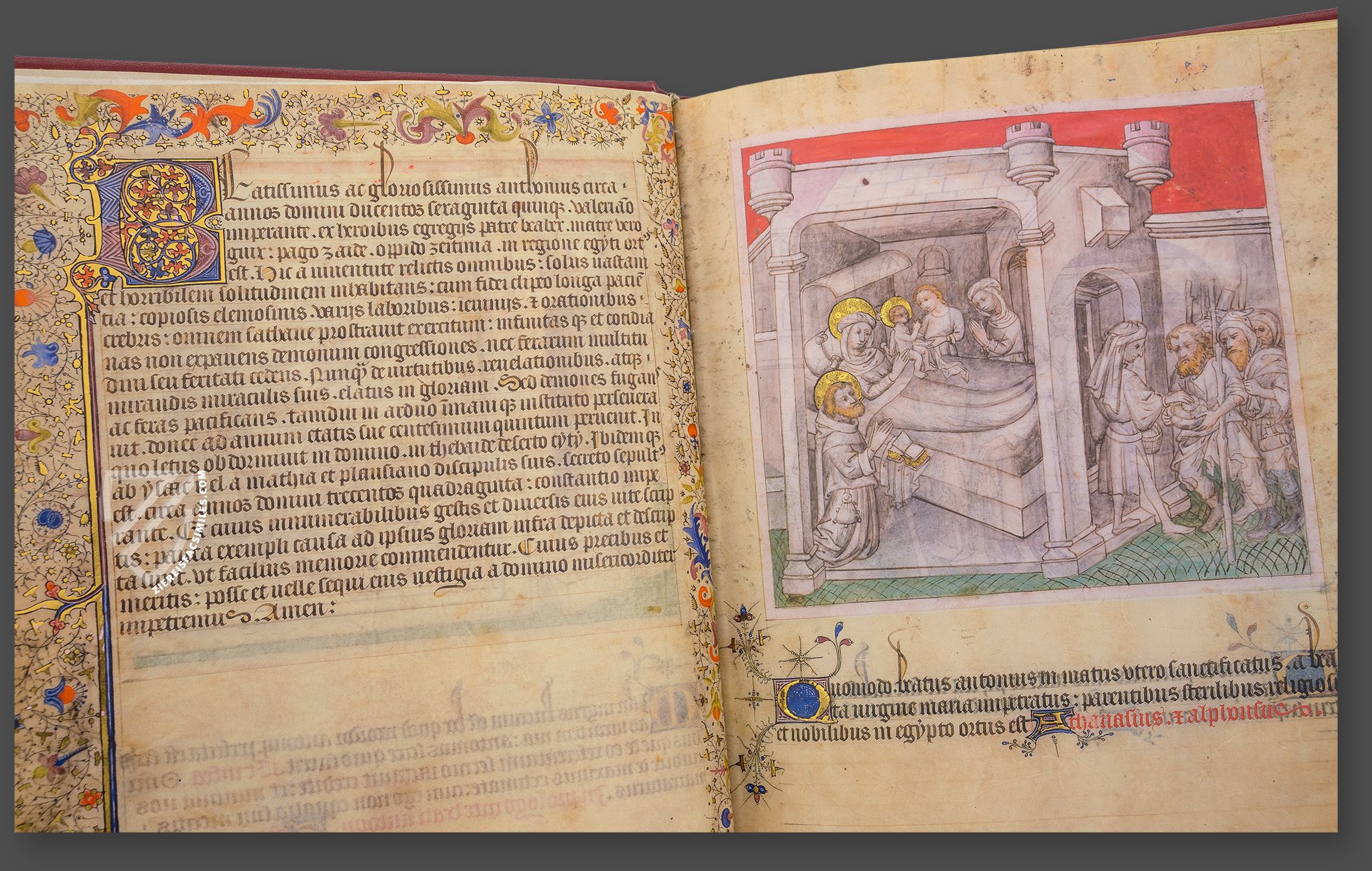
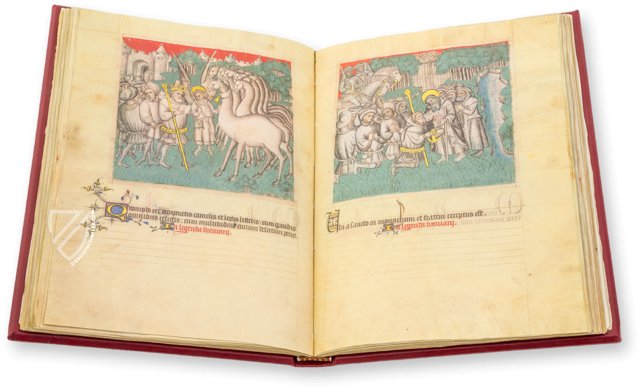
Two hundred exquisite Gothic demi-grisaille miniatures depict vivid scenes with elegant figures—rarely in the history of art has the *Life and Work of Saint Anthony the Abbot (c. 12 January 251 – 17 January 356), the Desert Father and founder of Christian monasticism, been portrayed more beautifully. Yet this manuscript, which has been in the possession of the Biblioteca Medicea Laurenziana for centuries, is far more than its pleasing aesthetics might suggest at first glance. It stands as an artistic testament to internal power struggles and disputes within the Order of Saint Anthony in the 15th century, served as a diplomatic gift, and represents the masterpiece of the Avignon painter Robin Fournier. The manuscript, which once belonged to a pope and to the Medici family, is the second illuminated version of a hagiographic text on the virtues and deeds of the order’s patron, Saint Anthony, written by the high-ranking and learned friar Jean Macellard. His aim was to unite the Hospital Brothers of Saint Anthony and to recount the most comprehensive biography of the saint to date, thereby reviving his veneration.
Life and Work of Saint Anthony the Abbot
Anthony the Great (251–356) was an early Christian Egyptian monk, ascetic, and hermit. He lived as a hermit in complete solitude and without any possessions. Anthony is said to have lived entirely within the meaning of a verse from the Gospel of Matthew: “thou wilt be perfect, go and sell that thou hast, and give to the poor, and thou shalt have treasure in heaven: and come and follow me.” (Mt 19:21). His spiritual attitude attracted many admirers and like-minded people who followed his example and gave up their earthly possessions. Anthony’s followers founded communities from which the first antique monasteries originated. He is therefore regarded as the founder of Christian monasticism and is arguably the most famous Christian monk of antiquity.
Healing Relics
In the High Middle Ages, Anthony also became the patron saint of the Hospital Brothers of Saint Anthony, as his relics were said to possess healing powers against what was known as Saint Anthony’s Fire, or ergot poisoning. Starting from the French village of Saint-Antoine-l’Abbaye, the order founded numerous monasteries with attached hospitals to care for thousands of sick people throughout Europe. Both the patron who commissioned the Florentine manuscript on the life and work of Anthony and the author of the text contained therein were members of such monastic establishments.
In Honor of the Order’s Patron Saint
The highly educated Jean Macellard served as Grand Sacristan of the mother abbey of the Order of Saint Anthony, the Abbey of Saint-Antoine-l'Abbaye, from 1410 to 1417. In the early 1420s, he was entrusted by the prior of the monastery with the task of composing a new, comprehensive Vita of the order’s patron saint. The goal was to help the order emerge from an image crisis and to restore its reputation and the faith of the faithful, as well as to reunite the order internally and remind its members of their shared values. As was customary in the Middle Ages, Macellard compiled various older writings for this purpose, including the Vita Antonii by Athanasius the Great, sermons by Anthony the Great himself,** as well as a legend about the life of the Egyptian desert father translated from Arabic. He completed his work in the year 1426.
Illustrating a Saint’s Life
The text on the deeds and virtues of the saint was then edited and illuminated for the first time that same year. None other than the gifted painter Robin Fournier from nearby Avignon was responsible for this; he had already done some magnificent paintings for the monastery on several occasions. He created a picture cycle of 200 miniatures that would have a decisive influence on later depictions of Anthony. This first illuminated manuscript of Macellard’s Liber vita Sanctissimi Antonii Abbatis, created in 1426, is now housed in the National Library of Malta.
A Work of Art as a Symbol of Power
At the same time, Jean de Montchenu (1378–1459) was fighting to secure his position within the Order. After being denied the office of abbot of Saint-Antoine-l’Abbaye due to internal disputes, he became head of the monastery of Sant'Antonio di Ranverso in Piedmont. This office also entailed the powerful position of cellarer of the mother abbey, which allowed him to return there only a short time later. There, the magnificently illuminated first manuscript likely made a great impression on him. To solidify his position within the Order, he commissioned another, even more lavish and revised version of the Vita of Antonius the Great in 1431–1432 – again by Jean Macellard and Robin Fournier. The latter surpassed his own work from 1426 and created 200 even more impressive miniatures depicting the life and deeds of the revered patron saint of the order.
Monochrome Book Illumination
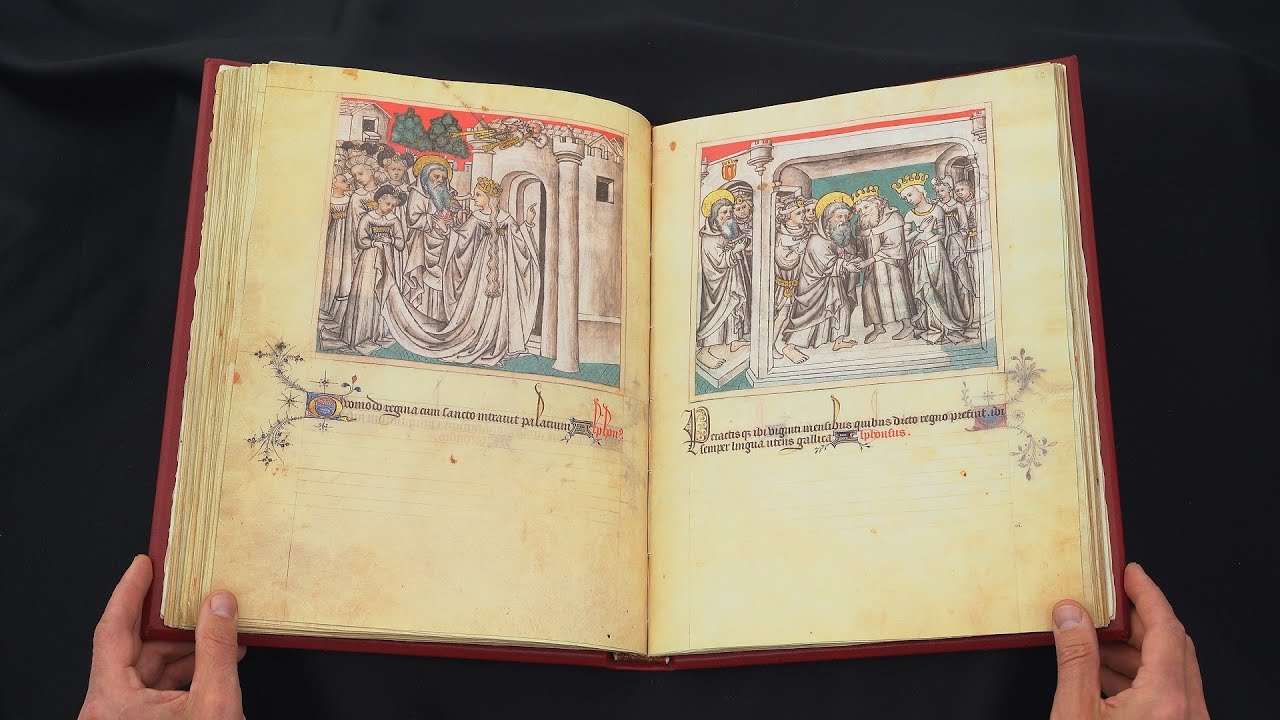
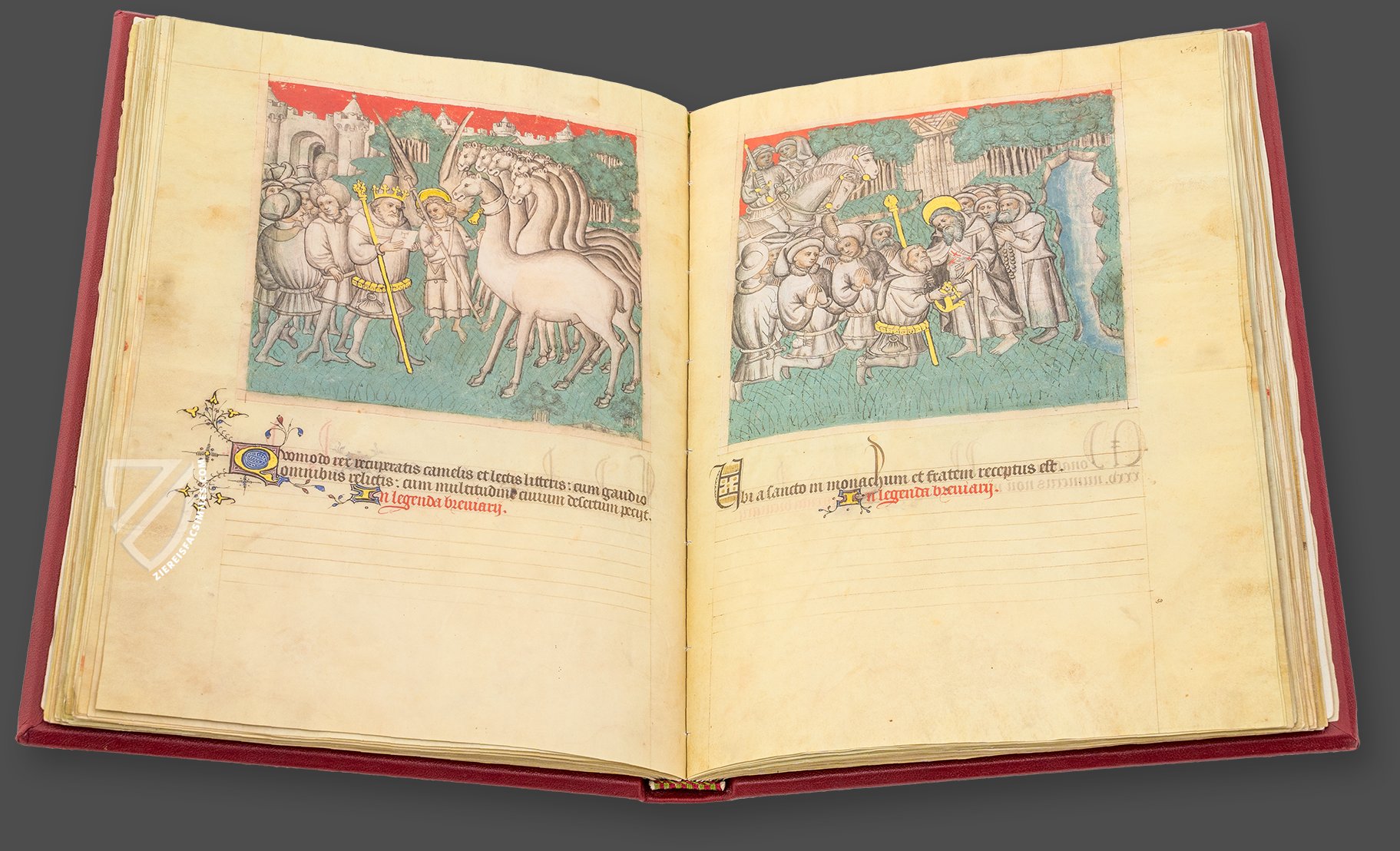
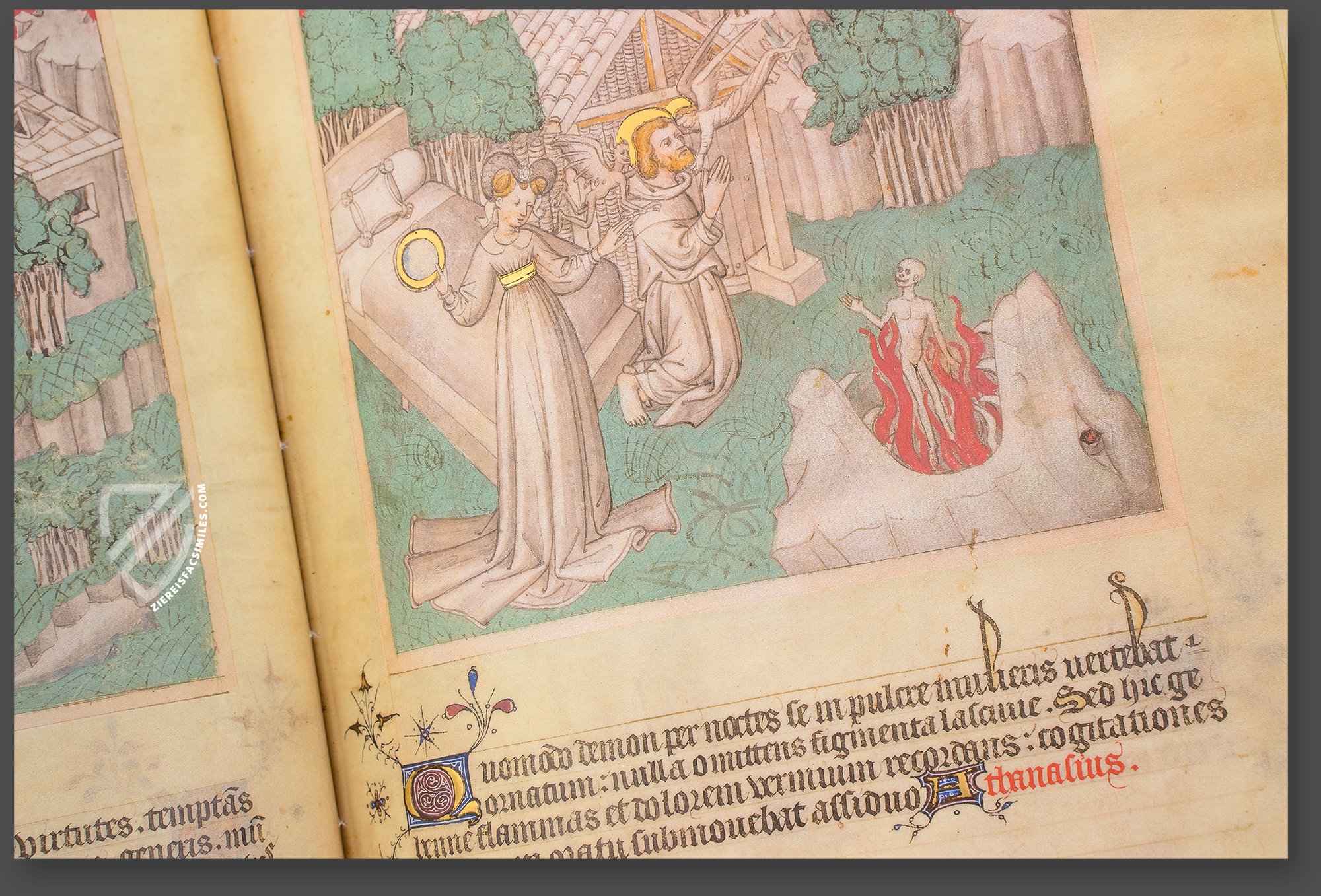
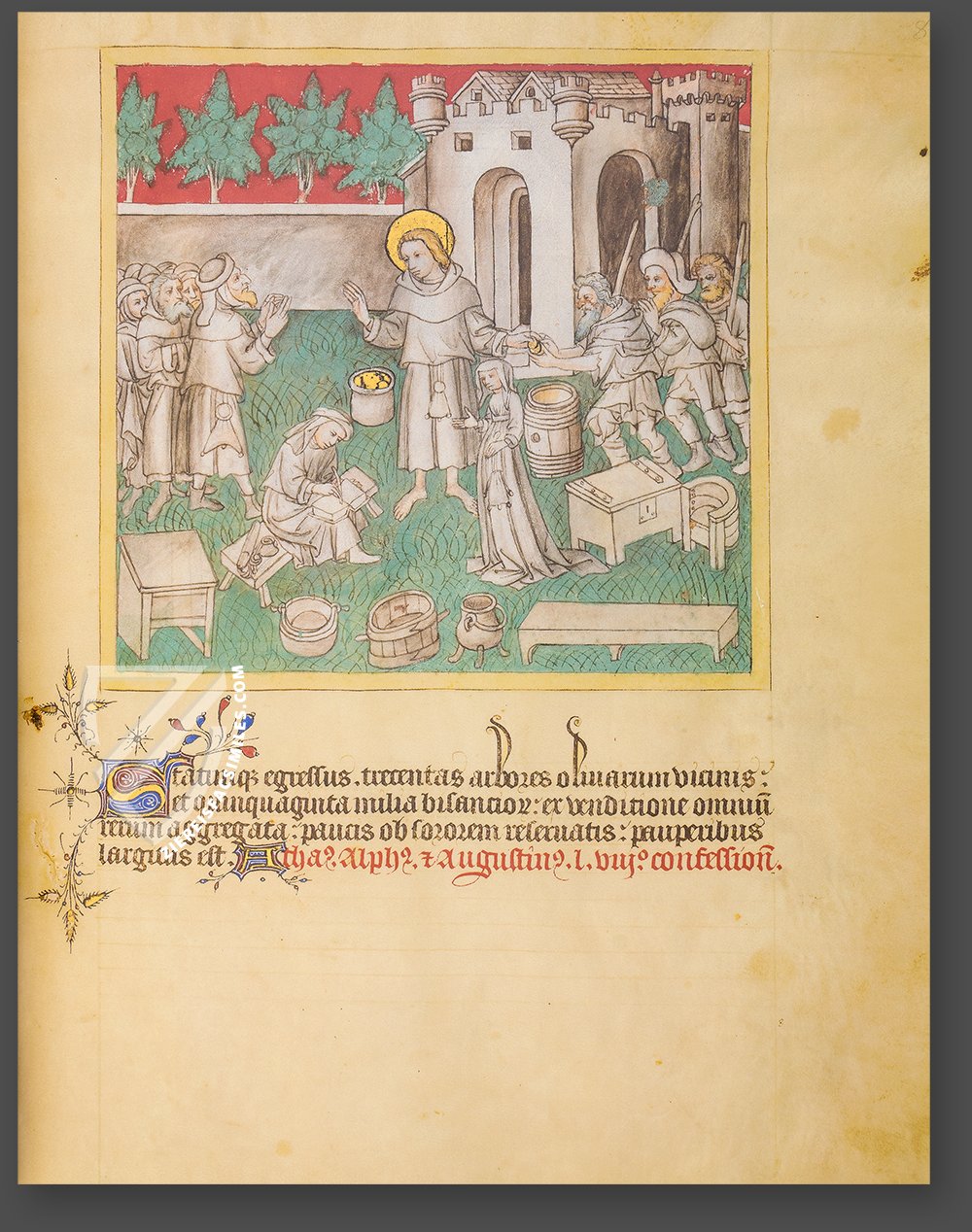
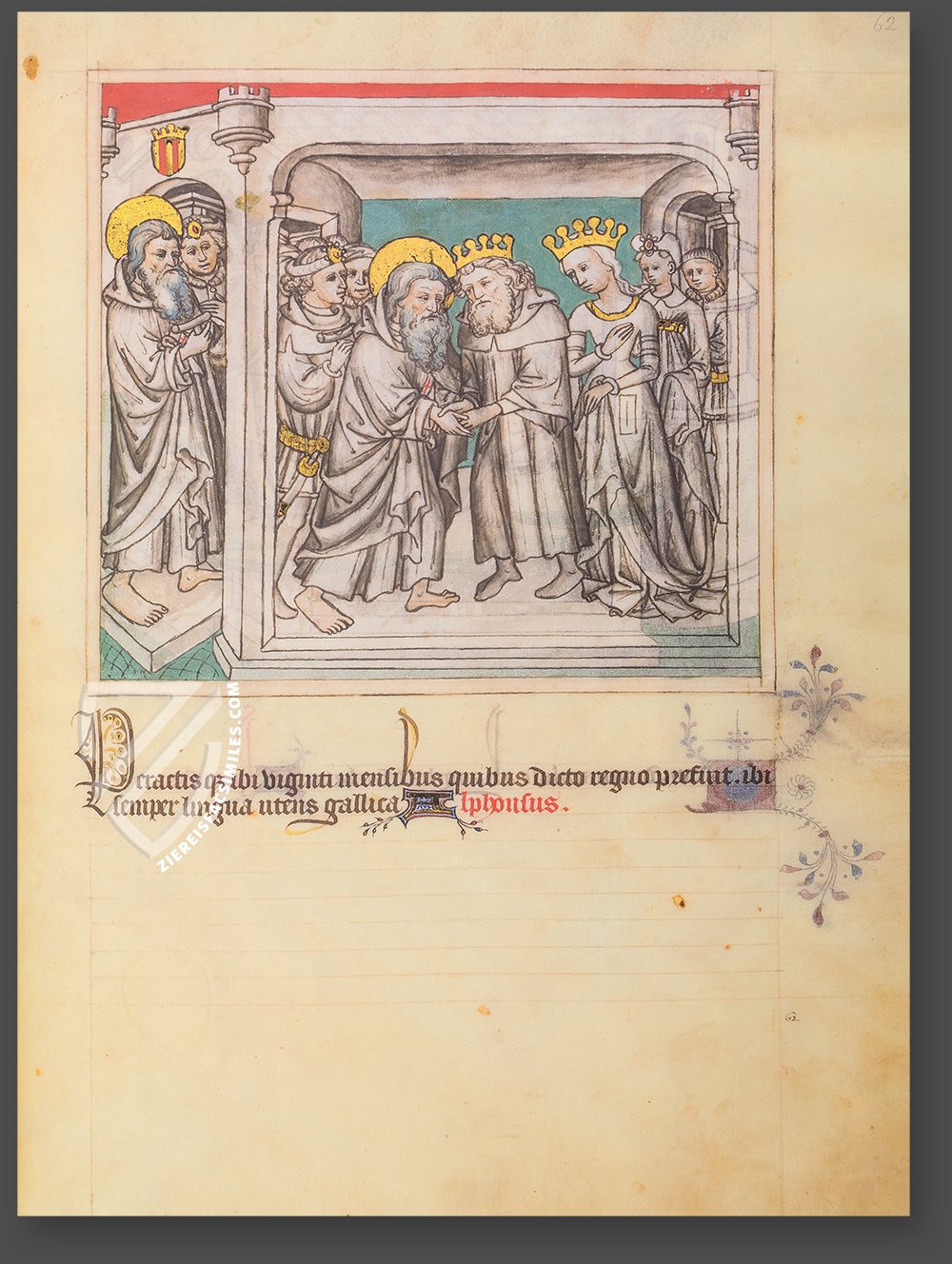
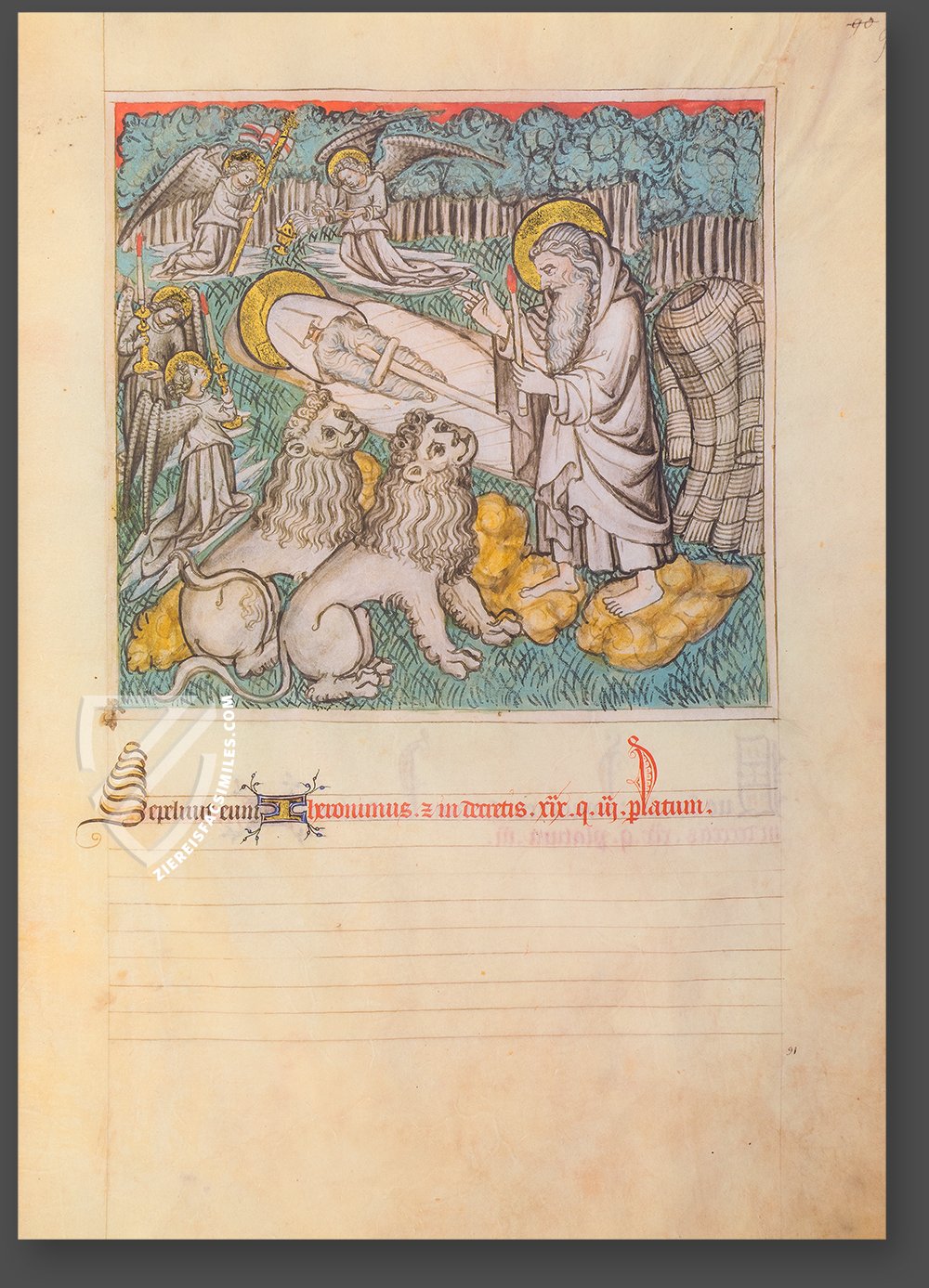
The moving life story of the father of monks, Anthony, is illustrated with wonderful demi-grisaille miniatures that follow a consistent aesthetic. Color accents in a powdery, cool green and a bold red highlight the images. They depict stylized, monochrome landscapes against which lively scenes unfold, inspired by both courtly and monastic daily life in the Middle Ages. One sees knights in armor engaging in sword fights on horseback and social events where nobles celebrate with music, food, and drink, as well as scenes of worship, prayer, and teaching.
A Gift for the Pope
Shortly after its completion, Jean de Montchenu presented this precious codex to the newly elected Pope Eugene IV (1383–1447), who had supported the Antonines in a conflict with the Benedictines. In this way, the manuscript also served a diplomatic purpose. Eugene IV gifted it only two years later, in 1434, to Cosimo di Medici (1389–1464). His influential dynasty maintained a patronage relationship with Saint Anthony at that time, so there was certainly also a personal and spiritual connection to the manuscript. It later found its way into the Biblioteca Medicea Laurenziana, founded by the Medici, where it is preserved to this day.
Codicology
- Alternative Titles
- Sant'Antonio Abate - la vita e le opere
Firenze Vita di S. Antonio Abbate
Antonius der Große - Leben und Werk - Size / Format
- 204 pages / 36.0 × 27.5 cm
- Origin
- France
- Date
- 1431–1432
- Epochs
- Style
- Genre
- Language
- Script
- Gothic
- Illustrations
- 200 large demi-grisaille miniatures
- Content
- Liber vita Sanctissimi Antonii Abbatis
- Patron
- Jean de Montchenu (1378–1459)
- Artist / School
- Jean Macellard (compiler)
Robert Favier (illuminator) - Previous Owners
- Pope Eugene IV (1383–1447)
Medici family
Life and Work of Saint Anthony the Abbot
Seeking a Life of Poverty
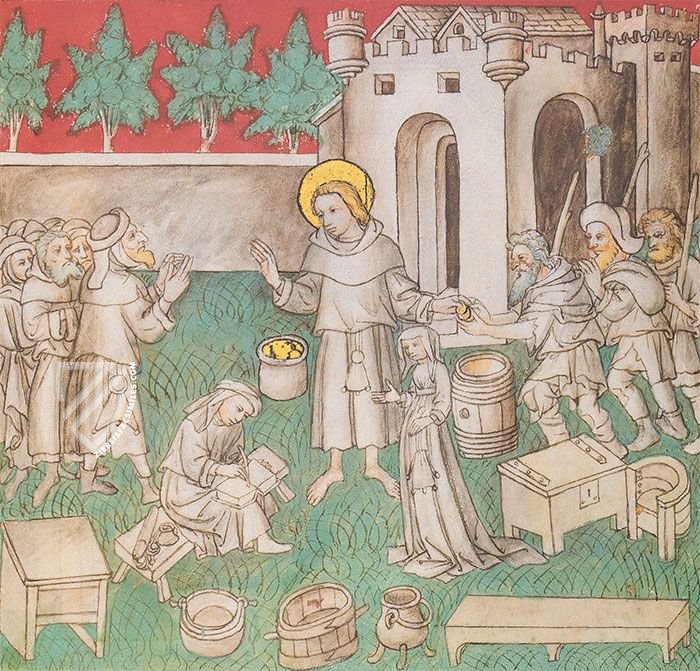
Anthony was born in a wealthy landowning family in Lower Egypt and decided to unburden himself of his inheritance after his parents died when he was only 20. He gave away some of this family’s lands to his neighbors while selling others and donating the funds to the poor. In doing so, he was following the words of Christ: “Jesus said to him, ‘If you want to be perfect, go, sell what you have and give to the poor, and you will have treasure in heaven; and come, follow Me’.” (Matt. 19:21)
Life and Work of Saint Anthony the Abbot
The Temptation of Saint Anthony
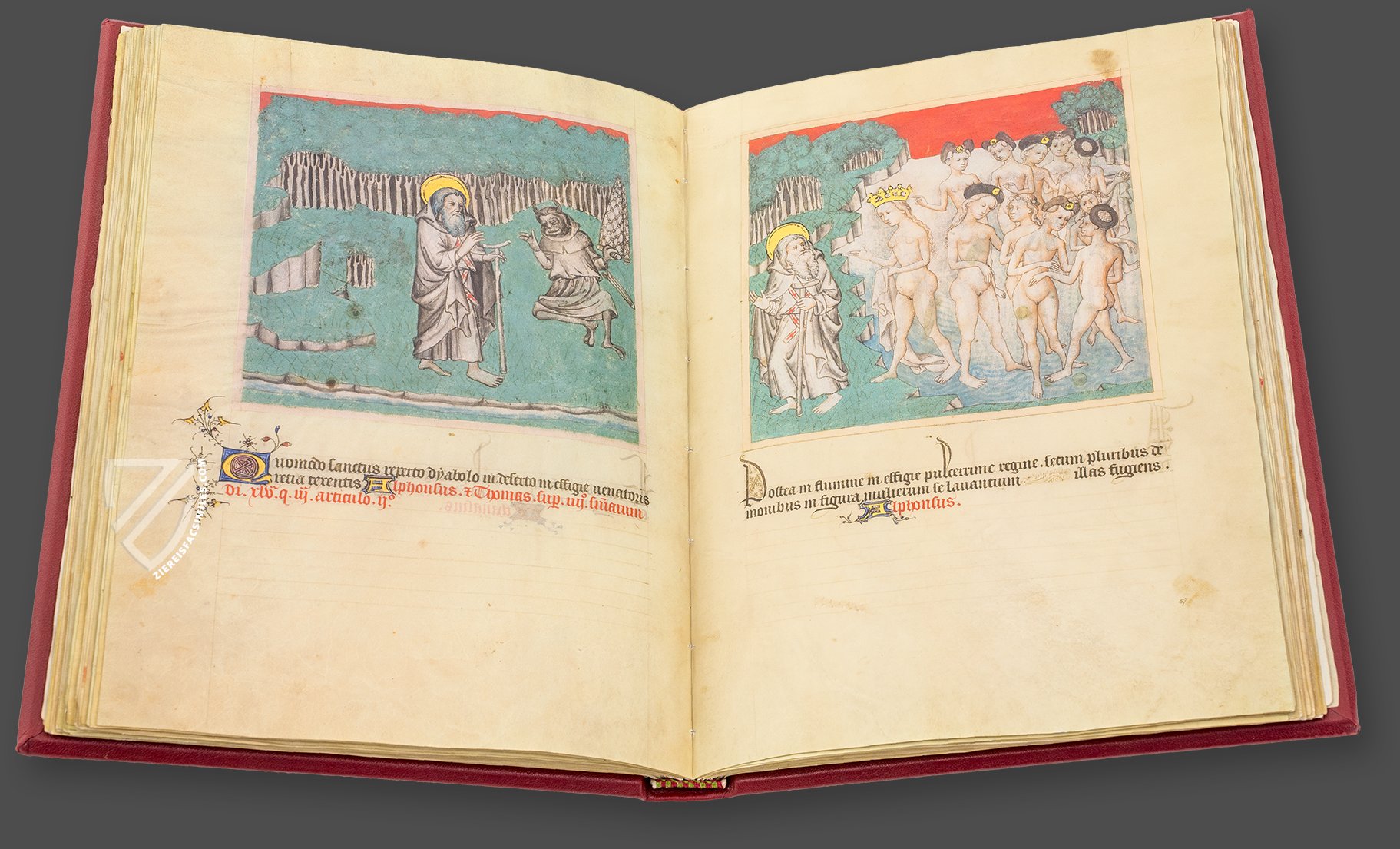
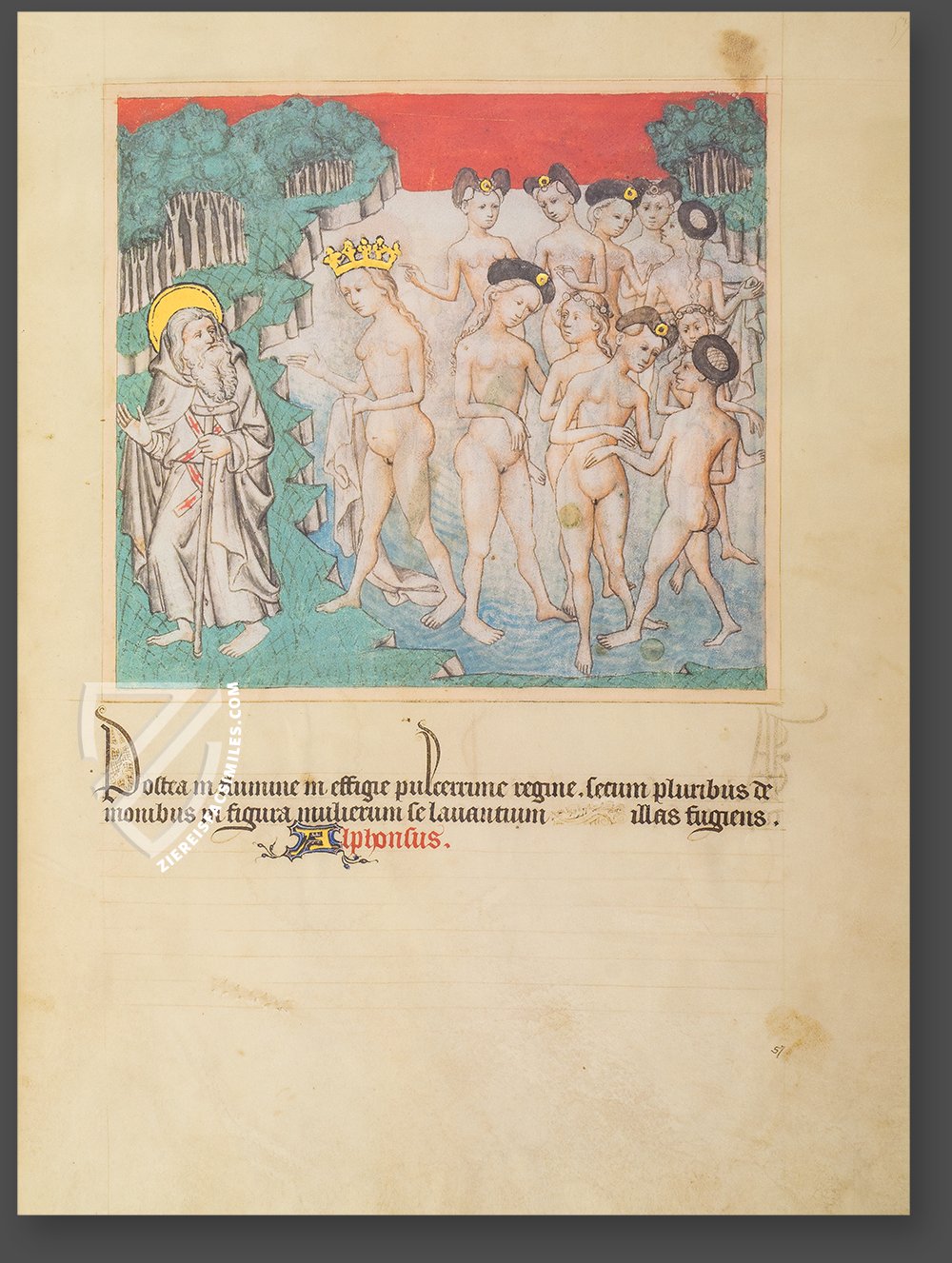
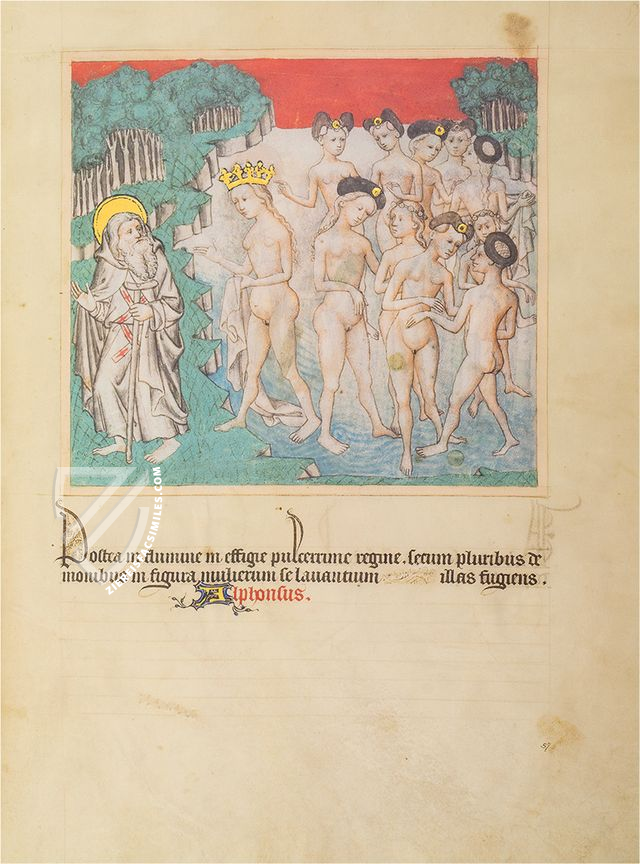
The supernatural temptation faced by Saint Anthony when he lived as an ascetic hermit in the Egyptian desert is a popular subject in Western art and was first discussed by Athanasius of Alexandria, a contemporary of Anthony’s. One of the temptations he faced was phantoms of naked women sent by the Devil, which the saint overcame through the power of prayer, a theme of Christian art.
Eleven female figures bathe in a river nude except for their headwear. One has a golden crown, two have circlets of flowers, four wear round caps, and four wear heart-shaped headdresses. Dressed in the humble and modest robes of a monk and carrying a walking stick, Saint Anthony is depicted with a halo and looks over his shoulder at the river full of temptresses.
#1 Sant'Antonio Abate - la vita e le opere
Language: Italian
(1,000€ - 3,000€)


- Block Books / Incunables / Post-incunables
- Alchemy
- Apocalypses / Beatus Manuscripts
- Astronomy / Astrology
- Bibles / Gospels
- Picture Bibles / Bibles Moralisées / Mirror of Human Salvation
- Botany
- Chronicles / History / Letters
- Cookbook / Recipes
- Diaries / Biographies / Autograph Books
- Encyclopedias
- Fashion / Costume Books
- Games / Game Theory
- Geography / Cartography / Navigation
- Graduals / Antiphonaries / Exultet Roll
- Haggadot
- Hunting Books
- Law / Deeds / Rules
- Leonardo da Vinci
- Literature / Poetry
- Medicine
- Missals / Lectionaries / Sacramentaries
- Model Books / Sketchbooks / Notebooks
- Music
- Mythology
- Natural History / Bestiaries
- Other Liturgical Manuscripts
- Other Religious Works
- Other Secular Works
- Paintings / Graphics
- Primers / Textbooks
- Private Devotion Books
- Prophecies / Divination
- Psalters
- Quran
- Saints' Lives
- Sermons / Homilies
- Single Leaf Collections
- Song Books
- Tanakh
- Tournament Books / Armorials / Genealogy
- Travelogues / Travel Guides
- Treatises
- Afghanistan
- Algeria
- Armenia
- Austria
- Azerbaijan
- Belarus
- Belgium
- Belize
- Bosnia and Herzegovina
- China
- Colombia
- Costa Rica
- Croatia
- Cyprus
- Czech Republic
- Denmark
- Egypt
- El Salvador
- Ethiopia
- France
- Germany
- Greece
- Guatemala
- Honduras
- Hungary
- India
- Iran
- Iraq
- Israel
- Italy
- Japan
- Jordan
- Kazakhstan
- Kyrgyzstan
- Lebanon
- Libya
- Liechtenstein
- Luxembourg
- Mexico
- Morocco
- Netherlands
- Palestine
- Panama
- Peru
- Poland
- Portugal
- Romania
- Russia
- Serbia
- Slovakia
- Spain
- Sri Lanka
- Sweden
- Switzerland
- Syria
- Tajikistan
- Tunisia
- Turkey
- Turkmenistan
- Ukraine
- United Kingdom
- United States
- Uzbekistan
- Vatican City
- A. Oosthoek, van Holkema & Warendorf
- Aboca Museum
- Ajuntament de Valencia
- Akademie Verlag
- Akademische Druck- u. Verlagsanstalt (ADEVA)
- Aldo Ausilio Editore - Bottega d’Erasmo
- Alecto Historical Editions
- Alkuin Verlag
- Almqvist & Wiksell
- Amilcare Pizzi
- Andreas & Andreas Verlagsbuchhandlung
- Archa 90
- Archiv Verlag
- Archivi Edizioni
- Arnold Verlag
- ARS
- Ars Magna
- Ars Millenii
- Art Market
- ArtCodex
- AyN Ediciones
- Azimuth Editions
- Badenia Verlag
- Bärenreiter-Verlag
- Belser Verlag
- Belser Verlag / WK Wertkontor
- Benziger Verlag
- Bernardinum Wydawnictwo
- BiblioGemma
- Biblioteca Apostolica Vaticana (Vaticanstadt, Vaticanstadt)
- Bibliotheca Palatina Faksimile Verlag
- Bibliotheca Rara
- Boydell & Brewer
- Bramante Edizioni
- Bredius Genootschap
- Brepols Publishers
- British Library
- Brokarte
- C. Weckesser
- Caixa Catalunya
- Canesi
- CAPSA, Ars Scriptoria
- Caratzas Brothers, Publishers
- Carus Verlag
- Casamassima Libri
- Centrum Cartographie Verlag GmbH
- Chavane Verlag
- Christian Brandstätter Verlag
- Circulo Cientifico
- Club Bibliófilo Versol
- Club du Livre
- Club Internacional del Libro
- CM Editores
- Collegium Graphicum
- Collezione Apocrifa Da Vinci
- Comissão Nacional para as Comemorações dos Descobrimentos Portugueses
- Coron Verlag
- Corvina
- CTHS
- D. S. Brewer
- Damon
- De Agostini/UTET
- De Nederlandsche Boekhandel
- De Schutter
- Deuschle & Stemmle
- Deutscher Verlag für Kunstwissenschaft
- DIAMM
- Dropmore Press
- Droz
- E. Schreiber Graphische Kunstanstalten
- Ediciones Boreal
- Ediciones Grial
- Ediclube
- Edições Inapa
- Edilan
- Editalia
- Edition Deuschle
- Edition Georg Popp
- Edition Leipzig
- Edition Libri Illustri
- Editiones Reales Sitios S. L.
- Éditions de l'Oiseau Lyre
- Editions Medicina Rara
- Editorial Base
- Editorial Casariego
- Editorial Mintzoa
- Editrice Antenore
- Editrice Velar
- Edizioni Edison
- Egeria, S.L.
- Eikon Editores
- Electa
- Emery Walker Limited
- Enciclopèdia Catalana
- Eos-Verlag
- Ephesus Publishing
- Ernst Battenberg
- Eugrammia Press
- Extraordinary Editions
- Fackelverlag
- Facsimila Art & Edition
- Facsimile Editions Ltd.
- Facsimilia Art & Edition Ebert KG
- Faksimile Verlag
- Feuermann Verlag
- Folger Shakespeare Library
- Franco Cosimo Panini Editore
- Friedrich Wittig Verlag
- Fundación Hullera Vasco-Leonesa
- G. Braziller
- Gabriele Mazzotta Editore
- Gebr. Mann Verlag
- Gesellschaft für graphische Industrie
- Getty Research Institute
- Giovanni Domenico de Rossi
- Giunti Editore
- Goldenmark Librarium
- Graffiti
- Grafica European Center of Fine Arts
- Guido Pressler
- Guillermo Blazquez
- Gustav Kiepenheuer
- H. N. Abrams
- Harrassowitz
- Harvard University Press
- Helikon
- Hendrickson Publishers
- Henning Oppermann
- Herder Verlag
- Hes & De Graaf Publishers
- Hoepli
- Holbein-Verlag
- Houghton Library
- Hugo Schmidt Verlag
- Hungarian Academy of Sciences
- Idion Verlag
- Il Bulino, edizioni d'arte
- ILte
- Imago
- In Officina Danesi
- Insel Verlag
- Instituto de Estudios Altoaragoneses
- Instituto Nacional de Antropología e Historia
- Introligatornia Budnik Jerzy
- Istituto dell'Enciclopedia Italiana - Treccani
- Istituto Ellenico di Studi Bizantini e Postbizantini
- Istituto Geografico De Agostini
- Istituto Poligrafico e Zecca dello Stato
- Italarte Art Establishments
- Jaca Book
- Jan Thorbecke Verlag
- Johnson Reprint Corporation
- Johnson Reprint Corporation
- Jos. Baer
- Josef Stocker
- Josef Stocker-Schmid
- Jugoslavija
- Karl W. Hiersemann
- Kasper Straube
- Kaydeda Ediciones
- Kindler Verlag / Coron Verlag
- Kodansha International Ltd.
- Konrad Kölbl Verlag
- Kurt Wolff Verlag
- La Linea Editrice
- La Meta Editore
- Lambert Schneider
- Landeskreditbank Baden-Württemberg
- Leo S. Olschki
- Les Incunables
- Liber Artis
- Library of Congress
- Libreria Musicale Italiana
- Lichtdruck
- Lito Immagine Editore
- Lumen Artis
- Lund Humphries
- M. Moleiro Editor
- Maison des Sciences de l'homme et de la société de Poitiers
- Manuscriptum
- Martinus Nijhoff
- Maruzen-Yushodo Co. Ltd.
- MASA
- Massada Publishers
- McGraw-Hill
- Metropolitan Museum of Art
- Militos
- Millennium Liber
- Müller & Schindler
- Nahar - Stavit
- Nahar and Steimatzky
- National Library of Wales
- Neri Pozza
- Nova Charta
- Oceanum Verlag
- Odeon
- Omnia Arte
- Orbis Mediaevalis
- Orbis Pictus
- Österreichische Staatsdruckerei
- Oxford University Press
- Pageant Books
- Parzellers Buchverlag
- Patrimonio Ediciones
- Pattloch Verlag
- PIAF
- Plon-Nourrit et cie
- Poligrafiche Bolis
- Presses Universitaires de Strasbourg
- Prestel Verlag
- Princeton University Press
- Prisma Verlag
- Priuli & Verlucca, editori
- Pro Sport Verlag
- Propyläen Verlag
- Pytheas Books
- Quaternio Verlag Luzern
- Reales Sitios
- Recht-Verlag
- Reichert Verlag
- Reichsdruckerei
- Reprint Verlag
- Riehn & Reusch
- Rizzoli
- Roberto Vattori Editore
- Rosenkilde and Bagger
- Roto-Sadag
- Roxburghe Club
- Salerno Editrice
- Saltellus Press
- Sandoz
- Sarajevo Svjetlost
- Schöck ArtPrint Kft.
- Schulsinger Brothers
- Scolar Press
- Scrinium
- Scripta Maneant
- Scriptorium
- Shazar
- Siloé, arte y bibliofilia
- SISMEL - Edizioni del Galluzzo
- Sociedad Mexicana de Antropología
- Société des Bibliophiles & Iconophiles de Belgique
- Soncin Publishing
- Sorli Ediciones
- Stainer and Bell
- Studer
- Styria Verlag
- Sumptibus Pragopress
- Szegedi Tudomànyegyetem
- Taberna Libraria
- Tarshish Books
- Taschen
- Tempus Libri
- Testimonio Compañía Editorial
- TGB Limited Editions
- Thames and Hudson
- The Clear Vue Publishing Partnership Limited
- The Facsimile Codex
- The Folio Society
- The Marquess of Normanby
- The Orphan Hospital Ward of Israel
- The Richard III and Yorkist History Trust
- The Warburg Institute
- Tip.Le.Co
- TouchArt
- TREC Publishing House
- TRI Publishing Co.
- Trident Editore
- Tuliba Collection
- Typis Regiae Officinae Polygraphicae
- Union Verlag Berlin
- Universidad de Granada
- Universitaire Bibliotheken Leiden
- University of California Press
- University of Chicago Press
- Urs Graf
- Vallecchi
- Van Wijnen
- VCH, Acta Humaniora
- VDI Verlag
- VEB Deutscher Verlag für Musik
- Verein Schweizerischer Lithographie-Besitzer
- Verlag Anton Pustet / Andreas Verlag
- Verlag Bibliophile Drucke Josef Stocker
- Verlag der Münchner Drucke
- Verlag für Regionalgeschichte
- Verlag Styria
- Vicent Garcia Editores
- W. Turnowsky
- Waanders Printers
- Wiener Mechitharisten-Congregation (Wien, Österreich)
- Wissenschaftliche Buchgesellschaft
- Wissenschaftliche Verlagsgesellschaft
- Wydawnictwo Dolnoslaskie
- Xuntanza Editorial
- Zakład Narodowy
- Zollikofer AG