
Leiden Aratea
Aachen (Germany) / Metz (France) — after 825
Ancient astronomy for Emperor Louis the Pious: Aratos of Solois' highly esteemed treatise on the stars, celestial phenomena and meteorology as a gold-decorated Carolingian masterpiece for Charlemagne's son
Commissioned sometime after 825 by Louis the Pious (778–840), the second Holy Roman Emperor
The text by the ancient Greek poet Aratus of Soli (ca. 315–240 BC) is rooted in Greek mythology
The manuscript is simultaneously a Carolingian work of art with 39 miniatures and a guidebook for navigation
Leiden Aratea


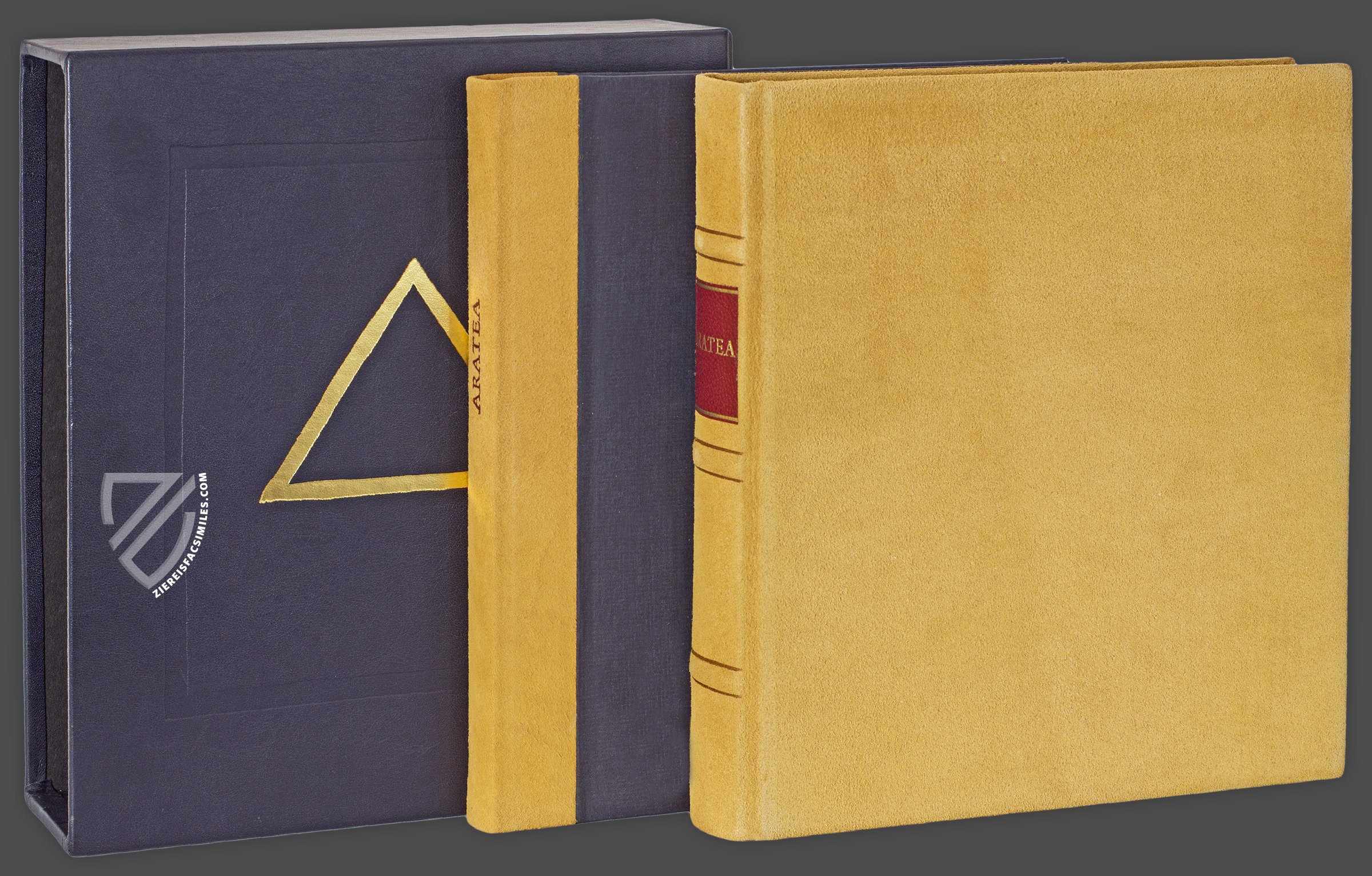

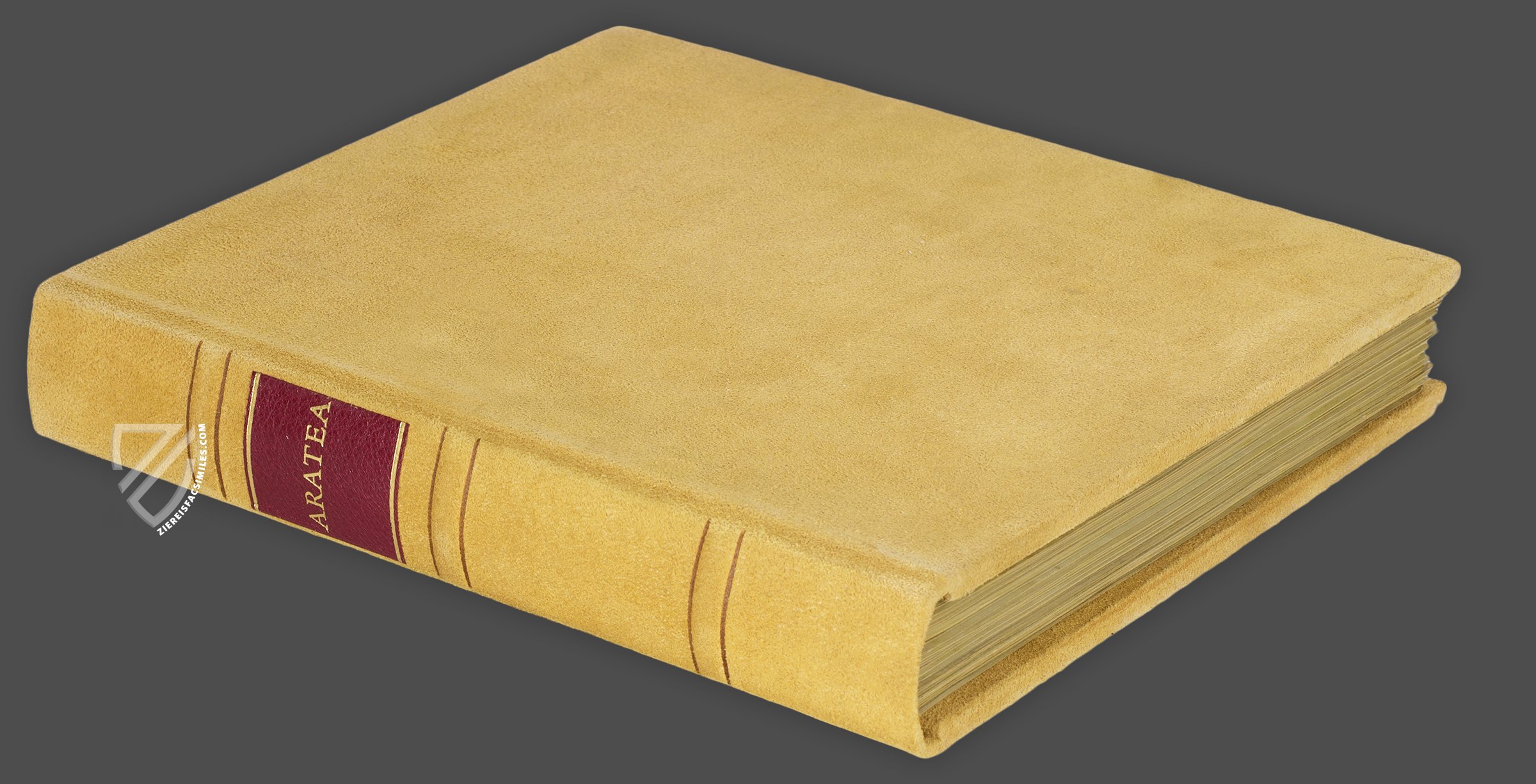

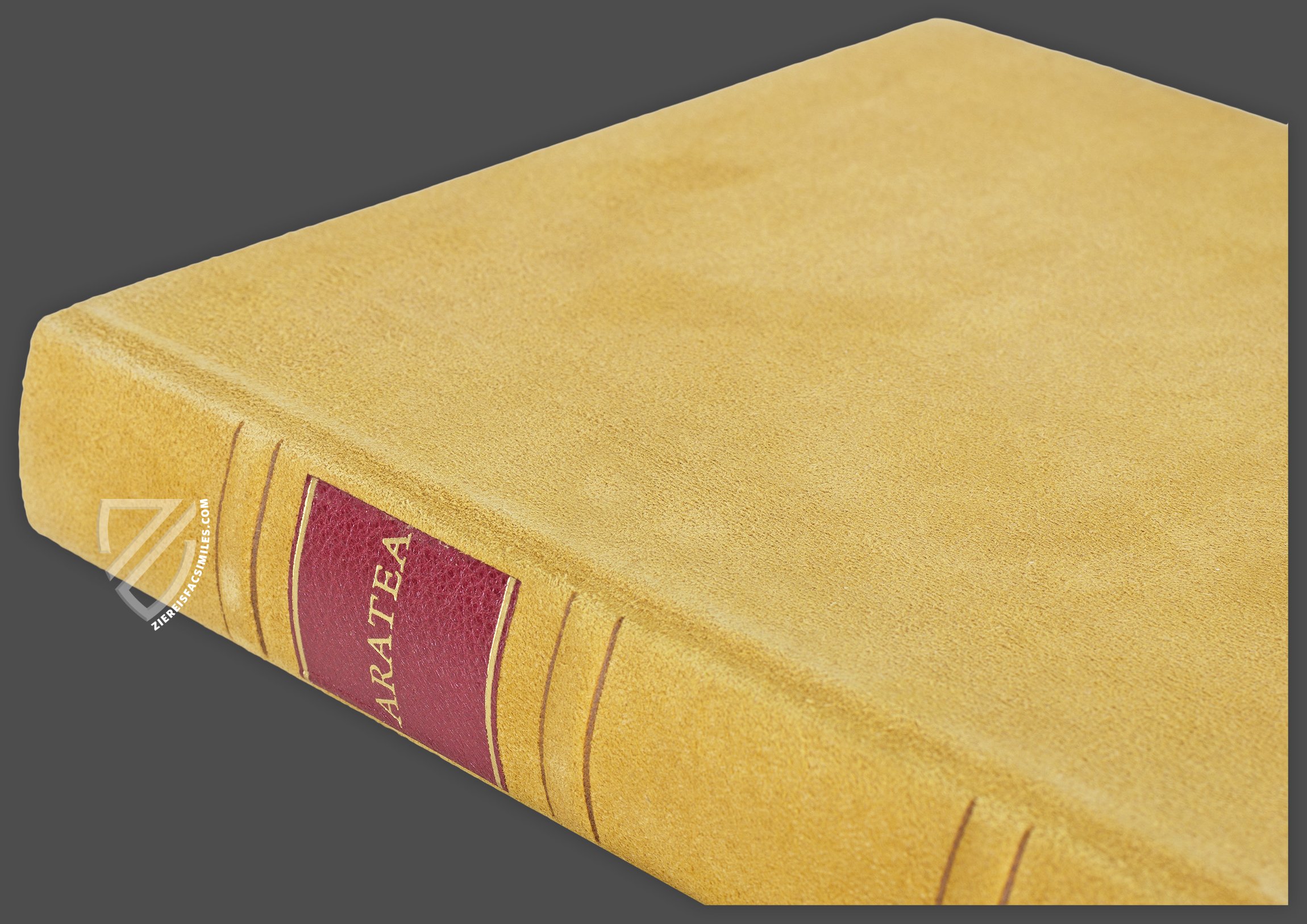
(1,000€ - 3,000€)
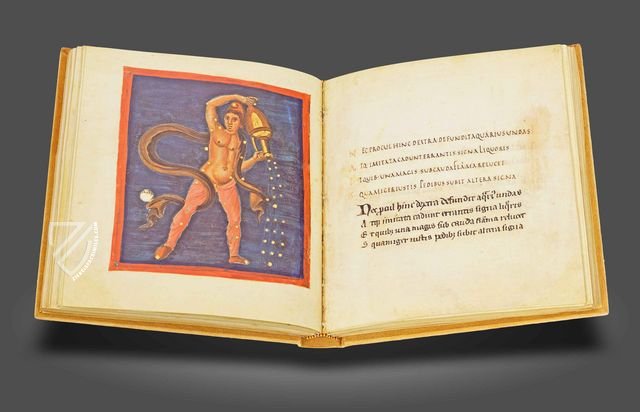
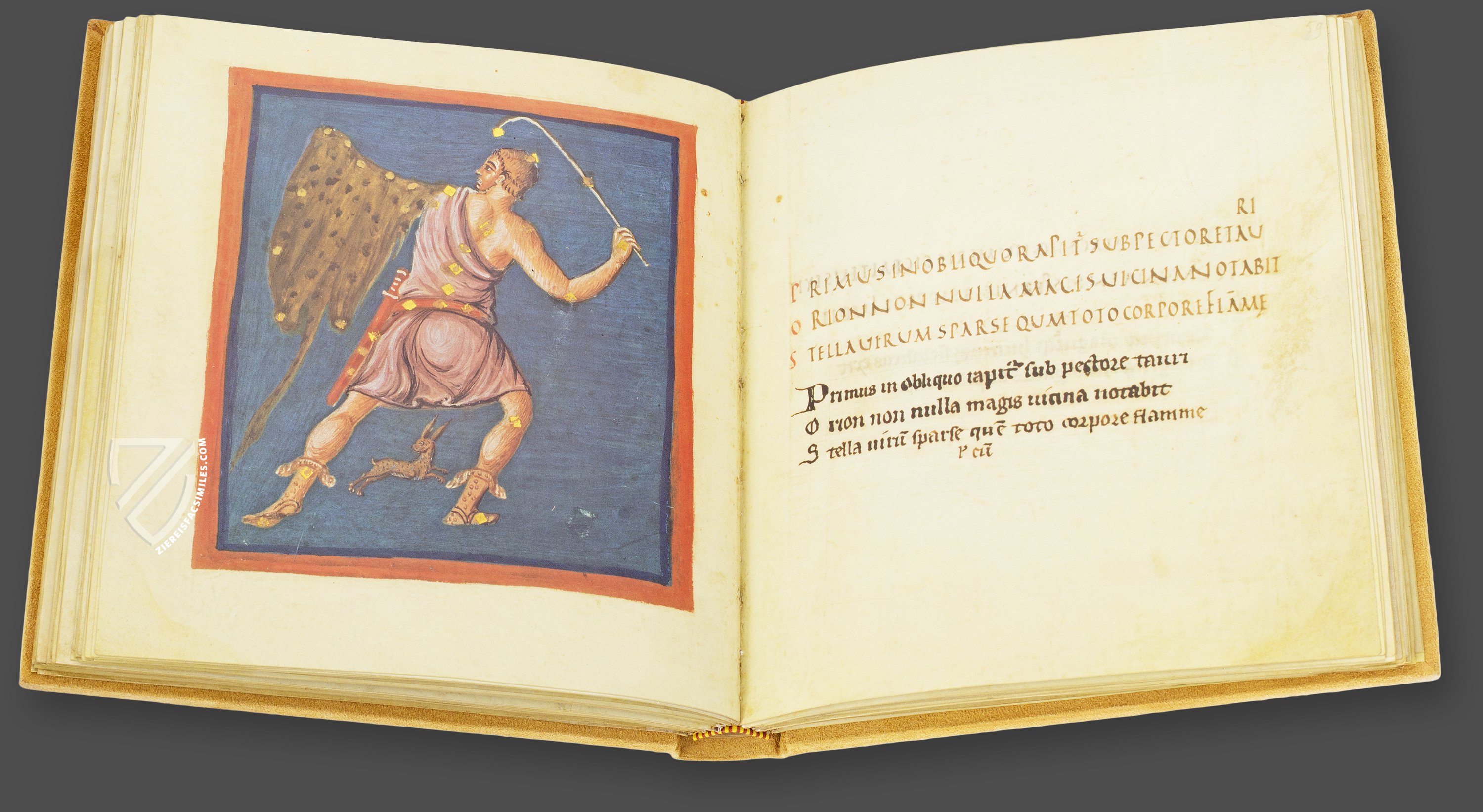
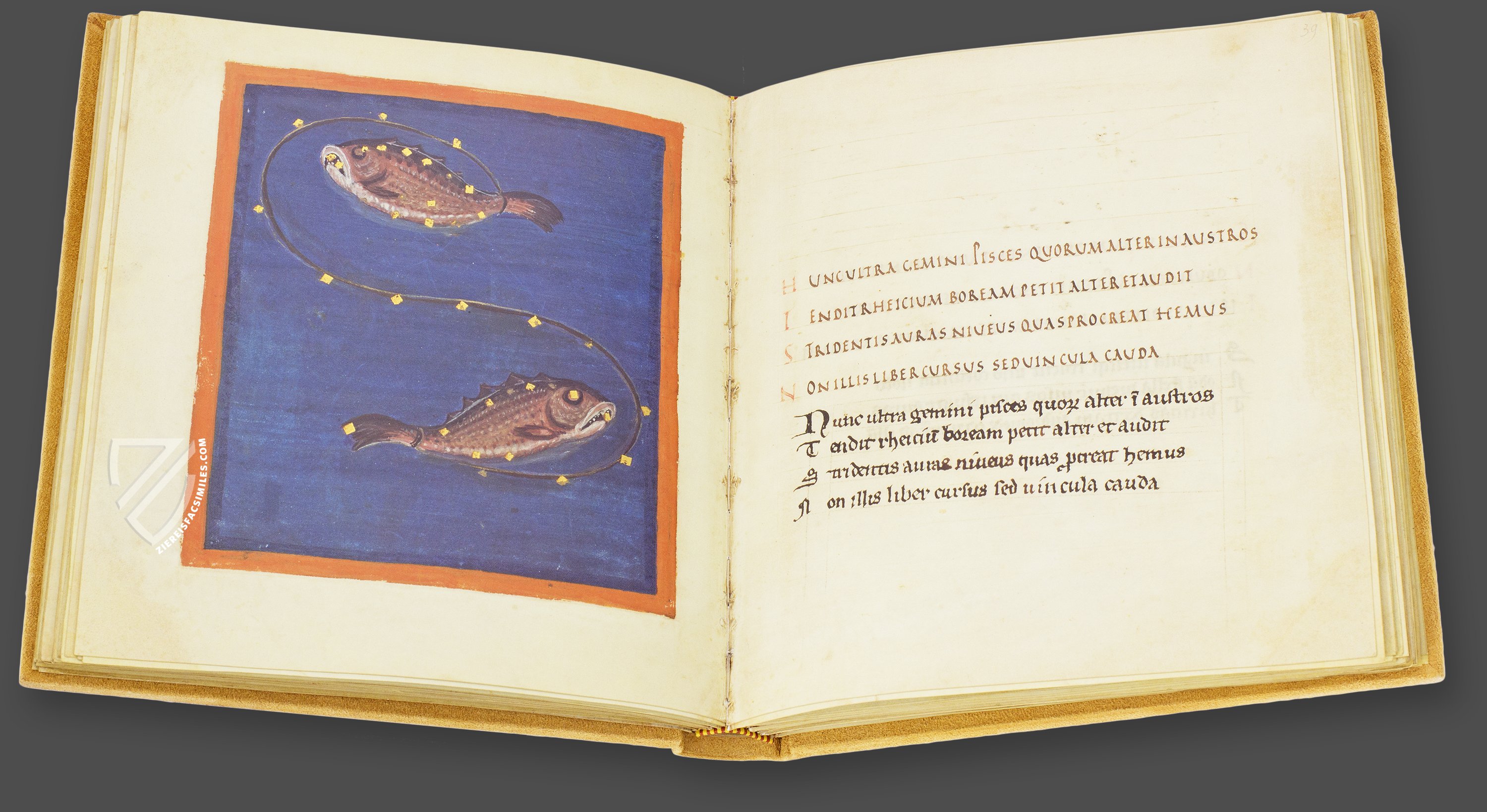
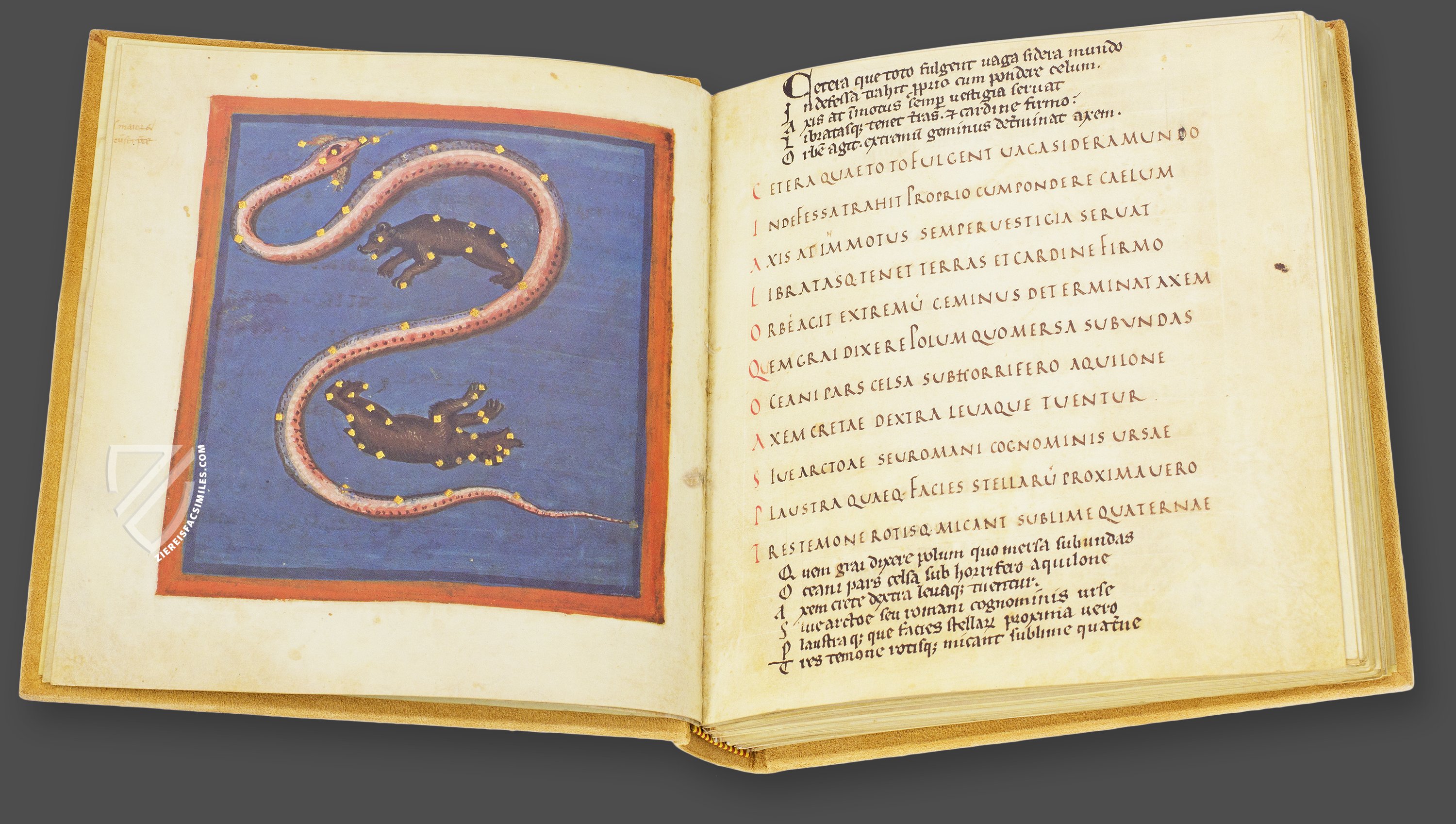
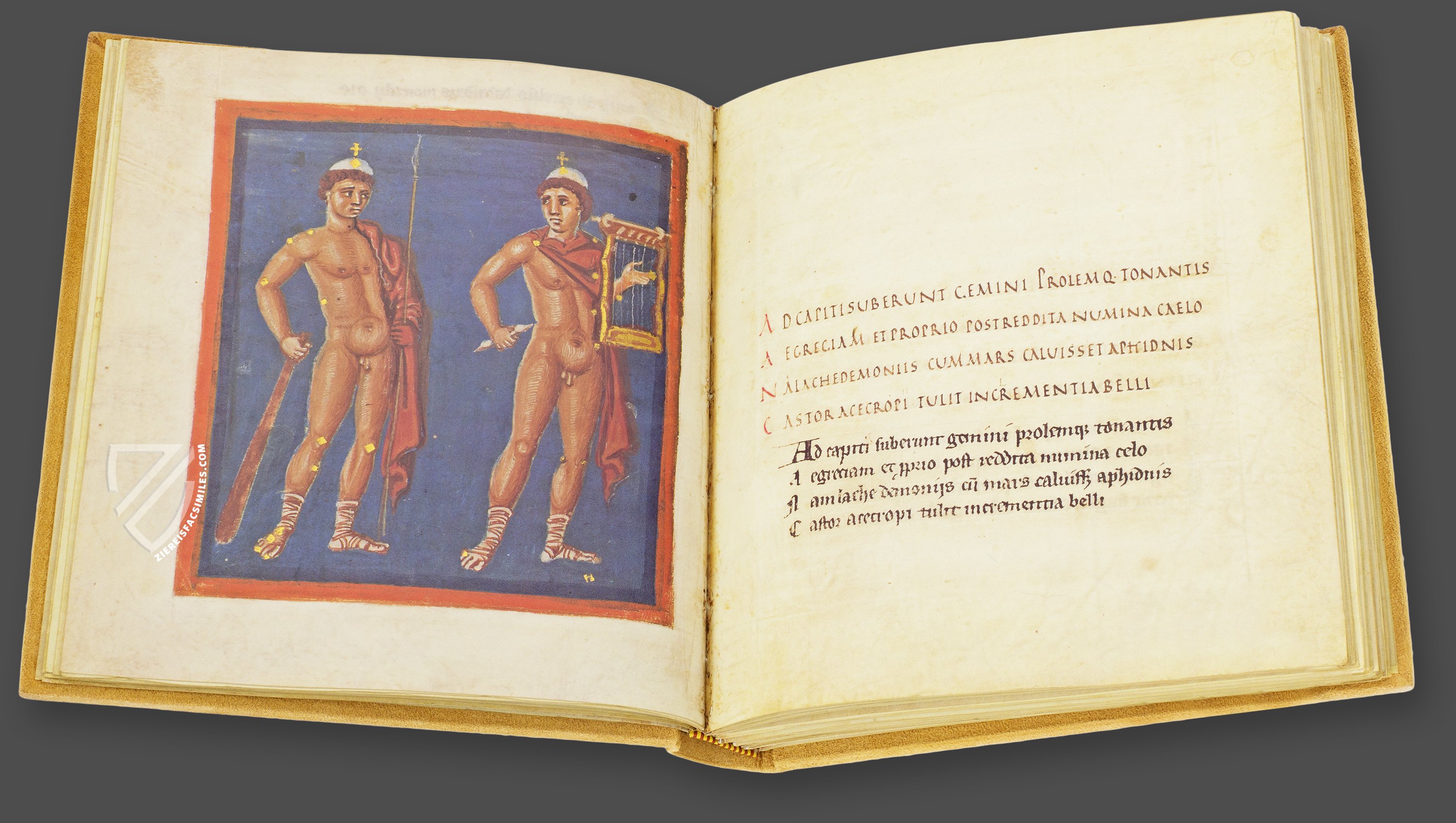
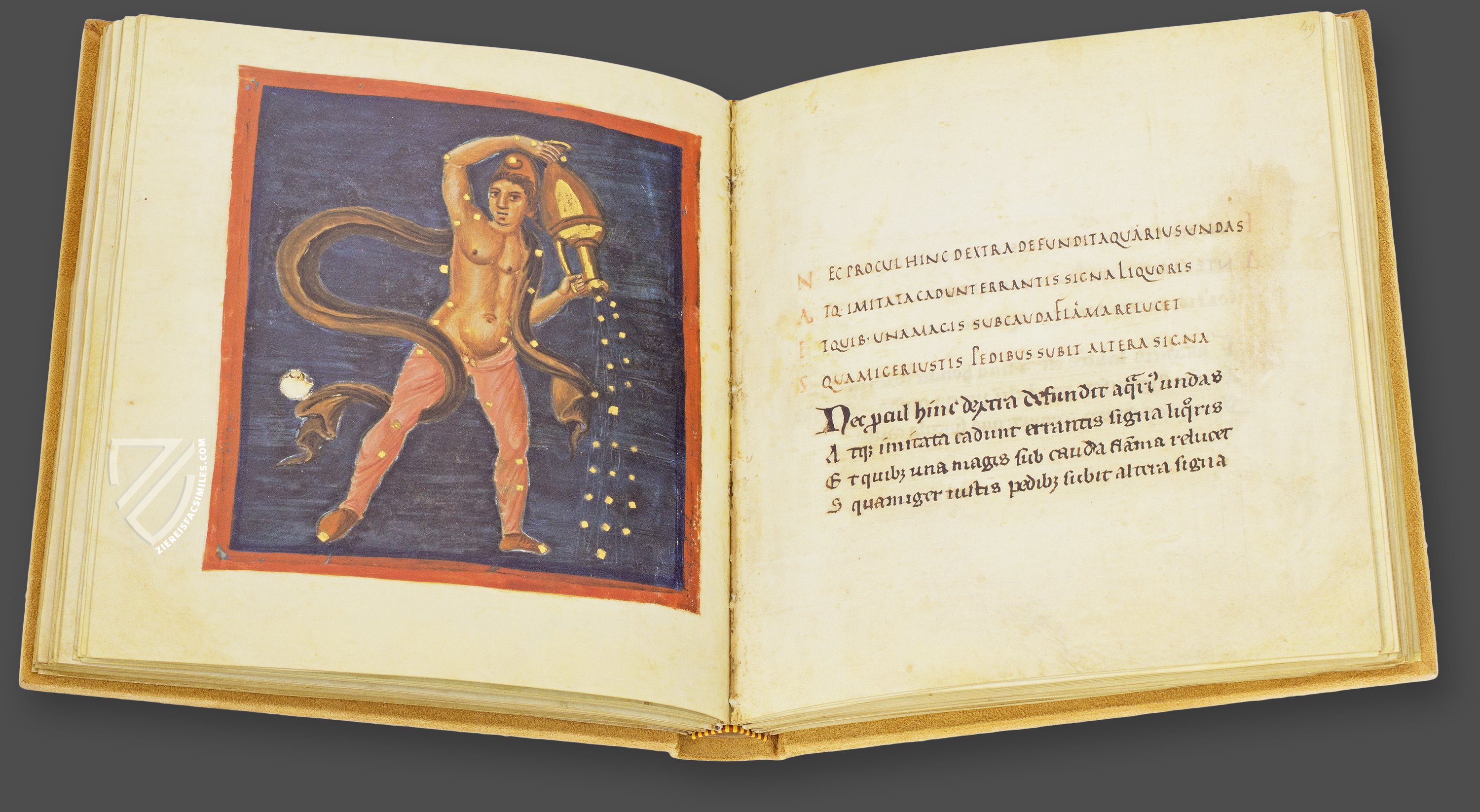
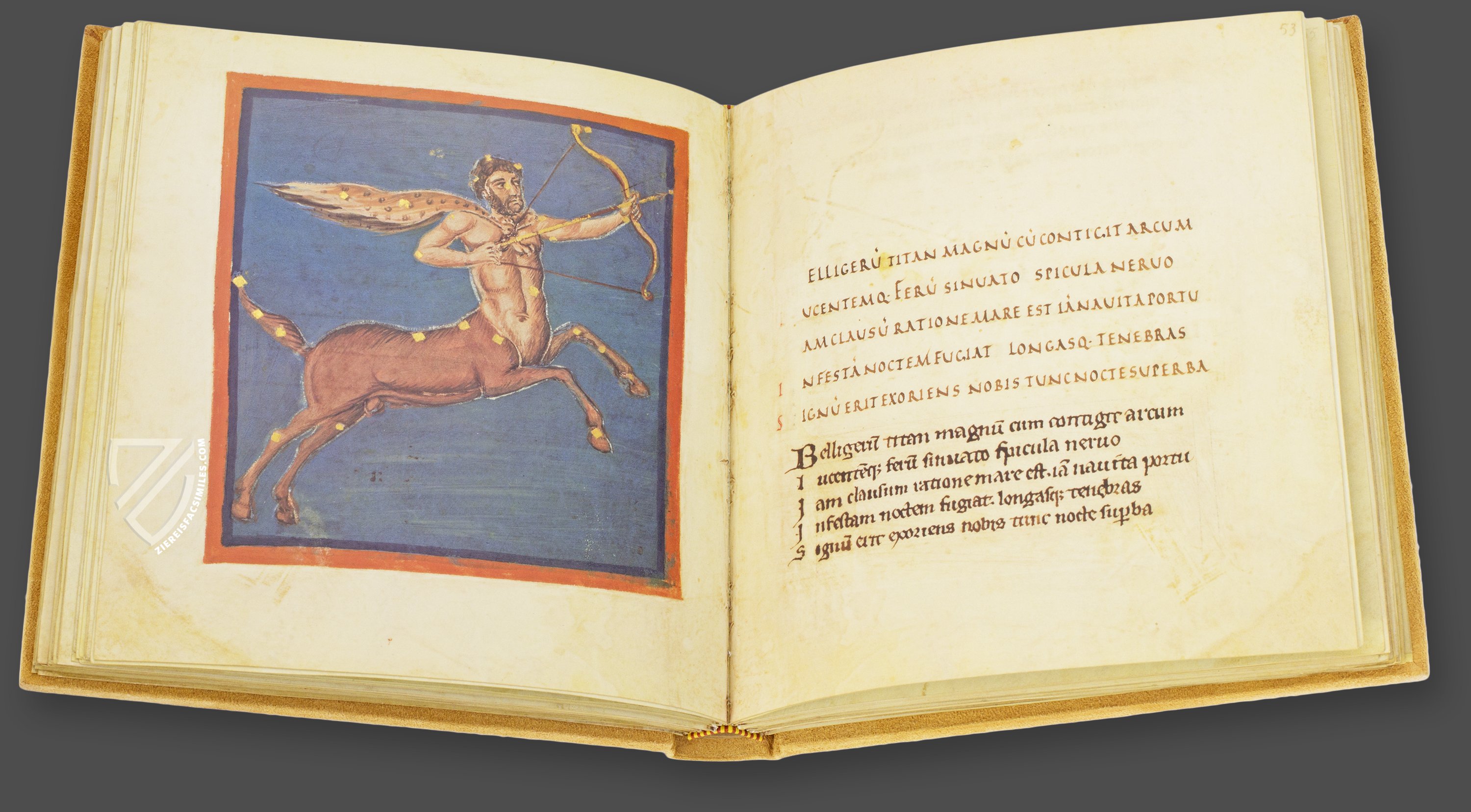
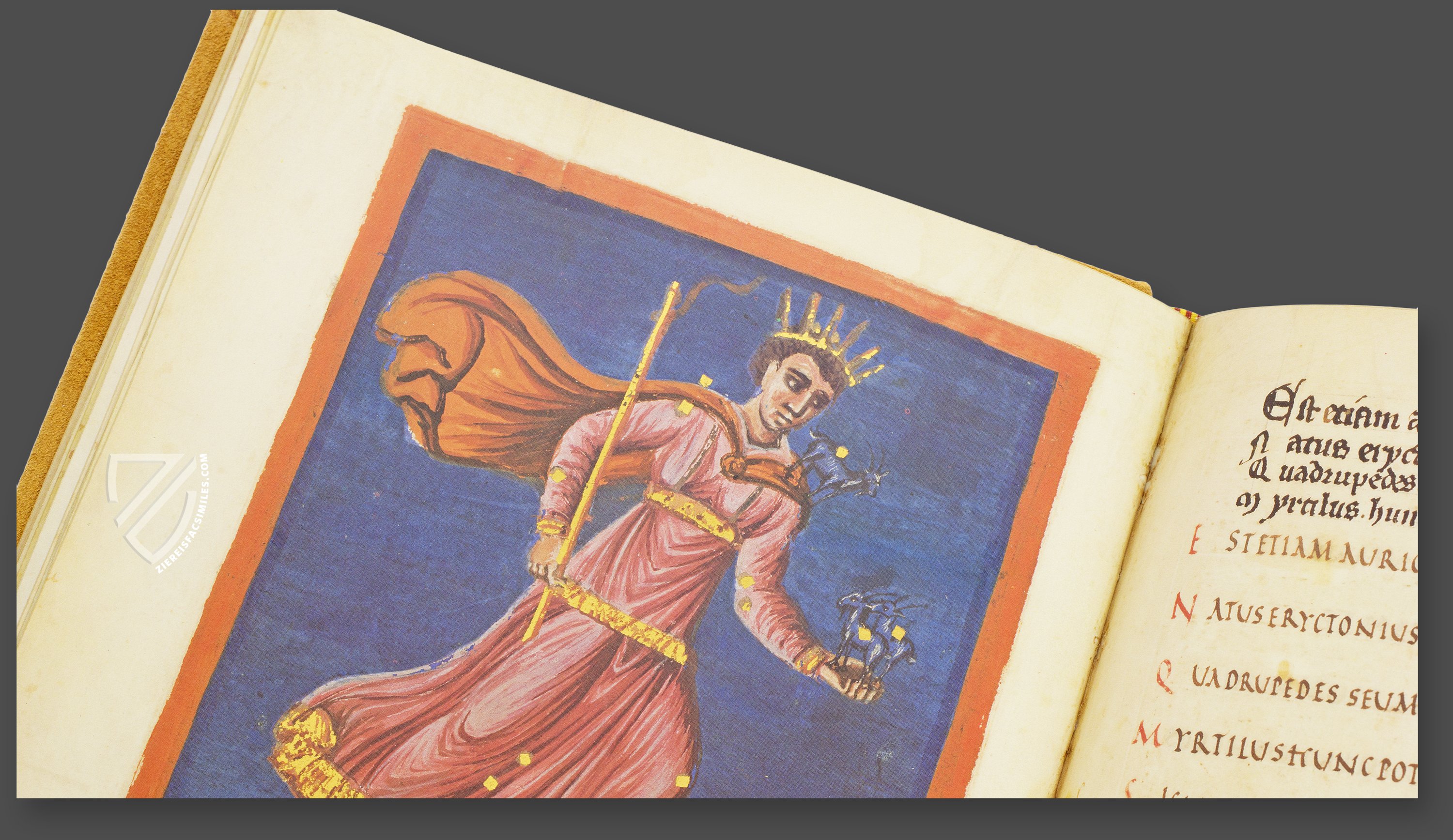
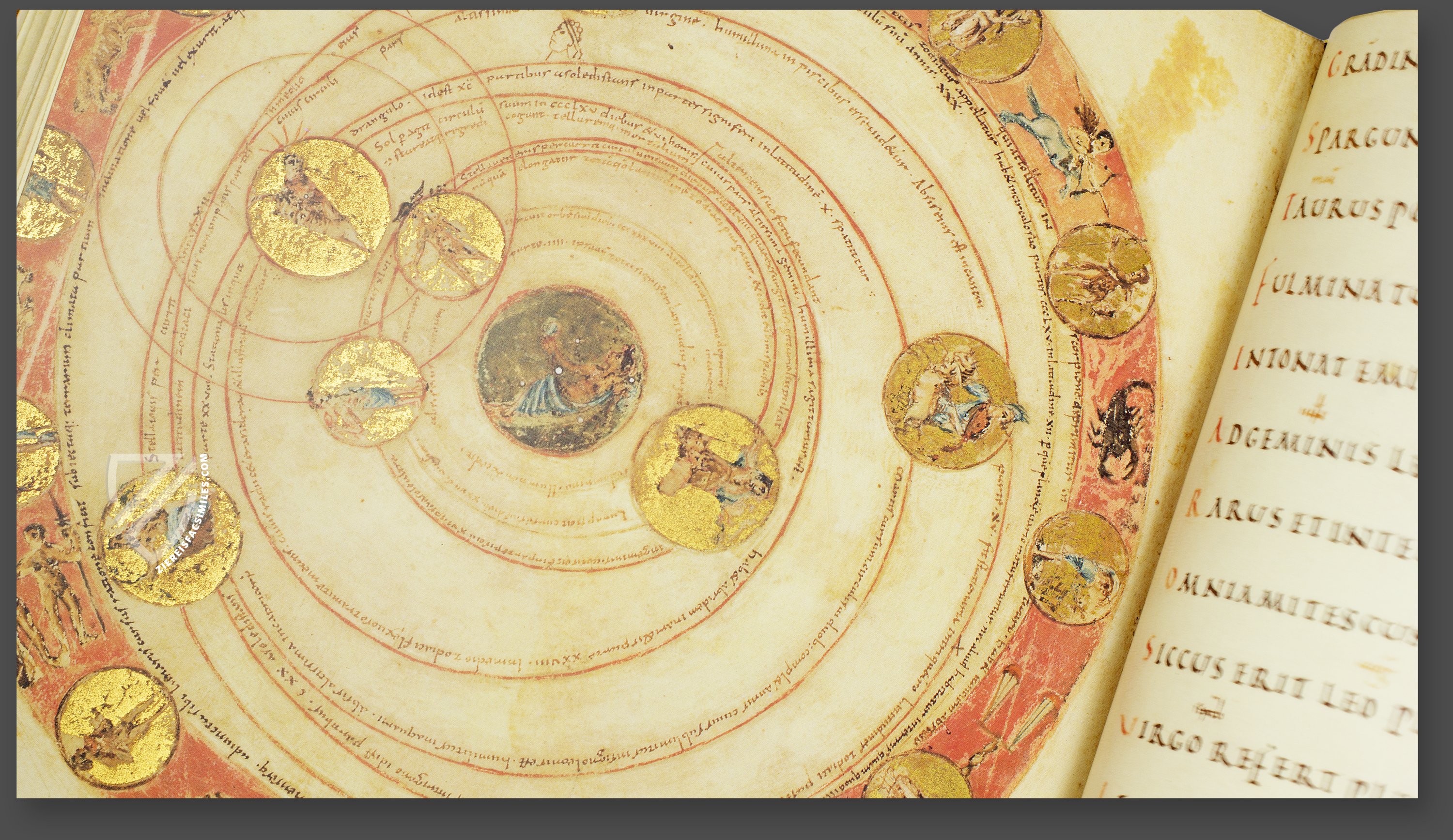
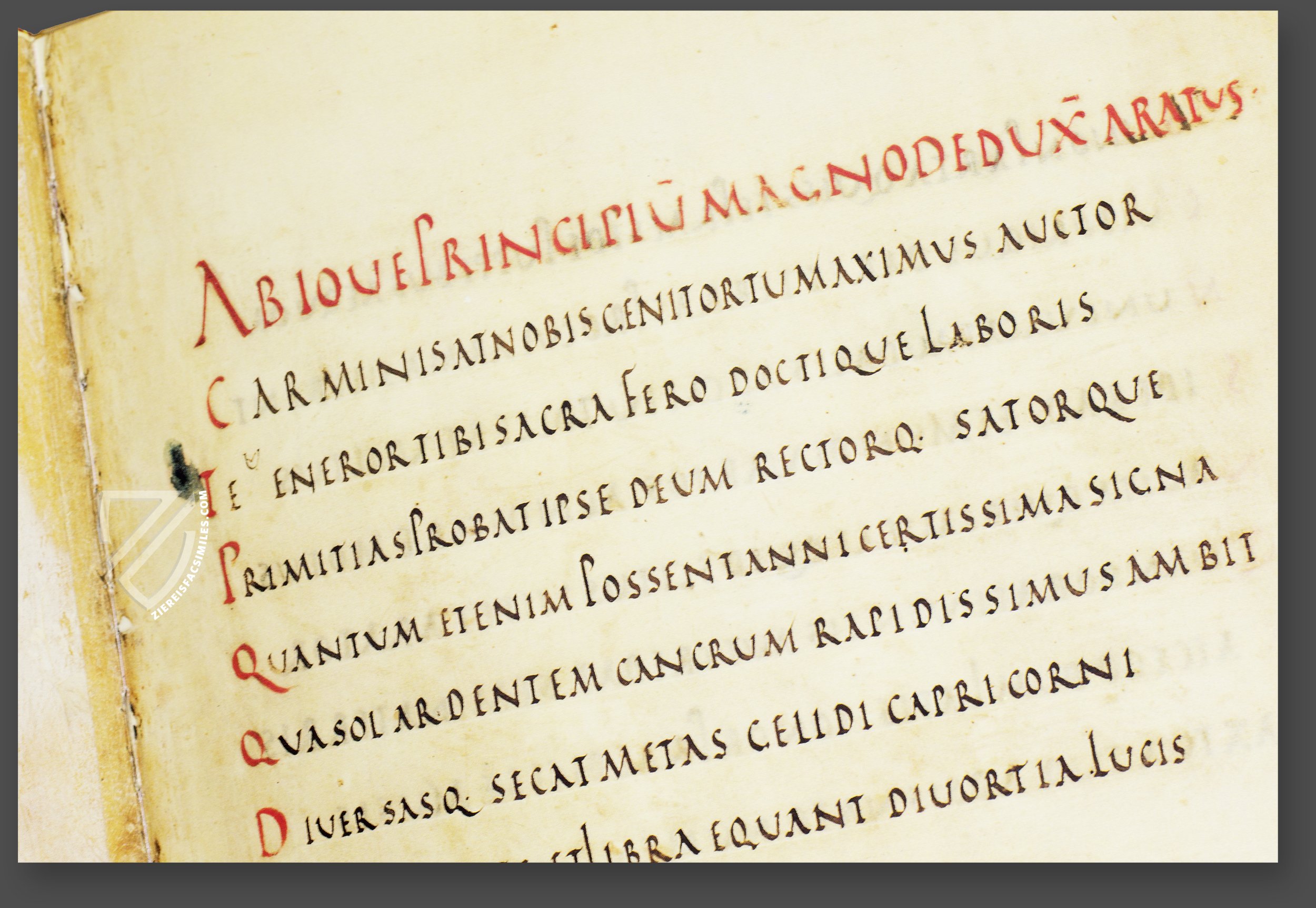
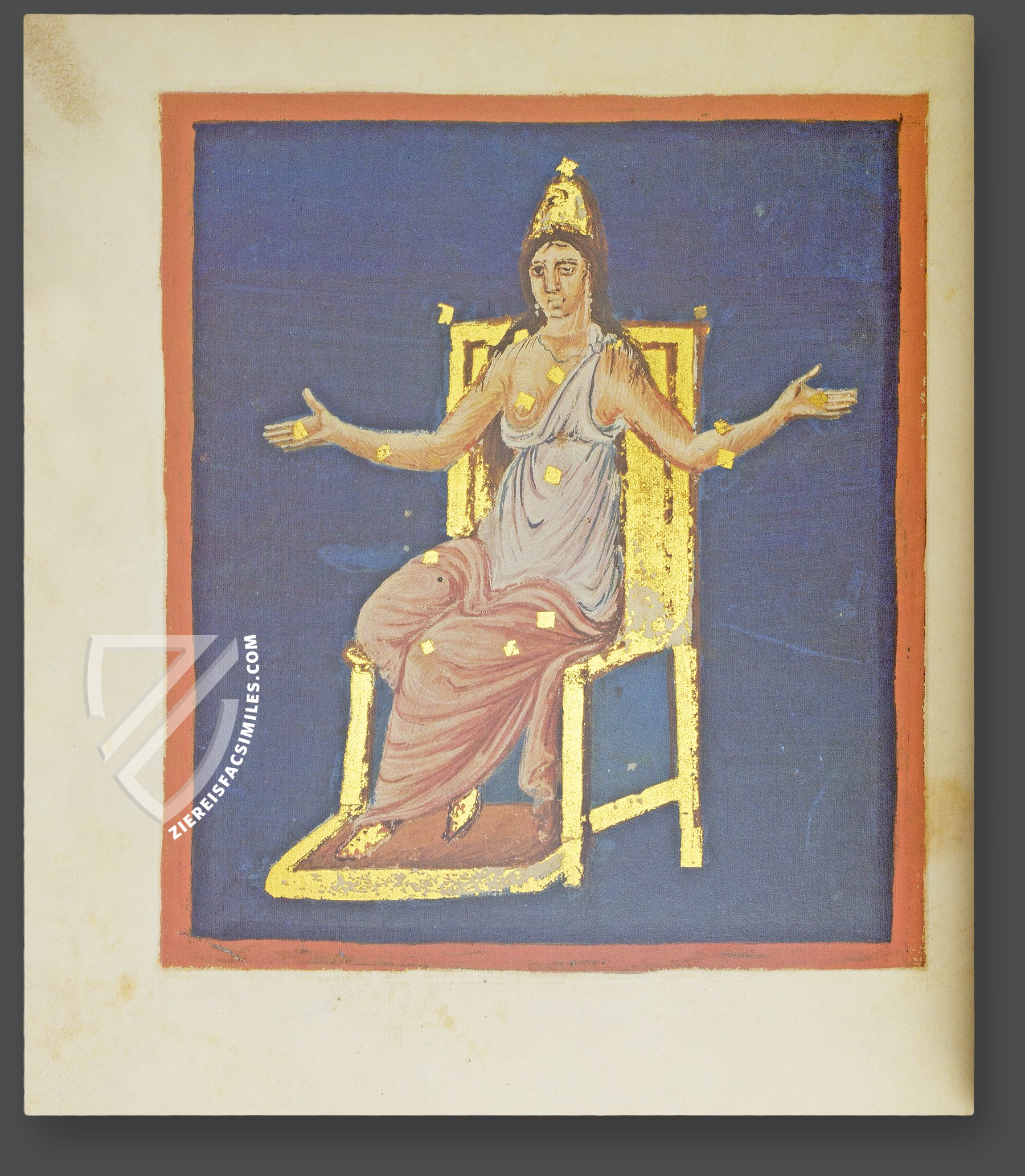
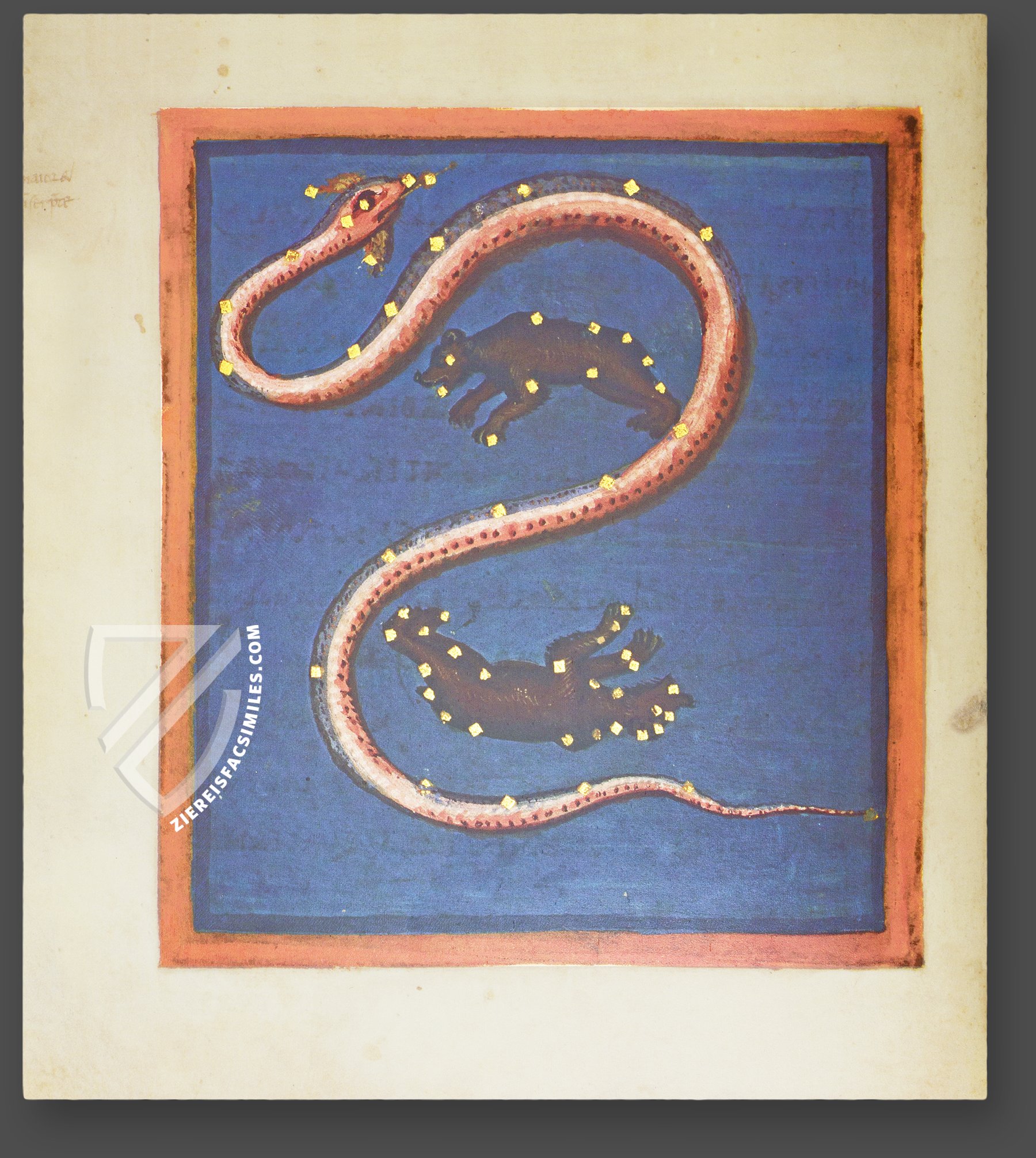
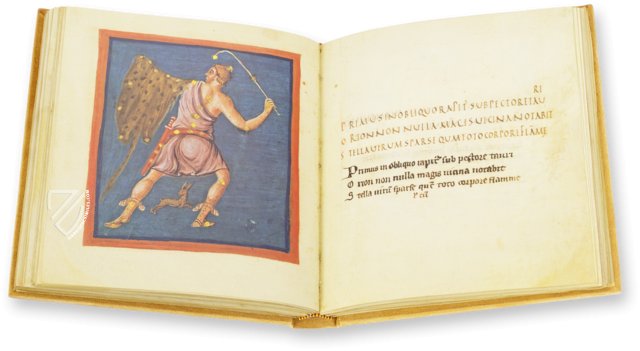
The Aratea is an astronomical textbook, which is oriented on the ancient example of the text Phaenomena by the poet Aratos of Soloi. The work comprises 200 pages with 39 large illustrations, which explain the planets, celestial phenomena, and weather signs. As in the Phaenomena, the figures and forms of ancient Greek mythology serve the author of the Aratea as the foundation of his astronomy. Shimmering gold leaf contrasts with dark blue backgrounds in the miniatures, which are based on ancient models and are of extraordinary quality. The work is a milestone of both miniature painting as well as astronomy and astrology that enjoyed popularity over the centuries, as evidenced by its numerous translations. It was commissioned by Louis the Pious, son and heir of Emperor Charlemagne and a learned patron of the arts and science, most likely as a gift for his wife Judith.
Leiden Aratea
The Leiden Aratea is a treatise on astronomy, oriented toward the ancient example of the text Phaenomena by the poet Aratus of Soli. The work is comprised of 200 pages with 39 large illustrations, which explain the planets, celestial phenomena, and rising of the fixed stars. As in the Phaenomena, the figures and forms of ancient Greek mythology serve the author of the Aratea as the foundation of his astronomy. The work is a milestone of teaching about the stars that enjoyed popularity over the centuries, as evidenced by its numerous translations.
A work with a history
The Aratea originates from the 9th century in the time of Emperor Louis the Pious. It was probably given on behalf of his second wife Judith, who was known as a great patron of the arts. The work was initially translated into Latin by the Roman general Caesar Claudius Germanicus and was copied into Gothic script in the 13th century. At this time the codex resided at the northern French abbey of St. Bertin. The manuscript was acquired in the 16th century by the Belgian humanist Jakob Susius, it later came to the philosopher Hugo Grotius and finally to Queen Christina of Sweden. She gave the text to her librarian Isaac Vossius, who left it in his inheritance to the Leiden University Library, where it remains to this day.
Valuable not only for artistic but also practical applications
The unusually beautiful paintings and text of the Leiden Aratea not only made the manuscript an ornament in the owner’s library, but it also had a practical use. At the end of antiquity and in the early middle ages, the constellations of the night’s sky served people as a sign post, indicating the time of day, the changing of the seasons, and assisted in the prediction of weather. Consequently the manuscript was a practical guidebook for voyagers at sea and also for its readers on land.
A milestone of illumination
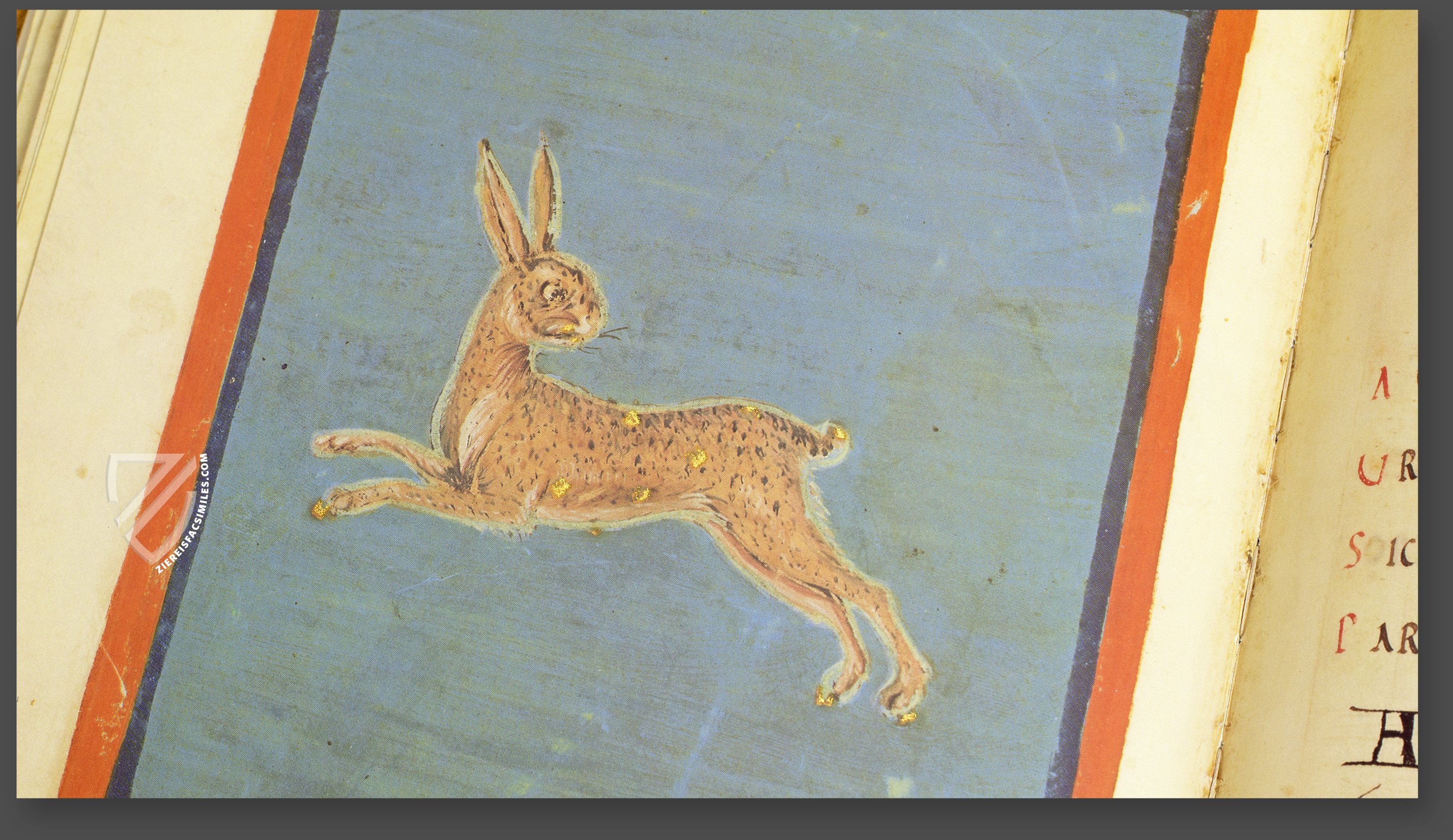
The 39 full-page miniatures, framed in luminous red, were completed by an unusually talented but unfortunately anonymous illuminator. The artist chose a deep dark blue for the background of his illustrations and used the finest gold leaf for his portrayals of the constellations. Every exposure to light can make the stars shine, thus the artist succeeded in creating a true to life copy of a clear night’s sky. The depictions of the animated figures from ancient archetypes are powerful and lively. Few other artists succeeded in their time at achieving such artistic sophistication with so few materials. The text of the Aratea is found on separate pages of the codex, so as not to disrupt the gorgeous paintings. This illumination technique was little short of groundbreaking and was first employed in this manuscript.
Codicology
- Alternative Titles
- Aratea
Leidener Aratea - Size / Format
- 200 pages / 22.5 × 20.0 cm
- Origin
- Germany
- Date
- after 825
- Epochs
- Style
- Genre
- Language
- Illustrations
- 39 full-page miniatures
- Patron
- Louis the Pious (reigned 813/814–840) and his wife Judith (c. 800–843)
- Previous Owners
- Abbey of St. Bertin in St. Omer
Jacob Susius (Ghent)
Hugo Grotius
Queen Christina of Sweden
Isaak Voss
Leiden Aratea
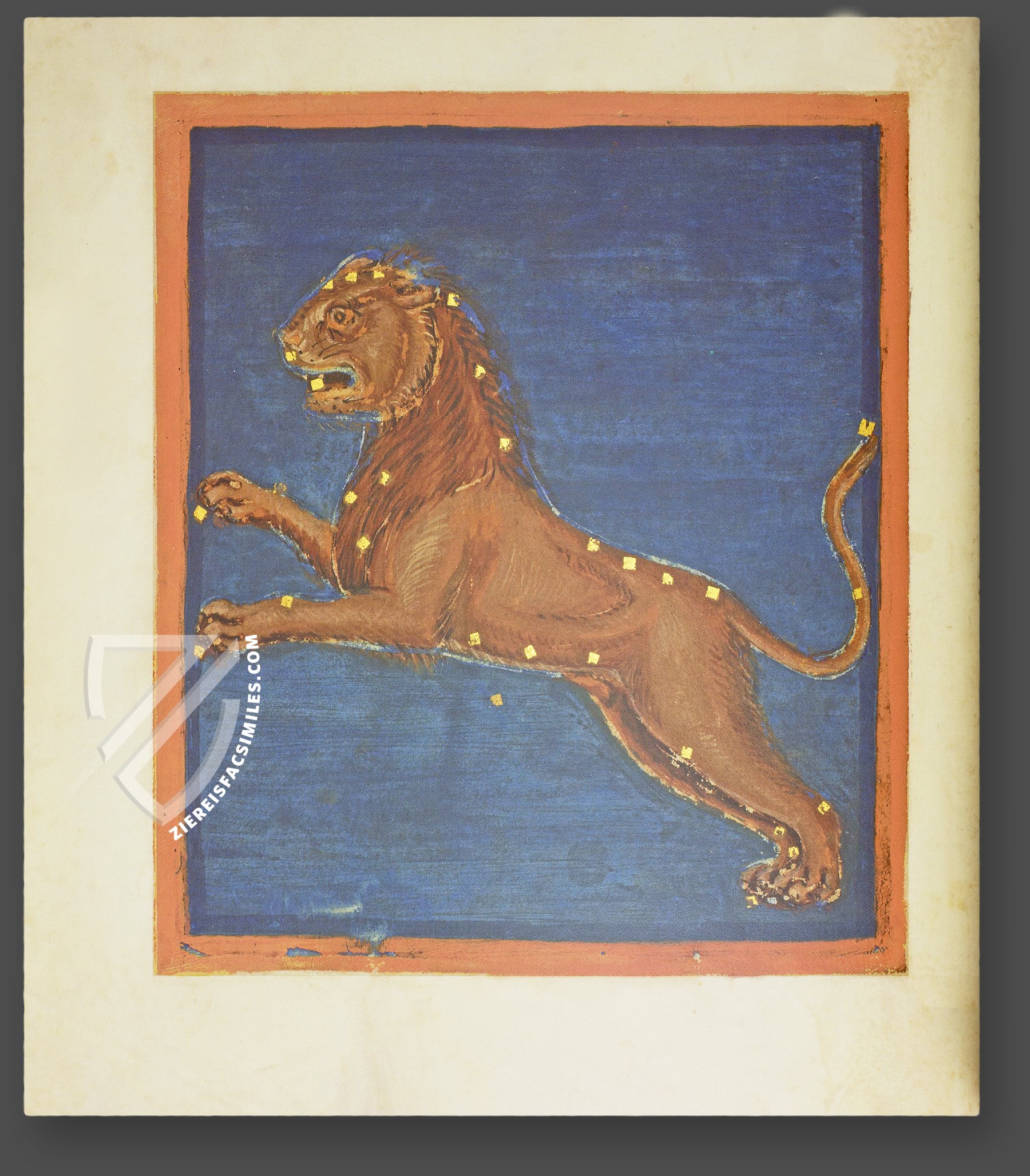
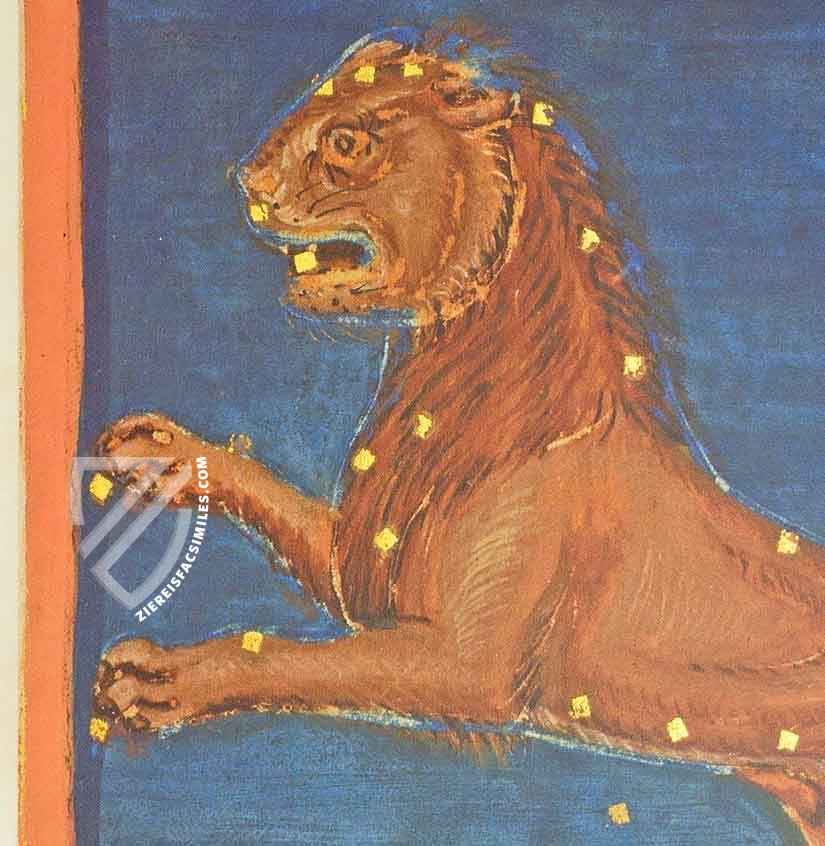
Leo
Although the gold leaf stars do not actually correspond to the constellation Leo, this Carolingian miniature of the zodiac sign is a surprisingly accurate depiction of a male lion. Close examination of the head and torso reveals subtle brushstrokes creating natural body contours and a realistic mane. With claws extended, the paws are depicted with a similar level of detail. The artist must have either been working from some extremely accurate models, or perhaps saw a lion in a menagerie.
Leiden Aratea
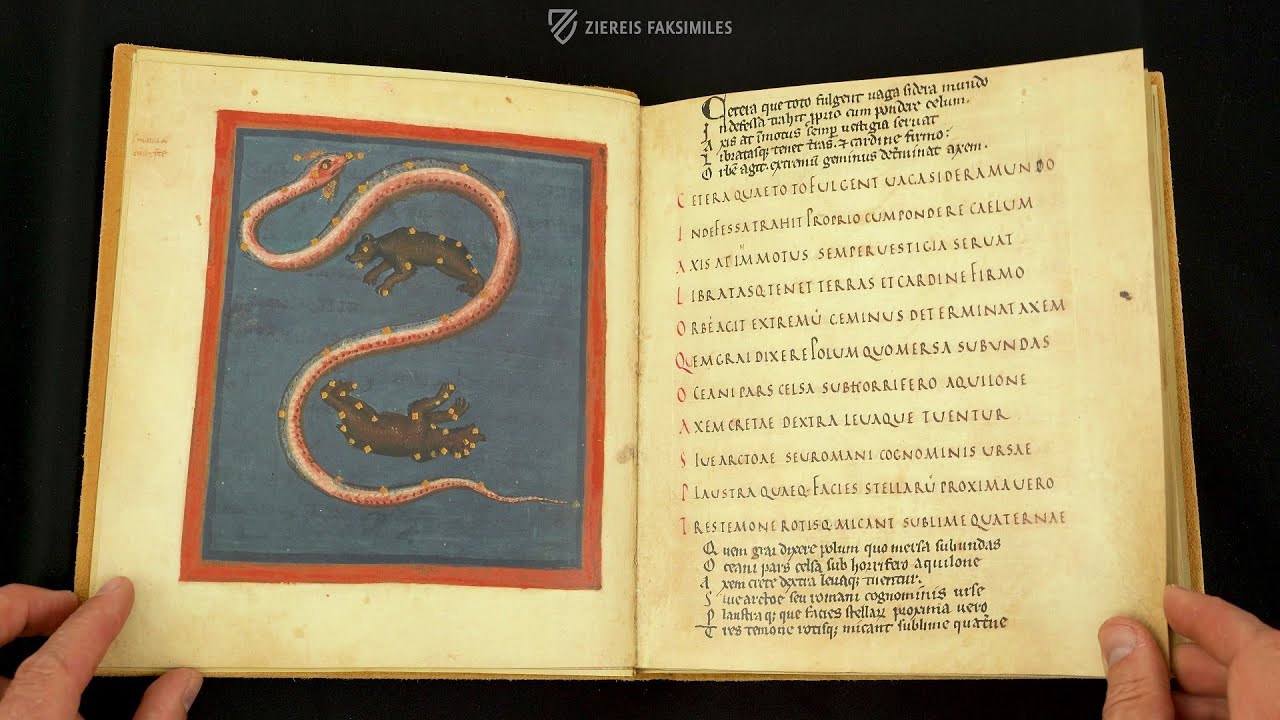
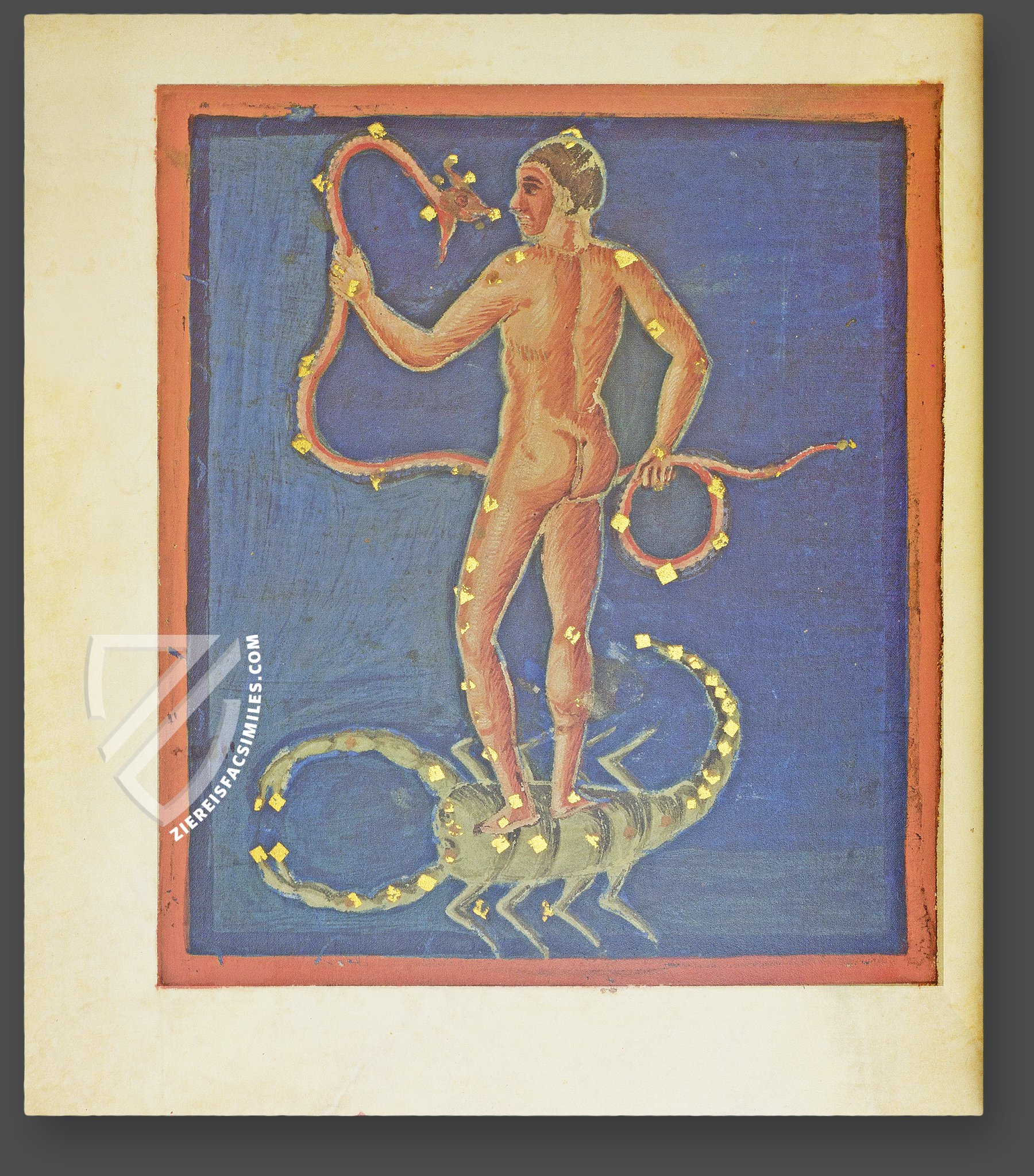
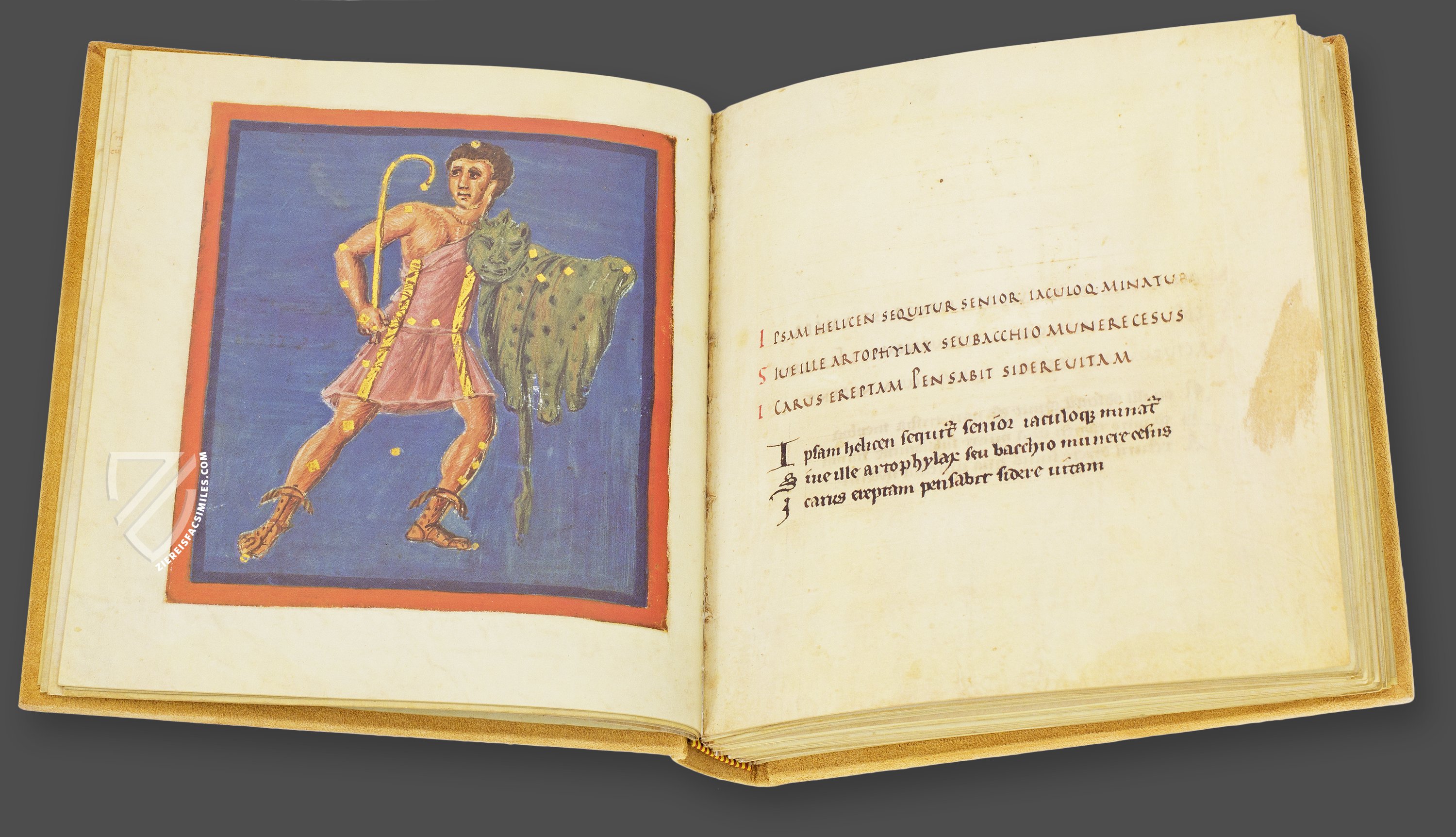
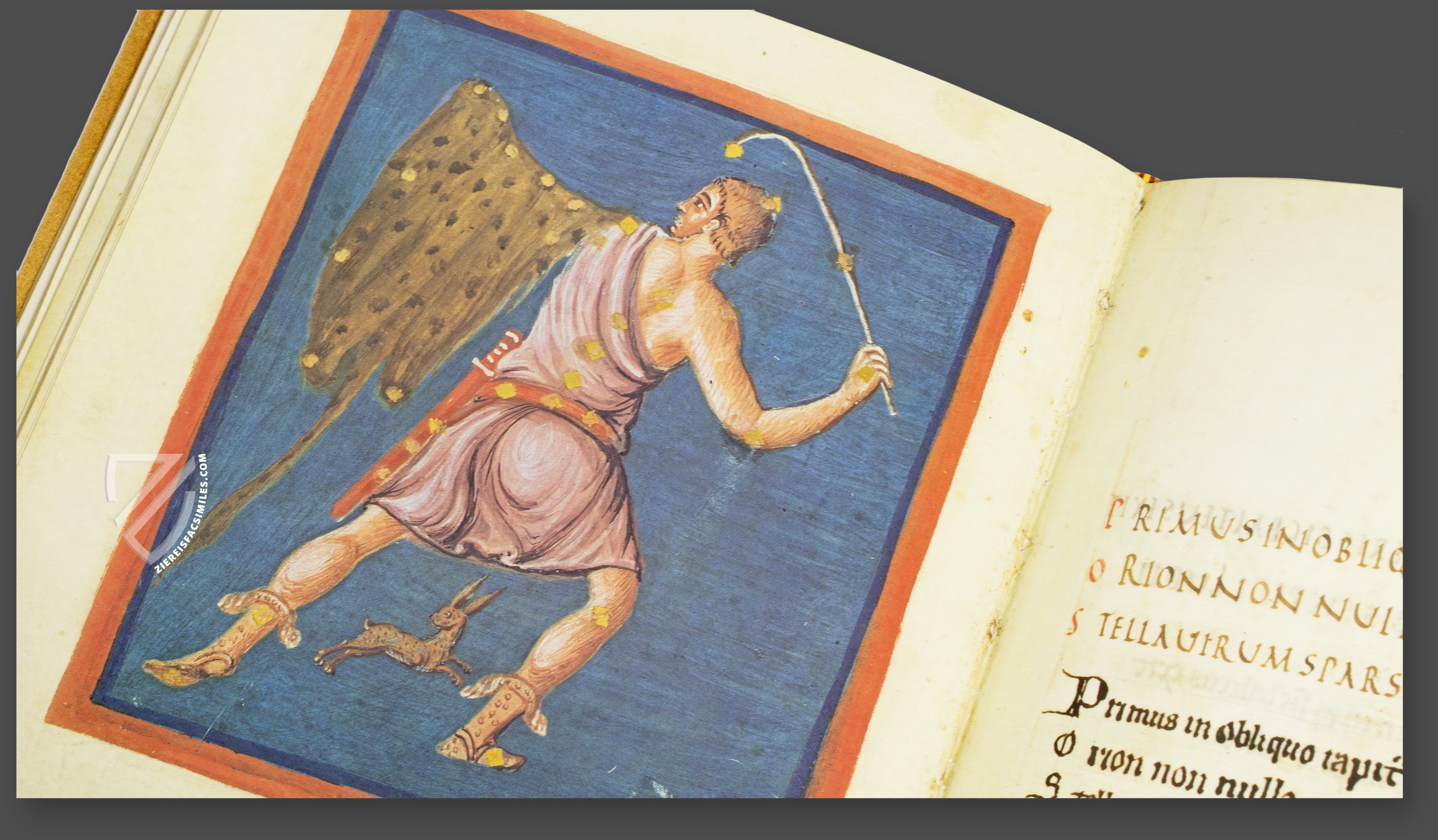
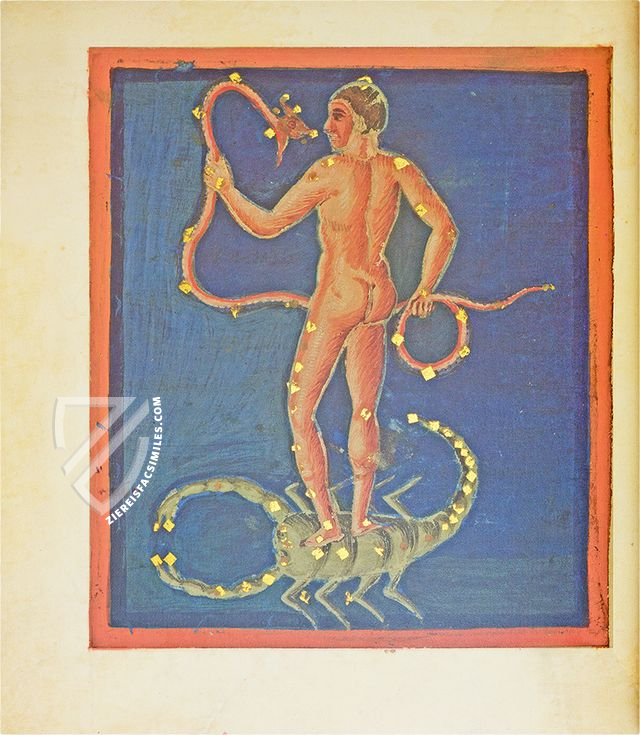
Ophiuchus, Serpens & Scorpius
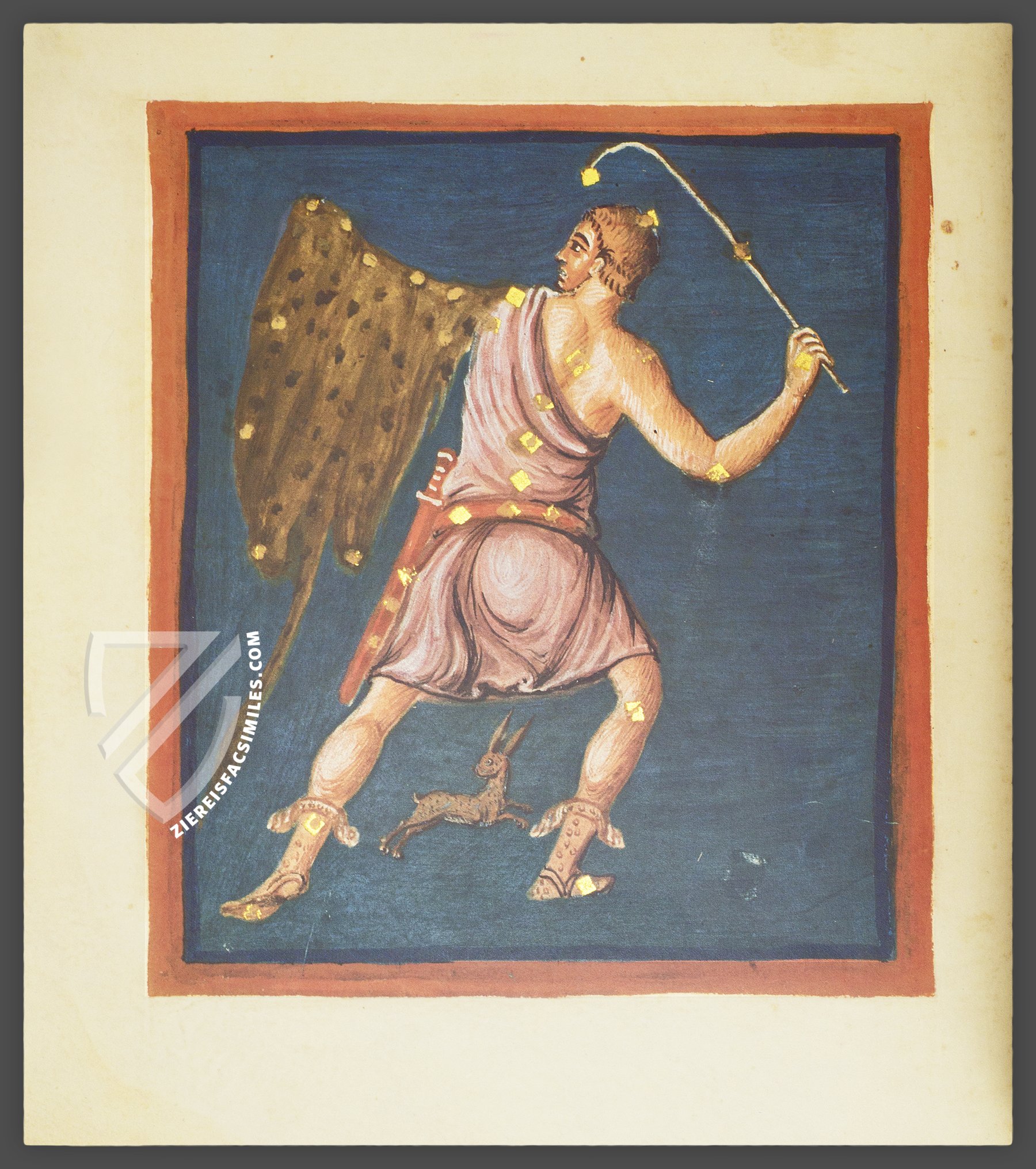
These miniatures appear to be copies of a manuscript from Late Antiquity. They are evidence that the 9th century was not a Dark Age but an epoch that carried on the traditions of antiquity. This is a figural depiction of the Ophiuchus constellation, from the Greek for “snake-bearer”, paired with the Serpens constellation, which represents the snake.
The miniature’s deep blue background allows for the contrast of the red-orange frame and figure as well as the gold leaf, which shows the positions of the individual stars of the two constellations. Standing atop the Scorpio zodiac sign, the male figure is remarkable for its anatomical accuracy with well-developed muscles in the calves, buttocks, and back. Despite its simplicity, it is a mesmerizing image.
#1 Aratea
Language: German
(1,000€ - 3,000€)

- Block Books / Incunables / Post-incunables
- Alchemy
- Apocalypses / Beatus Manuscripts
- Astronomy / Astrology
- Bibles / Gospels
- Picture Bibles / Bibles Moralisées / Mirror of Human Salvation
- Botany
- Chronicles / History / Letters
- Cookbook / Recipes
- Diaries / Biographies / Autograph Books
- Encyclopedias
- Fashion / Costume Books
- Games / Game Theory
- Geography / Cartography / Navigation
- Graduals / Antiphonaries / Exultet Roll
- Haggadot
- Hunting Books
- Law / Deeds / Rules
- Leonardo da Vinci
- Literature / Poetry
- Medicine
- Missals / Lectionaries / Sacramentaries
- Model Books / Sketchbooks / Notebooks
- Music
- Mythology
- Natural History / Bestiaries
- Other Liturgical Manuscripts
- Other Religious Works
- Other Secular Works
- Paintings / Graphics
- Primers / Textbooks
- Private Devotion Books
- Prophecies / Divination
- Psalters
- Quran
- Saints' Lives
- Sermons / Homilies
- Single Leaf Collections
- Song Books
- Tanakh
- Tournament Books / Armorials / Genealogy
- Travelogues / Travel Guides
- Treatises
- Afghanistan
- Algeria
- Armenia
- Austria
- Azerbaijan
- Belgium
- Belize
- Bosnia and Herzegovina
- China
- Colombia
- Costa Rica
- Croatia
- Cyprus
- Czech Republic
- Denmark
- Egypt
- El Salvador
- Ethiopia
- France
- Germany
- Greece
- Guatemala
- Honduras
- Hungary
- India
- Iran
- Iraq
- Israel
- Italy
- Japan
- Jordan
- Kazakhstan
- Kyrgyzstan
- Lebanon
- Libya
- Liechtenstein
- Luxembourg
- Mexico
- Morocco
- Netherlands
- Palestine
- Panama
- Peru
- Poland
- Portugal
- Romania
- Russia
- Serbia
- Slovakia
- Spain
- Sri Lanka
- Sweden
- Switzerland
- Syria
- Tajikistan
- Tunisia
- Turkey
- Turkmenistan
- Ukraine
- United Kingdom
- United States
- Uzbekistan
- Vatican City
- A. Oosthoek, van Holkema & Warendorf
- Aboca Museum
- Ajuntament de Valencia
- Akademie Verlag
- Akademische Druck- u. Verlagsanstalt (ADEVA)
- Aldo Ausilio Editore - Bottega d’Erasmo
- Alecto Historical Editions
- Alkuin Verlag
- Almqvist & Wiksell
- Amilcare Pizzi
- Andreas & Andreas Verlagsbuchhandlung
- Archa 90
- Archiv Verlag
- Archivi Edizioni
- Arnold Verlag
- ARS
- Ars Magna
- Ars Millenii
- Art Market
- ArtCodex
- AyN Ediciones
- Azimuth Editions
- Badenia Verlag
- Bärenreiter-Verlag
- Belser Verlag
- Belser Verlag / WK Wertkontor
- Benziger Verlag
- Bernardinum Wydawnictwo
- BiblioGemma
- Biblioteca Apostolica Vaticana (Vaticanstadt, Vaticanstadt)
- Bibliotheca Palatina Faksimile Verlag
- Bibliotheca Rara
- Boydell & Brewer
- Bramante Edizioni
- Bredius Genootschap
- Brepols Publishers
- British Library
- Brokarte
- C. Weckesser
- Caixa Catalunya
- Canesi
- CAPSA, Ars Scriptoria
- Caratzas Brothers, Publishers
- Carus Verlag
- Casamassima Libri
- Centrum Cartographie Verlag GmbH
- Chavane Verlag
- Christian Brandstätter Verlag
- Circulo Cientifico
- Club Bibliófilo Versol
- Club du Livre
- Club Internacional del Libro
- CM Editores
- Collegium Graphicum
- Collezione Apocrifa Da Vinci
- Comissão Nacional para as Comemorações dos Descobrimentos Portugueses
- Coron Verlag
- Corvina
- CTHS
- D. S. Brewer
- Damon
- De Agostini/UTET
- De Nederlandsche Boekhandel
- De Schutter
- Deuschle & Stemmle
- Deutscher Verlag für Kunstwissenschaft
- DIAMM
- Dropmore Press
- Droz
- E. Schreiber Graphische Kunstanstalten
- Ediciones Boreal
- Ediciones Grial
- Ediclube
- Edições Inapa
- Edilan
- Editalia
- Edition Deuschle
- Edition Georg Popp
- Edition Leipzig
- Edition Libri Illustri
- Editiones Reales Sitios S. L.
- Éditions de l'Oiseau Lyre
- Editions Medicina Rara
- Editorial Base
- Editorial Casariego
- Editorial Mintzoa
- Editrice Antenore
- Editrice Velar
- Edizioni Edison
- Egeria, S.L.
- Eikon Editores
- Electa
- Emery Walker Limited
- Enciclopèdia Catalana
- Eos-Verlag
- Ephesus Publishing
- Ernst Battenberg
- Eugrammia Press
- Extraordinary Editions
- Fackelverlag
- Facsimila Art & Edition
- Facsimile Editions Ltd.
- Facsimilia Art & Edition Ebert KG
- Faksimile Verlag
- Feuermann Verlag
- Folger Shakespeare Library
- Franco Cosimo Panini Editore
- Friedrich Wittig Verlag
- Fundación Hullera Vasco-Leonesa
- G. Braziller
- Gabriele Mazzotta Editore
- Gebr. Mann Verlag
- Gesellschaft für graphische Industrie
- Getty Research Institute
- Giovanni Domenico de Rossi
- Giunti Editore
- Goldenmark Librarium
- Graffiti
- Grafica European Center of Fine Arts
- Guido Pressler
- Guillermo Blazquez
- Gustav Kiepenheuer
- H. N. Abrams
- Harrassowitz
- Harvard University Press
- Helikon
- Hendrickson Publishers
- Henning Oppermann
- Herder Verlag
- Hes & De Graaf Publishers
- Hoepli
- Holbein-Verlag
- Houghton Library
- Hugo Schmidt Verlag
- Hungarian Academy of Sciences
- Idion Verlag
- Il Bulino, edizioni d'arte
- ILte
- Imago
- In Officina Danesi
- Insel Verlag
- Instituto de Estudios Altoaragoneses
- Instituto Nacional de Antropología e Historia
- Introligatornia Budnik Jerzy
- Istituto dell'Enciclopedia Italiana - Treccani
- Istituto Ellenico di Studi Bizantini e Postbizantini
- Istituto Geografico De Agostini
- Istituto Poligrafico e Zecca dello Stato
- Italarte Art Establishments
- Jaca Book
- Jan Thorbecke Verlag
- Johnson Reprint Corporation
- Johnson Reprint Corporation
- Jos. Baer
- Josef Stocker
- Josef Stocker-Schmid
- Jugoslavija
- Karl W. Hiersemann
- Kasper Straube
- Kaydeda Ediciones
- Kindler Verlag / Coron Verlag
- Kodansha International Ltd.
- Konrad Kölbl Verlag
- Kurt Wolff Verlag
- La Liberia dello Stato
- La Linea Editrice
- La Meta Editore
- Lambert Schneider
- Landeskreditbank Baden-Württemberg
- Leo S. Olschki
- Les Incunables
- Liber Artis
- Library of Congress
- Libreria Musicale Italiana
- Lichtdruck
- Lito Immagine Editore
- Lumen Artis
- Lund Humphries
- M. Moleiro Editor
- Maison des Sciences de l'homme et de la société de Poitiers
- Manuscriptum
- Martinus Nijhoff
- Maruzen-Yushodo Co. Ltd.
- MASA
- Massada Publishers
- McGraw-Hill
- Metropolitan Museum of Art
- Militos
- Millennium Liber
- Müller & Schindler
- Nahar - Stavit
- Nahar and Steimatzky
- National Library of Wales
- Neri Pozza
- Nova Charta
- Oceanum Verlag
- Odeon
- Omnia Arte
- Orbis Mediaevalis
- Orbis Pictus
- Österreichische Staatsdruckerei
- Oxford University Press
- Pageant Books
- Parzellers Buchverlag
- Patrimonio Ediciones
- Pattloch Verlag
- PIAF
- Plon-Nourrit et cie
- Poligrafiche Bolis
- Presses Universitaires de Strasbourg
- Prestel Verlag
- Princeton University Press
- Prisma Verlag
- Priuli & Verlucca, editori
- Pro Sport Verlag
- Propyläen Verlag
- Pytheas Books
- Quaternio Verlag Luzern
- Reales Sitios
- Recht-Verlag
- Reichert Verlag
- Reichsdruckerei
- Reprint Verlag
- Riehn & Reusch
- Rizzoli
- Roberto Vattori Editore
- Rosenkilde and Bagger
- Roto-Sadag
- Roxburghe Club
- Salerno Editrice
- Saltellus Press
- Sandoz
- Sarajevo Svjetlost
- Schöck ArtPrint Kft.
- Schulsinger Brothers
- Scolar Press
- Scrinium
- Scripta Maneant
- Scriptorium
- Shazar
- Siloé, arte y bibliofilia
- SISMEL - Edizioni del Galluzzo
- Sociedad Mexicana de Antropología
- Société des Bibliophiles & Iconophiles de Belgique
- Soncin Publishing
- Sorli Ediciones
- Stainer and Bell
- Studer
- Styria Verlag
- Sumptibus Pragopress
- Szegedi Tudomànyegyetem
- Taberna Libraria
- Tarshish Books
- Taschen
- Tempus Libri
- Testimonio Compañía Editorial
- TGB Limited Editions
- Thames and Hudson
- The Clear Vue Publishing Partnership Limited
- The Facsimile Codex
- The Folio Society
- The Marquess of Normanby
- The Orphan Hospital Ward of Israel
- The Richard III and Yorkist History Trust
- The Warburg Institute
- Tip.Le.Co
- TouchArt
- TREC Publishing House
- TRI Publishing Co.
- Trident Editore
- Tuliba Collection
- Typis Regiae Officinae Polygraphicae
- Union Verlag Berlin
- Universidad de Granada
- Universitaire Bibliotheken Leiden
- University of California Press
- University of Chicago Press
- Urs Graf
- Vallecchi
- Van Wijnen
- VCH, Acta Humaniora
- VDI Verlag
- VEB Deutscher Verlag für Musik
- Verein Schweizerischer Lithographie-Besitzer
- Verlag Anton Pustet / Andreas Verlag
- Verlag Bibliophile Drucke Josef Stocker
- Verlag der Münchner Drucke
- Verlag für Regionalgeschichte
- Verlag Styria
- Vicent Garcia Editores
- W. Turnowsky
- Waanders Printers
- Wiener Mechitharisten-Congregation (Wien, Österreich)
- Wissenschaftliche Buchgesellschaft
- Wissenschaftliche Verlagsgesellschaft
- Wydawnictwo Dolnoslaskie
- Xuntanza Editorial
- Zakład Narodowy
- Zollikofer AG