
The Golden Script
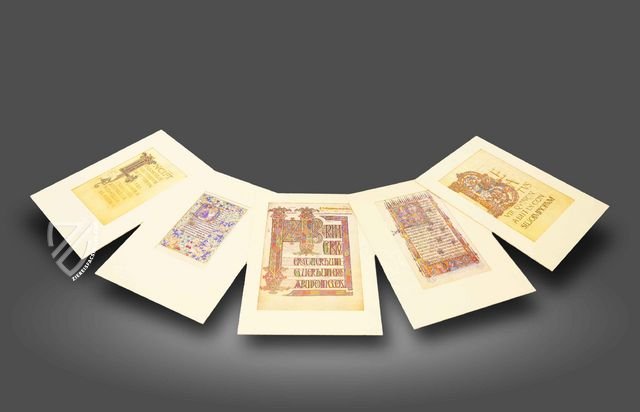
Tours (France), Lindisfarne (United Kingdom) and others — 7th–16th century
From the initial letter to the independent work of art: ornamental and historiated initials as the ultimate fusion of text and image over the centuries, from the Lindisfarne Gospels to the Sforza Hours
Historiated and scenic initials first emerged in the early 8th century and are an invention of Insular illuminators
While the images of the historiated initials refer to the text, scenic initials show figures without any connection to the text
No less artistic were the ornamental initials of the Middle Ages with their extraordinary richness of shapes and patterns
The Golden Script

(under 1,000€)
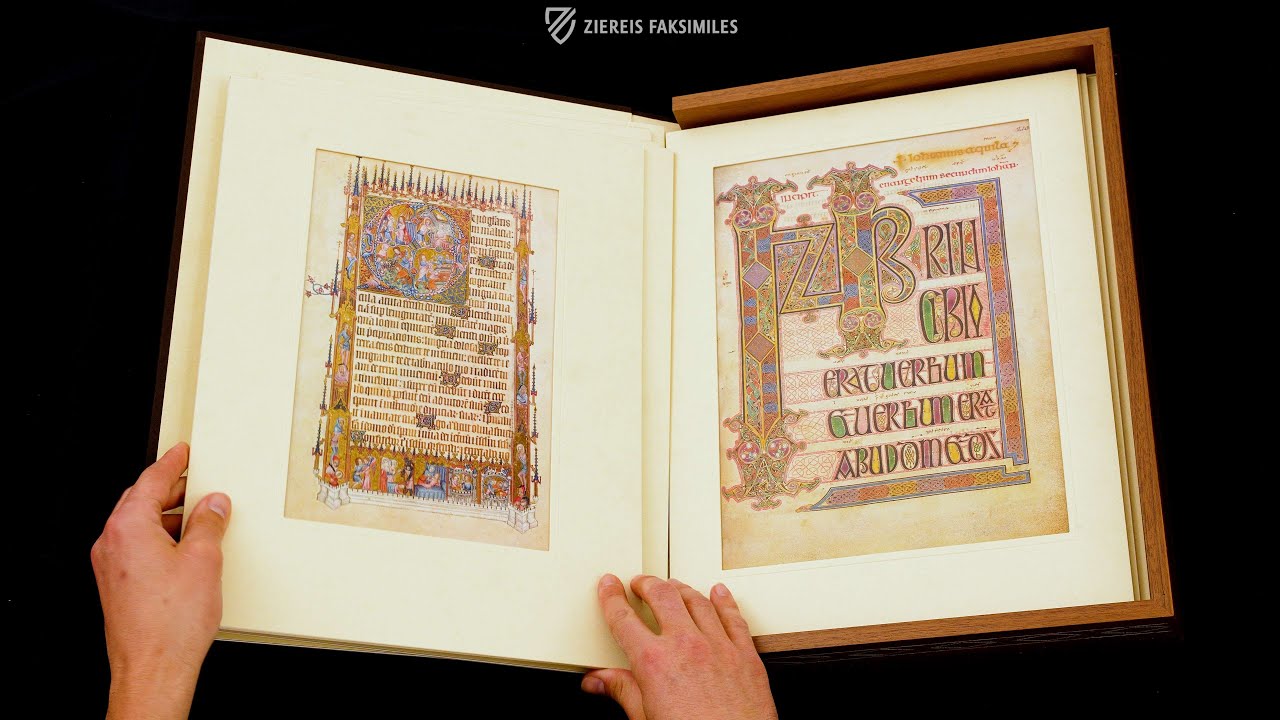
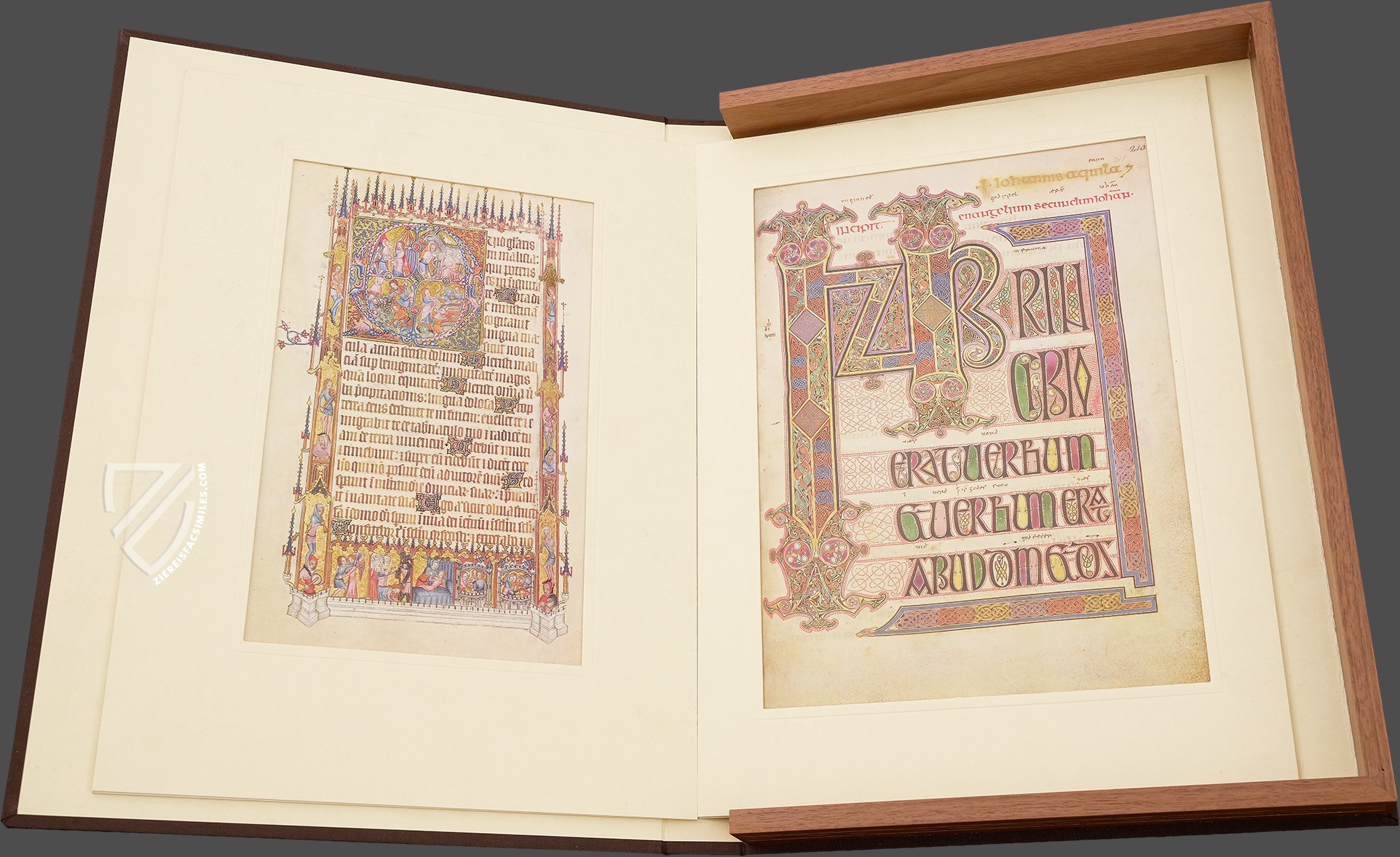
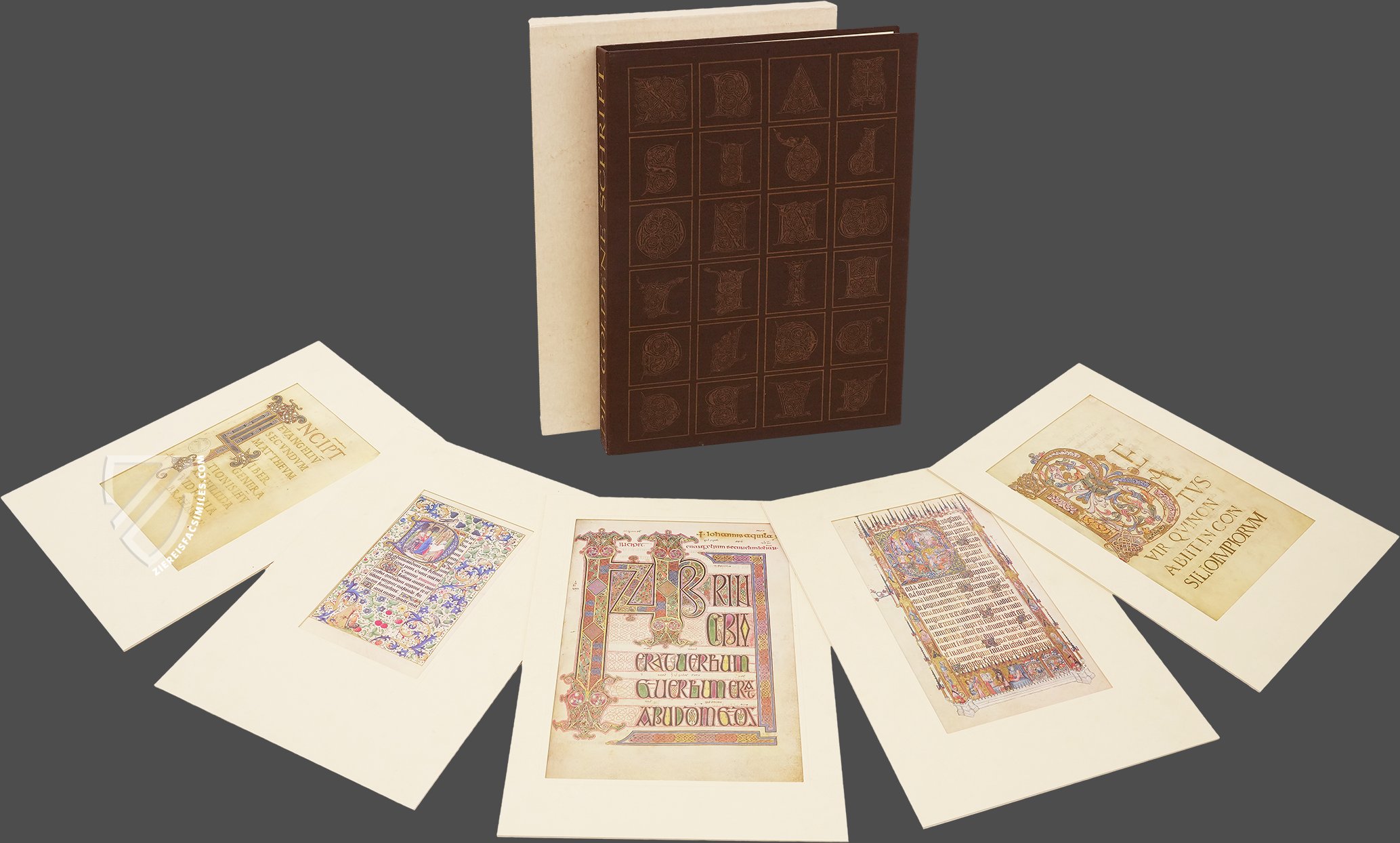
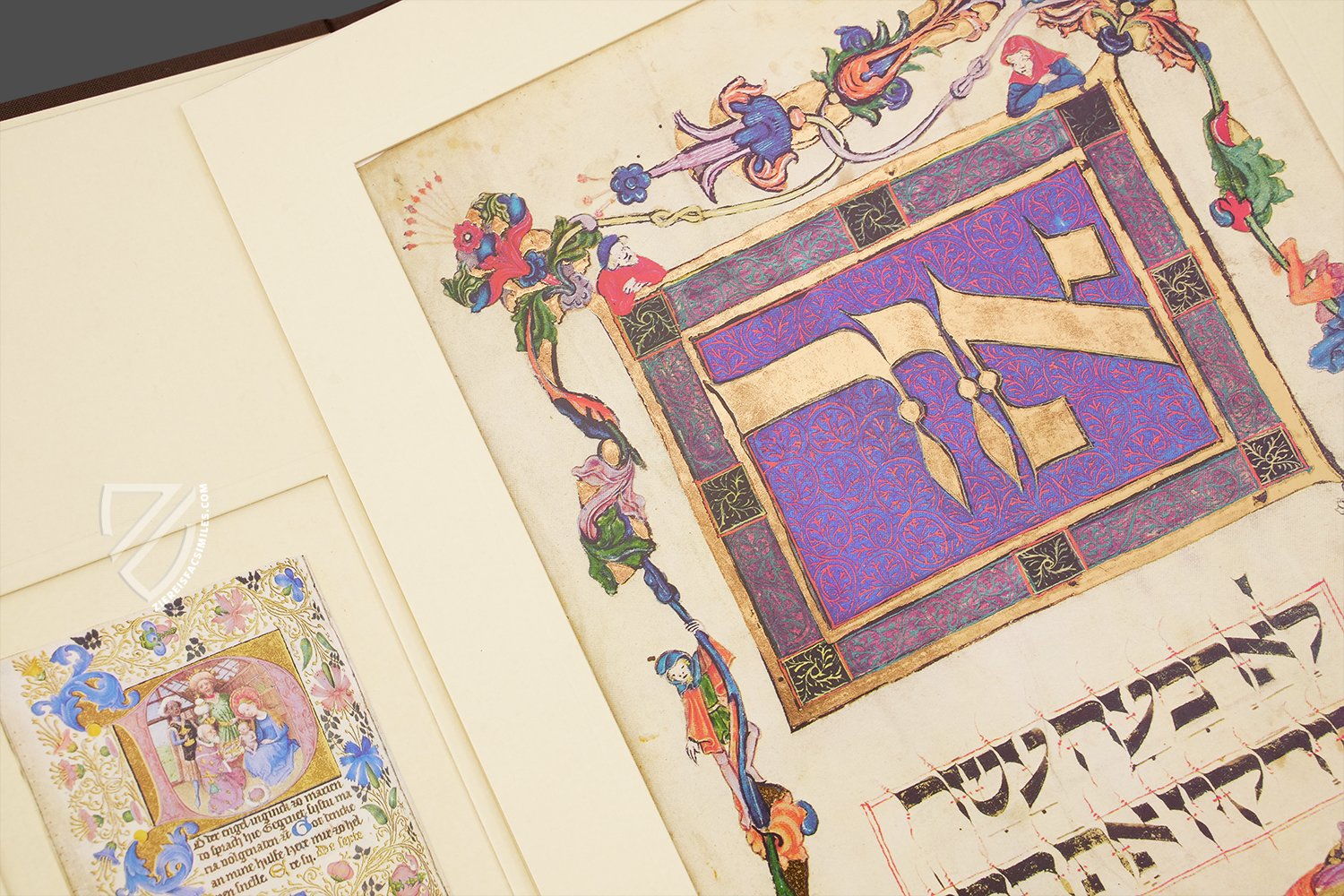
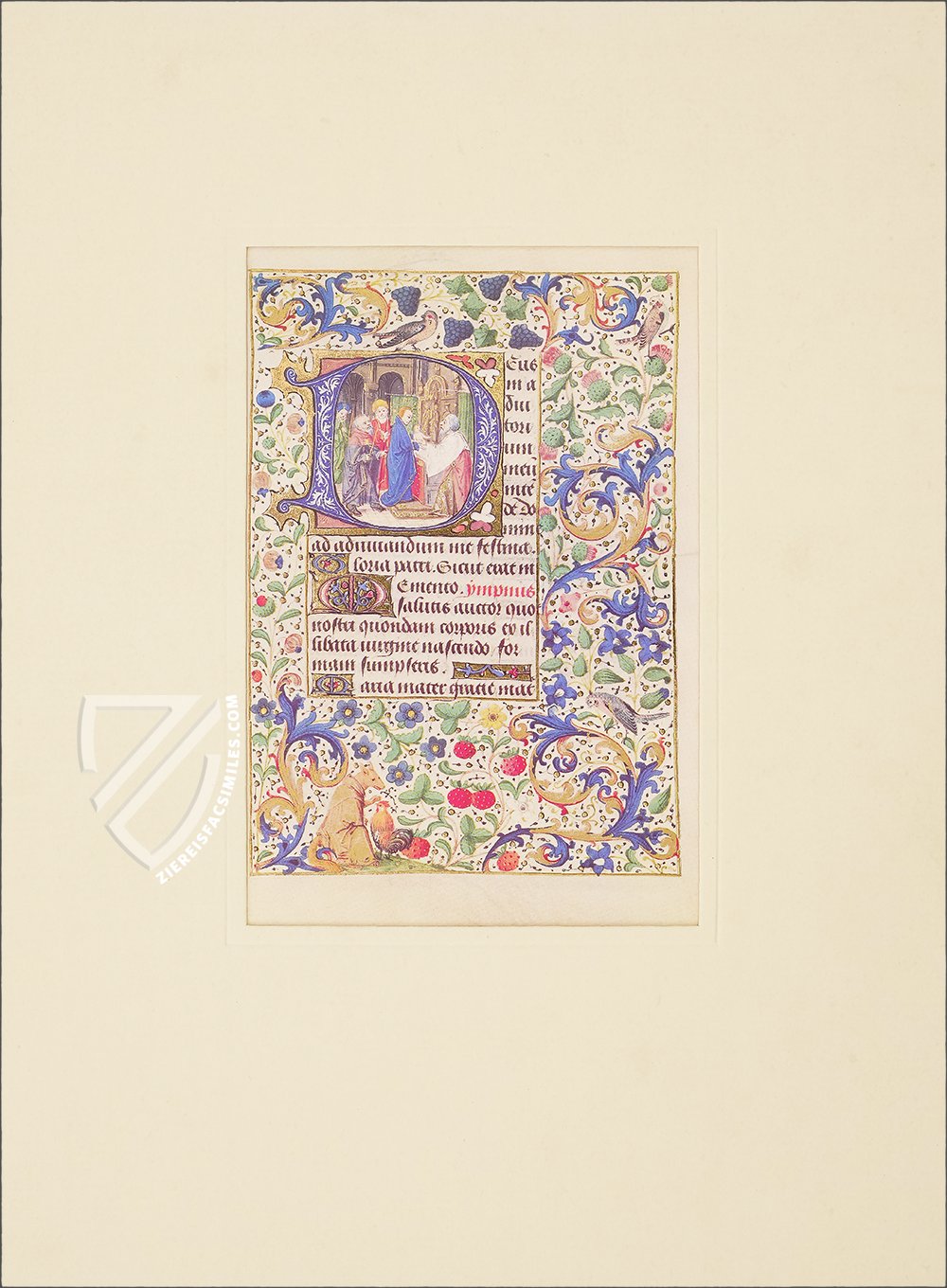
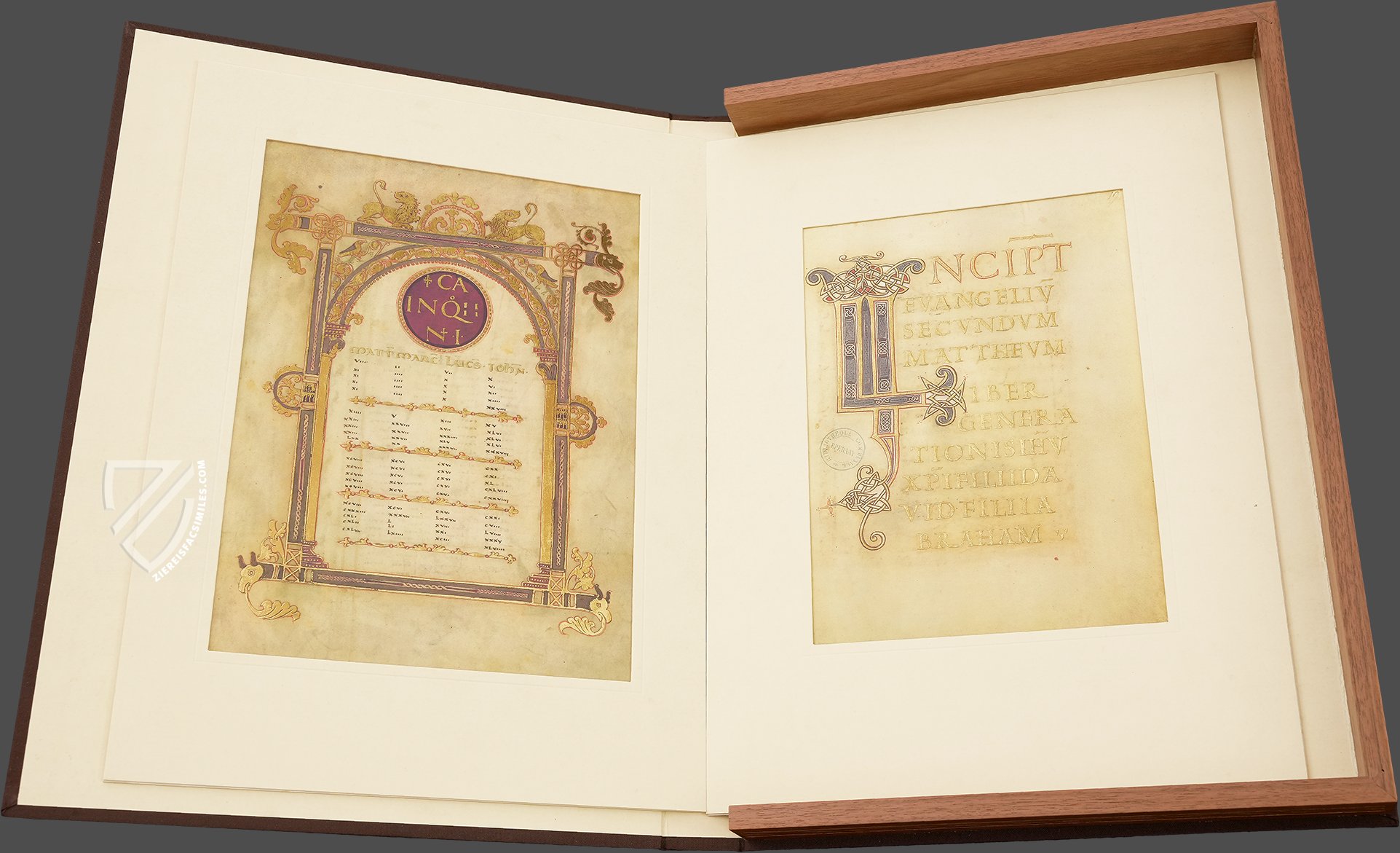
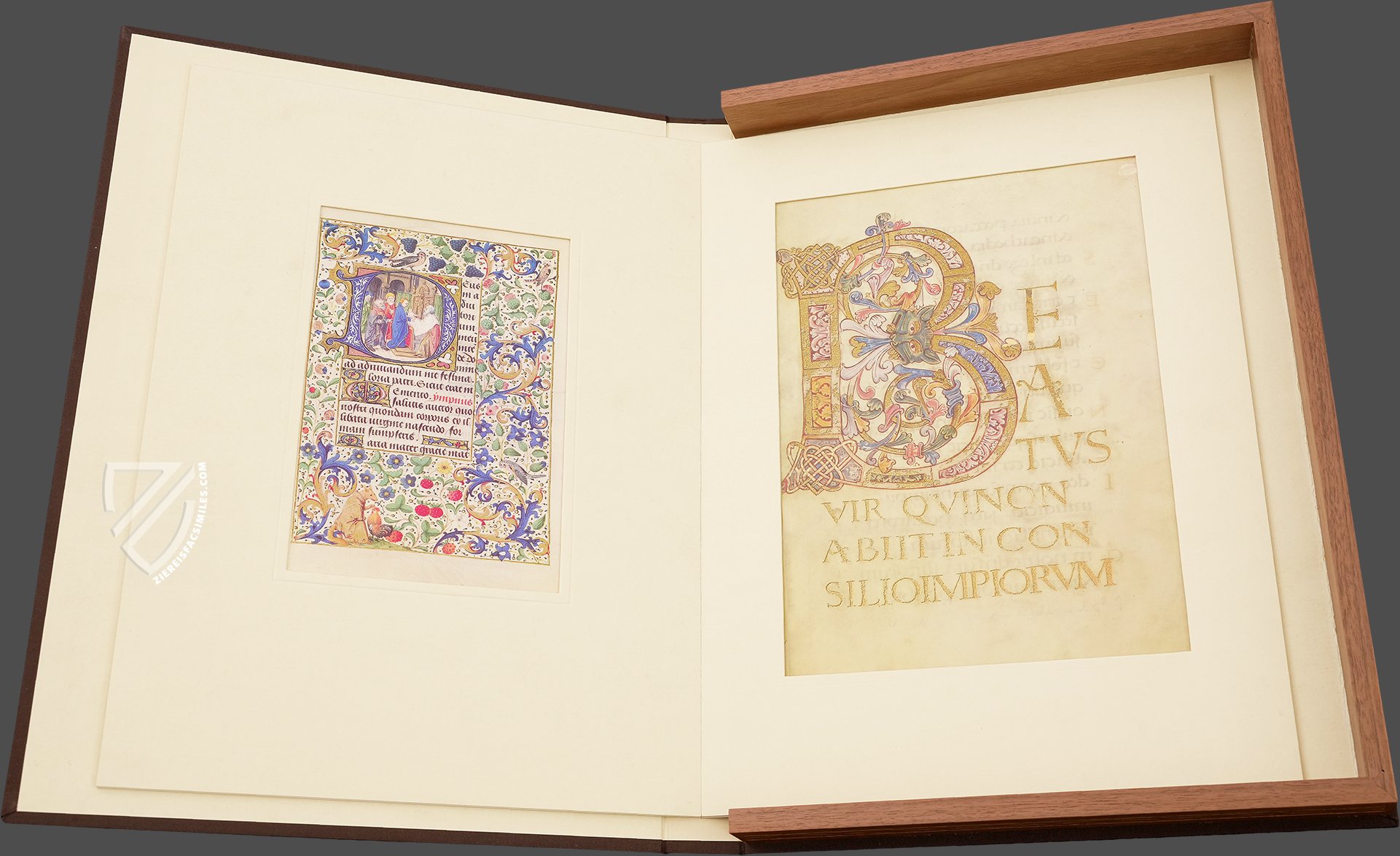
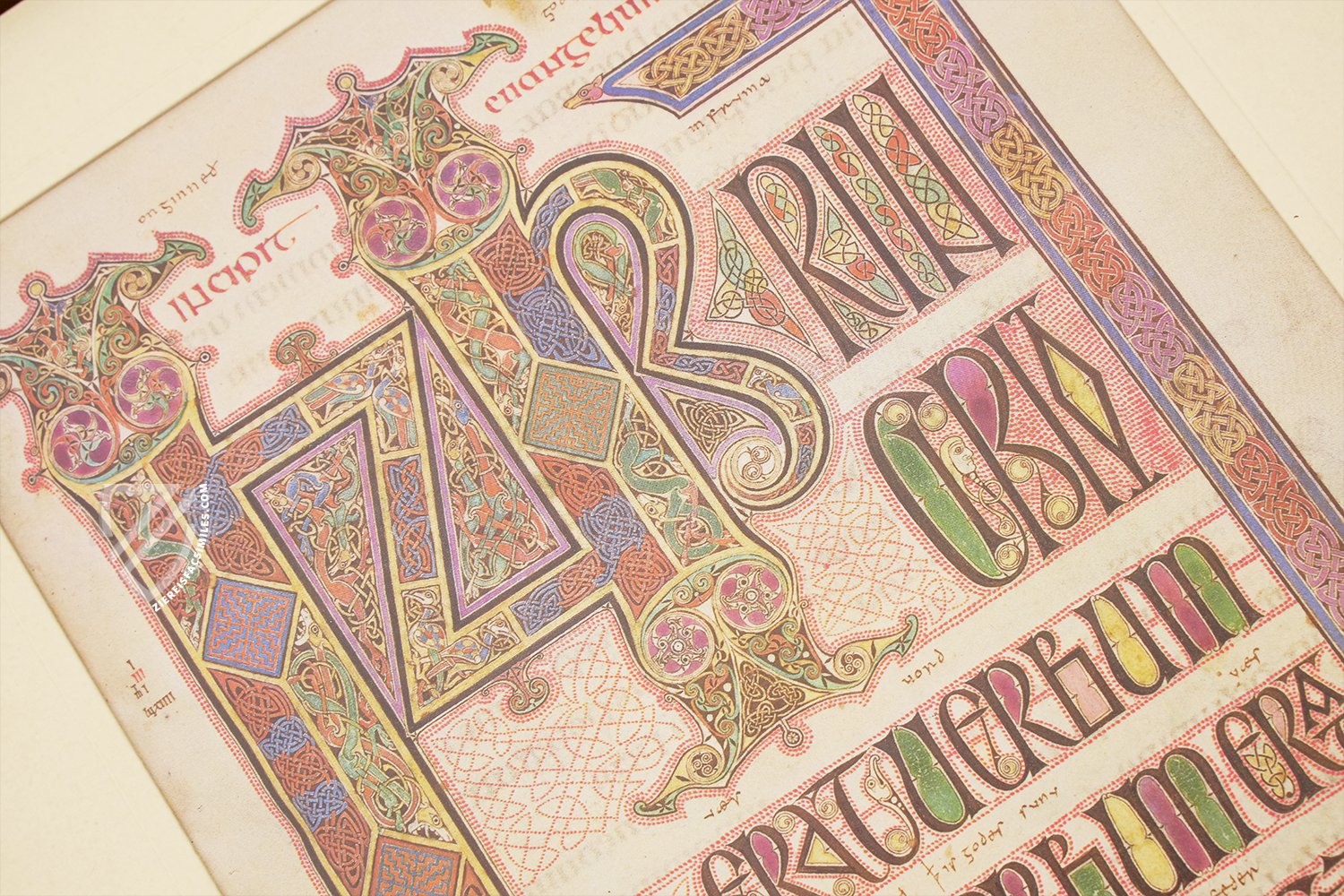
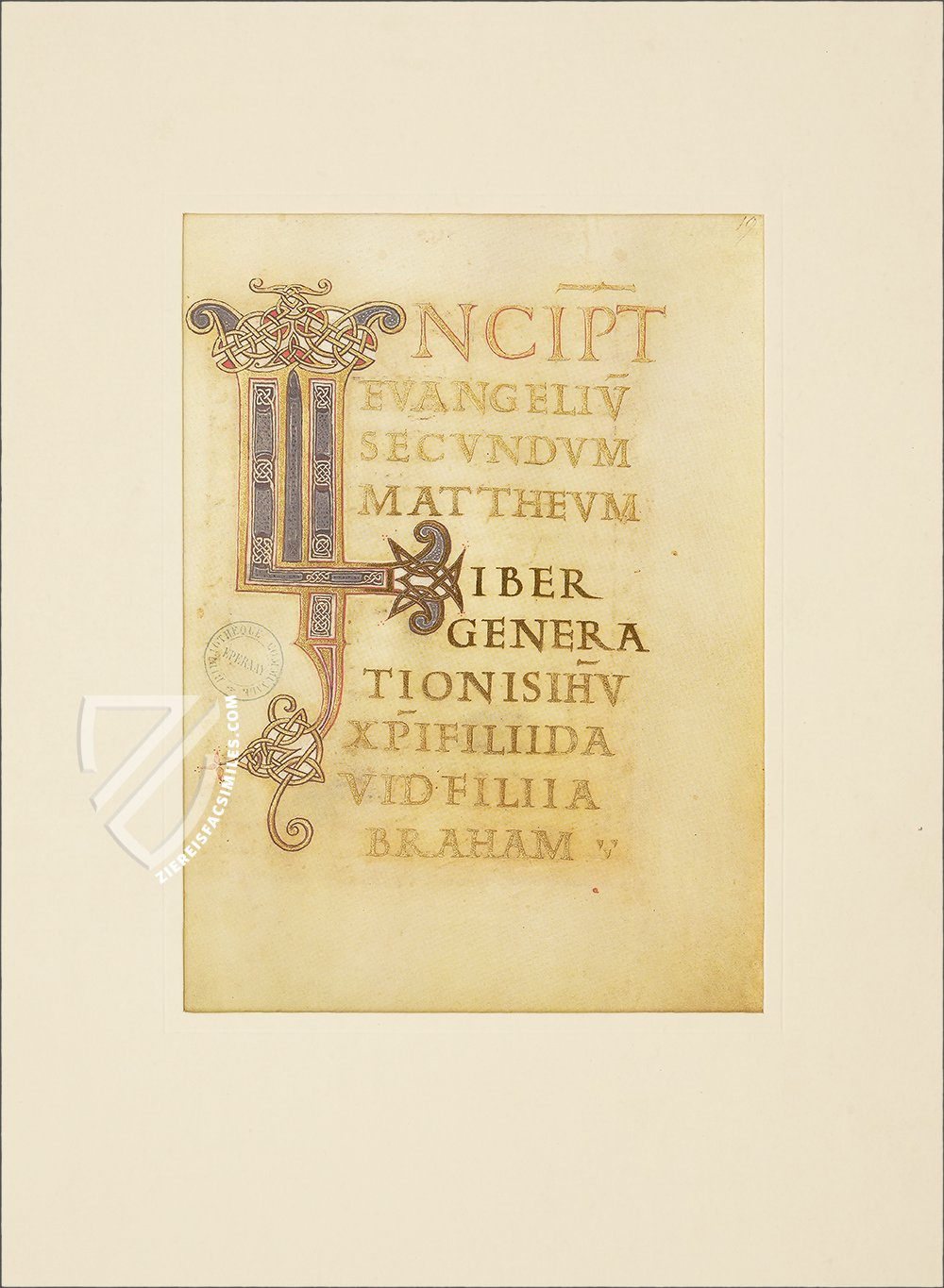
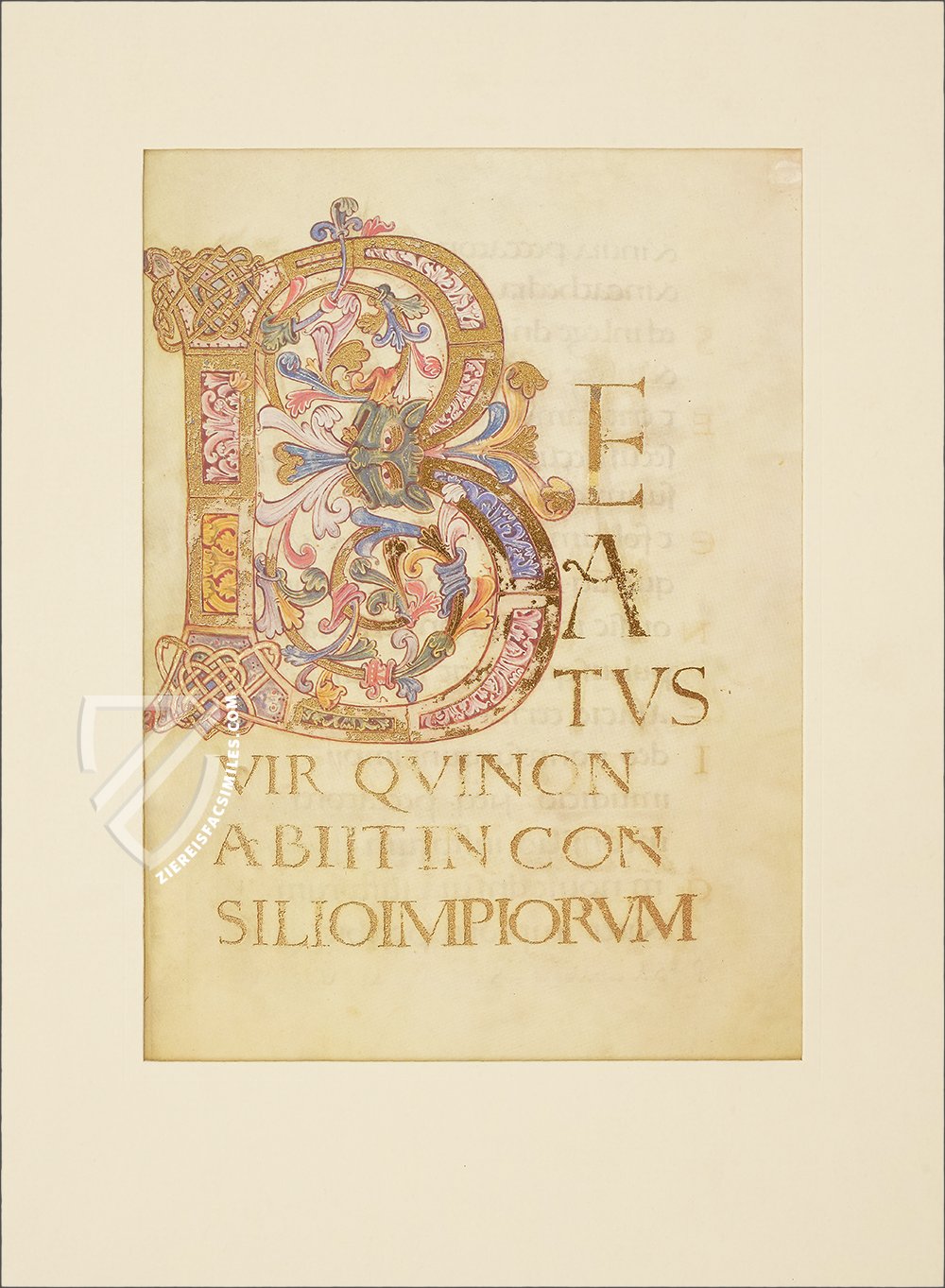
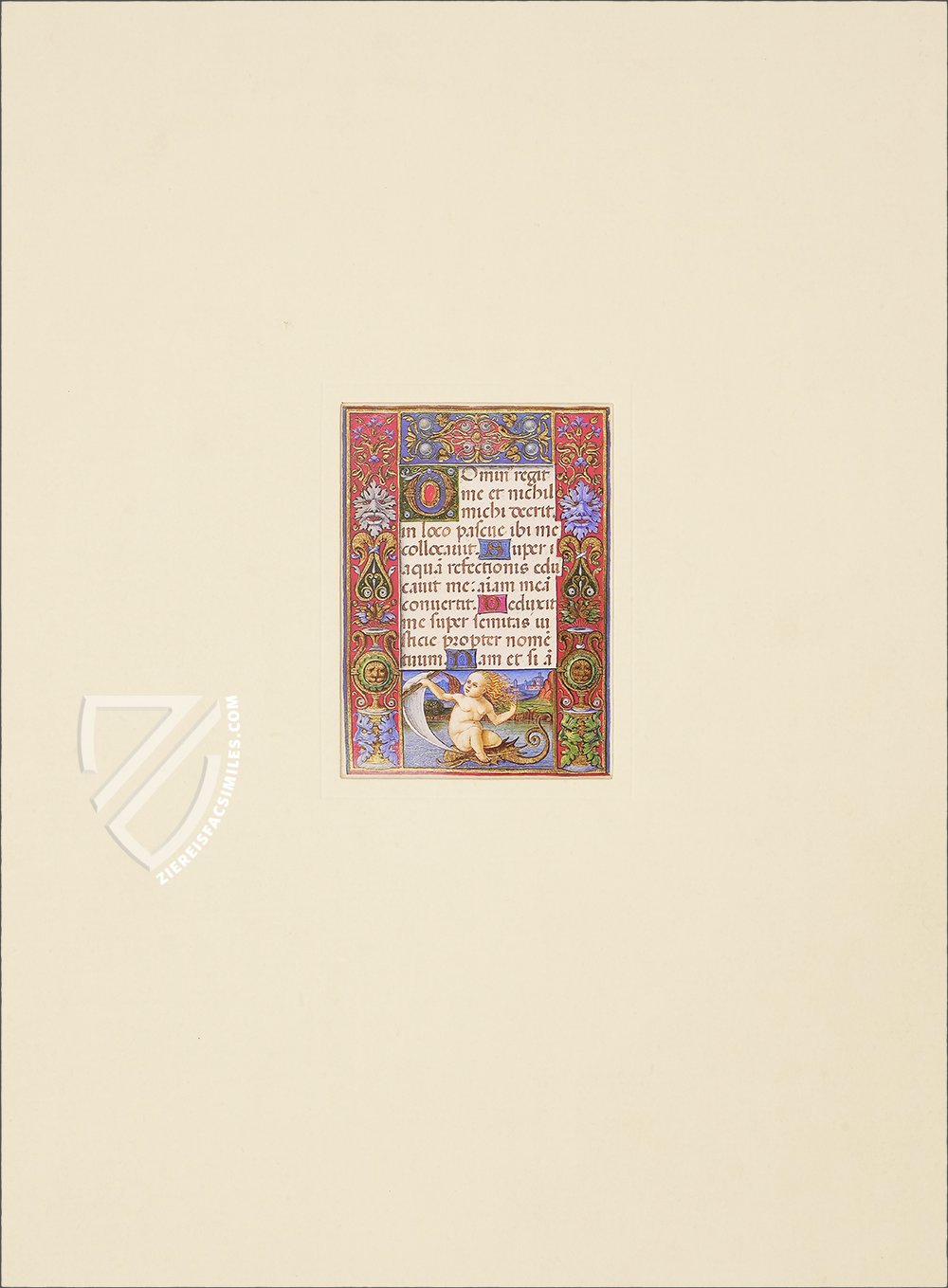
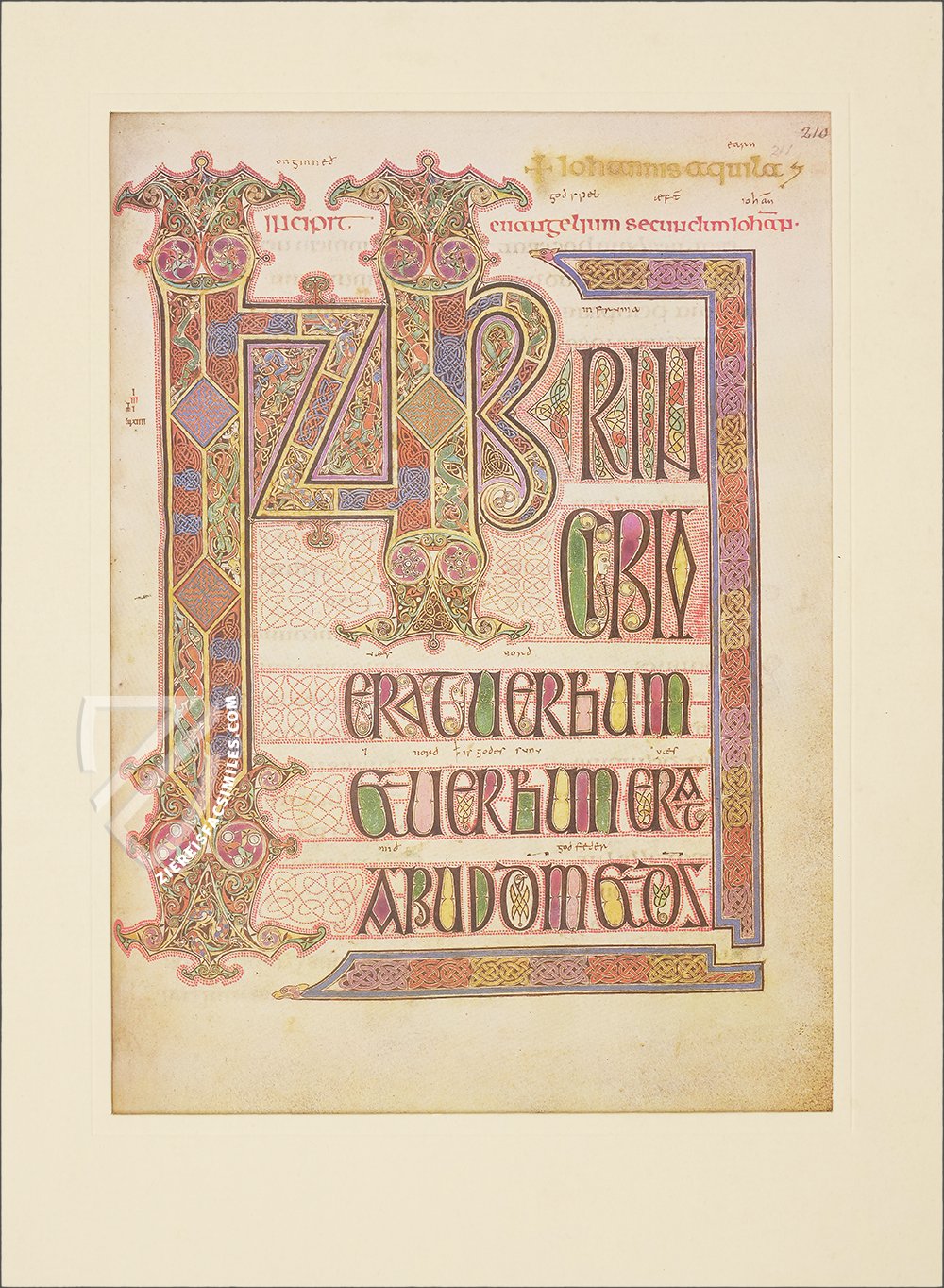
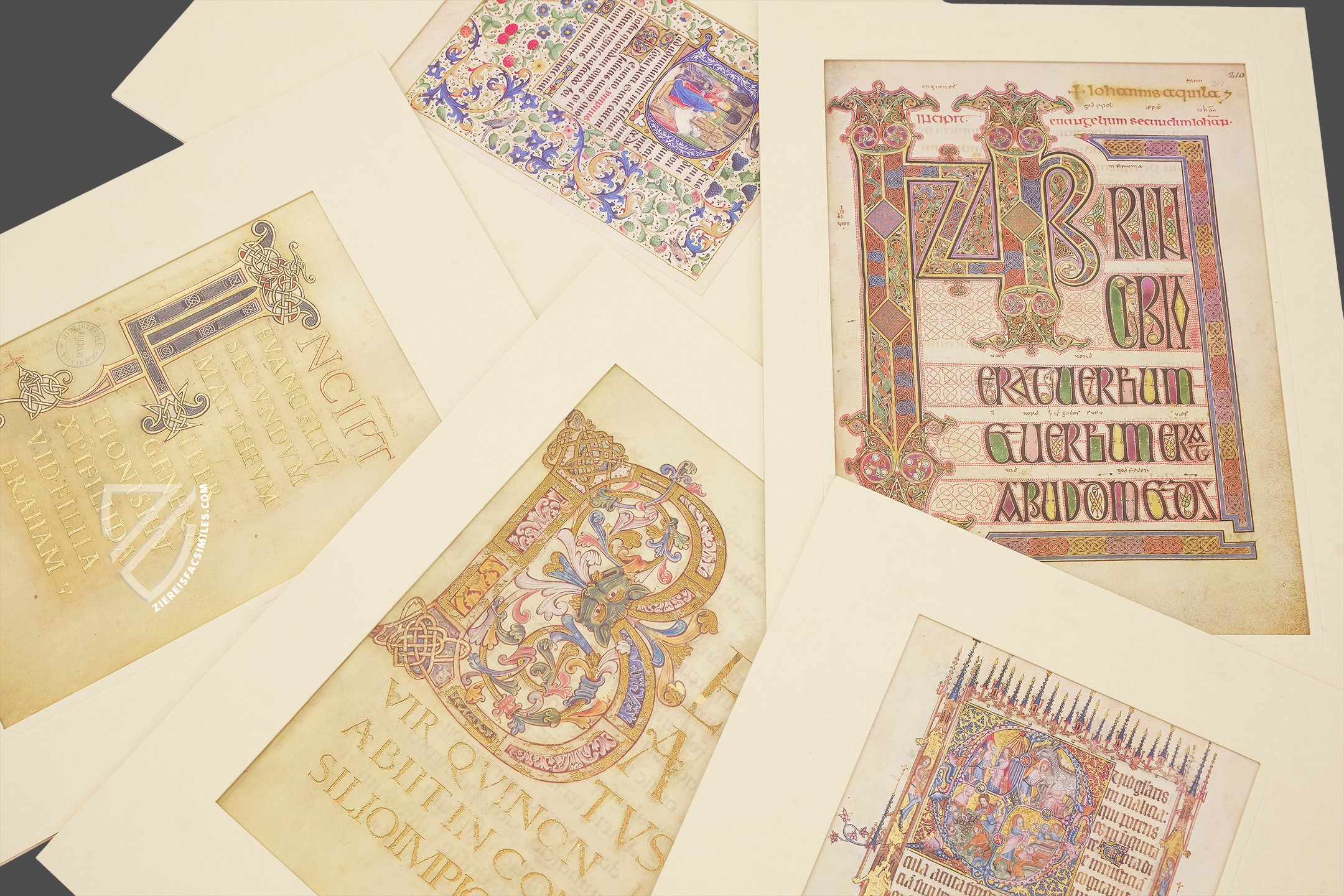
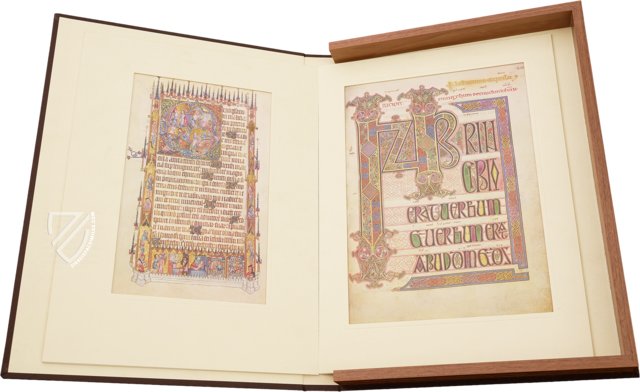
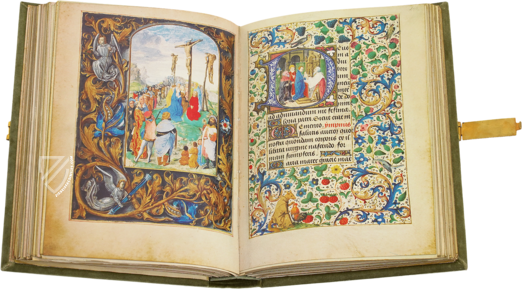
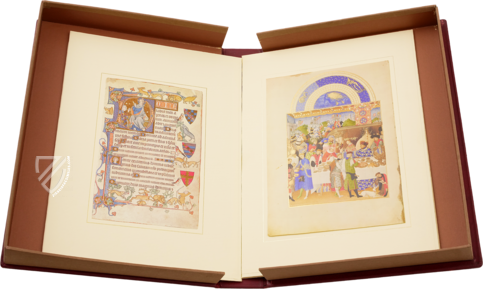
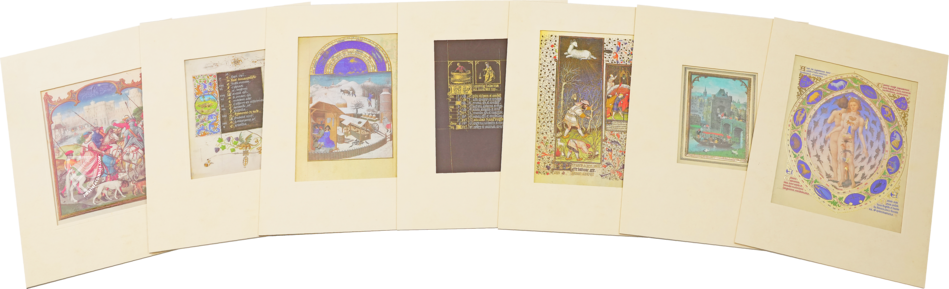
One thing that is indispensable in medieval manuscripts of all kinds is initials. Even when rendered in the simplest form, they structured almost every handwritten text or at least introduced written documents. Even in the Early Middle Ages, book artists transformed capital letters into elaborate little works of art, sometimes taking up entire pages and often accompanied by other book decorations such as borders, curlicues, and drolleries. Without question, the most striking examples of the medieval art of initials are the historiated initials, which incorporate figurative representations related to the content of the text. The letters often enclose the miniatures. Sometimes, however, the figures also “inhabit” the body of the letter, as in the case of the so-called gymnastic initials. In fact, historiated initials already appeared in the insular book illumination of the Early Middle Ages, which also produced the famous interlace initials. This single-leaf collection provides a wonderful insight into the sophistication and craftsmanship of the medieval art of initials.
The Golden Script
The art of initials is one of the most significant achievements of medieval book art. Although the practice of emphasizing the initial letters of text passages began in late antiquity, it was medieval illuminators who first conquered the capital letters (majuscules) as a field for artistic creativity and invention. In the course of the Middle Ages, initials, together with decorated borders and frames, became those places in precious manuscripts where their creators could try out and develop their artistic talents. The occasionally humorous results give witness to a great joy in design and creation. The small works of art, which are often adorned with gold and silver, became a central decorative element of secular and religious books already in the Early Middle Ages and fulfilled various functions. They were decoration, underlined the value of a text, but also represented the status and wealth of the patron, were pictorial additions to the text content, and were used to structure the text.
Magnificent Letters from the Early Middle Ages to the Renaissance
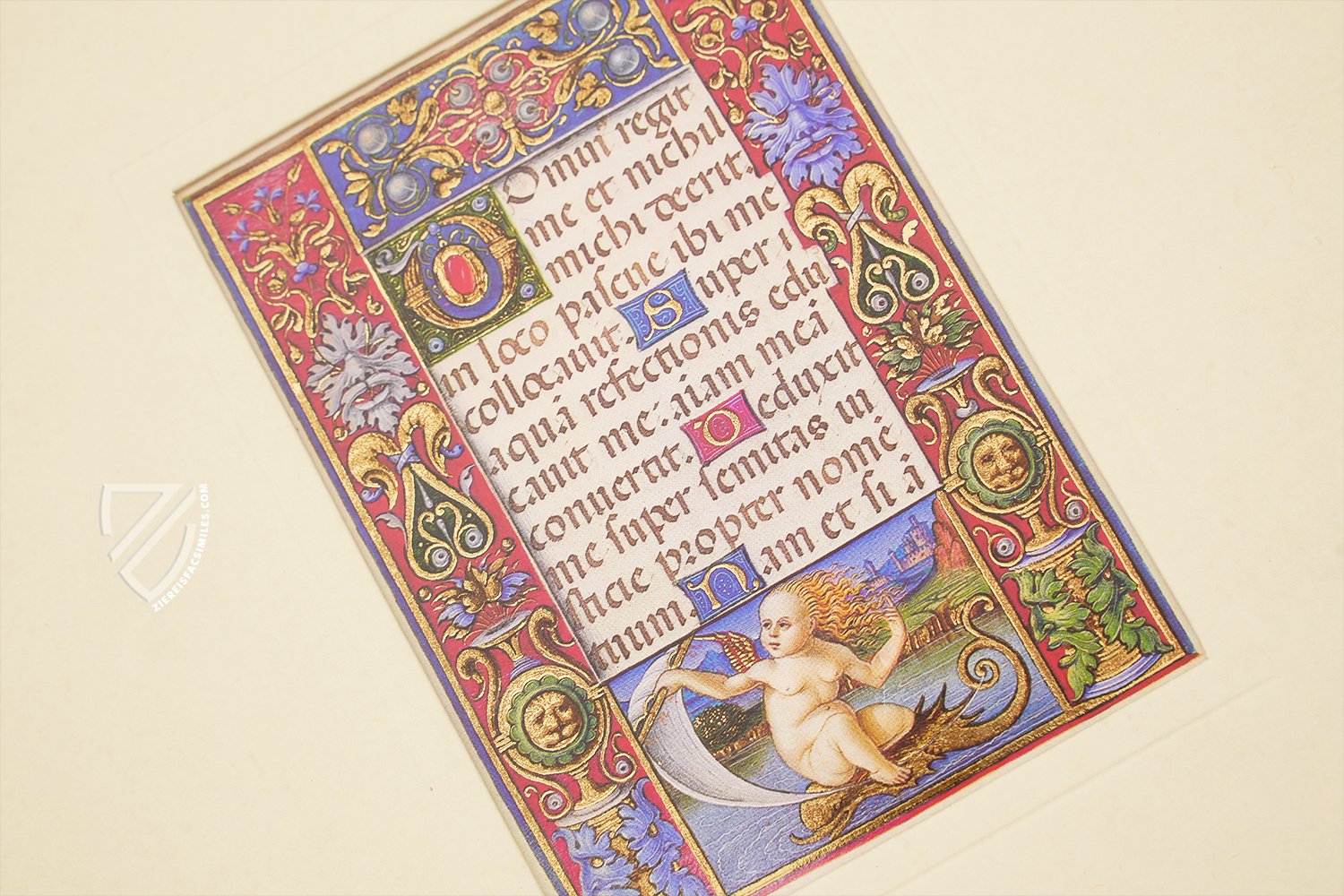
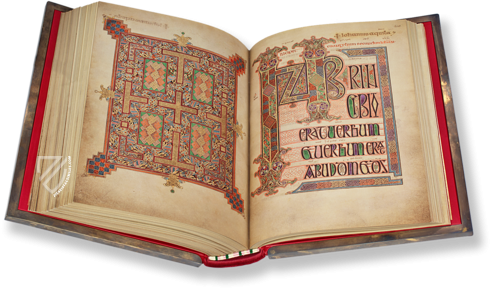
Just like the script of the body of the text and the miniatures, their forms of course arose from the respective taste of the time and stylistic developments and thus changed over time. This single-leaf collection of ten beautiful pages from the early Middle Ages to the 16th century provides a small but artful insight into the limitless variety created by medieval illuminators – from an impressive interlace initial from the Lindisfarne Gospels to a beautiful initial with split stem and scroll ornament from the Harley Psalter and an historiated initial from the Bohun Psalter, designed with incredible attention to detail, to a sumptuous Renaissance decorated page from the Sforza Hours.
Incipit Decorated Page of the Gospel of John
BLindisfarne Gospels, Lindisfarne, before 698
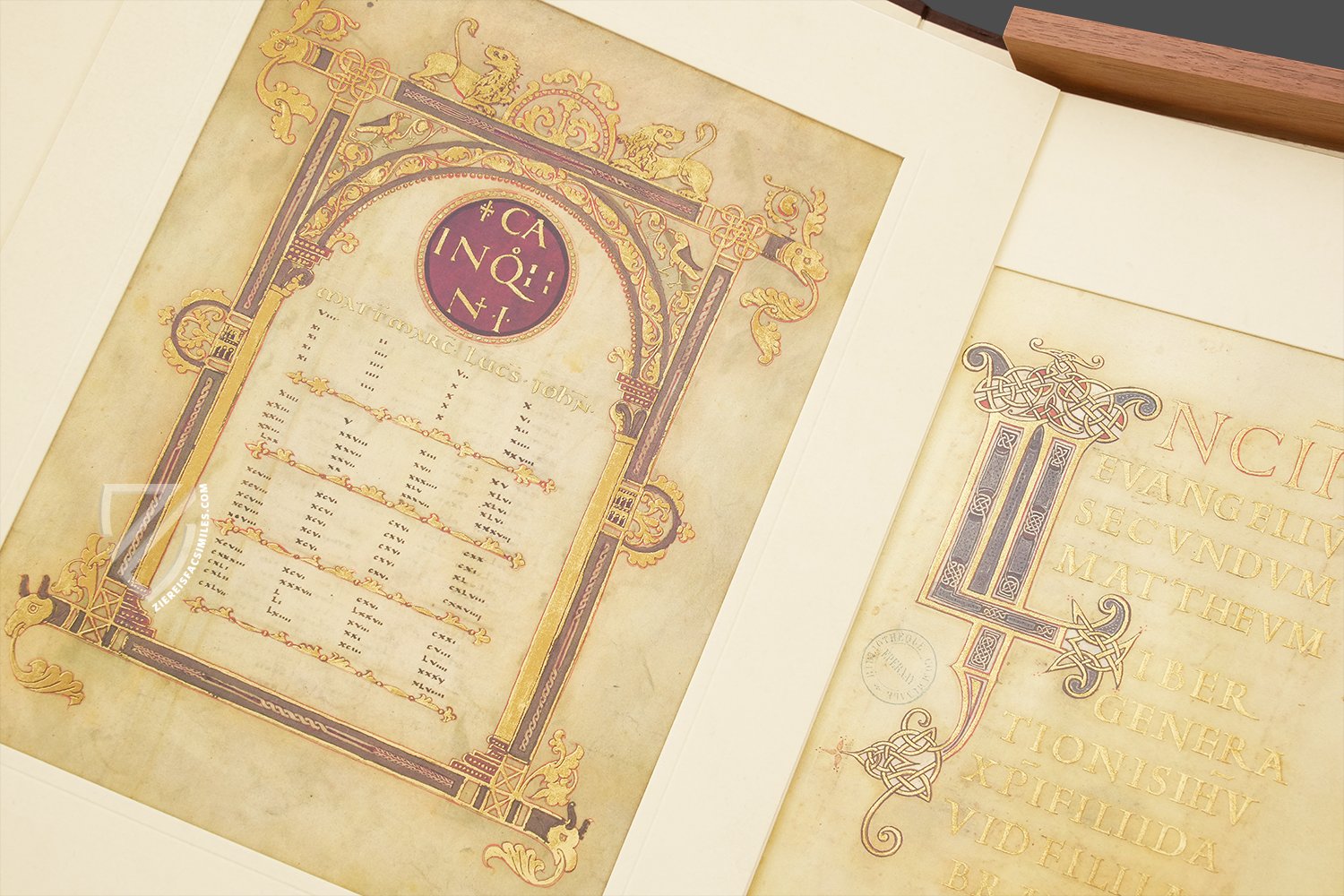
London, British LibraryIncipit Decorated Page of the Gospel of Matthew
Ebbo Gospels, Reims, 816/835
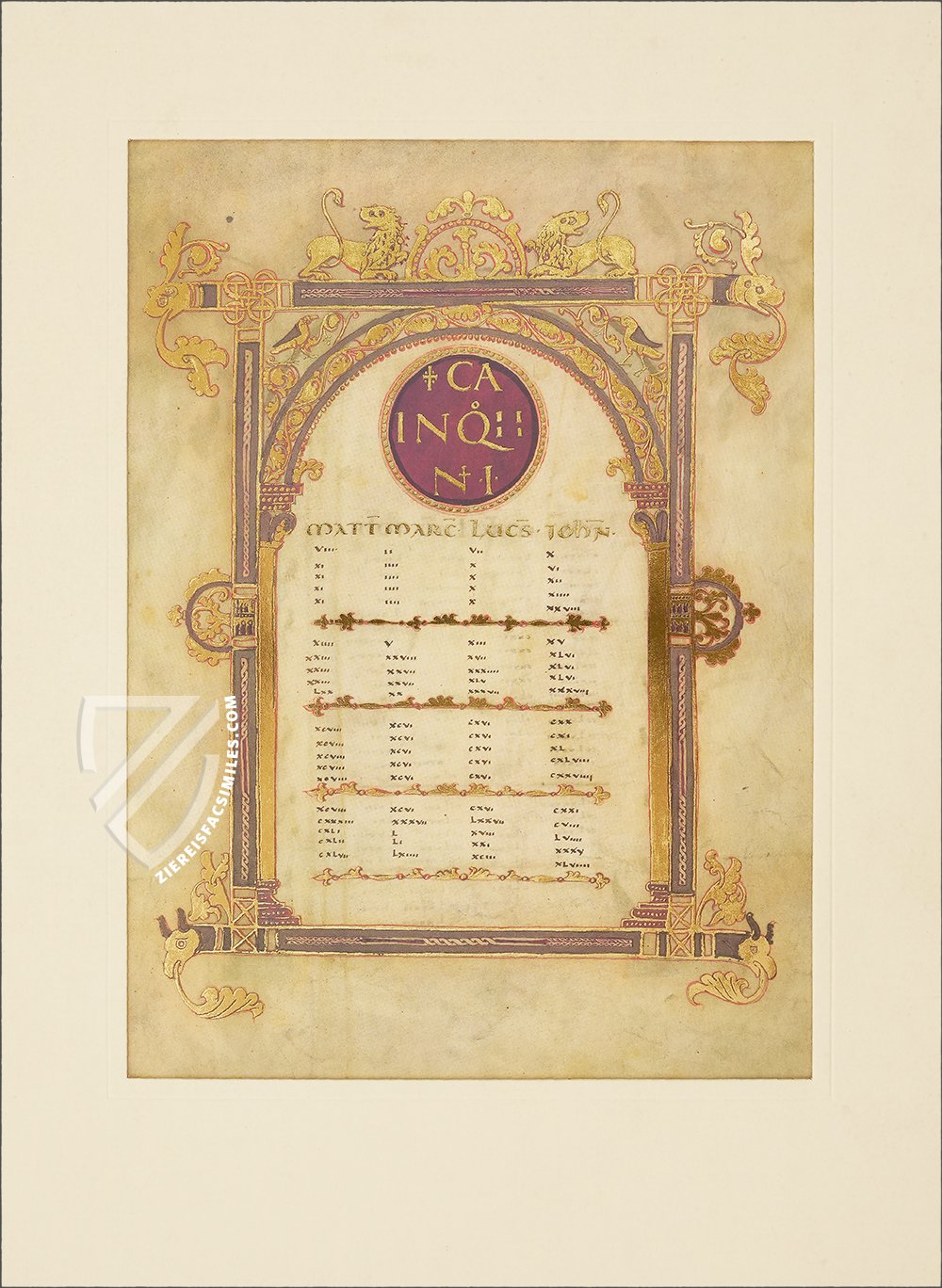
Epernay, Bibliothèque municipaleCanon Table
Gospels of Lothair, Tours, ca. 849/851
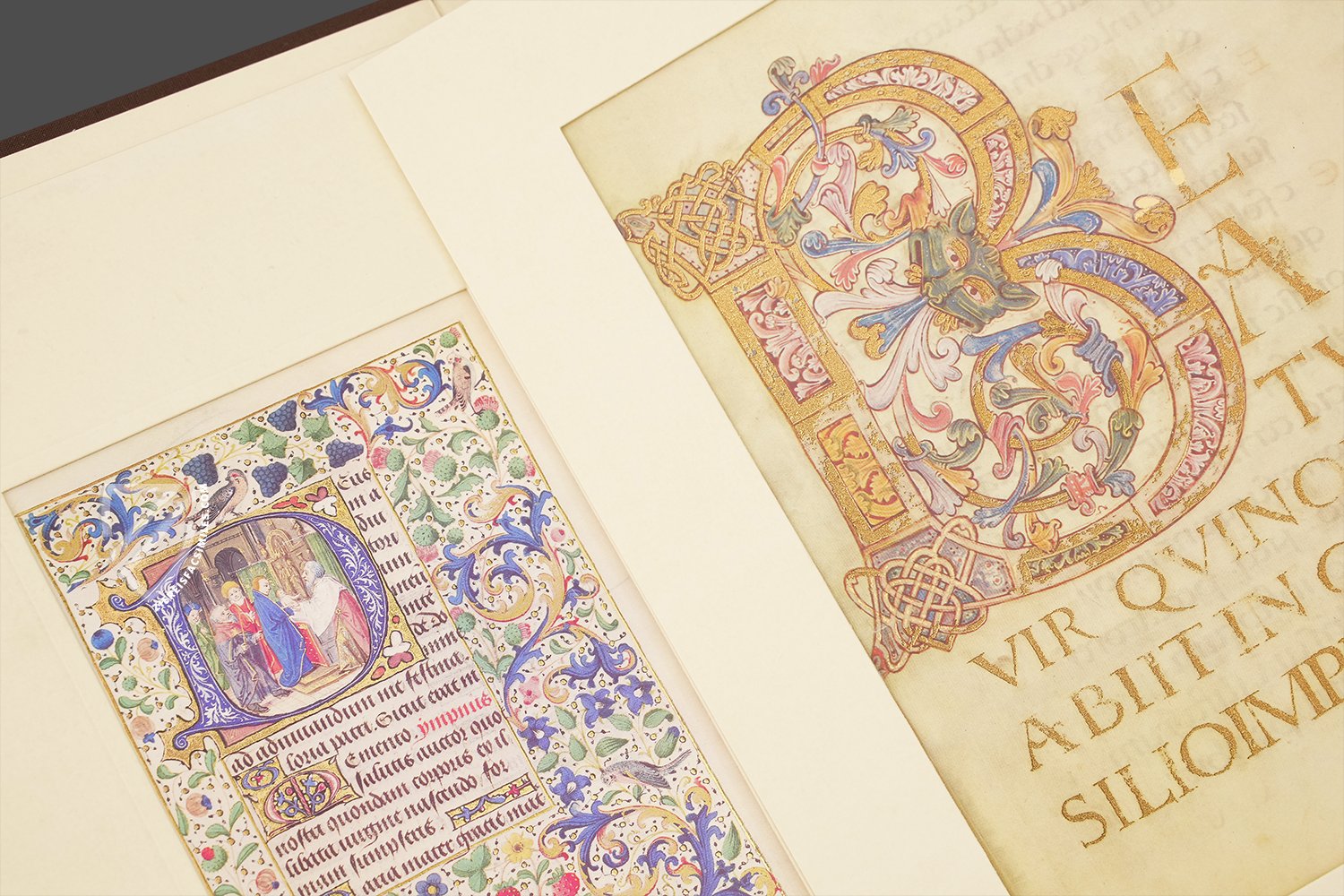
Paris, Bibliothèque nationale de FranceBeatus Vir Initial Decorated Page for Psalm 1
Harley Psalter, Canterbury, early 11th century
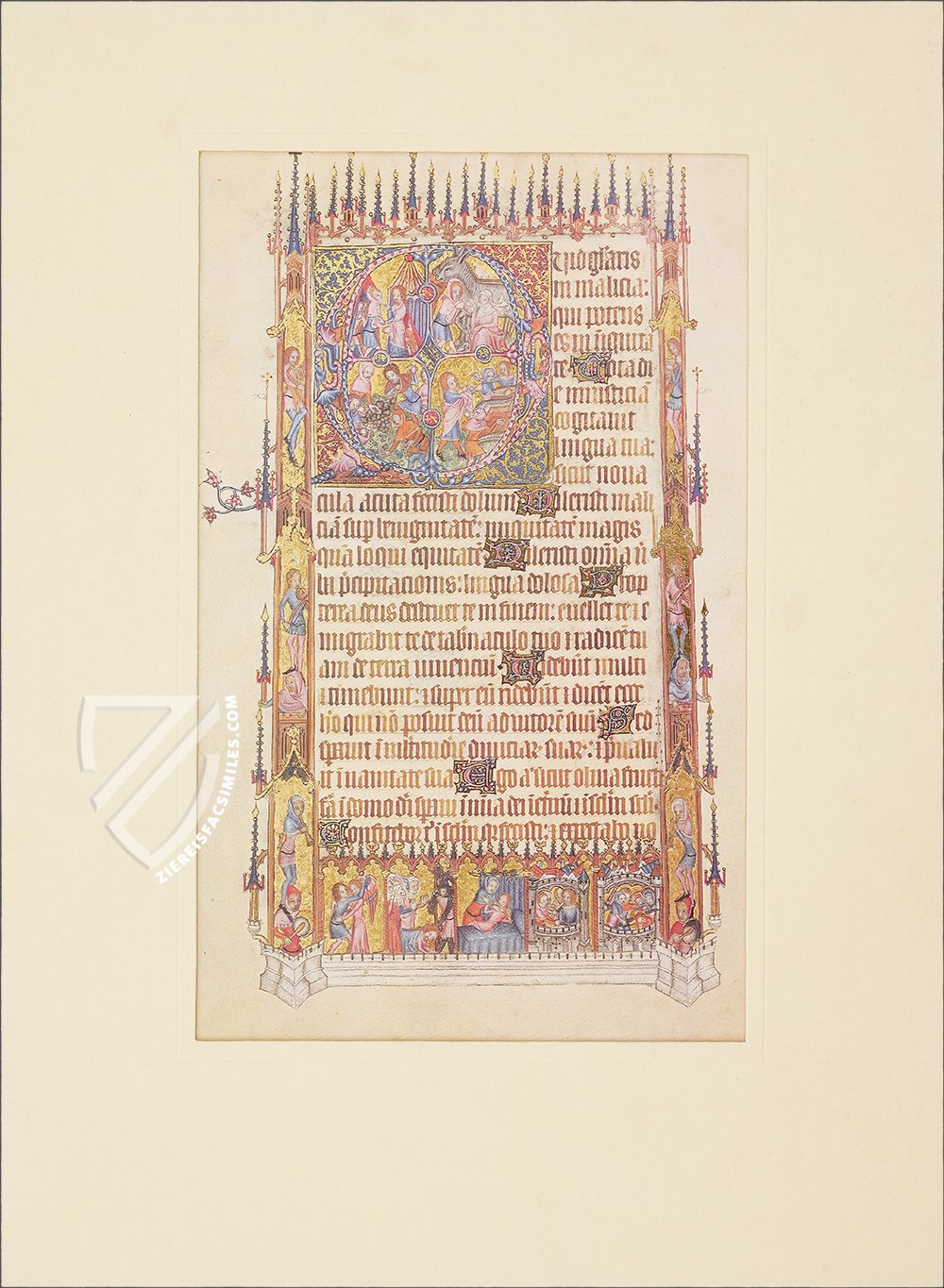
London, British Library“Q” Initial with Scenes from the Life of Jacob
Bohun Psalter, England, ca. 1370
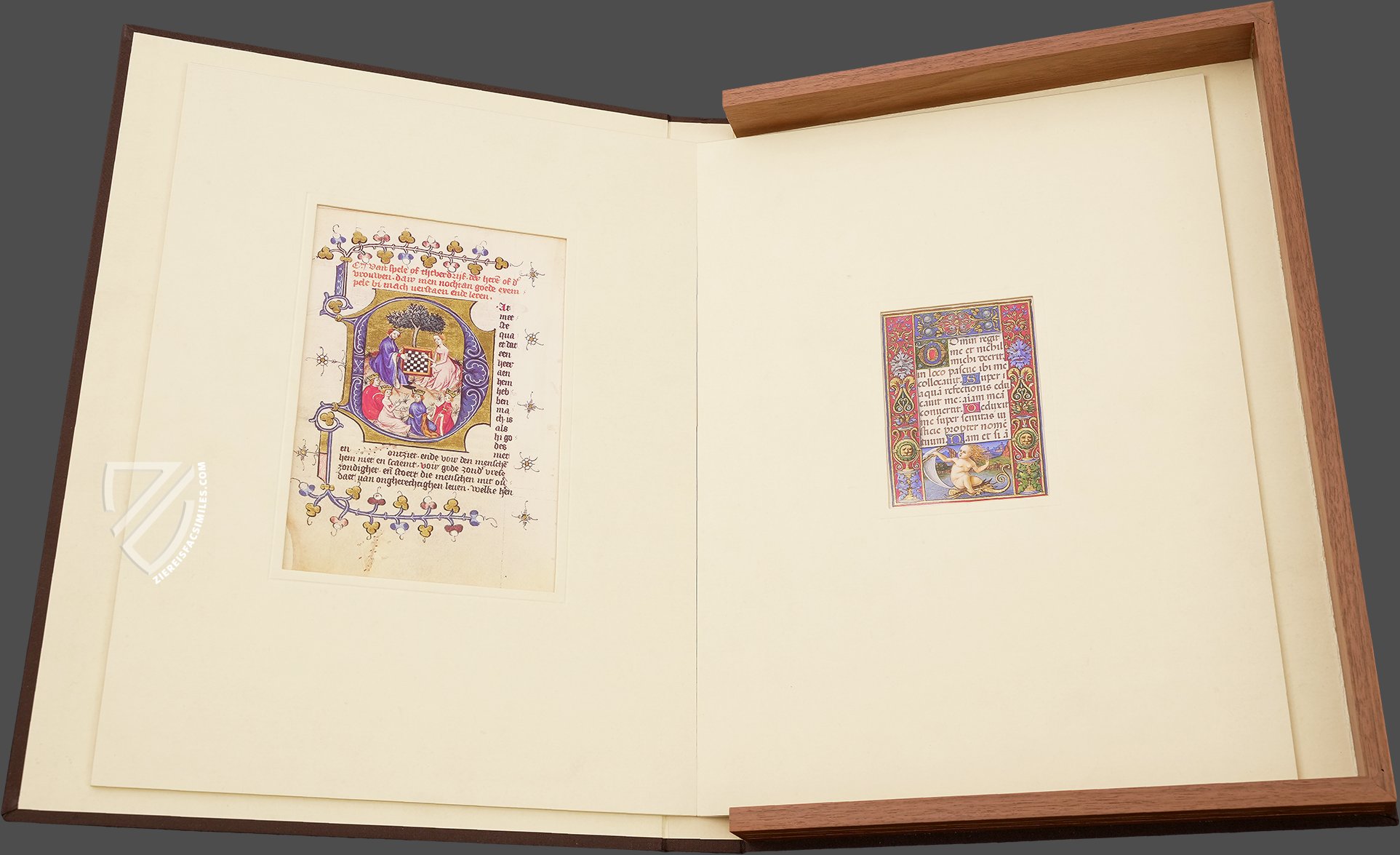
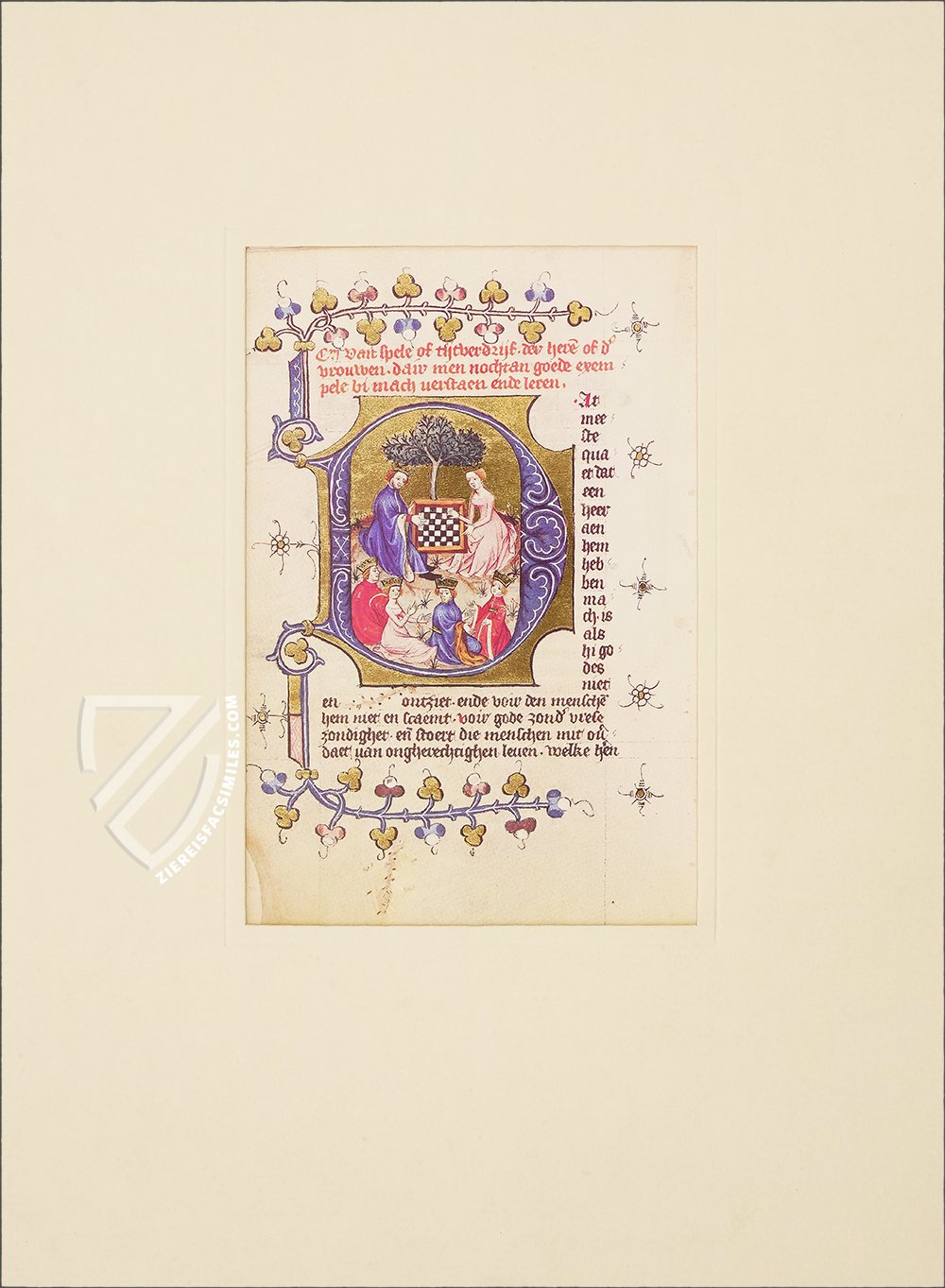
Oxford, Exeter College“D” Initial with Royal Chess Game
Tafel van den Kersten Ghelove, Utrecht, ca. 1410
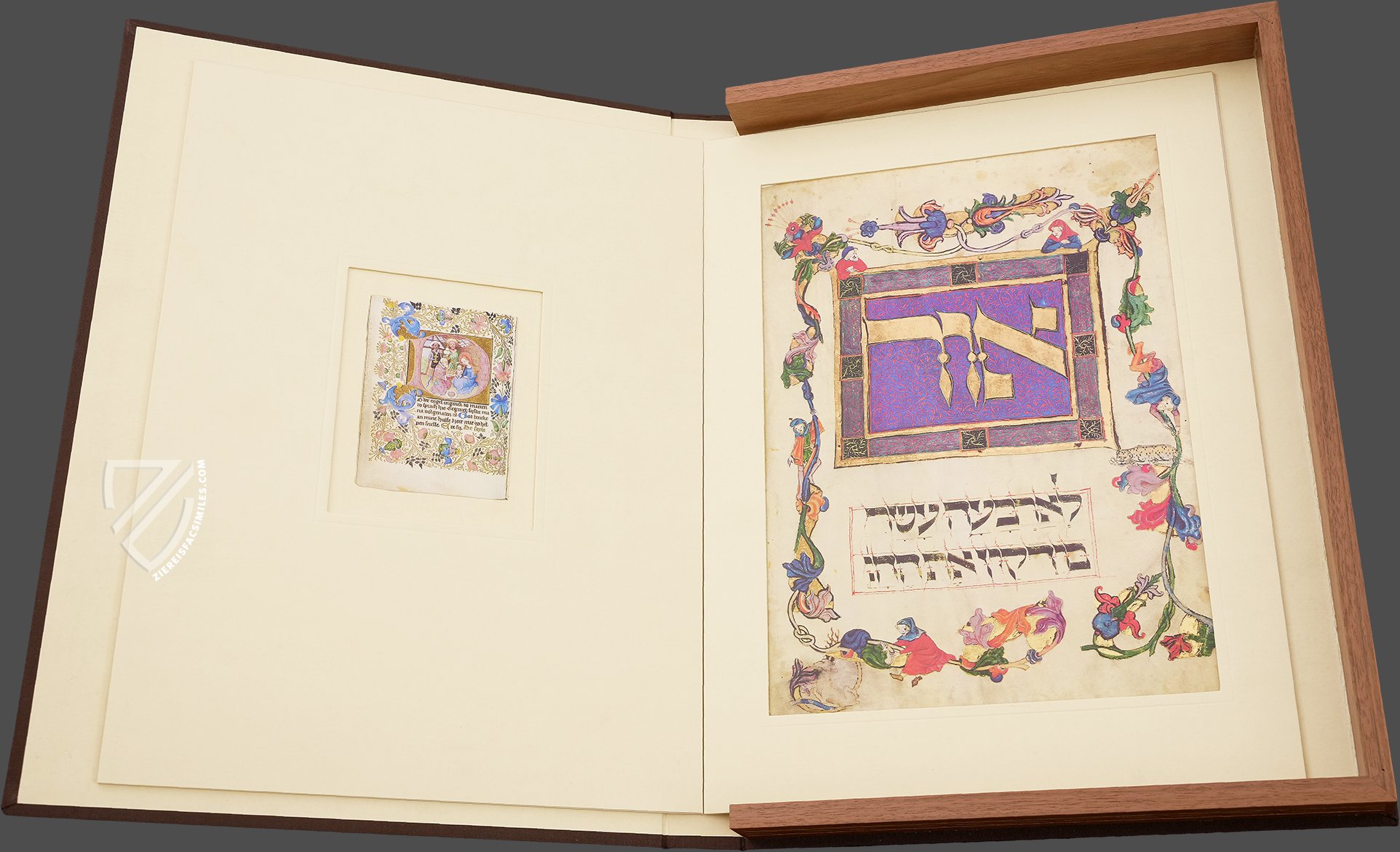
New York, The Morgan Library & MuseumInitial Decorated Page
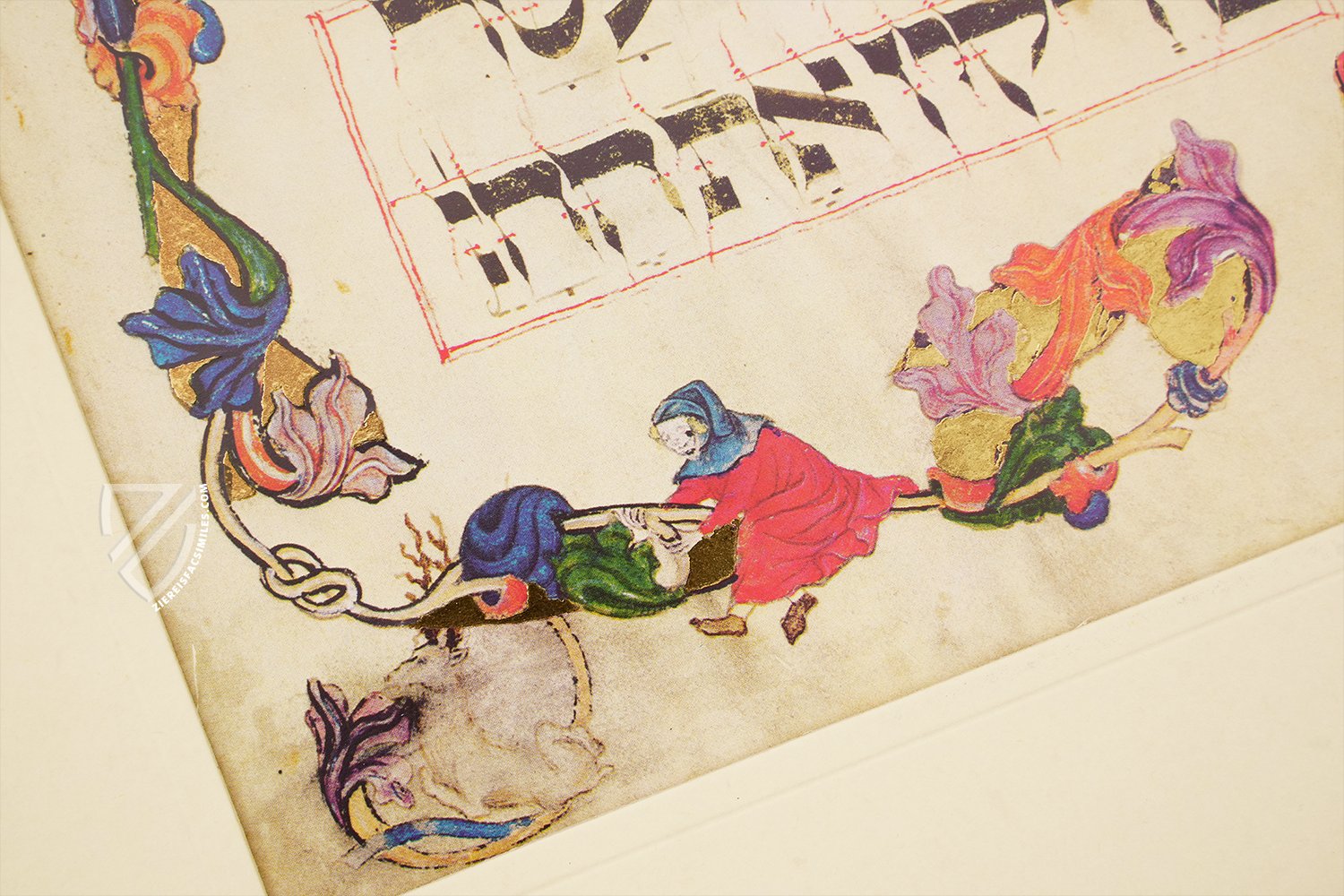
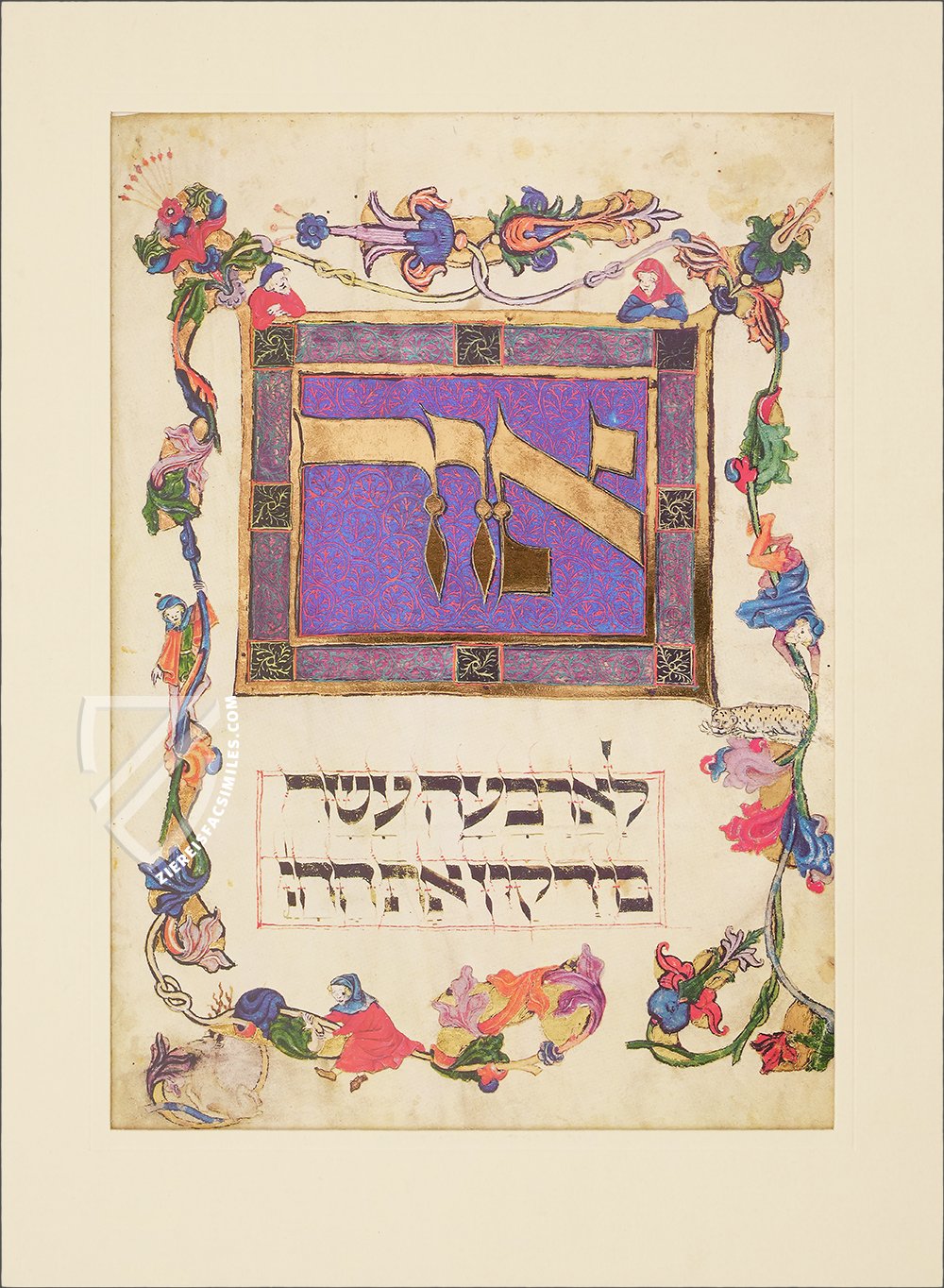
Darmstadt Pessach Haggadah - Codex Orientalis 8, Heidelberg, ca. 1430
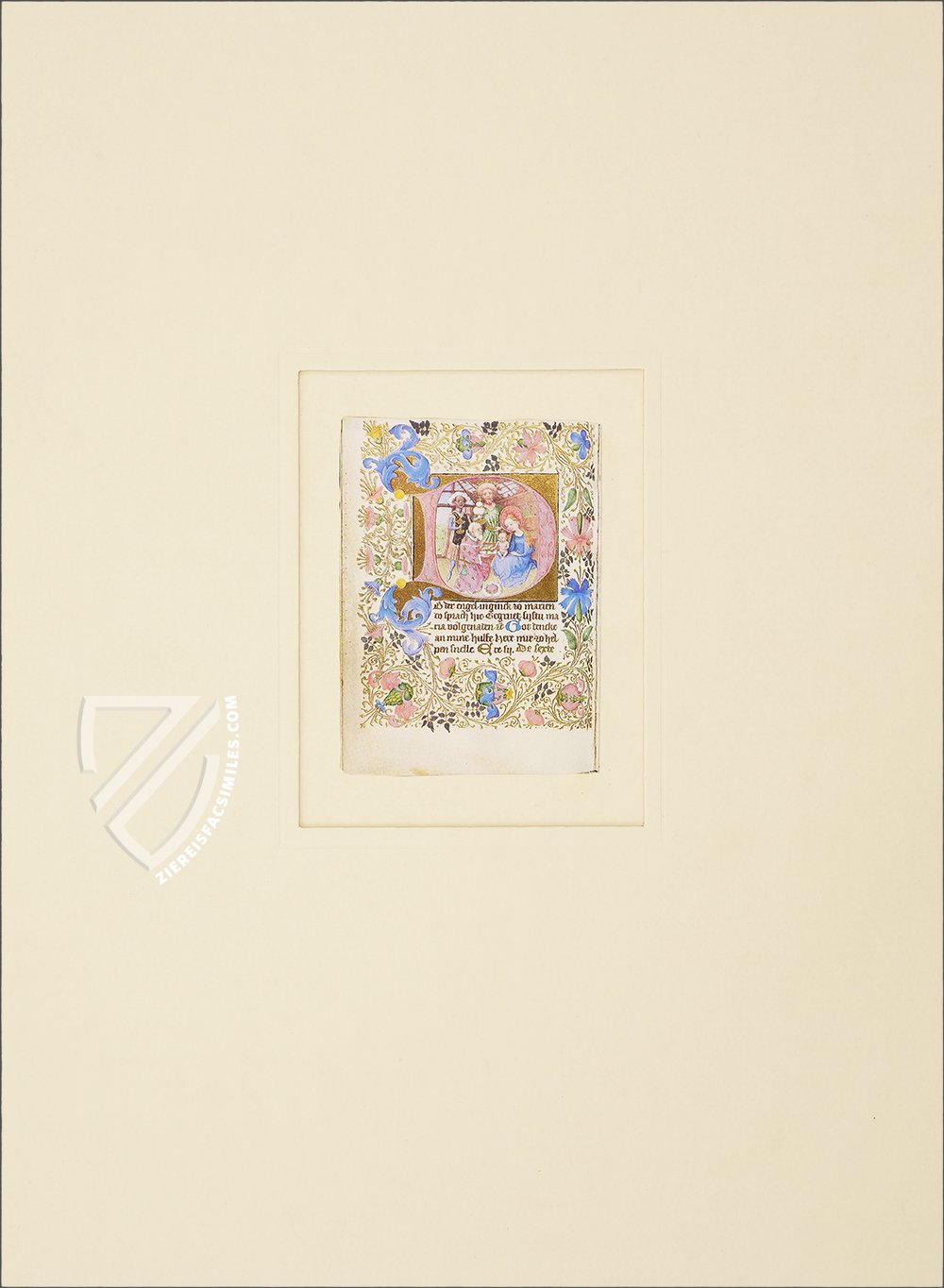
Darmstadt, Hessische Landes- und Hochschulbibliothek“D” Initial with the Adoration of the Magi
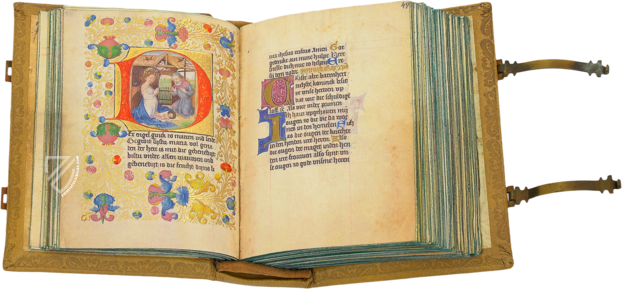
Stephan Lochner Prayer Book of 1451, Cologne, 1451
Darmstadt, Hessische Landes- und Hochschulbibliothek“D” Initial with the Presentation of Jesus at the Temple
Hours of Mary of Burgundy, Ghent or Bruges, 1470–1480
Vienna, Österreichische Nationalbibliothek“D” Initial
Sforza Hours, Milan and Ghent, ca. 1486/90 and around 1520
London, British Library
Codicology
- Alternative Titles
- Kassette Die Goldene Schrift
- Origin
- France
- Date
- 7th–16th century
- Genre
- Language
- Illustrations
- 10 miniatures
- Content
- Ten leaves from important manuscripts
- Artist / School
- Giovan Pietro Birago
Gerard Horenbout
Stefan Lochner - Previous Owners
- Bishop Eadfrith of Lindisfarne
Bona of Savoy, Duchess of Milan
Margaret of Austria
Catherine of Aragon
Mary of Burgundy
Humphrey de Bohun
Elizabeth of York, queen consort of England
The Golden Script
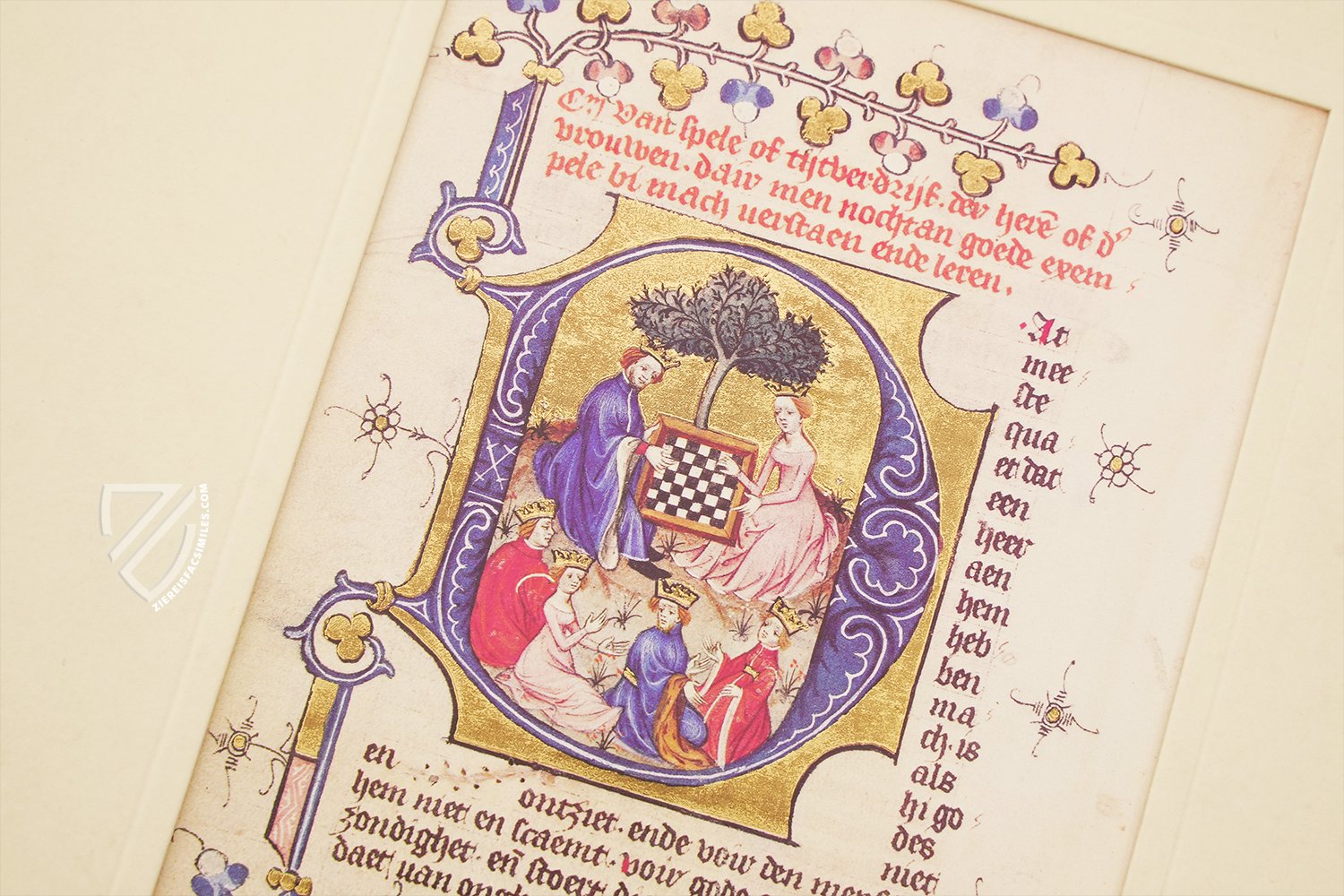
Chess – Tafel van den Kersten Ghelove
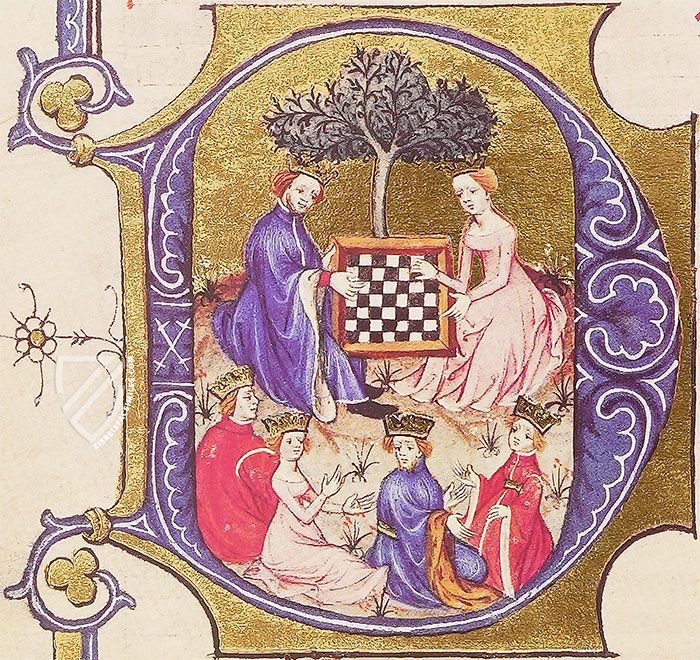
Appearing in a Dutch manuscript from ca. 1410, a king and queen playing chess are depicted in a historiated “D” initial consisting of blue acanthus leaves and a burnished gold background. They sit beneath a tree, presumably in a garden, play on a chessboard without pieces, and are accompanied by two men and two women in the foreground; all the figures wear golden crowns. Aside from being one of the most popular games among the nobility, the game of chess was used by authors like Jacobus de Cessolis as an allegory for medieval society.
The Golden Script
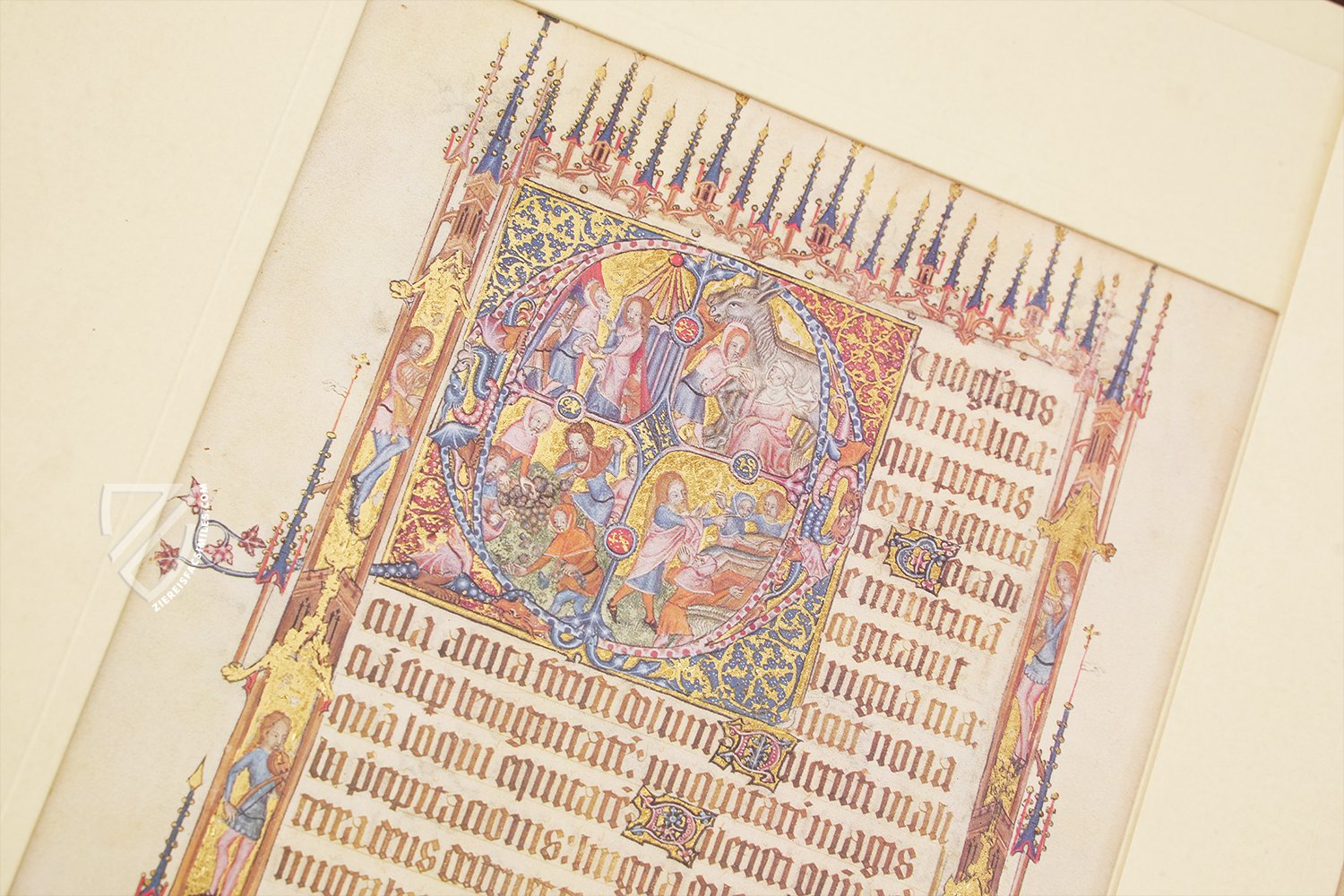
Psalm 52 – The Bohun Psalter
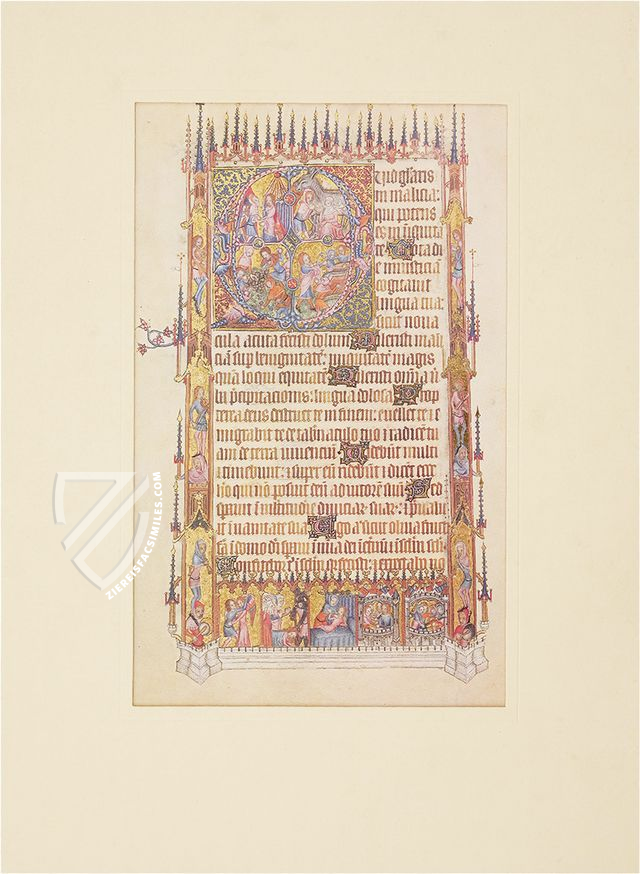
Although containing the text of Psalm 52 (or Psalm 51 in the Vulgate as it appears here), the imagery of this page from comes from the Book of Genesis and depicts scenes from the life of Jacob. The historiated “Q” initial is divided into four miniatures beginning in the upper-right corner: Jacob and Laban meet; Laban searches Rachel's tent; Laban and Jacob build the witness heap; Jacob sends presents to Esau. It is also adorned by five dragons as well as tiny medallions with the escutcheons of the Bohuns (a gold dragon on a blue field) and the English royal family (a gold dragon on a red field).
Five bas-de-page miniatures with trefoil arches decorated with crockets, finials, and pinnacles appear in the crenellated base of the architectural frame: Jacob wrestles with the angel; Jacob and Esau meet; Shechem ravishes Dinah; the Shechemites agree to be circumcised; the slaughter of the Shechemites. The tower-like structures with crocketed niches and adjoining buttressed pinnacles on either side of the text feature four pairs of musicians playing harps, fiddles, horns, and drums respectively. This late-14th century Psalter is a splendid example of the highly refined English Gothic style.
#1 Kassette Die Goldene Schrift
Language: German
(under 1,000€)
- Block Books / Incunables / Post-incunables
- Alchemy
- Apocalypses / Beatus Manuscripts
- Astronomy / Astrology
- Bibles / Gospels
- Picture Bibles / Bibles Moralisées / Mirror of Human Salvation
- Botany
- Chronicles / History / Letters
- Cookbook / Recipes
- Diaries / Biographies / Autograph Books
- Encyclopedias
- Fashion / Costume Books
- Games / Game Theory
- Geography / Cartography / Navigation
- Graduals / Antiphonaries / Exultet Roll
- Haggadot
- Hunting Books
- Law / Deeds / Rules
- Leonardo da Vinci
- Literature / Poetry
- Medicine
- Missals / Lectionaries / Sacramentaries
- Model Books / Sketchbooks / Notebooks
- Music
- Mythology
- Natural History / Bestiaries
- Other Liturgical Manuscripts
- Other Religious Works
- Other Secular Works
- Paintings / Graphics
- Primers / Textbooks
- Private Devotion Books
- Prophecies / Divination
- Psalters
- Quran
- Saints' Lives
- Sermons / Homilies
- Single Leaf Collections
- Song Books
- Tanakh
- Tournament Books / Armorials / Genealogy
- Travelogues / Travel Guides
- Treatises
- Afghanistan
- Algeria
- Armenia
- Austria
- Azerbaijan
- Belarus
- Belgium
- Belize
- Bosnia and Herzegovina
- China
- Colombia
- Costa Rica
- Croatia
- Cyprus
- Czech Republic
- Denmark
- Egypt
- El Salvador
- Ethiopia
- France
- Germany
- Greece
- Guatemala
- Honduras
- Hungary
- India
- Iran
- Iraq
- Israel
- Italy
- Japan
- Jordan
- Kazakhstan
- Kyrgyzstan
- Lebanon
- Libya
- Liechtenstein
- Luxembourg
- Mexico
- Morocco
- Netherlands
- Palestine
- Panama
- Peru
- Poland
- Portugal
- Romania
- Russia
- Serbia
- Slovakia
- Spain
- Sri Lanka
- Sweden
- Switzerland
- Syria
- Tajikistan
- Tunisia
- Turkey
- Turkmenistan
- Ukraine
- United Kingdom
- United States
- Uzbekistan
- Vatican City
- A. Oosthoek, van Holkema & Warendorf
- Aboca Museum
- Ajuntament de Valencia
- Akademie Verlag
- Akademische Druck- u. Verlagsanstalt (ADEVA)
- Aldo Ausilio Editore - Bottega d’Erasmo
- Alecto Historical Editions
- Alkuin Verlag
- Almqvist & Wiksell
- Amilcare Pizzi
- Andreas & Andreas Verlagsbuchhandlung
- Archa 90
- Archiv Verlag
- Archivi Edizioni
- Arnold Verlag
- ARS
- Ars Magna
- Ars Millenii
- Art Market
- ArtCodex
- AyN Ediciones
- Azimuth Editions
- Badenia Verlag
- Bärenreiter-Verlag
- Belser Verlag
- Belser Verlag / WK Wertkontor
- Benziger Verlag
- Bernardinum Wydawnictwo
- BiblioGemma
- Biblioteca Apostolica Vaticana (Vaticanstadt, Vaticanstadt)
- Bibliotheca Palatina Faksimile Verlag
- Bibliotheca Rara
- Boydell & Brewer
- Bramante Edizioni
- Bredius Genootschap
- Brepols Publishers
- British Library
- Brokarte
- C. Weckesser
- Caixa Catalunya
- Canesi
- CAPSA, Ars Scriptoria
- Caratzas Brothers, Publishers
- Carus Verlag
- Casamassima Libri
- Centrum Cartographie Verlag GmbH
- Chavane Verlag
- Christian Brandstätter Verlag
- Circulo Cientifico
- Club Bibliófilo Versol
- Club du Livre
- Club Internacional del Libro
- CM Editores
- Collegium Graphicum
- Collezione Apocrifa Da Vinci
- Comissão Nacional para as Comemorações dos Descobrimentos Portugueses
- Coron Verlag
- Corvina
- CTHS
- D. S. Brewer
- Damon
- De Agostini/UTET
- De Nederlandsche Boekhandel
- De Schutter
- Deuschle & Stemmle
- Deutscher Verlag für Kunstwissenschaft
- DIAMM
- Dropmore Press
- Droz
- E. Schreiber Graphische Kunstanstalten
- Ediciones Boreal
- Ediciones Grial
- Ediclube
- Edições Inapa
- Edilan
- Editalia
- Edition Deuschle
- Edition Georg Popp
- Edition Leipzig
- Edition Libri Illustri
- Editiones Reales Sitios S. L.
- Éditions de l'Oiseau Lyre
- Editions Medicina Rara
- Editorial Base
- Editorial Casariego
- Editorial Mintzoa
- Editrice Antenore
- Editrice Velar
- Edizioni Edison
- Egeria, S.L.
- Eikon Editores
- Electa
- Emery Walker Limited
- Enciclopèdia Catalana
- Eos-Verlag
- Ephesus Publishing
- Ernst Battenberg
- Eugrammia Press
- Extraordinary Editions
- Fackelverlag
- Facsimila Art & Edition
- Facsimile Editions Ltd.
- Facsimilia Art & Edition Ebert KG
- Faksimile Verlag
- Feuermann Verlag
- Folger Shakespeare Library
- Franco Cosimo Panini Editore
- Friedrich Wittig Verlag
- Fundación Hullera Vasco-Leonesa
- G. Braziller
- Gabriele Mazzotta Editore
- Gebr. Mann Verlag
- Gesellschaft für graphische Industrie
- Getty Research Institute
- Giovanni Domenico de Rossi
- Giunti Editore
- Goldenmark Librarium
- Graffiti
- Grafica European Center of Fine Arts
- Guido Pressler
- Guillermo Blazquez
- Gustav Kiepenheuer
- H. N. Abrams
- Harrassowitz
- Harvard University Press
- Helikon
- Hendrickson Publishers
- Henning Oppermann
- Herder Verlag
- Hes & De Graaf Publishers
- Hoepli
- Holbein-Verlag
- Houghton Library
- Hugo Schmidt Verlag
- Hungarian Academy of Sciences
- Idion Verlag
- Il Bulino, edizioni d'arte
- ILte
- Imago
- In Officina Danesi
- Insel Verlag
- Instituto de Estudios Altoaragoneses
- Instituto Nacional de Antropología e Historia
- Introligatornia Budnik Jerzy
- Istituto dell'Enciclopedia Italiana - Treccani
- Istituto Ellenico di Studi Bizantini e Postbizantini
- Istituto Geografico De Agostini
- Istituto Poligrafico e Zecca dello Stato
- Italarte Art Establishments
- Jaca Book
- Jan Thorbecke Verlag
- Johnson Reprint Corporation
- Johnson Reprint Corporation
- Jos. Baer
- Josef Stocker
- Josef Stocker-Schmid
- Jugoslavija
- Karl W. Hiersemann
- Kasper Straube
- Kaydeda Ediciones
- Kindler Verlag / Coron Verlag
- Kodansha International Ltd.
- Konrad Kölbl Verlag
- Kurt Wolff Verlag
- La Linea Editrice
- La Meta Editore
- Lambert Schneider
- Landeskreditbank Baden-Württemberg
- Leo S. Olschki
- Les Incunables
- Liber Artis
- Library of Congress
- Libreria Musicale Italiana
- Lichtdruck
- Lito Immagine Editore
- Lumen Artis
- Lund Humphries
- M. Moleiro Editor
- Maison des Sciences de l'homme et de la société de Poitiers
- Manuscriptum
- Martinus Nijhoff
- Maruzen-Yushodo Co. Ltd.
- MASA
- Massada Publishers
- McGraw-Hill
- Metropolitan Museum of Art
- Militos
- Millennium Liber
- Müller & Schindler
- Nahar - Stavit
- Nahar and Steimatzky
- National Library of Wales
- Neri Pozza
- Nova Charta
- Oceanum Verlag
- Odeon
- Omnia Arte
- Orbis Mediaevalis
- Orbis Pictus
- Österreichische Staatsdruckerei
- Oxford University Press
- Pageant Books
- Parzellers Buchverlag
- Patrimonio Ediciones
- Pattloch Verlag
- PIAF
- Plon-Nourrit et cie
- Poligrafiche Bolis
- Presses Universitaires de Strasbourg
- Prestel Verlag
- Princeton University Press
- Prisma Verlag
- Priuli & Verlucca, editori
- Pro Sport Verlag
- Propyläen Verlag
- Pytheas Books
- Quaternio Verlag Luzern
- Reales Sitios
- Recht-Verlag
- Reichert Verlag
- Reichsdruckerei
- Reprint Verlag
- Riehn & Reusch
- Rizzoli
- Roberto Vattori Editore
- Rosenkilde and Bagger
- Roto-Sadag
- Roxburghe Club
- Salerno Editrice
- Saltellus Press
- Sandoz
- Sarajevo Svjetlost
- Schöck ArtPrint Kft.
- Schulsinger Brothers
- Scolar Press
- Scrinium
- Scripta Maneant
- Scriptorium
- Shazar
- Siloé, arte y bibliofilia
- SISMEL - Edizioni del Galluzzo
- Sociedad Mexicana de Antropología
- Société des Bibliophiles & Iconophiles de Belgique
- Soncin Publishing
- Sorli Ediciones
- Stainer and Bell
- Studer
- Styria Verlag
- Sumptibus Pragopress
- Szegedi Tudomànyegyetem
- Taberna Libraria
- Tarshish Books
- Taschen
- Tempus Libri
- Testimonio Compañía Editorial
- TGB Limited Editions
- Thames and Hudson
- The Clear Vue Publishing Partnership Limited
- The Facsimile Codex
- The Folio Society
- The Marquess of Normanby
- The Orphan Hospital Ward of Israel
- The Richard III and Yorkist History Trust
- The Warburg Institute
- Tip.Le.Co
- TouchArt
- TREC Publishing House
- TRI Publishing Co.
- Trident Editore
- Tuliba Collection
- Typis Regiae Officinae Polygraphicae
- Union Verlag Berlin
- Universidad de Granada
- Universitaire Bibliotheken Leiden
- University of California Press
- University of Chicago Press
- Urs Graf
- Vallecchi
- Van Wijnen
- VCH, Acta Humaniora
- VDI Verlag
- VEB Deutscher Verlag für Musik
- Verein Schweizerischer Lithographie-Besitzer
- Verlag Anton Pustet / Andreas Verlag
- Verlag Bibliophile Drucke Josef Stocker
- Verlag der Münchner Drucke
- Verlag für Regionalgeschichte
- Verlag Styria
- Vicent Garcia Editores
- W. Turnowsky
- Waanders Printers
- Wiener Mechitharisten-Congregation (Wien, Österreich)
- Wissenschaftliche Buchgesellschaft
- Wissenschaftliche Verlagsgesellschaft
- Wydawnictwo Dolnoslaskie
- Xuntanza Editorial
- Zakład Narodowy
- Zollikofer AG