
Treatise on Arithmetic and Geometry by Filippo Calandri
Florence (Italy) — 1491
For the proper education of a future pope: golden arithmetic tables and splendidly illuminated texts on arithmetic and geometry, commissioned by Lorenzo de’ Medici for his son Giovanni, the future Pope Leo X
Lorenzo de' Medici (1449–1492) commissioned this work for his son Giovanni, the later Pope Leo X (1475–1521)
It was intended to teach the Medici offspring arithmetic and the basics of banking
The text by Filippo Calandri was beautifully illuminated by Giovanni Boccardo among others
Treatise on Arithmetic and Geometry by Filippo Calandri

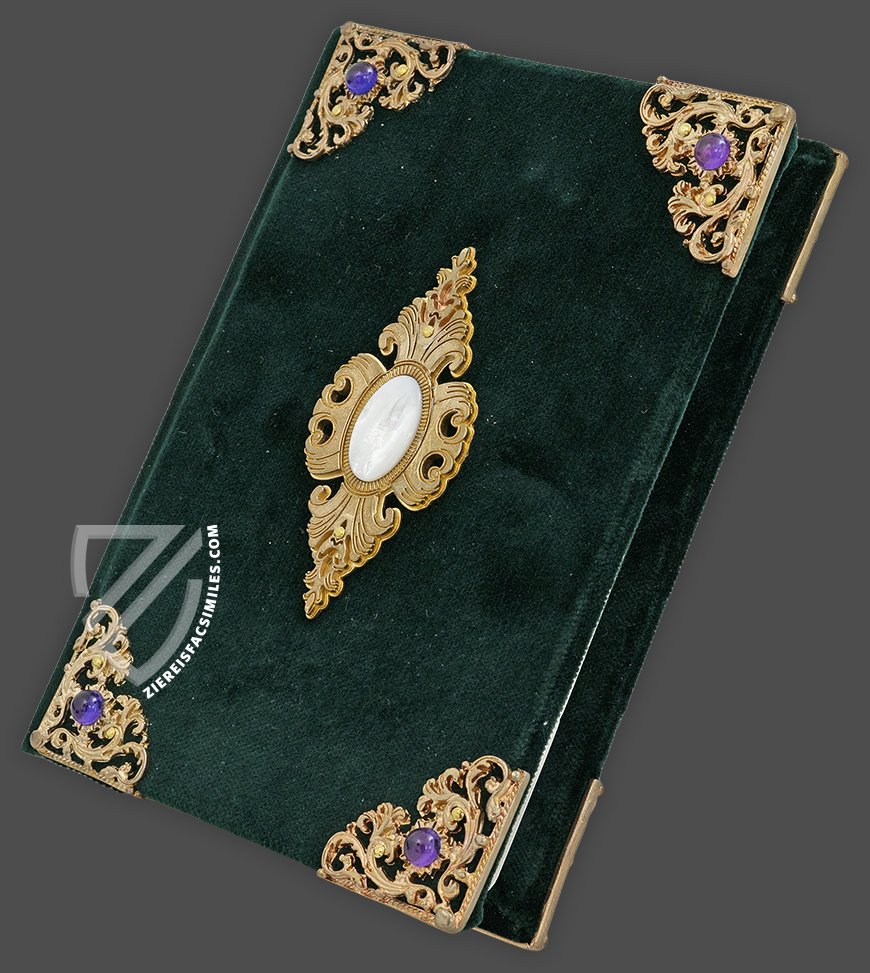
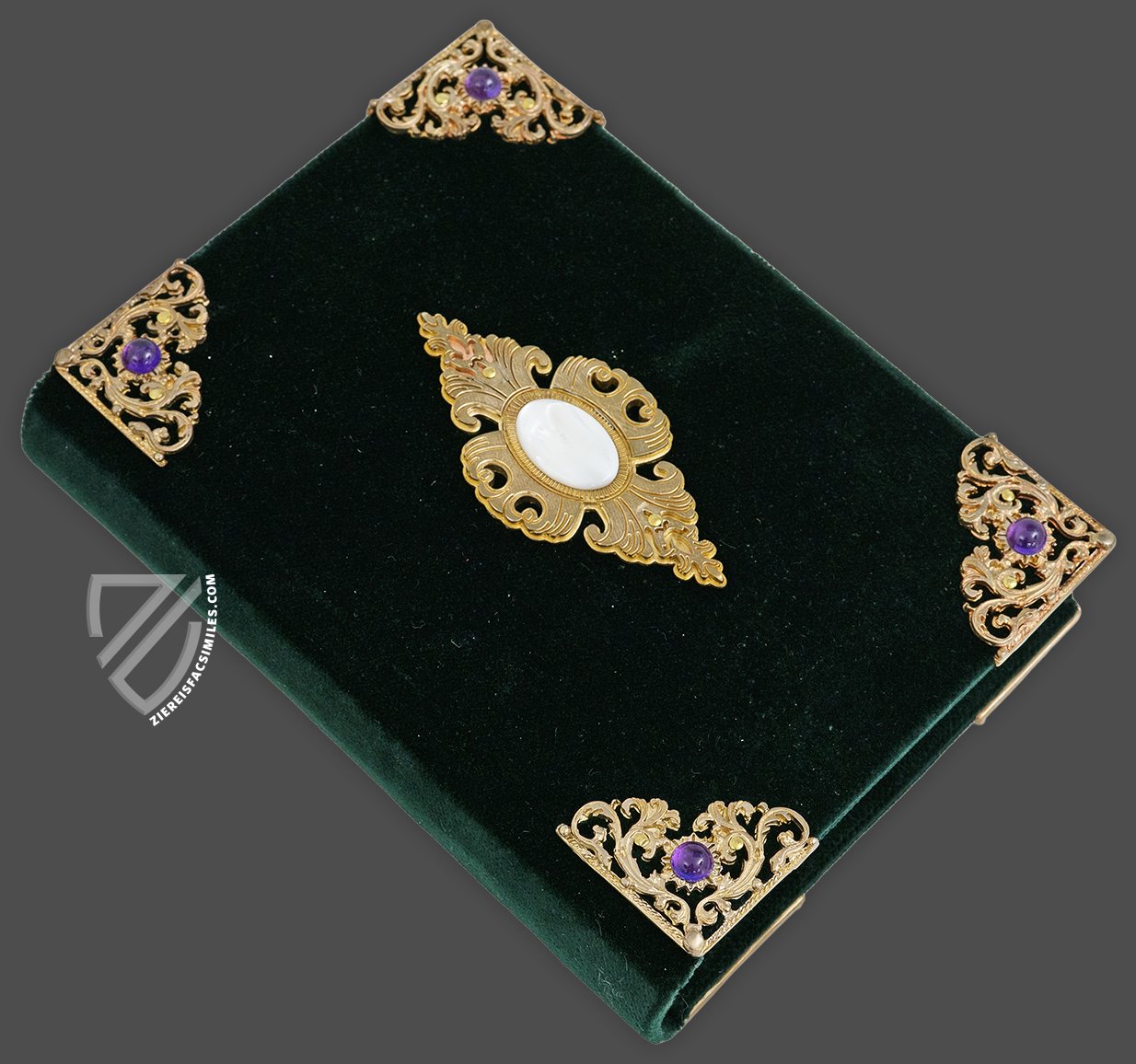
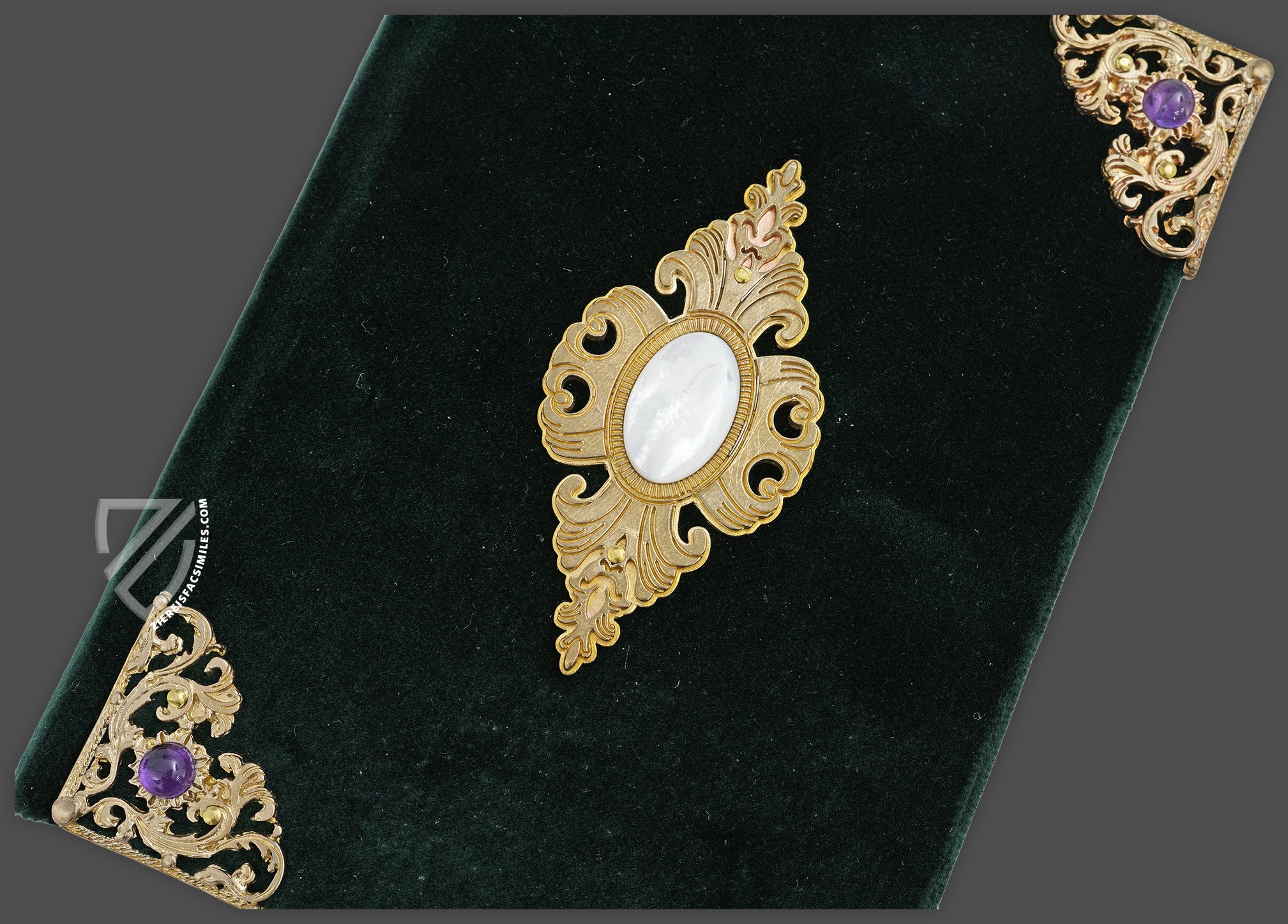
(1,000€ - 3,000€)
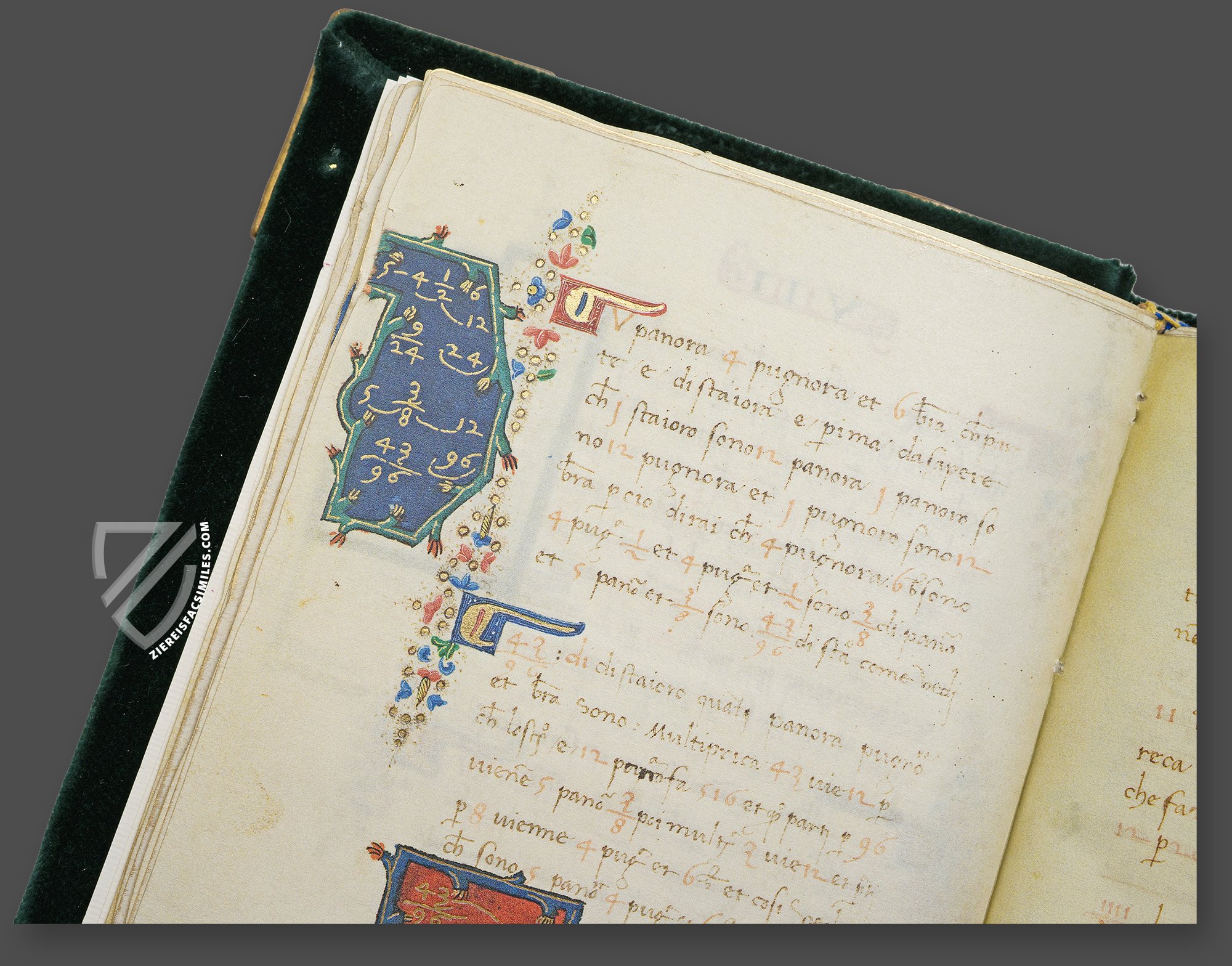
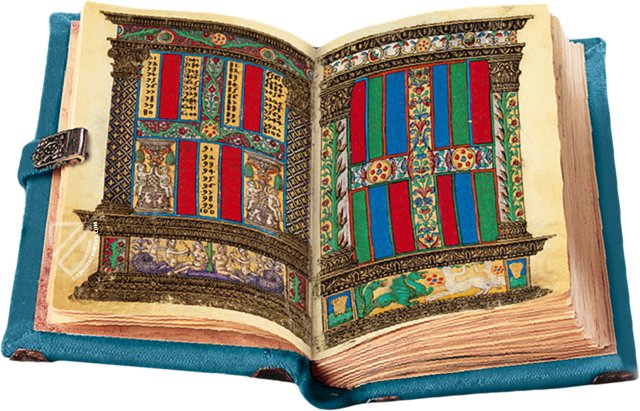
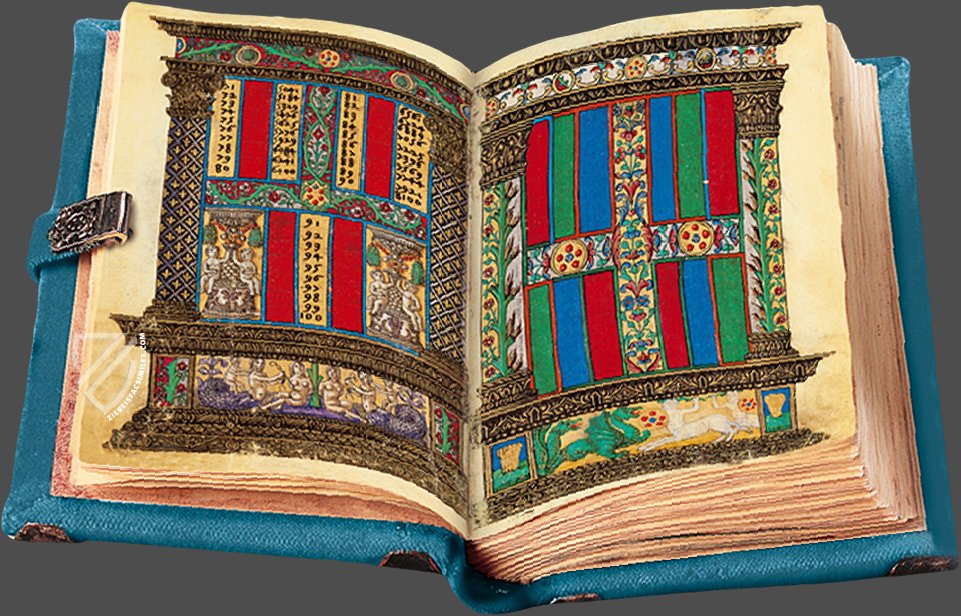
The Treatise on Arithmetic of Lorenzo I de’ Medici, known as the Magnificent, was probably intended as an instructional book for his son Giovanni, the future Pope Leo X. The Medici dominated European finance through their exceptional banking expertise, and it is therefore fitting that knowledge of arithmetic and commerce should be passed down within the family. The magnificently decorated manuscript contains a treatise on arithmetic and geometry by Filippo Calandri, preceded by a series of panels featuring individual representations of numbers. This mathematical work, like the numerous miniatures throughout the text, abounds in rich ornamentation, figurative imagery, and, above all, the Medici coat of arms. Every page gleams with the use of precious gold. Thus, this manuscript, created in Florence in 1491, represents a remarkable luxury object in which artistic splendor clearly takes precedence over purely didactic purpose.
Treatise on Arithmetic and Geometry by Filippo Calandri
The Treatise on Arithmetic of Lorenzo I de Medici, named the Magnificent, probably served as an instructional book for his son Giovanni, the later Pope Leo X. The Medici were hegemonic in their banking prowess, and so it is fitting that their banking and arithmetic should be handed down. The magnificently decorated manuscript contains a treatise on arithmetic and geometry by Filippo Calandri, which prepend several panels with singular paintings of one or more numbers. This mathematical work is, like its countless miniatures in the text, overflowing with ornaments, figurative depictions, and, above all, the Medici Coat of Arms. Everything shines with precious gold. Thus, this edition, which was printed in Florence in 1491, represents a singular luxury object that subordinates its didactic utility to the artistic phenomenon.
A Medici Contract
The famous patron of the manuscript, Lorenzo I. de Medici (1449–1492), the famous member of the influential Medici dynasty in Florence, was also a patron of art. Banking is unquestionably connected to the Medici. They founded a modern system of banking, which was ruled by them, and were even the bankers of the Popes. Lorenzo’s son Giovanni, the later Pope Leo X, would have been made familiar with banking and arithmetic lessons through this manuscript, as well as gaining a humanistic education.
Golden Images for a Mathematical Education
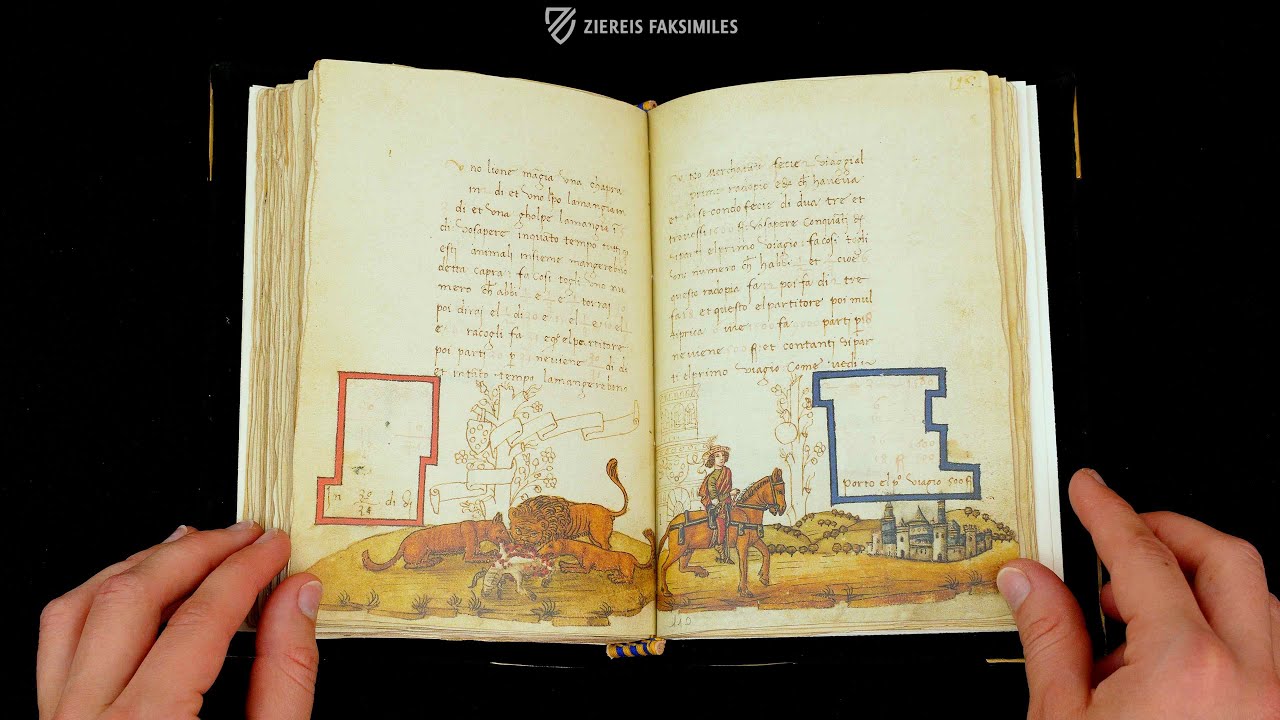
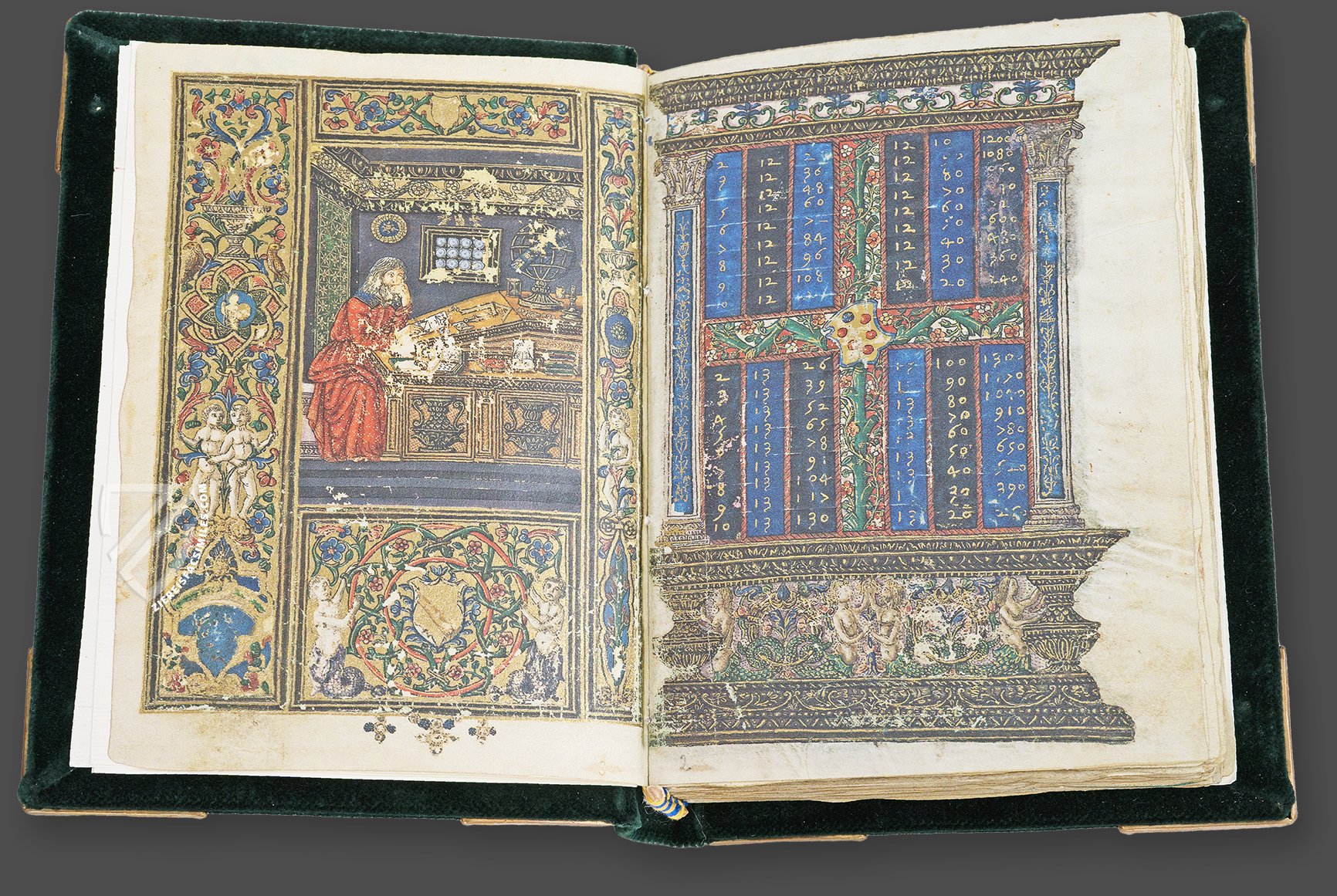
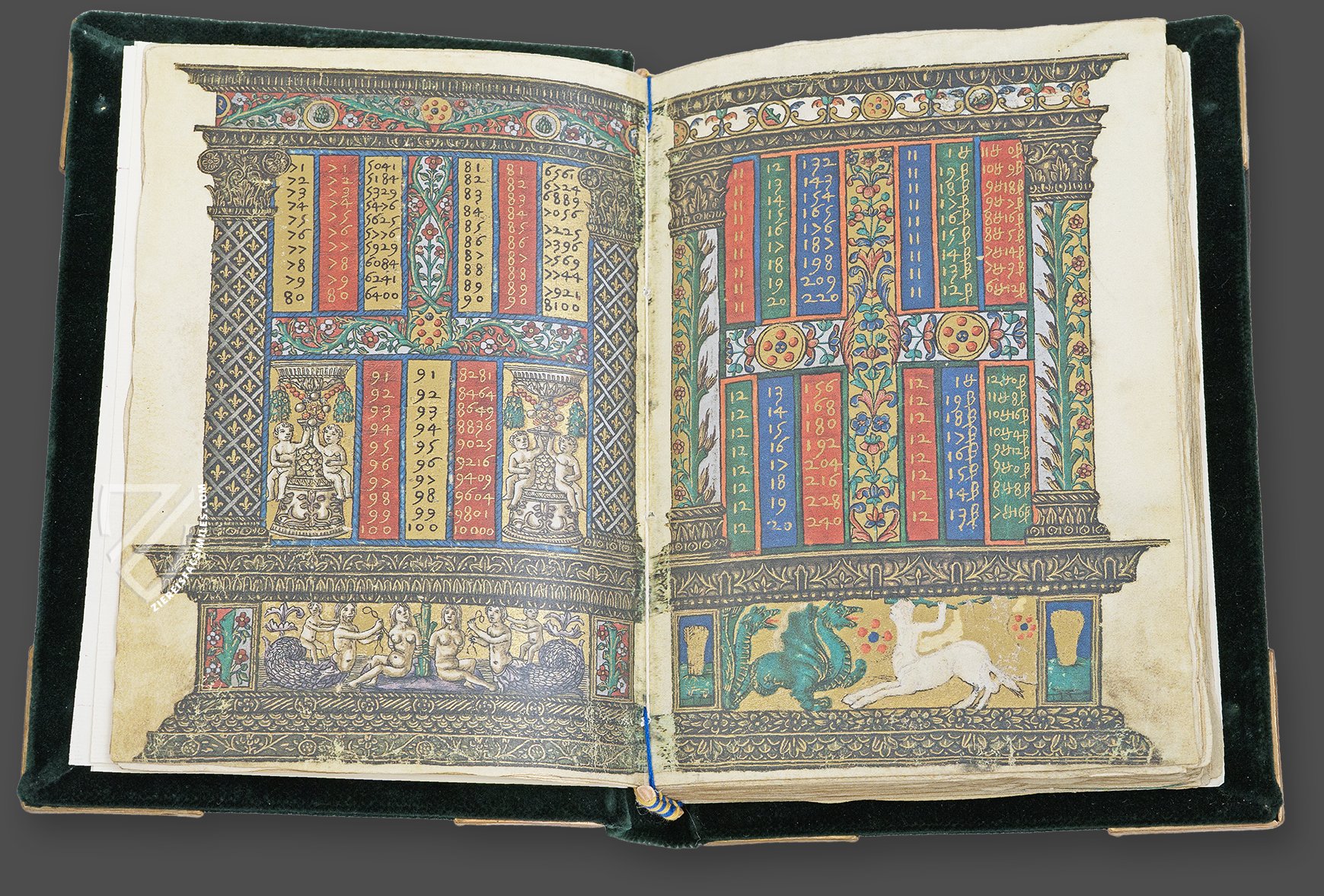
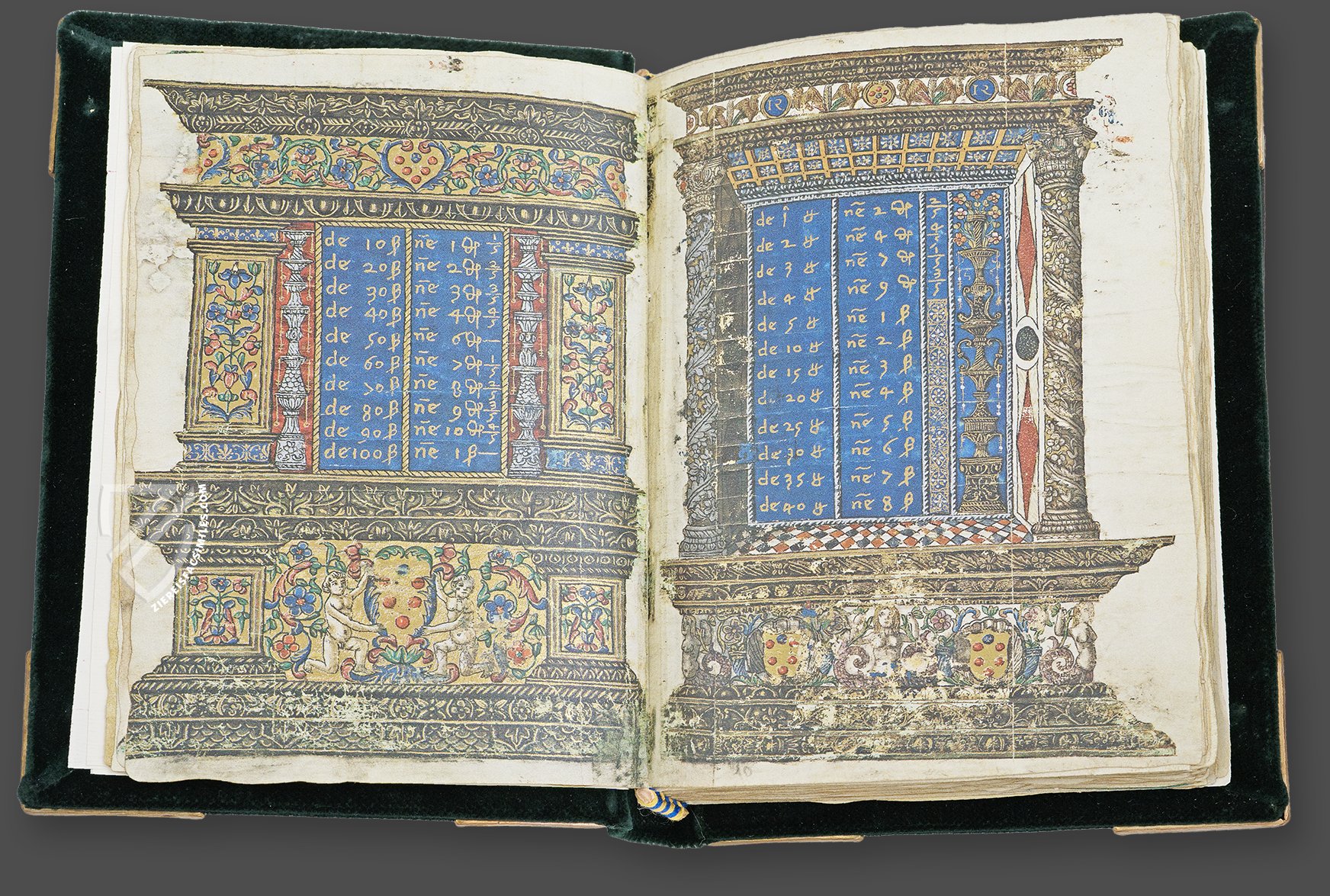
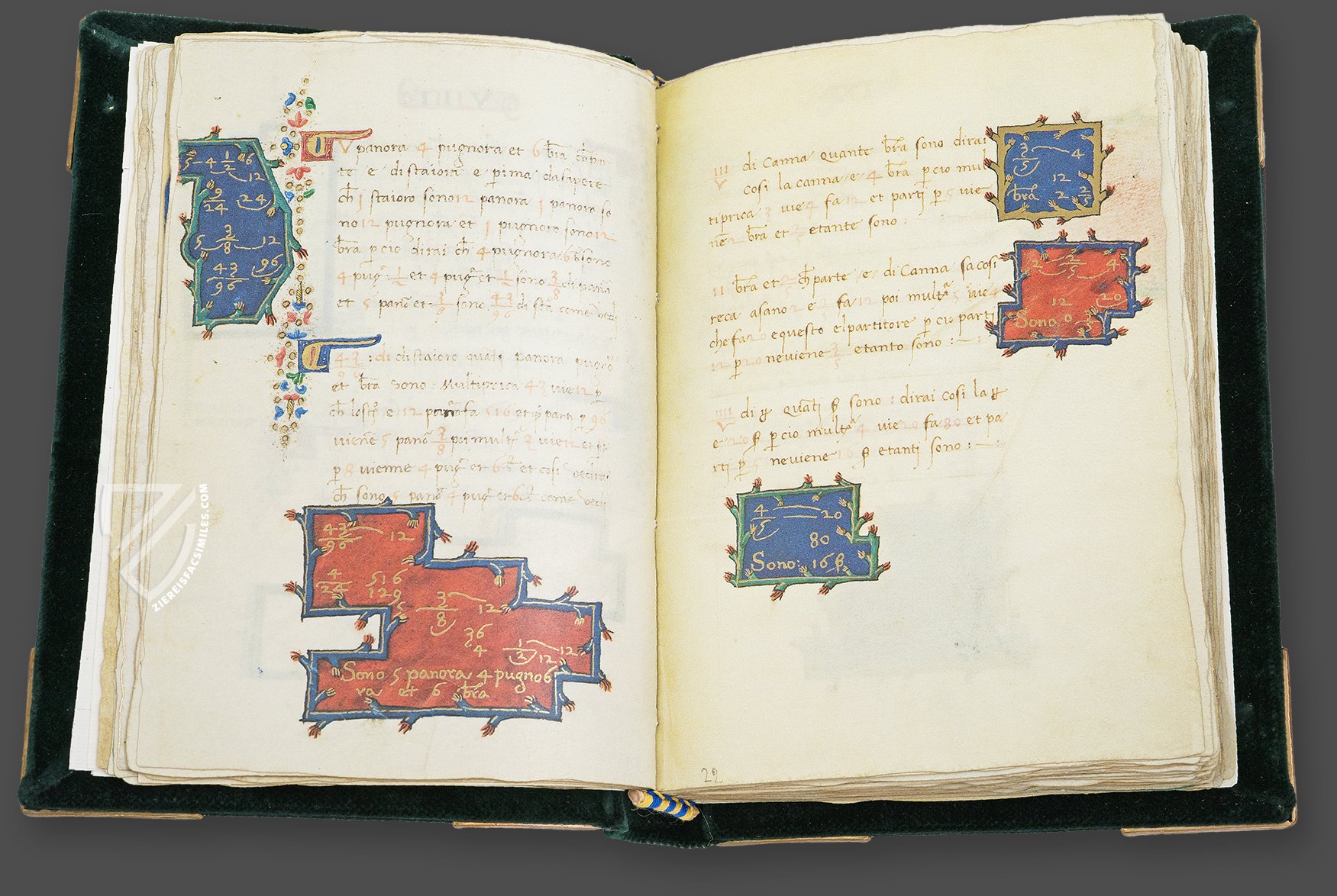
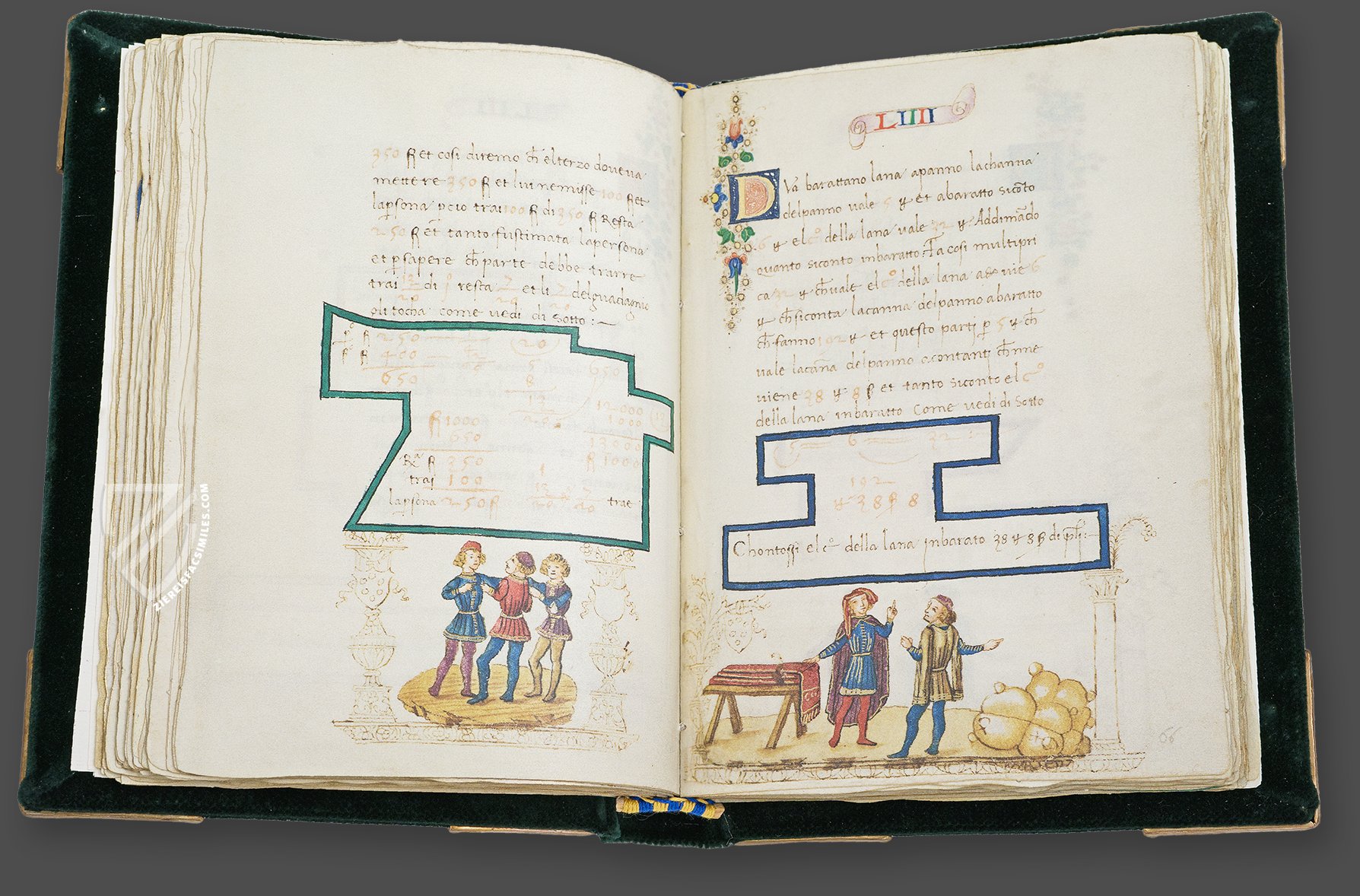
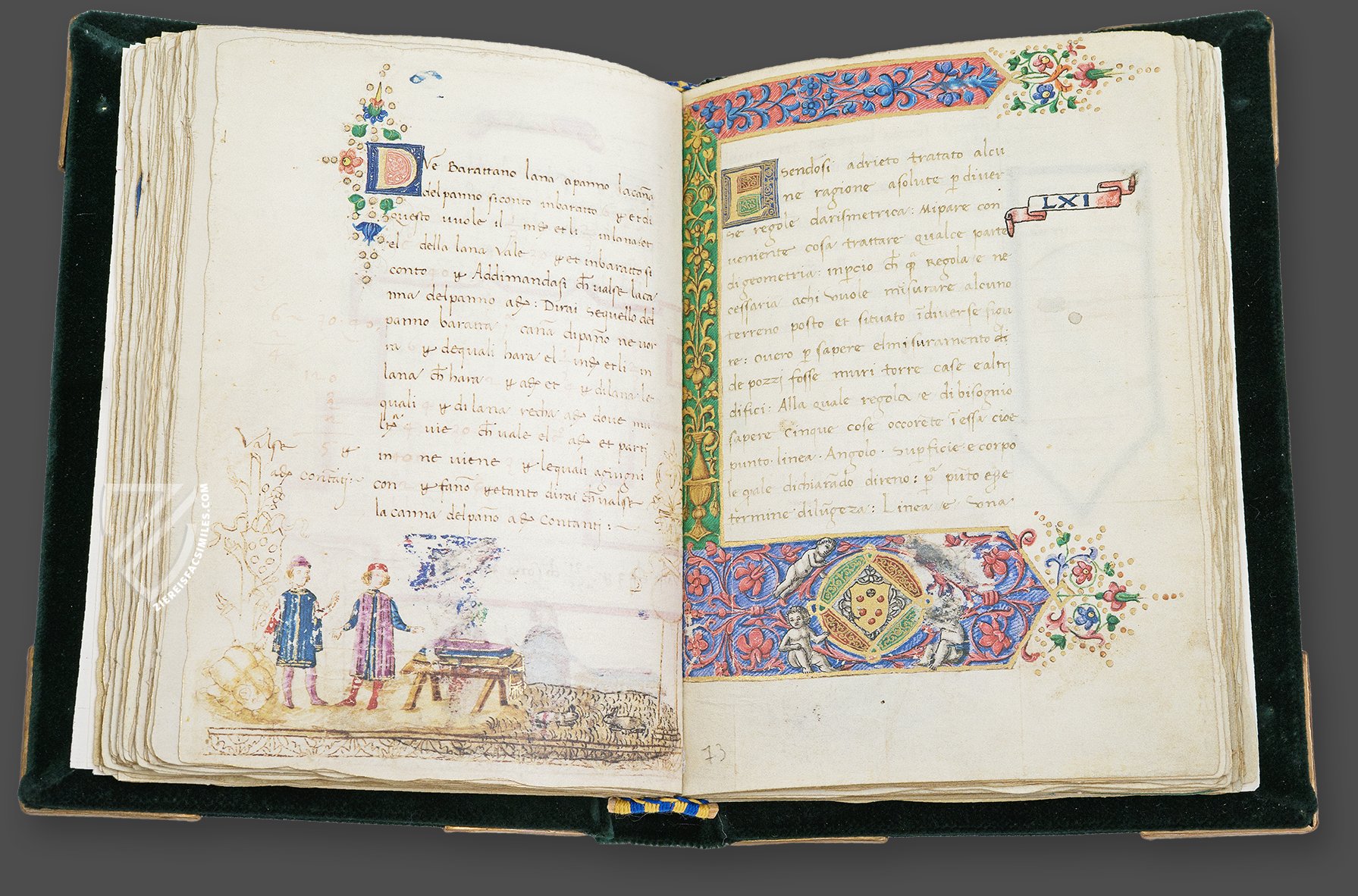
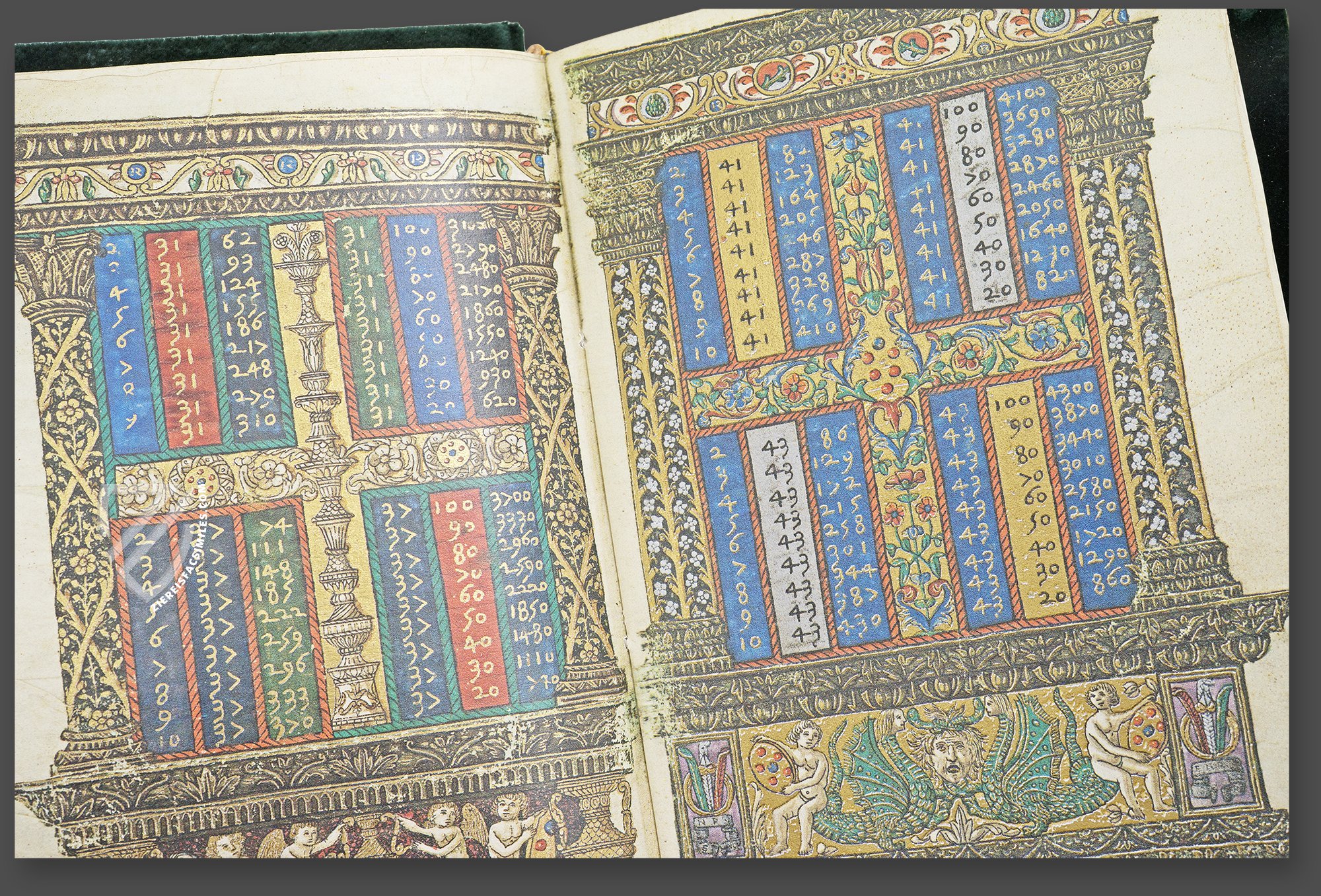
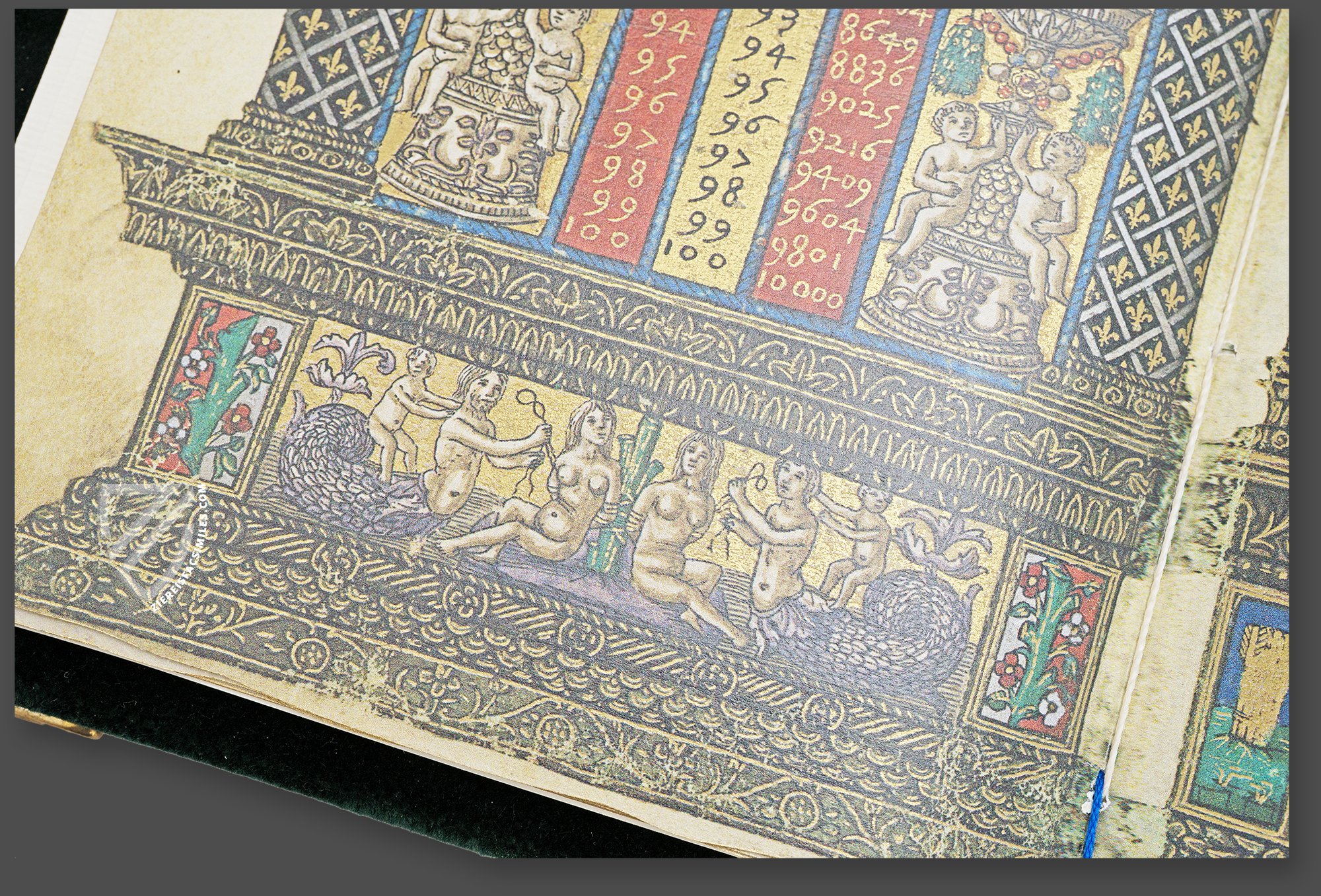
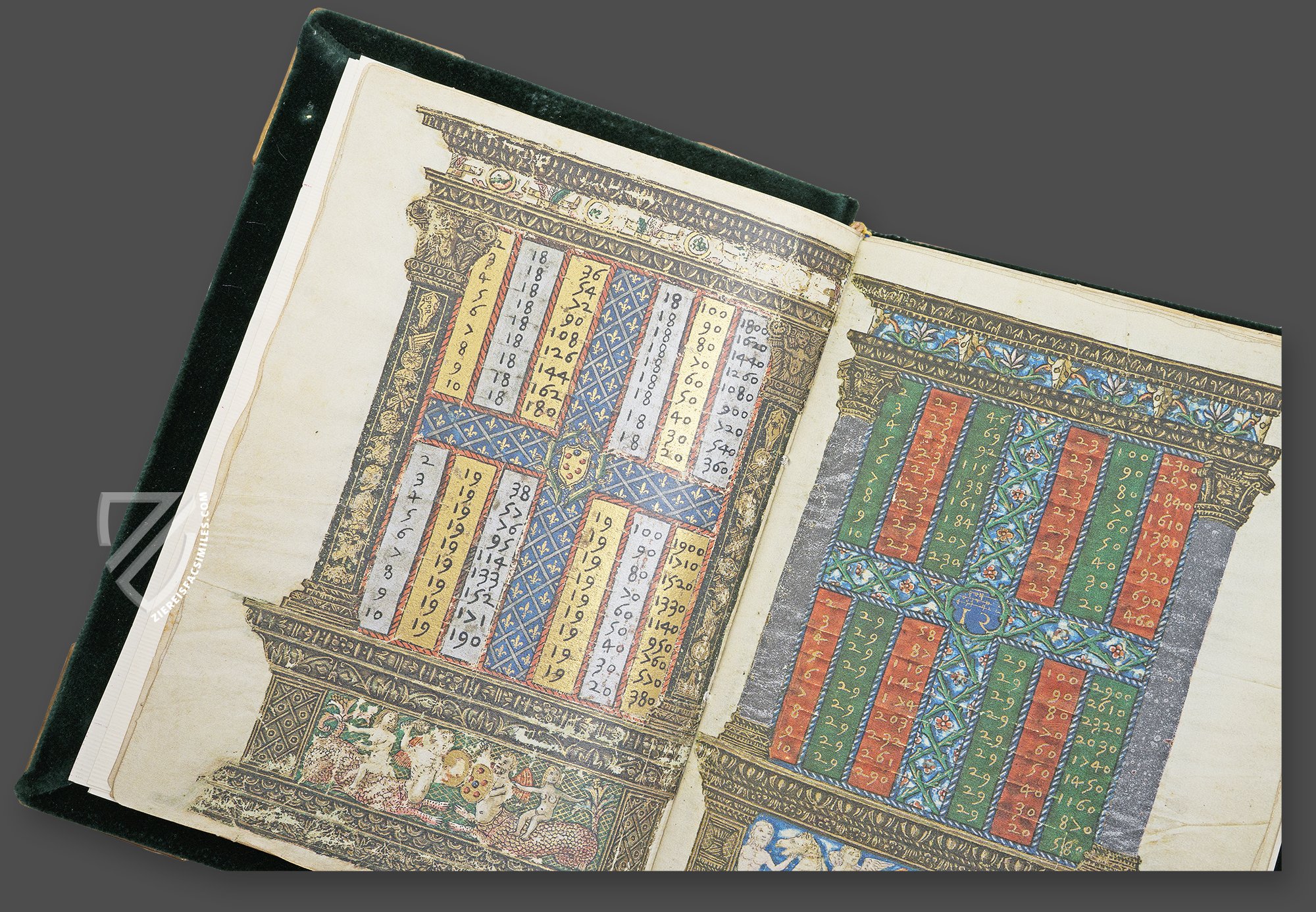
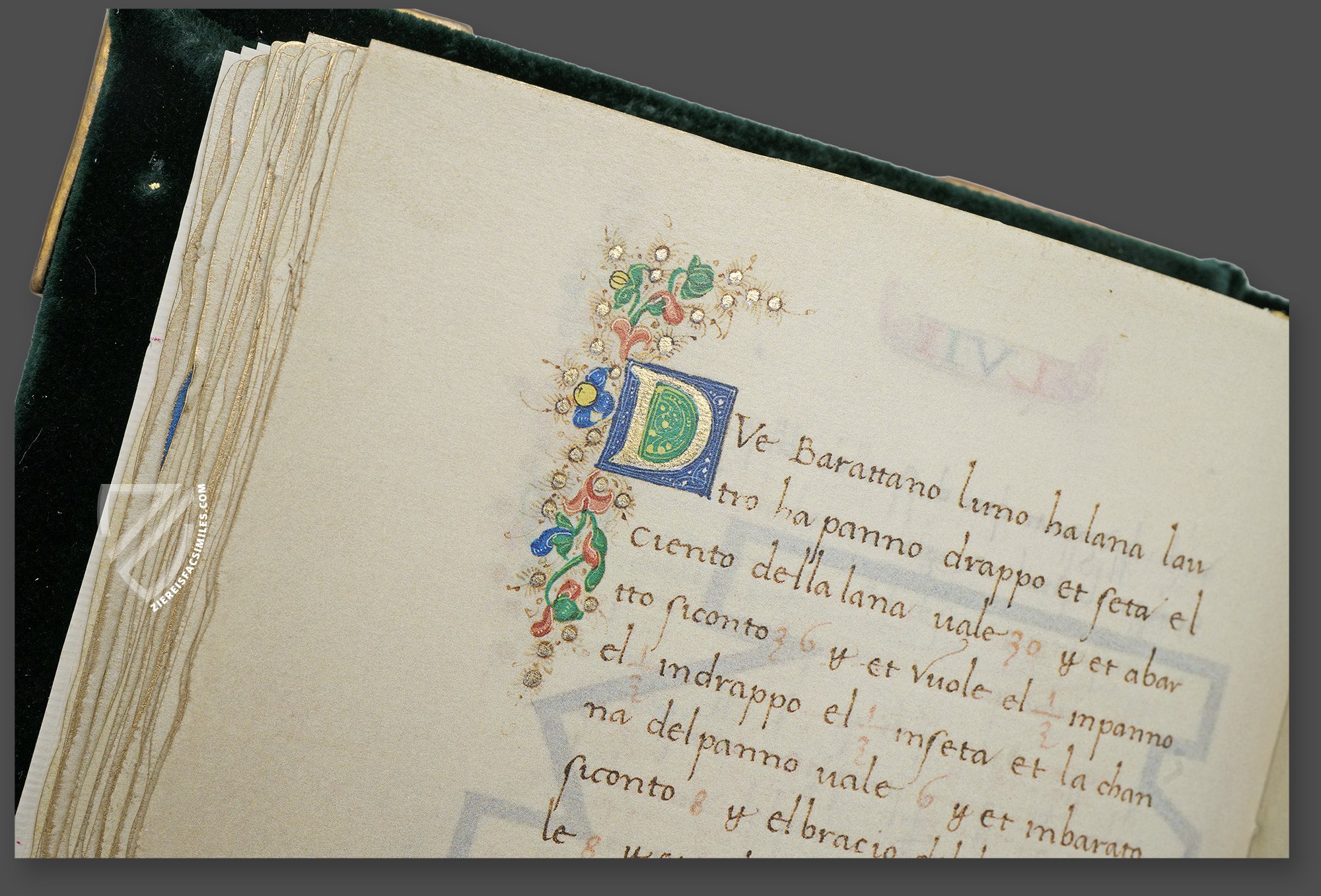
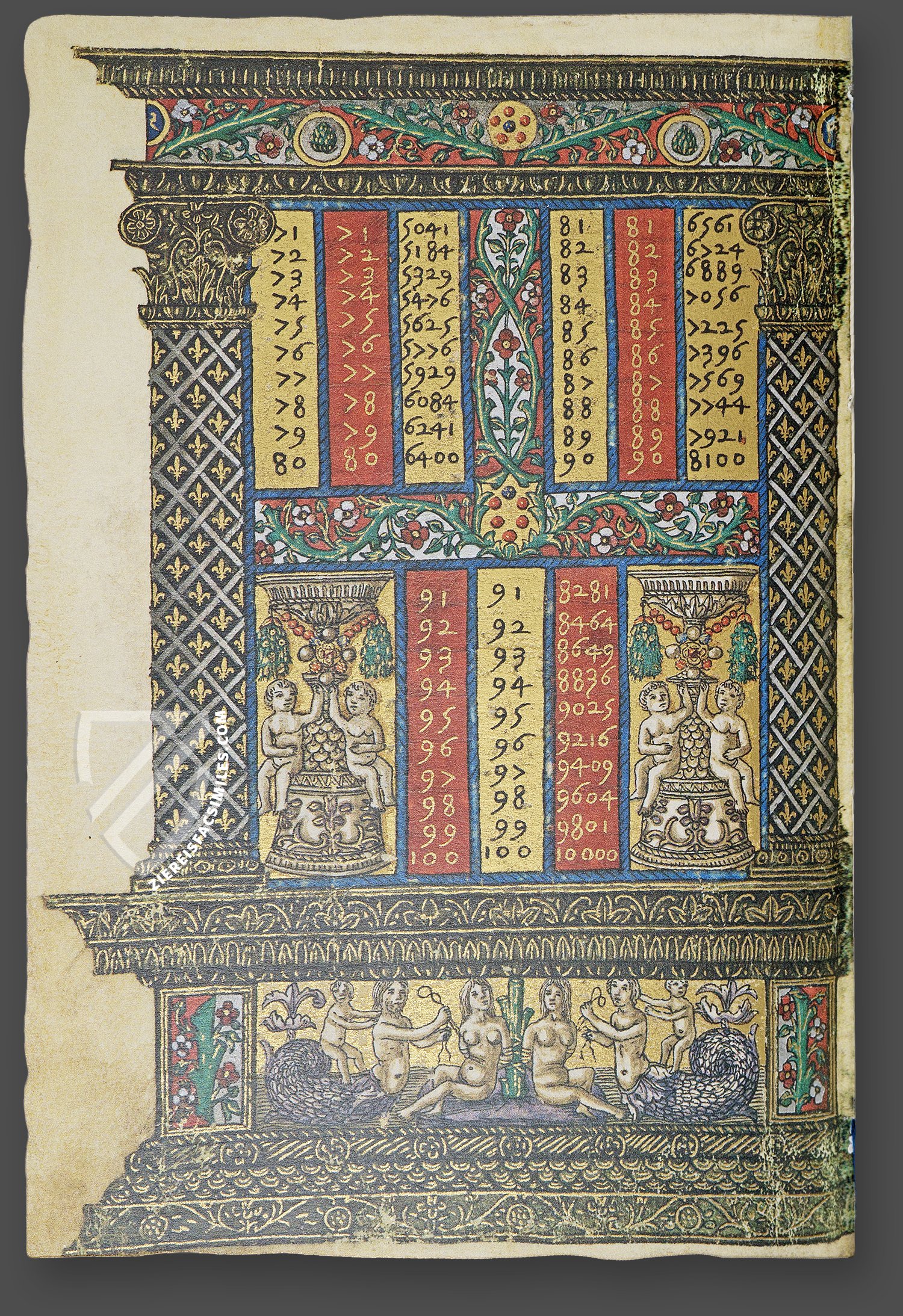
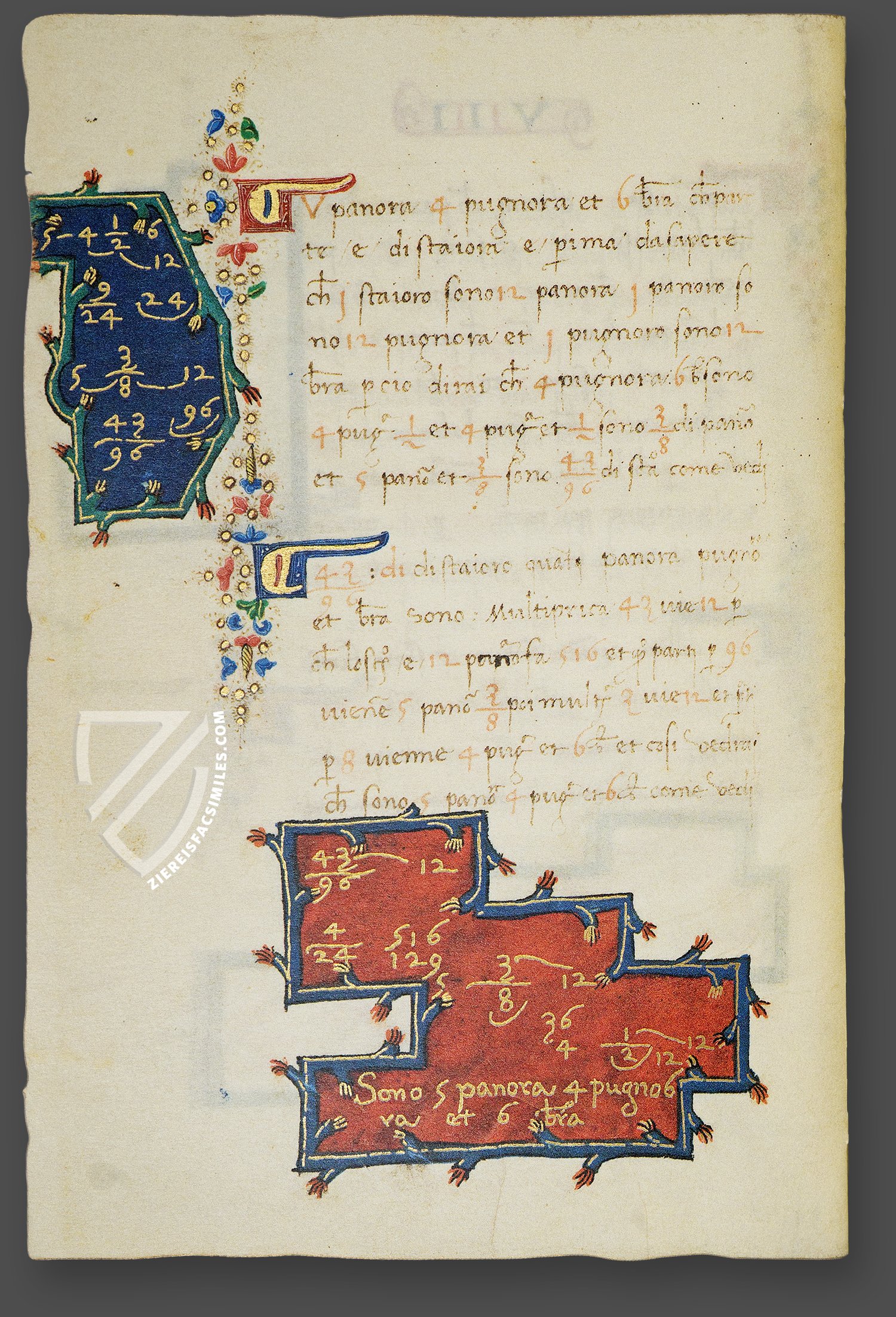
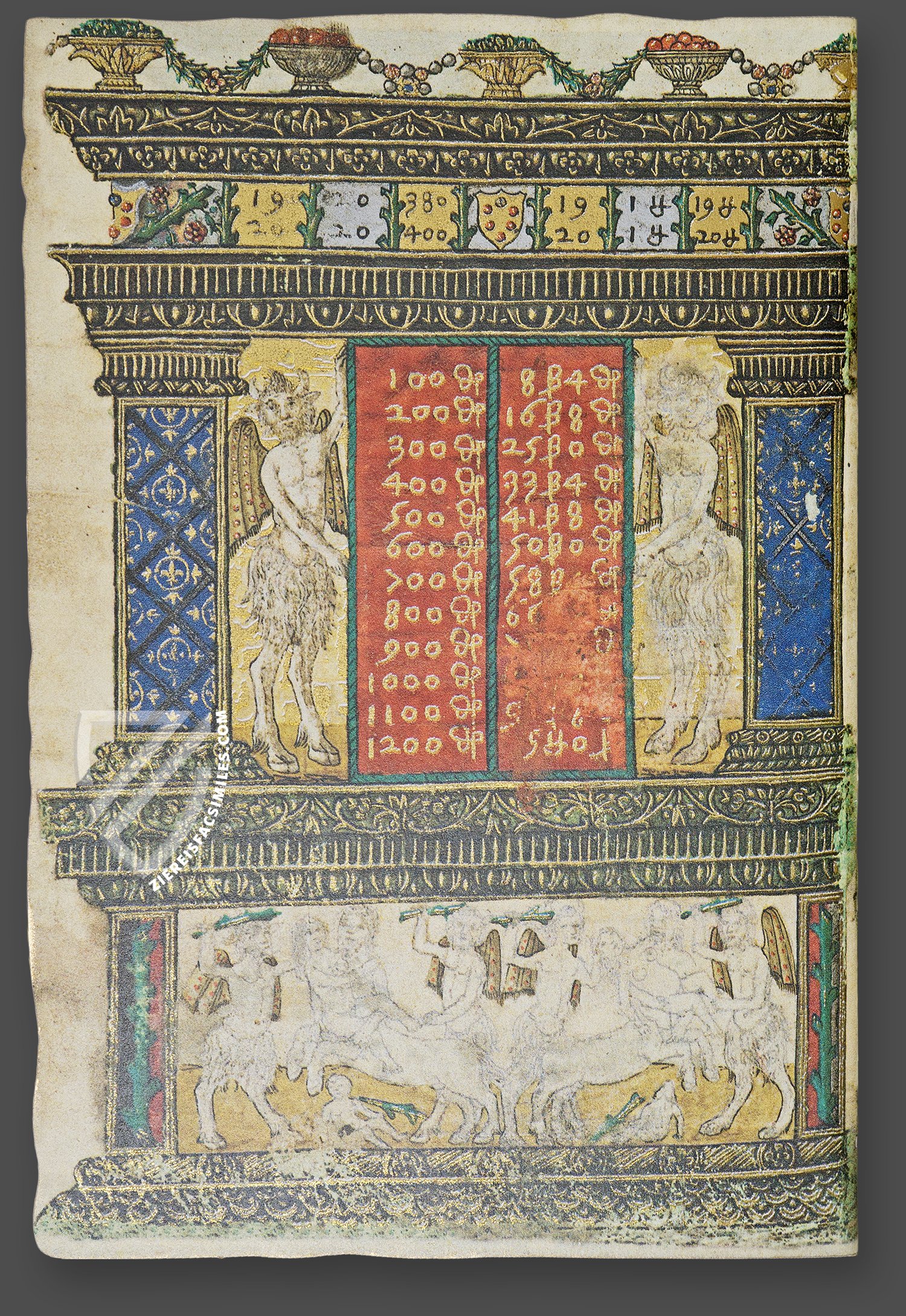
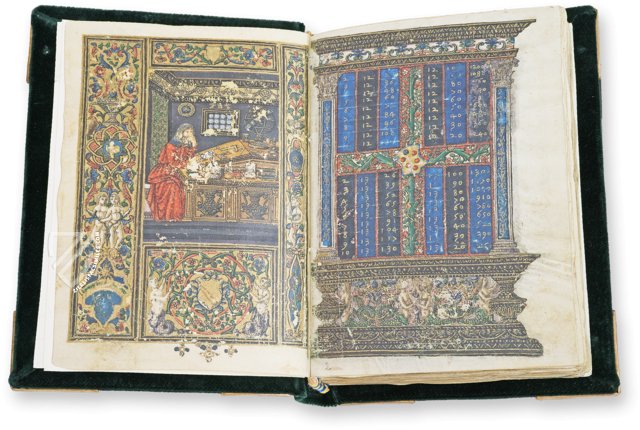
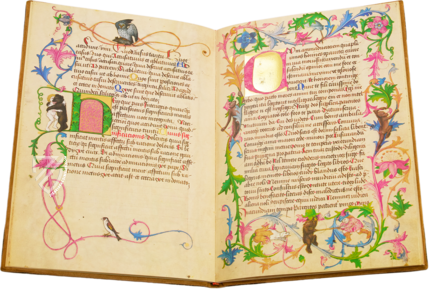
Throughout the 100 pages of the manuscript, measuring 17 x 12 cm, the 230 wonderful miniatures altogether. Next to the artful initials with exquisite leaflet work and in bright colors, the whole-page tables for calculations are sure to impress. The columns of figures are noted in bright red, blue, or green, and in golden writing. However, these are almost lost in the pageantry of the pages. Built like an altar with a predella with figurative depictions, e.g. musical cherubs, the arithmetic tables are decorated all over with ornamentation. Floral tendrils on the edges surround small cherubs, and the luminous Medici Coat of Arms is visible everywhere.
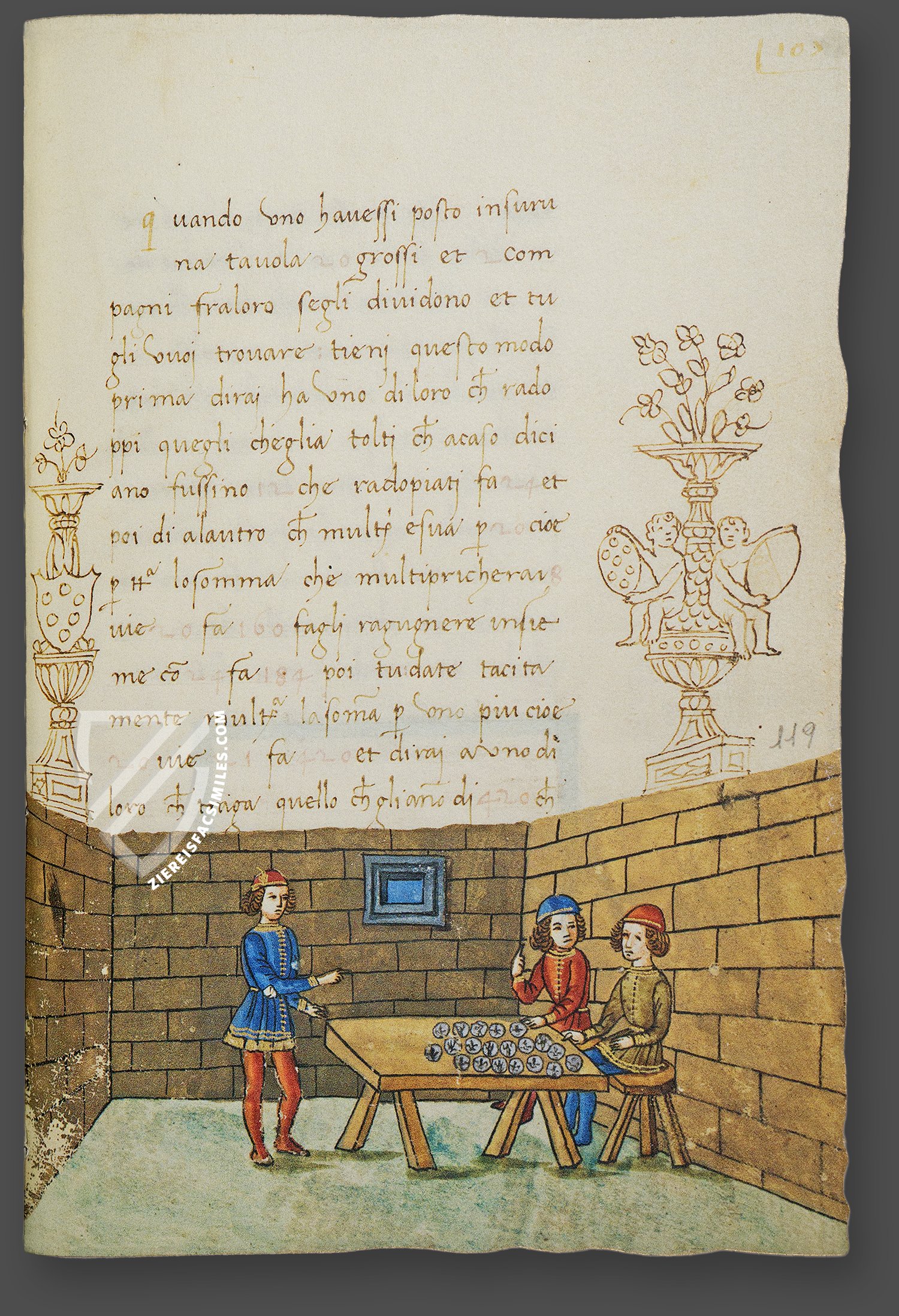
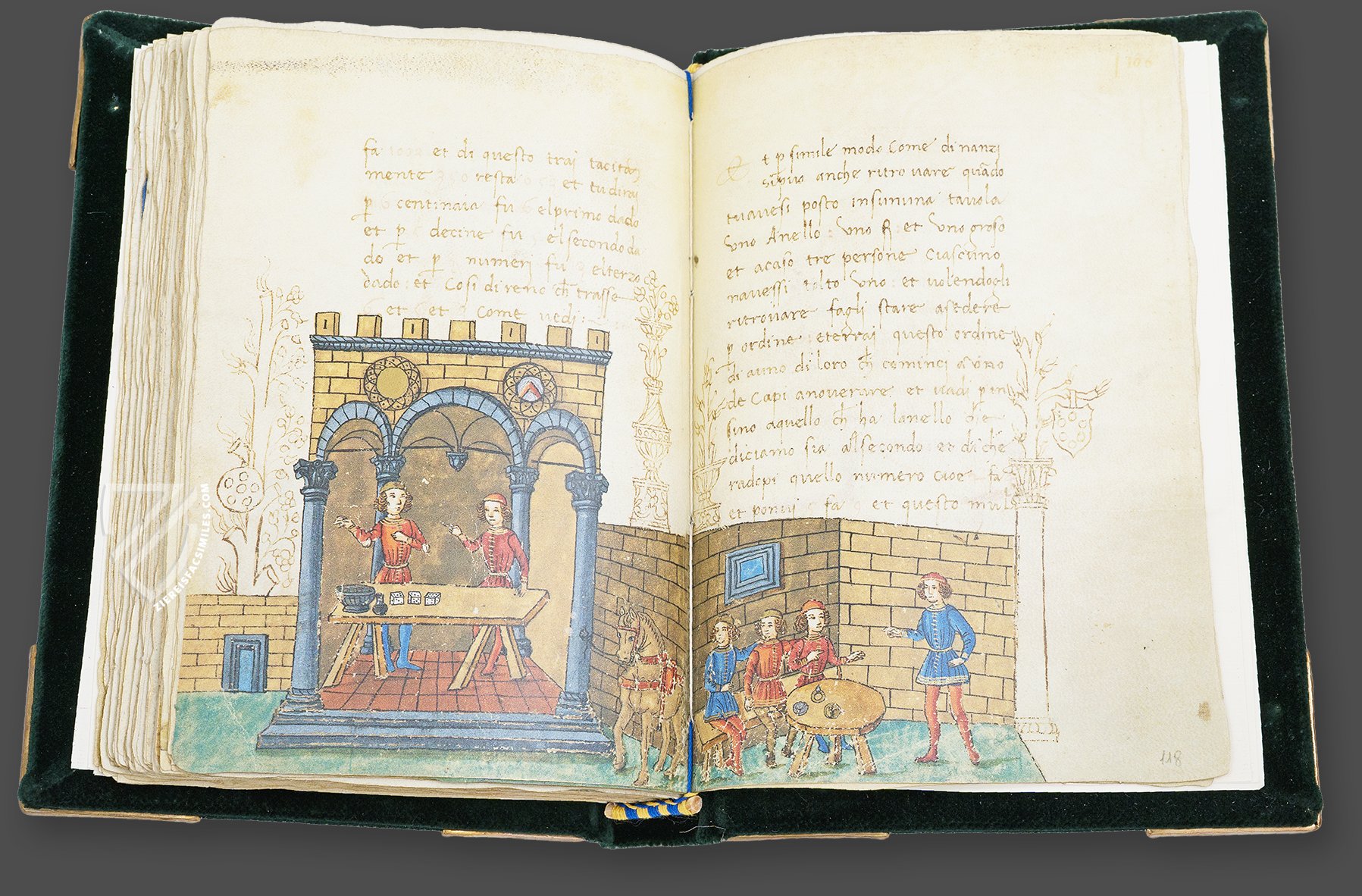
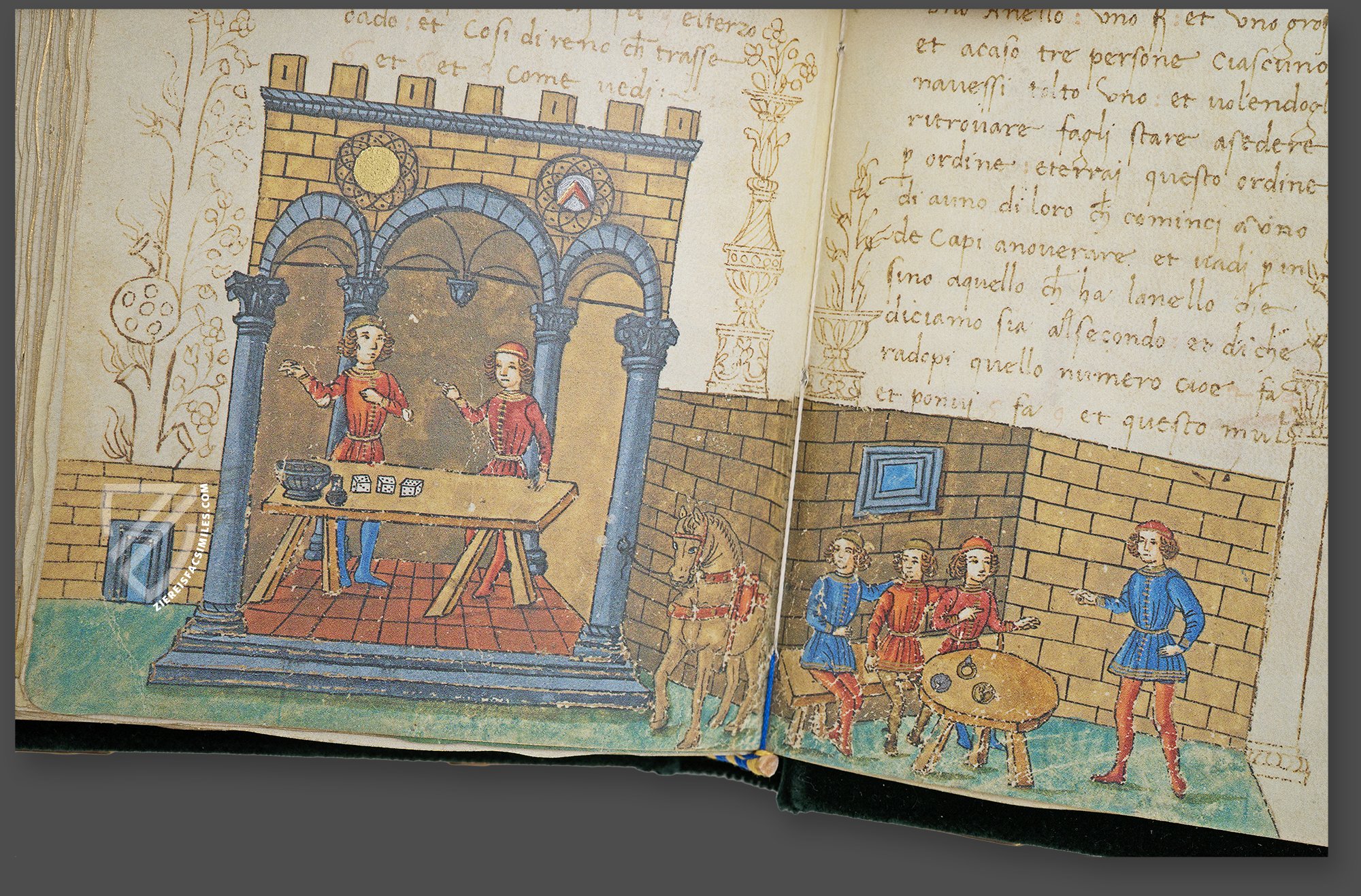
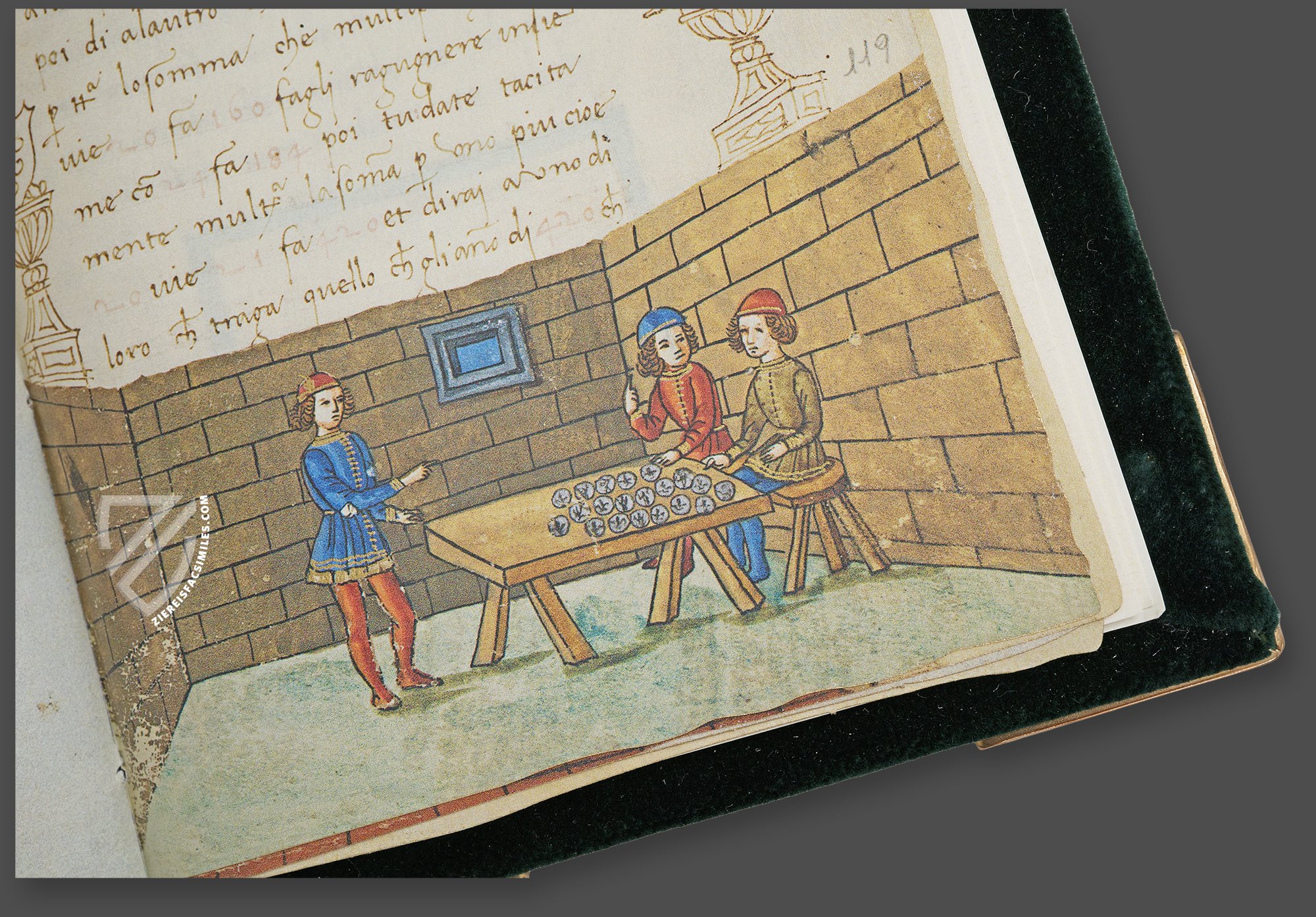
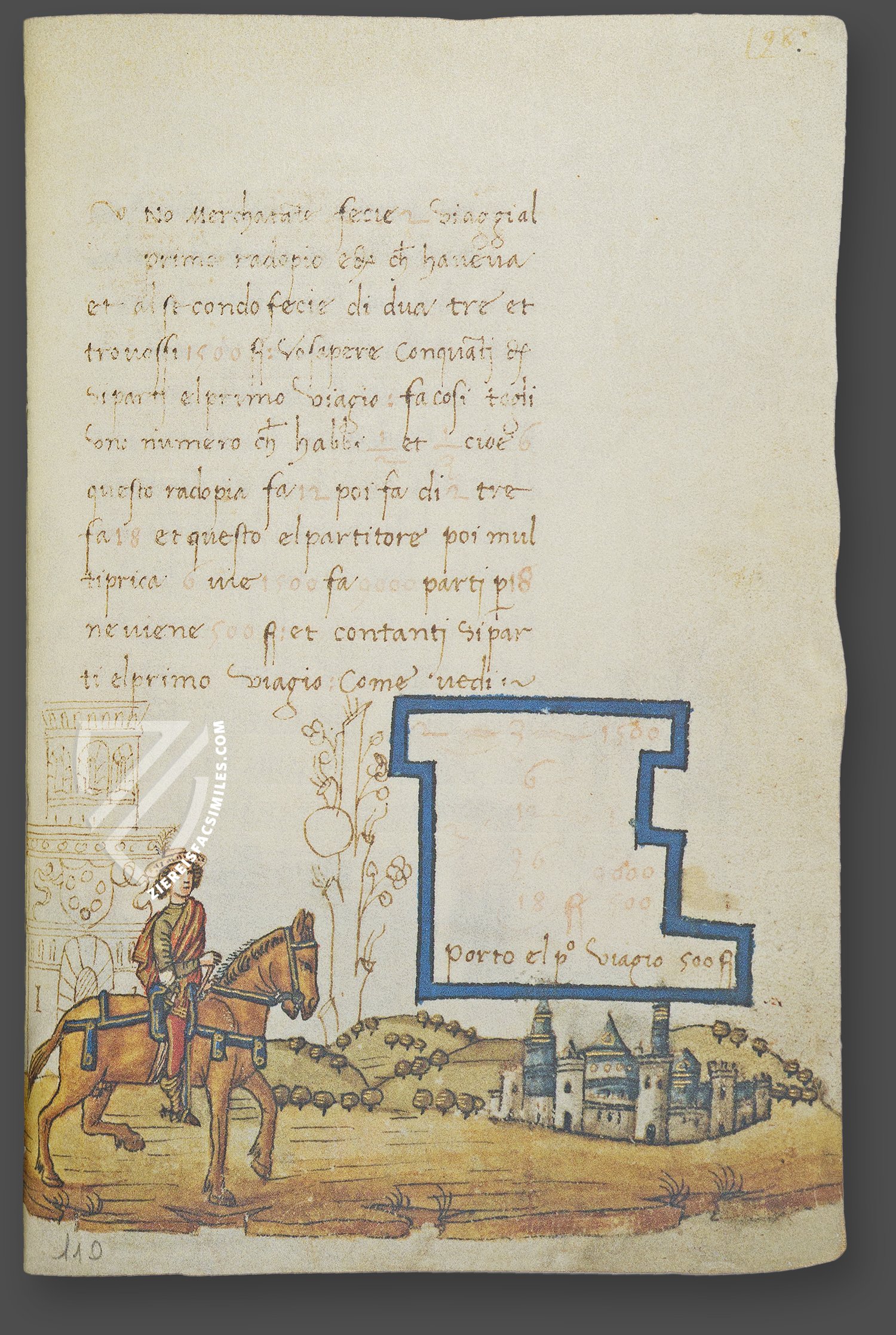
A few special text pages are designed in this fantastic manner, with borders of manifold ornamentation, classical forms, and mythological figures. Next to these whole page depictions, the text contains countless figurative illustrations, which are often scenes of everyday life, laborers at work, but also historical events. The various figures bustle about in partially perspective spaces. The marginal illustrations present with didactic intention the handling of money and goods as well as the problems with the activity of a merchant, which are mentioned in the text.
A Luxurious Object of the Late 15th Century
The manuscript is allegedly from Florence at the end of 15th century. In the year 1491, the Treatise on Arithmetic and Geometry was printed by Filippo Calandri, with a dedication to Giuliano de Medici, a later son of Lorenzo the Magnificent. With its extensive pictorial decorations, the superb manuscript-edition of this arithmetic treatise appears to have been more of a luxury object than a practical textbook. Written in Italian with Arabic numerals, this manuscript was on the cutting edge of its time.
As for the artist of the miniatures, the Italian miniaturist Giovanni Boccardo, also known as Boccardino il Vecchio, was responsible. He would later also work for Pope Leo X. In recent research, it is speculated, that two different artists contributed to the book project, perhaps in the style of Francesco di Antonio del Chierico – which is similar to the Book of Hours of Lorenzo the Magnificent – the other in the style of Gherardo di Giovannis and Pedro Berrunguetes.
Codicology
- Alternative Titles
- Tratado de Aritmética de Lorenzo el Magnífico
Traktat der Rechenkunst Lorenzos des Prächtigen
Traktat der Rechenkunst von Lorenzo dem Prächtigen
Traité d'Arithmétique de Laurent le Magnifique
Trattato di Aritmetica di Lorenzo il Magnifico
Tratado de Aritmética de Lourenço o Magnifico
Traktat der Rechenkunst Lorenzos de' Medici - Size / Format
- 100 pages / 17.0 × 12.0 cm
- Origin
- Italy
- Date
- 1491
- Epochs
- Style
- Genre
- Language
- Illustrations
- 230 miniatures illuminated in gold and silver
- Patron
- Lorenzo I. de’ Medici (1449–1492)
- Artist / School
- Filippo Calandri (author)
Pedro Berruguete (illuminator)
Workshop of Botticelli (illuminators) - Previous Owners
- Lorenzo's son Giovanni (Pope Leo X)
The Ways to Wealth
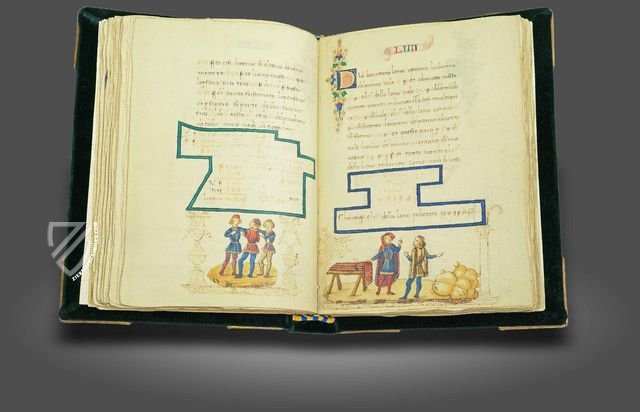
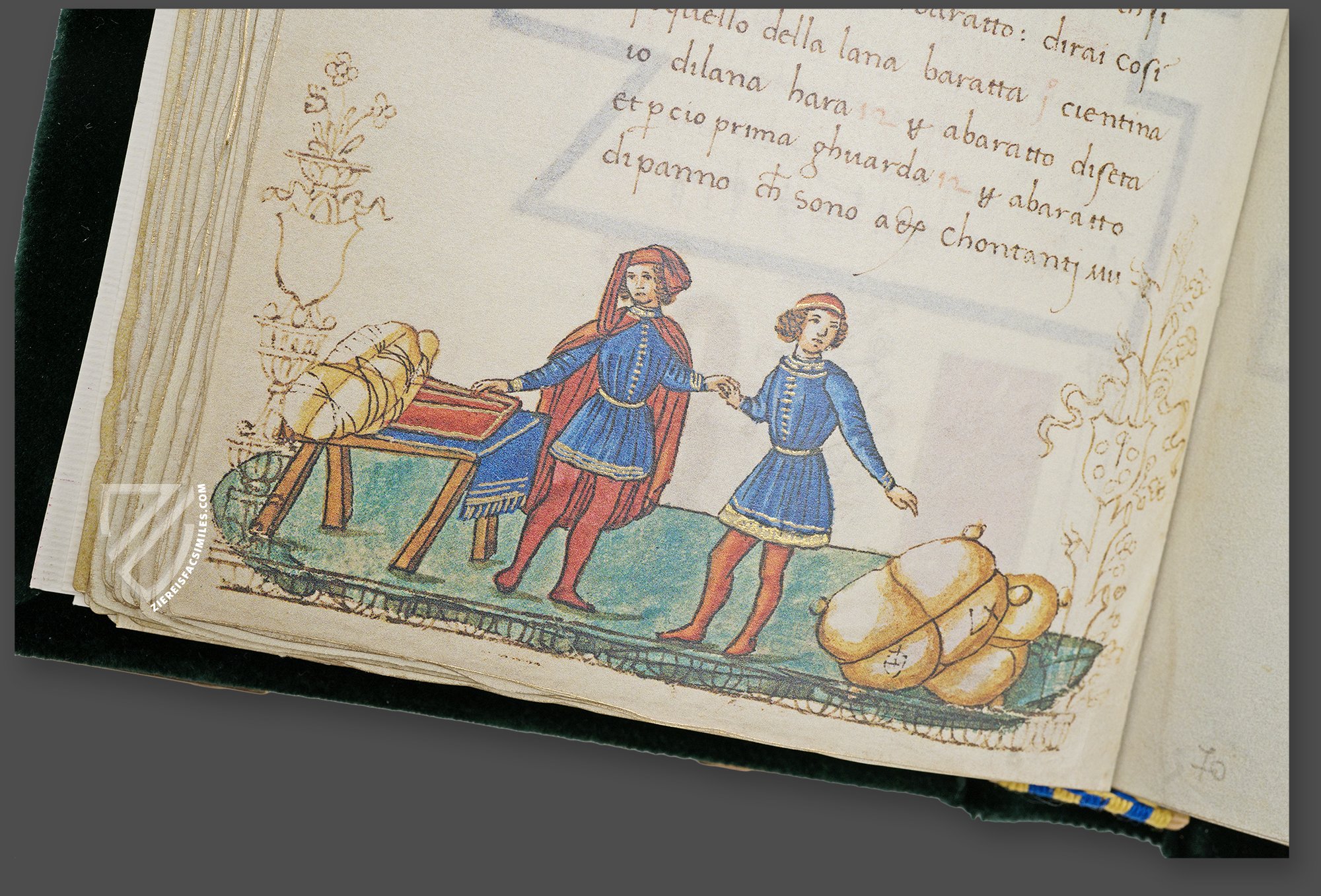
Two Wool Merchants
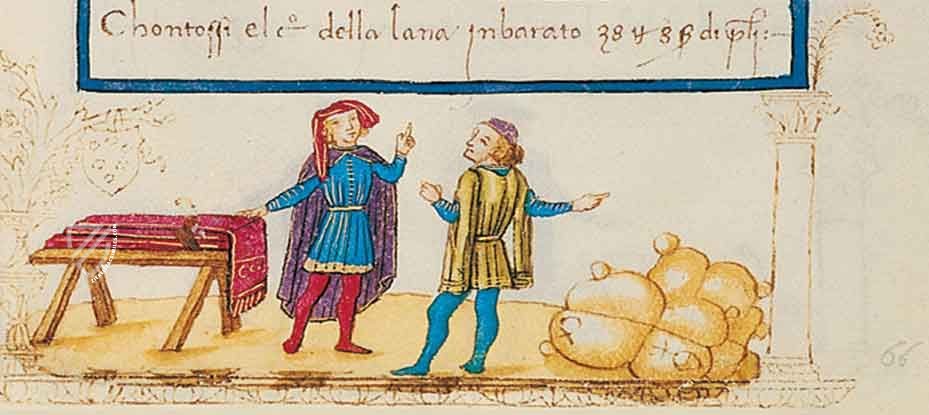
Although famous for its great banking houses, Florence’s wealth was built on the textile industry and Florentine fabrics were highly coveted, arguably the best in Europe during the Late Middle Ages. The international European wool trade began in the pastures of Scotland and England, its central hub was the Low Countries, and Florentine weavers produced the final product. The merchant on the right is standing next to bales of raw wool while his colleague on the left has finished textiles.
The Ways to Wealth
Table of Square Roots
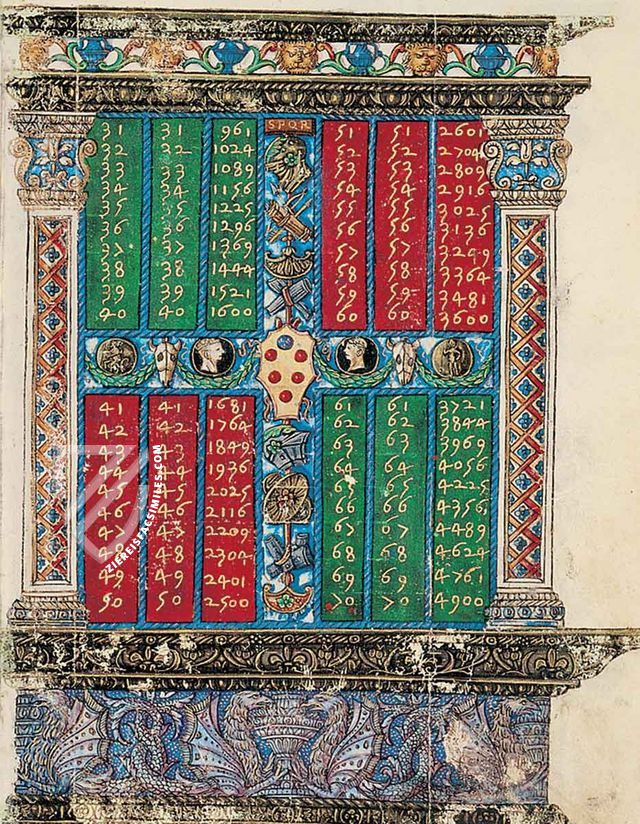
Presented in the form of a Roman-style altar, this table presents the square roots for the numbers 31 through 70, making it both a work of art and a helpful quick reference. Presented in fields of red and green, the numbers are divided by medallion portraits, bull’s skulls, laurel branches, as well as arms and armor including shields, a helmet, bow, and quiver.
A motif of stern lions’ faces and blue vases adorns the top of the table, which is flanked by finely-patterned columns with composite capitals. Created with wonderful, haunting shades of blue and purple, the base of the “altar” is patterned with griffins whose scaled dragon tails intertwine as their upper bodies, in the form of eagles, face one another.
#1 Die Wege zum Reichtum
Languages: Spanish, English, Italian
(1,000€ - 3,000€)
#2 Tratado de Aritmética de Lorenzo el Magnífico
Languages: Spanish
(1,000€ - 3,000€)

- Block Books / Incunables / Post-incunables
- Alchemy
- Apocalypses / Beatus Manuscripts
- Astronomy / Astrology
- Bibles / Gospels
- Picture Bibles / Bibles Moralisées / Mirror of Human Salvation
- Botany
- Chronicles / History / Letters
- Cookbook / Recipes
- Diaries / Biographies / Autograph Books
- Encyclopedias
- Fashion / Costume Books
- Games / Game Theory
- Geography / Cartography / Navigation
- Graduals / Antiphonaries / Exultet Roll
- Haggadot
- Hunting Books
- Law / Deeds / Rules
- Leonardo da Vinci
- Literature / Poetry
- Medicine
- Missals / Lectionaries / Sacramentaries
- Model Books / Sketchbooks / Notebooks
- Music
- Mythology
- Natural History / Bestiaries
- Other Liturgical Manuscripts
- Other Religious Works
- Other Secular Works
- Paintings / Graphics
- Primers / Textbooks
- Private Devotion Books
- Prophecies / Divination
- Psalters
- Quran
- Saints' Lives
- Sermons / Homilies
- Single Leaf Collections
- Song Books
- Tanakh
- Tournament Books / Armorials / Genealogy
- Travelogues / Travel Guides
- Treatises
- Afghanistan
- Algeria
- Armenia
- Austria
- Azerbaijan
- Belarus
- Belgium
- Belize
- Bosnia and Herzegovina
- China
- Colombia
- Costa Rica
- Croatia
- Cyprus
- Czech Republic
- Denmark
- Egypt
- El Salvador
- Ethiopia
- France
- Germany
- Greece
- Guatemala
- Honduras
- Hungary
- India
- Iran
- Iraq
- Israel
- Italy
- Japan
- Jordan
- Kazakhstan
- Kyrgyzstan
- Lebanon
- Libya
- Liechtenstein
- Luxembourg
- Mexico
- Morocco
- Netherlands
- Palestine
- Panama
- Peru
- Poland
- Portugal
- Romania
- Russia
- Serbia
- Slovakia
- Spain
- Sri Lanka
- Sweden
- Switzerland
- Syria
- Tajikistan
- Tunisia
- Turkey
- Turkmenistan
- Ukraine
- United Kingdom
- United States
- Uzbekistan
- Vatican City
- A. Oosthoek, van Holkema & Warendorf
- Aboca Museum
- Ajuntament de Valencia
- Akademie Verlag
- Akademische Druck- u. Verlagsanstalt (ADEVA)
- Aldo Ausilio Editore - Bottega d’Erasmo
- Alecto Historical Editions
- Alkuin Verlag
- Almqvist & Wiksell
- Amilcare Pizzi
- Andreas & Andreas Verlagsbuchhandlung
- Archa 90
- Archiv Verlag
- Archivi Edizioni
- Arnold Verlag
- ARS
- Ars Magna
- Ars Millenii
- Art Market
- ArtCodex
- AyN Ediciones
- Azimuth Editions
- Badenia Verlag
- Bärenreiter-Verlag
- Belser Verlag
- Belser Verlag / WK Wertkontor
- Benziger Verlag
- Bernardinum Wydawnictwo
- BiblioGemma
- Biblioteca Apostolica Vaticana (Vaticanstadt, Vaticanstadt)
- Bibliotheca Palatina Faksimile Verlag
- Bibliotheca Rara
- Boydell & Brewer
- Bramante Edizioni
- Bredius Genootschap
- Brepols Publishers
- British Library
- Brokarte
- C. Weckesser
- Caixa Catalunya
- Canesi
- CAPSA, Ars Scriptoria
- Caratzas Brothers, Publishers
- Carus Verlag
- Casamassima Libri
- Centrum Cartographie Verlag GmbH
- Chavane Verlag
- Christian Brandstätter Verlag
- Circulo Cientifico
- Club Bibliófilo Versol
- Club du Livre
- Club Internacional del Libro
- CM Editores
- Collegium Graphicum
- Collezione Apocrifa Da Vinci
- Comissão Nacional para as Comemorações dos Descobrimentos Portugueses
- Coron Verlag
- Corvina
- CTHS
- D. S. Brewer
- Damon
- De Agostini/UTET
- De Nederlandsche Boekhandel
- De Schutter
- Deuschle & Stemmle
- Deutscher Verlag für Kunstwissenschaft
- DIAMM
- Dropmore Press
- Droz
- E. Schreiber Graphische Kunstanstalten
- Ediciones Boreal
- Ediciones Grial
- Ediclube
- Edições Inapa
- Edilan
- Editalia
- Edition Deuschle
- Edition Georg Popp
- Edition Leipzig
- Edition Libri Illustri
- Editiones Reales Sitios S. L.
- Éditions de l'Oiseau Lyre
- Editions Medicina Rara
- Editorial Base
- Editorial Casariego
- Editorial Mintzoa
- Editrice Antenore
- Editrice Velar
- Edizioni Edison
- Egeria, S.L.
- Eikon Editores
- Electa
- Emery Walker Limited
- Enciclopèdia Catalana
- Eos-Verlag
- Ephesus Publishing
- Ernst Battenberg
- Eugrammia Press
- Extraordinary Editions
- Fackelverlag
- Facsimila Art & Edition
- Facsimile Editions Ltd.
- Facsimilia Art & Edition Ebert KG
- Faksimile Verlag
- Feuermann Verlag
- Folger Shakespeare Library
- Franco Cosimo Panini Editore
- Friedrich Wittig Verlag
- Fundación Hullera Vasco-Leonesa
- G. Braziller
- Gabriele Mazzotta Editore
- Gebr. Mann Verlag
- Gesellschaft für graphische Industrie
- Getty Research Institute
- Giovanni Domenico de Rossi
- Giunti Editore
- Goldenmark Librarium
- Graffiti
- Grafica European Center of Fine Arts
- Guido Pressler
- Guillermo Blazquez
- Gustav Kiepenheuer
- H. N. Abrams
- Harrassowitz
- Harvard University Press
- Helikon
- Hendrickson Publishers
- Henning Oppermann
- Herder Verlag
- Hes & De Graaf Publishers
- Hoepli
- Holbein-Verlag
- Houghton Library
- Hugo Schmidt Verlag
- Hungarian Academy of Sciences
- Idion Verlag
- Il Bulino, edizioni d'arte
- ILte
- Imago
- In Officina Danesi
- Insel Verlag
- Instituto de Estudios Altoaragoneses
- Instituto Nacional de Antropología e Historia
- Introligatornia Budnik Jerzy
- Istituto dell'Enciclopedia Italiana - Treccani
- Istituto Ellenico di Studi Bizantini e Postbizantini
- Istituto Geografico De Agostini
- Istituto Poligrafico e Zecca dello Stato
- Italarte Art Establishments
- Jaca Book
- Jan Thorbecke Verlag
- Johnson Reprint Corporation
- Johnson Reprint Corporation
- Jos. Baer
- Josef Stocker
- Josef Stocker-Schmid
- Jugoslavija
- Karl W. Hiersemann
- Kasper Straube
- Kaydeda Ediciones
- Kindler Verlag / Coron Verlag
- Kodansha International Ltd.
- Konrad Kölbl Verlag
- Kurt Wolff Verlag
- La Linea Editrice
- La Meta Editore
- Lambert Schneider
- Landeskreditbank Baden-Württemberg
- Leo S. Olschki
- Les Incunables
- Liber Artis
- Library of Congress
- Libreria Musicale Italiana
- Lichtdruck
- Lito Immagine Editore
- Lumen Artis
- Lund Humphries
- M. Moleiro Editor
- Maison des Sciences de l'homme et de la société de Poitiers
- Manuscriptum
- Martinus Nijhoff
- Maruzen-Yushodo Co. Ltd.
- MASA
- Massada Publishers
- McGraw-Hill
- Metropolitan Museum of Art
- Militos
- Millennium Liber
- Müller & Schindler
- Nahar - Stavit
- Nahar and Steimatzky
- National Library of Wales
- Neri Pozza
- Nova Charta
- Oceanum Verlag
- Odeon
- Omnia Arte
- Orbis Mediaevalis
- Orbis Pictus
- Österreichische Staatsdruckerei
- Oxford University Press
- Pageant Books
- Parzellers Buchverlag
- Patrimonio Ediciones
- Pattloch Verlag
- PIAF
- Plon-Nourrit et cie
- Poligrafiche Bolis
- Presses Universitaires de Strasbourg
- Prestel Verlag
- Princeton University Press
- Prisma Verlag
- Priuli & Verlucca, editori
- Pro Sport Verlag
- Propyläen Verlag
- Pytheas Books
- Quaternio Verlag Luzern
- Reales Sitios
- Recht-Verlag
- Reichert Verlag
- Reichsdruckerei
- Reprint Verlag
- Riehn & Reusch
- Rizzoli
- Roberto Vattori Editore
- Rosenkilde and Bagger
- Roto-Sadag
- Roxburghe Club
- Salerno Editrice
- Saltellus Press
- Sandoz
- Sarajevo Svjetlost
- Schöck ArtPrint Kft.
- Schulsinger Brothers
- Scolar Press
- Scrinium
- Scripta Maneant
- Scriptorium
- Shazar
- Siloé, arte y bibliofilia
- SISMEL - Edizioni del Galluzzo
- Sociedad Mexicana de Antropología
- Société des Bibliophiles & Iconophiles de Belgique
- Soncin Publishing
- Sorli Ediciones
- Stainer and Bell
- Studer
- Styria Verlag
- Sumptibus Pragopress
- Szegedi Tudomànyegyetem
- Taberna Libraria
- Tarshish Books
- Taschen
- Tempus Libri
- Testimonio Compañía Editorial
- TGB Limited Editions
- Thames and Hudson
- The Clear Vue Publishing Partnership Limited
- The Facsimile Codex
- The Folio Society
- The Marquess of Normanby
- The Orphan Hospital Ward of Israel
- The Richard III and Yorkist History Trust
- The Warburg Institute
- Tip.Le.Co
- TouchArt
- TREC Publishing House
- TRI Publishing Co.
- Trident Editore
- Tuliba Collection
- Typis Regiae Officinae Polygraphicae
- Union Verlag Berlin
- Universidad de Granada
- Universitaire Bibliotheken Leiden
- University of California Press
- University of Chicago Press
- Urs Graf
- Vallecchi
- Van Wijnen
- VCH, Acta Humaniora
- VDI Verlag
- VEB Deutscher Verlag für Musik
- Verein Schweizerischer Lithographie-Besitzer
- Verlag Anton Pustet / Andreas Verlag
- Verlag Bibliophile Drucke Josef Stocker
- Verlag der Münchner Drucke
- Verlag für Regionalgeschichte
- Verlag Styria
- Vicent Garcia Editores
- W. Turnowsky
- Waanders Printers
- Wiener Mechitharisten-Congregation (Wien, Österreich)
- Wissenschaftliche Buchgesellschaft
- Wissenschaftliche Verlagsgesellschaft
- Wydawnictwo Dolnoslaskie
- Xuntanza Editorial
- Zakład Narodowy
- Zollikofer AG